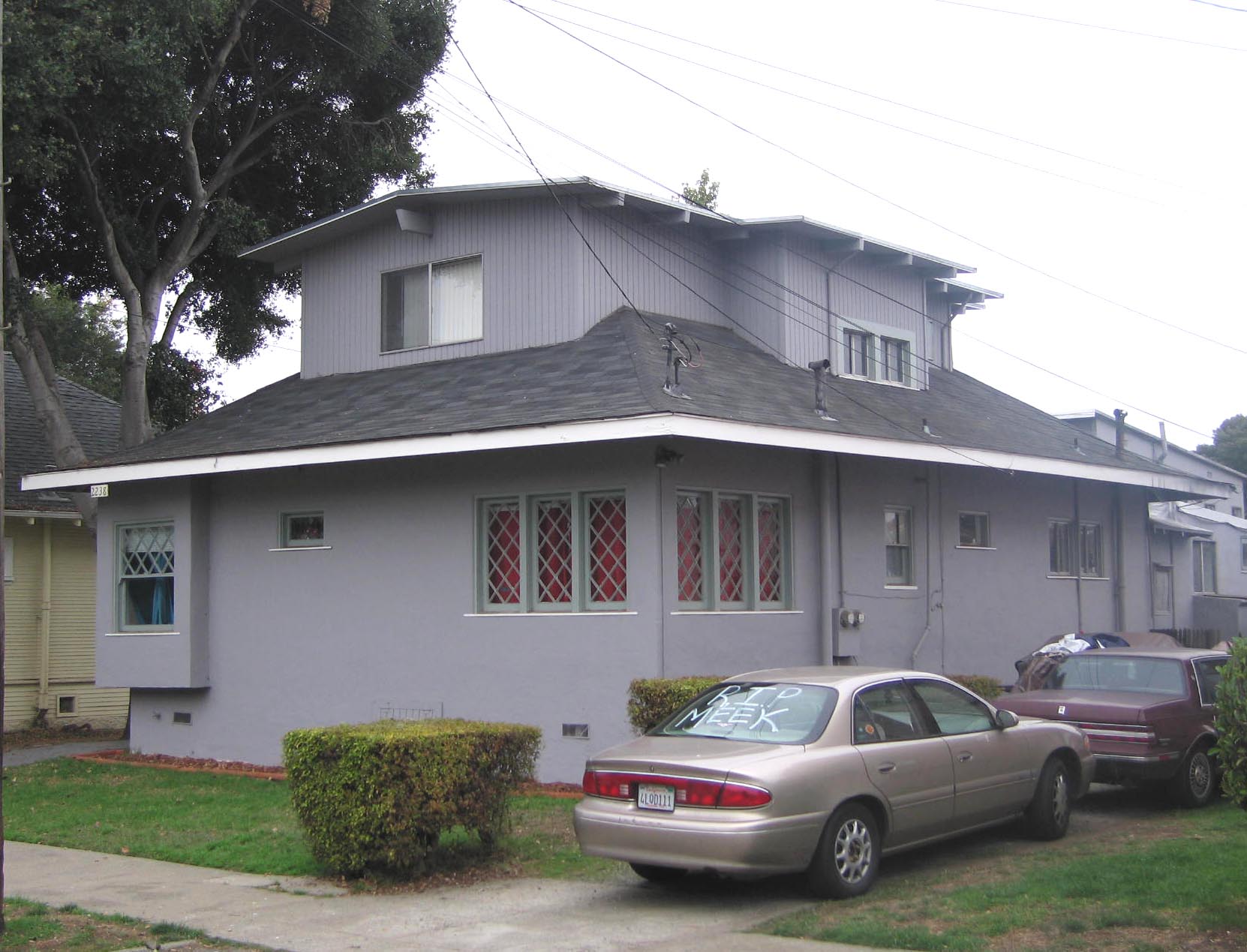
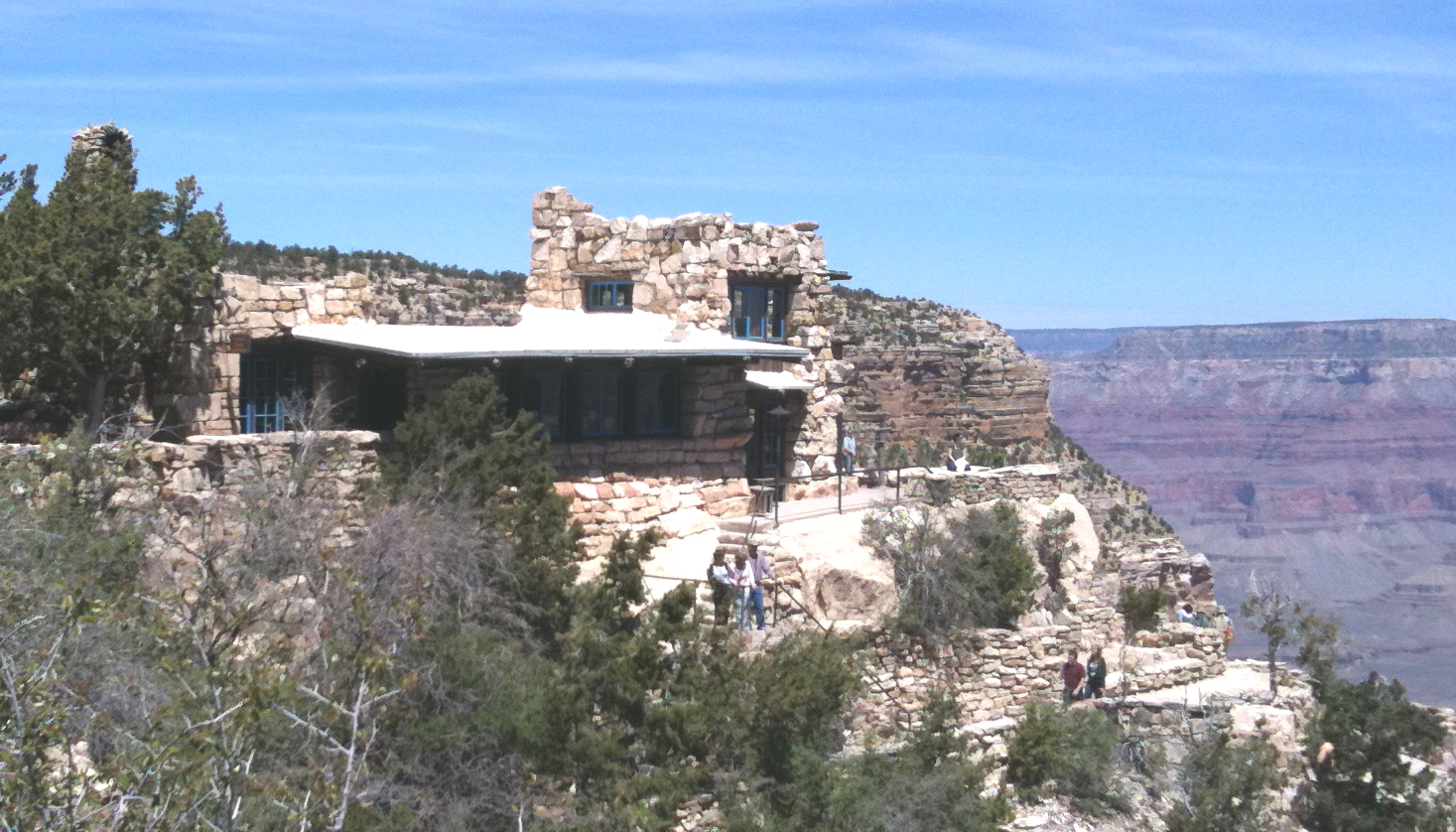
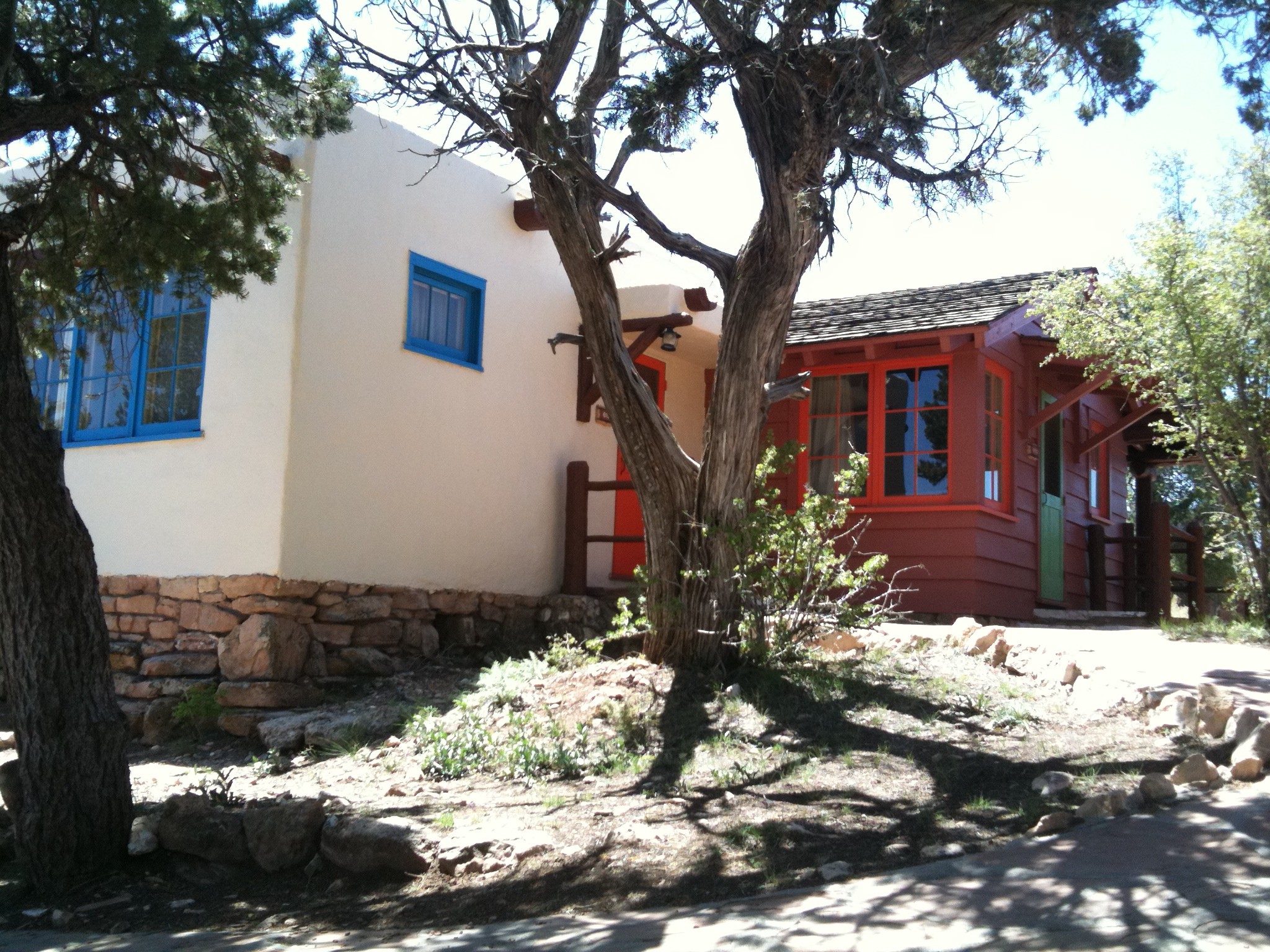
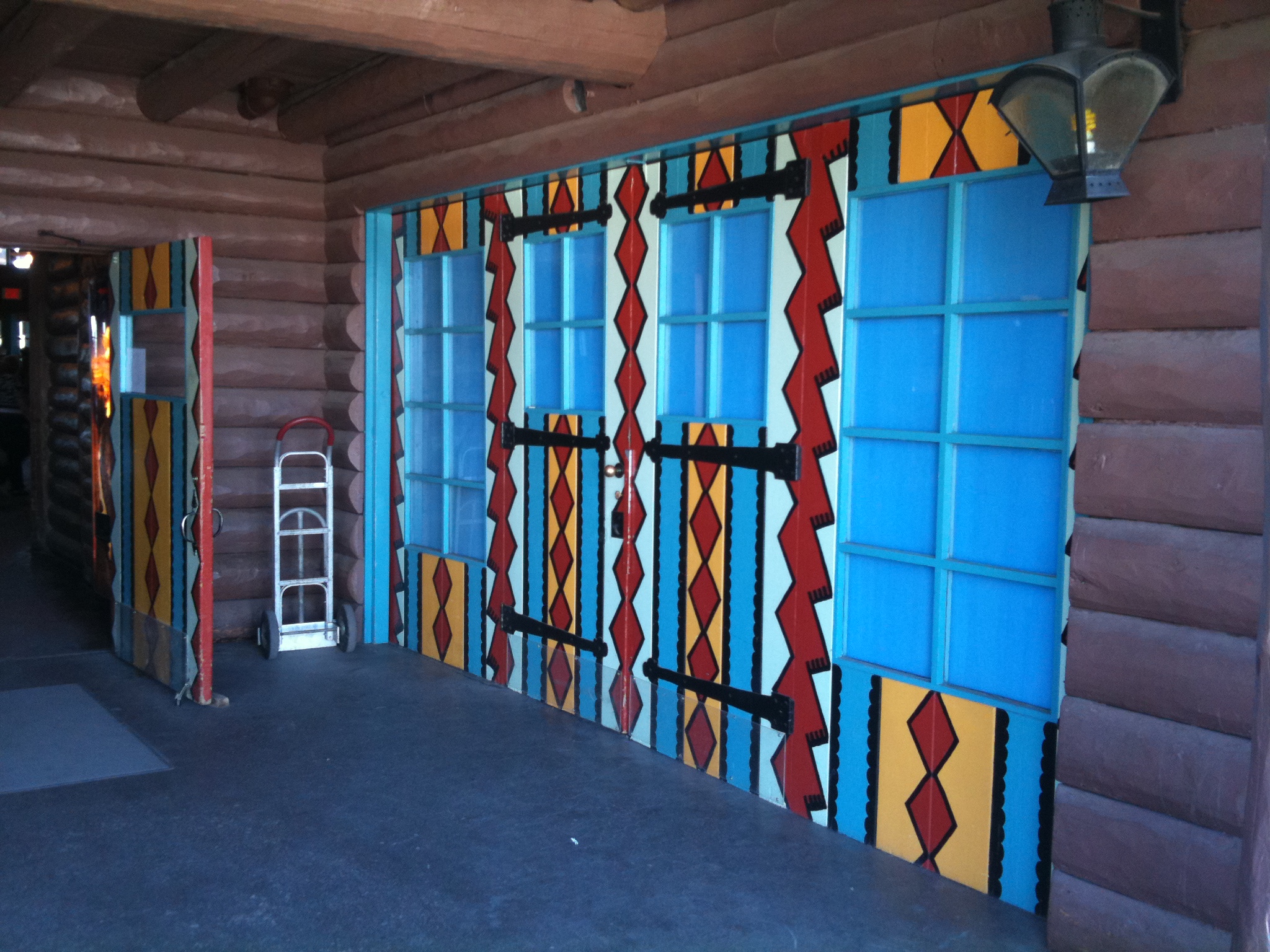
I love houses that cannot be categorized. Or maybe they all can be……anyone got a name for this style?
Archive for the ‘Found Objects’ Category
A truly unique piece of architecture
Posted in Found Objects, tagged Berkeley, houses, humor on January 19, 2011| 4 Comments »
HVAC design ideas
Posted in Found Objects, tagged HVAC, patterns, Rem Koolhas, Renzo Piano on January 16, 2011| 3 Comments »
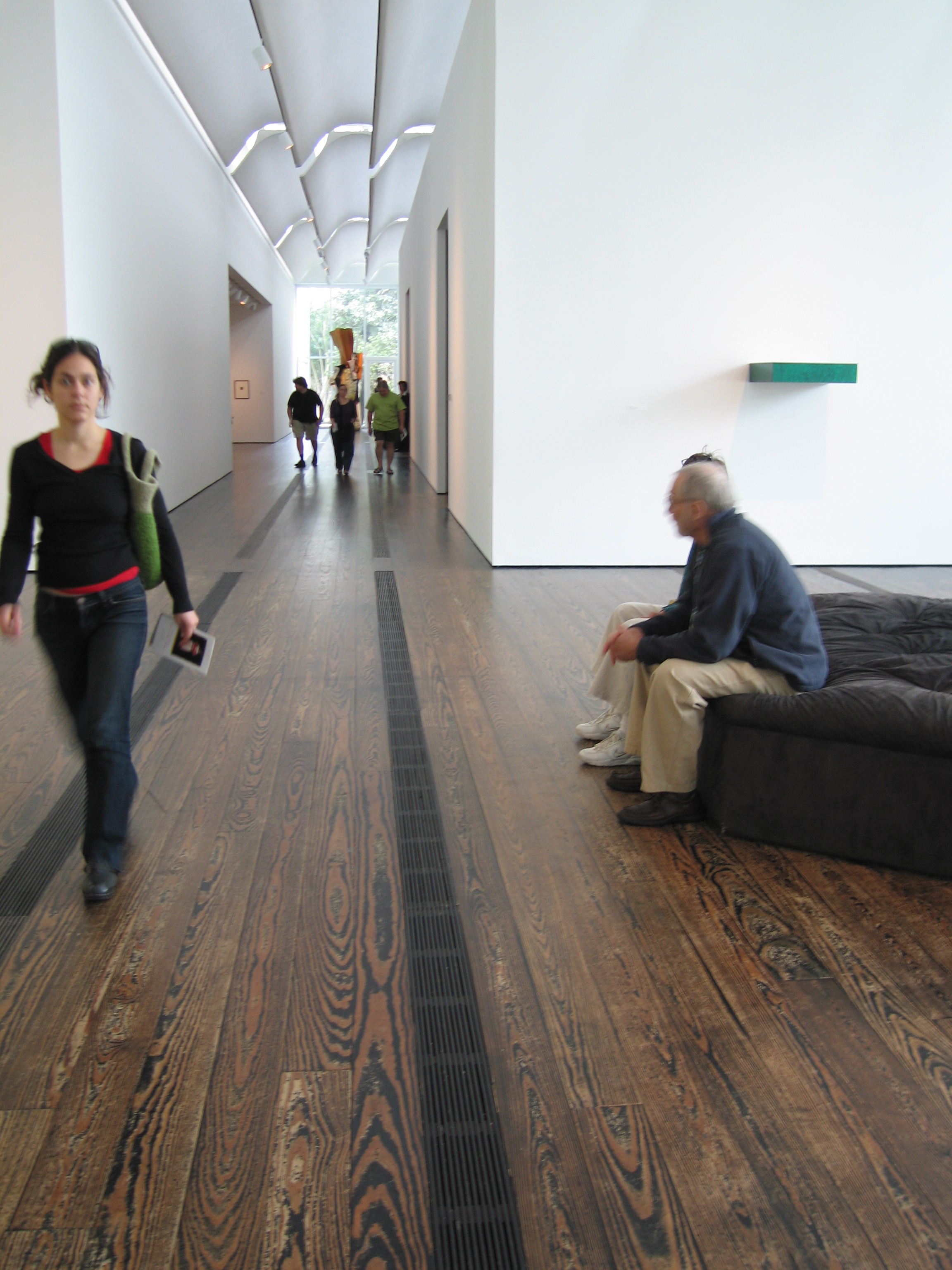
This is an art museum in Houston designed by Renzo Piano called the Menil Collection. One particularly cool detail there is the floor registers that are turned into an artistic accent. Long straight lines with smaller lines within in the long straight hallway….nicely contrasting with the accentuated wavy wood grain. It is also nice to have such an even distribution, rather than small holes in one corner of each room.
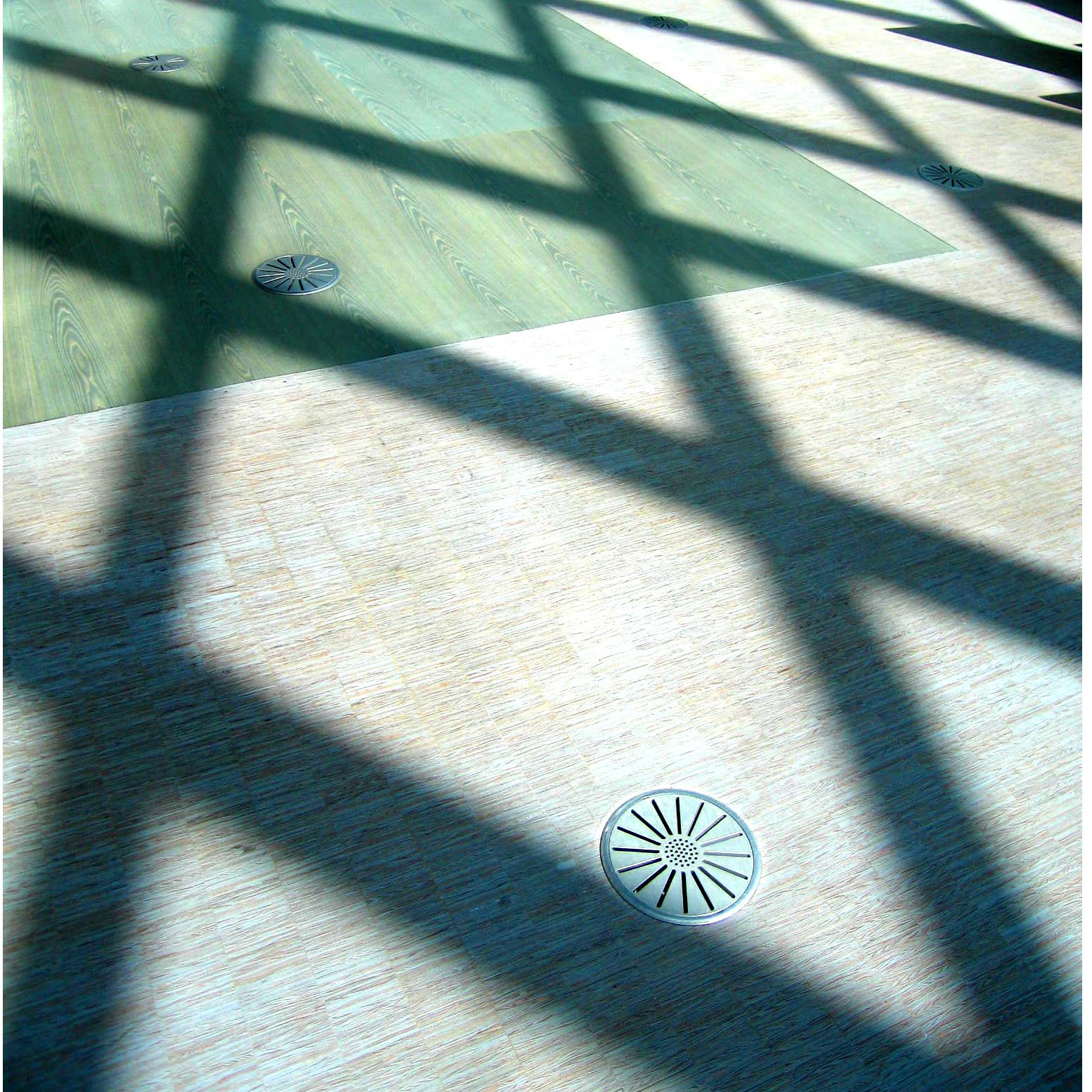
Rem Koolhas’s team also likes to carefully consider their HVAC details. This elegant supply register is in the Seattle Central Library….scattered throughout the lobby punctuating the varied pallet of flooring materials.
Municipal Natatorium, Pt Richmond, CA
Posted in Found Objects, tagged green, humor, lighting design, Richmond, signs on January 14, 2011| 2 Comments »
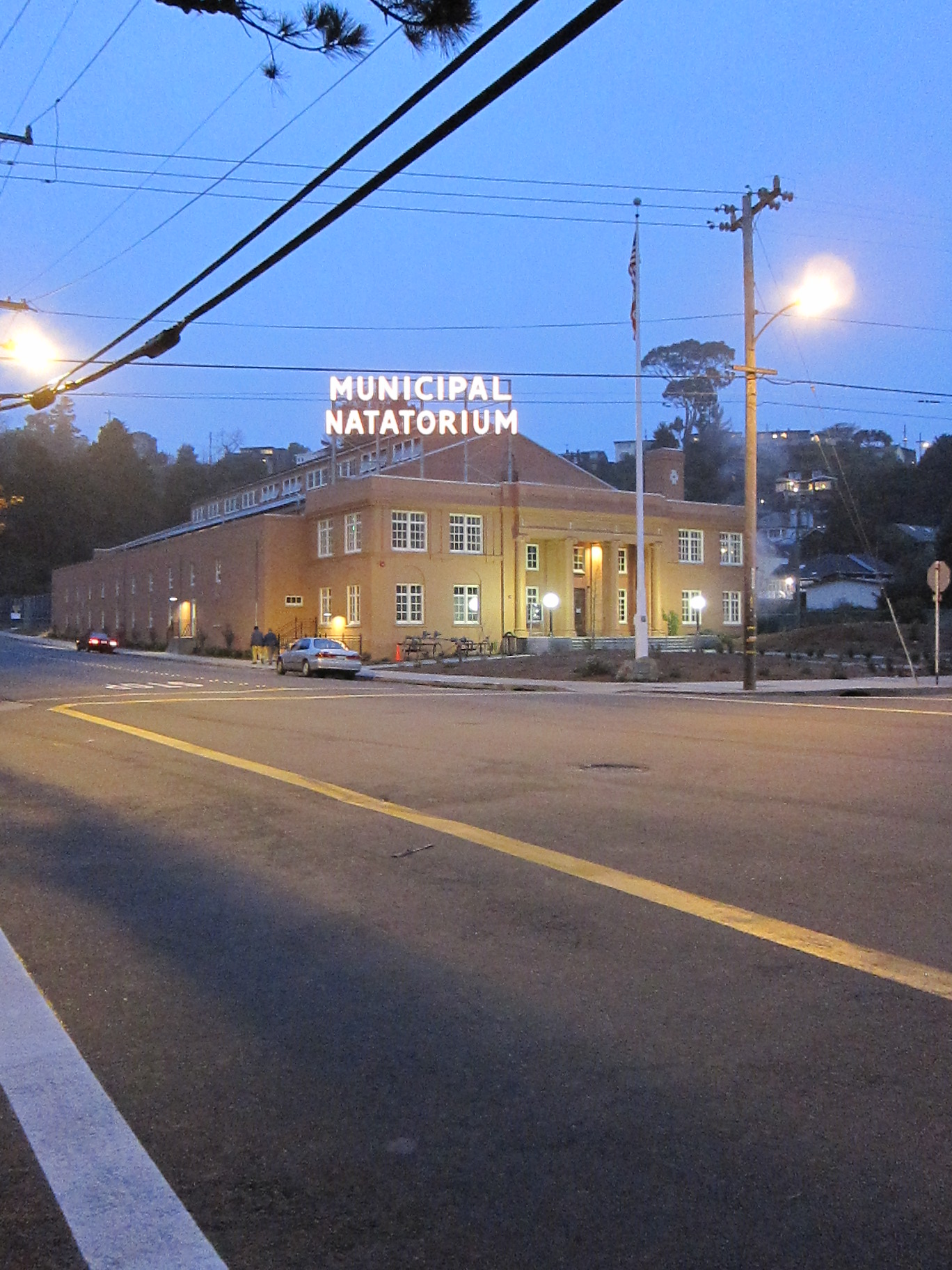
The public swimming pool in Point Richmond reopened with a grand celebration recently. In the interior, the beautiful structure is washed with daylight, and a floor to ceiling mural at one end by John Wehrle really completes the experience. I took a photo of the huge lighted sign the other night because it amused me. Maybe more buildings should be clearly labeled like this. I’ve considered it for my house, in part because I like to paint. The street numbers could be 8″ high and painted in glow in the dark paint. We could bring in a new era of sign painting arts and put neon sign makers to work. I’m not sure all the signs should be mounted at an angle to the building like this…and they could be slightly more subtle perhaps….but they should all be as beautiful as possible. No shiny plastic.
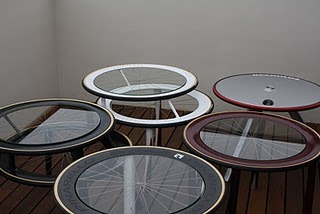
These tables made from old bike parts are cool
Posted in Found Objects, tagged furniture, recycled, salvaged on December 13, 2010| Leave a Comment »
They are made in New Zealand by Carbon Footprint Design
Unfortunately it would up the carbon footprint a bit to ship them across the Pacific. I imagine that they are pretty lightweight though.
Northern California Fall
Posted in Design Projects, Found Objects, tagged garden, green, landscape, Northern California seasons, passive solar, plants, trees on December 6, 2010| Leave a Comment »
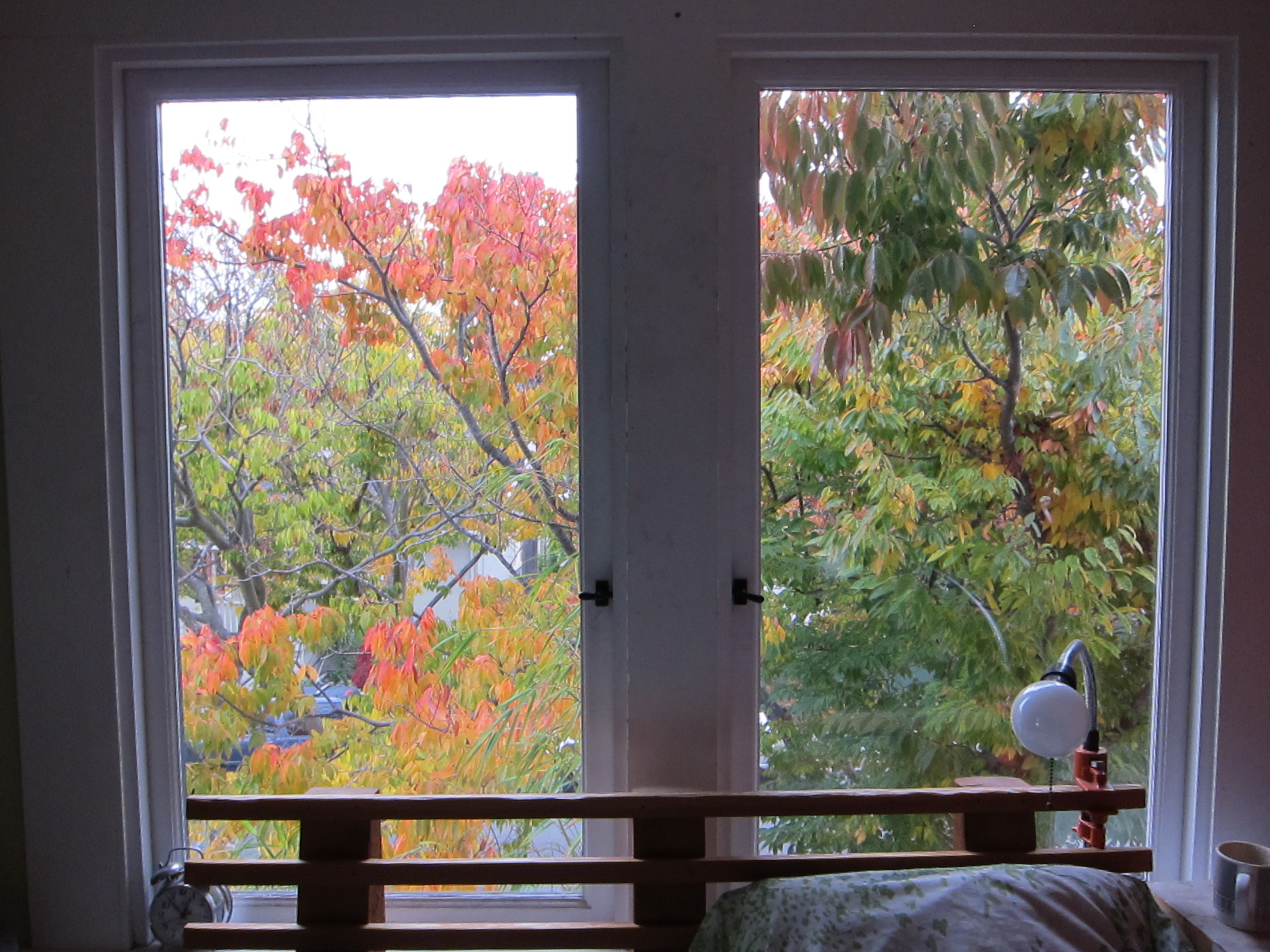
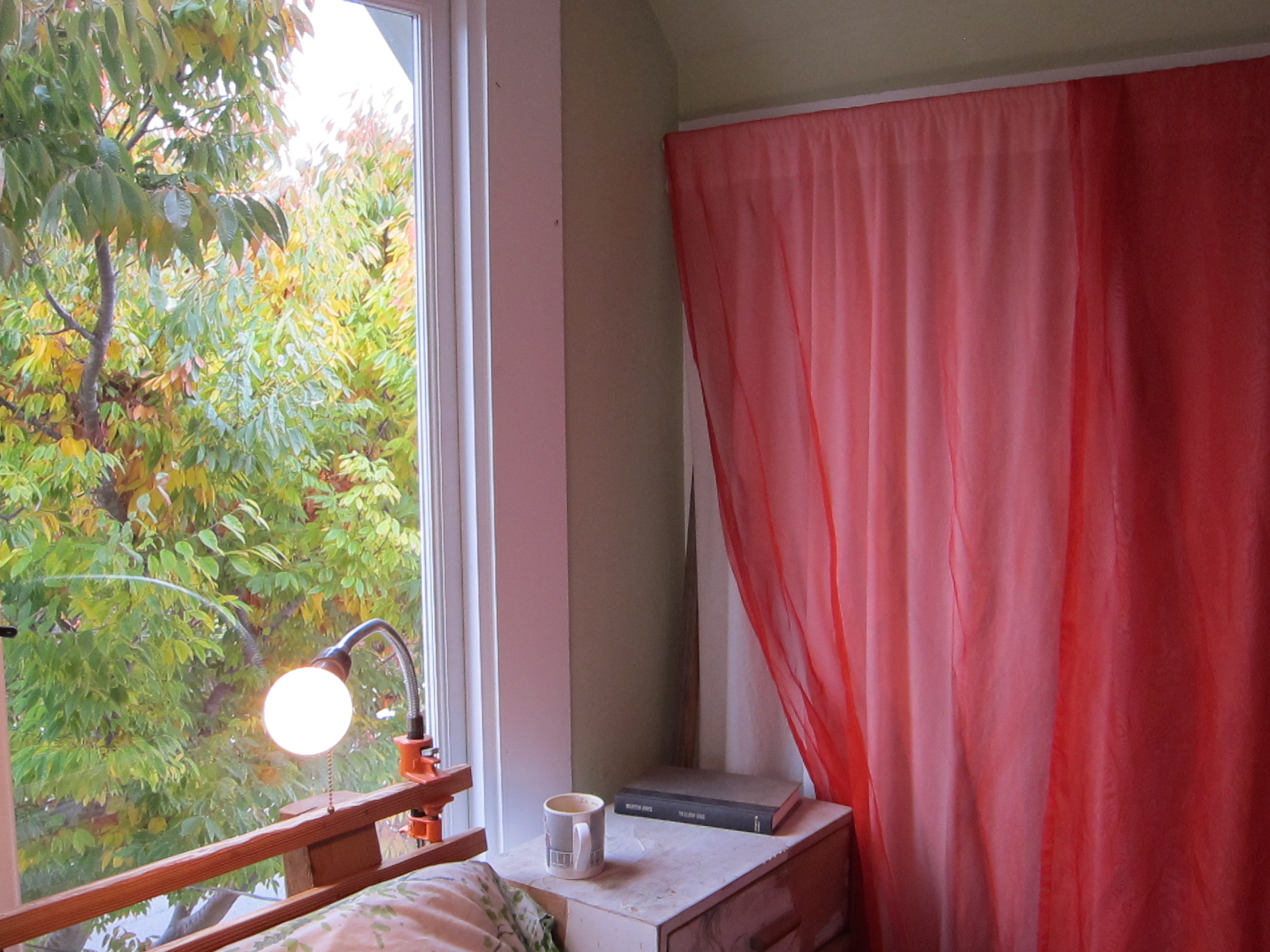
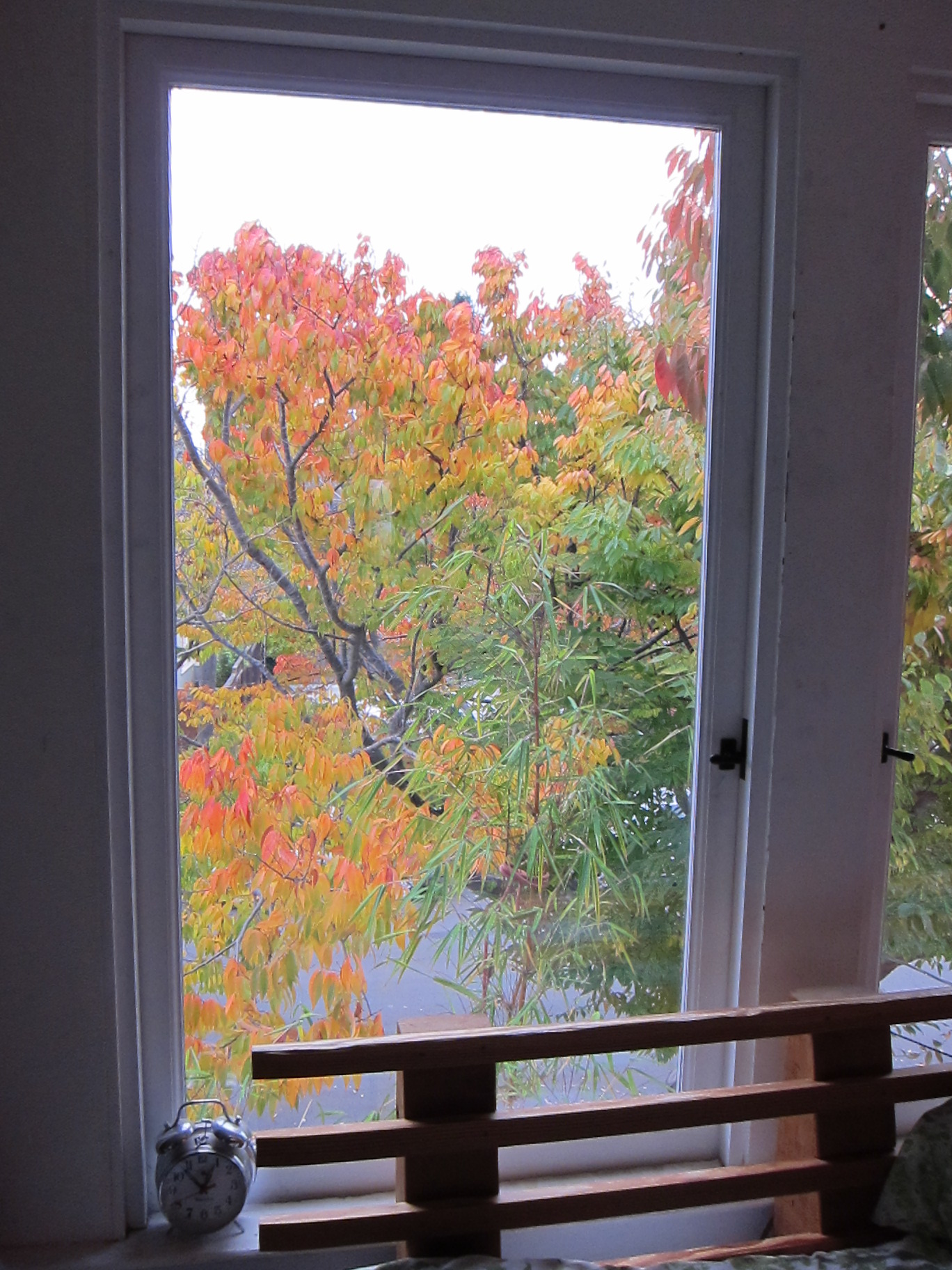
In honor of the Northern California Fall I am posting a few photos of the glorious trees that might be the most important architectural feature of my apartment. Without this pair of venerable deciduous Zelcova trees I would have much less privacy in my bedroom and the house and yard would be much hotter and sunnier in the summer months. The beauty of a deciduous tree smack on the south side of the house is that in the winter the sun streams into the south-facing windows. warming and cheering the rooms. Of course the fall foliage is a nice side benefit.
The seasons in Northern California have always seemed a bit confused to this native of Detroit. I recently realized why: When the fall foliage begins, it is usually also the beginning of the rainy season. This means that simultaneously some trees are turning red, orange, yellow and brown, and most other plants and trees are turning bright green from all of the rain. In the spring the reverse is true. The deciduous trees are sprouting little green leaves and buds….and most other things are turning brown as the water supply diminishes.
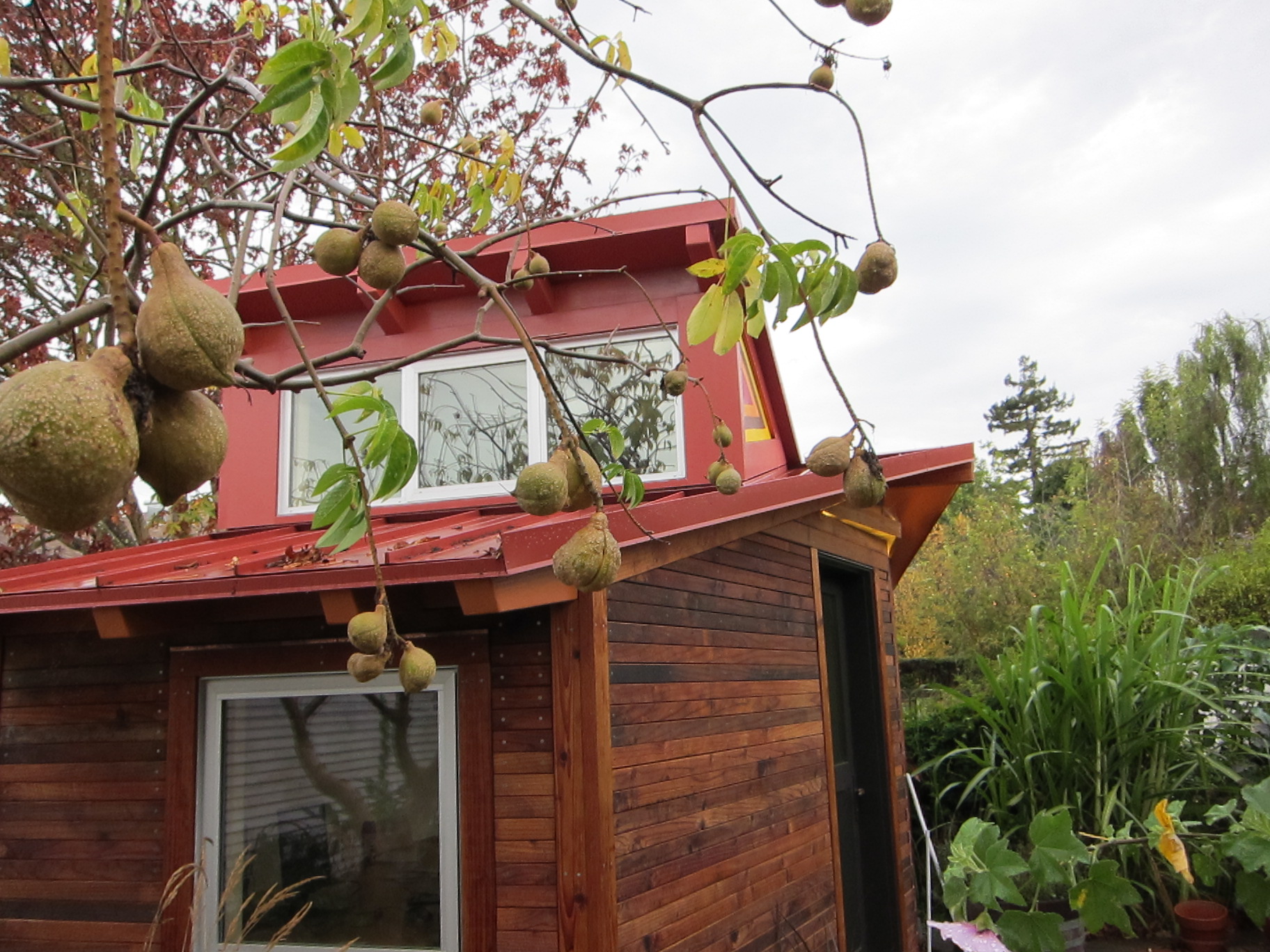
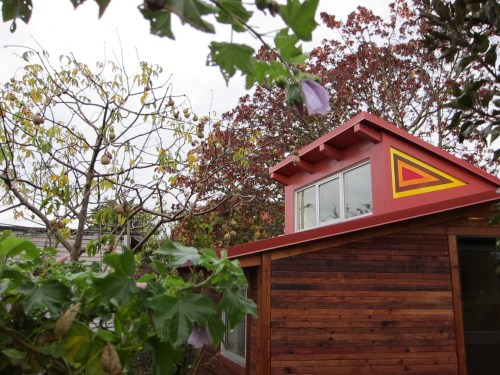
I painted the burgee on my art studio new colors for the fall. This building also has the benefits of a deciduous tree to the south. This time it is the spectacular California Buckeye. 

The High Line in the Fall
Posted in Found Objects, tagged color, garden, landscape, New York, plants on November 16, 2010| Leave a Comment »
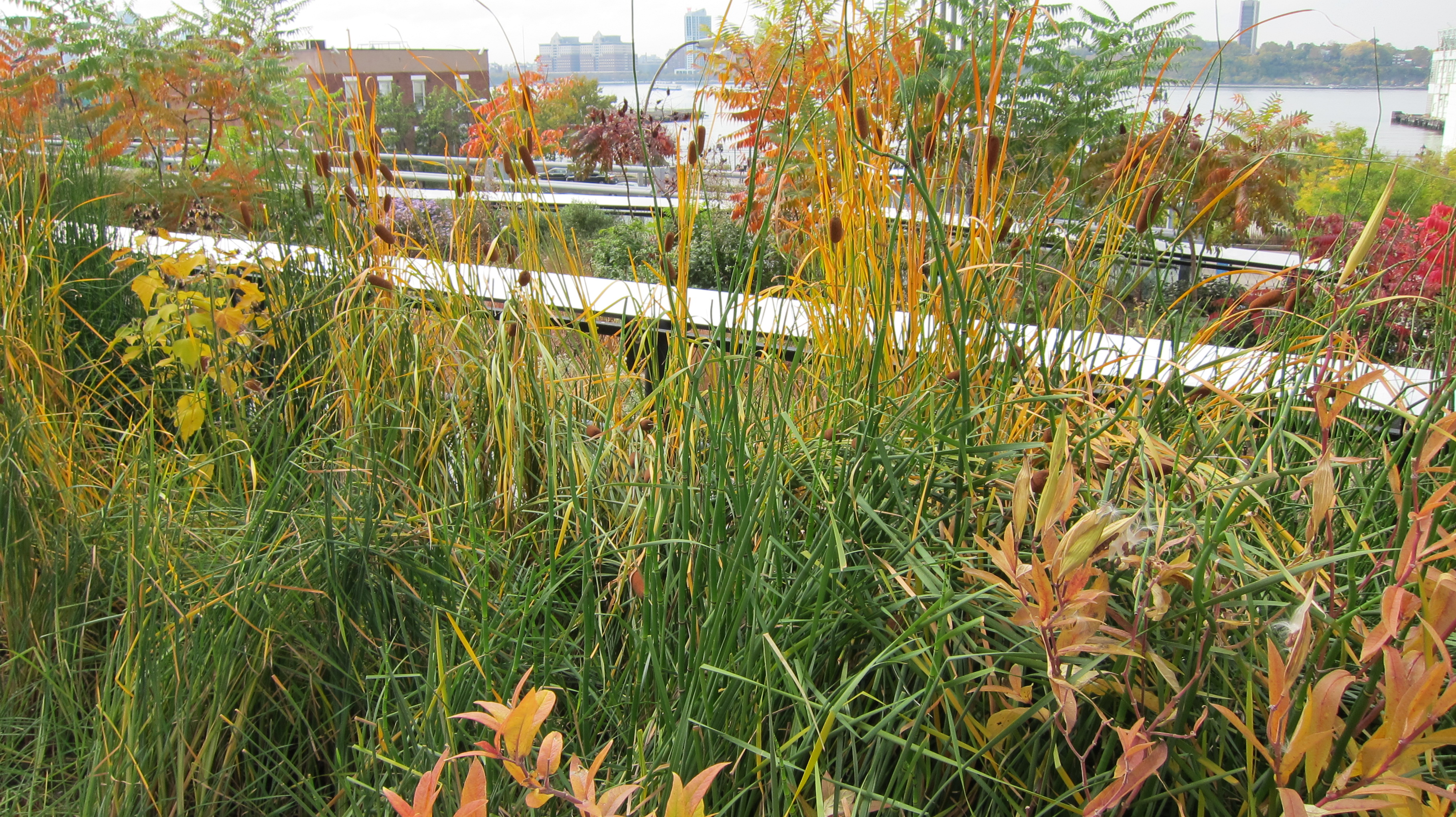
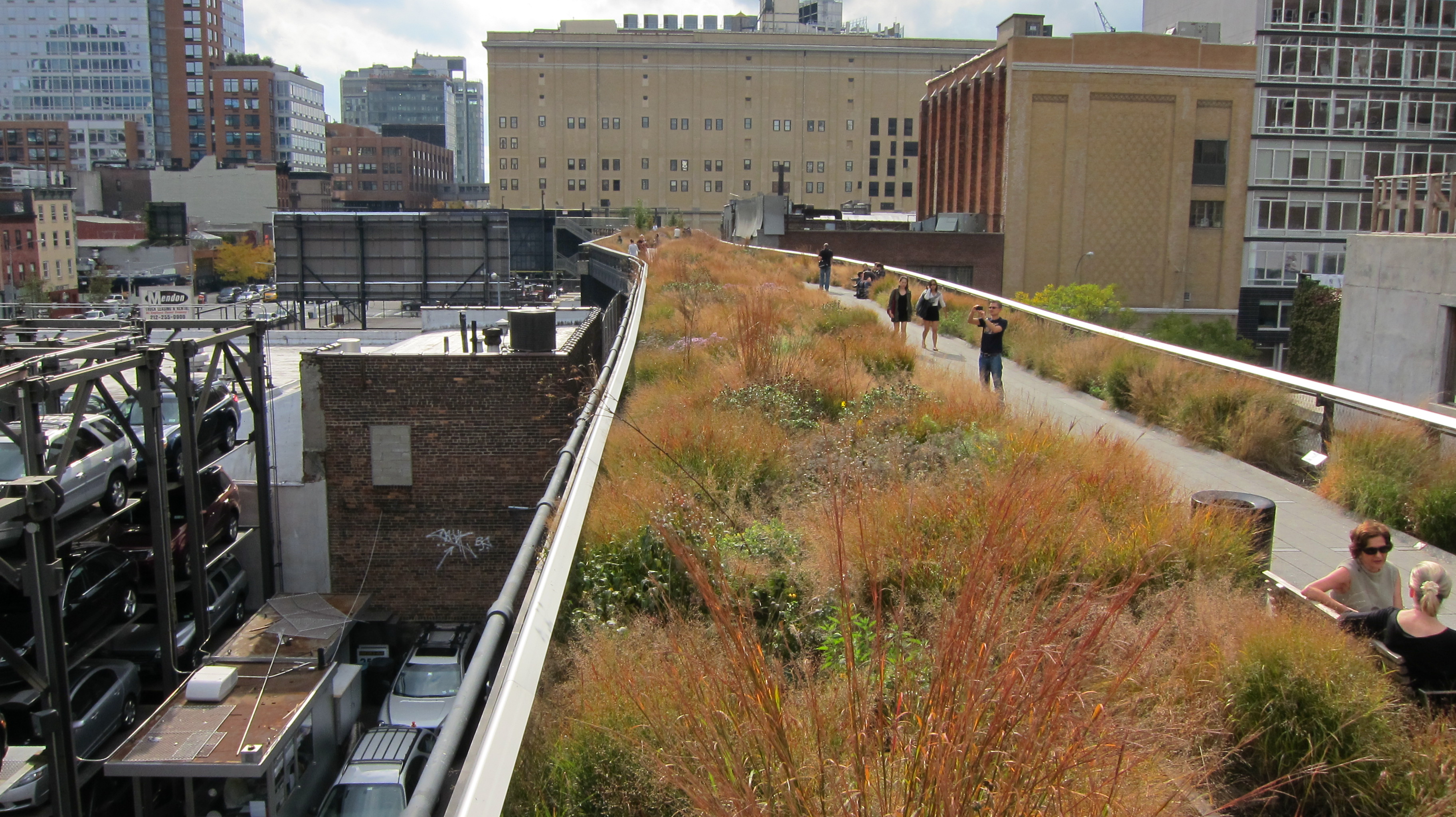
Also in New York City, I revisited the wonderful High Line to see how all the plants are doing. The are doing great! In late October the High Line is alive with fall colors:
PH Tour 2: Nabih’s details
Posted in Found Objects, tagged energy efficiency, heat recovery ventilator, HVAC, passive house, rainscreen, windows, wood on November 4, 2010| 2 Comments »
Passive house is a fairly new word. This recent evolutionary step in building technology comes from Austria, but many of the concepts are ancient. The basic idea is to insulate really well and eliminate random air leakage and thereby require way less heating energy. Ideally all the heat needed will be generated by occupants, their computers and light bulbs, and the sun.
Pretty simple, right? The devil is in the details. Real Passive Houses also must pass a performance test to prove they actually work.
Nabih Tahan was an innovator on the west coast. The New York Times published an article about Passive Houses a houses in 2008 that mentions his Berkeley California renovation project.
Unfortunately, Nabih’s house failed the blower door test for leakiness, so doesn’t actually qualify as a passive house, but he has measured his energy use over the last two years and it performs extremely well. He had to install electric baseboard heaters to satisfy the building code. He rarely turns on these heaters, but since electric heat is inefficient, (a lot is wasted in transmission) his “source energy load” is slightly over the Passive House requirement. He thinks that he would have qualified if he had used gas heaters.
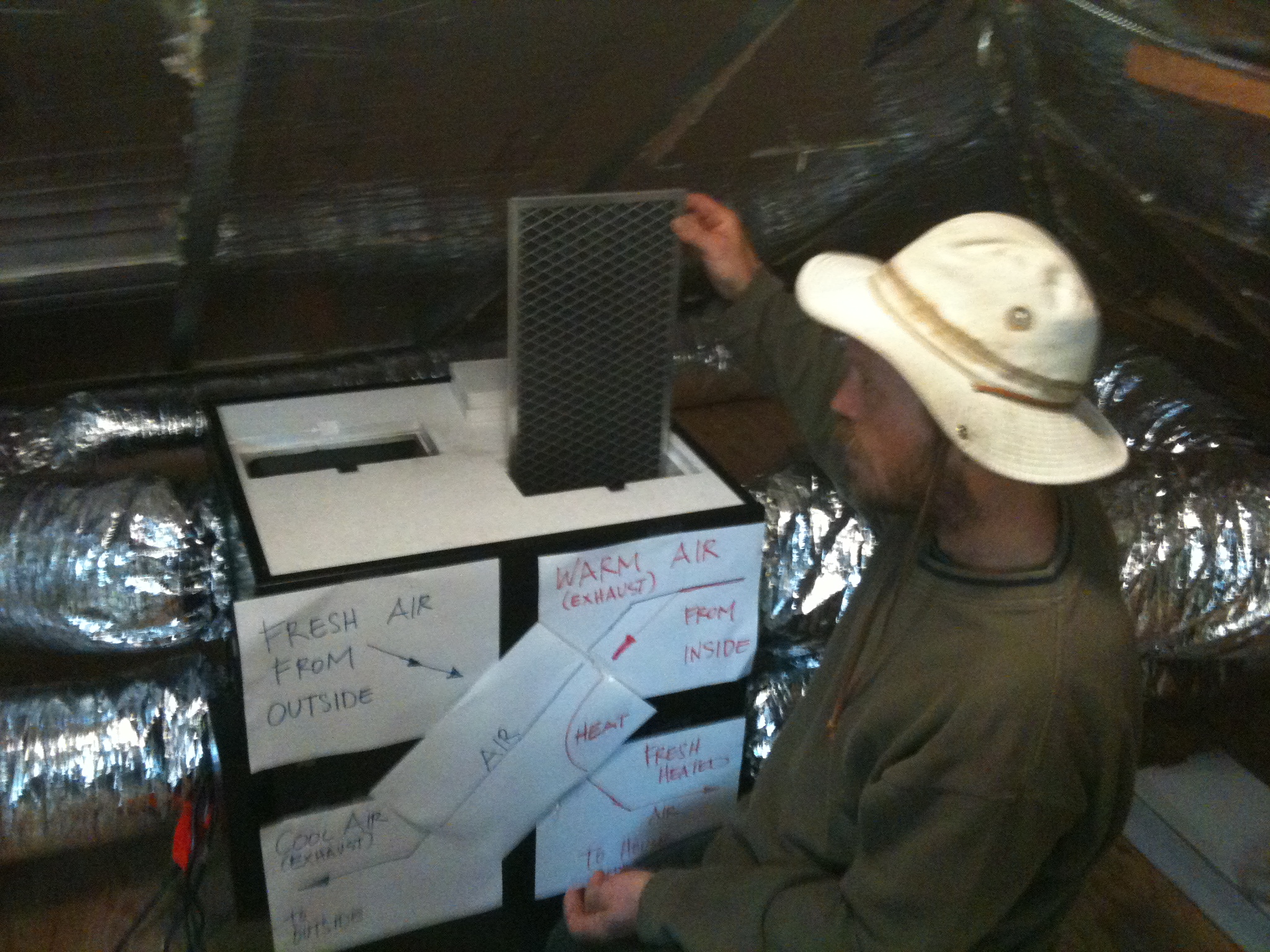
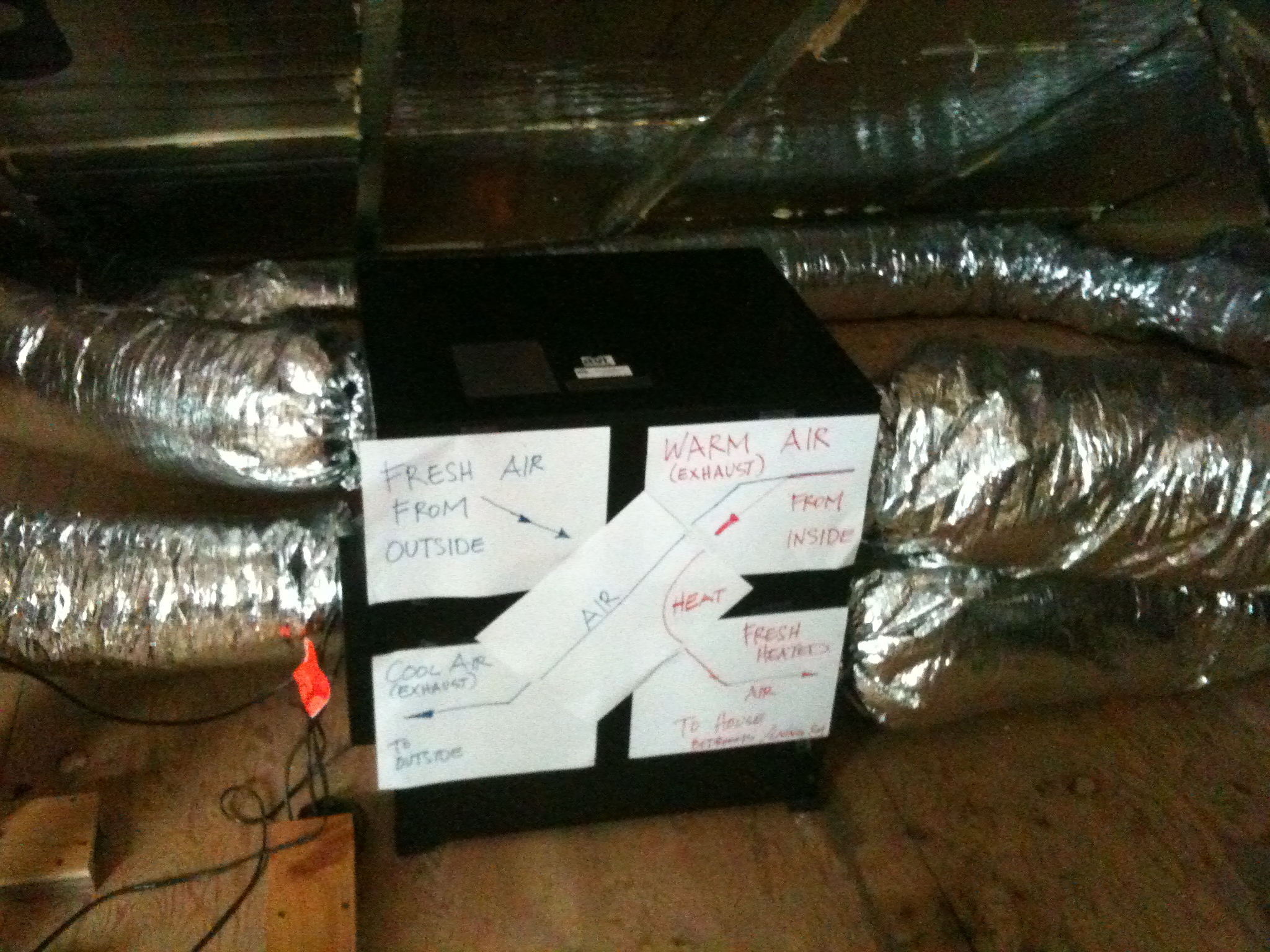
Here is a picture of Nabih’s Air to air heat exchanger (energy recovery ventilator) from Ultimate Air:
The guy in the picture designed and installed the system. His name is is George Nesbitt, and he has a company called Environmental Design-Build.
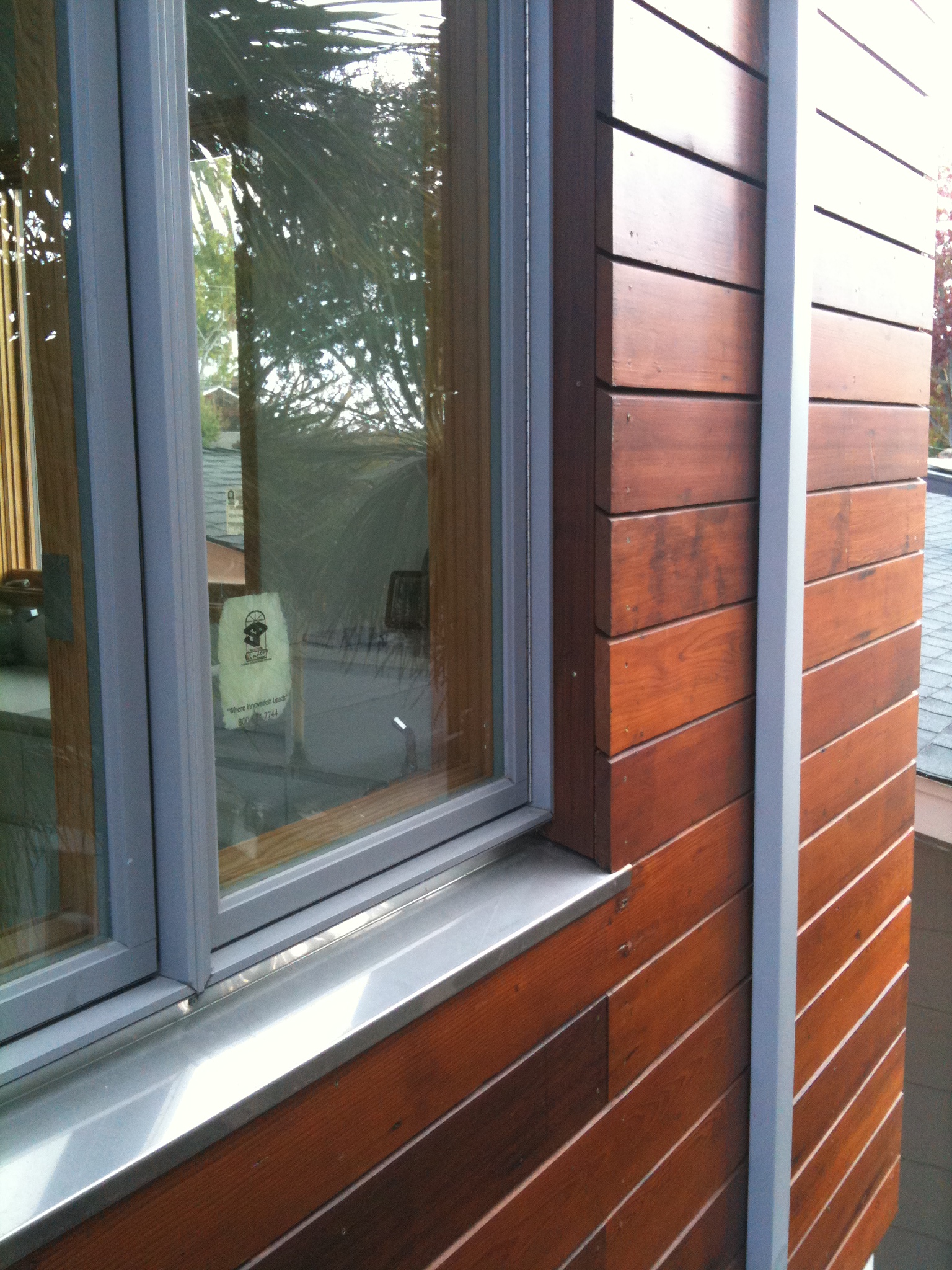
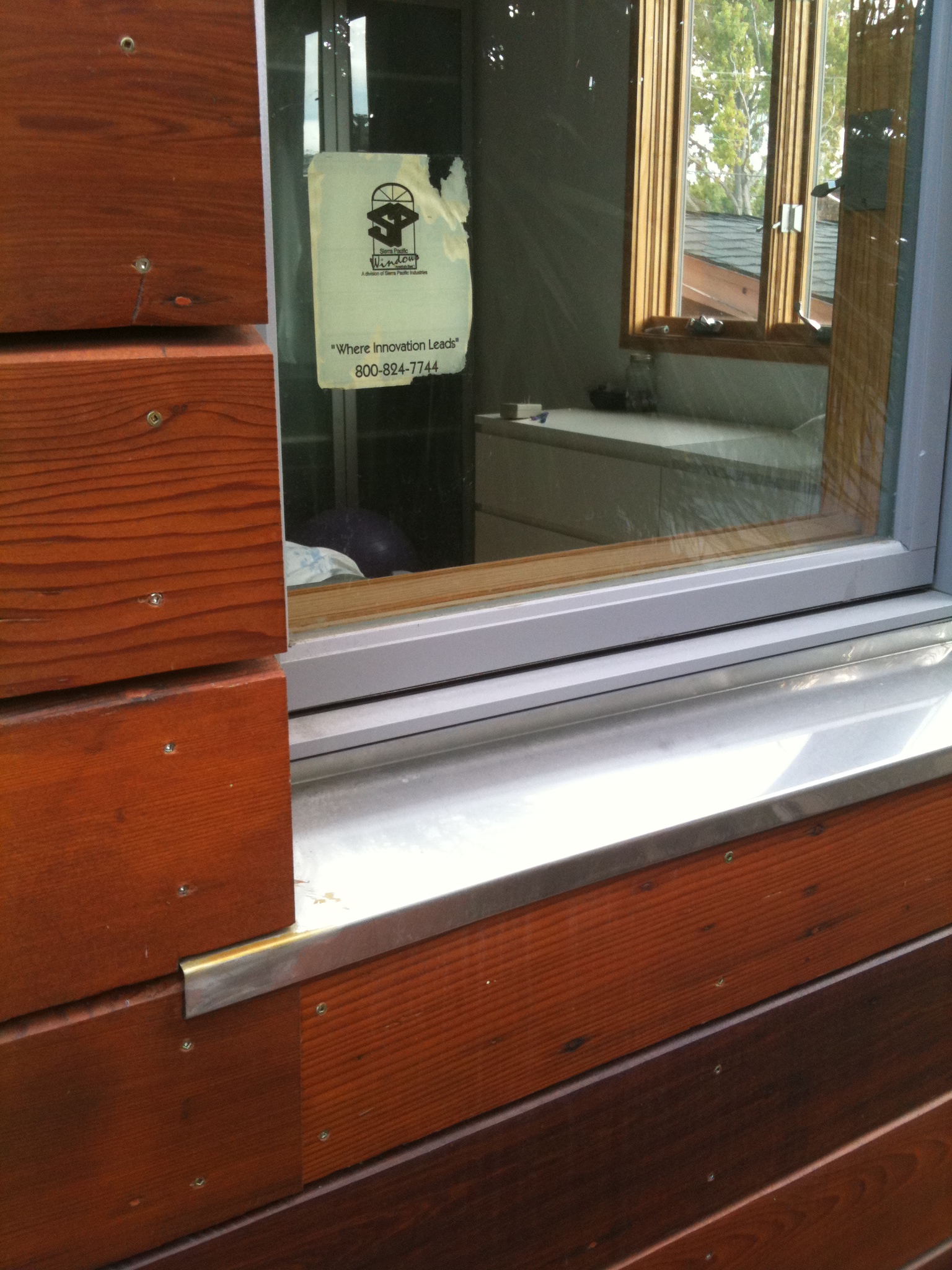
Nabih installed redwood rainscreen siding. I think it was made out of the old siding, milled into flat slats. His window details are pretty nice:
Woven tapestries and plants are better than acoustical ceiling tiles
Posted in Found Objects, tagged acoustics, garden, New York, plants on November 2, 2010| Leave a Comment »
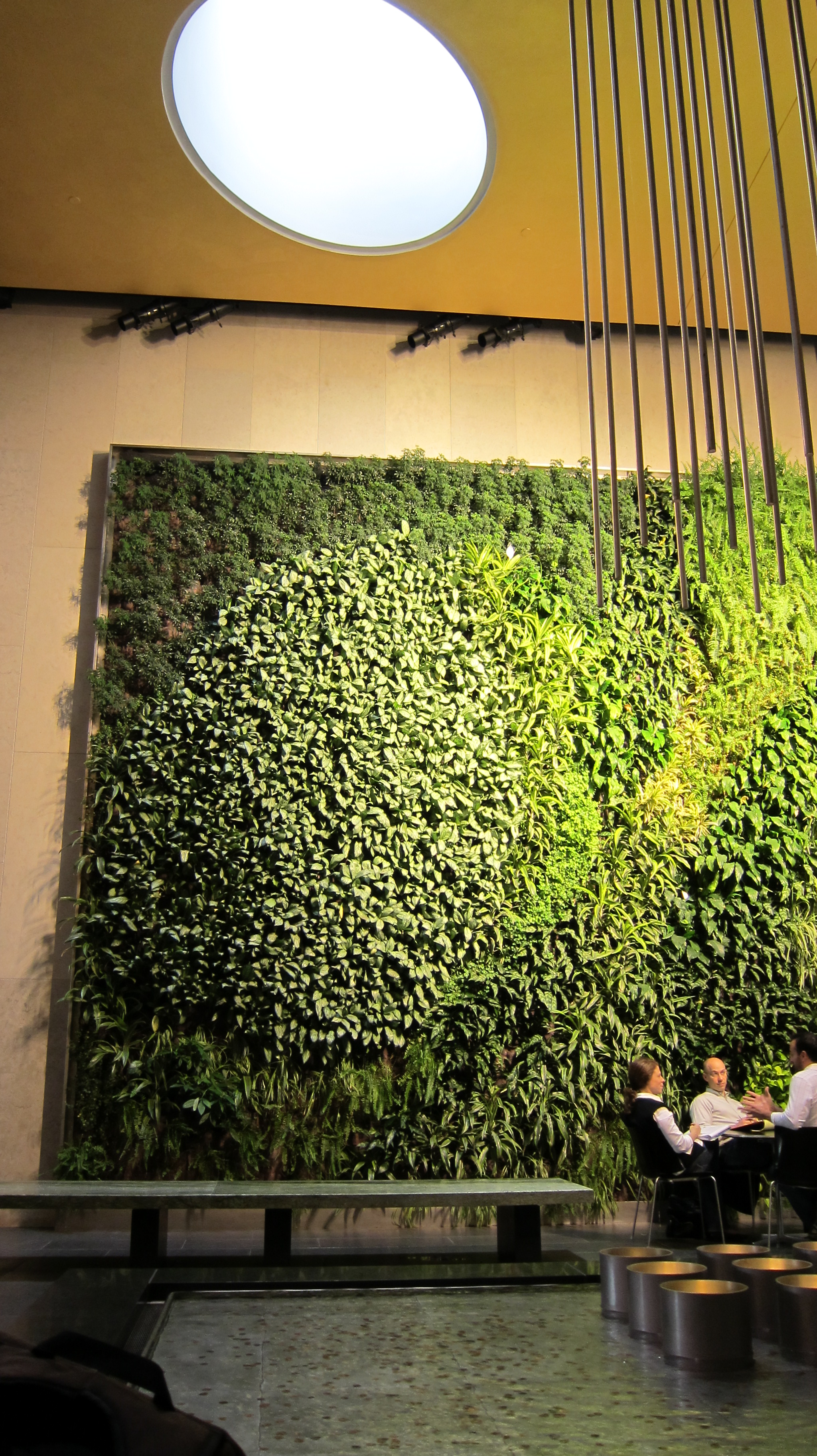
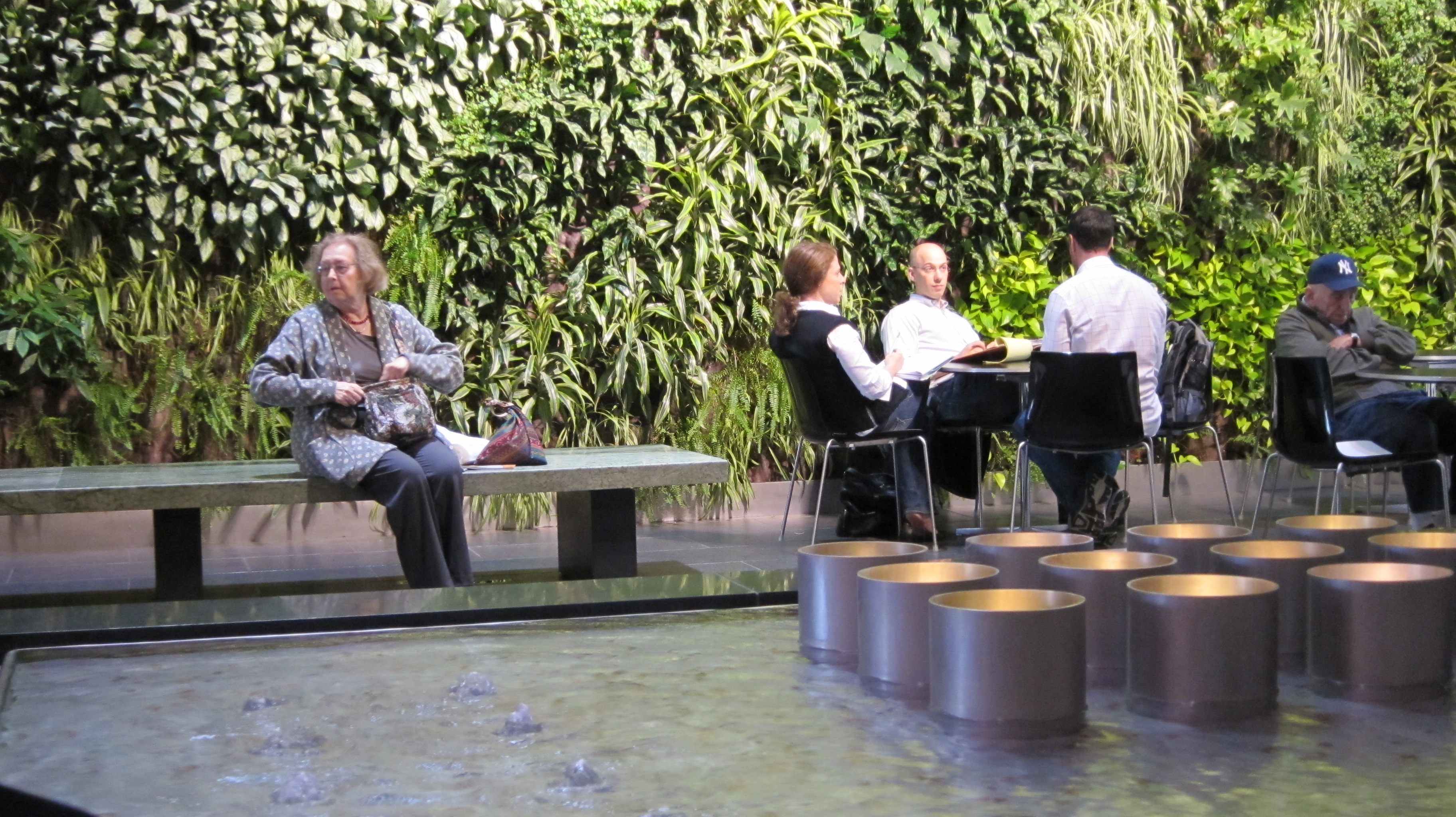
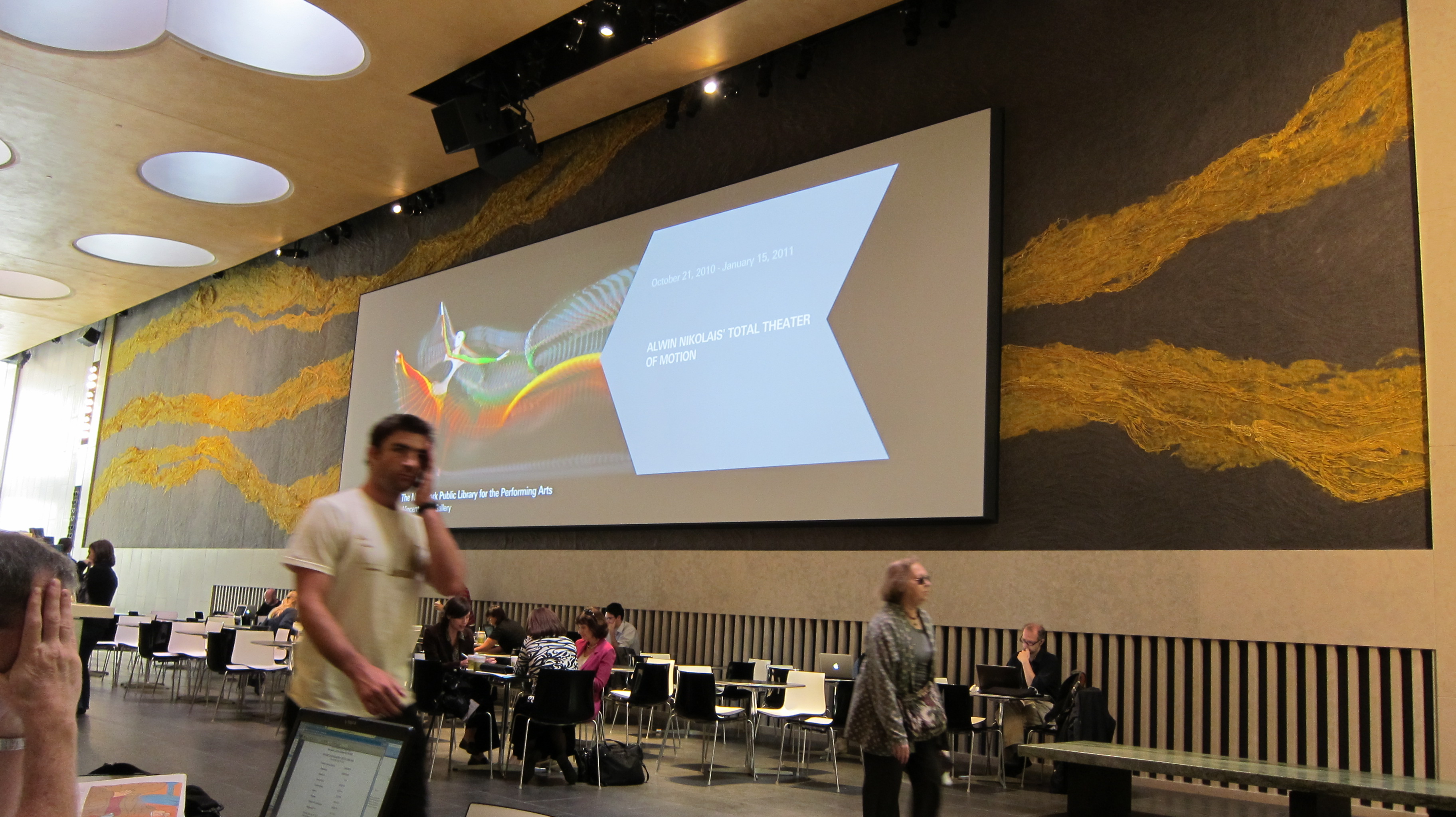
Designed by Tod Williams and Billie Tsien, the David Rubenstein Atrium at Lincoln Center is a very quiet and peaceful retreat from the clamor of Manhattan.
Instead of more mundane and technical solutions, they chose to achieve the desired quiet by commissioning a textile artist to weave giant tapestries and growing plants on other parts of the walls. A subtle water feature completes the effect perfectly.
Passive House Tour #1: San Jose (under construction)
Posted in Found Objects, tagged energy efficiency, green, passive house, process on October 4, 2010| Leave a Comment »
This past Sunday I went on a tour of some cutting edge energy-efficient houses. (They are hoping to meet the Passive House Standard) These photos are of one house in San Jose (1820 Cottle Avenue) by One Sky Homes. It is a conventional, 3200 SF luxury tract home, but will need much less energy to operate. According to the Passive House calculations it will be Net Zero Energy (Solar panels on the roof will provide all the required energy)
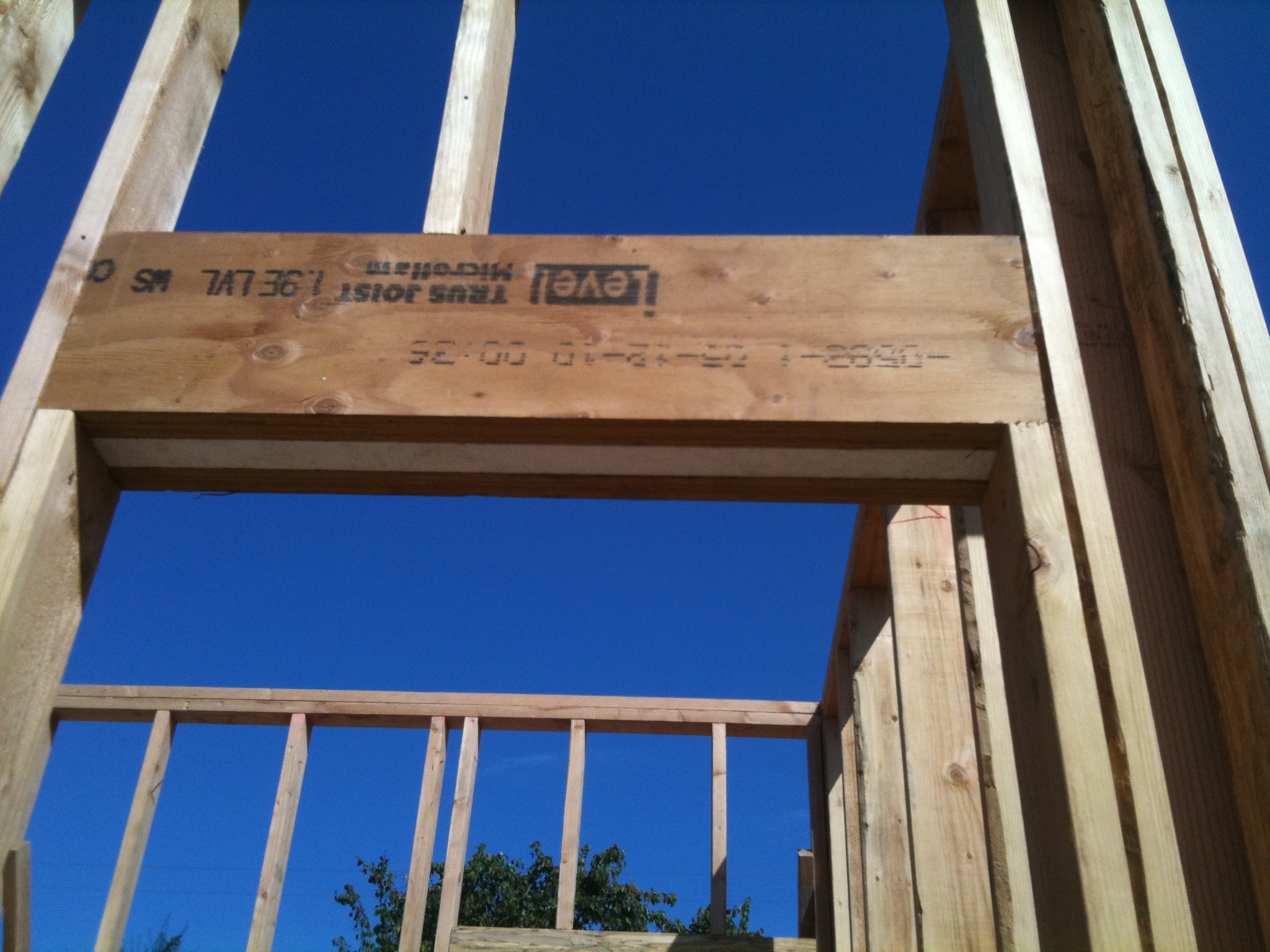
So far the house is only partially framed, but we were able to see the advanced framing techniques coming together, including this insulated header:
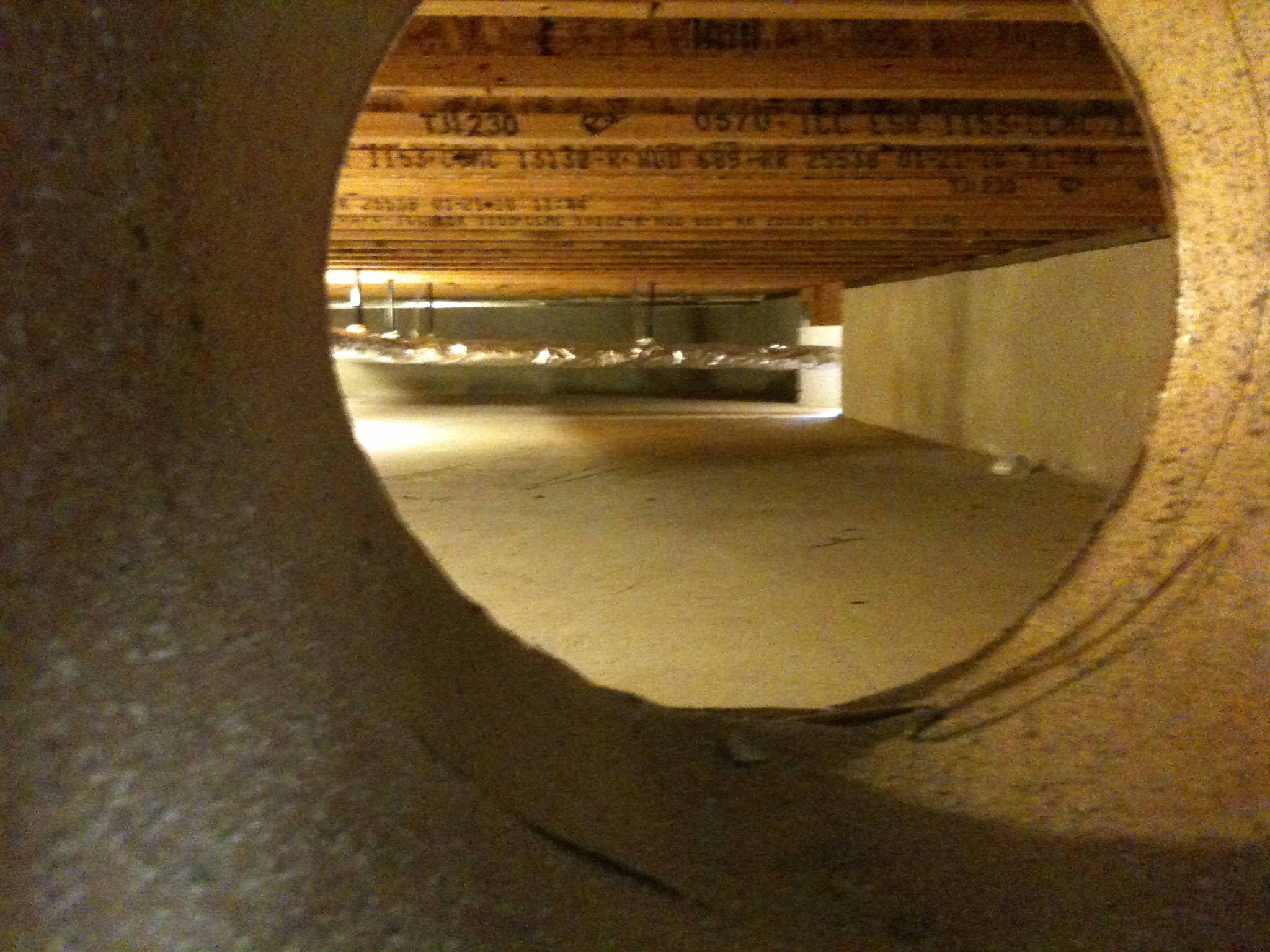
The house sits a top an insulated crawlspace. This is the first insulated crawlspace I have seen myself. The point of an insulated crawlspace is that all the ducts and water lines can run through conditioned space and energy is not lost. The insulated crawlspace also eliminates some of the thermal bridging that usually occurs where house meets the foundation and the earth. Finally, the conditioned crawlspace stays clean and dry, which makes it far more pleasant when maintenance requires someone to crawl around under the house. Here is a photo looking into the crawlspace from a ventilation hole:
There is, of course, a french drain all the way around the perimeter and also a floor drain in the slab to make sure it stays nice and dry down there.
The walls are insulated concrete forms, and there is 3″ of insulation under the concrete slab as well.
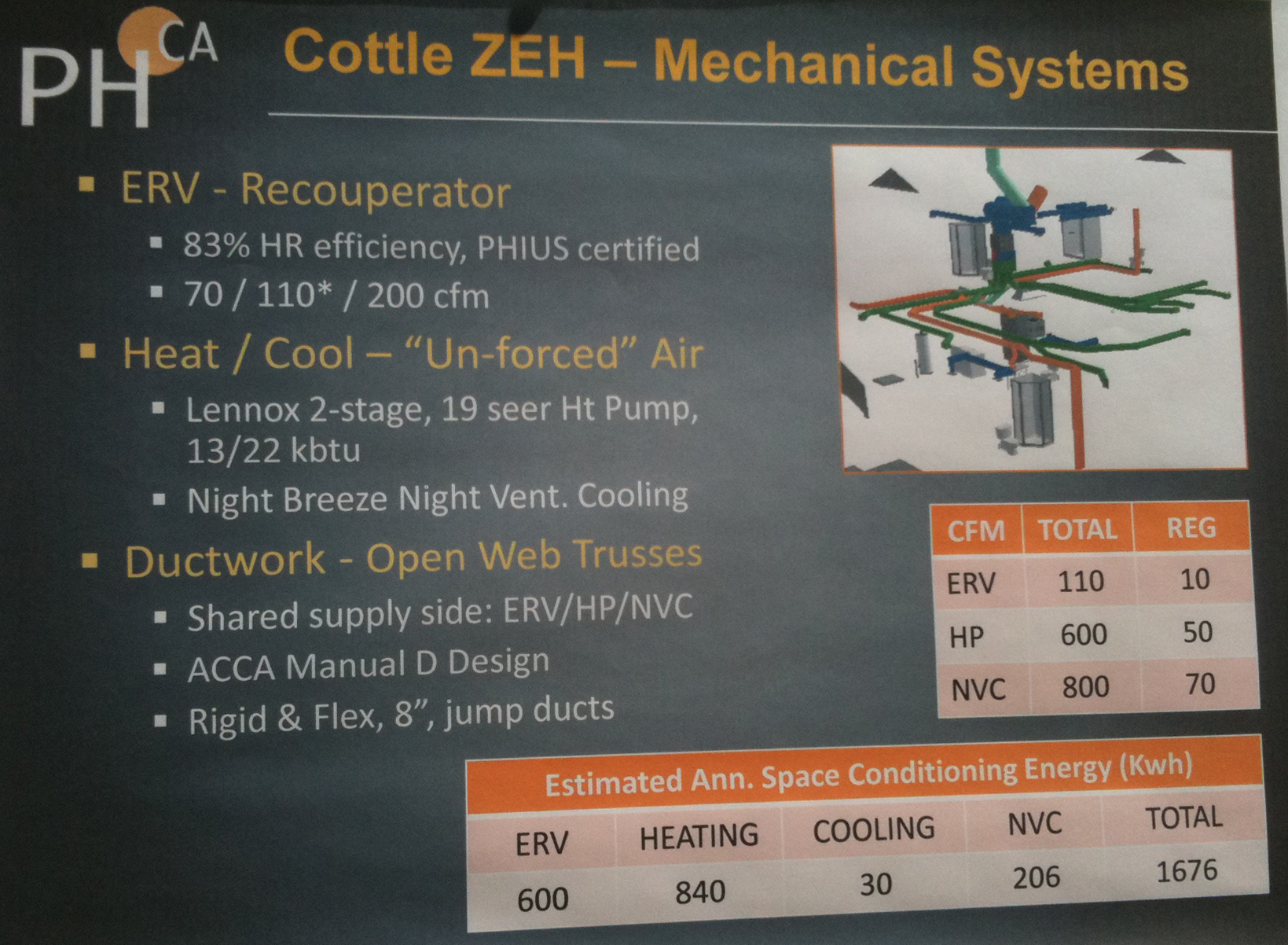
Here is a photo of some of the graphics explaining the heating, cooling and ventilating system:
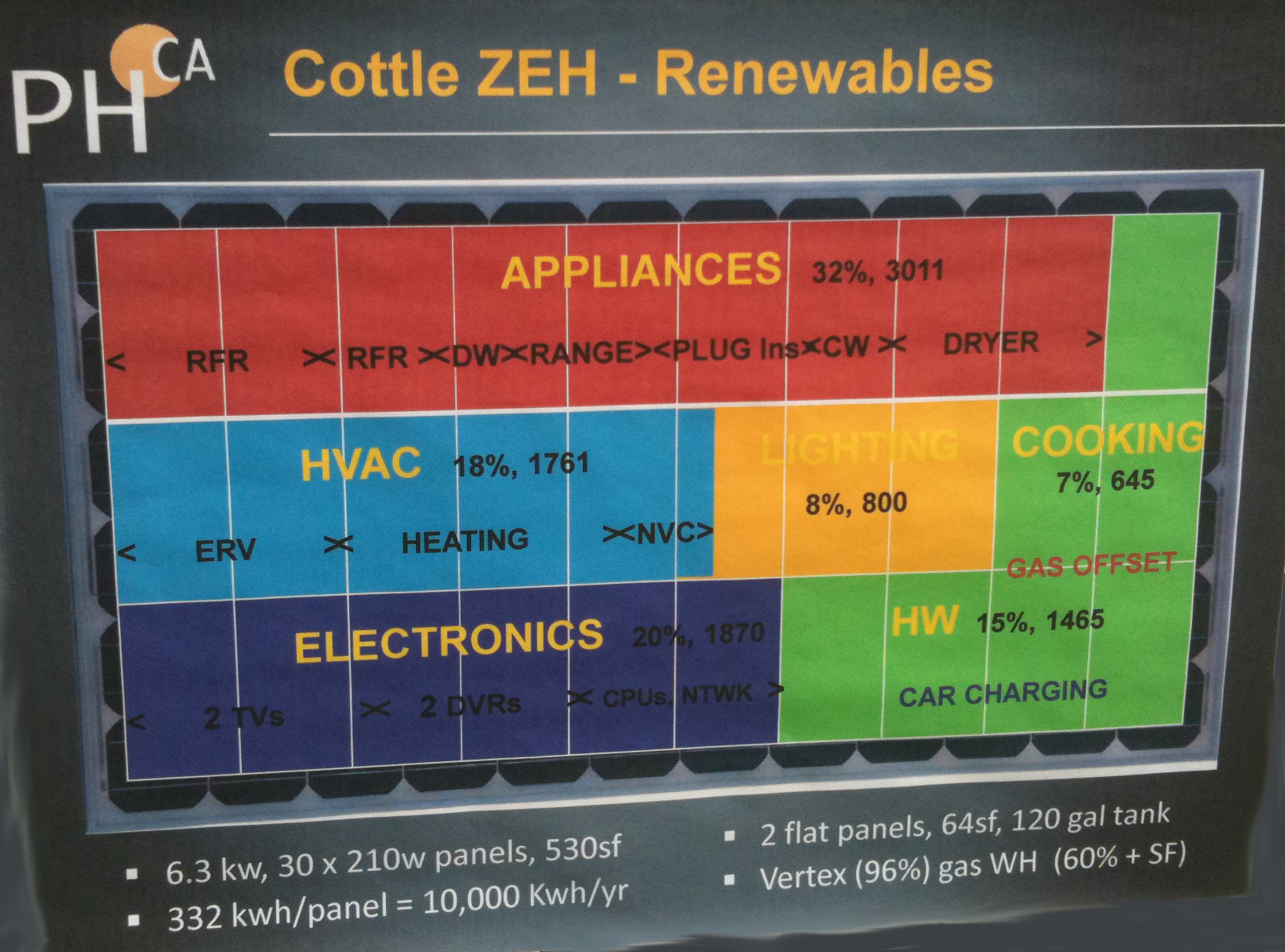
and another showing the anticipated energy breakdown for lighting, appliances, thermal comfort, electric car charging, and entertainment:
Portière in Cold Spring Harbor
Posted in Found Objects, tagged buildings on the water, Cold Spring Harbor, doorways, houses, interiors, value on September 21, 2010| 1 Comment »
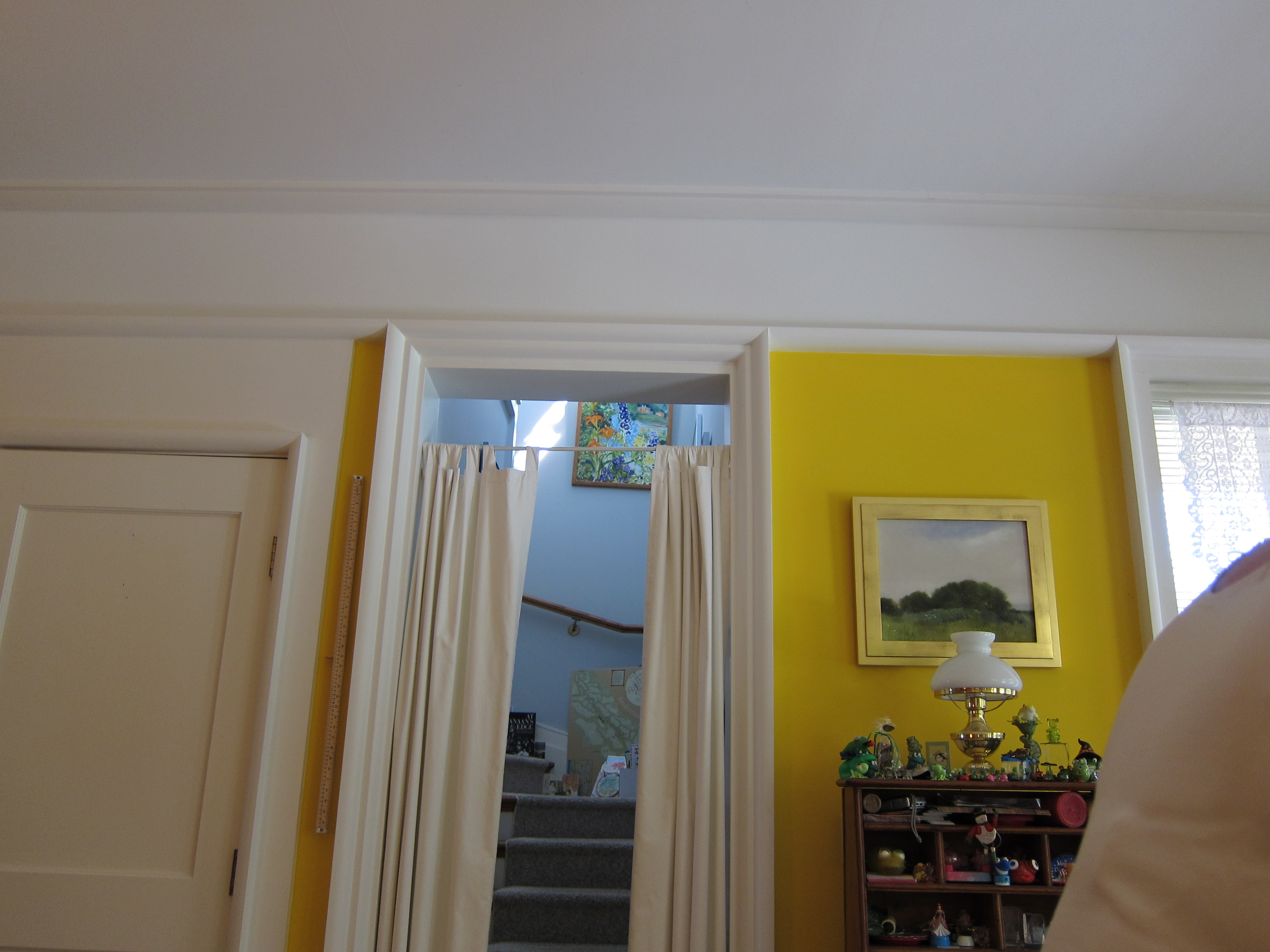
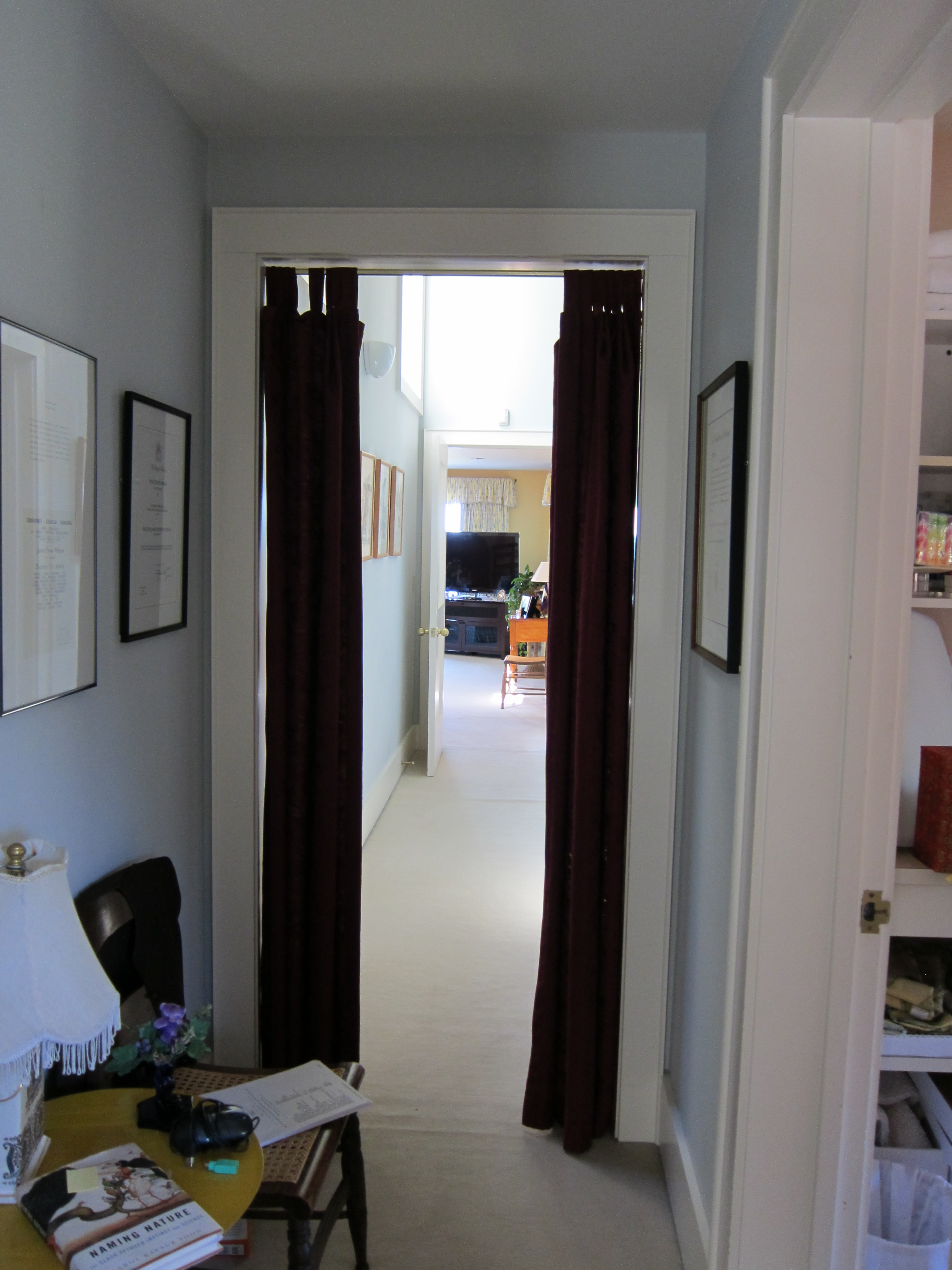
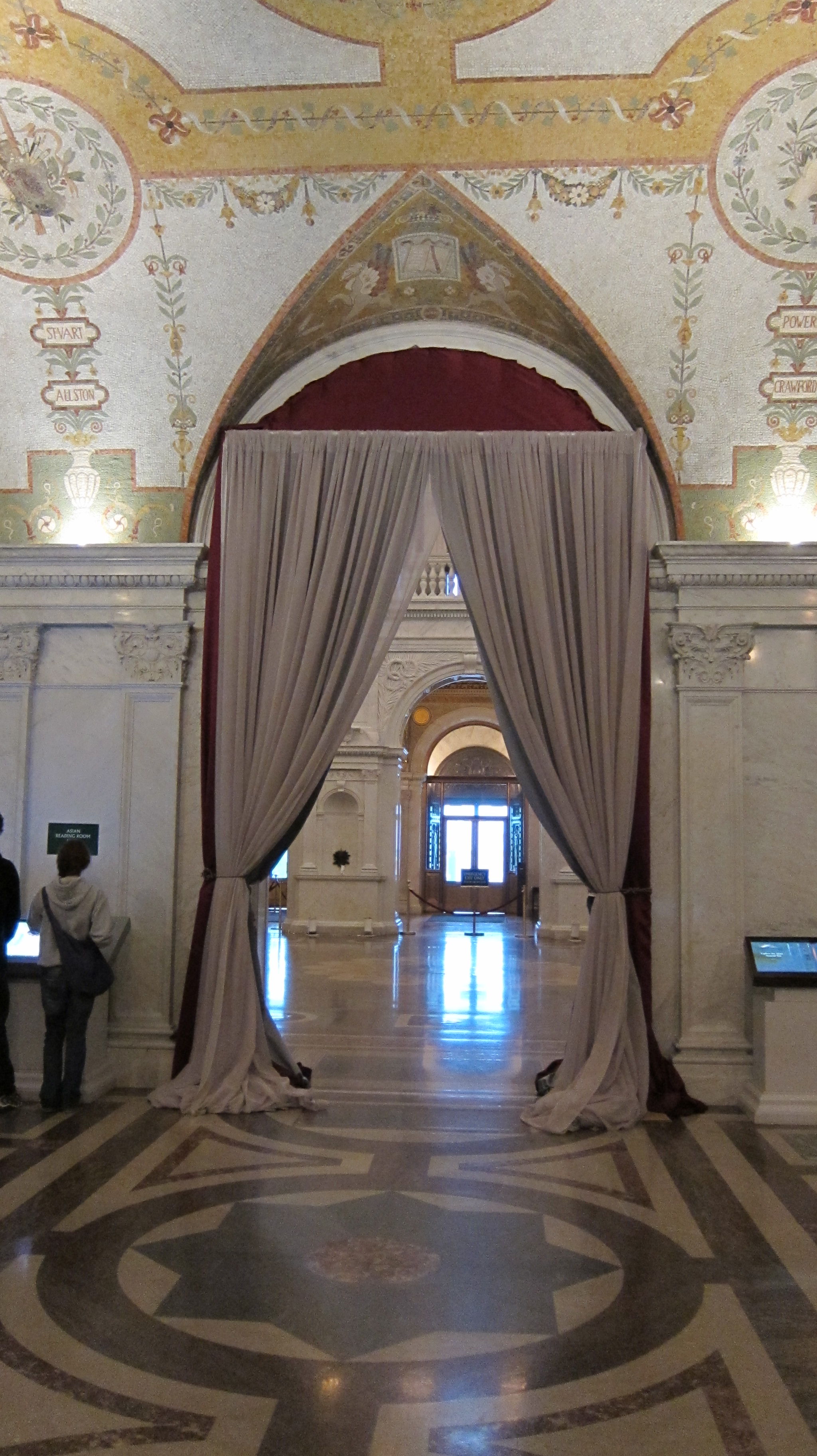
Portière: a curtain hung in a doorway, either to replace the door or for decoration.
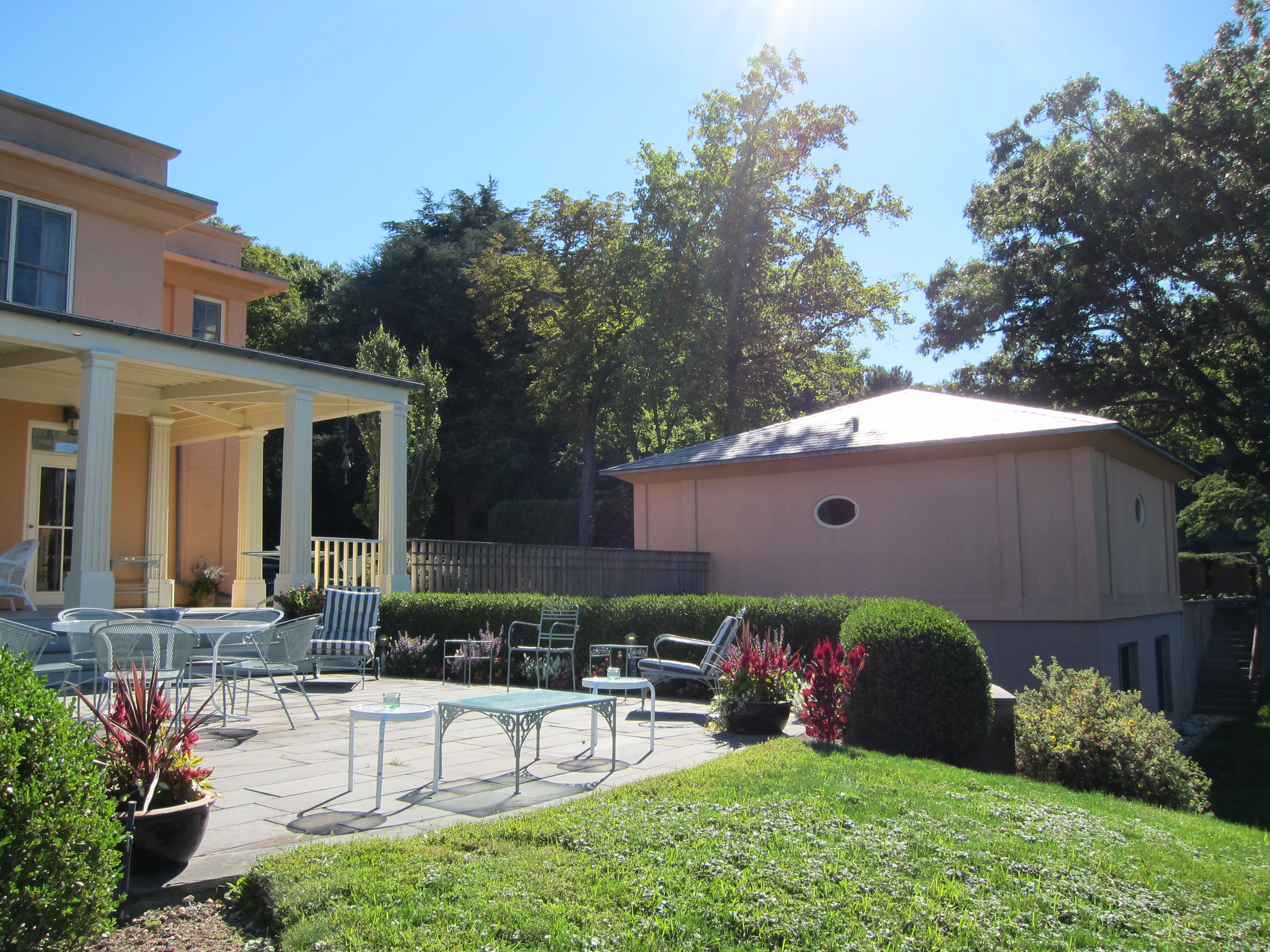
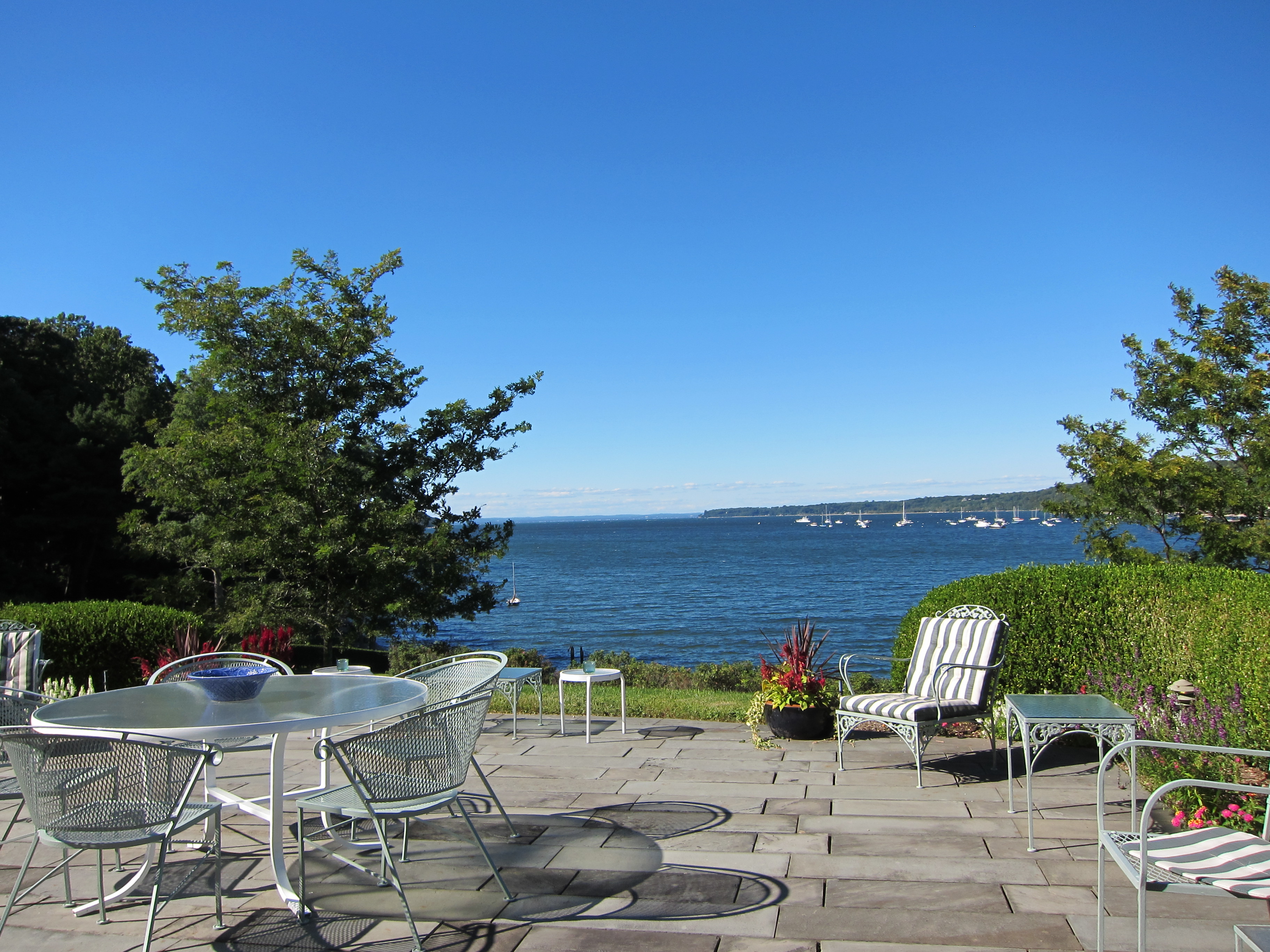
I visited my friend Duncan last week at his parent’s house in Cold Spring Harbor, Long Island:
I learned this word from Duncan’s mother, Elizabeth Watson, an architectural historian. She has a these good examples of simple, utilitarian portière in her own house:
This architectural term comes from the French word for door, porte. Common in wealthier households during the Victorian era (according to Wikipedia,) curtains are still a great way to create privacy, mitigate drafts, hide a messy closet, subdivide a space, or create a cozy nook. Its much more affordable to put up a curtain than install any sort of door, and it is especially appropriate if you need a temporary or quick solution, or if you get excited about fabrics or a splash of color.
Here is a fancier example of Portière from the National Gallery in Washington DC:
I also found this drapery design blog with all sorts of examples of portière.