More info on this project can be found here:
Posts Tagged ‘green’
Fair Companies visits deedsdesign
Posted in Design Projects, tagged green, landscape, paint, painted plywood, passive solar, rainscreen, redwood, salvaged, small buildings, video on April 10, 2012| 2 Comments »
Electrical Timers
Posted in Found Objects, tagged bathroom, energy efficiency, gadgets, green on March 21, 2012| Leave a Comment »
It is a good idea to put your bathroom fan on a timer so that you can set the fan to turn off in 1 minute or 30 minutes or anywhere in between. This way you get the damaging moisture out of the house without forgetting and leaving the fan on all day.
This is an elegant product from Lutron – clean looking with a sparkle of tiny lights….but it might be hard for farsighted people to read and it seems a bit complicated for what it does.

This one by Leviton has a simpler design and looks easier for clumsy fingers to operate. I think it could lose the “min.” and just have the numbers, but perhaps then it would perplex first time users for a few seconds.

This old-fashioned spring-wound timer from Intermatic that probably makes a clicking sound as it winds down. …but its operation is very obvious.
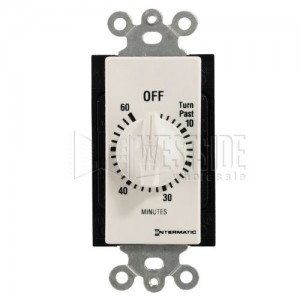
I will report in after I test my choice, the Leviton.
Cheerful Marmoleum Floor
Posted in Found Objects, Information, tagged color, flooring, green, linoleum, patterns on January 19, 2012| Leave a Comment »
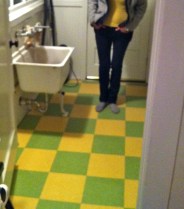 My friend Amanda installed this Marmoleum floor in her laundry room. I think the color choice is great in this small, mostly white room. It might be a bit busy in a bigger room with more colors, objects, and activity. Marmoleum is a great product – It is old fashioned linoleum made from “linseed oil, rosins, wood flour, jute and ecologically responsible pigments.” It comes in a wonderful array of colors…most are subtly speckled so dirt and crumbs and scratches don’t show so much.
LED Lighting for the Deck
Posted in Design Projects, tagged green, lighting design, Richmond on January 10, 2012| Leave a Comment »
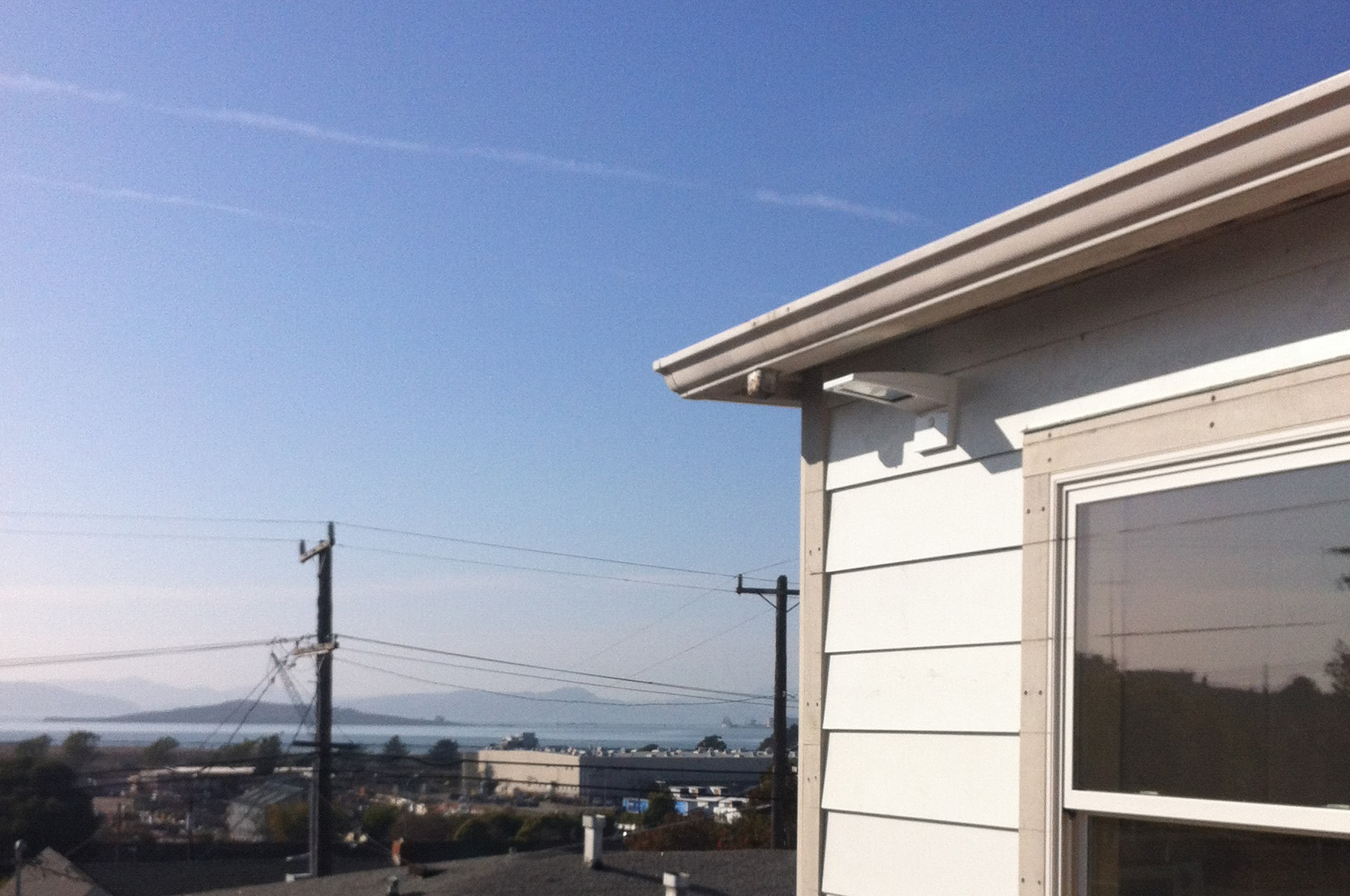
Exterior LED light from RAB Lighting
I havent seem them turned on yet. the client will hopefully report in tonight.
The opposite of the modular house that I just visited – owner built in Wales
Posted in Found Objects, tagged green, passive solar on January 6, 2012| Leave a Comment »
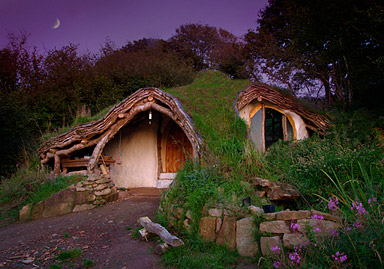
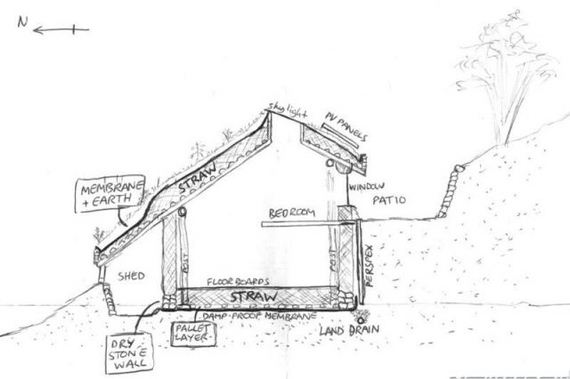
A young man in Wales built this house for his family using a chainsaw, a hammer and a 1″ chisel. In some ways I am more drawn to this one than the modular one….even though it makes for rustic living. He needed no team of architects, engineers, and modular specialists. It has no green certification, but certainly far greener, except for its location in the countryside. The modular house is more suited for modern urban lifestyles.
Here is the builder, Simon Dale’s website for more pictures and information about the project.
Thank you to my British correspondent, Amanda Soskin, for sharing this gem.
Lloyd Kahn has published several books about similar creative, owner built structures. Here is a glimpse of a recent Lloyd Kahn book that I have enjoyed very much.
Winner of the 2010 Solar Decathalon Europe
Posted in Found Objects, tagged green, high tech, small buildings, solar electricity on October 27, 2011| Leave a Comment »
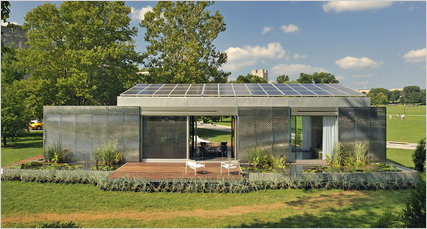
Lumenhaus -- photo by Jim Stroup, Virginia Tech
More photos and information can be found on Lumenhaus.com , Treehugger, and, in the NY Times, this review of the project.
Except for the slightly odd beams that stick out to support the opened sliding screens (see some of the other photos at links above) the design of this experimental and technologically advanced house is quite elegant. The basic idea is to use technology to allow a glass house to be comfortable and energy efficient in all seasons…and to take this a few steps further to enhance quality of life in the house with these same features.
It has been criticized as too techy and too expensive to be marketable, which might be valid, and with almost all glass on the north and South walls, its needs a big suburban or country lot for privacy. (It currently resides next to the famous Farnsworth House (Mies Van Der Rohe) in Plano, Illinos.)
The concept of having stackable modules, so that the house can expand and contract as the family does, would change the real estate profession. The ease of adding and subtracting modules would be an important factor in whether it would be worth the hassle of removing part of your house and selling it to a neighbor.
Be sure to check out the adjustable perforated shade screens that can become more or less opaque depending on the temperature inside. These screens are a much simplified version of Jean Nouvell’s beautiful screens on the Institut du Monde Arabe, Paris
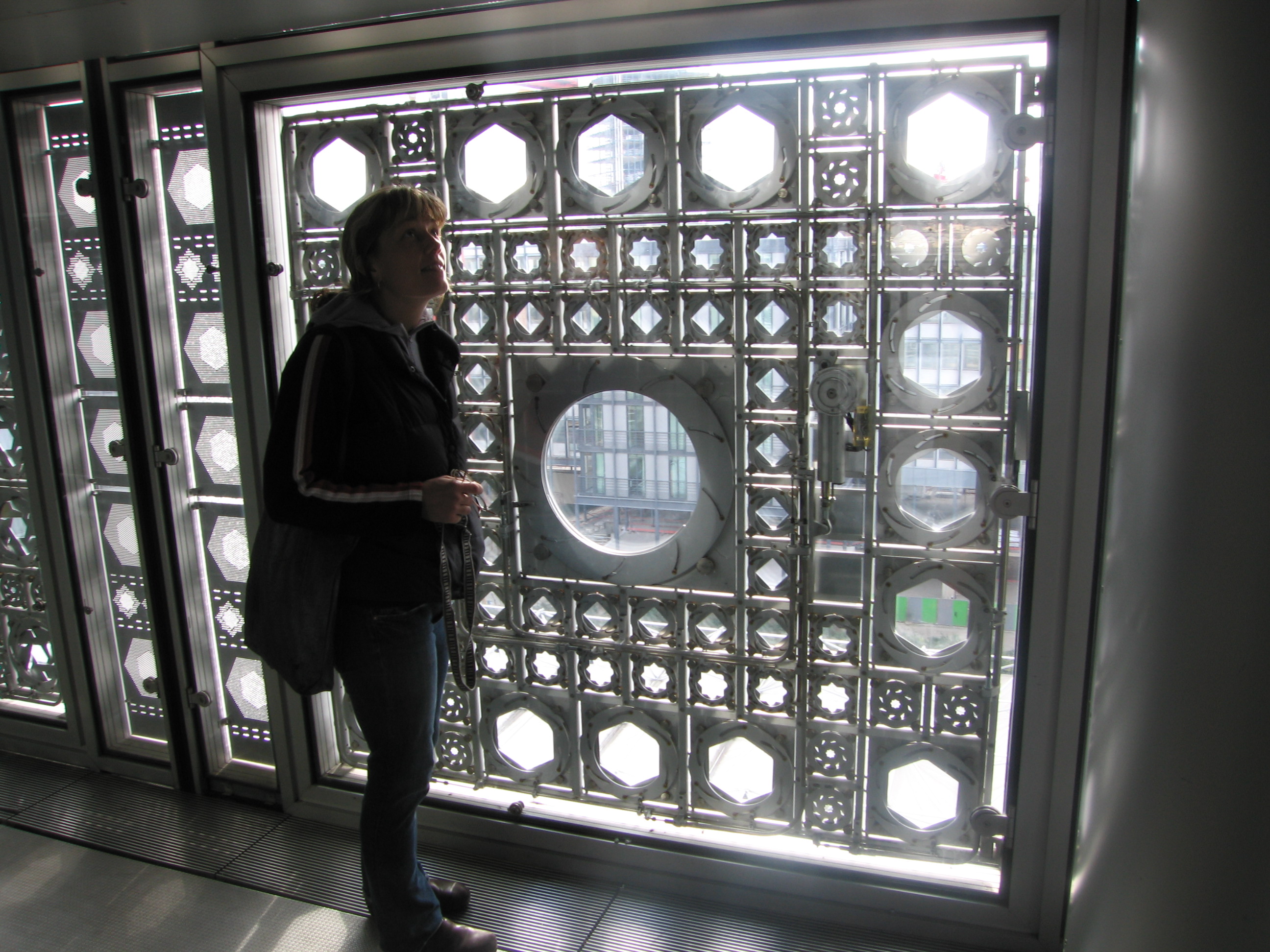
This is a picture of me inside Jean Nouvel's Institute Du Monde Arab (photo by Amanda Soskin)
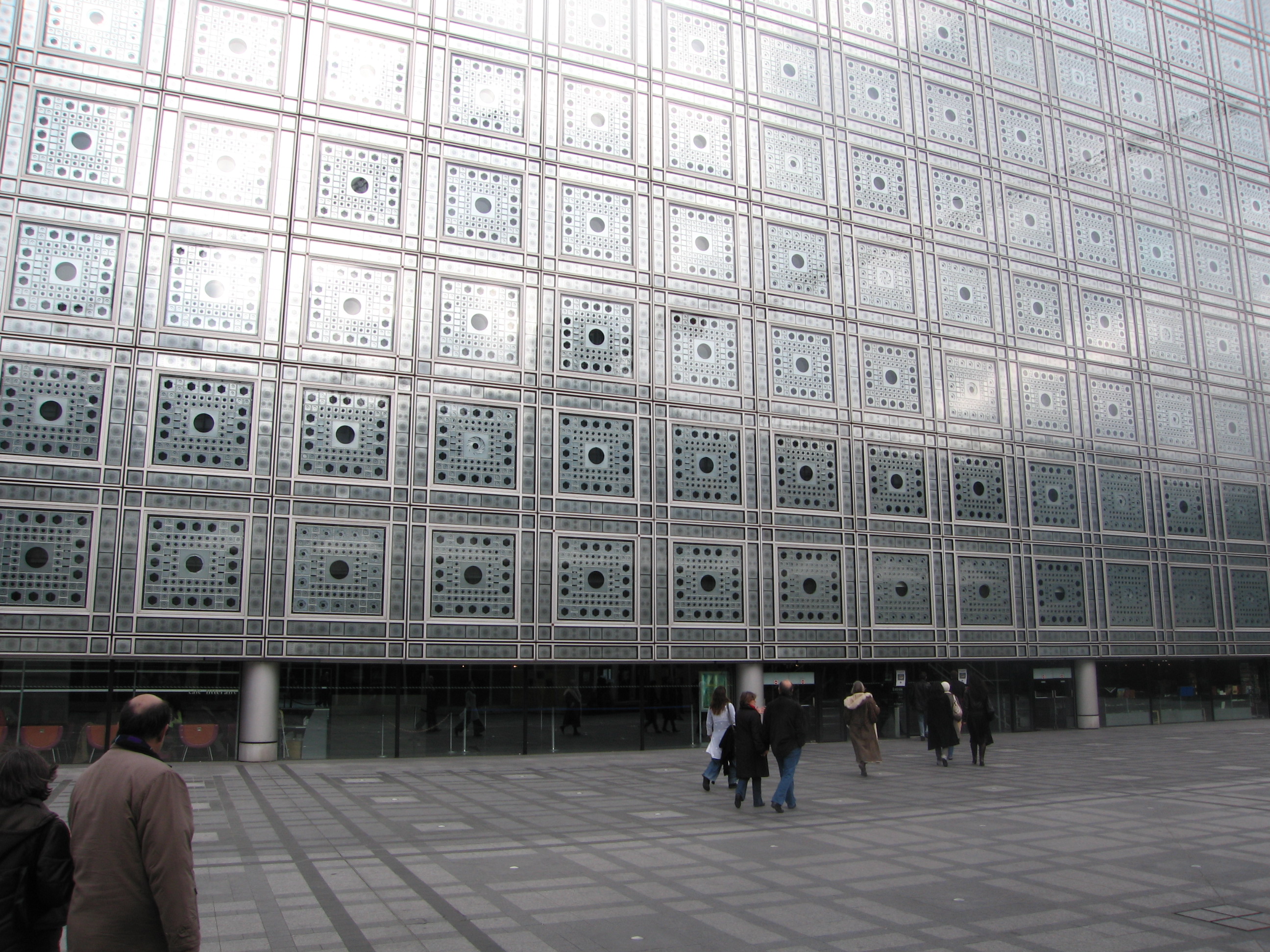
Exterior Institut Du Monde Arabe, Paris
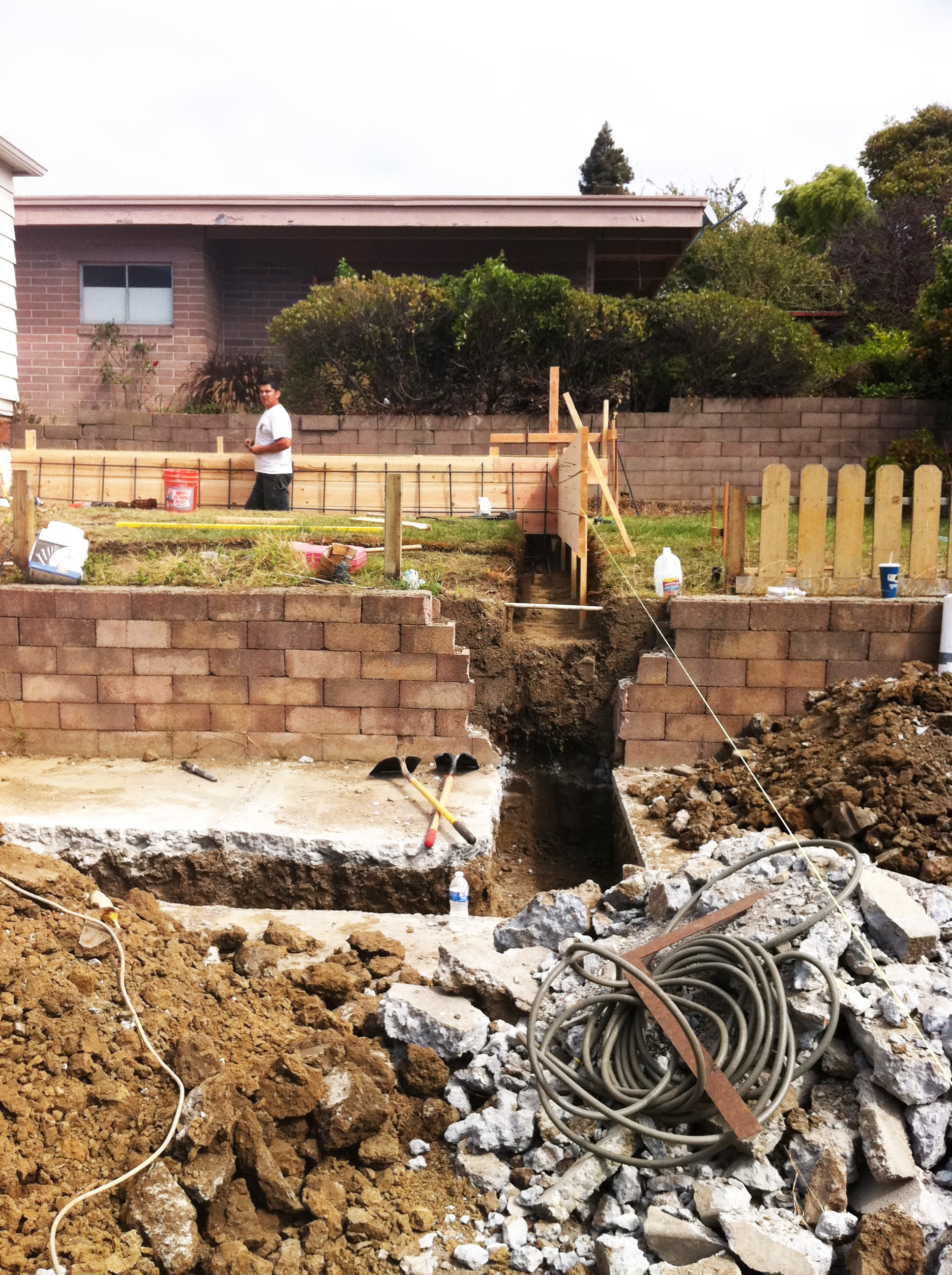
Foundation Underway for a Small Addition in Richmond, California
Posted in Design Projects, tagged green, houses, Richmond on October 2, 2011| Leave a Comment »
New Chief Architecture Critic at New York Times Focused on Practical Human Concerns
Posted in Information, tagged green on September 27, 2011| Leave a Comment »
Michael Kimmelman is the new chief NY Times architecture critic. His debut architecture review, In a Bronx Complex, Doing Good Mixes With Looking Good, is a critique of a new housing development in the Bronx, NY. He calls the building handsome, but focuses more on the practical aspects of the design. It does sound like a nice place to live.
Here is another review of the review with photos.
Here are some words from Michael Kimmelman about his visions for his new job.
Bird-Friendly Building Design
Posted in Information, tagged birds, glass, green, windows on September 15, 2011| Leave a Comment »
The city of San Francisco is close to passing new regulations for new or modified buildings to reduce danger to birds. This document outlines the hazards and some solutions.
The most dangerous buildings are those next to lush parks with a lot of windows facing the park. It might seem like a hard sell to eliminate windows facing parks for the sake of a few birds, but the solutions are things like screens and external shading devices…and less glass….which are all good things for many other reasons.
It is also important to reduce light pollution because this can disorient birds flying at night. Less light pollution is also a good general practice.
Read more about the San Francisco Planning Department’s Progress on the issue here.
The New York Times published an article on this topic today.
I once had a dove crash into my living room window. The neighbor saw the incident and claims that the dove was being chased by a hawk. It was very sad to find the little bird dead on the window sill.
Progress on the Fairfax, California Passive House Addition
Posted in Design Projects, tagged Fairfax, green, houses on August 30, 2011| Leave a Comment »
I took a trip to Fairfax this morning to check out the progress on this creekside addition. The owner and many of his family members are undertaking the construction of this 800 SF addition and remodel of an 100 year old cabin themselves.
Justis Fennell, a passionate Passive House enthusiast is seen here on the front porch talking on the phone to one of his air sealing product suppliers. Justis is the Air Sealing Specialist for the project.
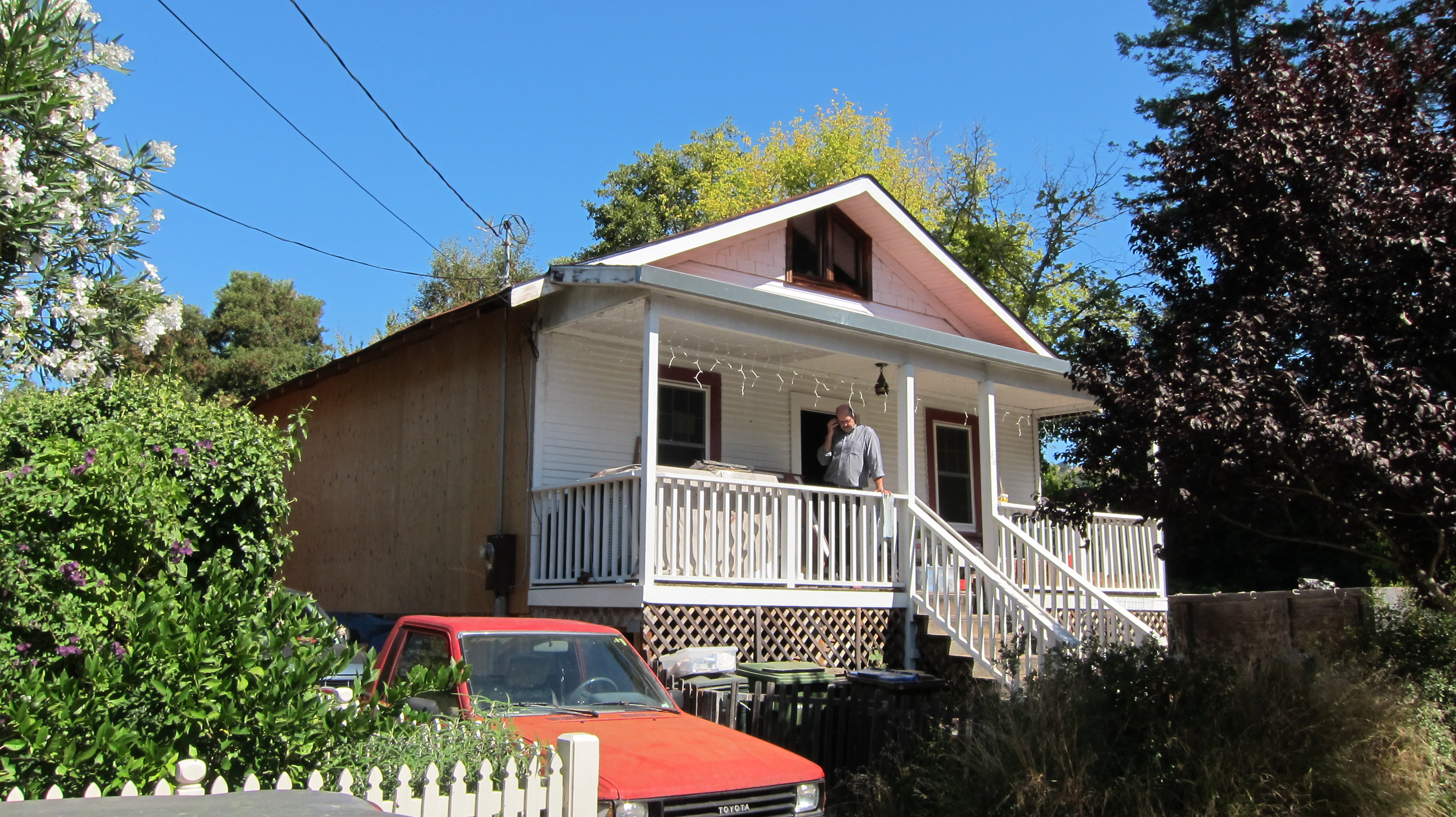
This is the house from afar. The decision was made to carefully remove all of the old painted redwood siding, add plywood sheathing, 3/4″ xps insulation (R4), and a drainage plane, and reinstall the original siding as a rainscreen.
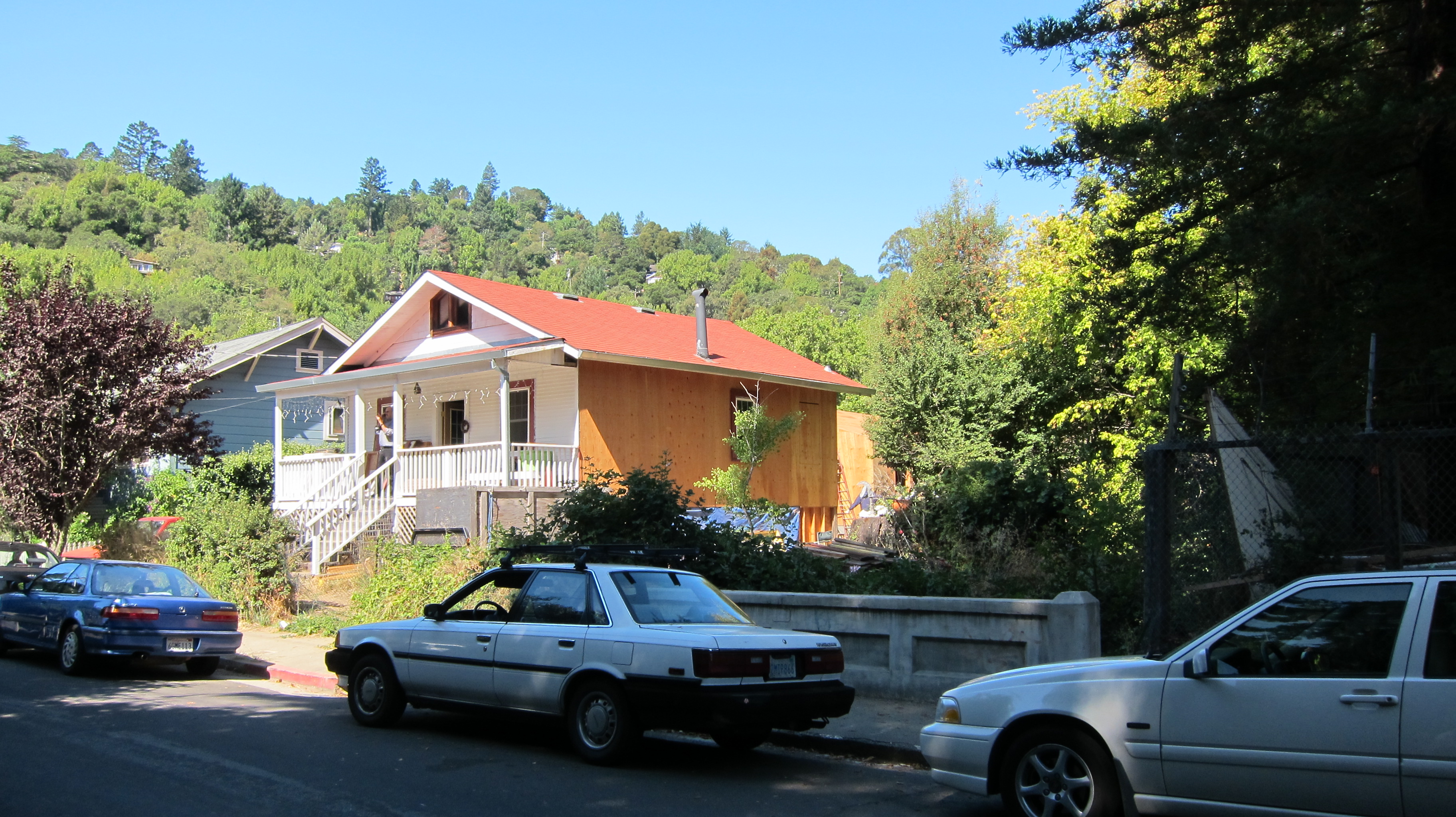
This is the client, his brother and uncle working on installing the last pieces of roof sheathing.

Here you can see the start of the airsealing process – bright blue Ecoseal that is installed using a high powered airless sprayer to make sure it gets deep in to all the gaps and crevices. You can also see the 24″ oc 2×6 framing.
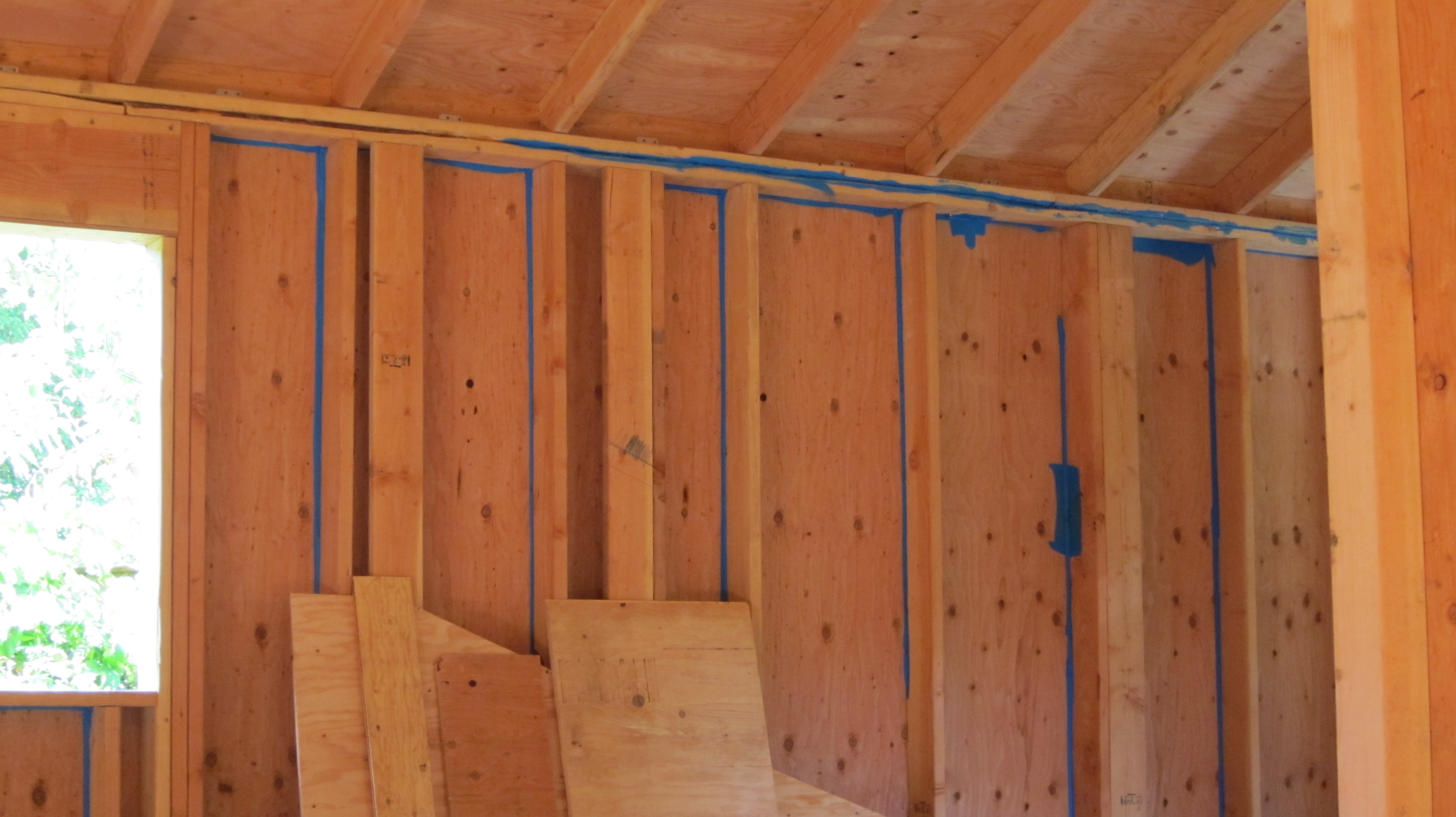
Framing Photo here.
Advanced Framing Underway in Fairfax, California
Posted in Design Projects, tagged green, houses on August 3, 2011| Leave a Comment »
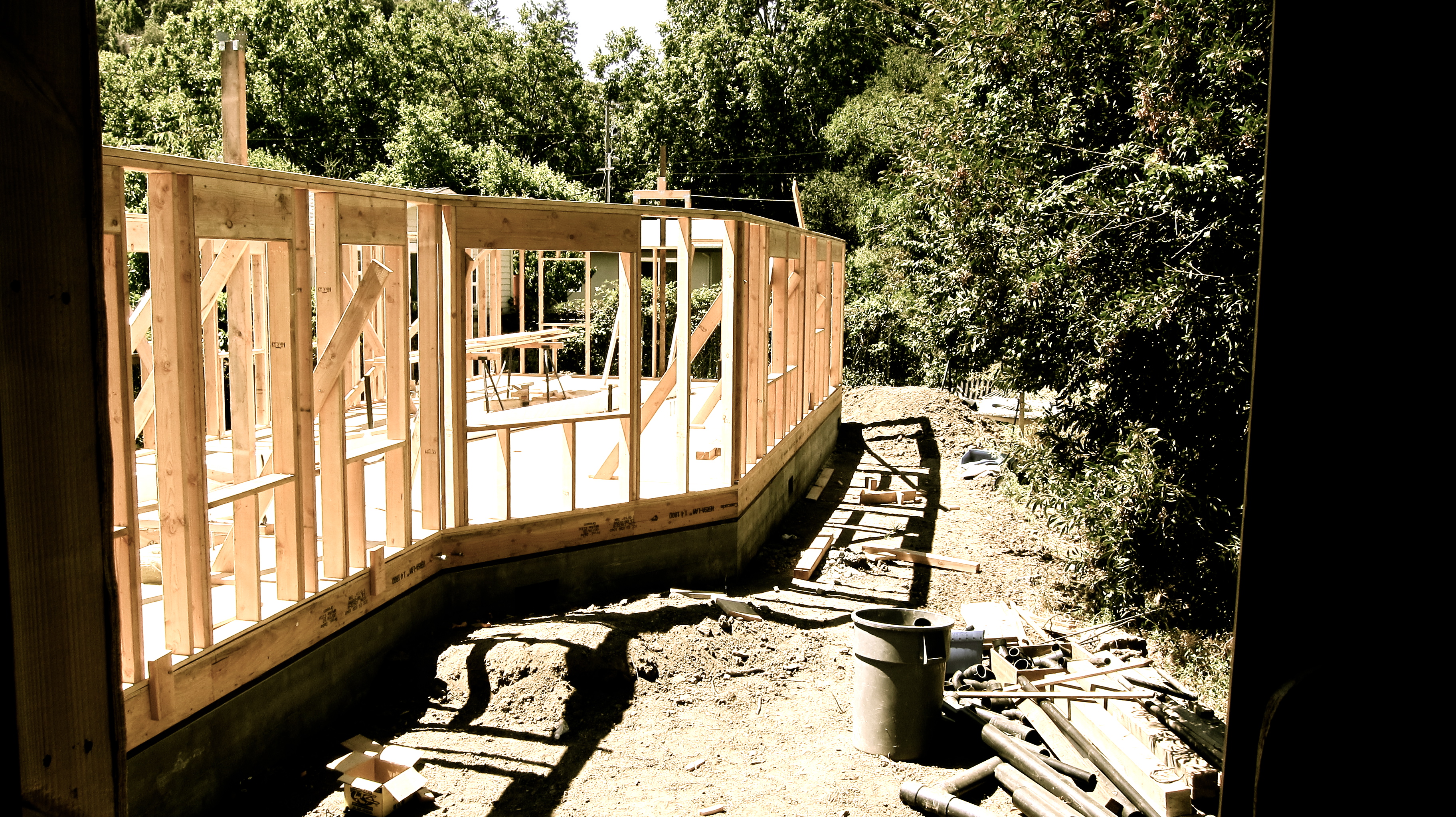
1) Insulated headers
2) 24″ on center 2×6 studs
3) windows placed and sized so as to minimize extra studs.
The main reason for advanced framing is to minimize thermal bridging, side benefit: less wood used.
An Interior Trim Paint That I Love: zero voc, biodegradable, and a pleasure to use
Posted in Information, tagged green, interiors, paint on July 31, 2011| Leave a Comment »
For those of you who are house painters or who have done some painting you know that oil based interior house paint has been virtually eliminated from the market because of the dangerous off-gassing. The mainstream paint companies have replaced traditional oil paint with latex semigloss trim paint that in my opinion is kind of rubbery and sticky and unpleasant for the perfectionist painter to apply.
I am not a professional painter, but I have done a fair bit of painting- around my own house and also artistic painting on canvas with both oil paints and acrylic.
For a trim paint that flows like oil paint, dries to a low sheen, can be sanded between coats for a super smooth result, try:
Bioshield Aqua Resin Trim Enamel
I am not being paid by Bioshield, I just love their paint. In addition to the pleasing qualities, I am pretty sure the paint is zero VOC and compostable.
- accessory dwelling unit acoustics addition additions ADU Albany aluminum angles appleply ash bathroom Berkeley birds boxes Brooklyn buildings on the water cabin cabinets cedar children color concrete construction process copper cottage curiosities curves decks decoration desert architecture details Detroit dog doorways El Cerrito energy efficiency Fairfax fence fibercement fir fire resistant construction framing fun furniture Garage garden glass tile green green building handrail historical styles holes house houses house surgery humor indoor-outdoor interiors isba John Mcbride Julia Morgan kitchen landscape LED light lighting lighting design McBride Construction metal minimalism modern new materials New York Oak Oakland paint painted plywood pantry paperstone passive house passive solar patterns plants plywood poet's corner Point Richmond process railings rainscreen recycled redwood remodel remodelling restaurant Richmond Rockridge roof rustic salvaged San Francisco San Mateo shou sugi ban simple skylight small buildings small spaces solar electricity sparkle stained glass steel storage Strawbale structure stucco subway tile tile tiny house trim turquoise utilitarian utility value vaulted ceiling victorian walnut water management whimsy windows wood zinc
-
link to RSS Feed

 deedsdesign