My structural engineer told me that he designed the steel trunk for this project:
I am very curious how they are dealing with egress and other practical matters, but looks pretty cool anyway.
My structural engineer told me that he designed the steel trunk for this project:
I am very curious how they are dealing with egress and other practical matters, but looks pretty cool anyway.
Posted in Found Objects | Tagged tree forts | Leave a Comment »
Saloon doors are a curious architectural concept. They do not function as a door for security, weather protection, or acoustical privacy. They sort of just block the way and create an impediment for easy passage. They might even slap you on the butt on the way through if the hinges are springy. What’s the point? What was the point in the old west of the USA where they were popularized for saloon entryways, at least in the movies? I’m not sure.
They symbolically indicate a point of entry and can screen the interior from view….but a regular door could do this too, and more.
I saw these nice saloon doors through the window of a tattoo parlor in San Rafael, CA. In this example they are more like a gate. They say: stop. wait. get permission from the gate keeper before you enter.

My friend Martina had red-painted saloon doors between her kitchen and dining room. I wish I had a picture because they were cool. I think the point of her doors was purely decorative. They did screen the view of the kitchen a bit from the table, but mostly they made you feel like you were in a saloon…

I found another good example of useful saloon doors. This nice black pair (Hunter House, Birmingham, Michigan) screen the entrance to the bathrooms. The space is tight, so saloon doors are helpful because you can see over them and are less likely to open them into another person.
(The artistic composition of T-bar wall panels an framed art is also quite nice here)
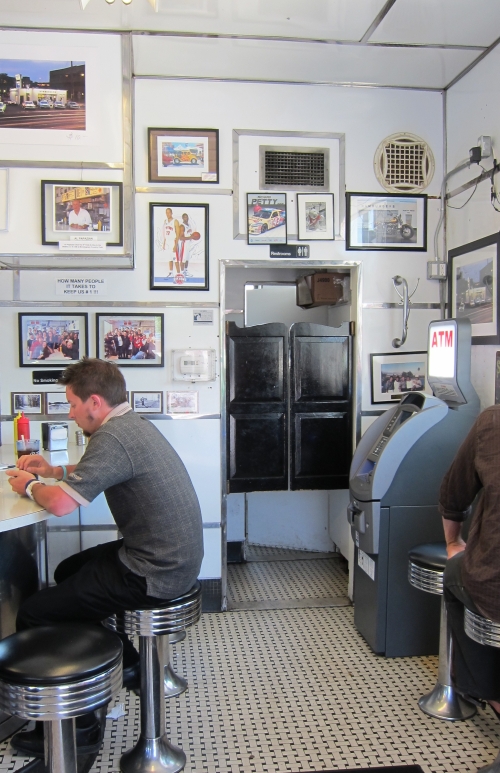

A demonstration of the the utility of saloon doors – privacy, but you can still see
Posted in Found Objects | Tagged batwing doors, doors, doorways, saloon doors, whimsy | 2 Comments »
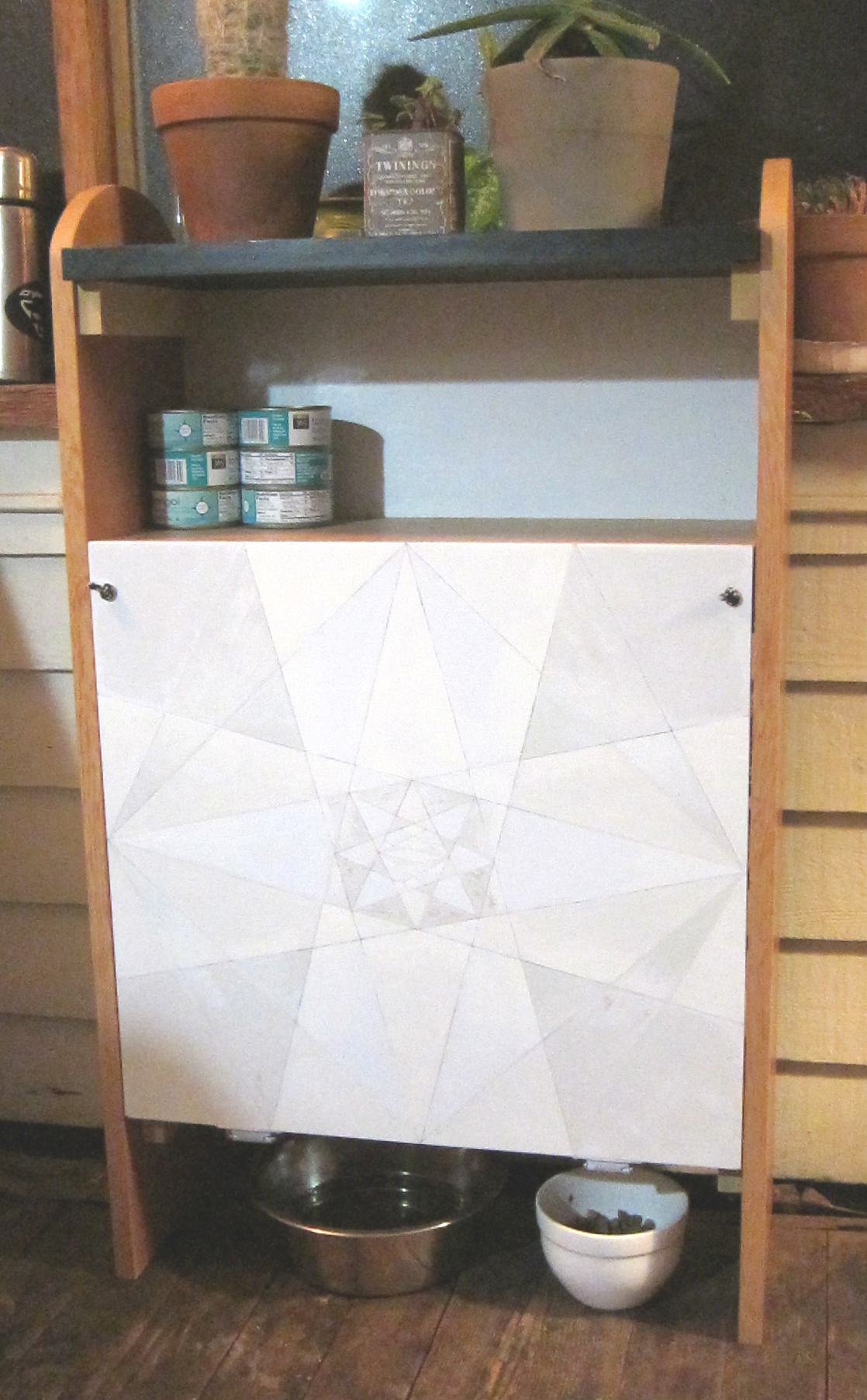
This Cadillac Trash Can has a top shelf for plants, a shelf for holding tuna for the cat, and a space below to push the dog bowls out of the way. It is built from remnants, so I didn’t have complete control of the proportions: Richlite top, fir sides, plywood shelves, door, & back panel
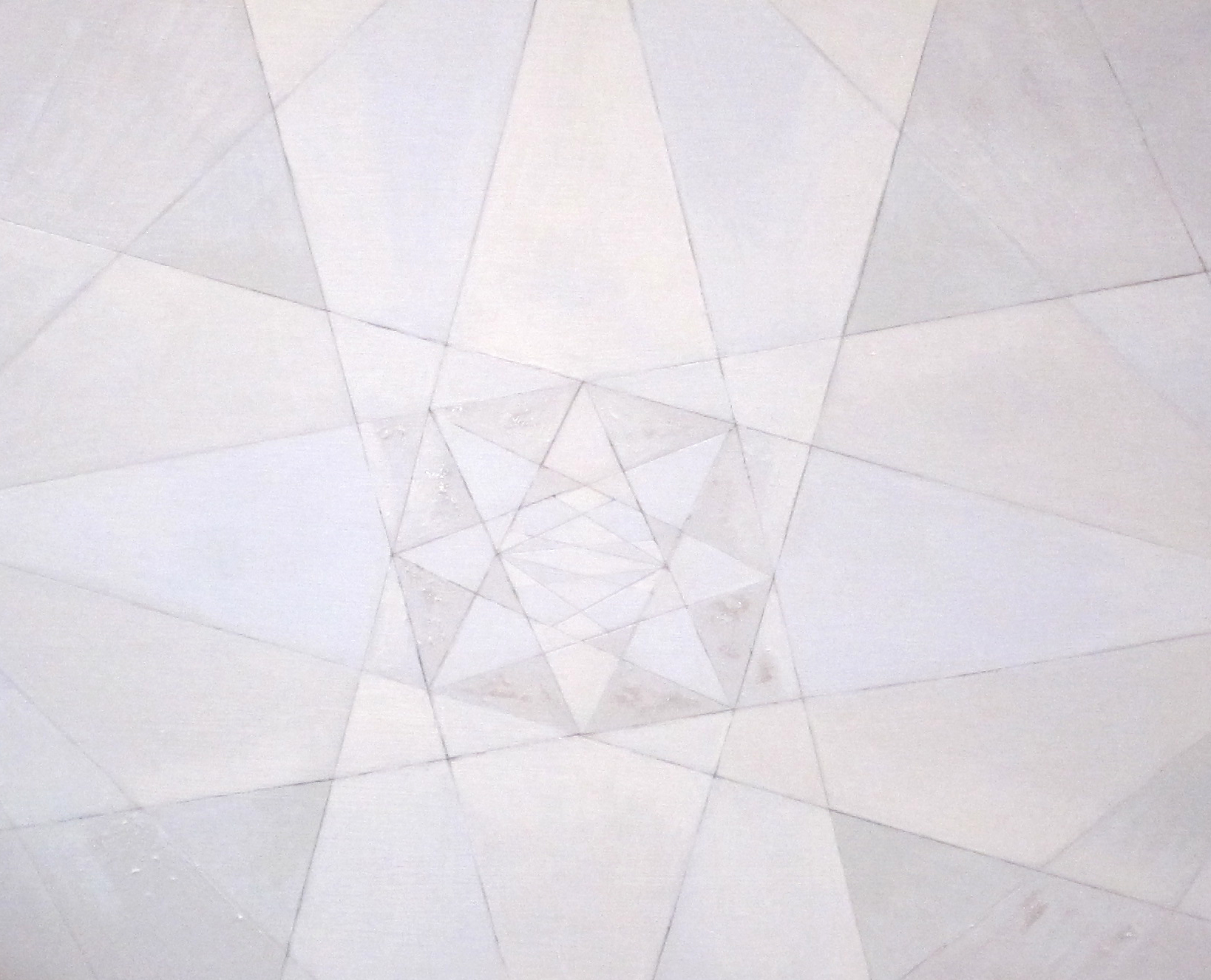
Decorated with pencil and Bioshield Aqua Resin Trim Enamel (zero VOC and compostable)
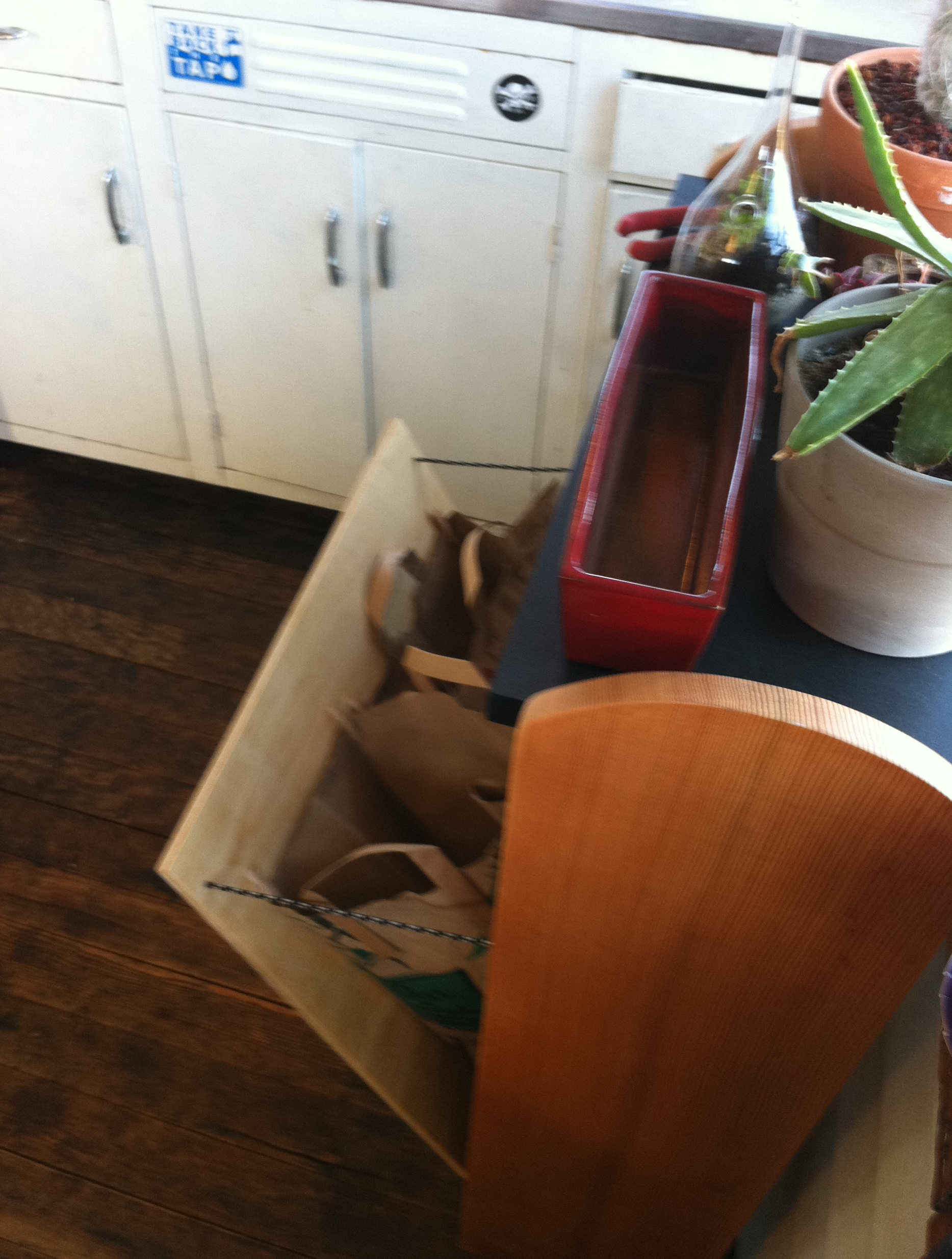
The door flips open on and is held at the proper angle by rope salvaged from a sailboat. Small clothespins attach the bags to the door for easy access
Posted in Design Projects | Tagged fir, furniture, green, paint, paperstone, patterns, recycled, rope, salvaged, wood | 3 Comments »
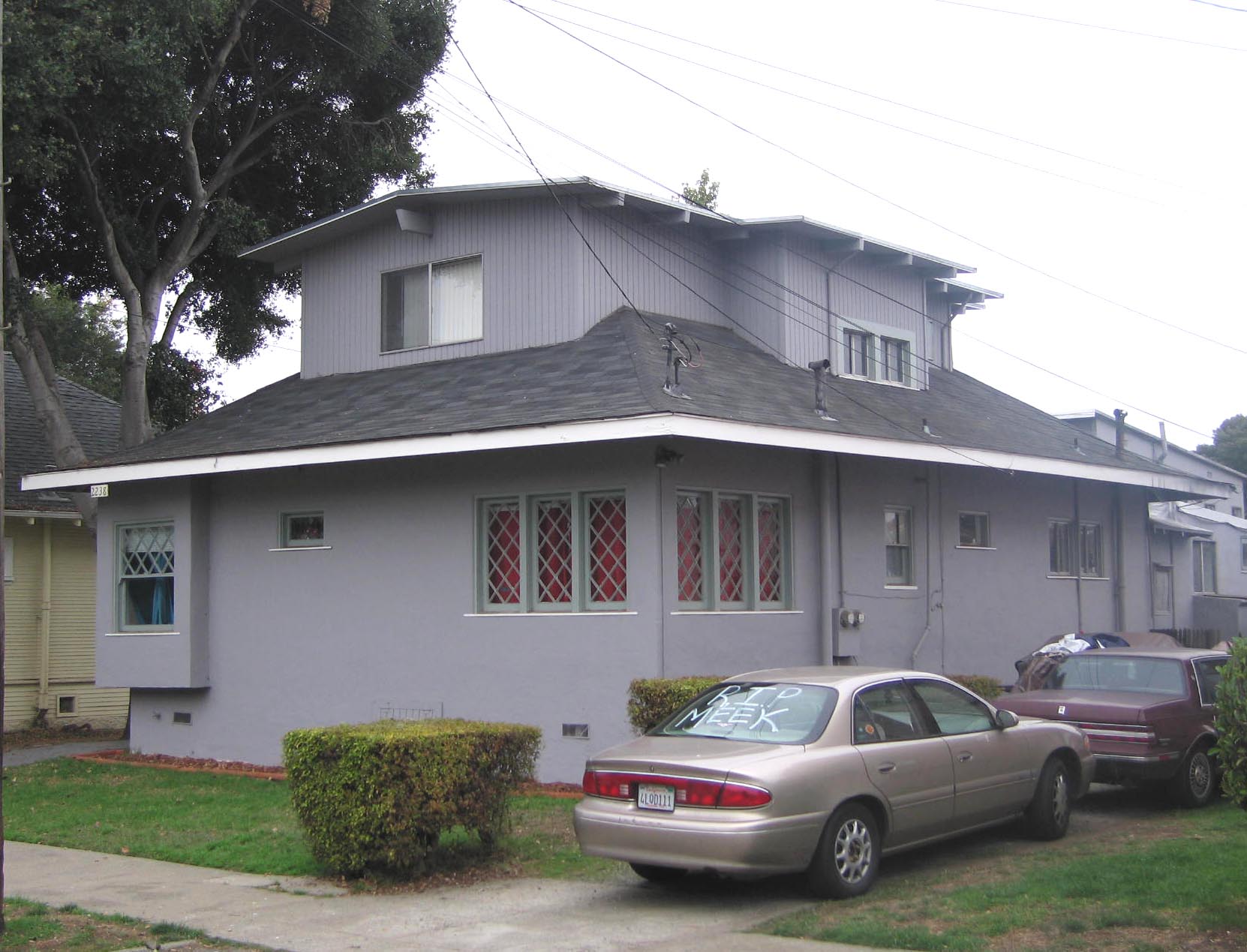
I love houses that cannot be categorized. Or maybe they all can be……anyone got a name for this style?
Posted in Found Objects | Tagged Berkeley, houses, humor | 4 Comments »
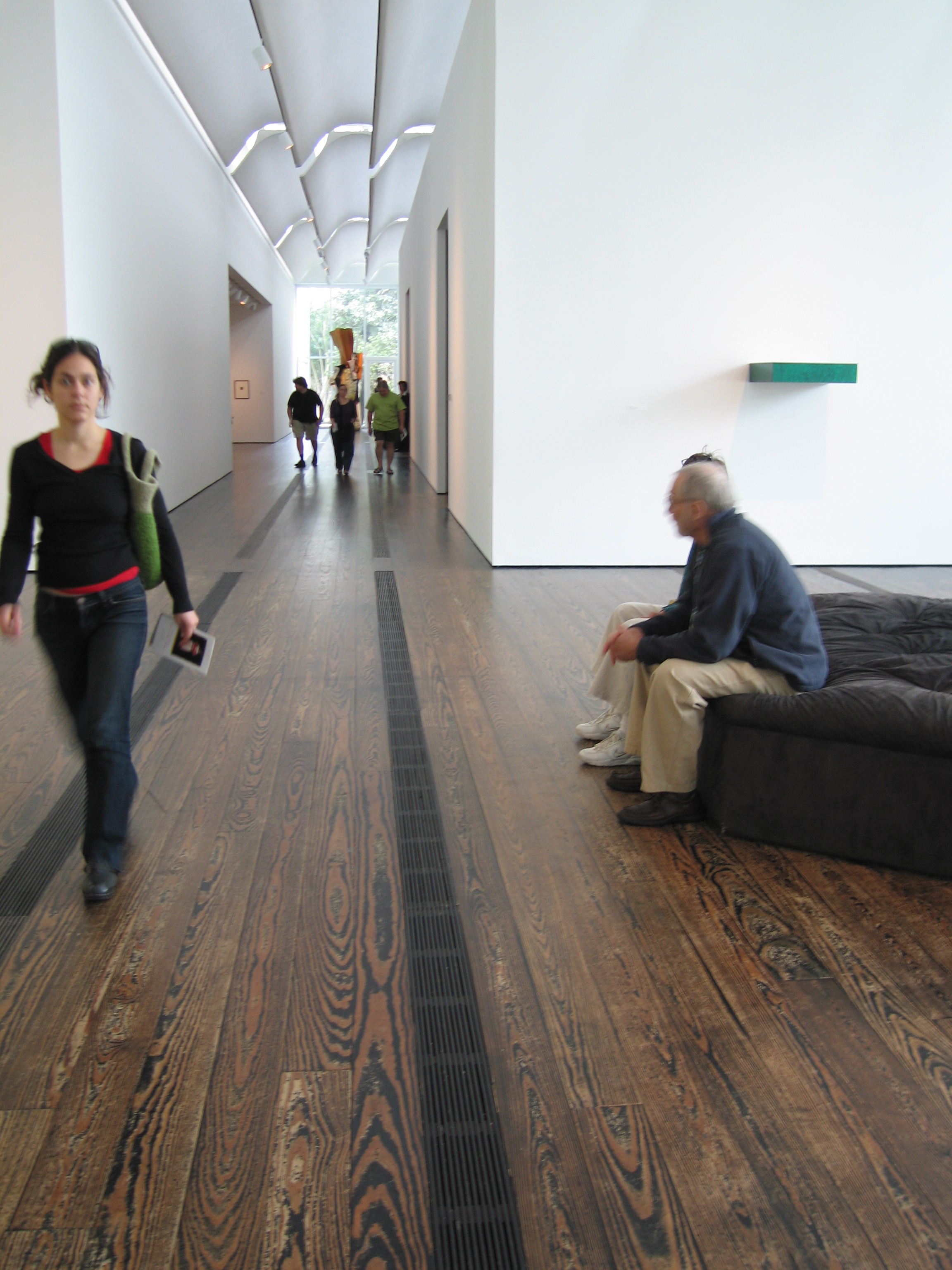 This is an art museum in Houston designed by Renzo Piano called the Menil Collection. One particularly cool detail there is the floor registers that are turned into an artistic accent. Long straight lines with smaller lines within in the long straight hallway….nicely contrasting with the accentuated wavy wood grain. It is also nice to have such an even distribution, rather than small holes in one corner of each room.
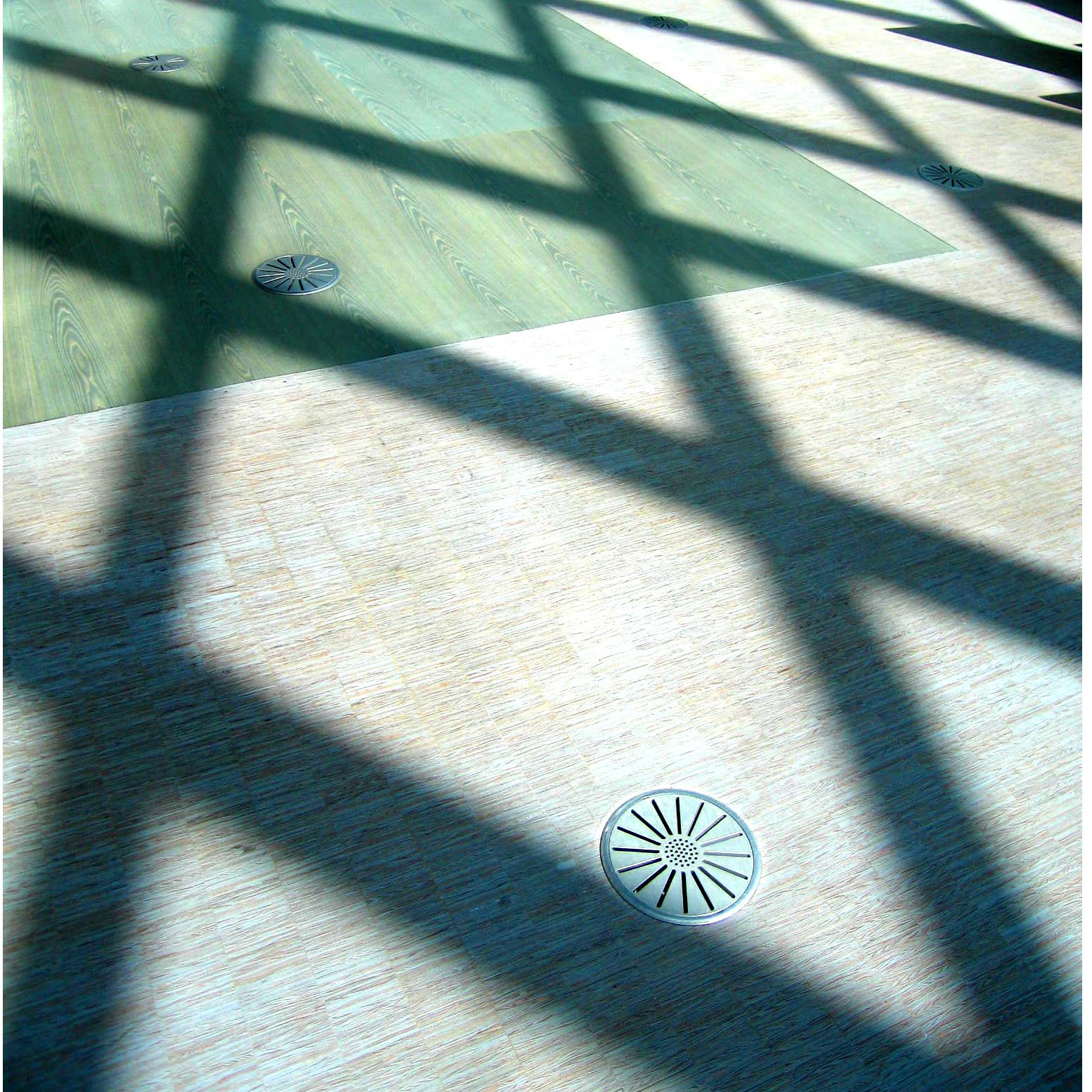
Rem Koolhas’s team also likes to carefully consider their HVAC details. This elegant supply register is in the Seattle Central Library….scattered throughout the lobby punctuating the varied pallet of flooring materials.
Posted in Found Objects | Tagged HVAC, patterns, Rem Koolhas, Renzo Piano | 3 Comments »
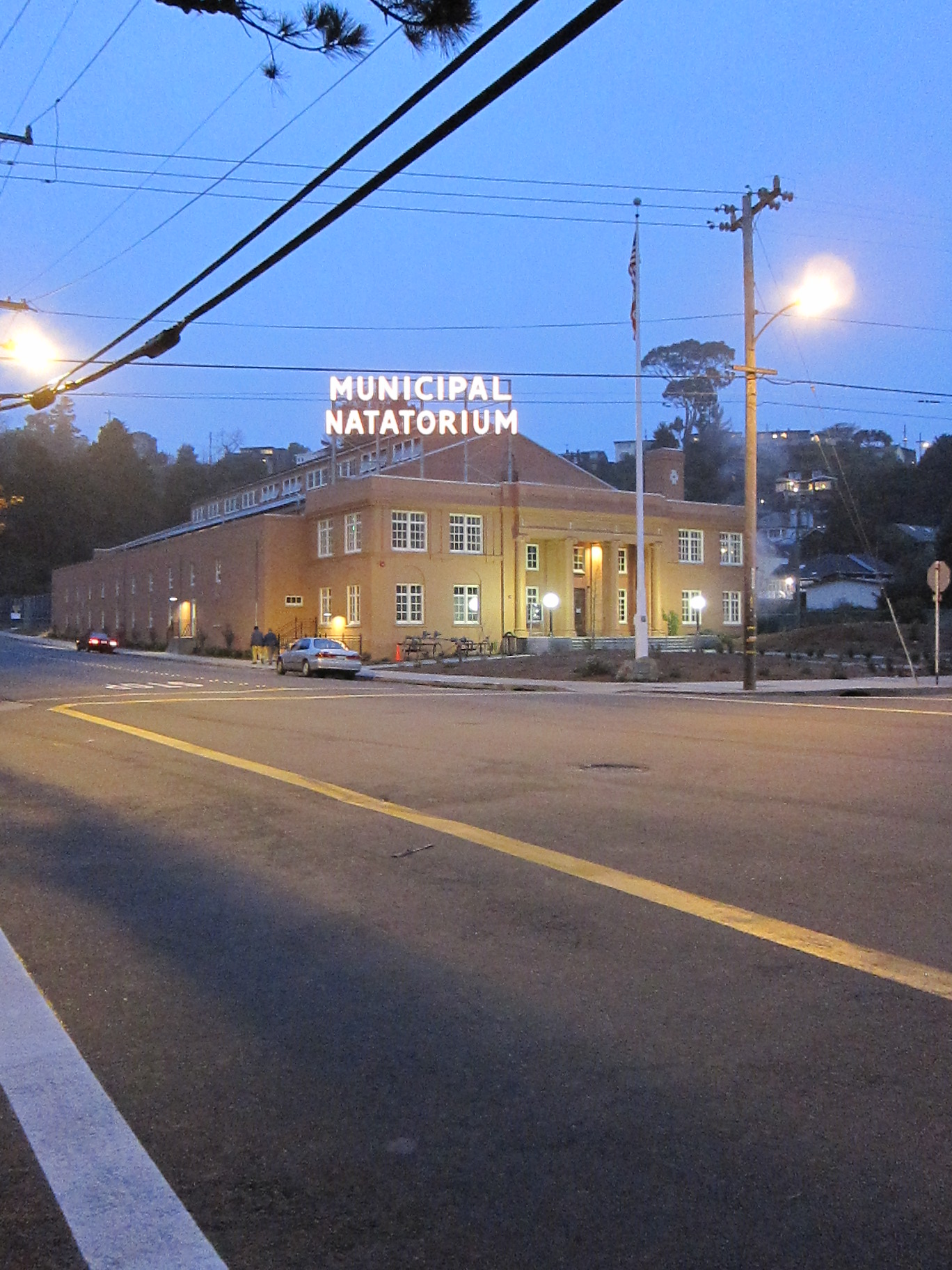 The public swimming pool in Point Richmond reopened with a grand celebration recently. In the interior, the beautiful structure is washed with daylight, and a floor to ceiling mural at one end by John Wehrle really completes the experience. I took a photo of the huge lighted sign the other night because it amused me. Maybe more buildings should be clearly labeled like this. I’ve considered it for my house, in part because I like to paint. The street numbers could be 8″ high and painted in glow in the dark paint. We could bring in a new era of sign painting arts and put neon sign makers to work. I’m not sure all the signs should be mounted at an angle to the building like this…and they could be slightly more subtle perhaps….but they should all be as beautiful as possible. No shiny plastic.
Posted in Found Objects | Tagged green, humor, lighting design, Richmond, signs | 2 Comments »
I am writing about these two State of California bills because they didn’t seem to get much press.
Starting on January 1, 2011 some Californians will be paid by the utility for the power that they generate with solar panels and windmills. AB920 was signed into law in October 2009.
AB 510 (signed into law in February 2010) raised the cap set on the number of homes and businesses that can take advantage of net energy metering. The cap went from 2.5% of the utilities total customer peak power demand to 5%.
The California Green Building Blog has good information, but I can’t find much on the rate structure. I have heard that electricity will be bought at the same wholesale rate that the utility would have paid other suppliers for electricity at that place and time.
This site has some purchase rate information for many of the utilities.
So if you own a good roof for solar or wind power but don’t use a lot of electricity yourself, this might be enough incentive to build your own electricity generation plant.
Posted in Information | Tagged green, solar electricity | 4 Comments »
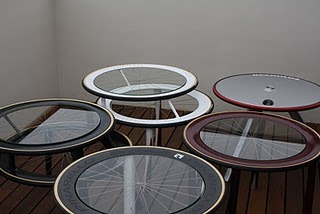 They are made in New Zealand by Carbon Footprint Design
Unfortunately it would up the carbon footprint a bit to ship them across the Pacific. I imagine that they are pretty lightweight though.
Posted in Found Objects | Tagged furniture, recycled, salvaged | Leave a Comment »
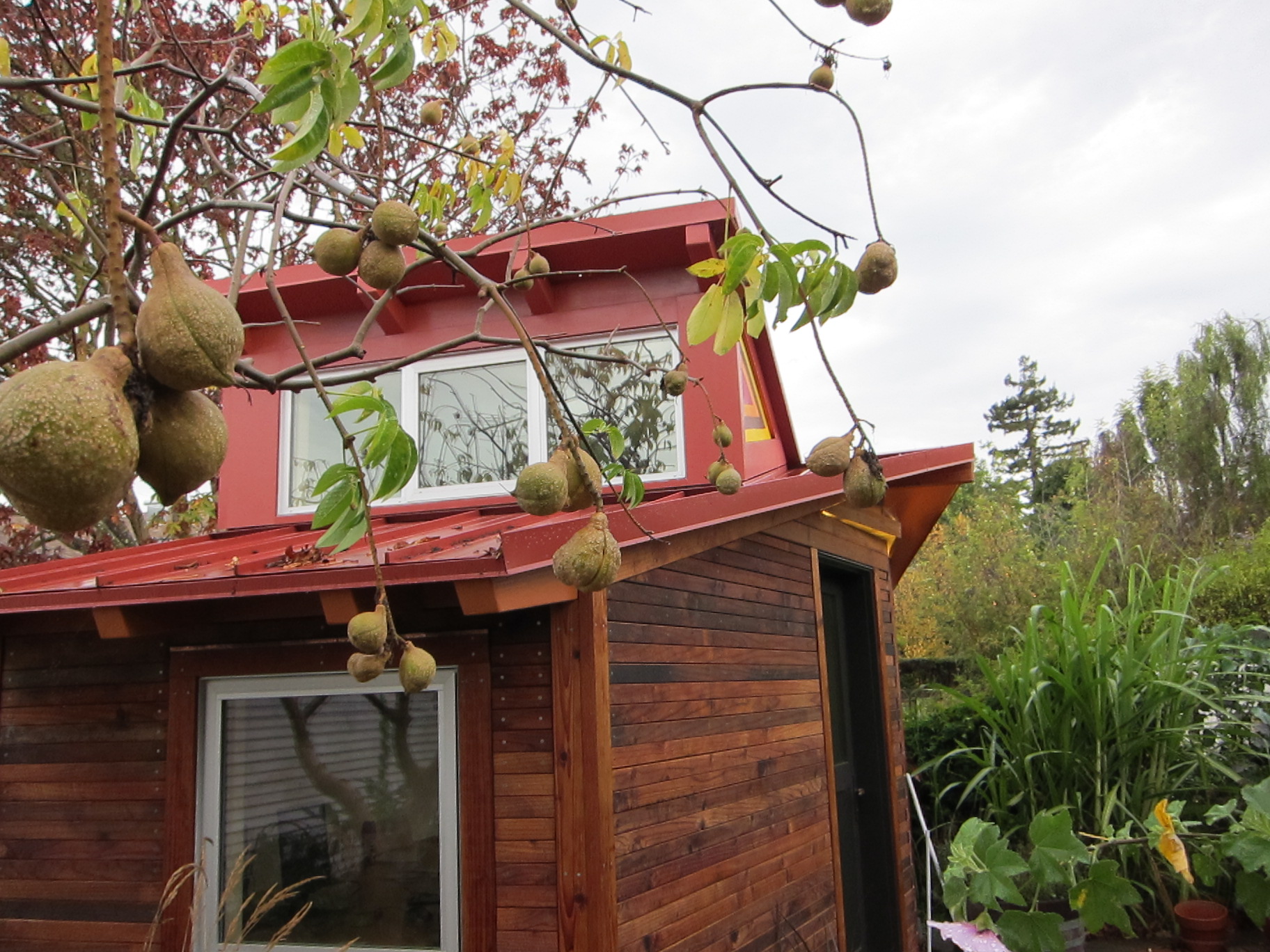
Go HERE and HERE for more photos of the project Here is an article about the project on Dwell Magazine’s website and Here you can vote for or against the design.
Total Cost: $24522.47 ($204/ SF)
Design: Free (by owner)
Permit Fees: $111.55 (Electrical only, 120 SF accessory building didn’t require a building permit.
Foundation materials: $1425.79 (incl sand, gravel, plastic, 30% Flyash concrete, forming materials, pumping labor, tool rental, rebar, etc)
Framing materials: $2661.73 (Almost all FSC Certified includes several large appearance grade exposed beams and FSC Certified sheathing plywood and all the hardware)
Building Paper and Flashing: $397.00 (We had to buy the roofing felt twice because the roof installation was repeatedly delayed by rain.
3 Windows & 1 Door: $1720.02 $750 (half price) for the Loewen half glass aluminum clad fir door salvaged from another project. The windows are dbl glazed aluminum= inexpensive. I chose aluminum because It looks good with the redwood. This is a small outbuilding without heat and they work fine, but metal windows have lower U-value than wood, fiberglass and vinyl. It would be hard to justify metal windows in a larger project with a heating system. The glass in the south facing windows is Sungate 500. This is a special glass that is designed to have a high U-value and also a high solar heat gain coefficient. “In winter, Sungate 500 Low-E Glass transmits the sun’s visible light and directs solar shortwave infrared energy into the home. At the same time, it reflects longs wave infrared (heat) energy — like that which comes from a home’s heating system — back into the room”
Paints and Finishes: $544.90 (Penofin Verde, American Pride, Earth Paint, AFM Safecoat, Bioshield) These are not the cheapest finishes, but honestly way more pleasant to work with than the traditional smelly stuff. Ill have to report back on longevity and durability, but so far so good.
Insulation, Sheetrock install and finish (incl labor), Interior Trim (FSC certified): $1609.93
Roof: $2615.93 (galvanized standing seam painted red by Tri Sheet Metal, James Morgenroth) I hope this is a long lasting solution. It was chosen for the clean crisp lines and the cheerful color. I was considering a zinc roof for its infamous longevity advantages, but didn’t find a local installer familiar with the material.
Exterior Siding & Trim: $850.73 (All the redwood siding was milled from logs salvaged from a road widening project in Sonoma County and gifted to the building. (ie free, just involved a lot of labor and $200 worth of stainless steel screws)
The siding is installed as a rain screen with a space behind the siding for ventilation and drainage. The idea is to make everything last longer by preventing moisture from getting trapped and rotting the siding or the framing. I used Penofin Verde, an eco-friendly penetrating sealer on the redwood. I’m hoping that I wont have to reseal it more than every other year. I have used the more stinky petroleum product Marine Grade Penofin on my wood garage doors for several years. It seems to do a good job of protecting the wood, but since they are on the south side without much protection, I reapply every year.
I sealed the exposed fir rafter tails with penetrating epoxy before priming and painting. They should hold up well, but I need to keep an eye on the corner where the high-end rafters meet the wall. I can imagine water running down the underside and sitting in this corner.
Rain protection & Dump runs: $114.66
Tools and bits: $75.87
Electrical & Plumbing: $1469.40 (includes fixtures, somewhat expensive LED exterior strip light that only uses 7 wAtts. The Louis Poulsen PH5 pendant was a gift)
Landscaping: $1982.88 (brick path by Hornby Garden Design and Construction)
Misc: $585.35
General Labor: $8,004.00 (carpentry, Built-in furniture, electrical, trenching, rough plumbing, etc. Some of this is discounted because it was done by my good friend John Mcbride. This does not include extensive work by owner/designer)
Cost analysis: The door, the roof and some of the lights are expensive. The built-ins were inexpensive, but involved a lot of labor that normally would have cost far more. The unusual shape involved more labor in framing, siding, and roofing. This building didn’t require a permit except for the electrical. Many components that were free would normally have cost a fair bit. The design labor and other extensive labor of the designer also would normally have cost money. For this reason, one should assume that a similar structure might cost at least $36,000, not including design. This would mean $300/ SF.
Things I would do differently or might change later: Insulate the concrete slab, use this sort of window trim detail
Performance: So far the thick and careful insulation (R19 in the 2×6 framed walls and R30 in the roof) and the passive solar features (mainly the south-facing windows with overhangs and a deciduous California Buckeye tree in front of them) perform wonderfully. The building is very comfortable without supplemental heat. On the occasional day that is too warm, opening the high windows works magic. When it is too cold I warm up the room by turning on a few lights and my computer. Sometimes I bring a large dog inside or do 10 jumping jacks to generate some heat. Because of the insulation, the heat sticks around.
Posted in Design Projects, Information | Tagged aluminum, Berkeley, green, lighting design, paint, passive solar, rainscreen, redwood, salvaged, small buildings | Leave a Comment »
In honor of the Northern California Fall I am posting a few photos of the glorious trees that might be the most important architectural feature of my apartment. Without this pair of venerable deciduous Zelcova trees I would have much less privacy in my bedroom and the house and yard would be much hotter and sunnier in the summer months. The beauty of a deciduous tree smack on the south side of the house is that in the winter the sun streams into the south-facing windows. warming and cheering the rooms. Of course the fall foliage is a nice side benefit.
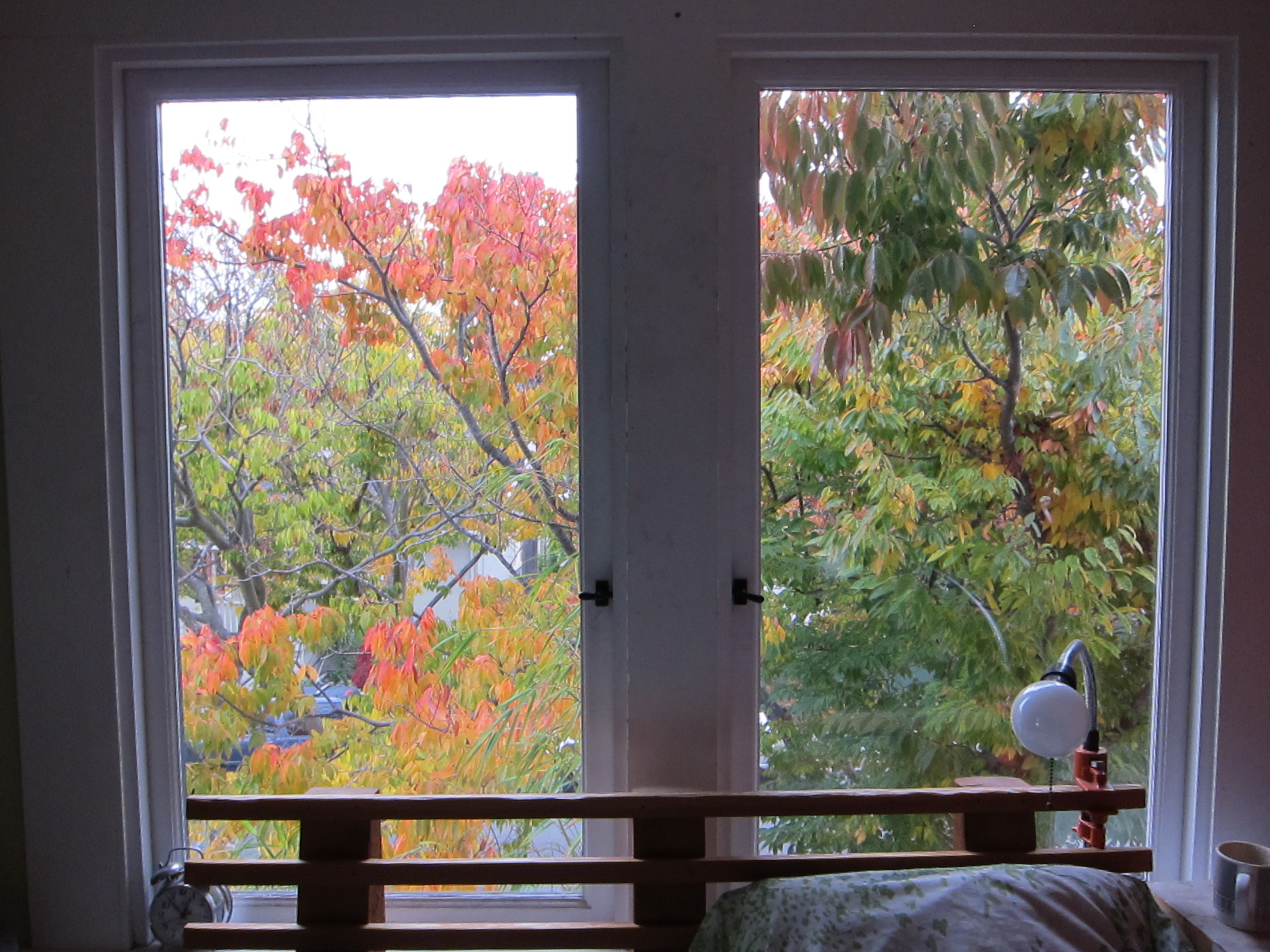
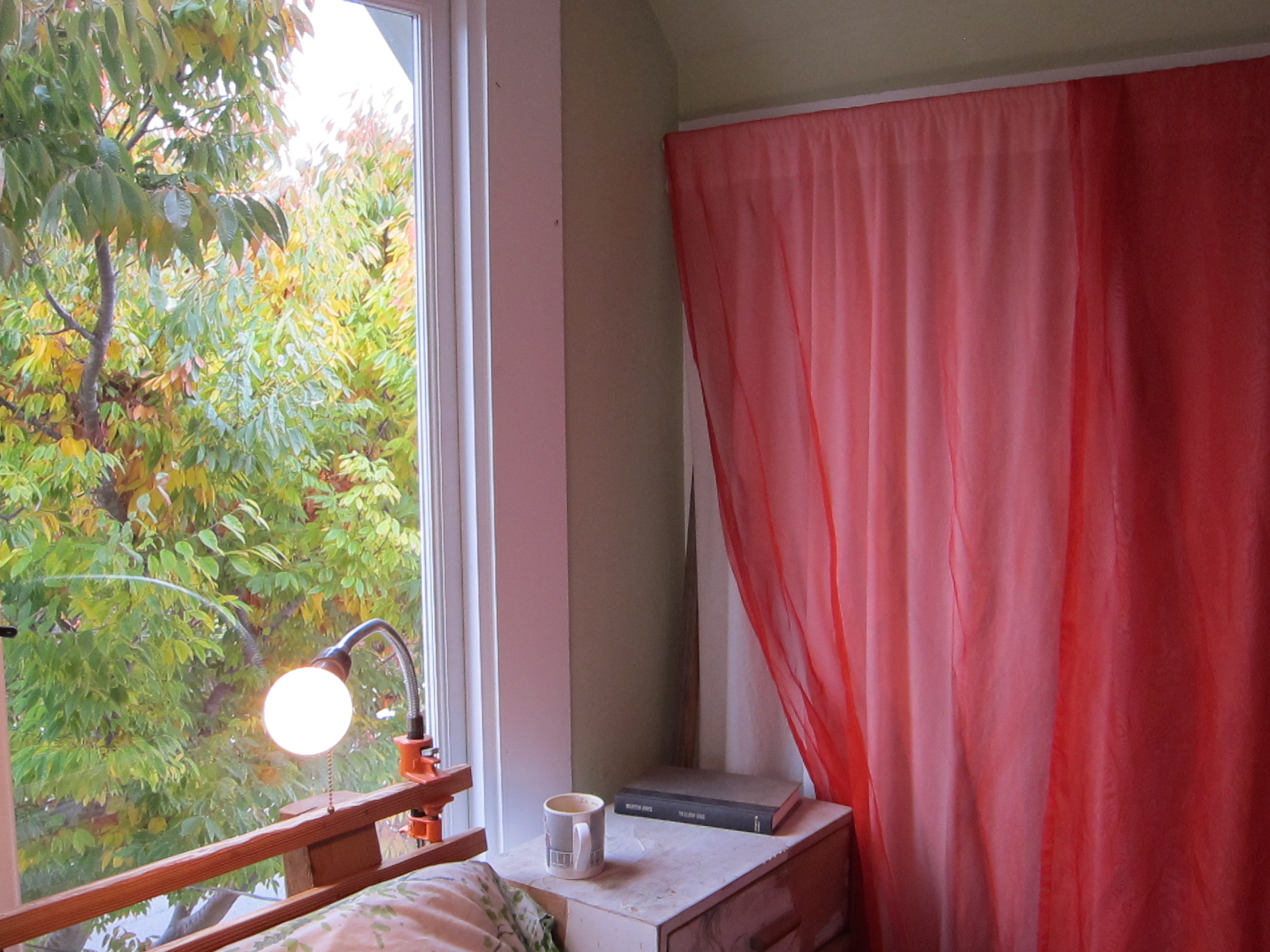
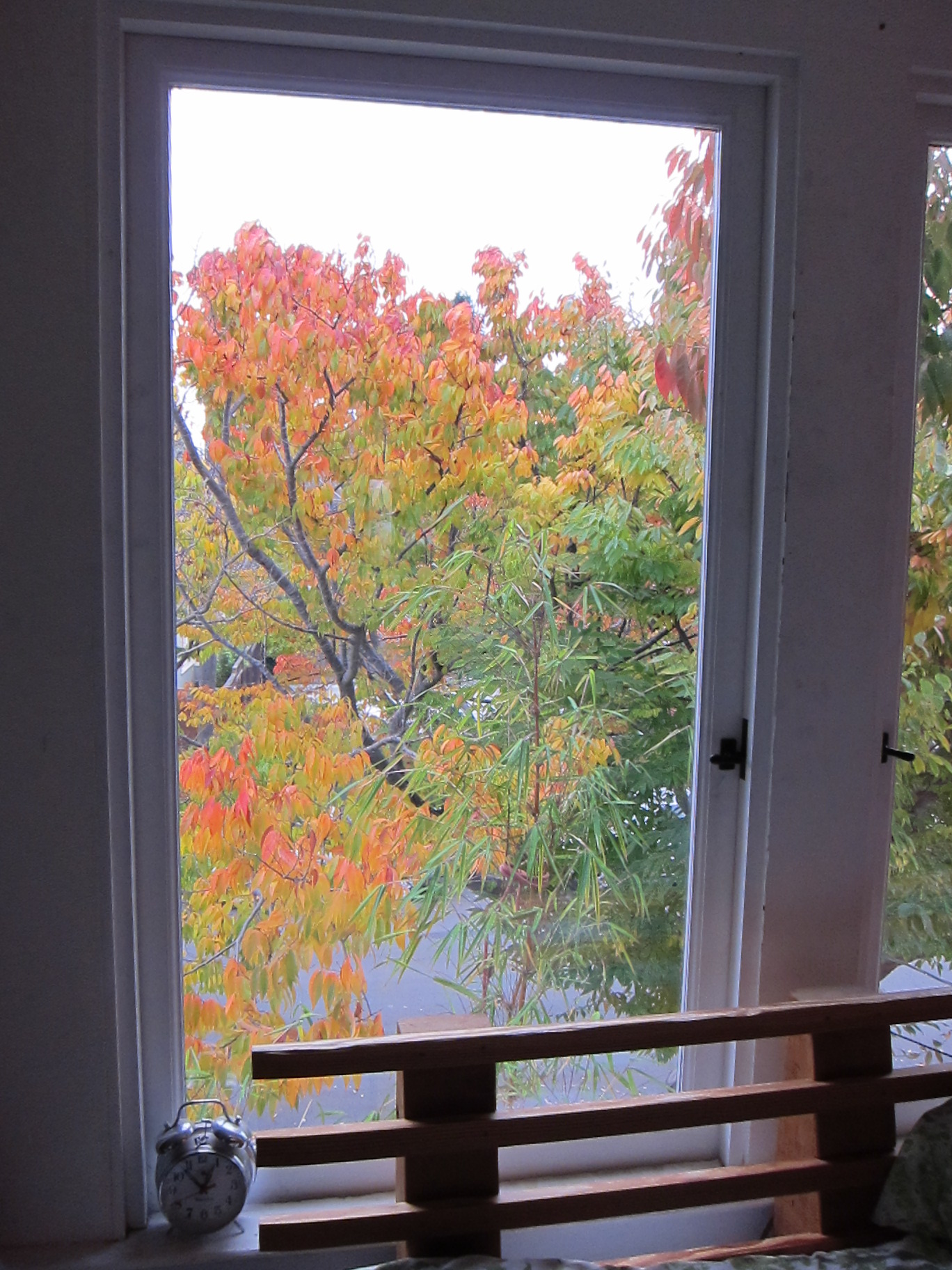
The seasons in Northern California have always seemed a bit confused to this native of Detroit. I recently realized why: When the fall foliage begins, it is usually also the beginning of the rainy season. This means that simultaneously some trees are turning red, orange, yellow and brown, and most other plants and trees are turning bright green from all of the rain. In the spring the reverse is true. The deciduous trees are sprouting little green leaves and buds….and most other things are turning brown as the water supply diminishes.
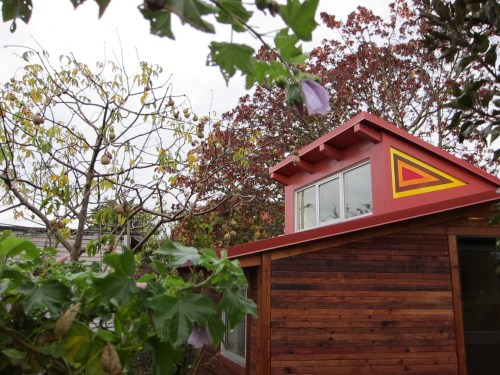
I painted the burgee on my art studio new colors for the fall. This building also has the benefits of a deciduous tree to the south. This time it is the spectacular California Buckeye. 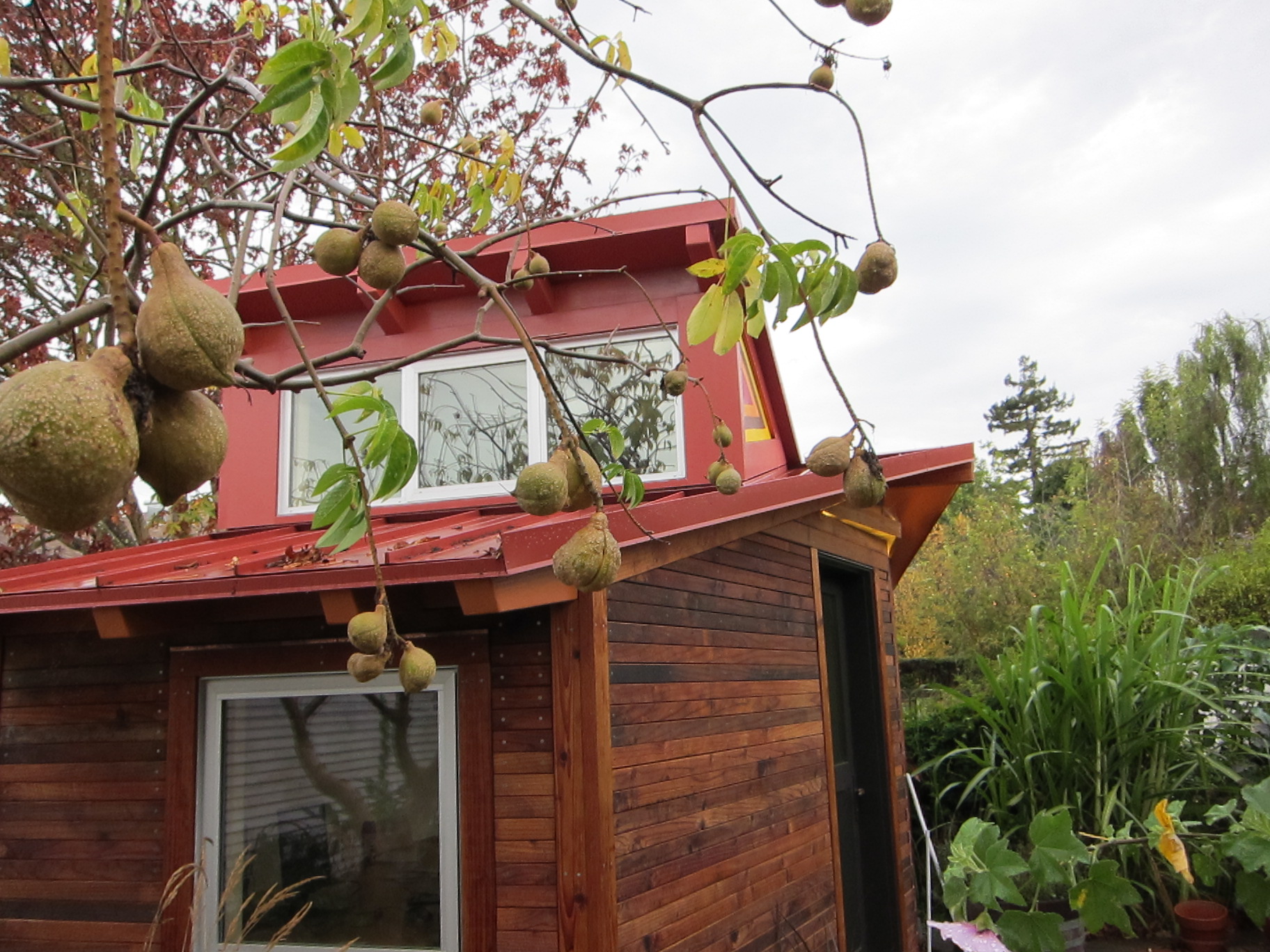
Posted in Design Projects, Found Objects | Tagged garden, green, landscape, Northern California seasons, passive solar, plants, trees | Leave a Comment »
The architectural highlights of my visit to the south rim of the Grand Canyon were a study in contrasts.
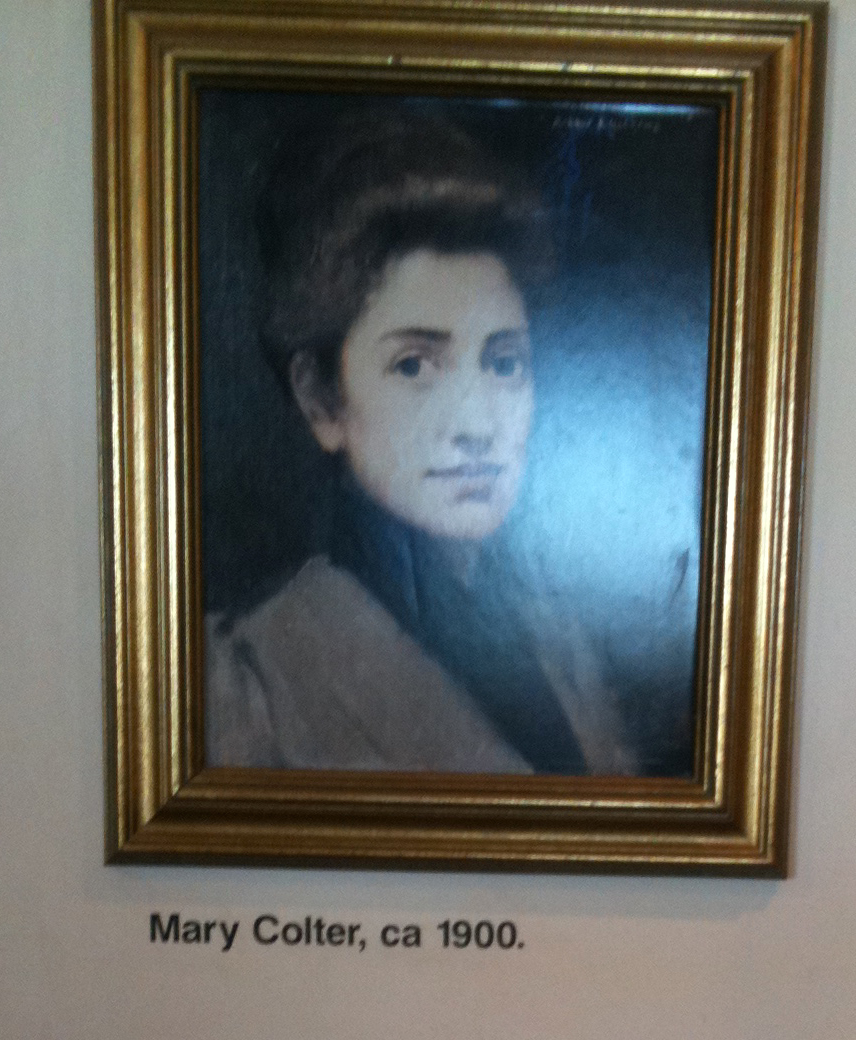
Mary Coulter’s Lookout studio, perched right on the rim is built of the canyon limestone and meant to blend right into the backdrop.
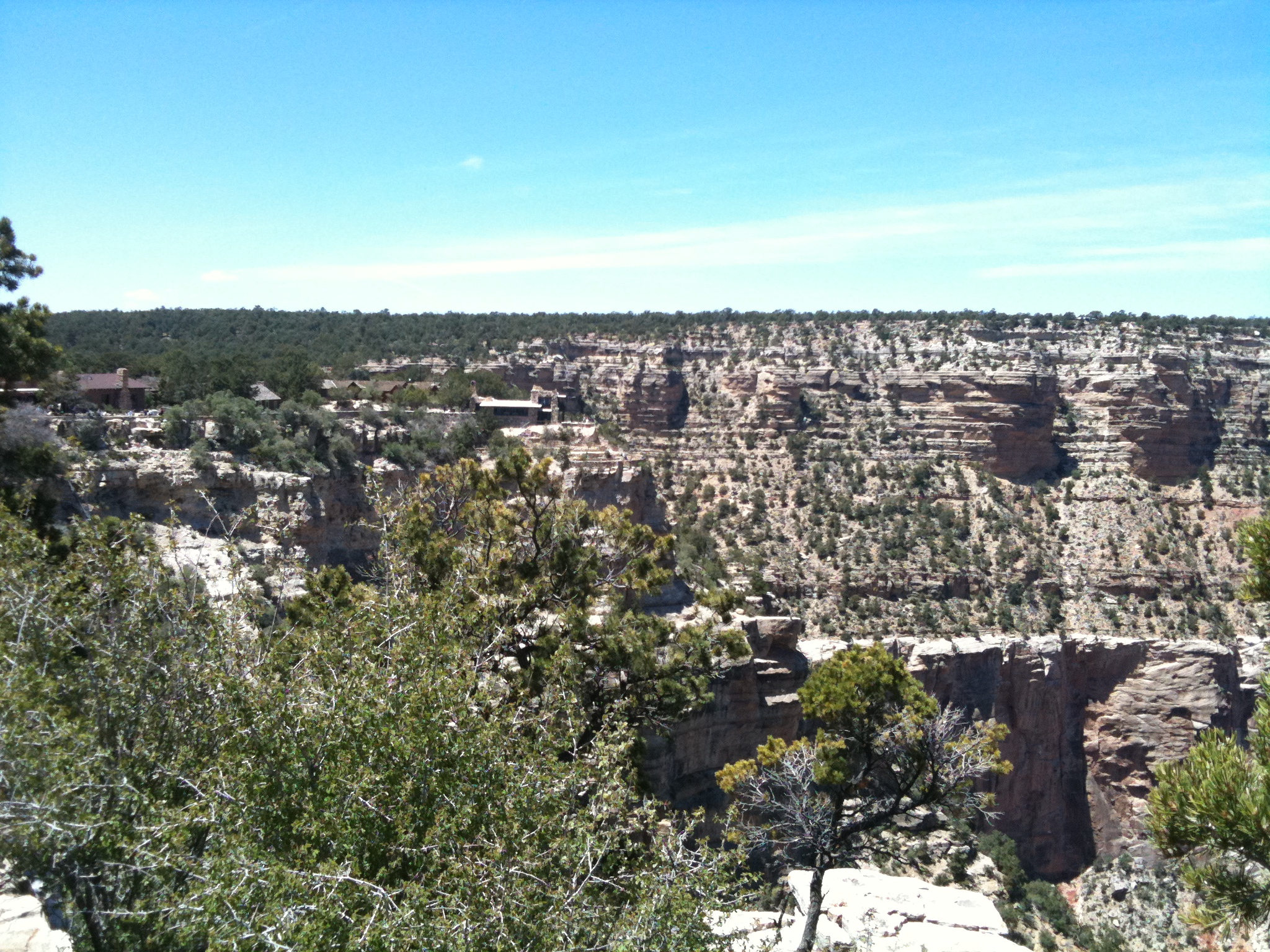
Lookout Studio from afar
She is successful in this goal. Up close, once you realize there is a building, the rustic charm is clear.
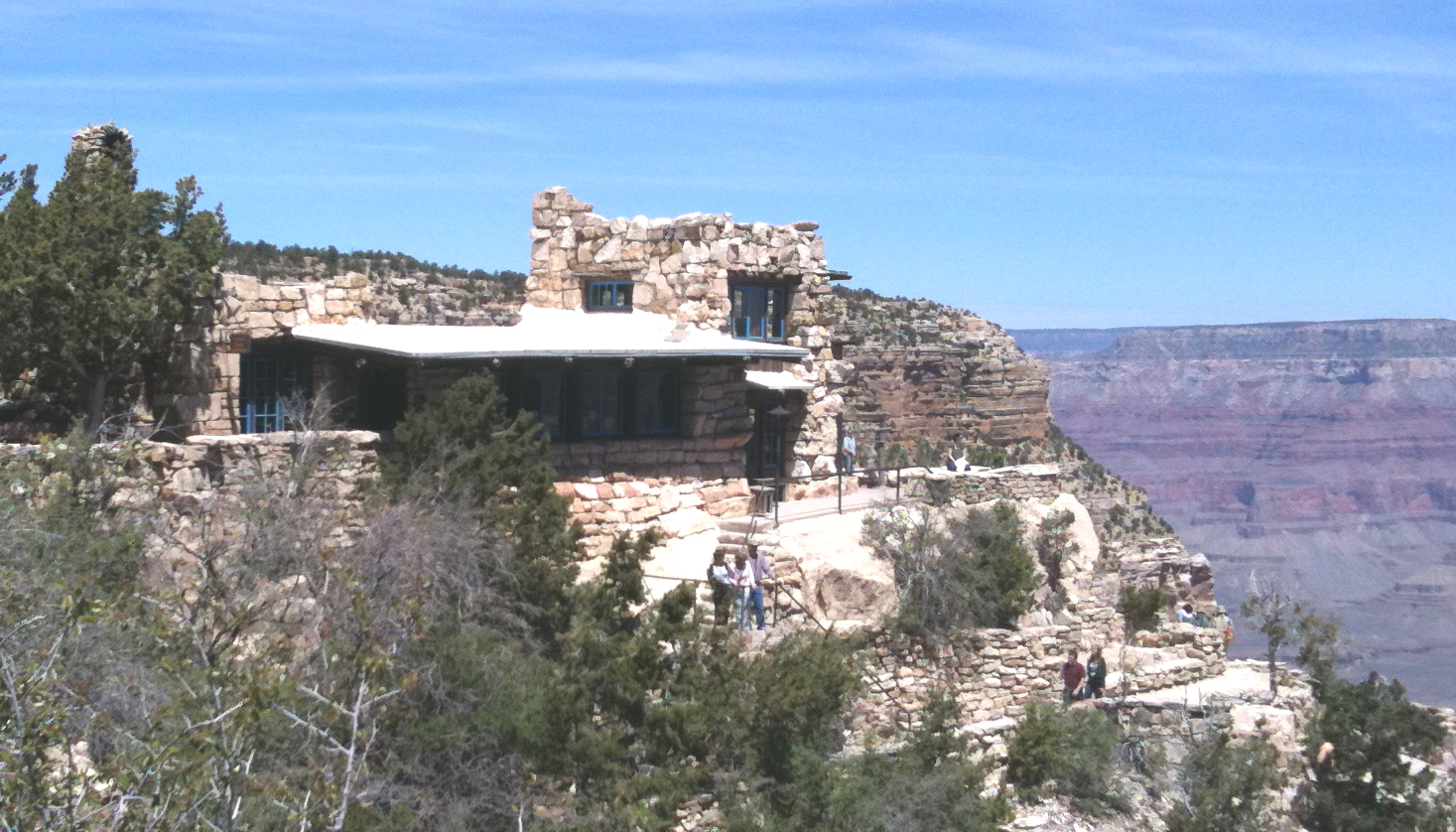
Lookout Studio: 1914, Designer Mary Colter, rough cut limestone to blend with the surroundings
On the other end of the spectrum, there are many buildings and parts of buildings painted vibrant colors. These sorts of color schemes are best in the bright clear sunlight of the desert or tropics.
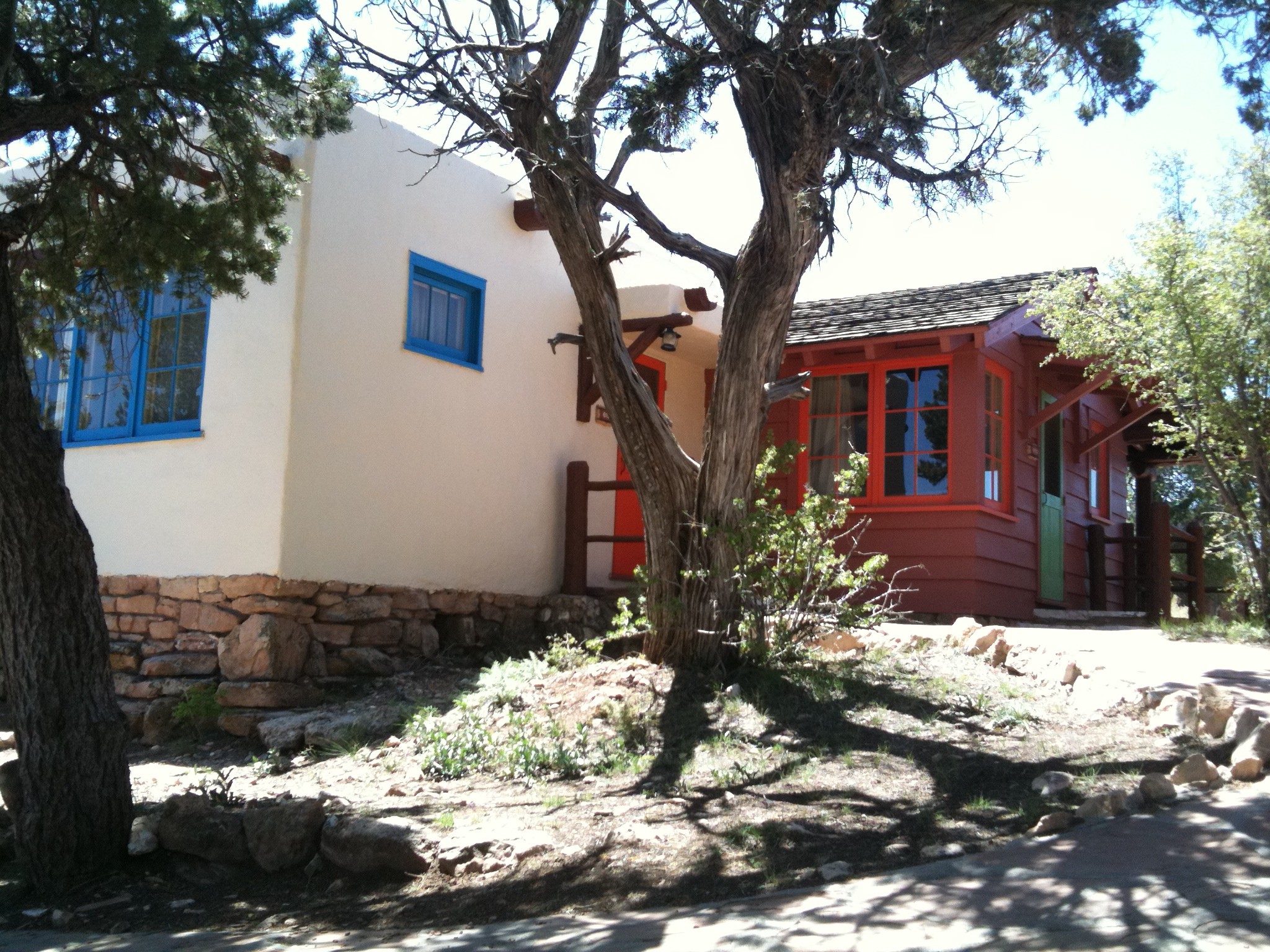
The bright desert sun on some bold color choices
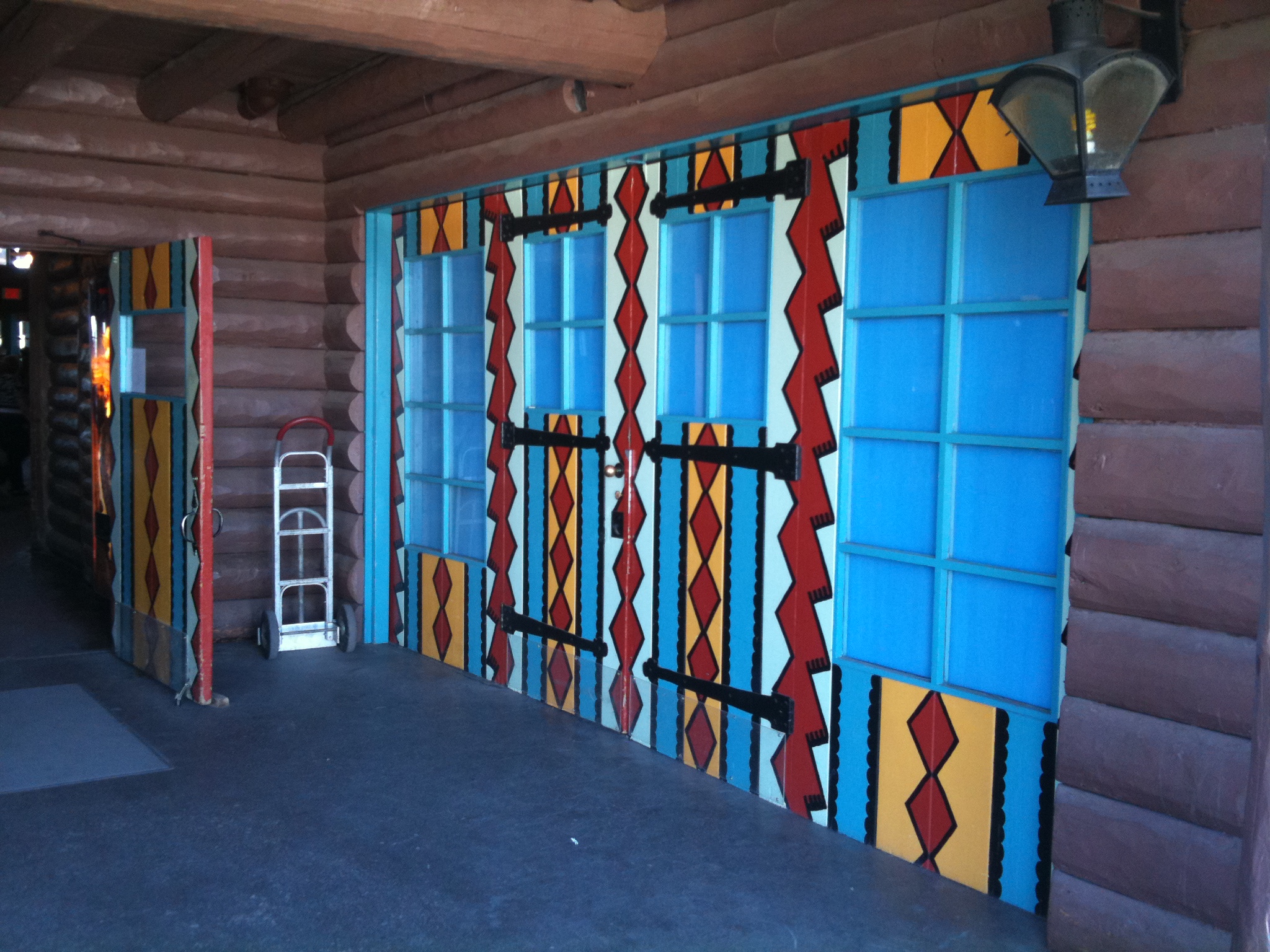
Bright painted doors
I included a photo of the curving metal railing that follows the rim just because it is simple and elegant without being institutional.

elegant curving railings at the edge of the canyon
Posted in Found Objects | Tagged bright colors, camoflage, color, desert architecture, desert colors, grand canyon national park, landscape, Mary Coulter, metal, metal railings, national park architecture, patterns, railing, stone | Leave a Comment »

 deedsdesign