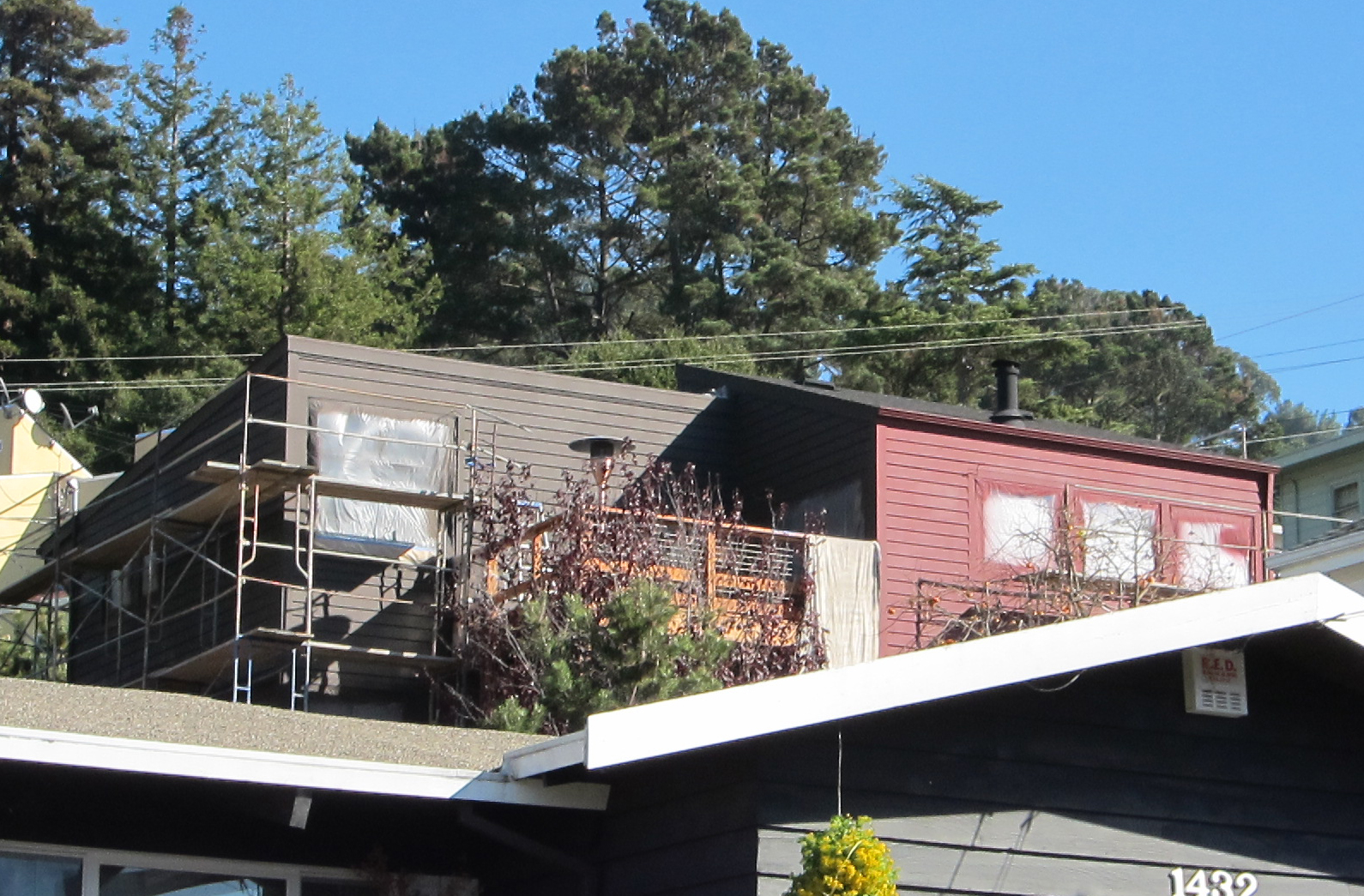
Posted in Design Projects | Tagged color, El Cerrito, houses, paint | Leave a Comment »
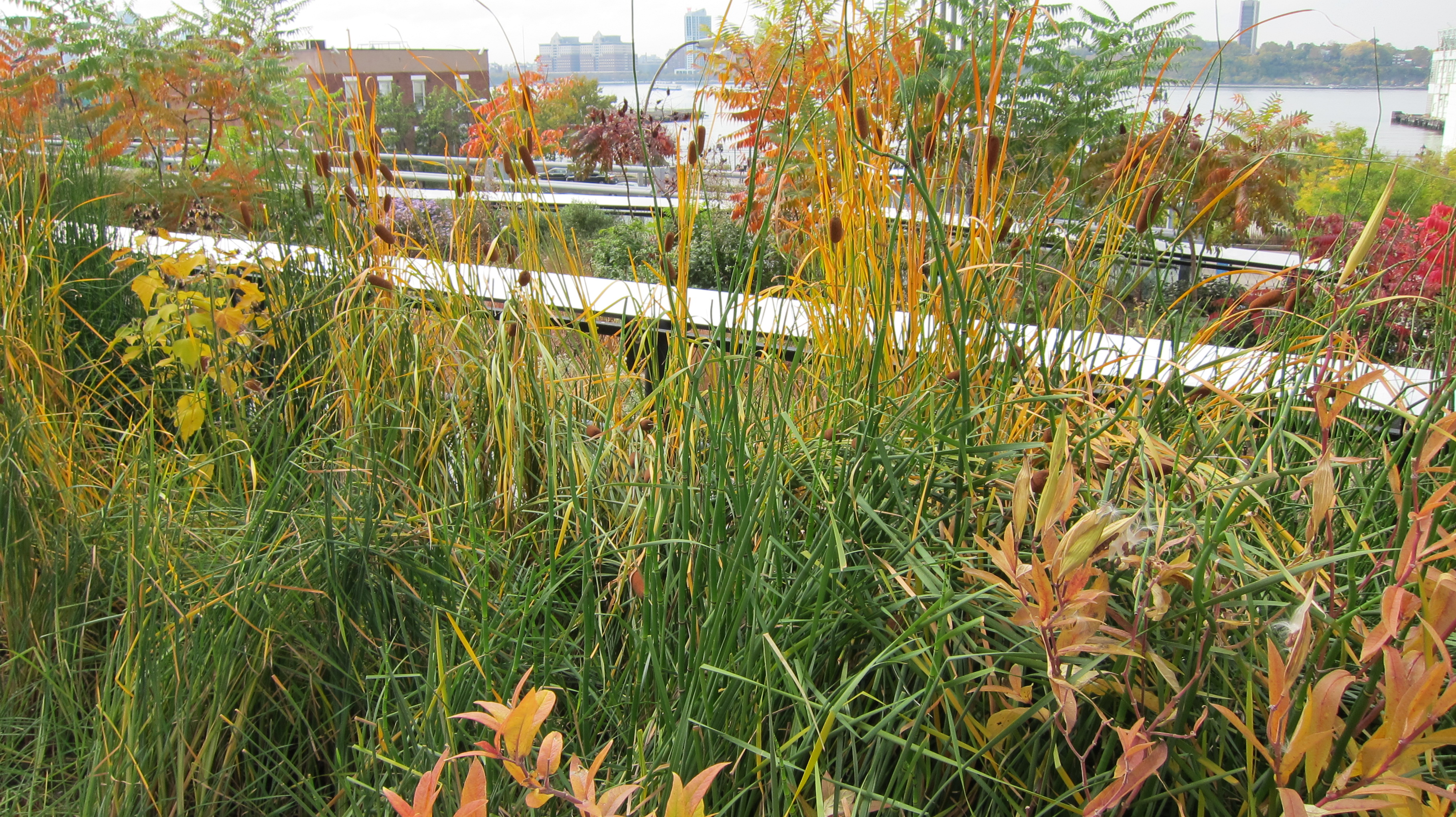
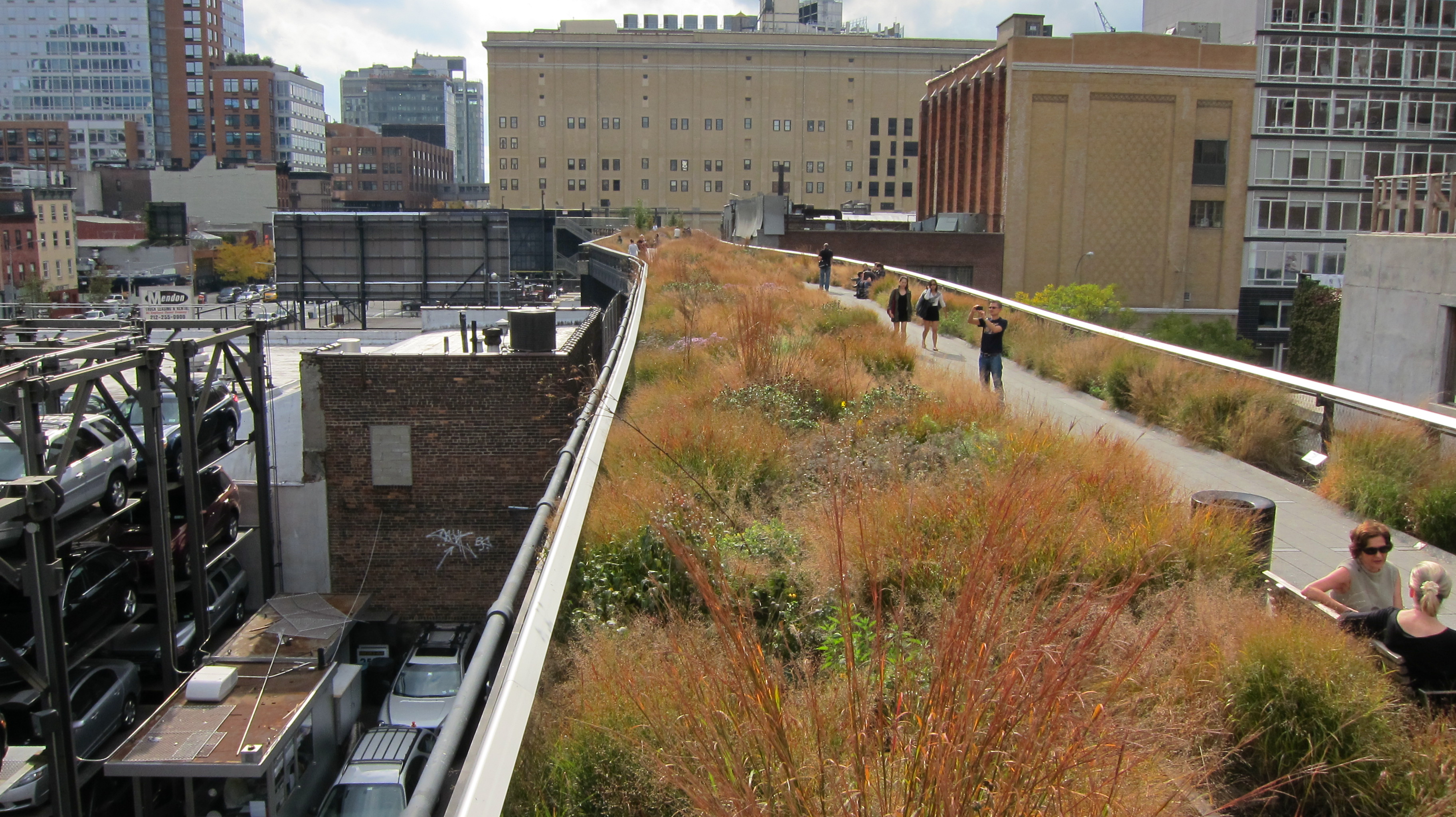
Also in New York City, I revisited the wonderful High Line to see how all the plants are doing. The are doing great! In late October the High Line is alive with fall colors:
Posted in Found Objects | Tagged color, garden, landscape, New York, plants | Leave a Comment »
Passive house is a fairly new word. This recent evolutionary step in building technology comes from Austria, but many of the concepts are ancient. The basic idea is to insulate really well and eliminate random air leakage and thereby require way less heating energy. Ideally all the heat needed will be generated by occupants, their computers and light bulbs, and the sun.
Pretty simple, right? The devil is in the details. Real Passive Houses also must pass a performance test to prove they actually work.
Nabih Tahan was an innovator on the west coast. The New York Times published an article about Passive Houses a houses in 2008 that mentions his Berkeley California renovation project.
Unfortunately, Nabih’s house failed the blower door test for leakiness, so doesn’t actually qualify as a passive house, but he has measured his energy use over the last two years and it performs extremely well. He had to install electric baseboard heaters to satisfy the building code. He rarely turns on these heaters, but since electric heat is inefficient, (a lot is wasted in transmission) his “source energy load” is slightly over the Passive House requirement. He thinks that he would have qualified if he had used gas heaters.
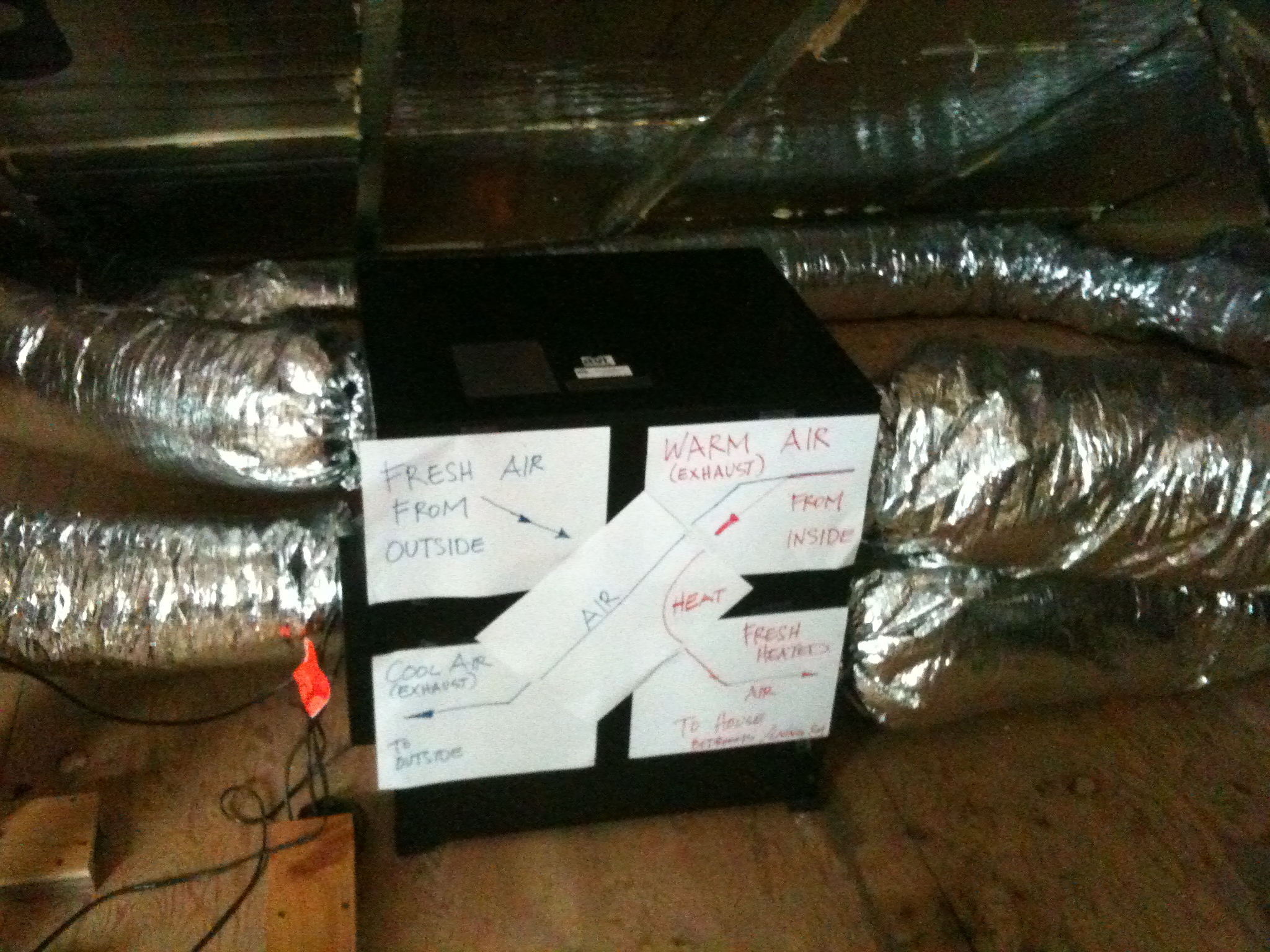
Here is a picture of Nabih’s Air to air heat exchanger (energy recovery ventilator) from Ultimate Air:
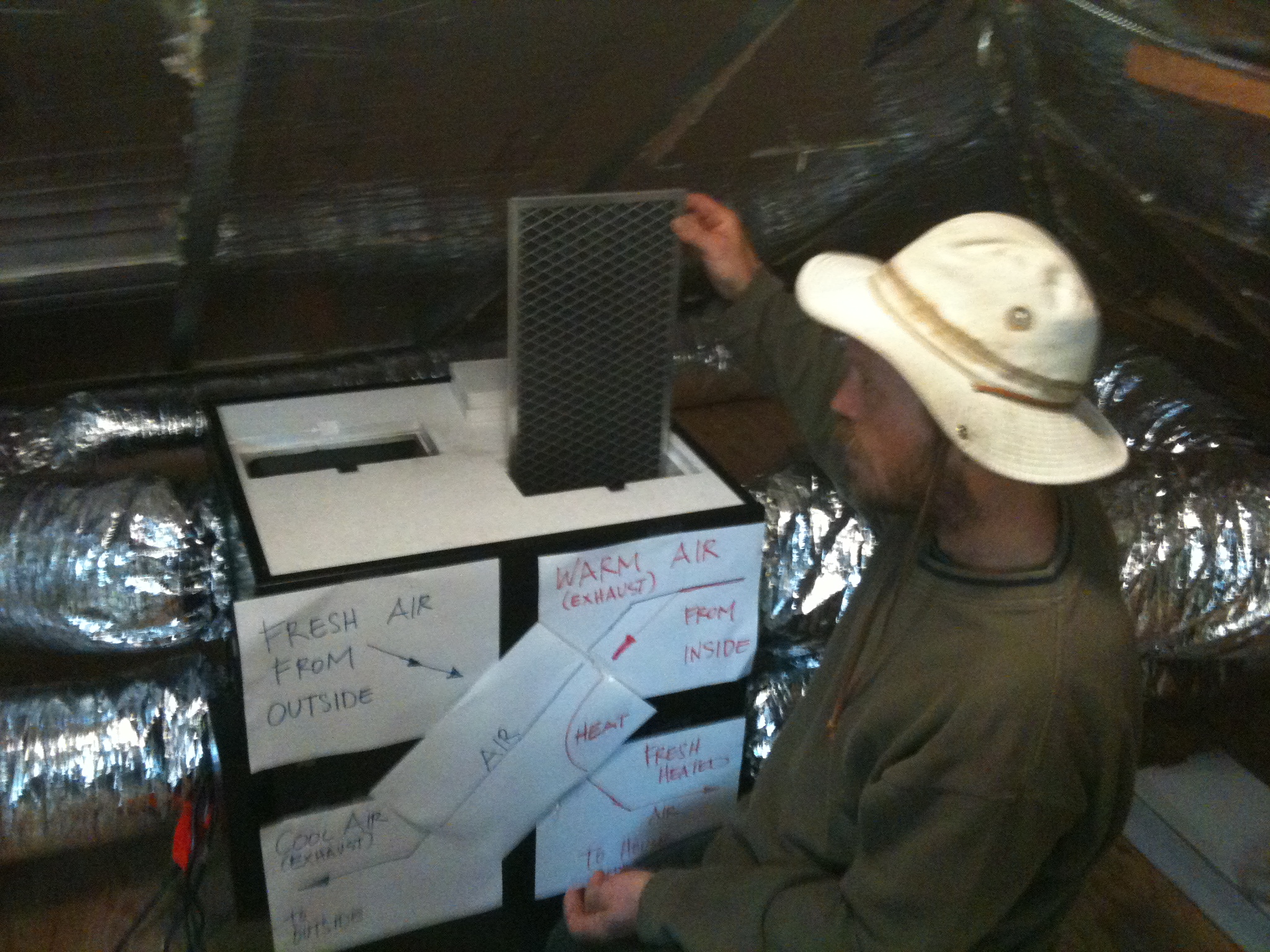
The guy in the picture designed and installed the system. His name is is George Nesbitt, and he has a company called Environmental Design-Build.
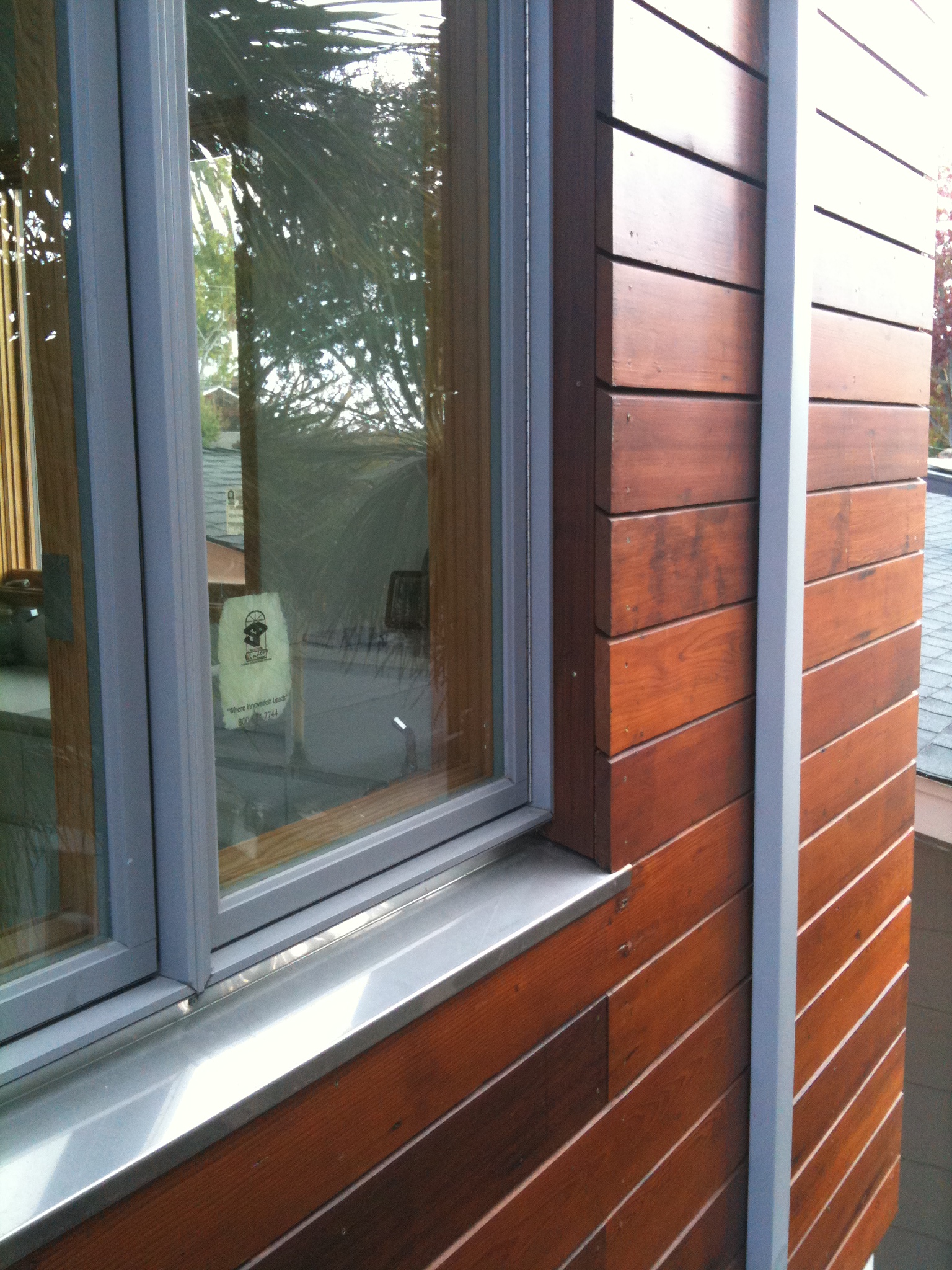
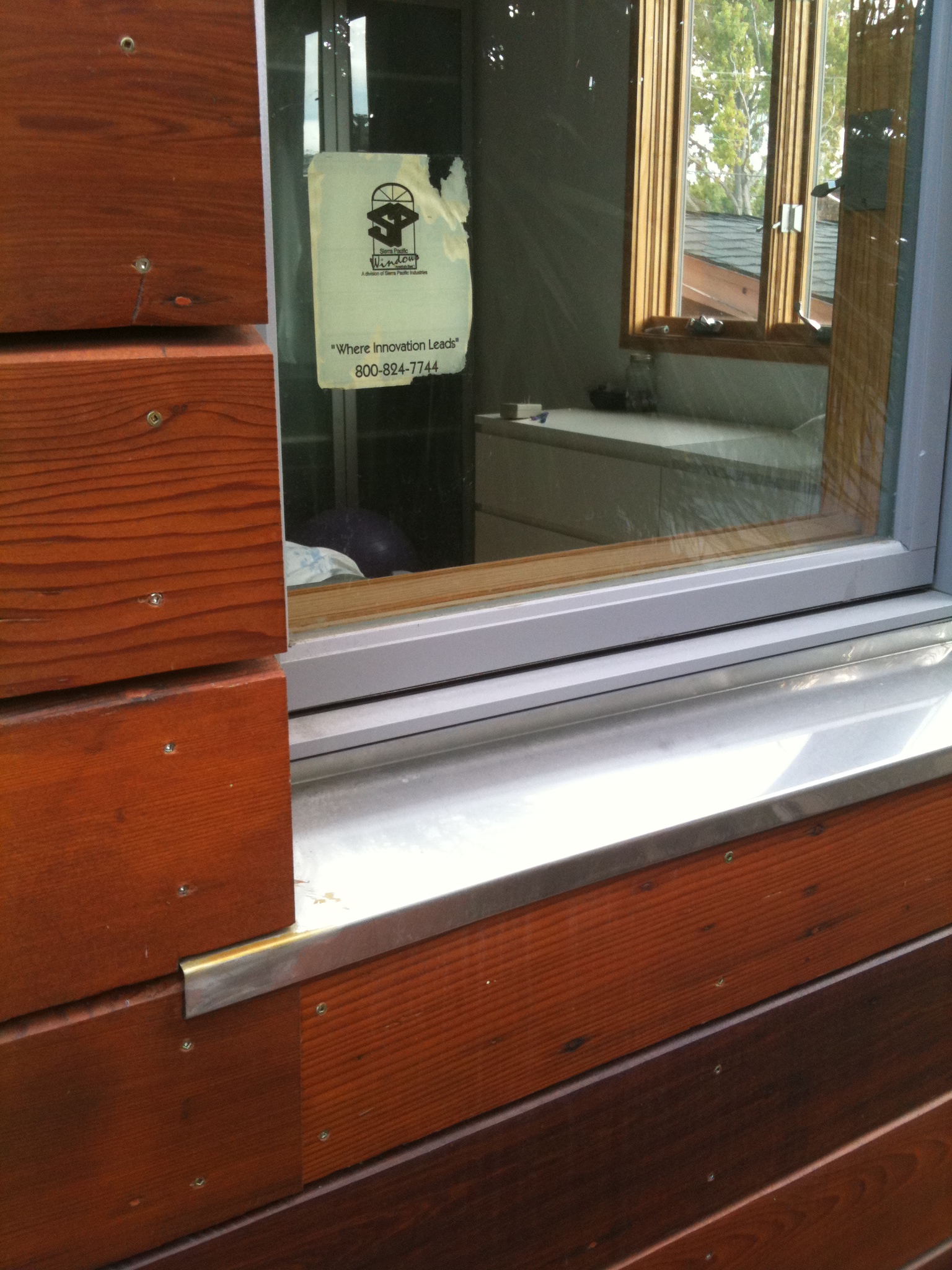
Nabih installed redwood rainscreen siding. I think it was made out of the old siding, milled into flat slats. His window details are pretty nice:
Posted in Found Objects | Tagged energy efficiency, heat recovery ventilator, HVAC, passive house, rainscreen, windows, wood | 2 Comments »
Designed by Tod Williams and Billie Tsien, the David Rubenstein Atrium at Lincoln Center is a very quiet and peaceful retreat from the clamor of Manhattan.
Instead of more mundane and technical solutions, they chose to achieve the desired quiet by commissioning a textile artist to weave giant tapestries and growing plants on other parts of the walls. A subtle water feature completes the effect perfectly.
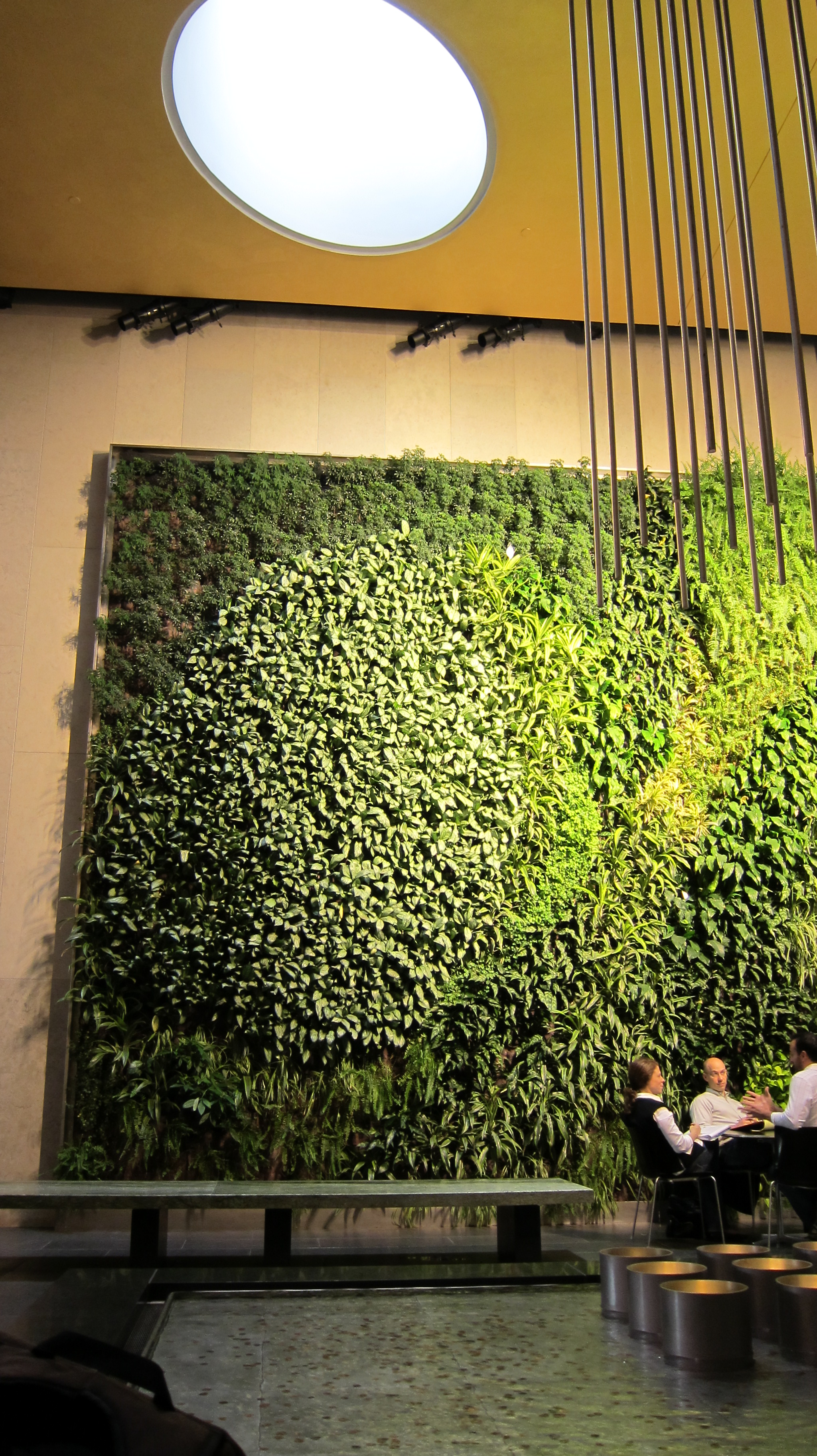
The plant covered wall and one of many round skylights
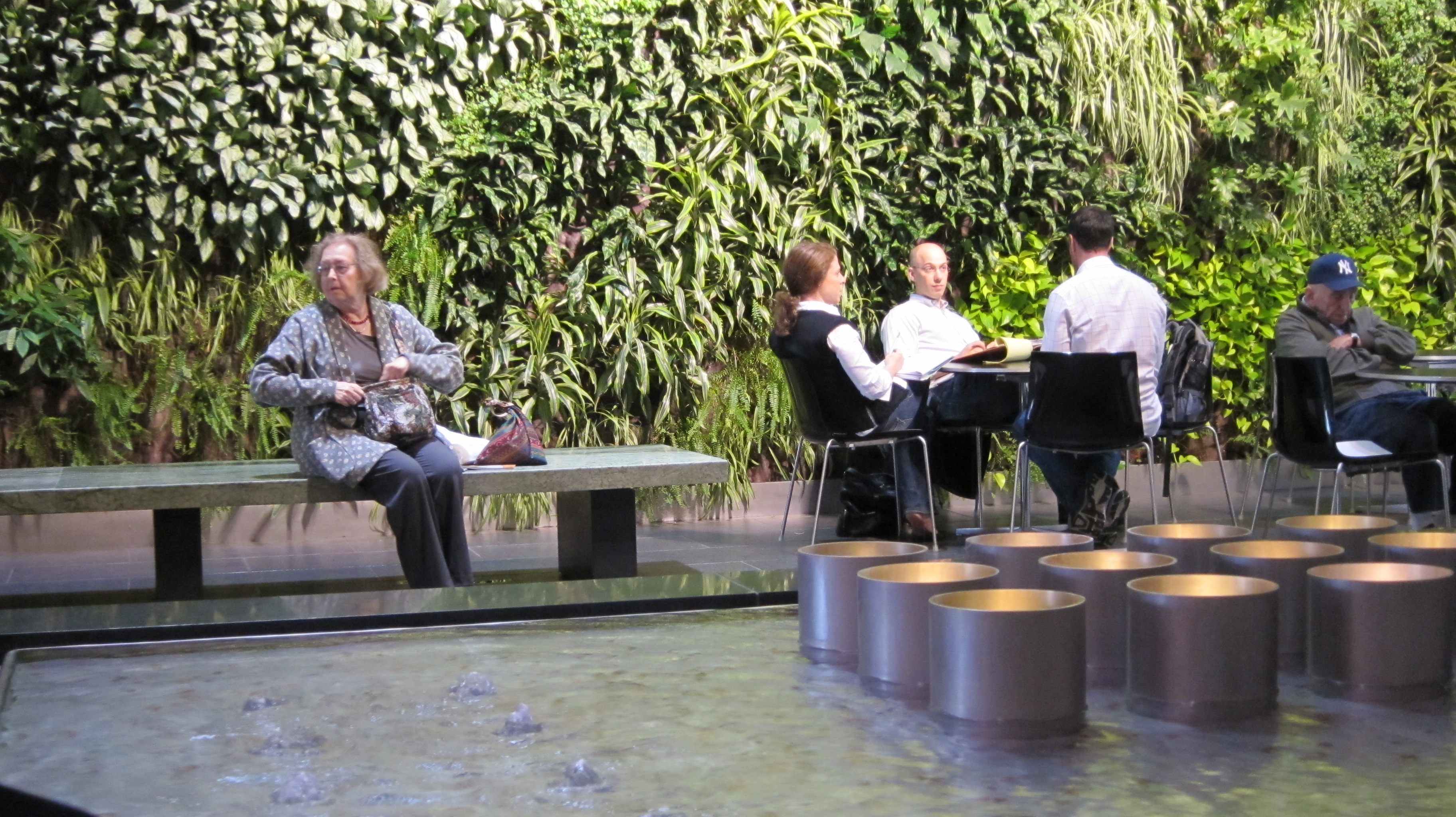
The water fountain and the living wall
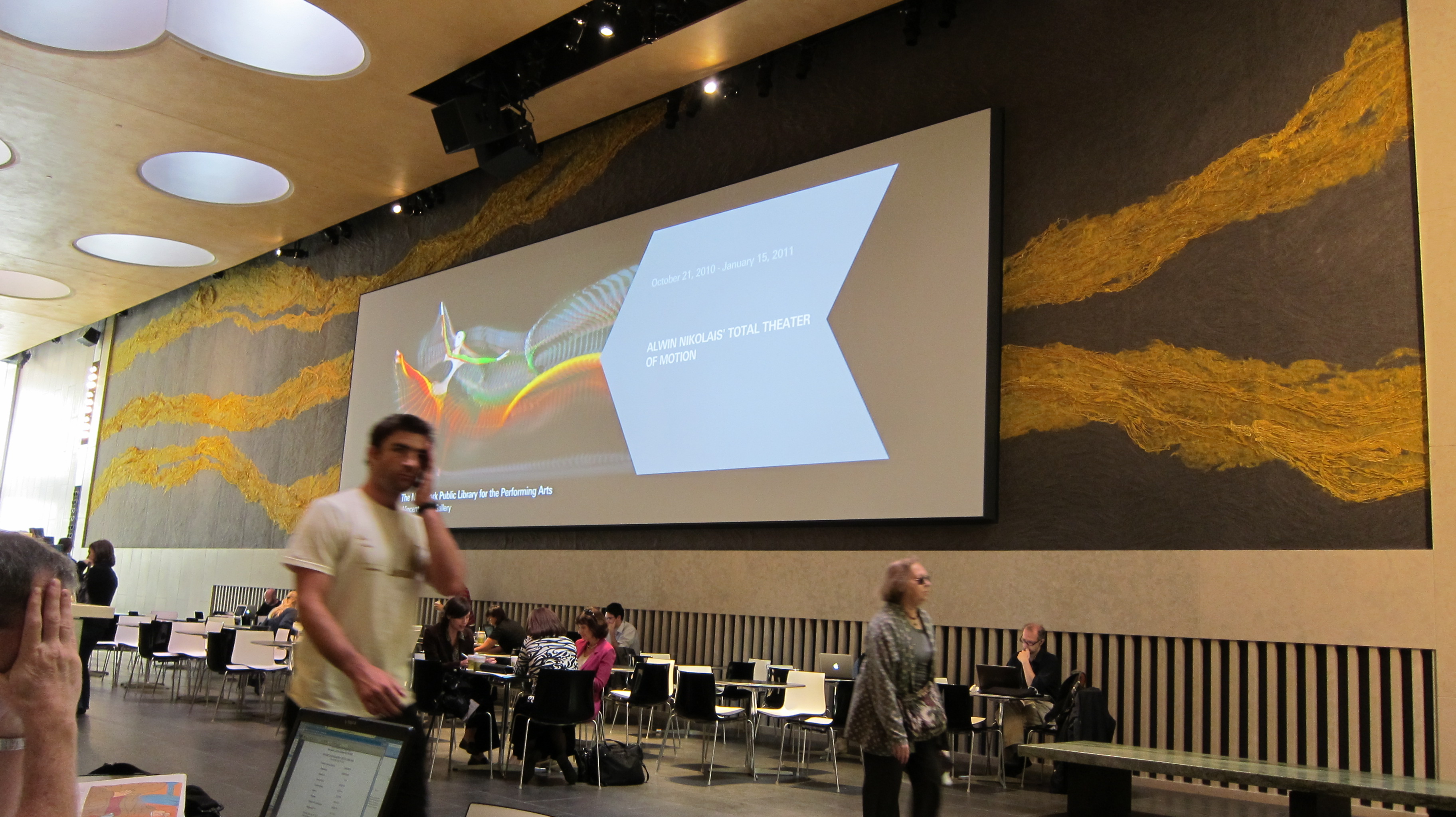
Handwoven Tapestry and a Computer Screen
Posted in Found Objects | Tagged acoustics, garden, New York, plants | Leave a Comment »
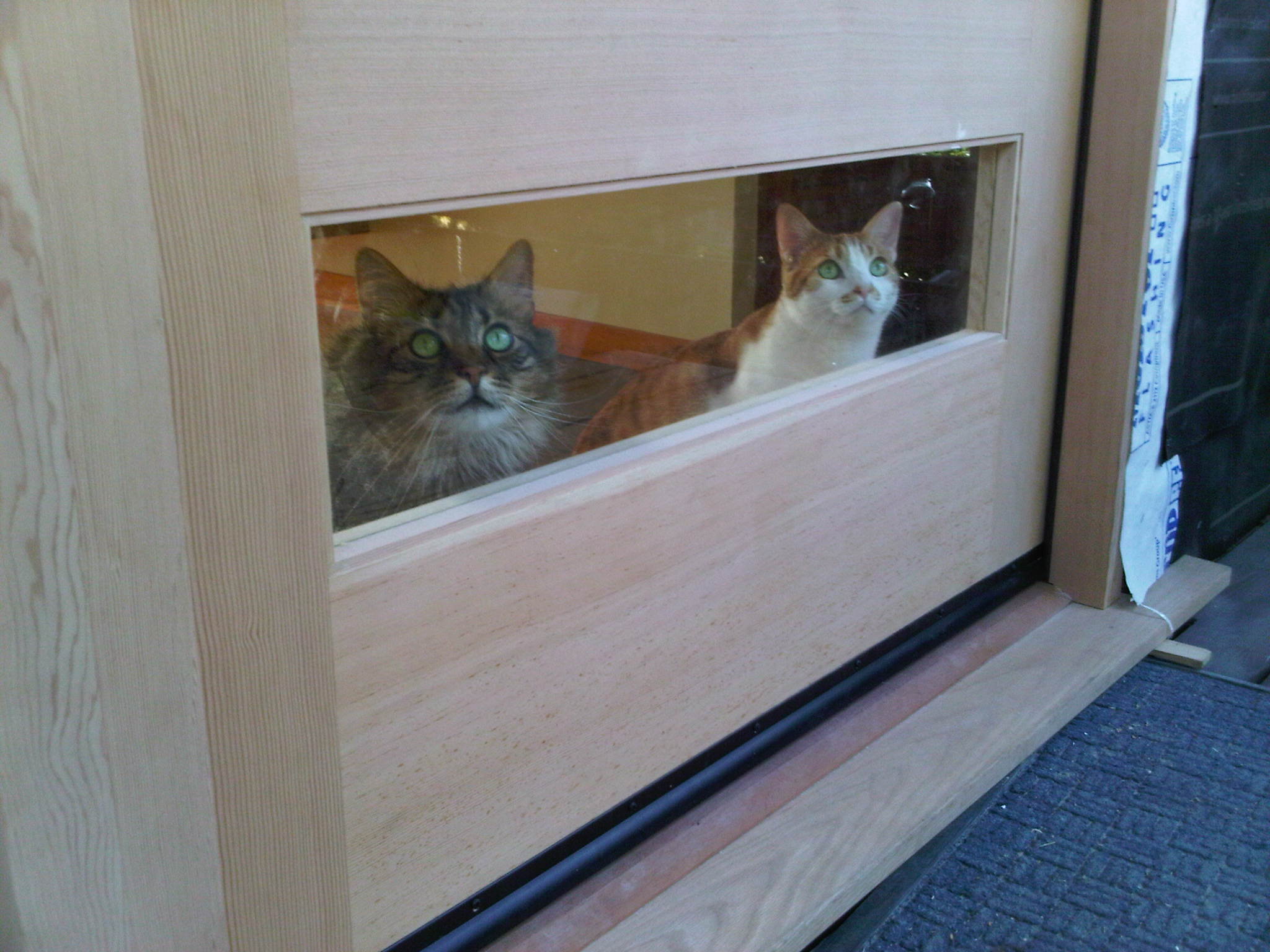
Pastis and Cognac are happy that their owners kept one clear pane for them
Posted in Design Projects | Tagged cats, doorways, El Cerrito, houses, whimsy | Leave a Comment »
This past Sunday I went on a tour of some cutting edge energy-efficient houses. (They are hoping to meet the Passive House Standard) These photos are of one house in San Jose (1820 Cottle Avenue) by One Sky Homes. It is a conventional, 3200 SF luxury tract home, but will need much less energy to operate. According to the Passive House calculations it will be Net Zero Energy (Solar panels on the roof will provide all the required energy)
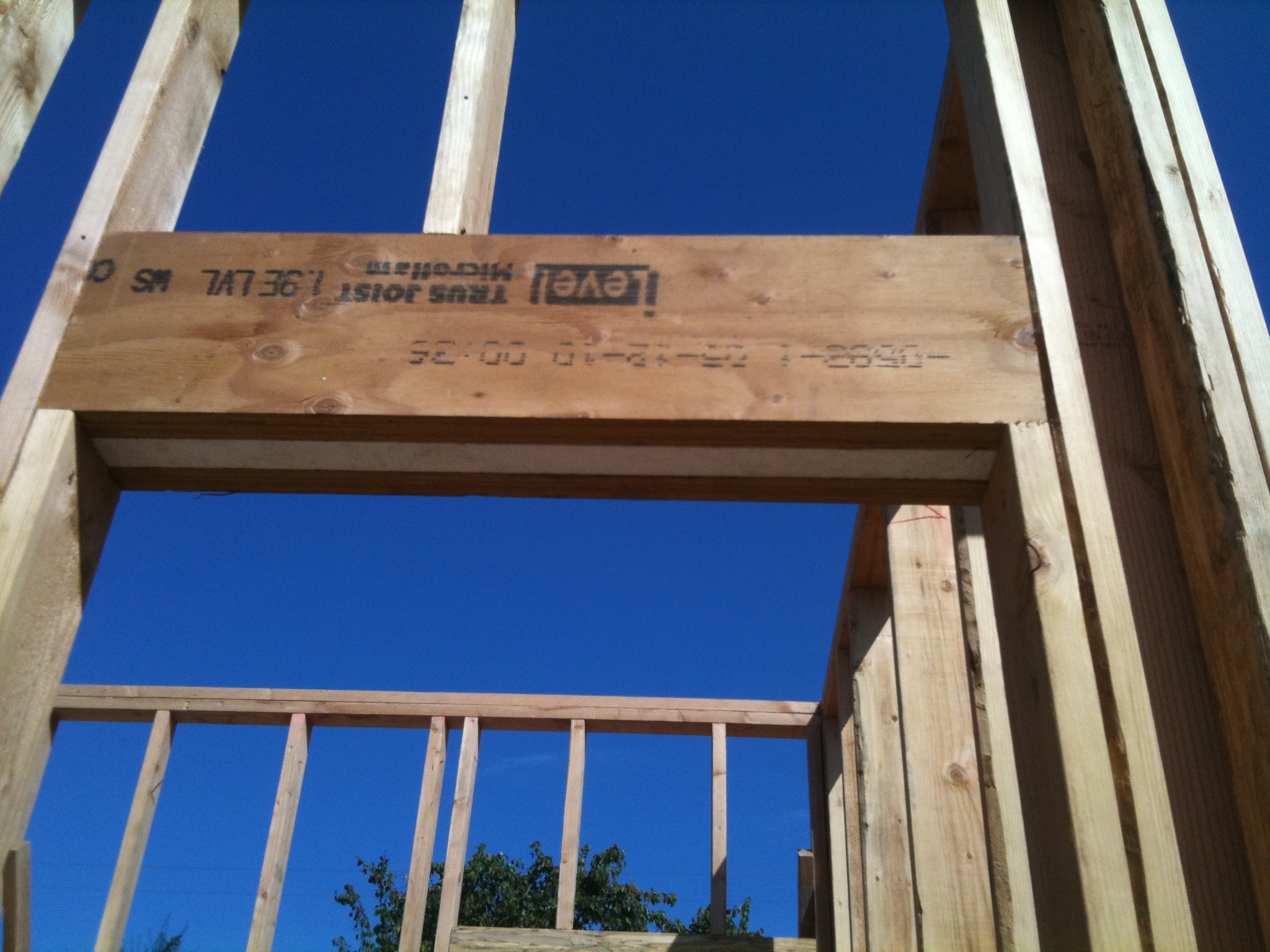
So far the house is only partially framed, but we were able to see the advanced framing techniques coming together, including this insulated header:
The house sits a top an insulated crawlspace. This is the first insulated crawlspace I have seen myself. The point of an insulated crawlspace is that all the ducts and water lines can run through conditioned space and energy is not lost. The insulated crawlspace also eliminates some of the thermal bridging that usually occurs where house meets the foundation and the earth. Finally, the conditioned crawlspace stays clean and dry, which makes it far more pleasant when maintenance requires someone to crawl around under the house. Here is a photo looking into the crawlspace from a ventilation hole:
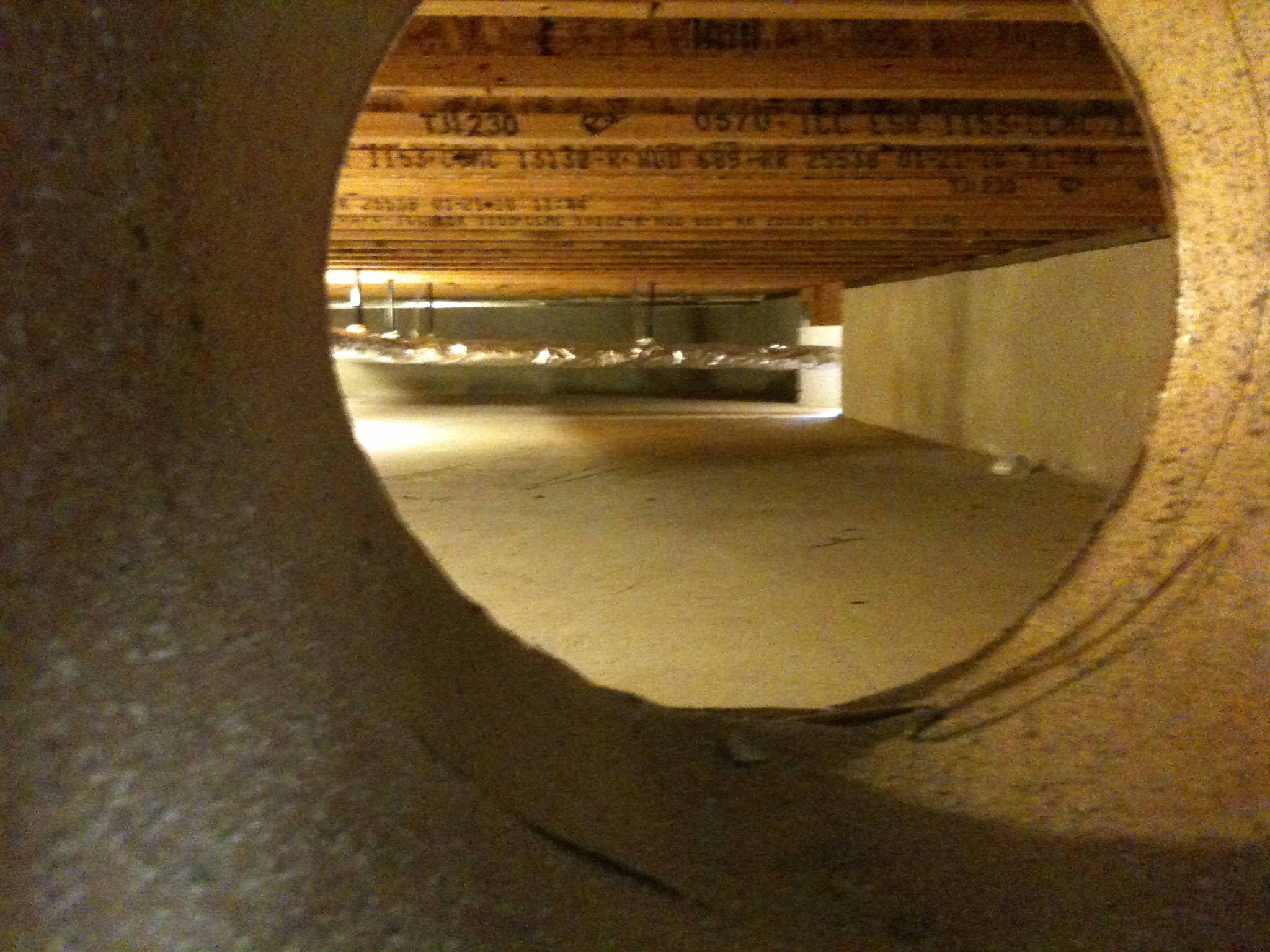
There is, of course, a french drain all the way around the perimeter and also a floor drain in the slab to make sure it stays nice and dry down there.
The walls are insulated concrete forms, and there is 3″ of insulation under the concrete slab as well.
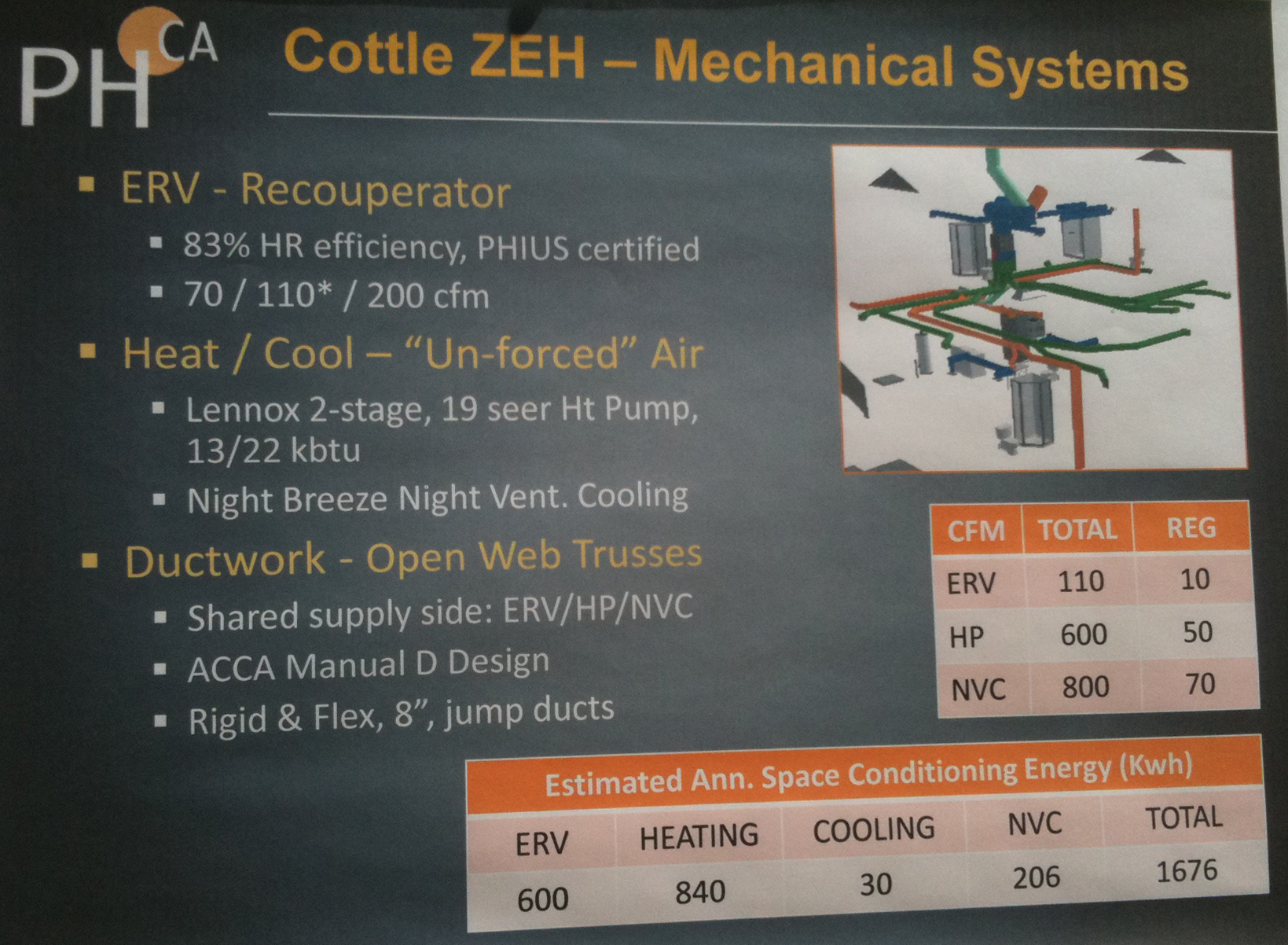
Here is a photo of some of the graphics explaining the heating, cooling and ventilating system:
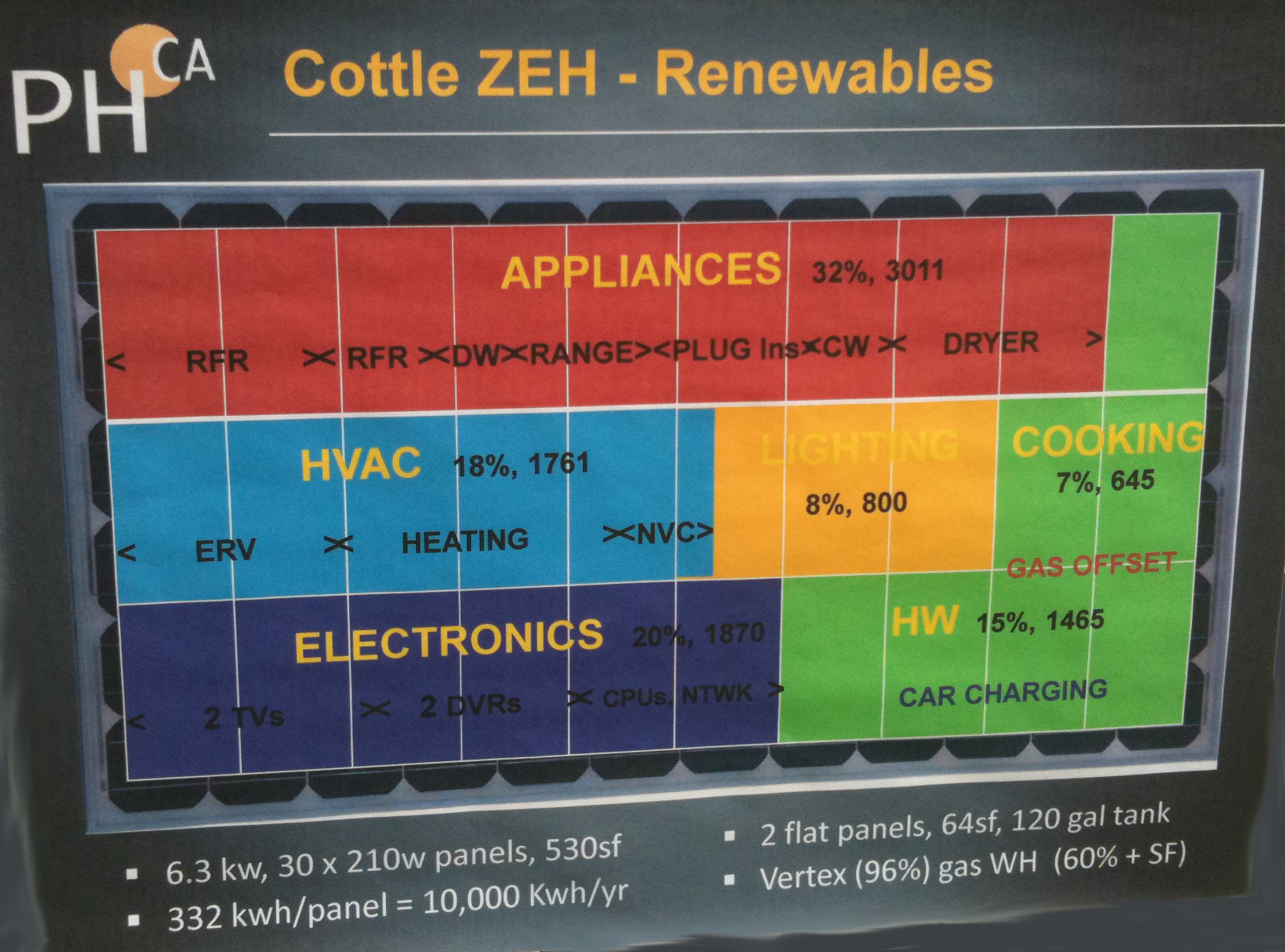
and another showing the anticipated energy breakdown for lighting, appliances, thermal comfort, electric car charging, and entertainment:
Posted in Found Objects | Tagged energy efficiency, green, passive house, process | Leave a Comment »
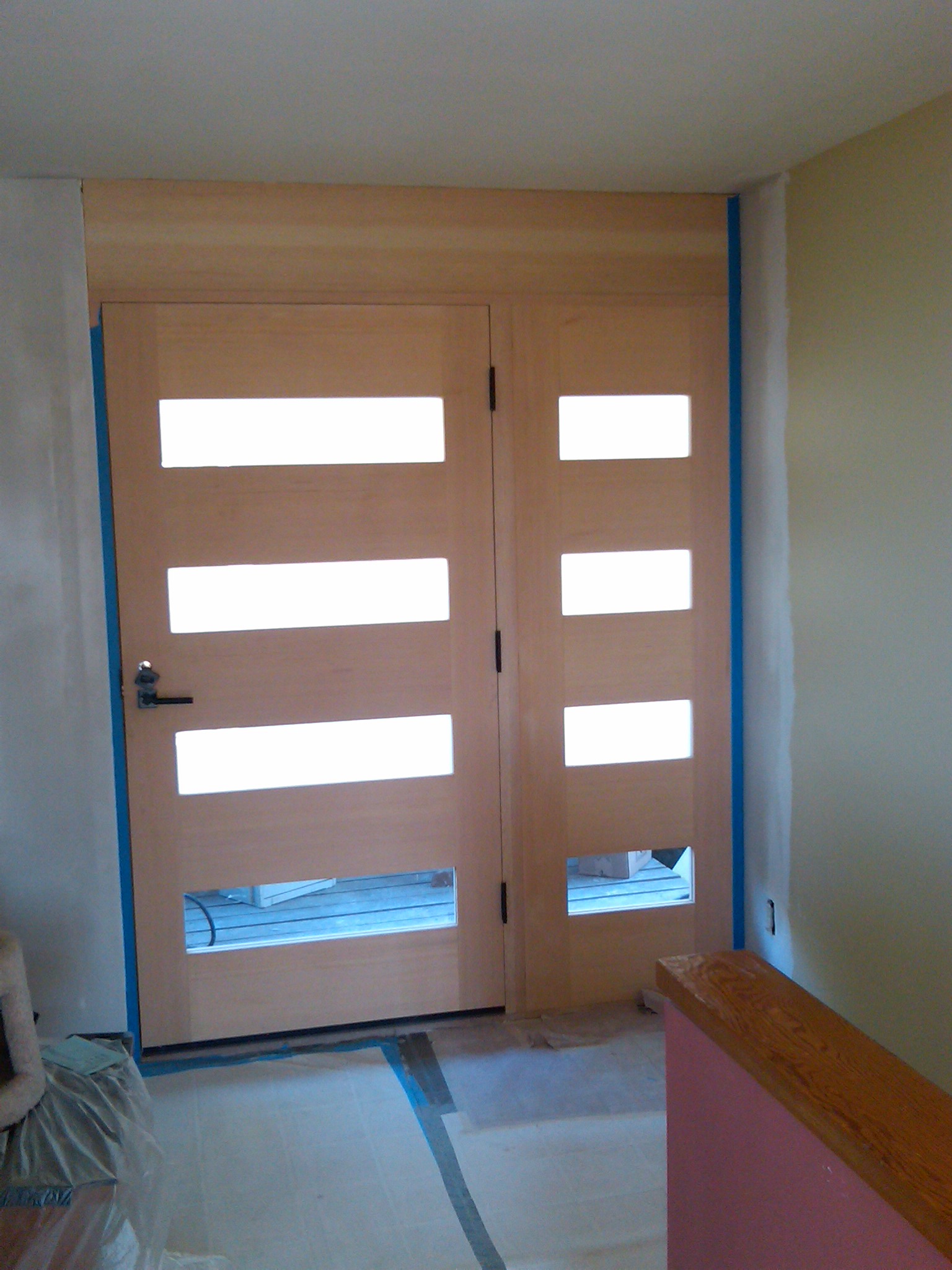
The front door was installed yesterday. Now we are working out the trim details. (Ignore the blue painters tape please)
We decided to make the fir continue all the way to the ceiling and the corner for simplicity Having a sliver of white to the right of the door and a wider sliver above would have diminished the installation. I admit some influence by the intersecting planes of Gerrit Rietveld’s Schröder House
Posted in Design Projects | Tagged doorways, El Cerrito, houses, mahogony, process, wood | Leave a Comment »

The As-built Floorplan
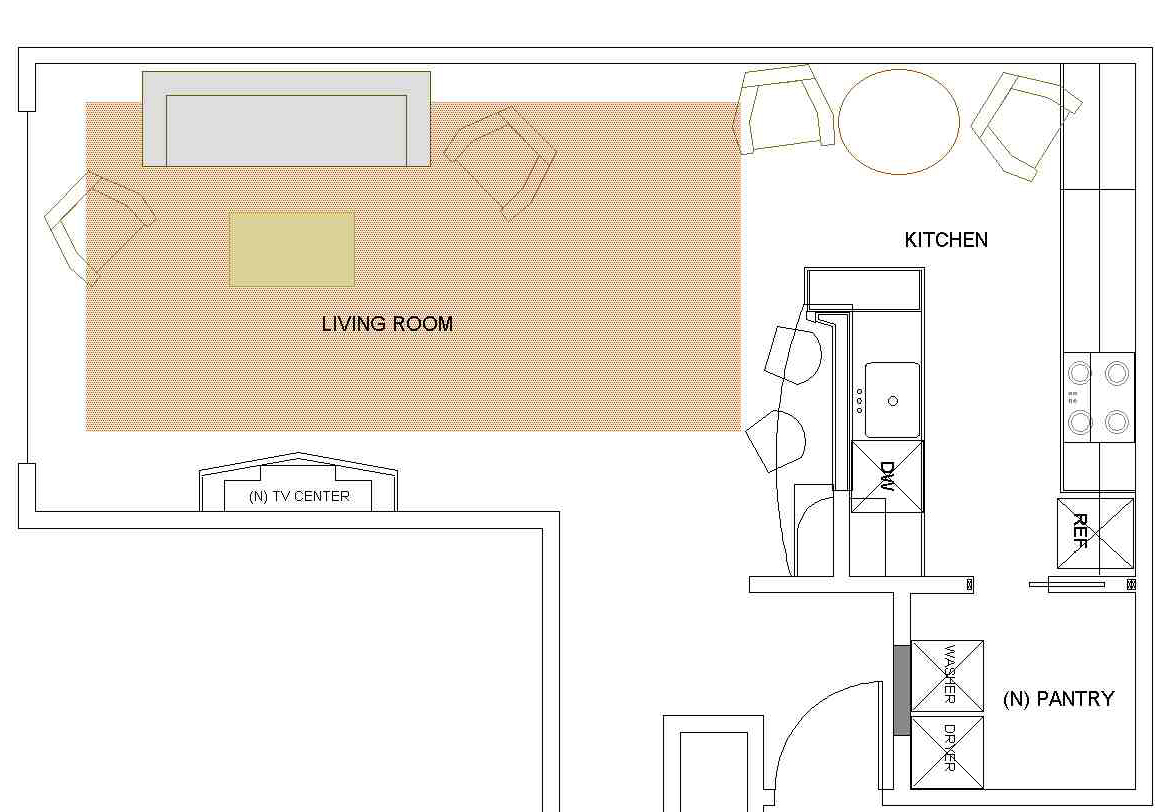
The Revised Floor Plan
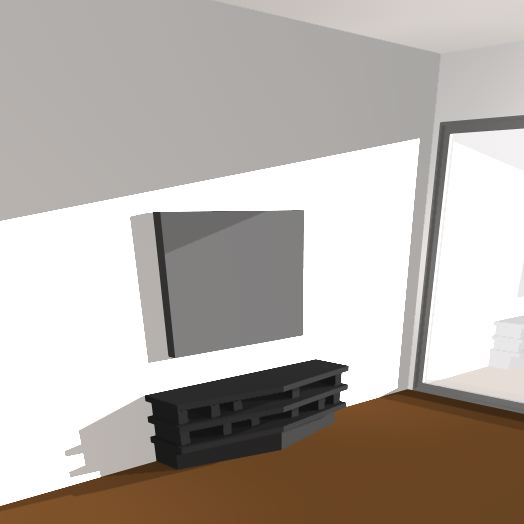
This upgrade includes an expanded kitchen (for a client who enjoys cooking,) modern kitchen cabinets, a lot of drawers to maximize storage, New lighting design throughout the kitchen, foyer, and living room, conversion of a large storage closet into a pantry and laundry room, incorporation of a desk area into the kitchen, elimination of an electric fireplace with two-dimensional paper bricks and a new wall mounted flat screen TV with custom entertainment cabinet below.
Here are a few pictures of the kitchen before construction:
-
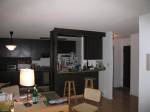
- The kitchen
-

- view from the kitchen with fake brick fireplace
-
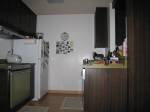
- the kitchen
-

- Entry hall & storage closet
I am going to make you wait for the AFTER photos until it is finished,but here is a computer model of the new TV center to come:
Posted in Design Projects | Tagged furniture, kitchen, process | 3 Comments »
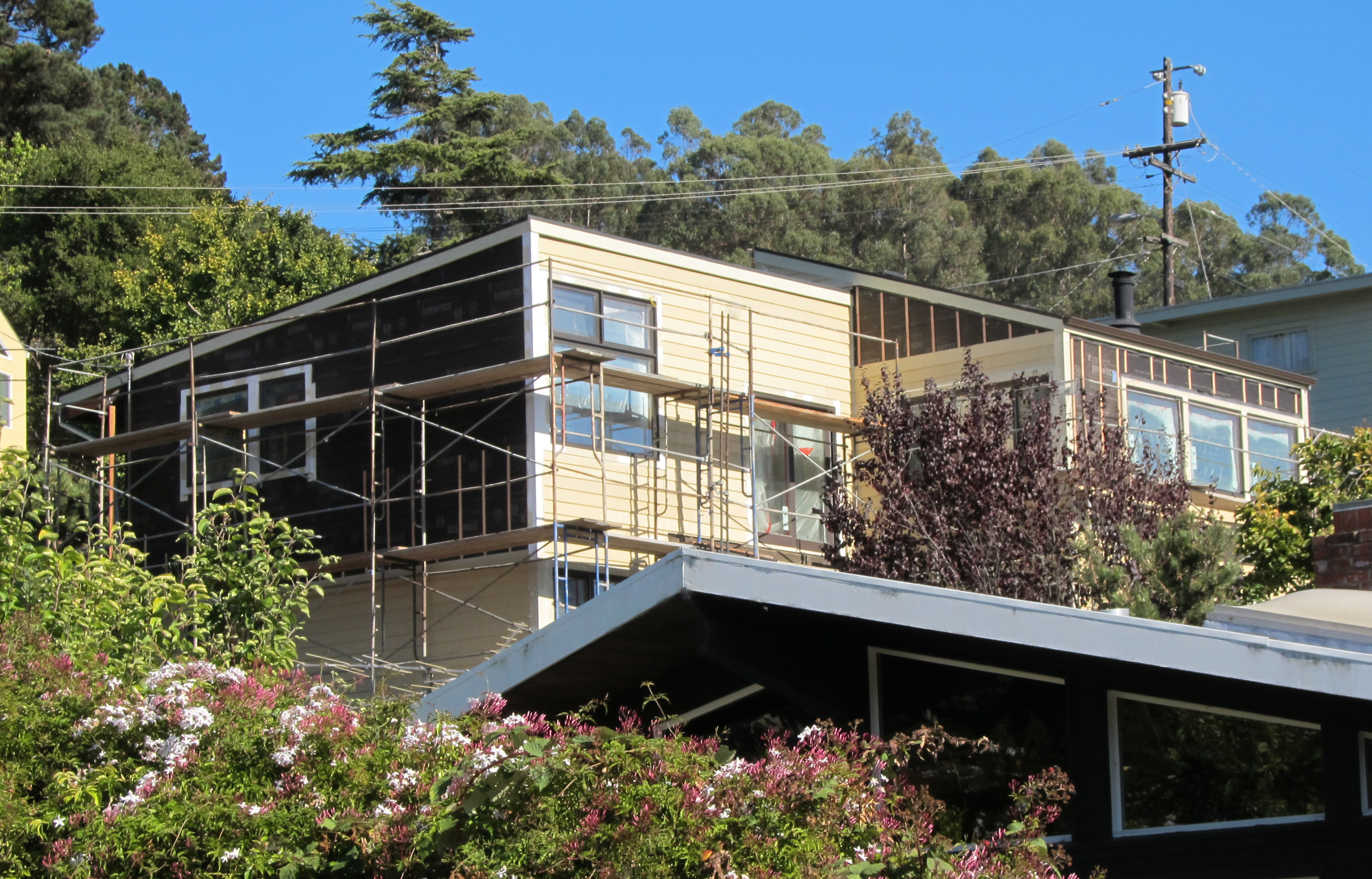
Posted in Design Projects | Tagged El Cerrito, fibercement, process | Leave a Comment »
The client and their cats are moving back home so Guillaume put in a rush order for the custom fir door. Here is a photo of the door glued and clamped at John Staton in West Berkeley: 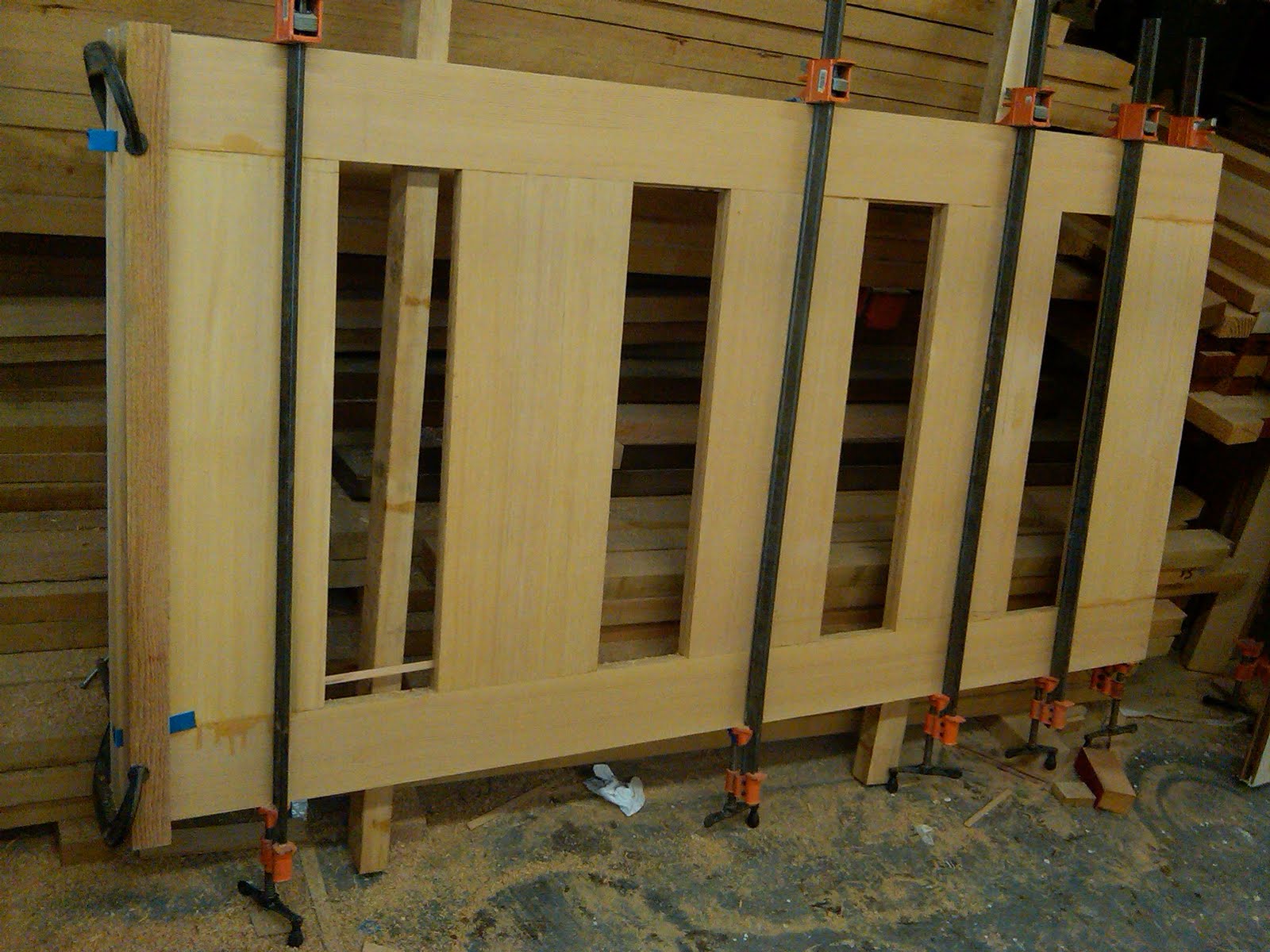 I hope it will be ready in time!
Posted in Design Projects | Tagged doorways, mahogony, process, wood | Leave a Comment »
It is hard to get good pictures of the rainscreen assembly, but here are a few courtesy of Mr. Canivet.
The point of the rainscreen is to allow air to circulate behind the siding and dry out the backside. This way the moisture doesn’t instead get sucked inwards into the insulation and stud bays and the paper-backed sheet rock when you turn on your industrial kitchen hood. This can cause all sorts of problems. It also just keeps the moisture from lurking behind the siding.
The siding is 5/8″ thick fibercement lap siding. the furring is 1.5″x5/16″ cedar strips, and the drainage plane is good old-fashioned 2-ply building paper. In order to keep insects from building nests behind the siding Guillaume came up with a simple detail using wire mesh and filter fabric at the top and bottom and above and below each window.
Posted in Design Projects | Tagged El Cerrito, fibercement, process, rainscreen | Leave a Comment »
Portière: a curtain hung in a doorway, either to replace the door or for decoration.
I visited my friend Duncan last week at his parent’s house in Cold Spring Harbor, Long Island:
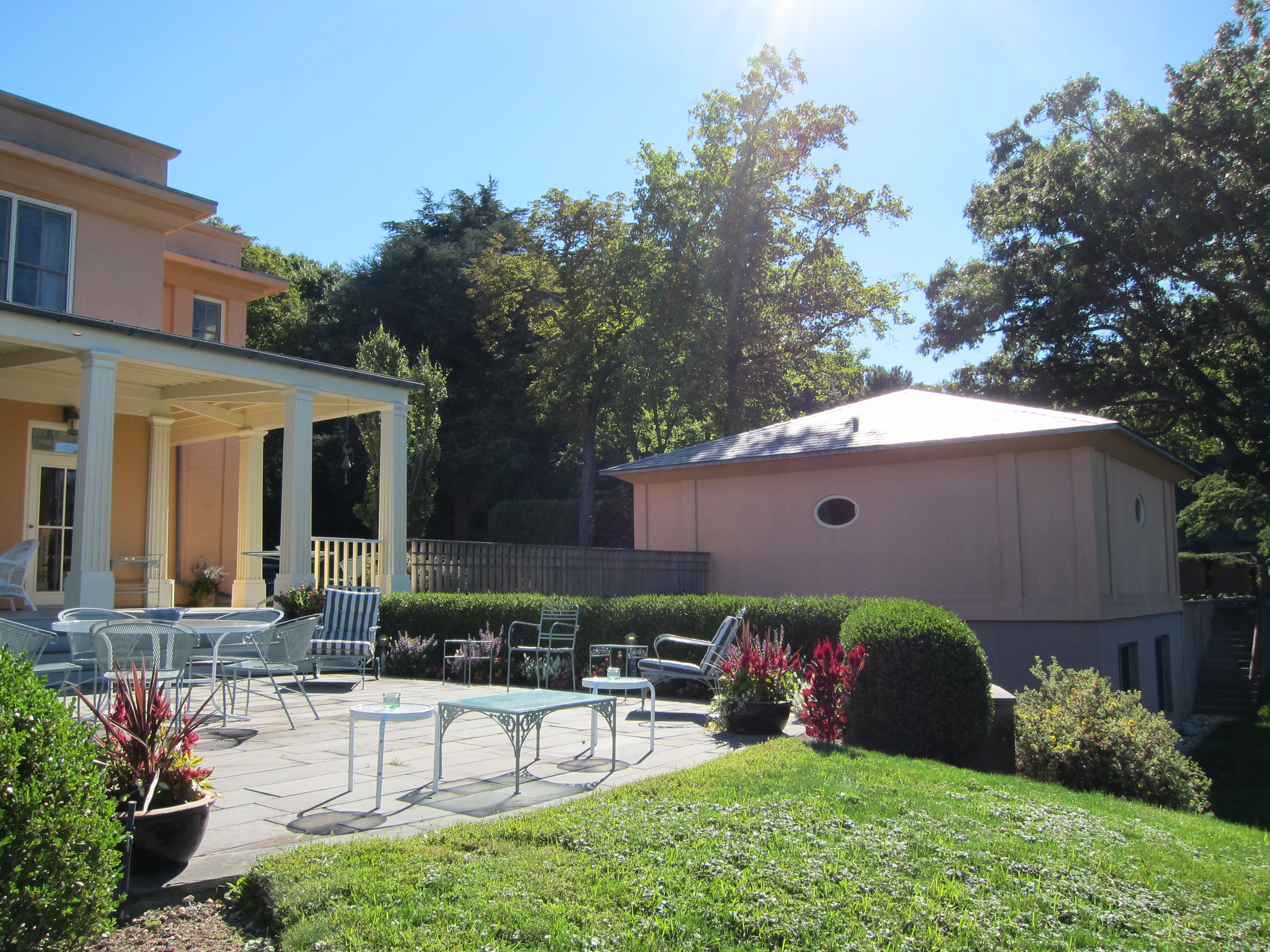
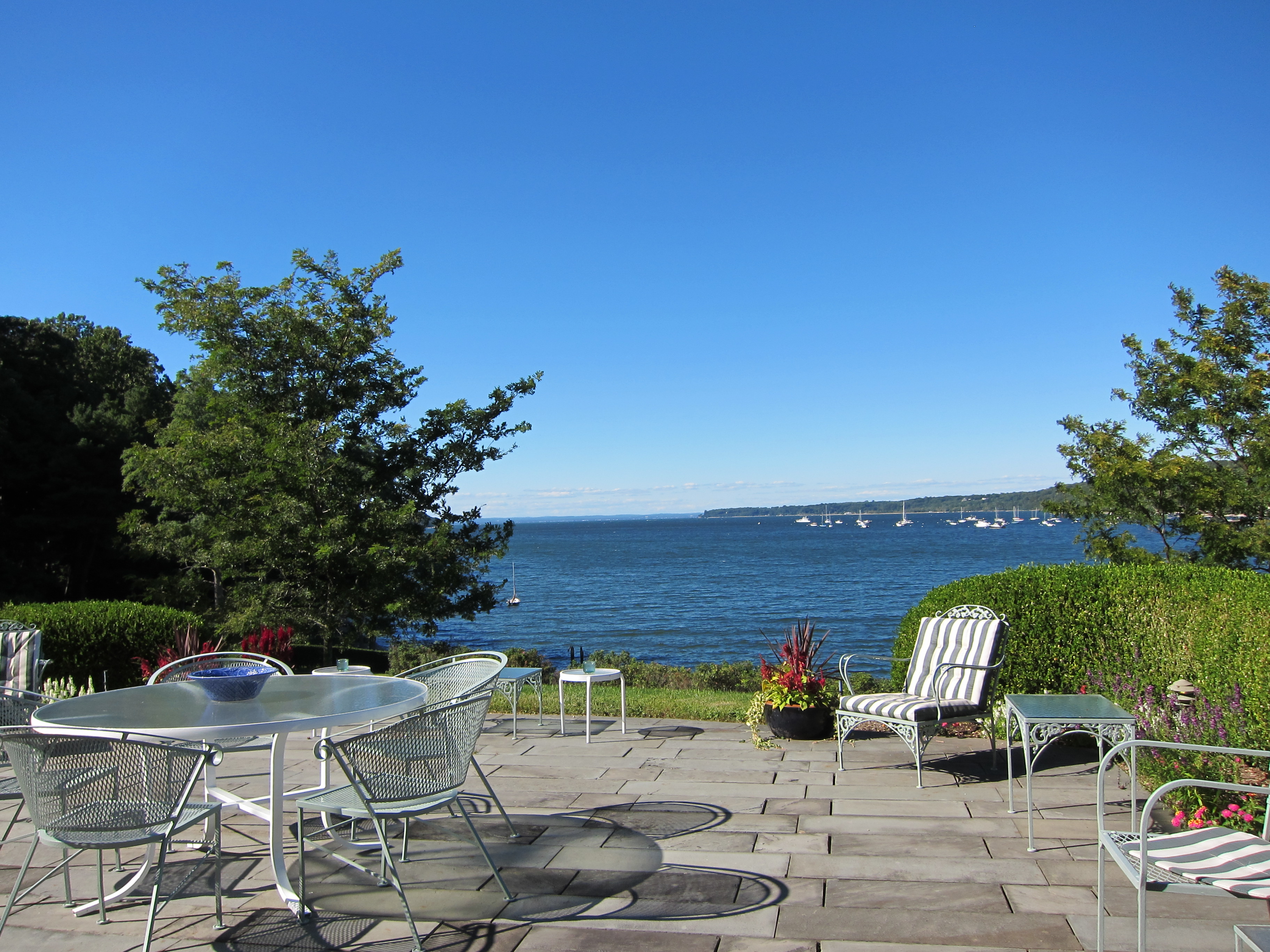
I learned this word from Duncan’s mother, Elizabeth Watson, an architectural historian. She has a these good examples of simple, utilitarian portière in her own house:
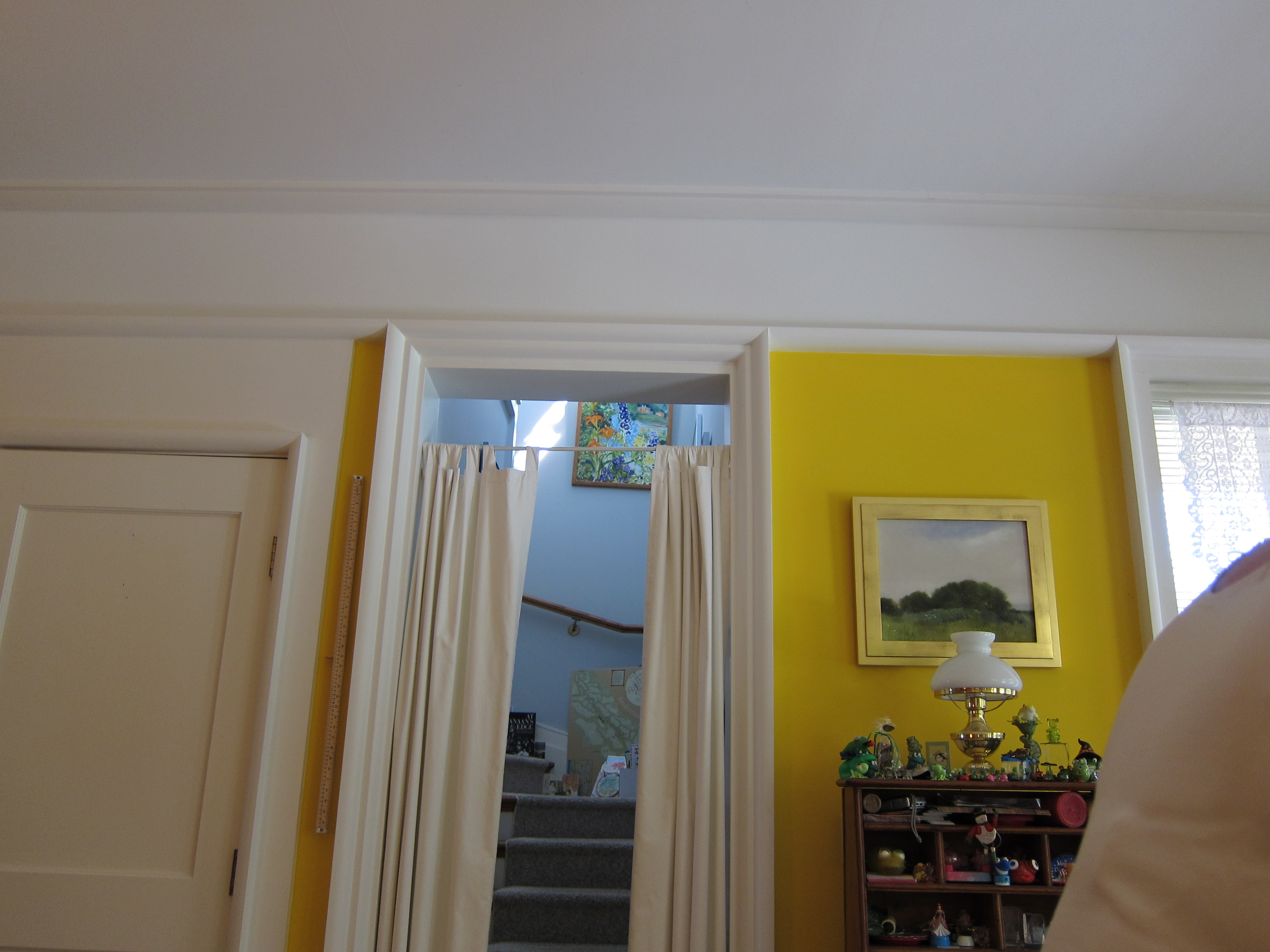
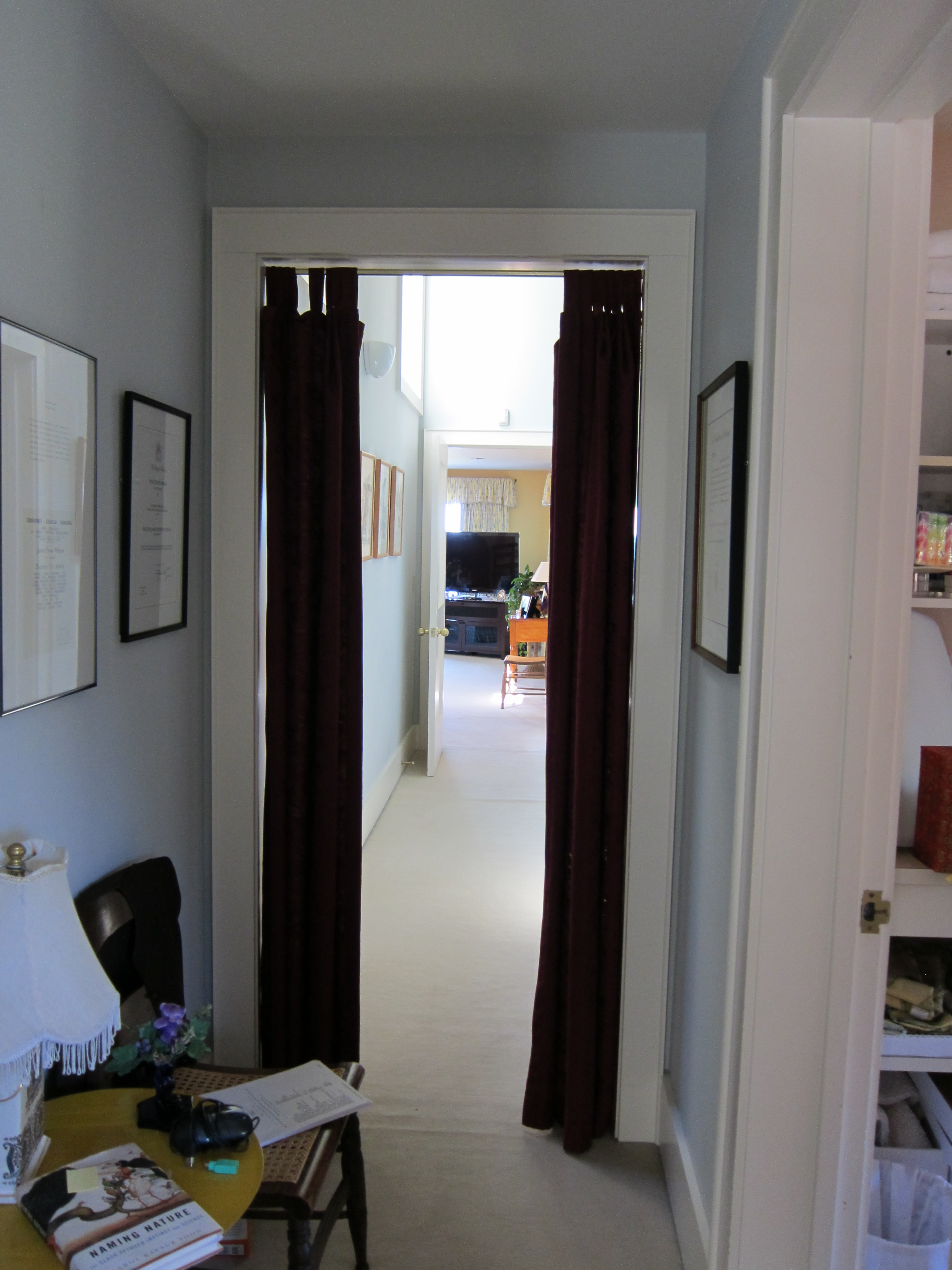
This architectural term comes from the French word for door, porte. Common in wealthier households during the Victorian era (according to Wikipedia,) curtains are still a great way to create privacy, mitigate drafts, hide a messy closet, subdivide a space, or create a cozy nook. Its much more affordable to put up a curtain than install any sort of door, and it is especially appropriate if you need a temporary or quick solution, or if you get excited about fabrics or a splash of color.
Here is a fancier example of Portière from the National Gallery in Washington DC:
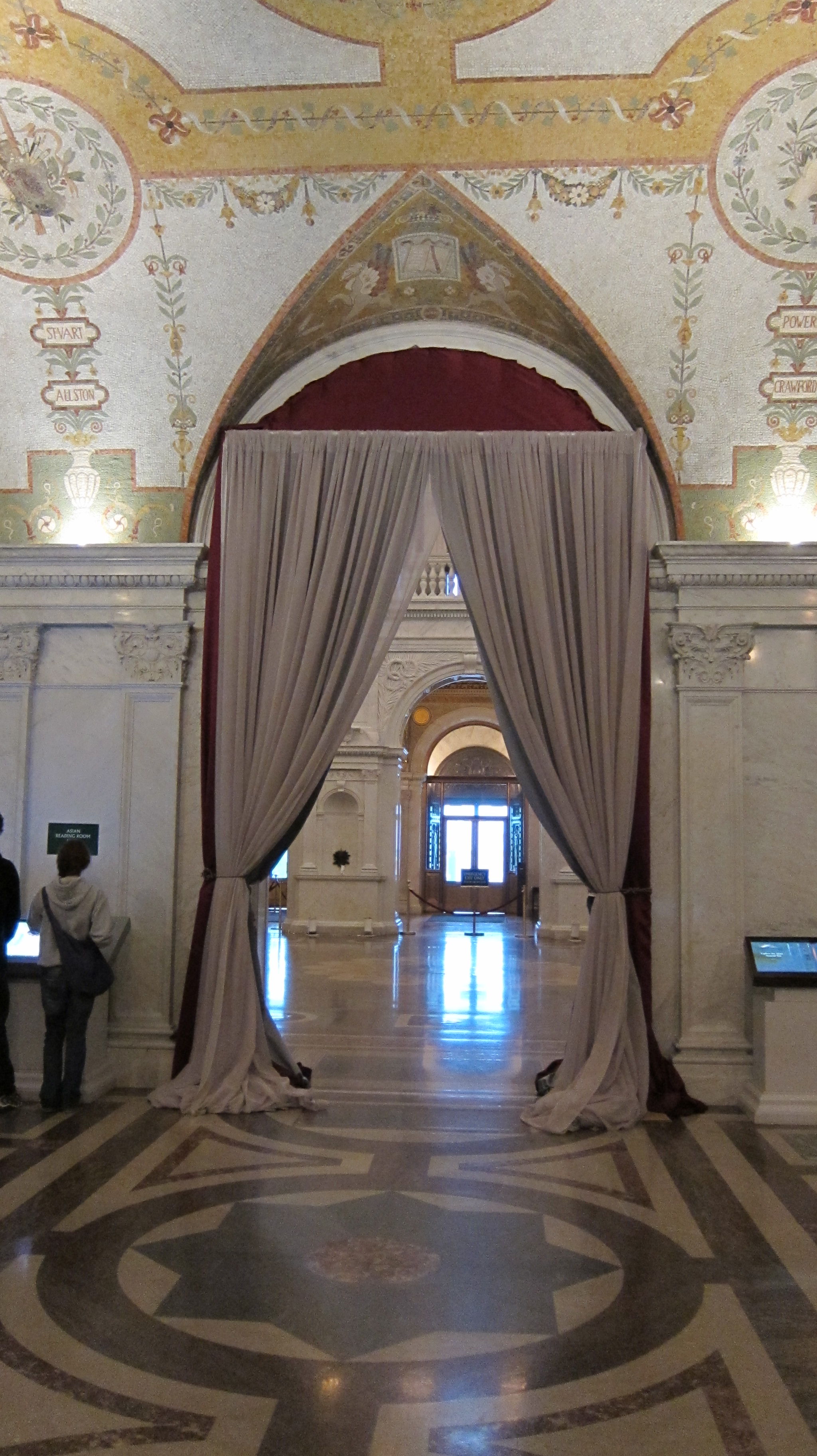
I also found this drapery design blog with all sorts of examples of portière.
Posted in Found Objects | Tagged buildings on the water, Cold Spring Harbor, doorways, houses, interiors, value | 1 Comment »
- accessory dwelling unit acoustics addition additions ADU Albany aluminum angles appleply ash bathroom Berkeley birds boxes Brooklyn buildings on the water cabin cabinets cedar children color concrete construction process copper cottage curiosities curves decks decoration desert architecture details Detroit dog doorways El Cerrito energy efficiency Fairfax fence fibercement fir fire resistant construction framing fun furniture Garage garden glass tile green green building handrail historical styles holes house houses house surgery humor indoor-outdoor interiors isba John Mcbride Julia Morgan kitchen landscape LED light lighting lighting design McBride Construction metal minimalism modern new materials New York Oak Oakland paint painted plywood pantry paperstone passive house passive solar patterns plants plywood poet's corner Point Richmond process railings rainscreen recycled redwood remodel remodelling restaurant Richmond Rockridge roof rustic salvaged San Francisco San Mateo shou sugi ban simple skylight small buildings small spaces solar electricity sparkle stained glass steel storage Strawbale structure stucco subway tile tile tiny house trim turquoise utilitarian utility value vaulted ceiling victorian walnut water management whimsy windows wood zinc
-
link to RSS Feed

 deedsdesign