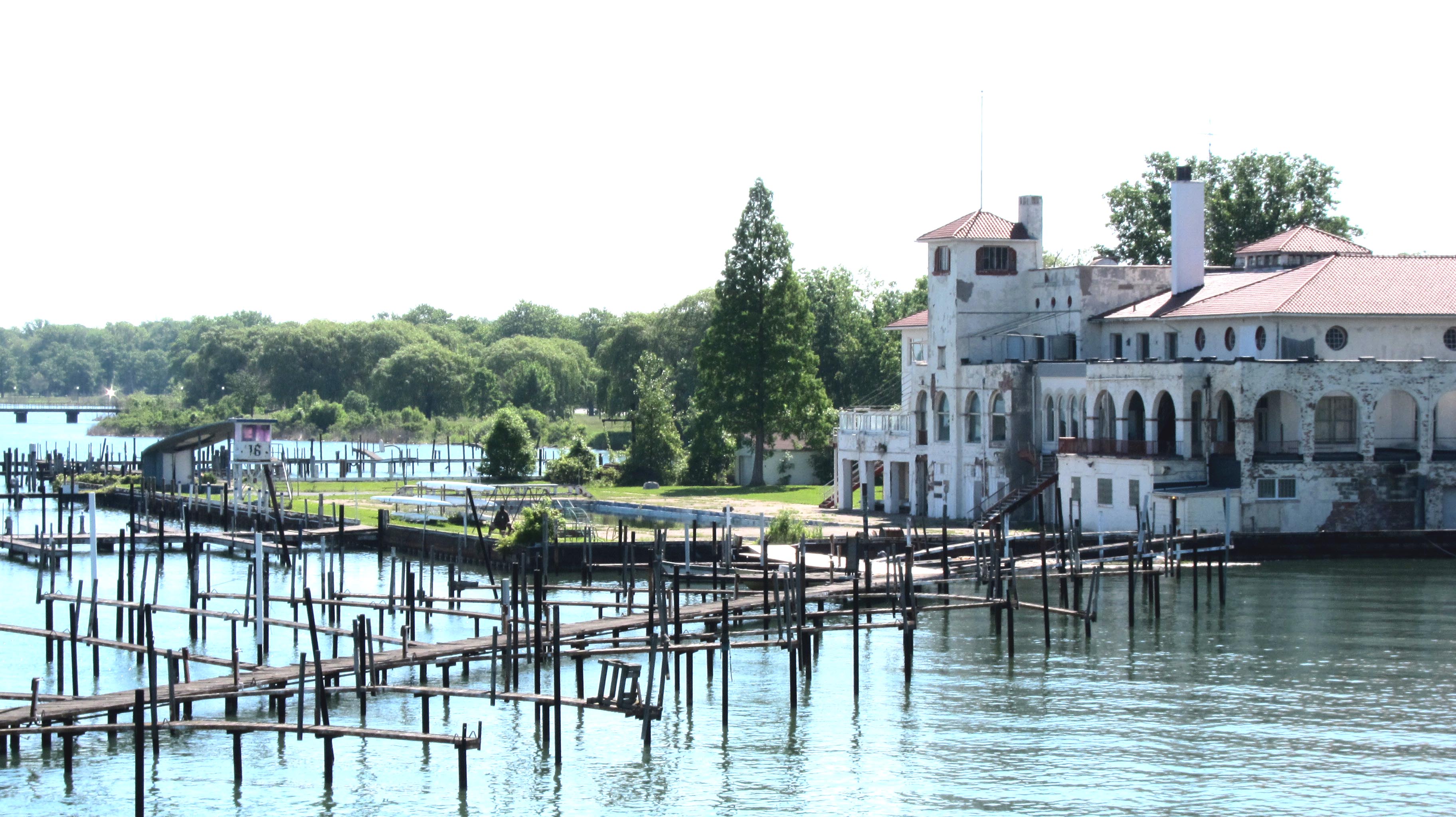
 The oldest Boating Club in North America is on Belle Isle in the Detroit River. It sits empty, needing 20 million dollars in repairs.
Posted in Found Objects | Tagged buildings on the water, Detroit, historical styles, yacht clubs | 1 Comment »
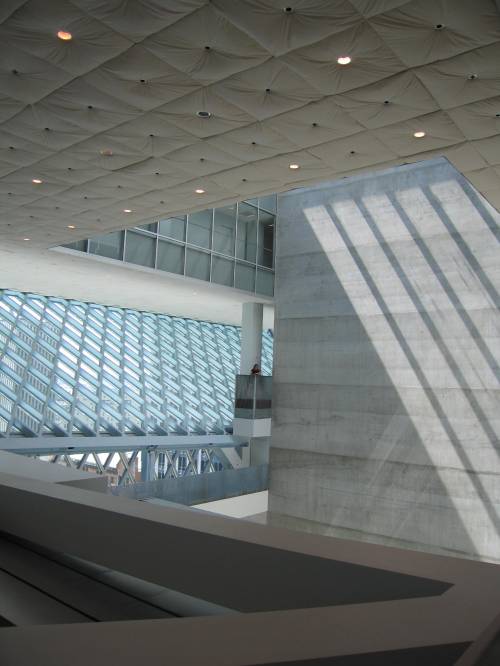
I just returned from a field trip to Seattle, Washington. We visited one of my favorite buildings of all time, The Seattle Main Public Library by Rem Koolhas, to see how it is holding up. It is now 7 years old and still looks great. Very raw and utilitarian…but nicely detailed to be comfortable and functional too. This building makes me realize that it is sometimes worth the effort to stick to your guns and convince the client to do something really different. There is nothing conventional about this building.
We also visited Ellie Sherman at the Whidbey Institute.
She lives in a tiny cabin – about 7’x8′.
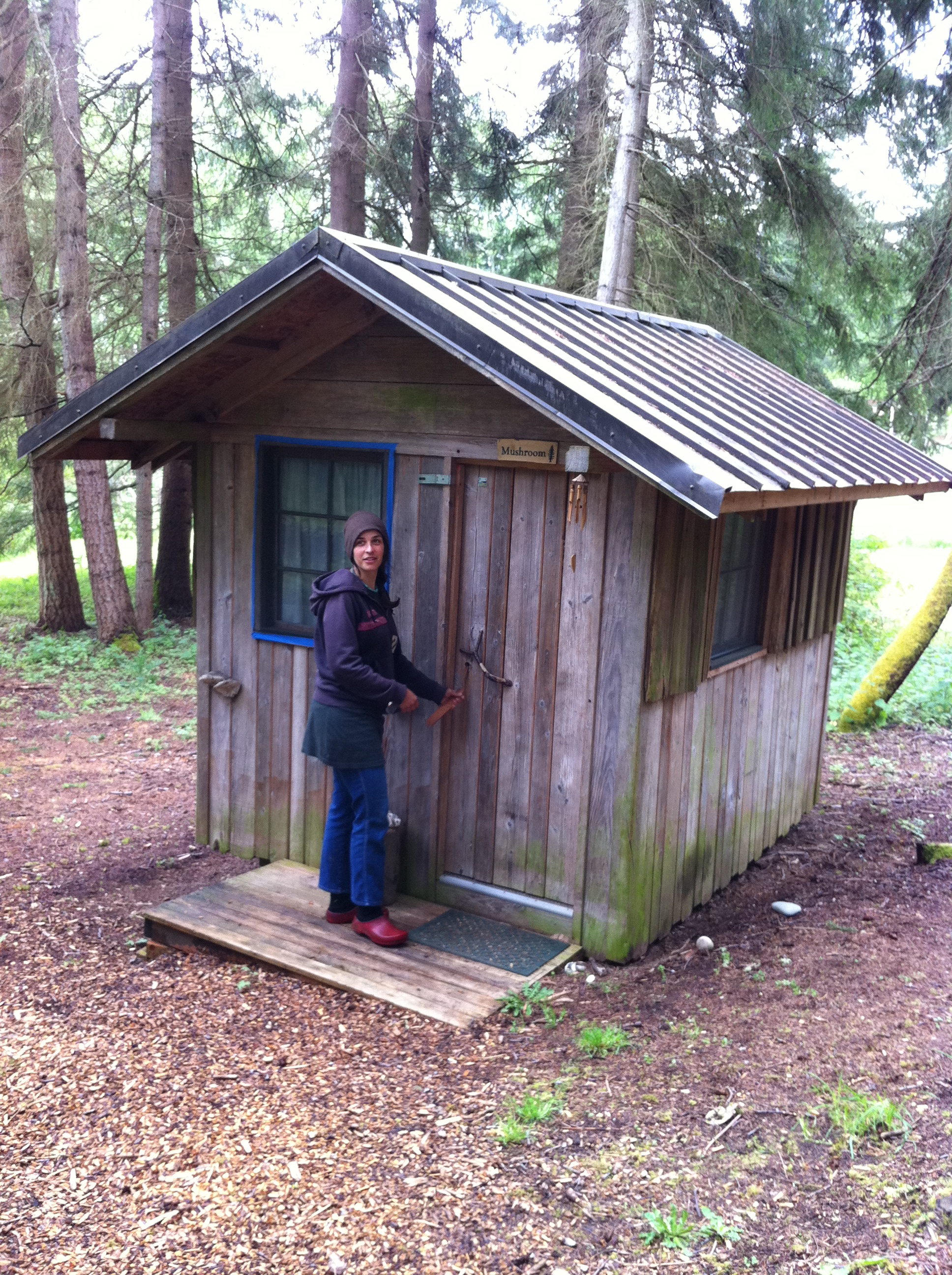
It is very cozy inside. I wish I had a photo. There is something really nice about bedrooms just barely big enough for a bed, some clothes, and some books.
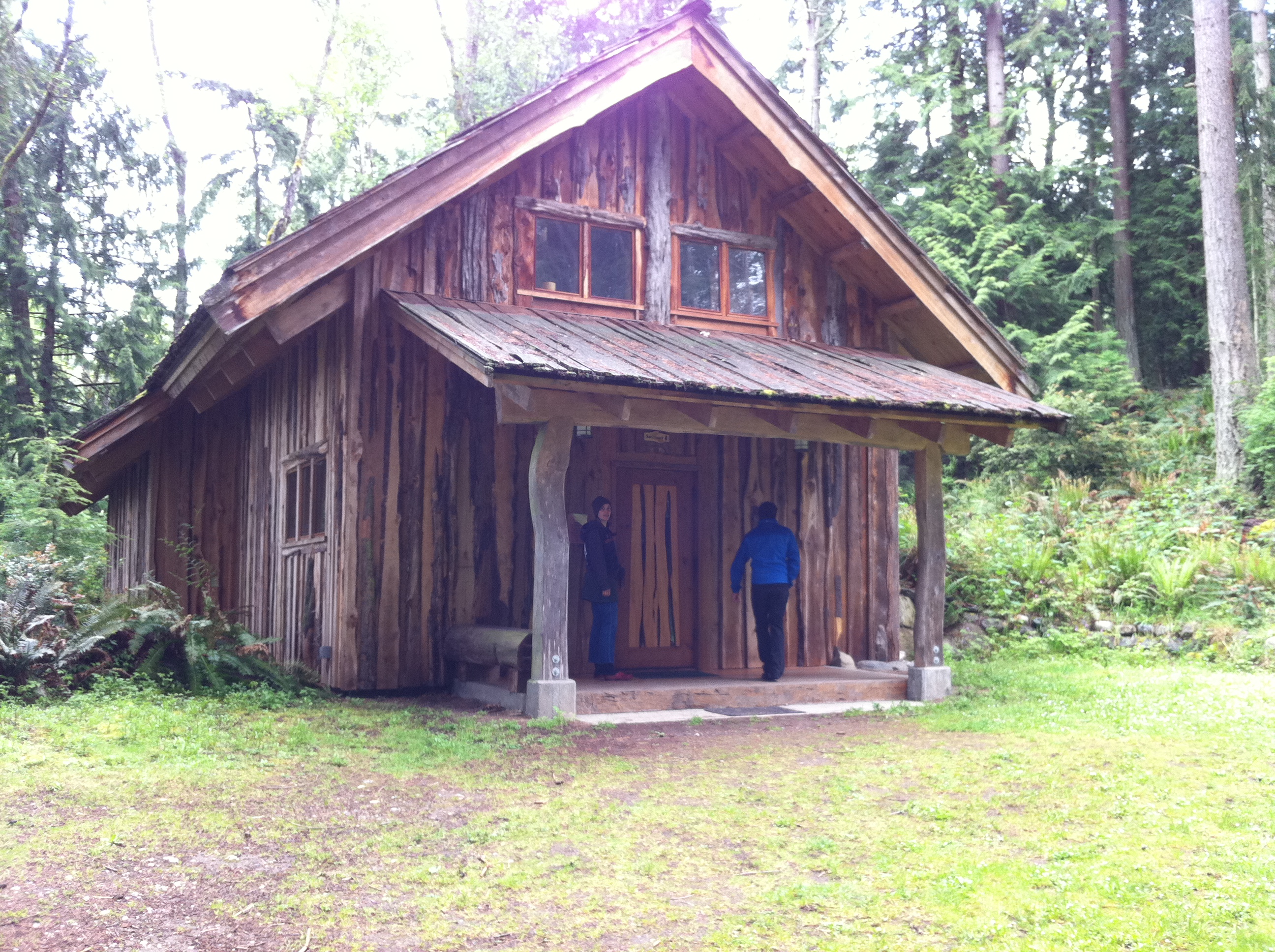
The Sanctuary is another nice building at the Whidbey Institute:
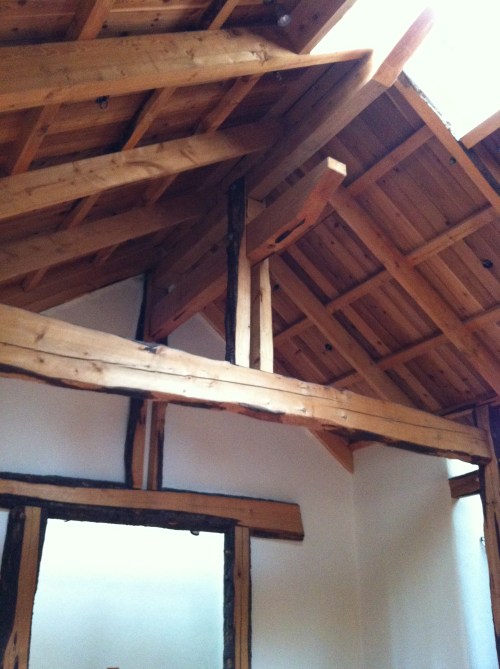
Also, on Whidbey Island, we collected a feast of clams and mussels.


We had a good local guide who shared his secret mussel patch with us.

When we returned, I took a nap in my friend Jason’s tiny retreat on wheels, only slightly bigger than Ellie’s cabin, but it contains a bed, and table for two, and a kitchenette. (you can see it here in the background behind Jason and Rosalina)
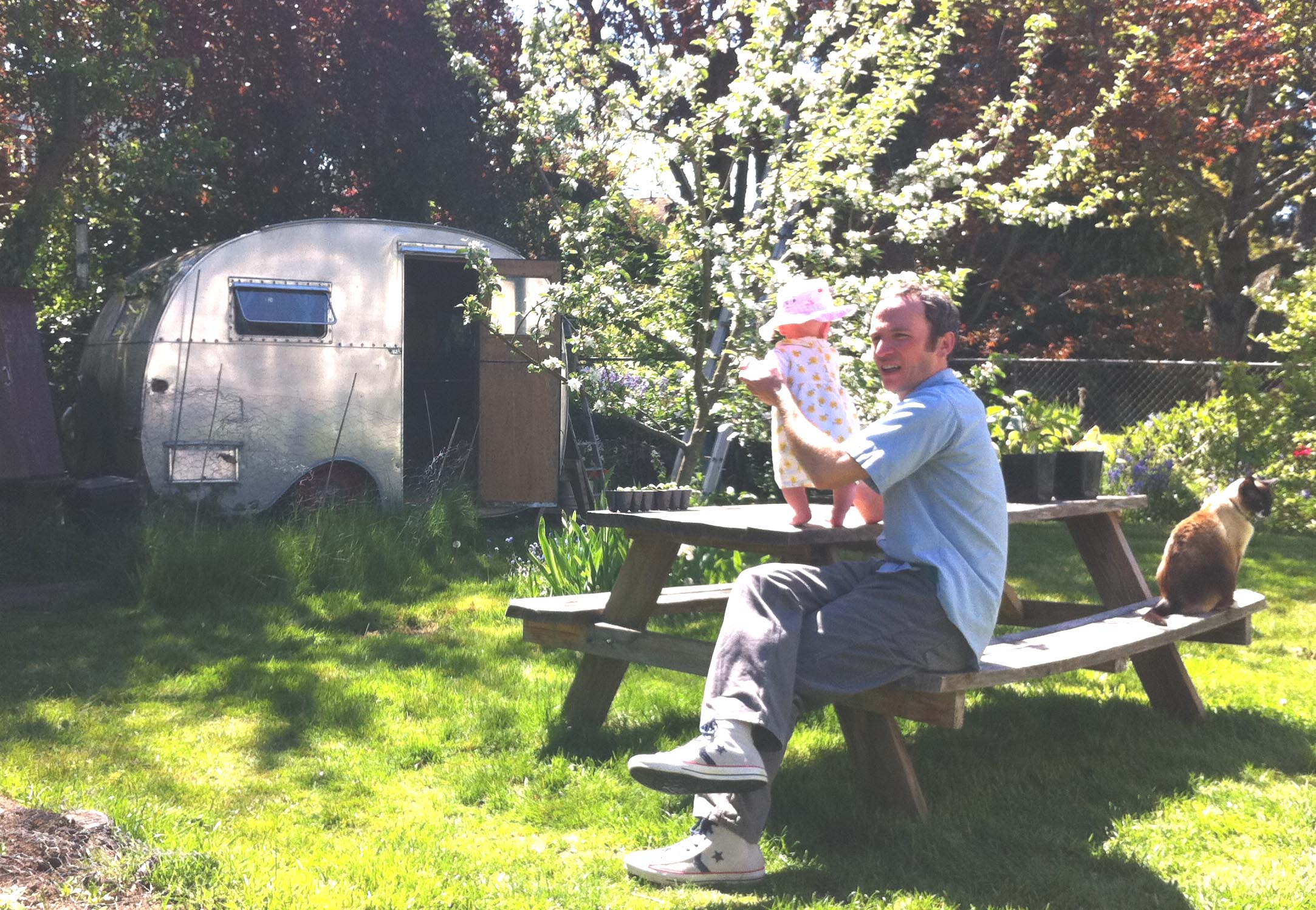
And then we cooked clams in Tofty’s yellow kitchen
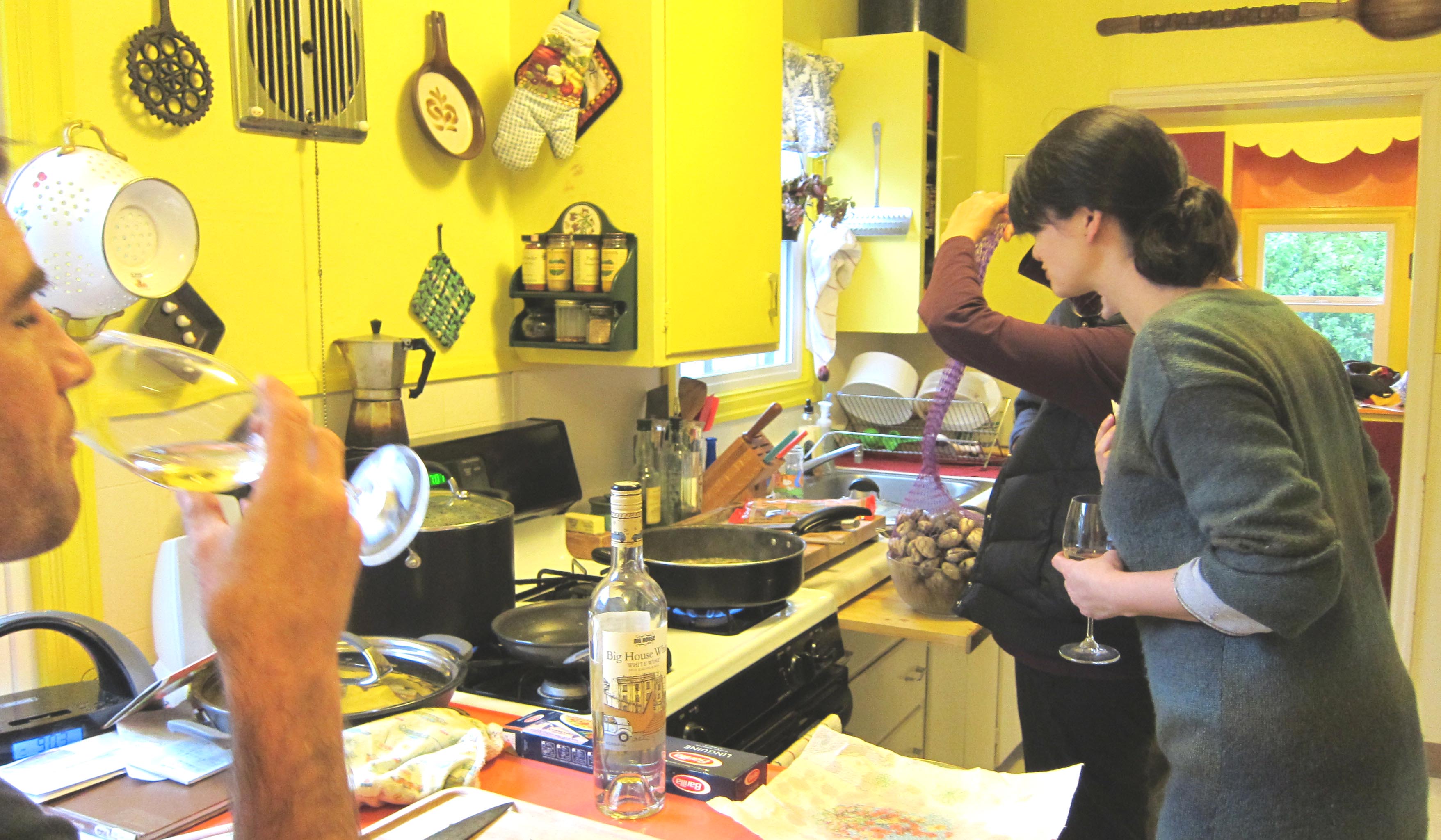
John sips wine while Jody and Vina tend to the clam sauce
Posted in Found Objects | Tagged acoustics, cabin, clam digging, color, concrete, Library, porches, Rem Koolhas, rustic, small buildings, timber frame, tiny trailer home, utilitarian, wood, yellow | Leave a Comment »
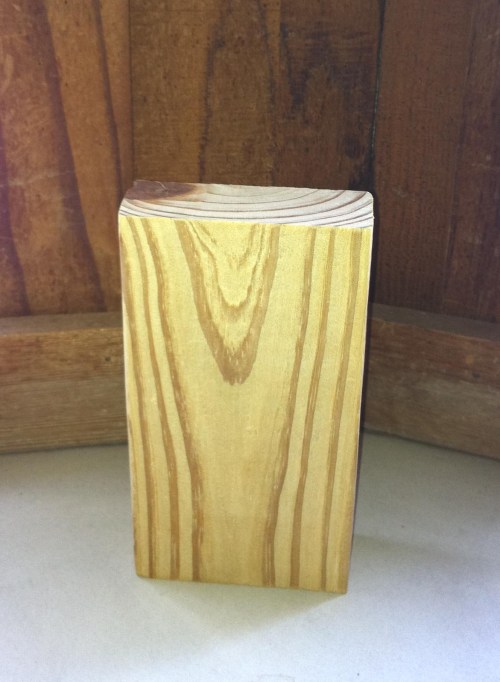
I have been searching for a material for building decks that meets the most rigorous requirements of the wildfire interface zones. I found a new product called TimberSIL that seems to fit the bill and more. The product literature makes some big claims:
“TimberSIL utilizes recycled non-toxic water glass, extracted from rice hulls (an abundant waste product) to surround and protect the wood fiber. TimberSIL wood is unrecognizable as food source for insects, protected from flame and resists rot. The glass extraction process is so heat intensive that it creates more energy than it uses (Energy positive).”
BuildingGreen.com has given the material great reviews, and they explain the energy positive claims a bit:
“Timber Treatment Technologies switched entirely to this waste agricultural source of sodium silicate about a year ago. The sodium silicate the company uses in its treatment process is derived 100% from burning rice hulls. Rice hulls have a high silica content–up to about 60%–and this silica is extracted in a gasification process in which the hulls are heated to produce three products: hydrogen (which is burned to generate electricity), carbon (used in making activated carbon for filters), and amorphous sodium silicate. ”
This is a relatively new and unproven product as of yet, but it seems like a good one to try. The TimberSIL installation manual provides a lot of helpful tips. I think only southern yellow pine is available now, but perhaps it will expand to other species and maybe they can switch to FSC certified wood as well.
Posted in Information | Tagged building materials, fire resistant construction, glass impregnated wood, green, new materials, wood | 3 Comments »
The before shots of this custom kitchen are here. It was an enjoyable design process with a creative and very involved client.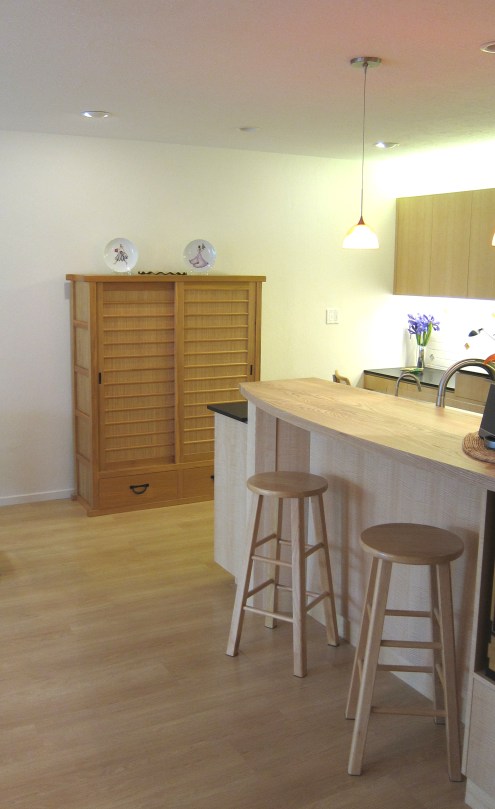
This is a view of the kitchen from the entry hall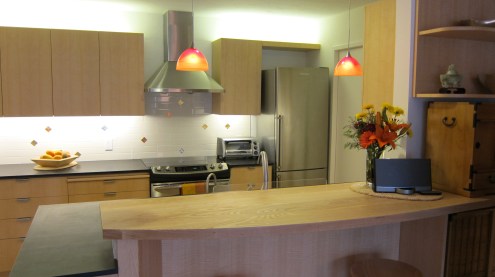
Warm glow of orange glass pendant lights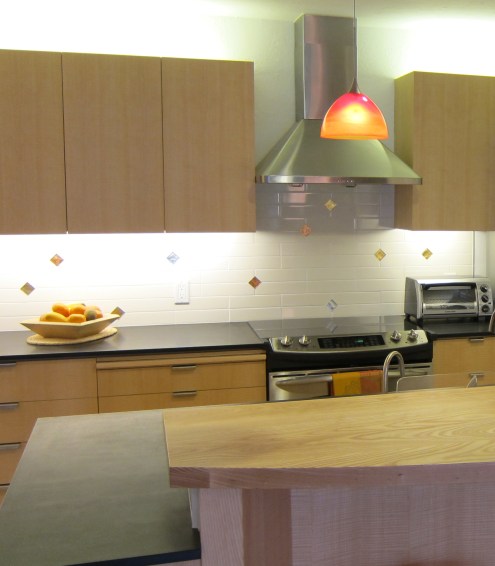
Iridescent orange and gold accent tiles are like music notes in the field of white rectangles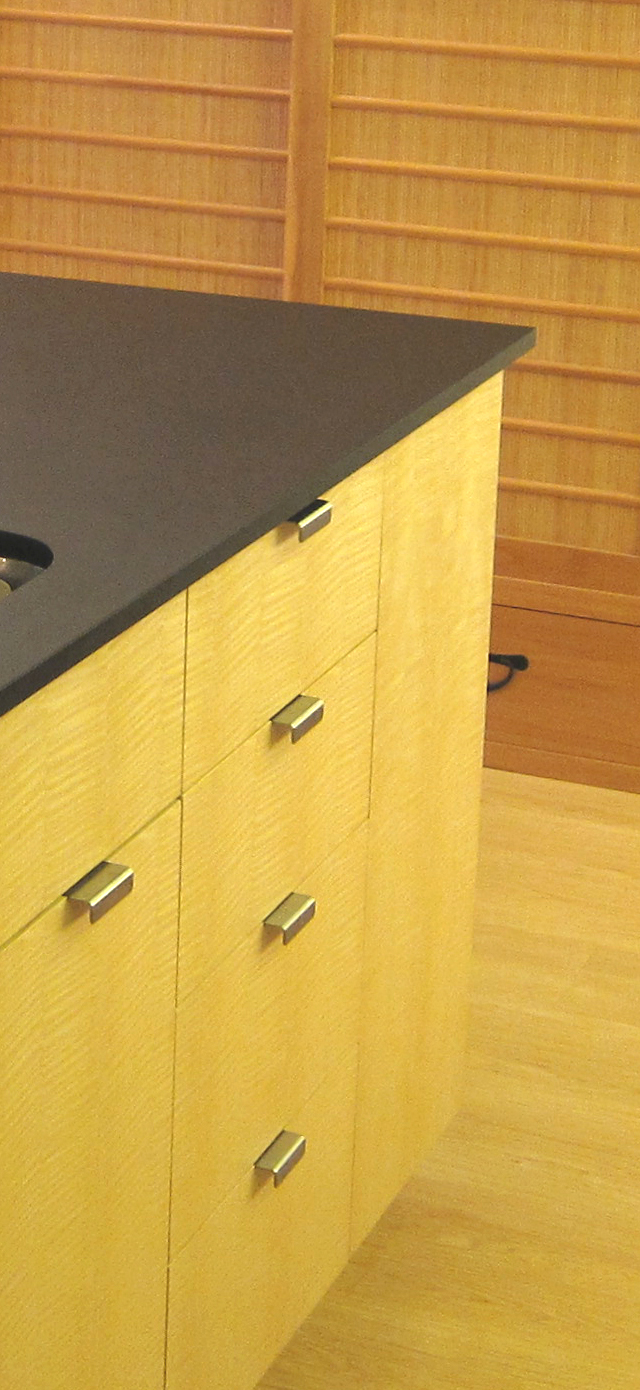
Shimmering figured ash cabinetry with simple mortised drawer pulls (Freedman and Chesley Custom Cabinets)
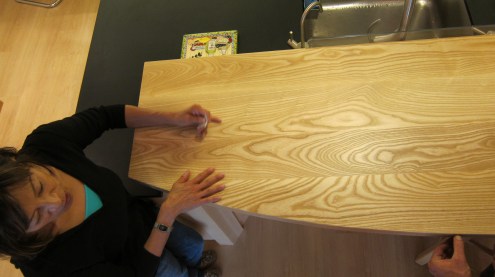
Close-up of the beautiful solid ash curved bar top (also by Freedman and Chesley, Emeryville, CA)
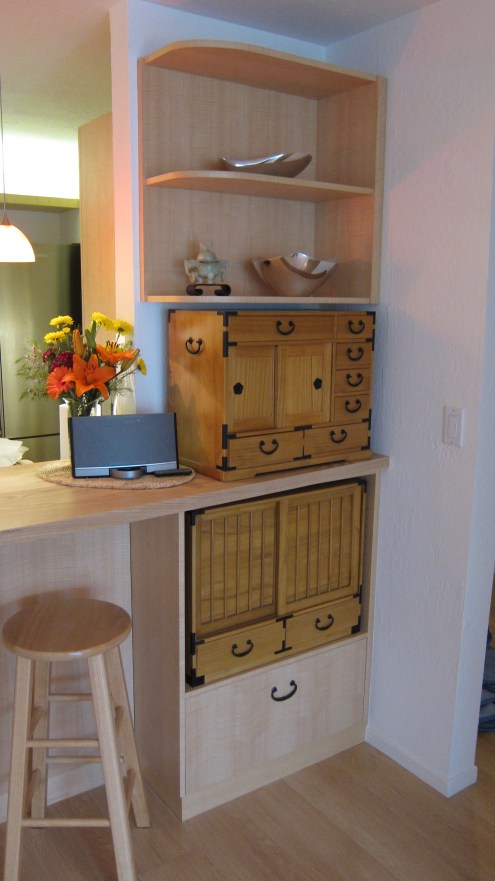 Custom designed cabinetry to fit the client’s tansu pieces
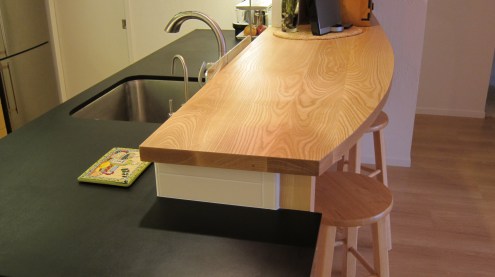 Intersection of black, white, and warm wood (the black Paperstone countertop matches the tv cabinet across the room)
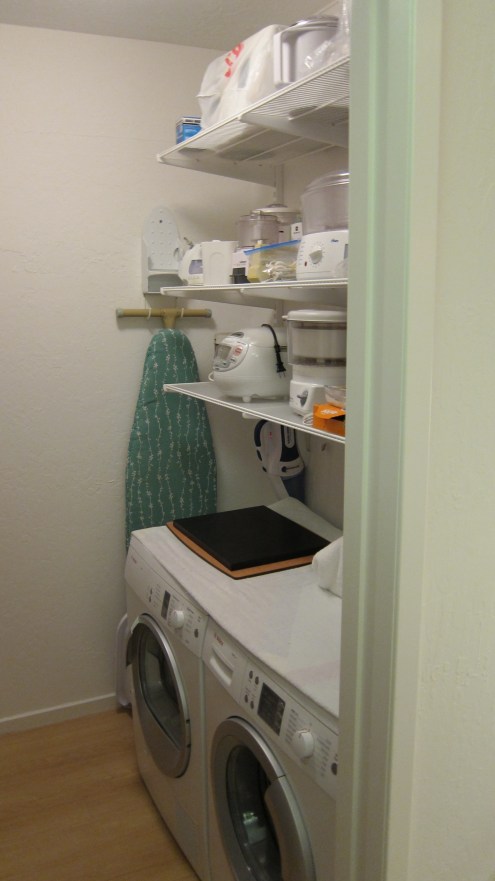 Laundry and pantry are conveniently close at hand behind a subtle white-painted pocket door
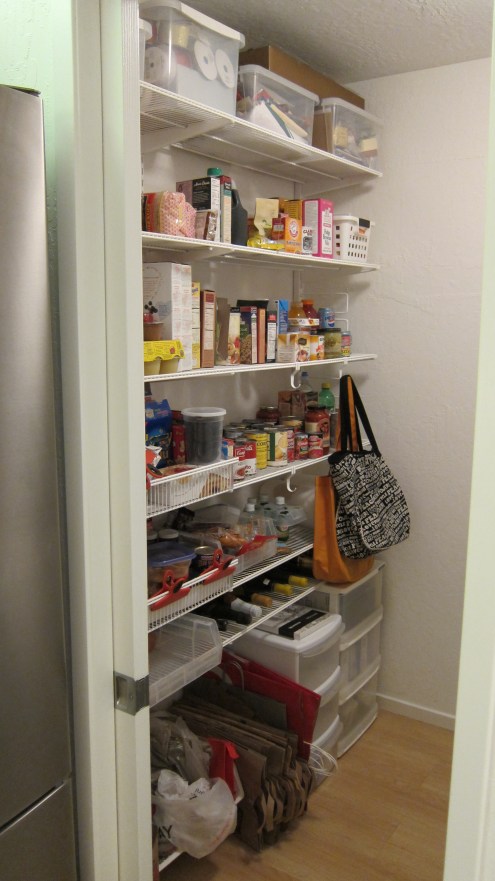
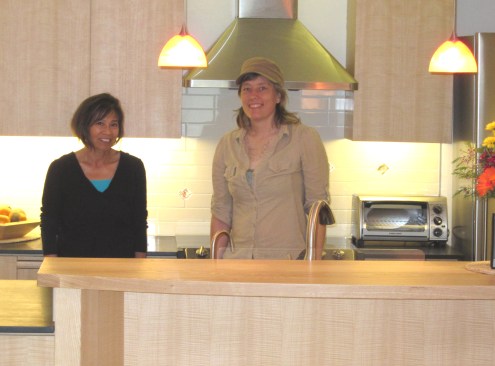 Architect and client in the new kitchen!
Posted in Design Projects | Tagged ash, kitchen, lighting design, patterns, richlite, tile, wood | 5 Comments »
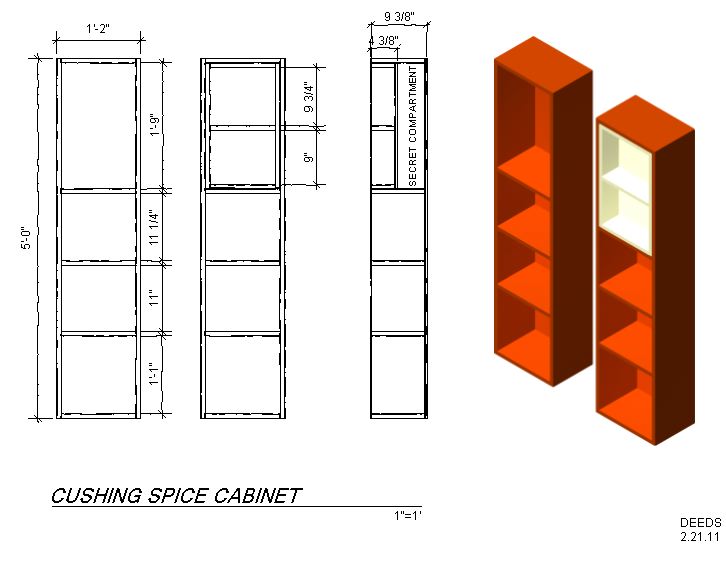
John is working on this little cabinet to fill an abandoned chase in my cousin Lara’s kitchen. She got the cabinet in exchange for a month or two of weekly cello lessons. What a deal!
Posted in Design Projects | Tagged furniture, plywood | Leave a Comment »
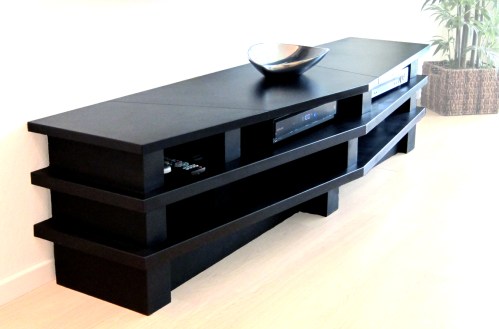
At last this sculptural TV cabinet is in place and all the cords contained neatly in the base.
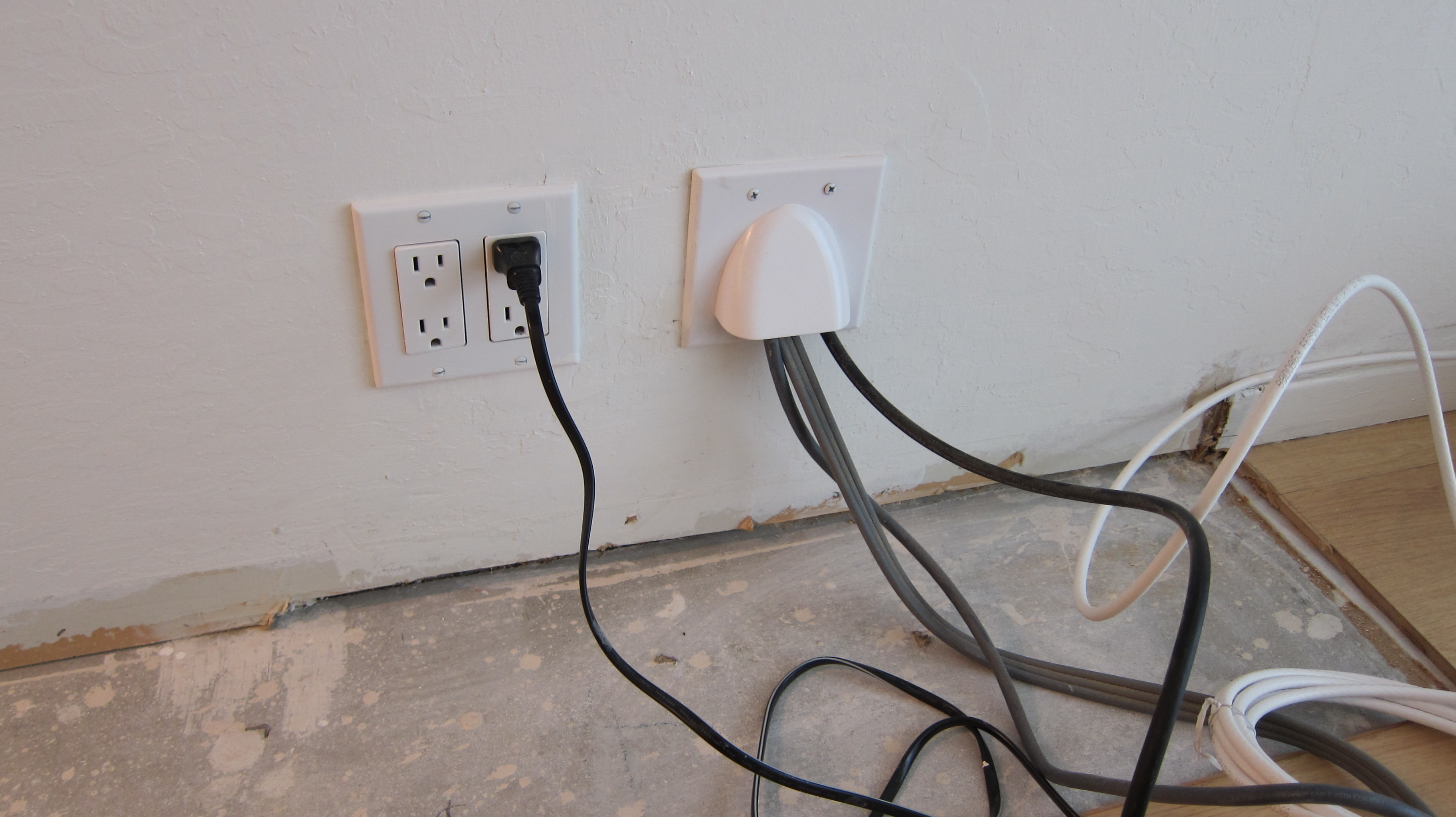
The seven variously sized compartments are designed to hold the cable box, remote controls, and perhaps a dvd or a few books. The two seams in the Paperstone top elegantly slice the pentagon into three pieces. The sturdy painted poplar blocks that form the support structure are staggered in and out. The deeper set blocks disappear into the blackness of the piece.
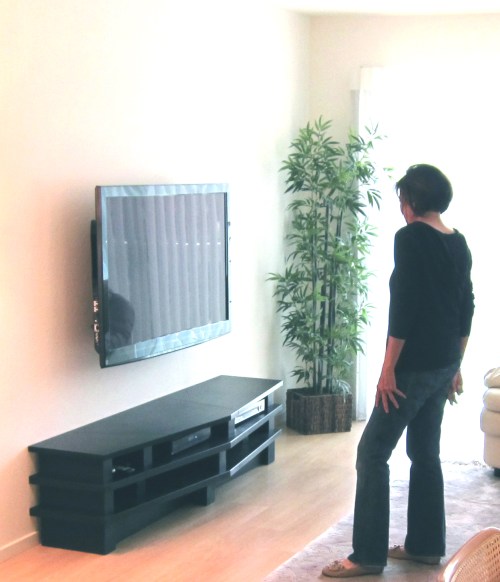
Thanks to Gabe of Semolina Designs for selling me the remnant and helping with fabrication of the Paperstone top.
I’ll post photos of the finished kitchen next.
Posted in Design Projects | Tagged Alameda, black, color, furniture, paperstone, richlite, sculpture | 2 Comments »
I found this instructive video on an old friend’s website.
Bunny is very authentic and truly inspired by her beautiful table setting. I like the mixing of modern and antique. Formal dining rooms are becoming a thing of the past for people who desire efficient living in small spaces. Eating areas that are closely connected to the kitchen fit well in the foody lifestyle of the early 21st century.
Posted in Found Objects, Information | Tagged color, informal dining, interiors, New York, table setting, vegetable centerpiece | Leave a Comment »
While I was working on this piece, the Royal Wedding occurred in England. Queen Elizabeth was praised by the press for the “timeless elegance” of her cheerful yellow suit and matching hat. It is proper for a queen to be dignified yet approachable. Reading about the contrast between the queen’s attire and the more modern styles that were worn by other guests reminded me of the contrast between my two recent furniture projects. The yellow corner cabinet is cheerful and whimsical, while the simple, black, angular lines of the TV cabinet speak a different language.
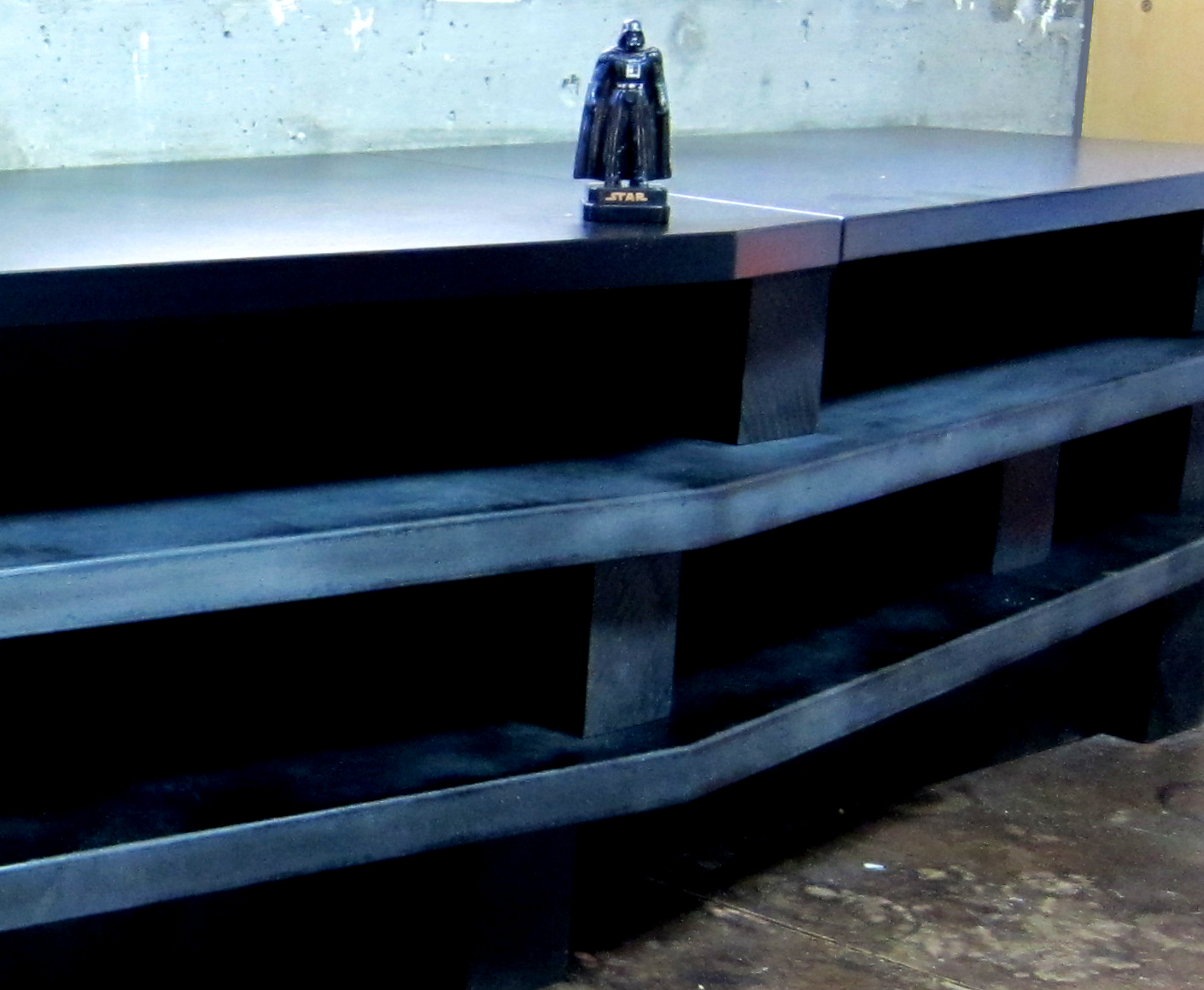
It has been a complex design and assembly process, accommodating various components and cords, but it is almost finished.
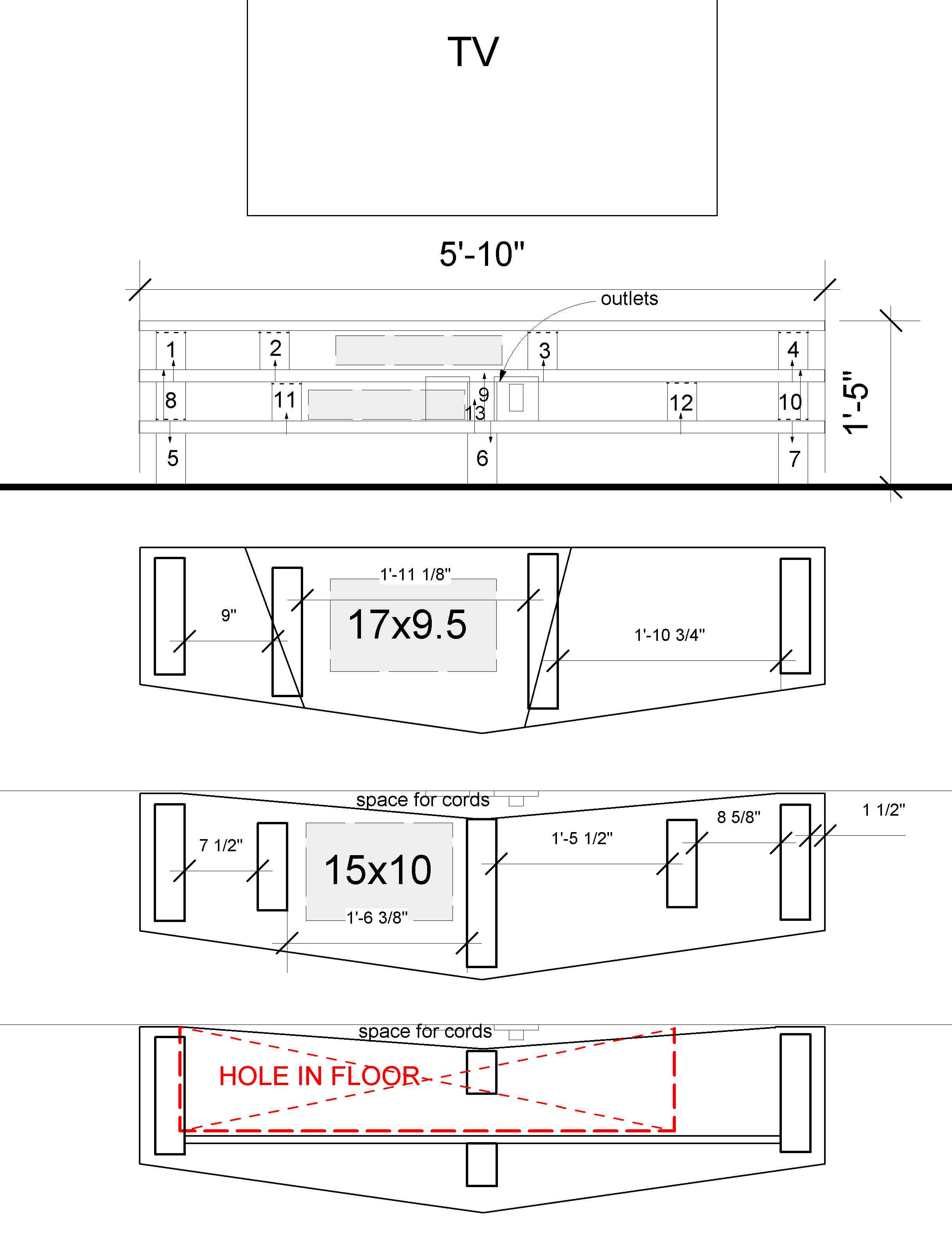
One more coat of polish, and then we deliver and install.
Posted in Design Projects | Tagged furniture, paperstone, process, richlite | Leave a Comment »
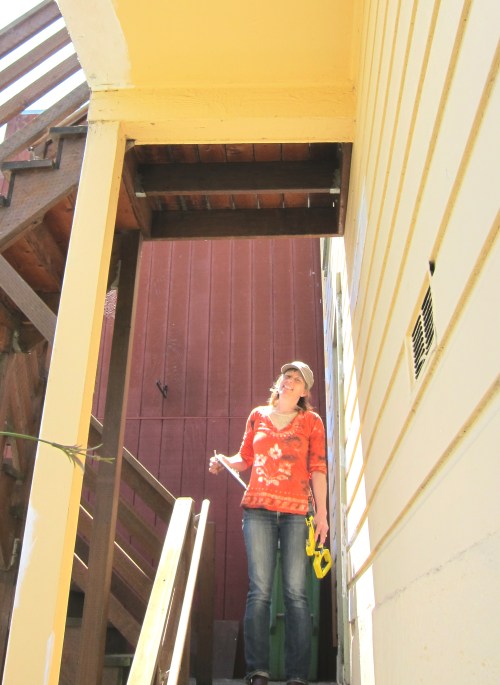
Architect measuring the back stairs
I’ve been busy starting a few new projects the past couple of weeks. All three projects are small additions on the back of houses; one in San Francisco, one in Livermore, and one in Richmond.
Measuring a house can be tedious, so I often begin with just the basic dimensions and information essential for the project. I can always verify and fill in details later as needed. Beyond breaking the task into manageable bites, this strategy also keeps initial costs down. This is good if the project is uncertain and the client has hired me in part to determine feasibility. Thoroughly photographing the building is very helpful. It is hard to catch everything, and the pictures help me clarify if a dimension doesn’t seem right. Arial photographs are also a good tool for understanding the neighborhood fabric and locating the North arrow (and more importantly South)
Besides basic dimensions, asbuilt plans should include basic structural information: sizes of studs and joists, direction of joists, and roof framing and slope; and location of the utilities, furnace, water heater, electrical panel, and, of course, the main sewer line. The location of the sewer line has been crucial in all three of these recent projects. When designing for a tight budget, it usually doesn’t make sense to relocate the main sewer line, and you need to make sure you can connect to it easily and with adequate slope.
The next step is schematic design. This is the most exciting part of almost any project. Sometimes unexpected solutions appear out of nowhere.
Posted in Design Projects, Information | Tagged houses, process, San Francisco | Leave a Comment »
The tall cabinet is installed with a peg leg made from plumbing parts. It awaits the doors. Stay posted.
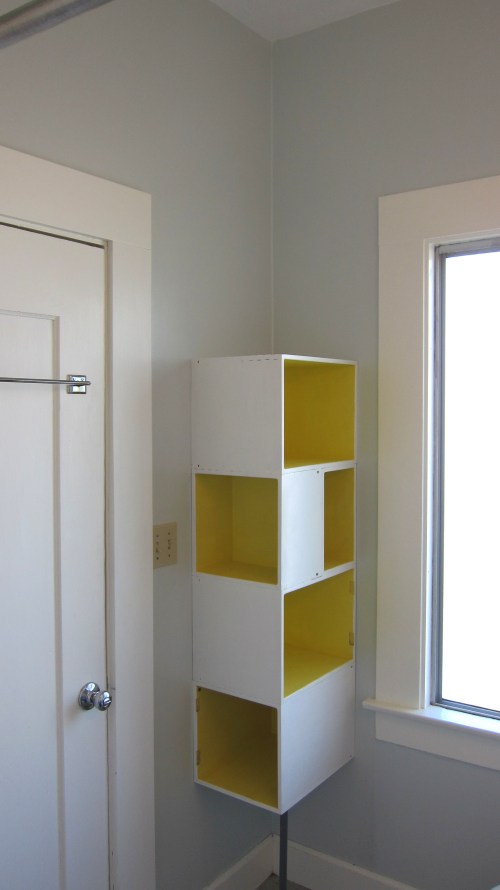
Posted in Design Projects | Tagged color, furniture, painted plywood, plywood, whimsy, yellow | 4 Comments »
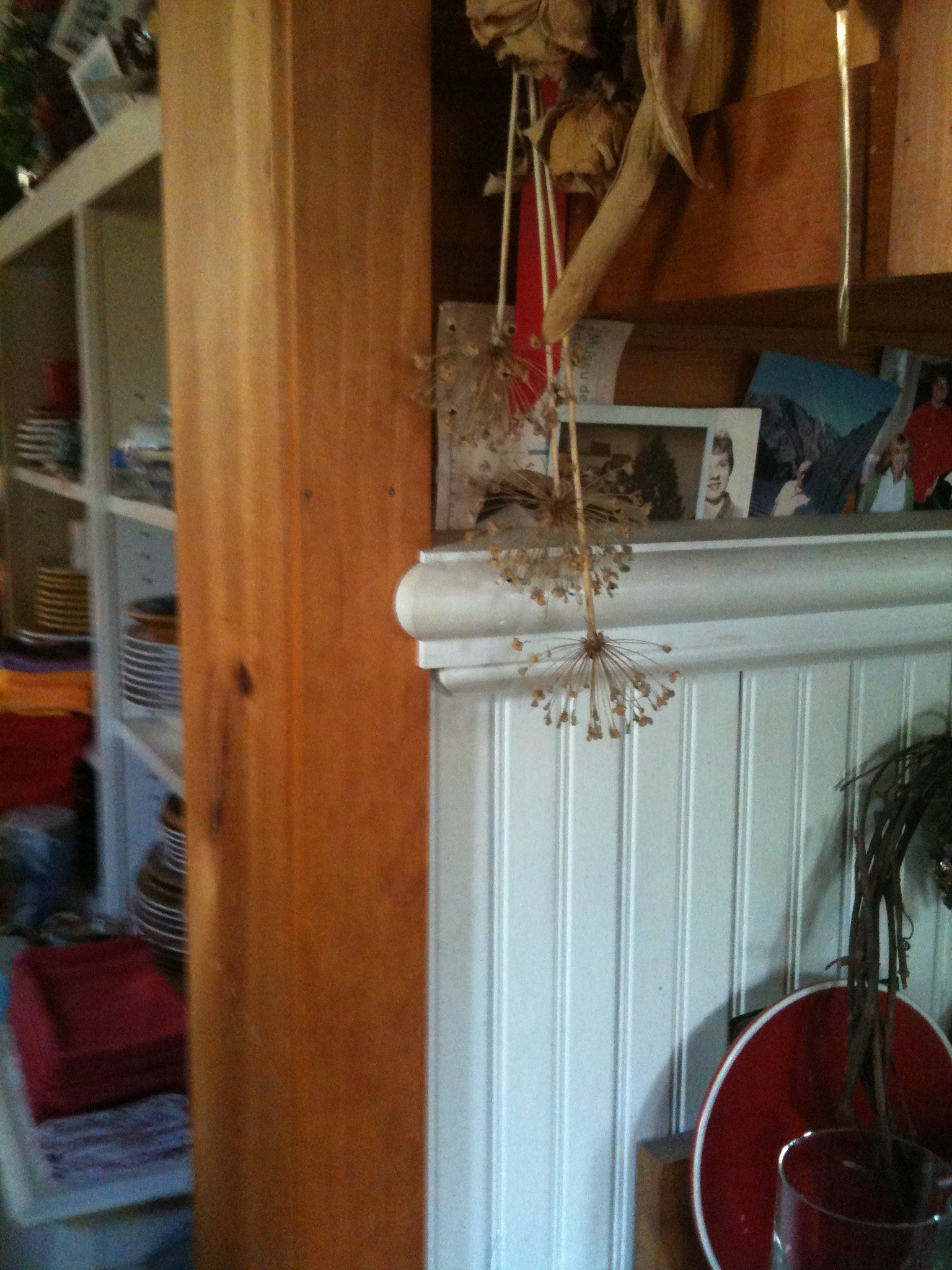
John Mueller, University of Detroit Architecture Professor, was the craftsman for this elegant junction of painted trim and wood post.
Posted in Found Objects | Tagged details, Detroit, John Mueller, painted wood, trim | Leave a Comment »
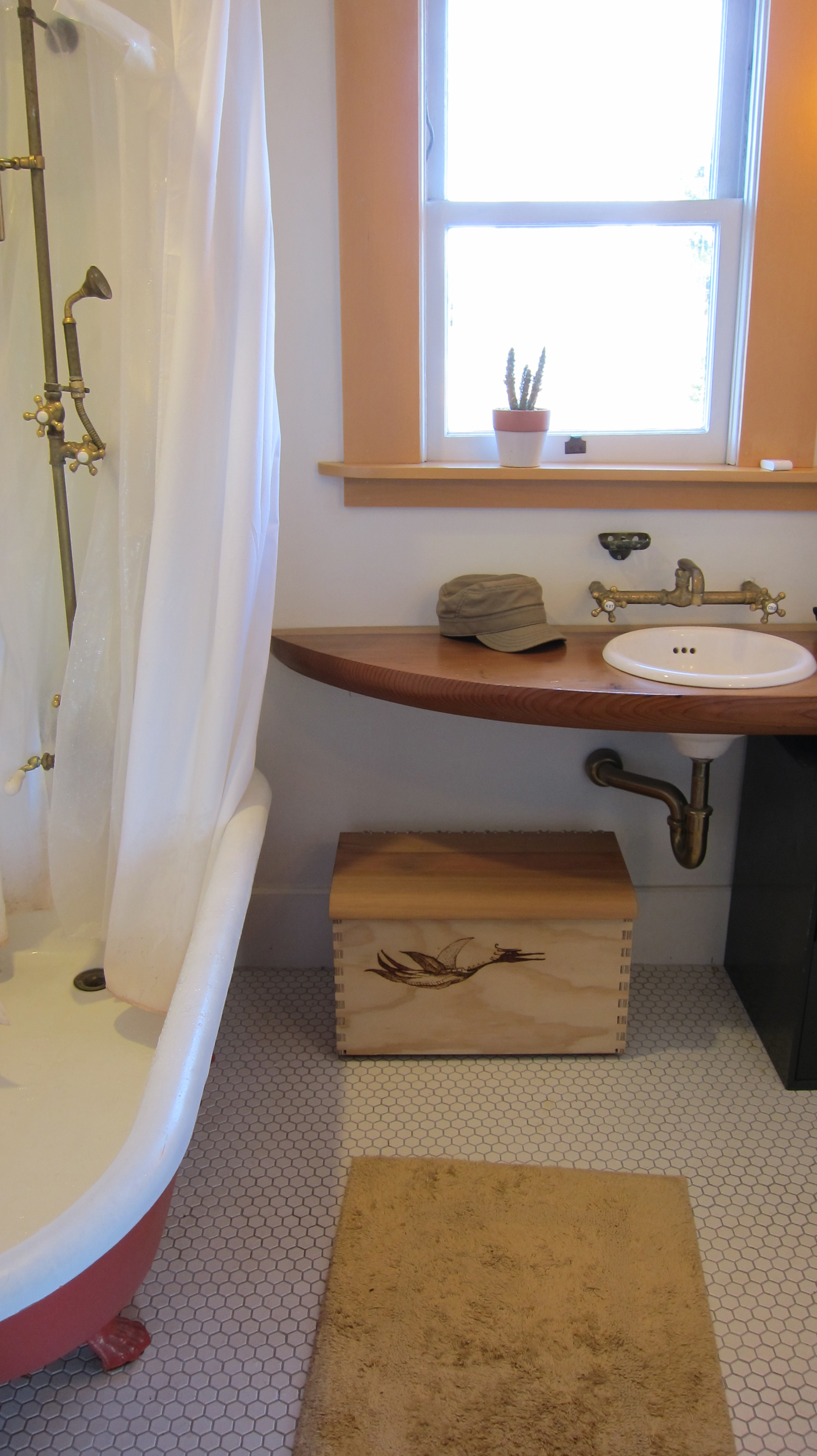
Prototype #1 is finished with a bit of pyrography – a prehistoric winged creature.
Apologies to customers waiting for treasure chests, this one has become my toilet paper storage box. As you can see there are many uses for such a chest. Soon we will have prototype #2 underway.
Posted in Design Projects | Tagged bathroom, boxes, fir, furniture, plywood, pyrography, redwood, whimsy | Leave a Comment »
- accessory dwelling unit acoustics addition additions ADU Albany aluminum angles appleply ash bathroom Berkeley birds boxes Brooklyn buildings on the water cabin cabinets cedar children color concrete construction process copper cottage curiosities curves decks decoration desert architecture details Detroit dog doorways El Cerrito energy efficiency Fairfax fence fibercement fir fire resistant construction framing fun furniture Garage garden glass tile green green building handrail historical styles holes house houses house surgery humor indoor-outdoor interiors isba John Mcbride Julia Morgan kitchen landscape LED light lighting lighting design McBride Construction metal minimalism modern new materials New York Oak Oakland paint painted plywood pantry paperstone passive house passive solar patterns plants plywood poet's corner Point Richmond process railings rainscreen recycled redwood remodel remodelling restaurant Richmond Rockridge roof rustic salvaged San Francisco San Mateo shou sugi ban simple skylight small buildings small spaces solar electricity sparkle stained glass steel storage Strawbale structure stucco subway tile tile tiny house trim turquoise utilitarian utility value vaulted ceiling victorian walnut water management whimsy windows wood zinc
-
link to RSS Feed

 deedsdesign