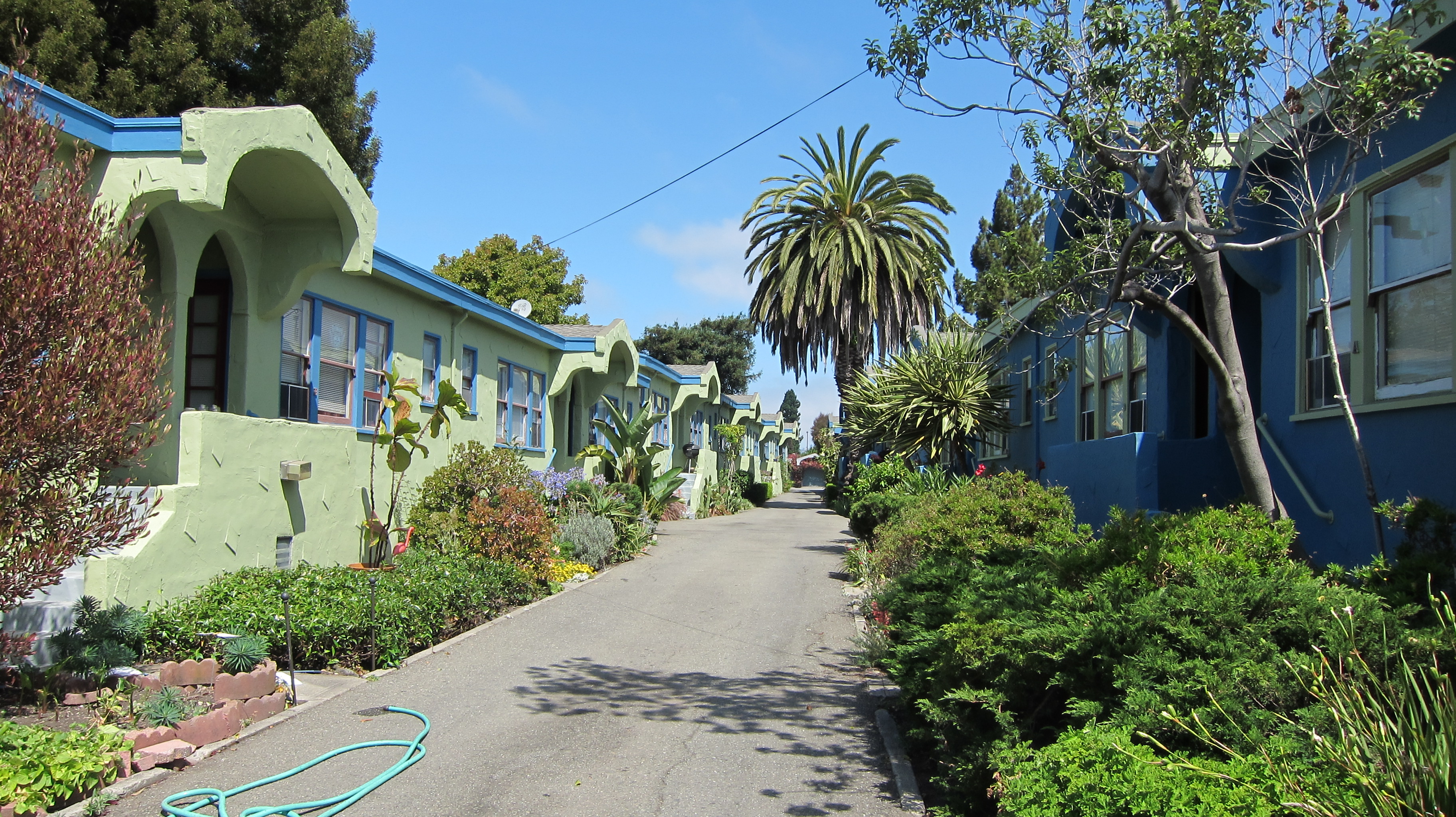
 This 20 unit apartment complex is layed out in two rows facing each other with a north-south lane down the middle. This way sunshine permeates the entire complex and allows for lovely gardens in front of every unit. It seems like a very sociable design with all the front porches lined up facing each other. It would be even better if they could eliminate regular vehicular traffic down the lane and provide access to the parking lot at the end from the other side. At least the cars are out of sight. I suppose privacy might be an issue at times with all of your neighbors easily able to see who comes and goes…but this is also a good safety feature.
Posted in Found Objects | Tagged Berkeley, garden, historical styles, landscape, passive solar, small buildings | Leave a Comment »
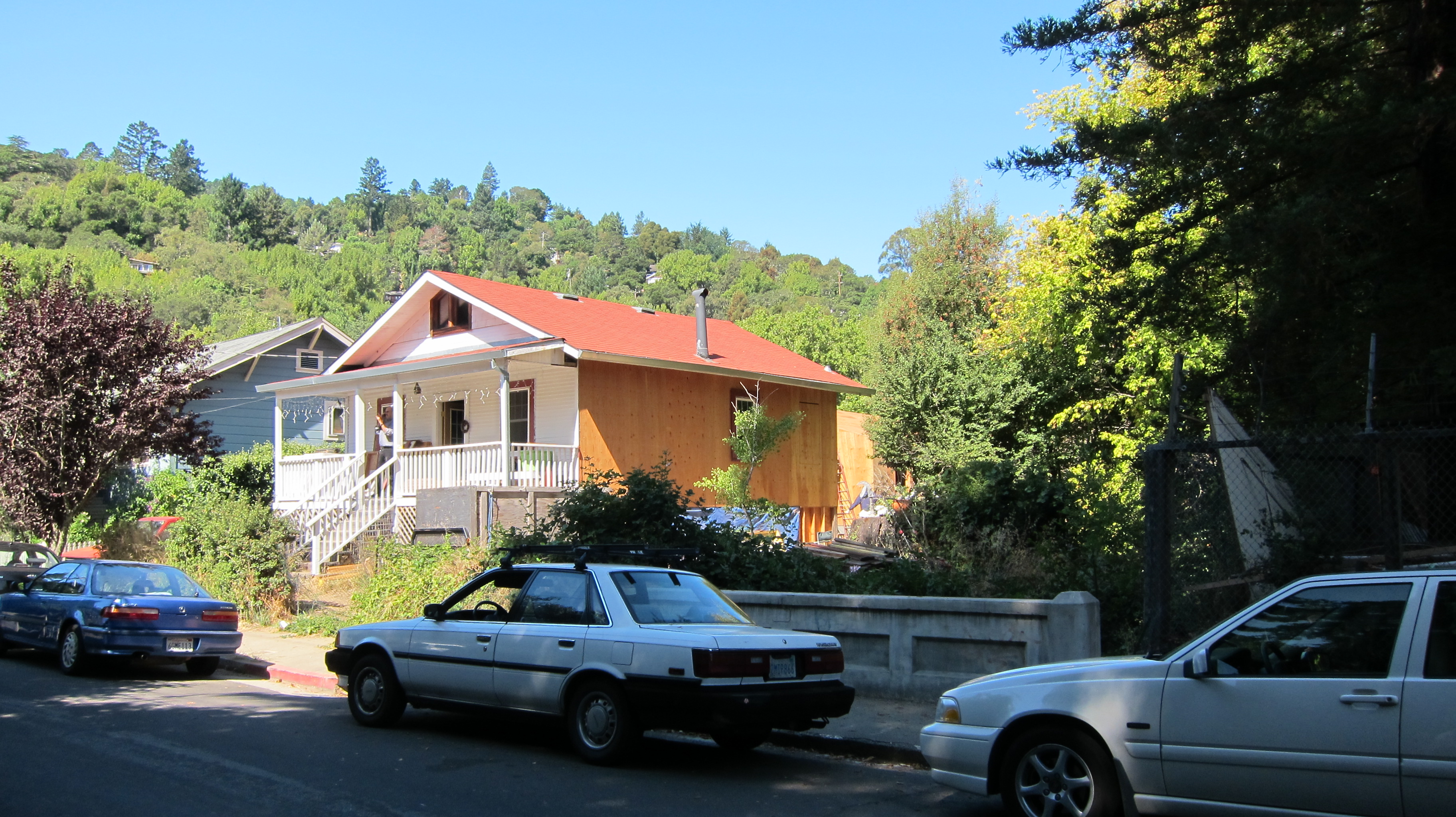
I took a trip to Fairfax this morning to check out the progress on this creekside addition. The owner and many of his family members are undertaking the construction of this 800 SF addition and remodel of an 100 year old cabin themselves.
Justis Fennell, a passionate Passive House enthusiast is seen here on the front porch talking on the phone to one of his air sealing product suppliers. Justis is the Air Sealing Specialist for the project.
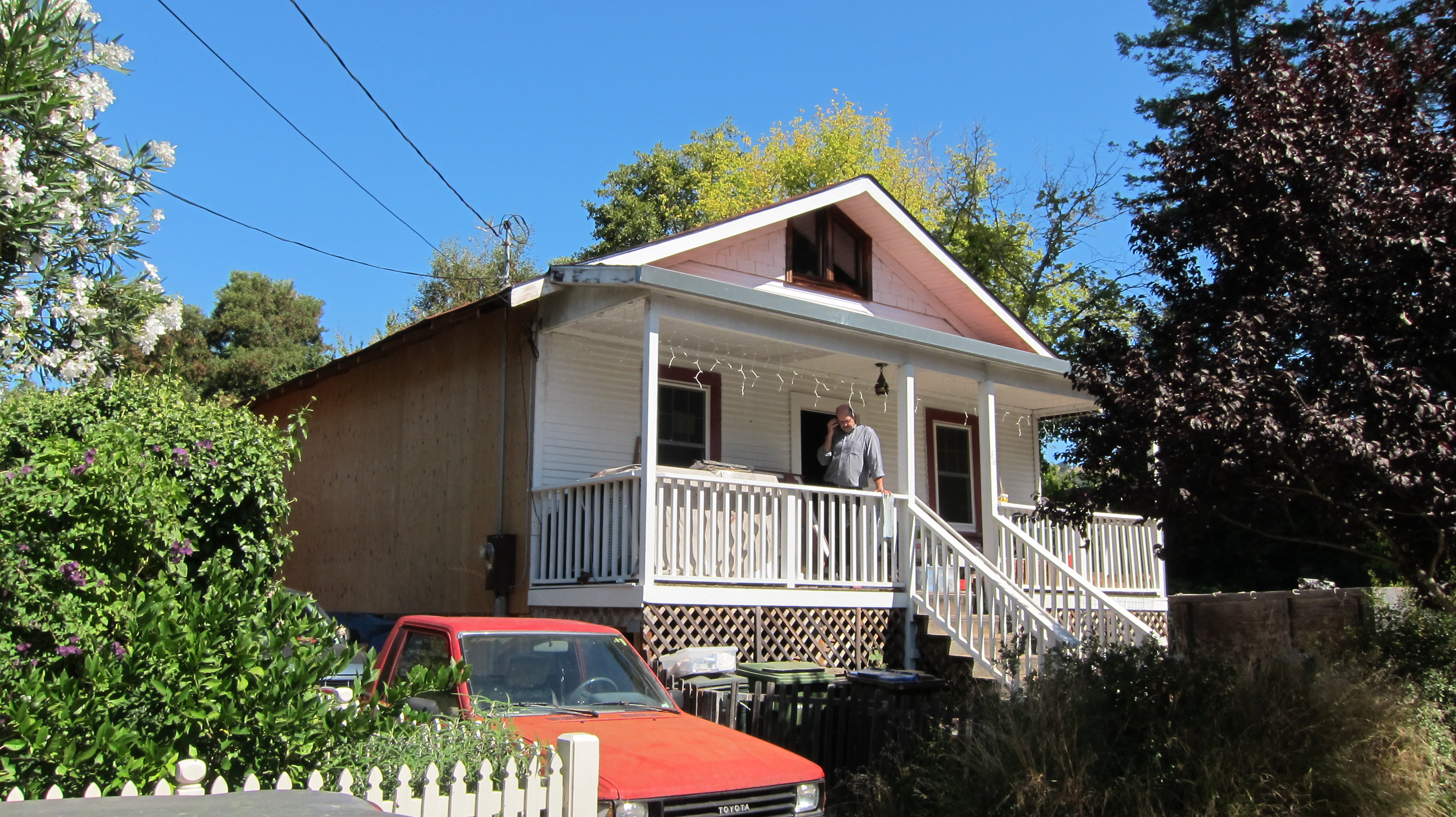
This is the house from afar. The decision was made to carefully remove all of the old painted redwood siding, add plywood sheathing, 3/4″ xps insulation (R4), and a drainage plane, and reinstall the original siding as a rainscreen.
This is the client, his brother and uncle working on installing the last pieces of roof sheathing.

Here you can see the start of the airsealing process – bright blue Ecoseal that is installed using a high powered airless sprayer to make sure it gets deep in to all the gaps and crevices. You can also see the 24″ oc 2×6 framing.
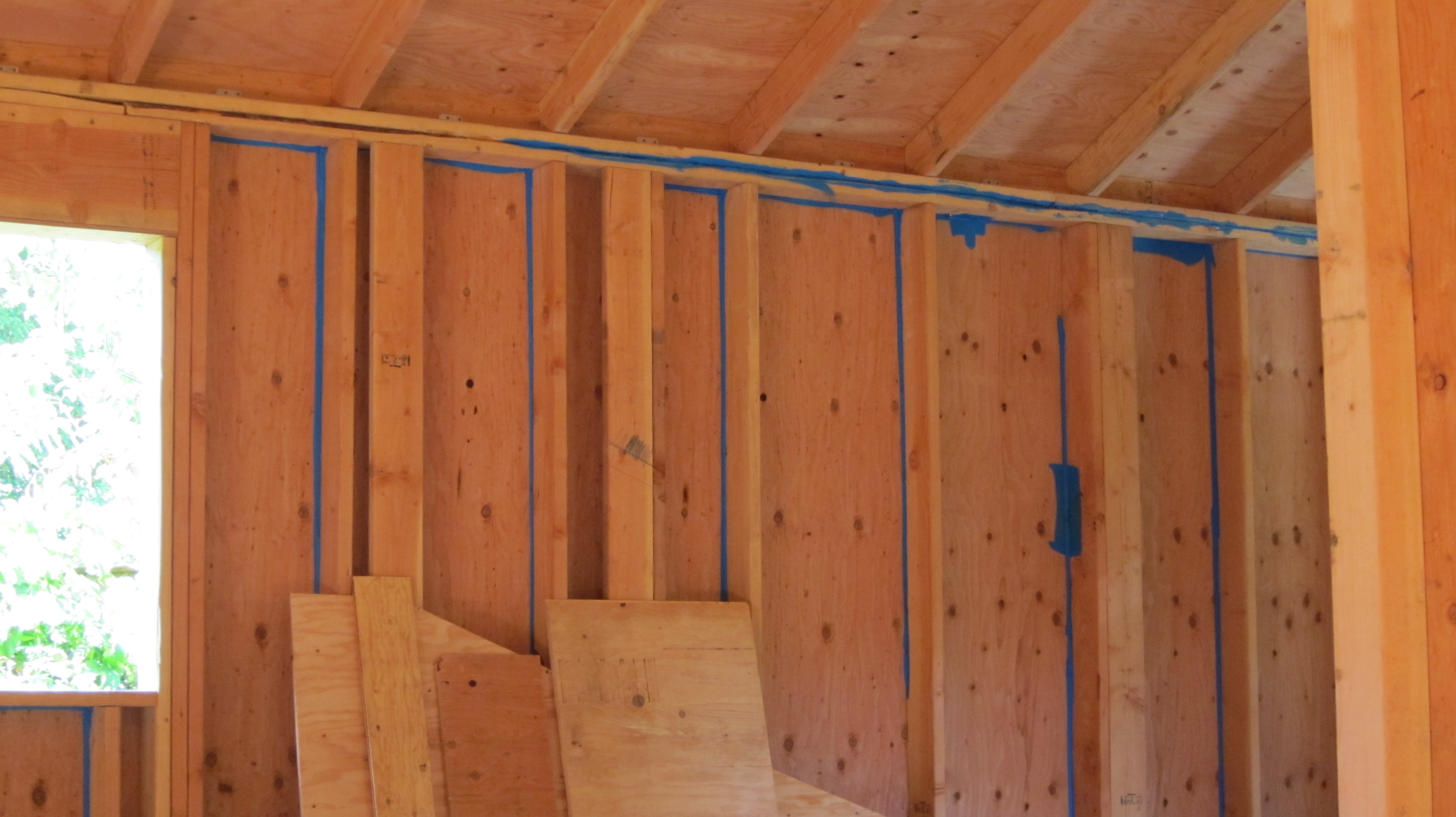
Framing Photo here.
Posted in Design Projects | Tagged Fairfax, green, houses | Leave a Comment »
Posted in Found Objects | 2 Comments »
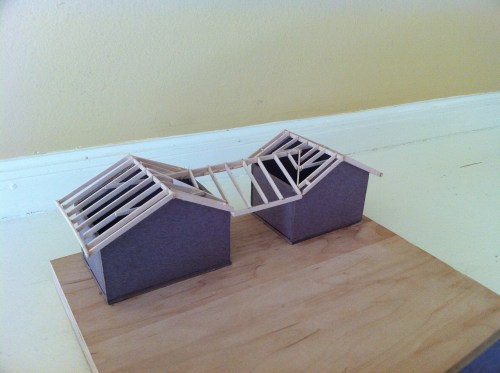
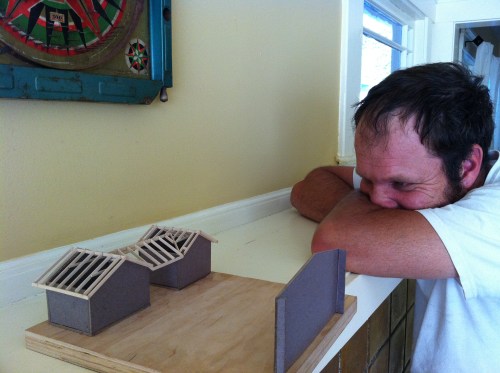
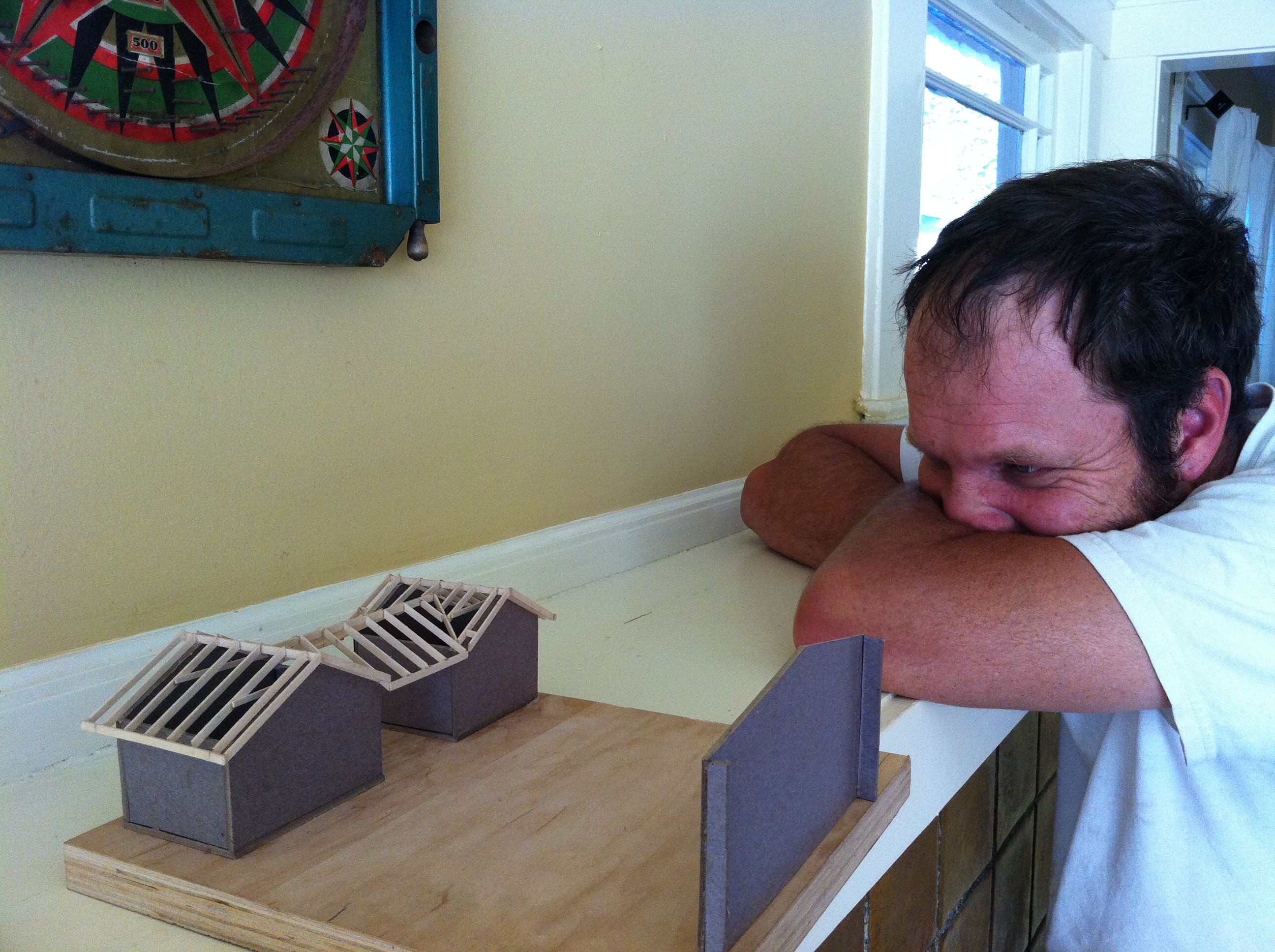
My old friend Matt Hornby (Landscape architect, garden designer/builder, & stone mason,) and I are collaborating on the design of a little garden building at back of his yard. Matt built the model himself.
Its going to be nice!
Posted in Design Projects | Tagged small buildings | 1 Comment »
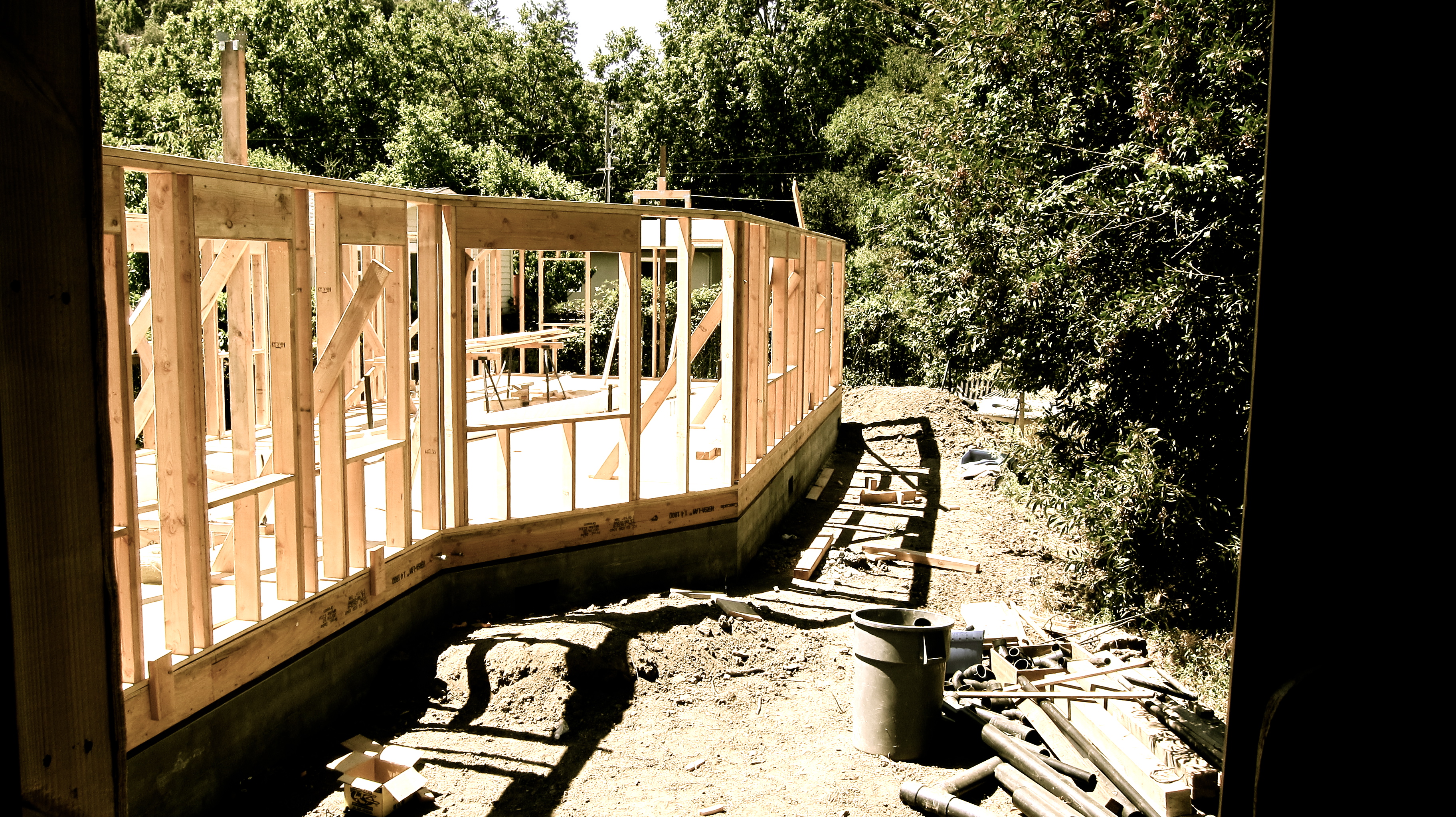
1) Insulated headers
2) 24″ on center 2×6 studs
3) windows placed and sized so as to minimize extra studs.
The main reason for advanced framing is to minimize thermal bridging, side benefit: less wood used.
Posted in Design Projects | Tagged green, houses | Leave a Comment »
For those of you who are house painters or who have done some painting you know that oil based interior house paint has been virtually eliminated from the market because of the dangerous off-gassing. The mainstream paint companies have replaced traditional oil paint with latex semigloss trim paint that in my opinion is kind of rubbery and sticky and unpleasant for the perfectionist painter to apply.
I am not a professional painter, but I have done a fair bit of painting- around my own house and also artistic painting on canvas with both oil paints and acrylic.
For a trim paint that flows like oil paint, dries to a low sheen, can be sanded between coats for a super smooth result, try:
Bioshield Aqua Resin Trim Enamel
I am not being paid by Bioshield, I just love their paint. In addition to the pleasing qualities, I am pretty sure the paint is zero VOC and compostable.
Posted in Information | Tagged green, interiors, paint | Leave a Comment »
From Eliel Saarinen’s The Search for Form in Art and Architecture, NY Reinhold publishing Corp. 1948
Form and Color:
p. 231
“Form is mainly constituted by its proportions, rhythm, volume, and scale. The colors used, therefore, should support and emphasize these form-properties, rather than bring disarray to them. Thus, the more neutral the general color scheme, the more form is apt to appear to its full value, as form. And the more color is regarded as the supporting, refining, and enlivening element, the more color is apt to bring variety and freshness to form.”
P. 232
“Suppose now that we have the following situation. Suppose that the room has been properly arranged according to the above description. Then, that in some part of this room there has been hung a picture; lets say, a rather conspicuous one as to its size, scale, treatment, and subject-matter — and above all, radiant in color. Obviously this picture constitutes the paramount color-accent of its environment, and the environment must be rearranged accordingly. Also, if other paintings or objects of whatever kind are brought within the sphere of influence of this painting, their fitness must be decided according to the nature of this influence. Hardly any other procedure is possible if one’s ambition is to build up a consistent color-harmony”
P. 236
“However, we are not able to give advice as what should be done and what not. This could only mean that we would put down theoretical systems of our own for the use of others-which would be against our thinking. The only thing we can stress-and with emphasis-is that color is not a mere matter of decorative enjoyment. It has a deeper meaning, and this deeper meaning everyone must individually learn to sense. Sound and movement- music and dance- are not for the sake of dinner-entertainment, as many seem to think. They are essential means for inner cultural growth.
So is color.
And so must the art of color be.”
Posted in Information | Tagged color | Leave a Comment »
I couldn’t find a good photo of this lovely pair of buildings that I’m allowed to repost here, but there are a lot available on the internet if you search for “Marilyn Monroe Towers” or “Absolute Towers Mississauga” The website of the architect has a peculiar description of the design concept:
In my opinion these curving shapes are beautiful and that is all the explanation that they really need. These two paragraphs on the website get more to the point:
“The building is sculpture-like in its overall effect, and its design expresses the universal language of audacity, sensuality and romance. As the new landmark of the city of Mississauga, it will become the icon of the present landscape with all its twisting rhythms resembling the human body.
In our design, the continuous balcony surrounds the whole building, eliminating the vertical lines used in traditional high rise architecture to emphasize the height. The entire building rotates by different degrees at different level, which corresponds with sceneries at different height. Our aim is to evoke the city dwellers’ aspiration for nature, and get them in touch with the sunlight and the wind.”
If I travel to Mississauga I will take some pictures to post here, but here is an artistic flicker photo of the buildings under construction:

This NYT photo captures the synergistic curves:
Posted in Found Objects | Tagged curves | Leave a Comment »
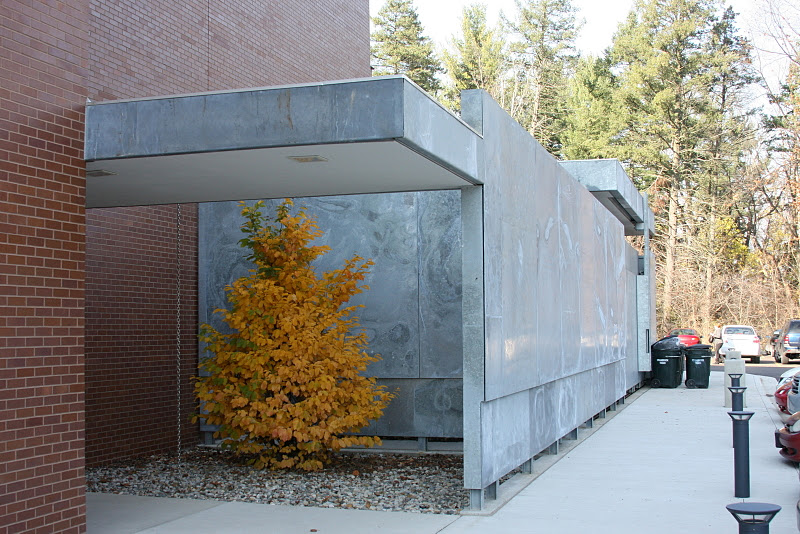
I took this picture at the Cranbrook Academy of Art. The wing to the left of the opening is the new wing of the museum. The yellow brick building is definitely the Eliel Saarinen original from the 1940s. The new wing is based on a Rafael Moneo master plan, but designed by an Ann Arbor, Michigan based architect who isn’t getting much press. “The work of Moneo, a winner of the Pritzker Prize, architecture’s equivalent of the Nobel, has been augmented by work of Ann Arbor architect David W. Osler” Further research (Jan 12, 2011) reveals that the Smith Group is now credited with the project. I’m not sure if my previous research yielded inaccurate information, or if The Smith Group took over when Osler died in 2008.
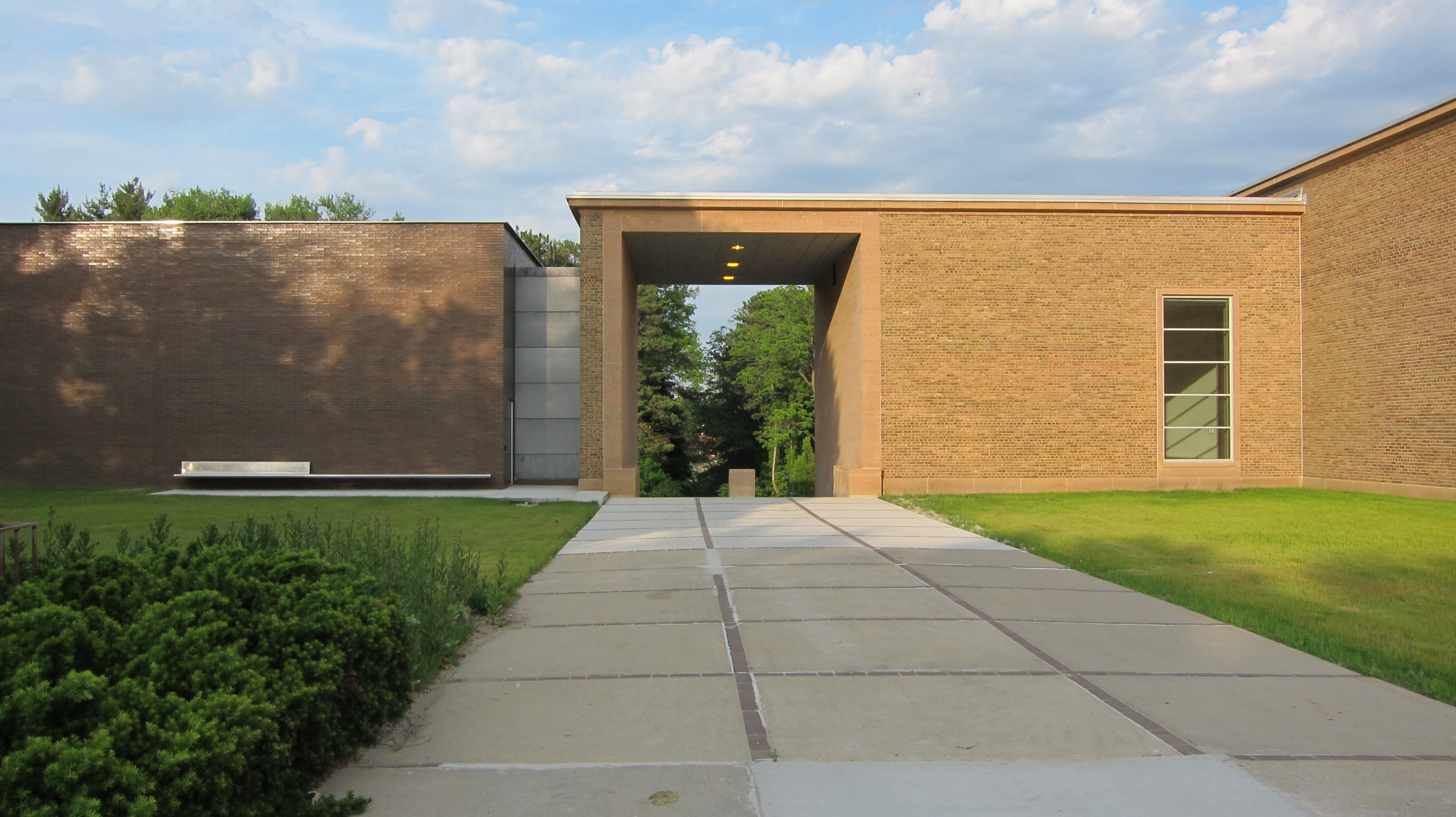
I like the simple transition and I think the new wing nicely complements Saarinen’s quiet brick building. Im not su sure about the new brick color….but they probably couldn’t easily match the yellow bricks.
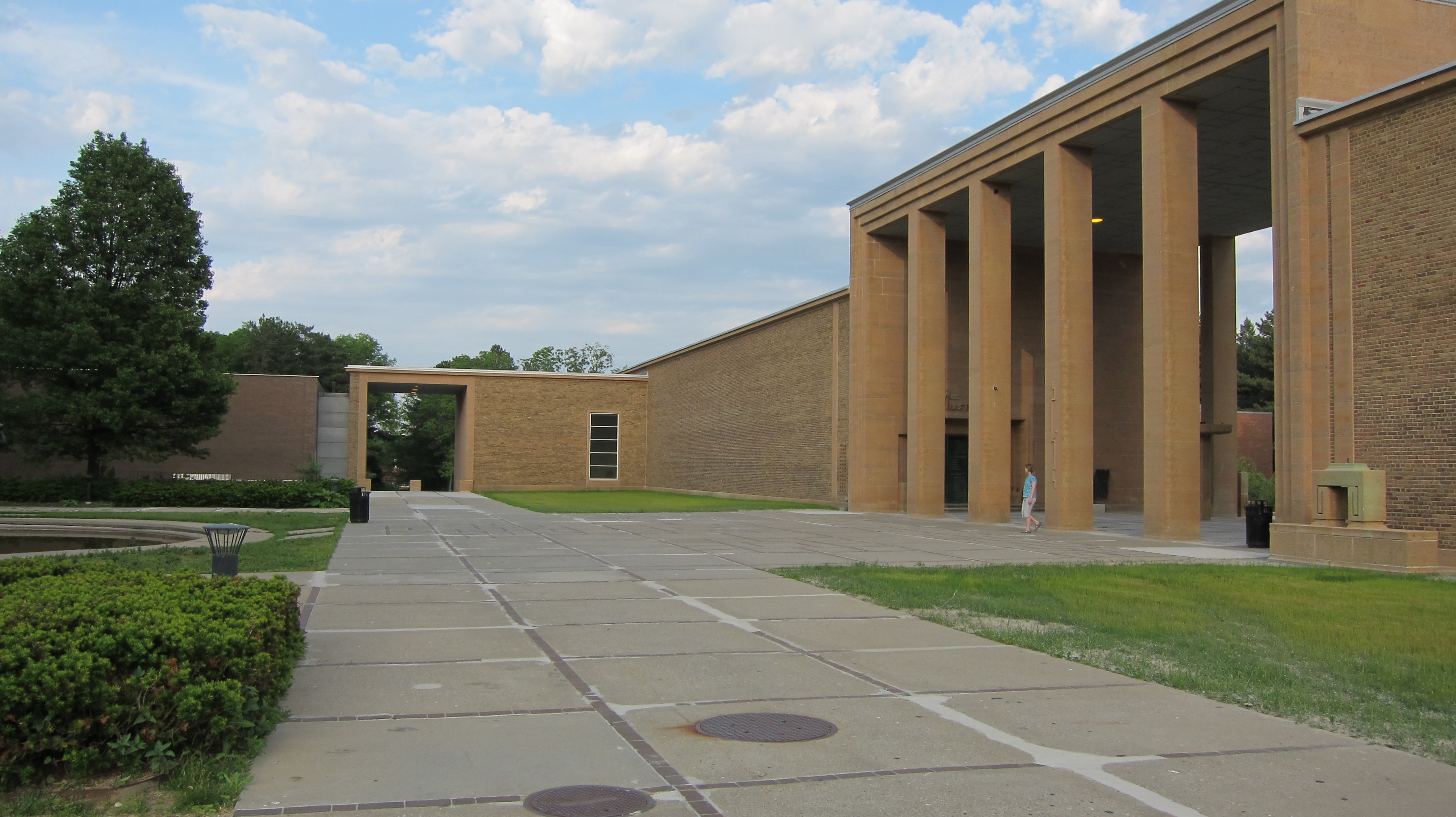 A side note: The view through the large square opening is through the woods to the Booth house, formal garden and pool. If you zoom in on the first photo you can barely see this, but the trees sure need a pruning.
My dad just sent me this picture of the other side of the addition – the parking lot entrance. It just opened in the fall of 2011.
Here is a good Architect Magazine article about the project including statistics and more photos.
Posted in Found Objects | 2 Comments »
Adrian Higgins writes about gardens usually, but this article is about little buildings in the garden. The featured building, “Broadhurst’s Crib” is pretty cool. Its rainscreen is made to glow because all that is behind it is translucent plastic.
Small buildings in the garden are great because you get to really be in the garden while having some shelter and maybe electricity. In a small yard there is incentive to make the building as small as possible because this means more garden and less building.
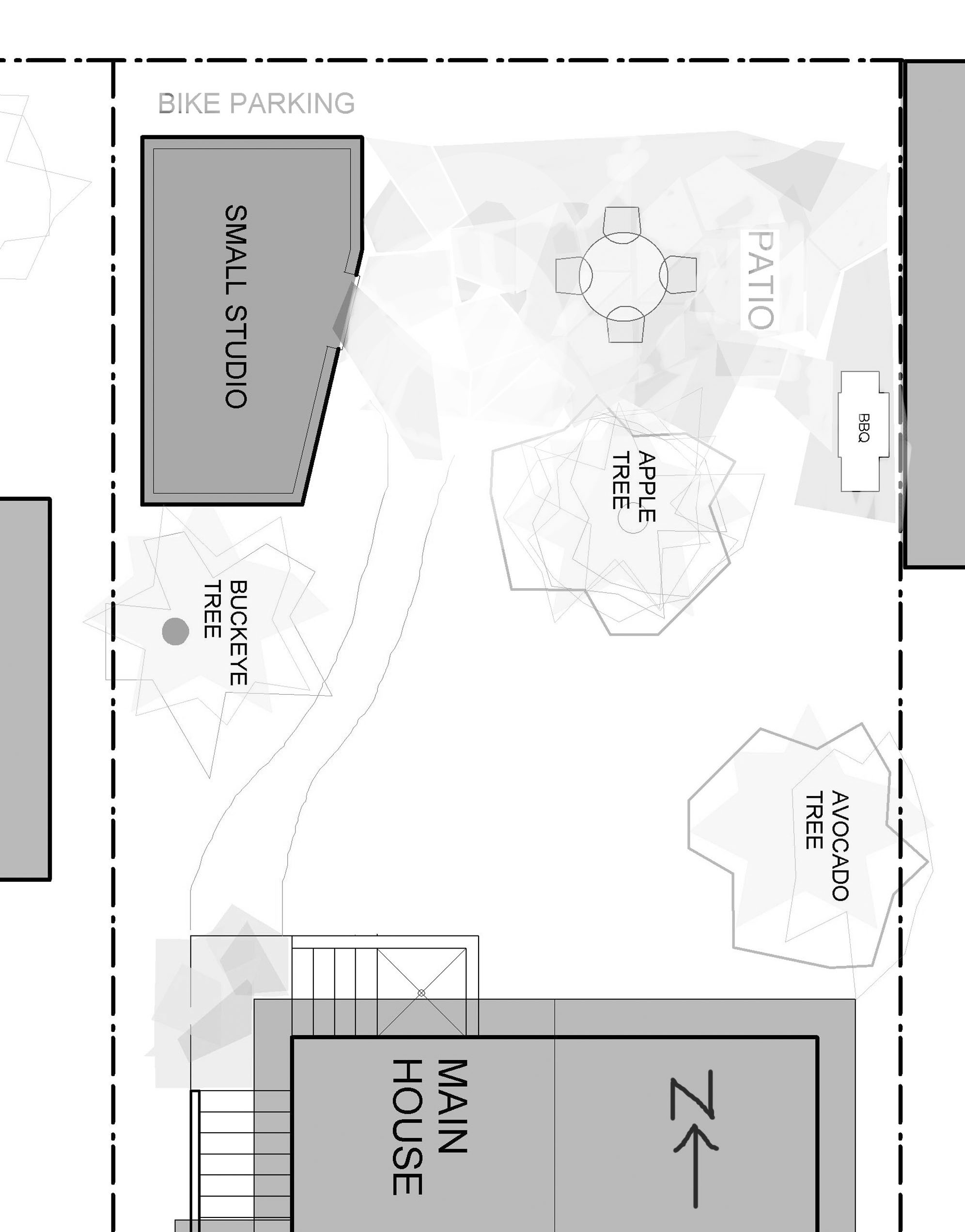
In this case, the building is an unusual shape to minimize impact on the garden and the southern sun and to maximize efficiency on the interior of the 120 SF building.
Posted in Design Projects, Information | Tagged garden buildings | 2 Comments »
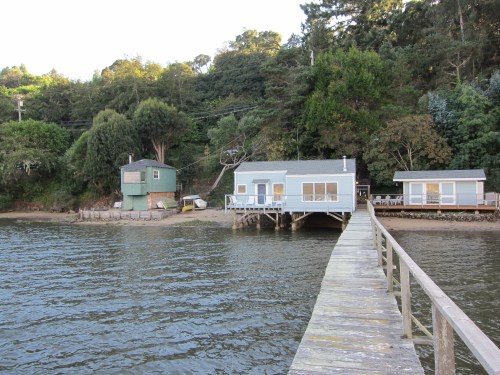
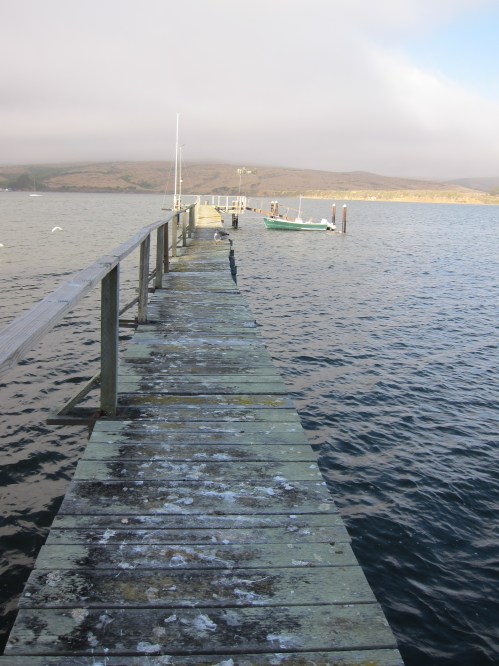
long dock and little house on Tomales Bay
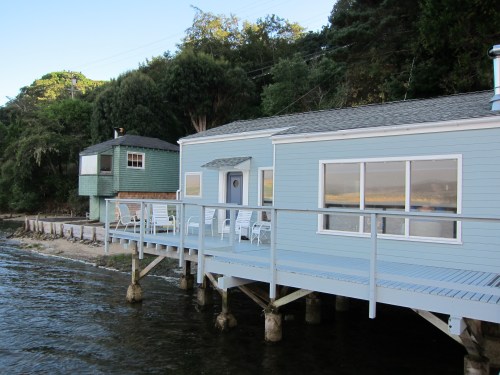
water side of Tomales Bay house
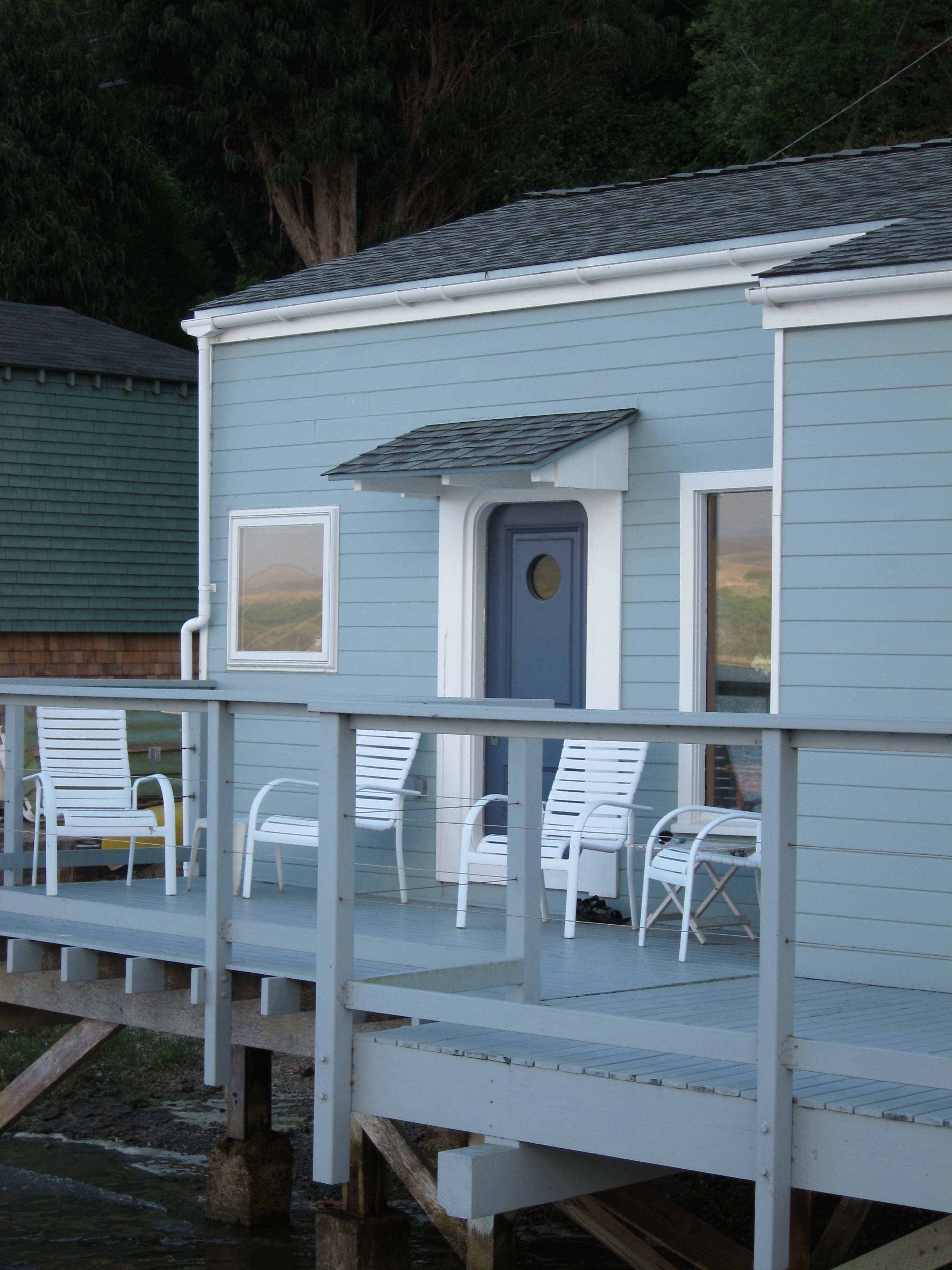
door with porthole
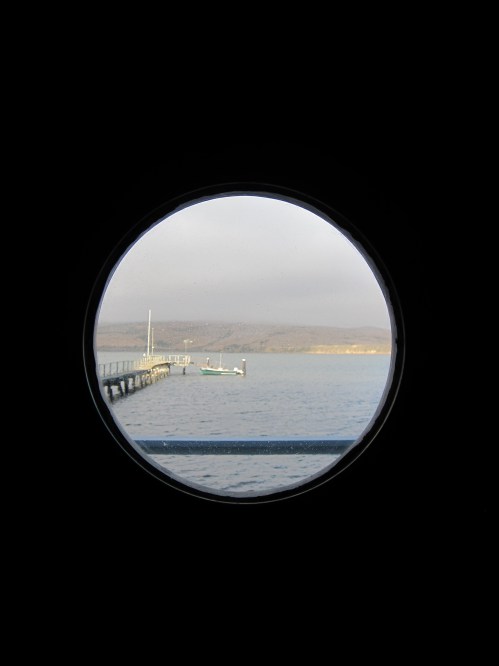
view through porthole 1
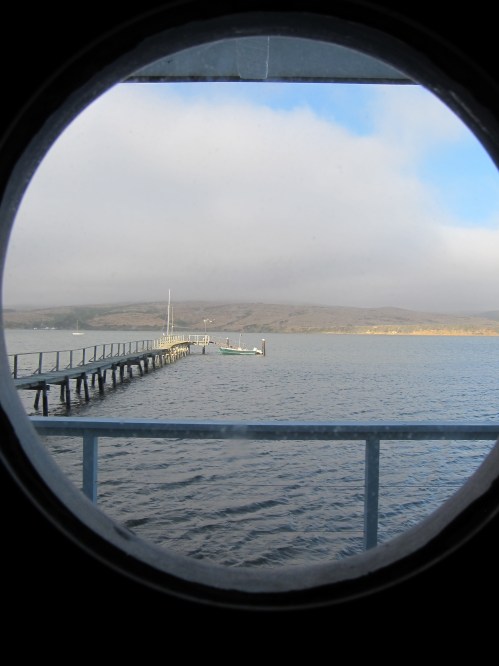
view through porthole 2
Posted in Found Objects | Tagged buildings on the water, doorways, holes, landscape, porthole window, round window, small buildings | 5 Comments »
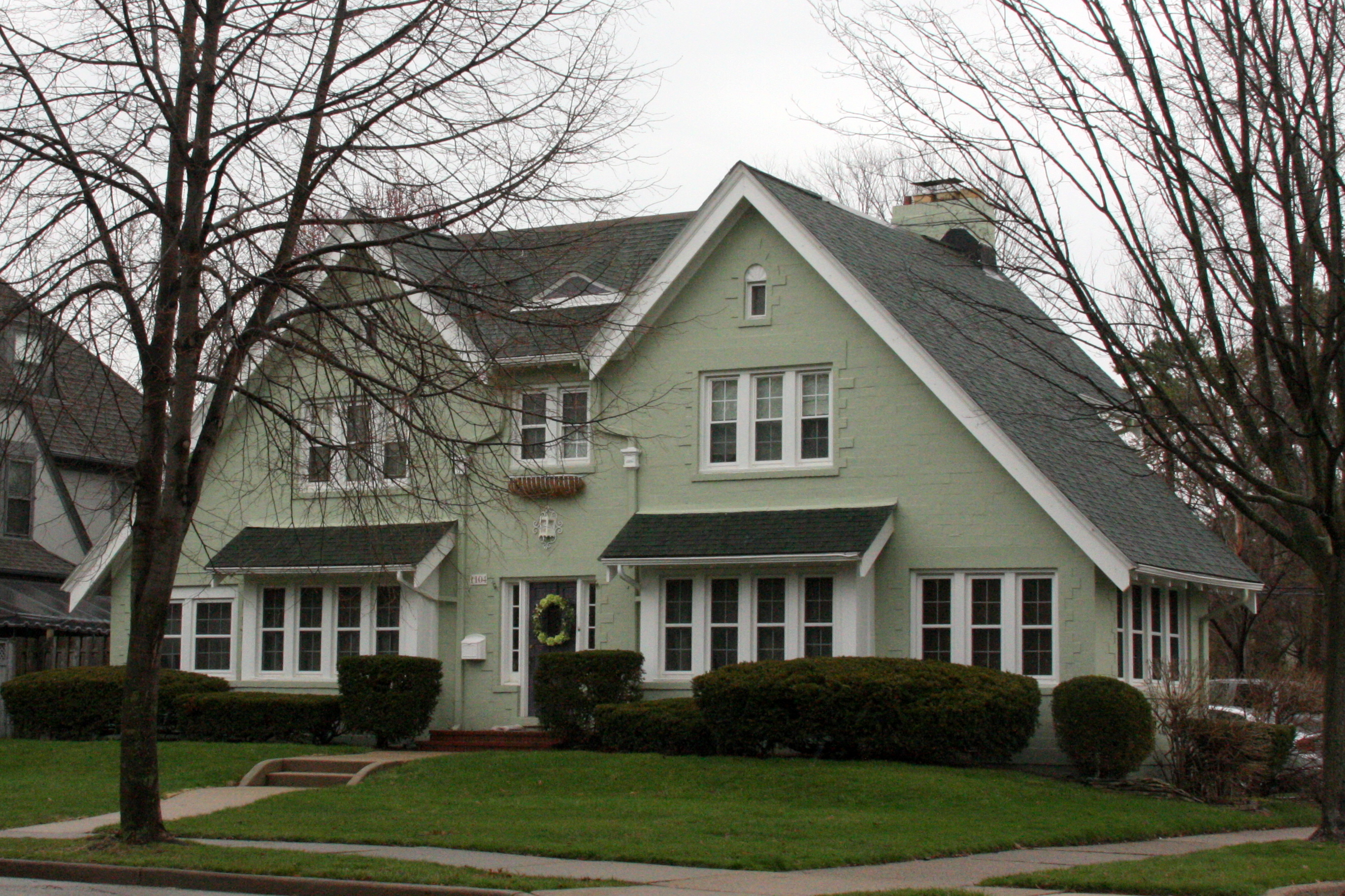
Grosse Pointe, Michigan, Photo courtesy of Ralph Deeds
Posted in Found Objects | Tagged roof | Leave a Comment »
- accessory dwelling unit acoustics addition additions ADU Albany aluminum angles appleply ash bathroom Berkeley birds boxes Brooklyn buildings on the water cabin cabinets cedar children color concrete construction process copper cottage curiosities curves decks decoration desert architecture details Detroit dog doorways El Cerrito energy efficiency Fairfax fence fibercement fir fire resistant construction framing fun furniture Garage garden glass tile green green building handrail historical styles holes house houses house surgery humor indoor-outdoor interiors isba John Mcbride Julia Morgan kitchen landscape LED light lighting lighting design McBride Construction metal minimalism modern new materials New York Oak Oakland paint painted plywood pantry paperstone passive house passive solar patterns plants plywood poet's corner Point Richmond process railings rainscreen recycled redwood remodel remodelling restaurant Richmond Rockridge roof rustic salvaged San Francisco San Mateo shou sugi ban simple skylight small buildings small spaces solar electricity sparkle stained glass steel storage Strawbale structure stucco subway tile tile tiny house trim turquoise utilitarian utility value vaulted ceiling victorian walnut water management whimsy windows wood zinc
-
link to RSS Feed

 deedsdesign