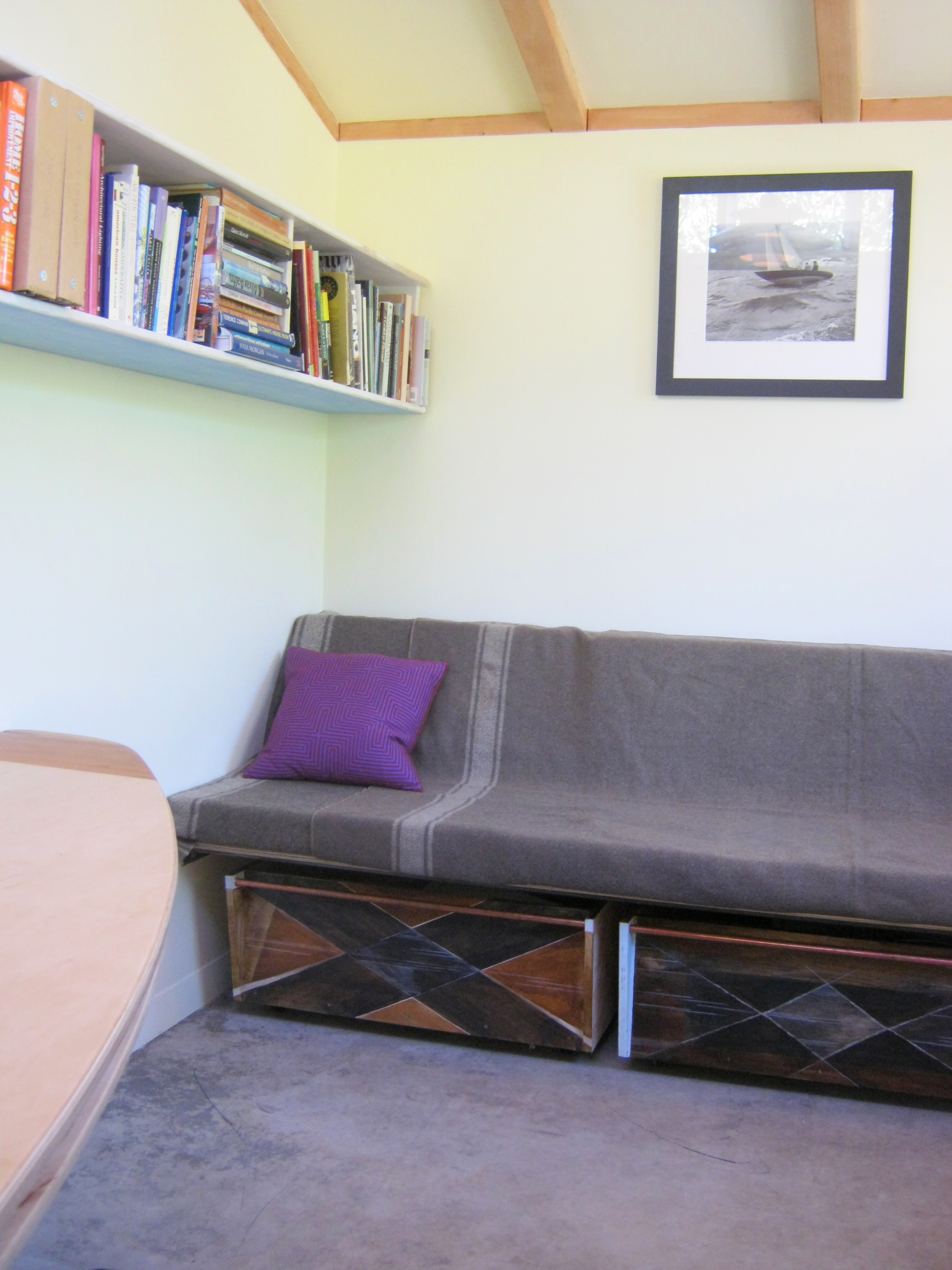
The internet seems to like our small studio. I have found many repostings of Lenny’s photos, and commentary about the little studio. Most of them seem to have just nabbed and revised slightly the written content from Dwell or the Washington Post, but here are a few that are more original:
Yesterday Kirsten Dirksen and Nicolas Boullosa came all the way from Barcelona to make a video about the studio. I eagerly and nervously await my and John’s debut as movie stars on faircompanies.com.
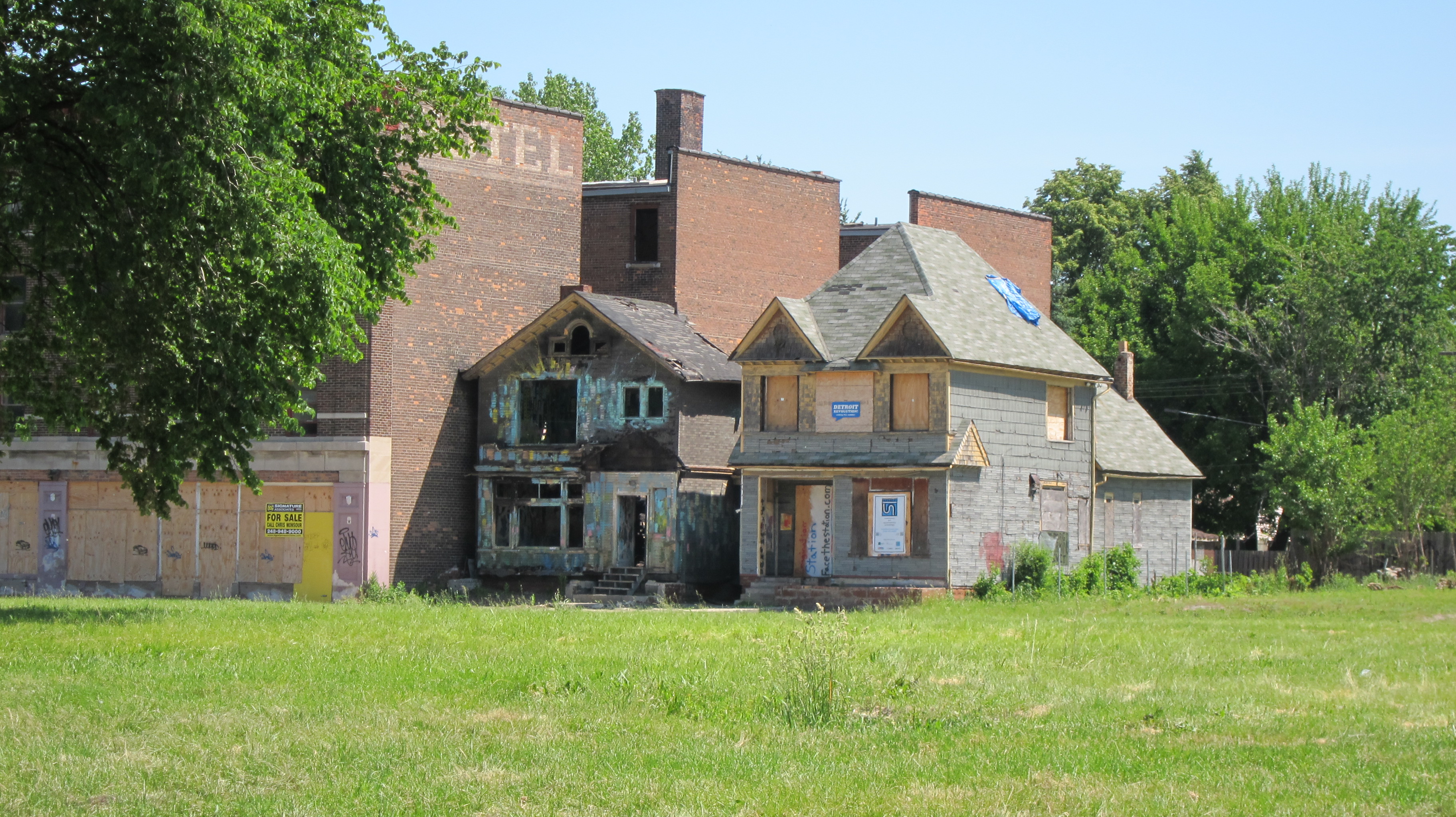
I received this hefty book for Christmas from my dad. It contains a lot of great photos of the city I grew up near. Enclosed in the pages of the book was this New Yorker article about the book and its forward written by Elmore Leonard, also a native of suburban Detroit. It is mentioned in the article and forward that “Julia believes it should be preserved and appreciated any way it is, not restored.” Urban decay is beautiful, I agree, but honestly it seems like an insensitive statement from a resident of Bloomfield Hills. You could call her a poverty tourist. I know for a fact that many Detroiters are annoyed by all the hipsters from Europe who come in droves to photograph the urban blight. But in some ways I am inclined to agree with the author. (I too have the privilege of viewing the city from afar and on occasional visits home to another affluent suburb.) The people of Detroit deserve our compassion and it is sad to see some truly beautiful old buildings fall into unsalvagable disrepair, but at this point it might not be all bad to allow the city to slowly return to nature.
The New Yorker Article ends with reference to Elmore Leonard’s teasing attention to the origin of the holes in Julia Taubman’s jeans.
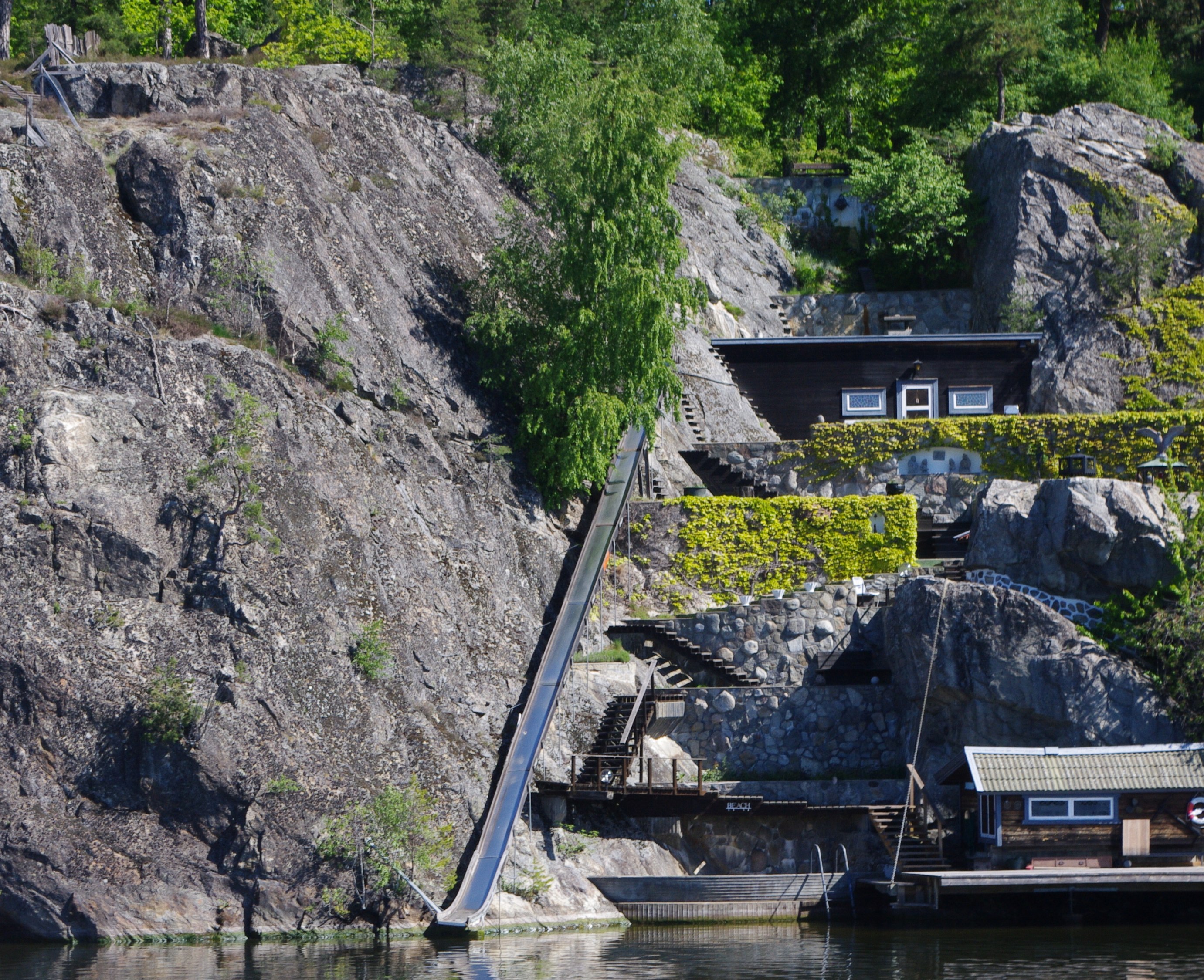
My friend Charles shared this photo he took from a boat tour near Stockholm. The house looks like its built right into the rocks. Clean minimal lines, stone walls that blend with the cliffs, subtle earthtones, black painted wood, and a very tasteful waterslide.
I saw these blocky interlocking bottles at the MoMA, NYC, designed by Juris Mednis in 1983. What a great way to package shampoo and conditioner….ketchup and mustard….oil and vinegar.
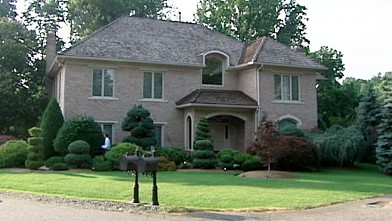
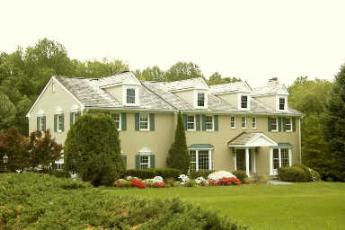
Michelle Bachmann’s house with “a grand manor roof” and “European flavor”
Gingrich’s “Mansionette”
Santorum House: “a big rectangular box with holes punched in it for windows. It doesn’t have much to say. Need I say more?”
The New York Times ran this article recently about the homes of the Republican presidential candidates. The review, informed by “interior designers and design psychologists” (no architects) is generally unfavorable. They make fun of Newt Gingrich’s extensive use of mirrors and Huntsman’s pink love seat with yellow bows. Bachmann’s complex roofline is rather atrocious (no mention of the maintenance issues with such a roof,) and Santorum’s more simple house is called boxy with small punched windows. The houses are all quite big… mostly around 5500 square feet. One designer who commented in the article said that he’d call them McMansions, but that would give McDonalds a bad name. Wow. That is saying a lot. None of them appear to be designed by architects that were given much latitude, but most of the candidates appear to have dropped some cash on interior designers. The houses all scream “I am a traditionalist,” according to design psychologists that were consulted. Manicured green lawns and brick or stone are present in all.
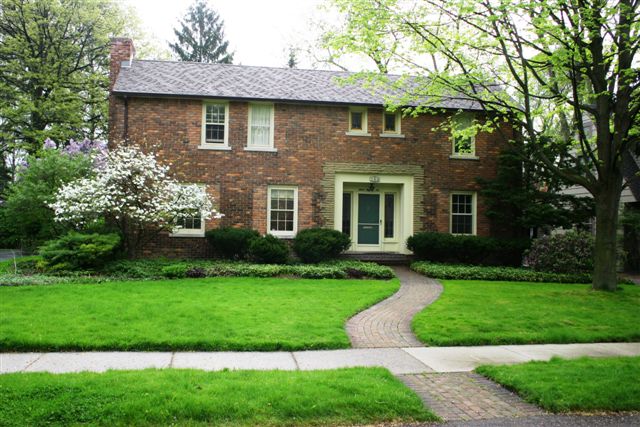
Uh Oh. What would they say about my parent’s house, (the house were I grew up)? My dad took off the fake shutters at least….and it does have industrial chic concrete window sills. The windows are true divided lites, by the way, and my folks hired a local artist to make some stained glass windows for either side of and above the front door…Its not so big, but it is brick veneer with a green lawn and small punched windows.
Not a Republican house though
There is no discussion in the Times article about solar orientation or energy efficiency. There is no mention of simplicity, elegance, or economy. Creativity does not make an appearance, (except in Newt’s whimsical topiary.)
Perhaps the candidates can learn a bit from Ice Cube.
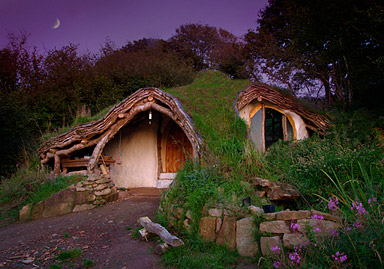
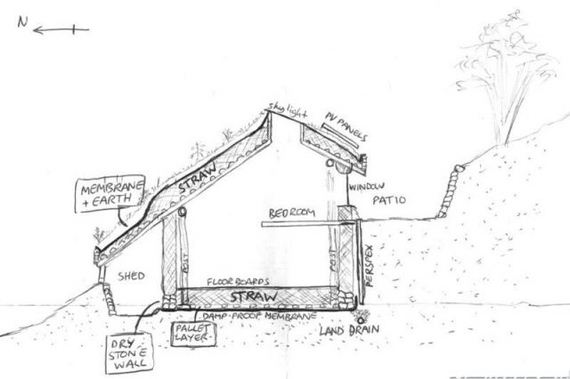
A young man in Wales built this house for his family using a chainsaw, a hammer and a 1″ chisel. In some ways I am more drawn to this one than the modular one….even though it makes for rustic living. He needed no team of architects, engineers, and modular specialists. It has no green certification, but certainly far greener, except for its location in the countryside. The modular house is more suited for modern urban lifestyles.
Thank you to my British correspondent, Amanda Soskin, for sharing this gem.
Lloyd Kahn has published several books about similar creative, owner built structures. Here is a glimpse of a recent Lloyd Kahn book that I have enjoyed very much.
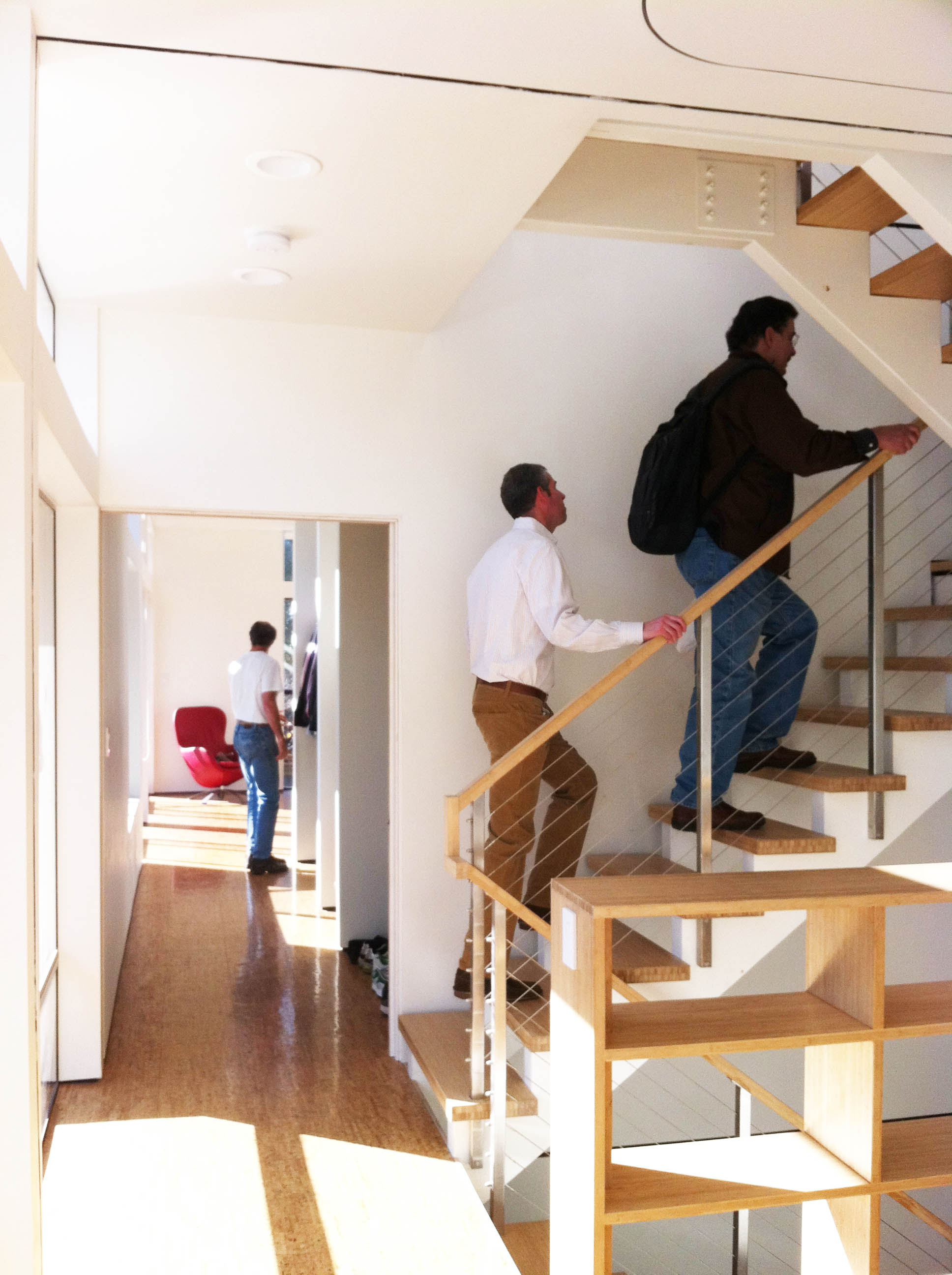
At lunch today I went with Guillaume Canivet to visit the Simpatico Homes prototype modular house in Emeryville. Seth Krubriner, the owner of the house explained the design and construction process from start to finish. The modules were constructed in San Jose by Eco Offsite. Swatt Architects was also involved. This sounds like a lot of cooks in the kitchen…..so I am curious how the collaboration worked. Seth gave a very interesting and honest presentation of the benefits and drawbacks of modular construction compared to conventional site built. His house actually has site built pieces added onto the modules.
To me, it seems that the best part of choosing a modular system over conventional is that you are limited by the modular system. There are fewer choices and therefore the design process is simpler. Just like a restaurant with a short menu, the specialization and simplification often yields a better product.
Without a good understanding of the system and a willingness to work with it and accommodate it in the design, a modular house might not be any less expensive than a conventionally built house, and could easily cost more, especially if the factory was not very close to the site.
In Seth’s house the joints between the modules are accentuated and celebrated. (you can see one of the joints, a black reglet, in the photo above.) This is an example of how the design should accommodate the system. If Seth were to try for a more traditional aesthetic he would have lost some of the savings.
This same simplification and cost savings could be achieved by an architect who presented a limited pallet of materials and a select contractor and offered to deliver a very specific product. Not a bad idea.
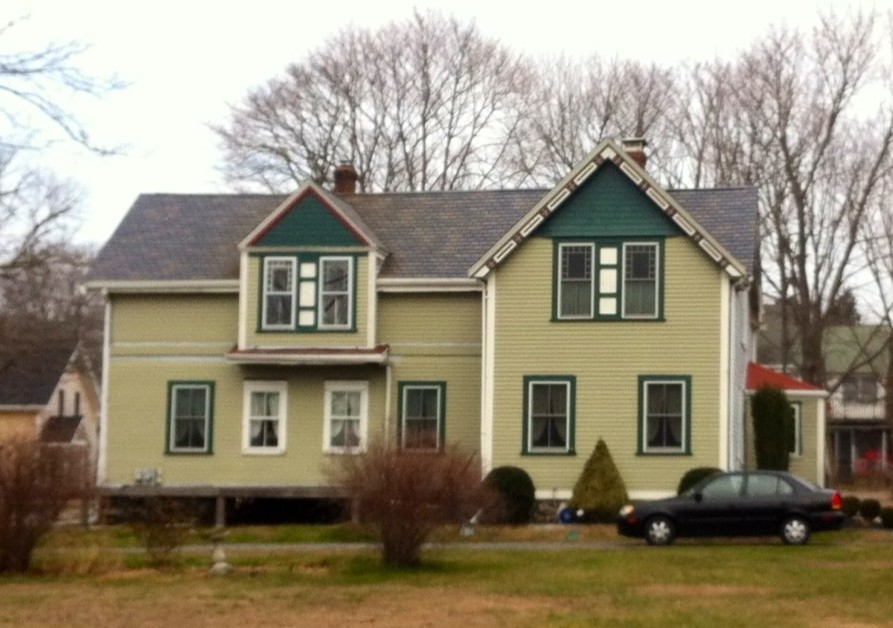
Last week I visited a friend in Jamestown, RI, a stoic New England farming and vacationing community adjacent to Newport. I spied this unusual house while walking up Narragansett Avenue. I am curious about the personalities who created the musical arrangement of windows (painted two different colors) and unusual decoration and painting scheme. Someone was having fun. Perhaps a carpenter 100 years ago started the theme, preserved and continued in a recent remodel.







 deedsdesign