This project was completed a a few years ago, but I realized I never posted any finished photos because I was waiting for the landscaping and an interior sliding screen between office and living room. I think it’s done now and I hope to stop by soon to see it.
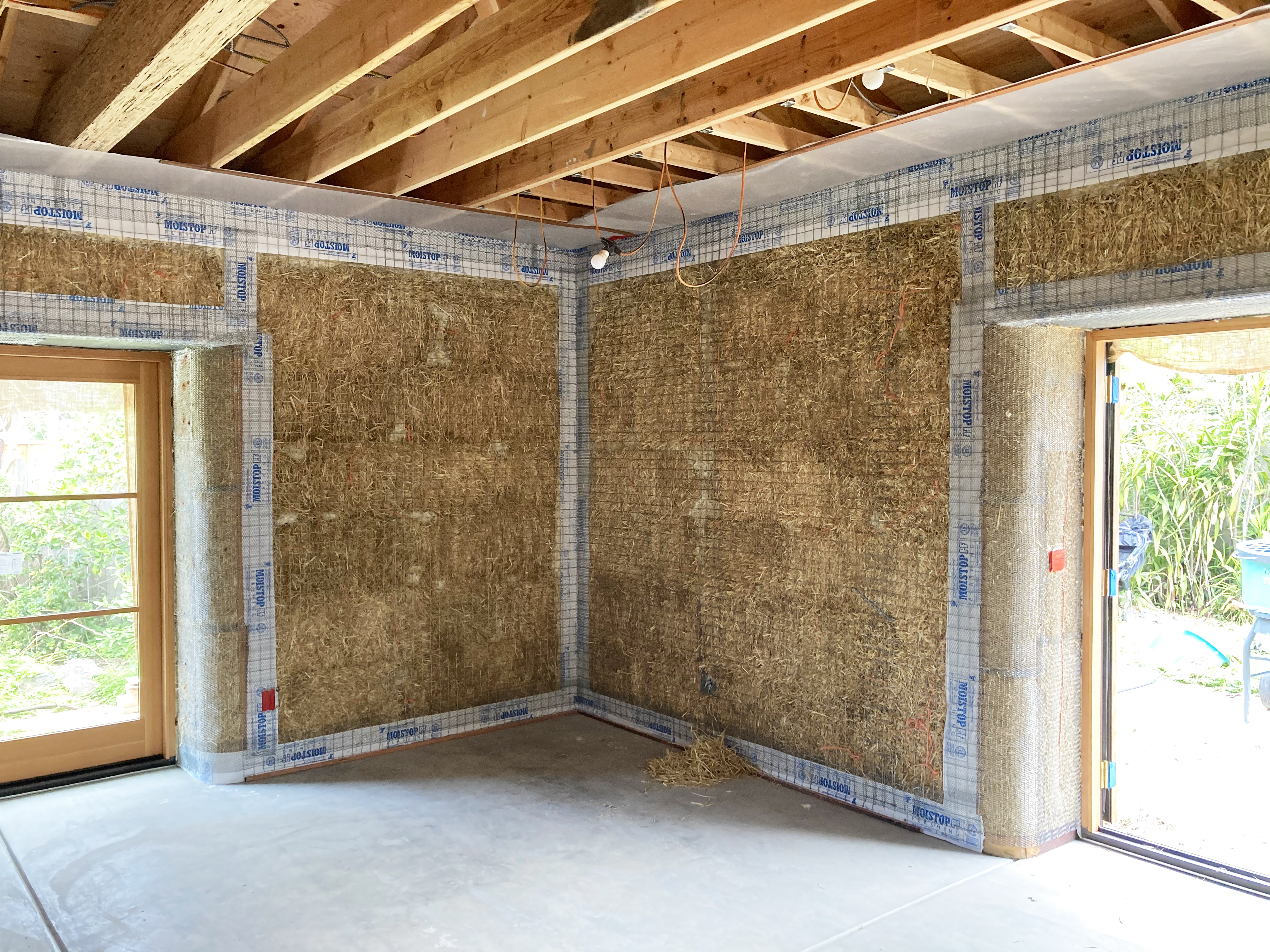
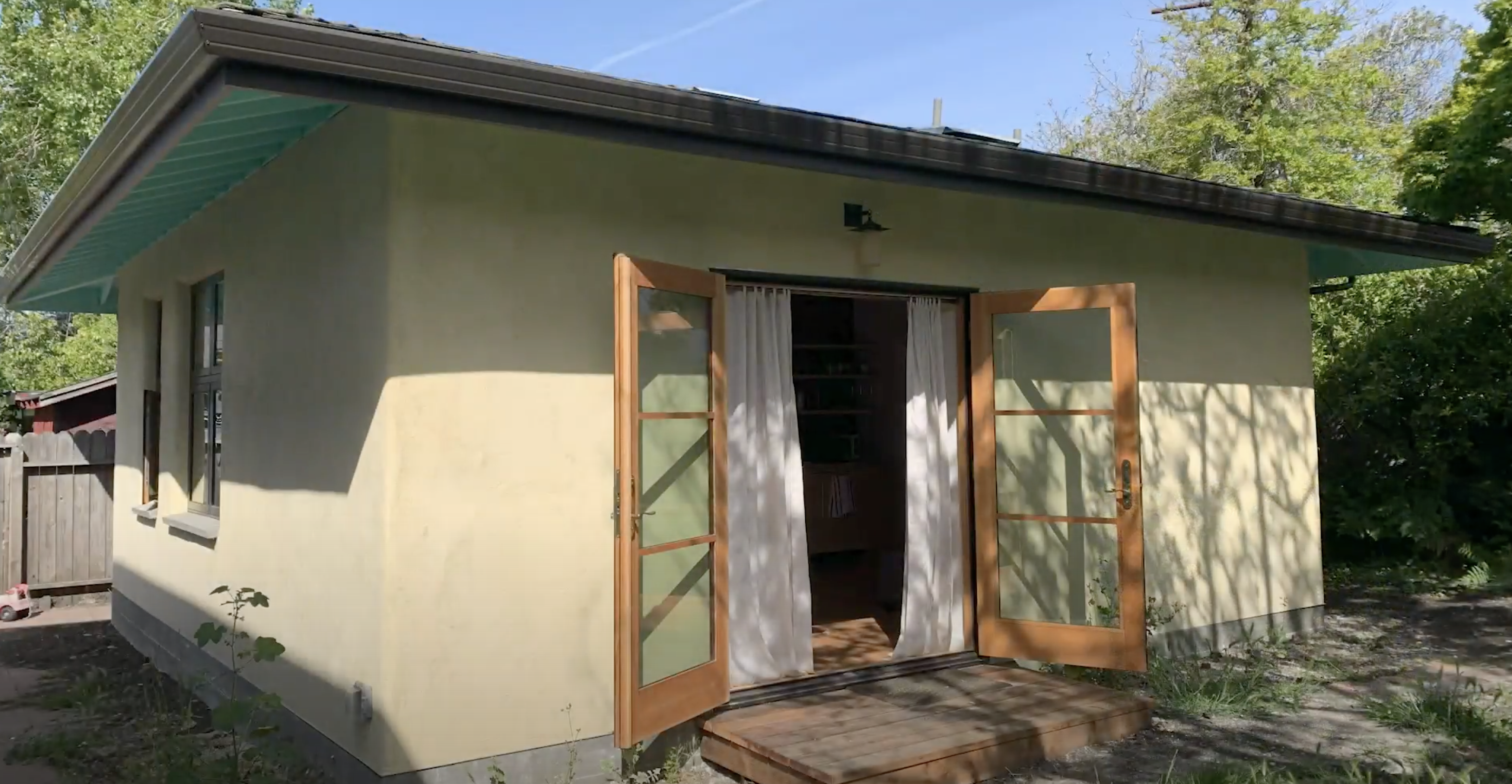
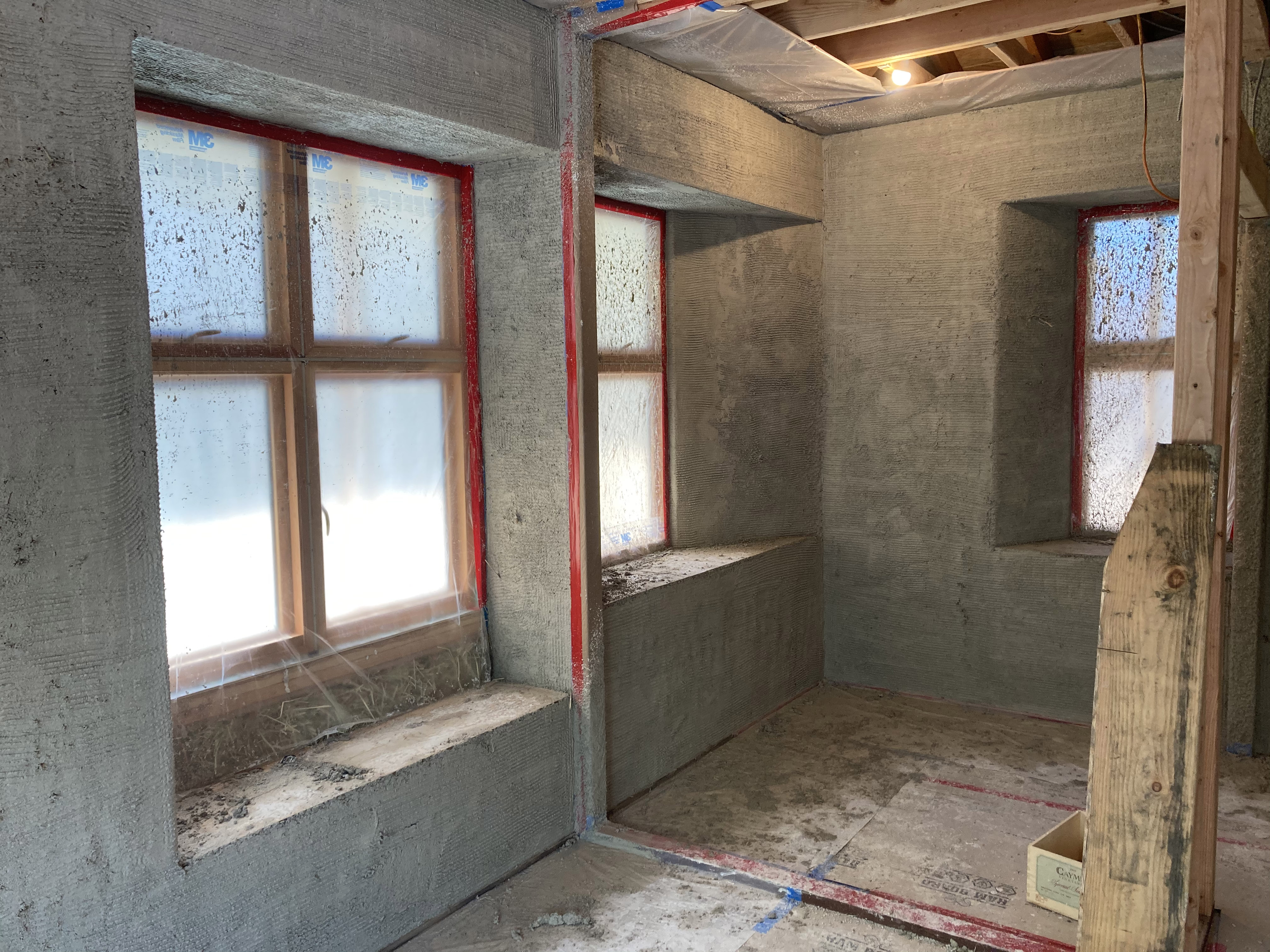
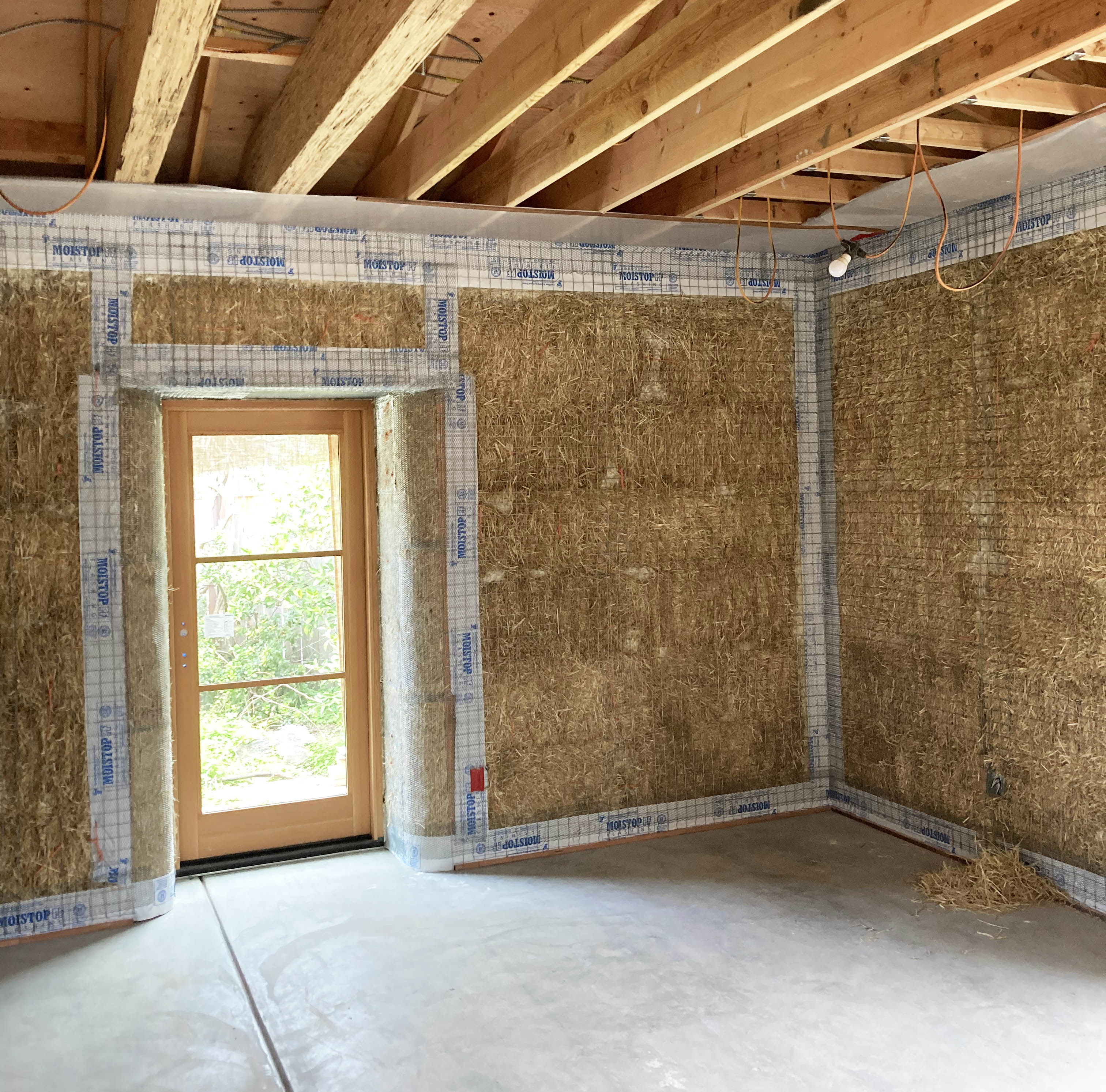
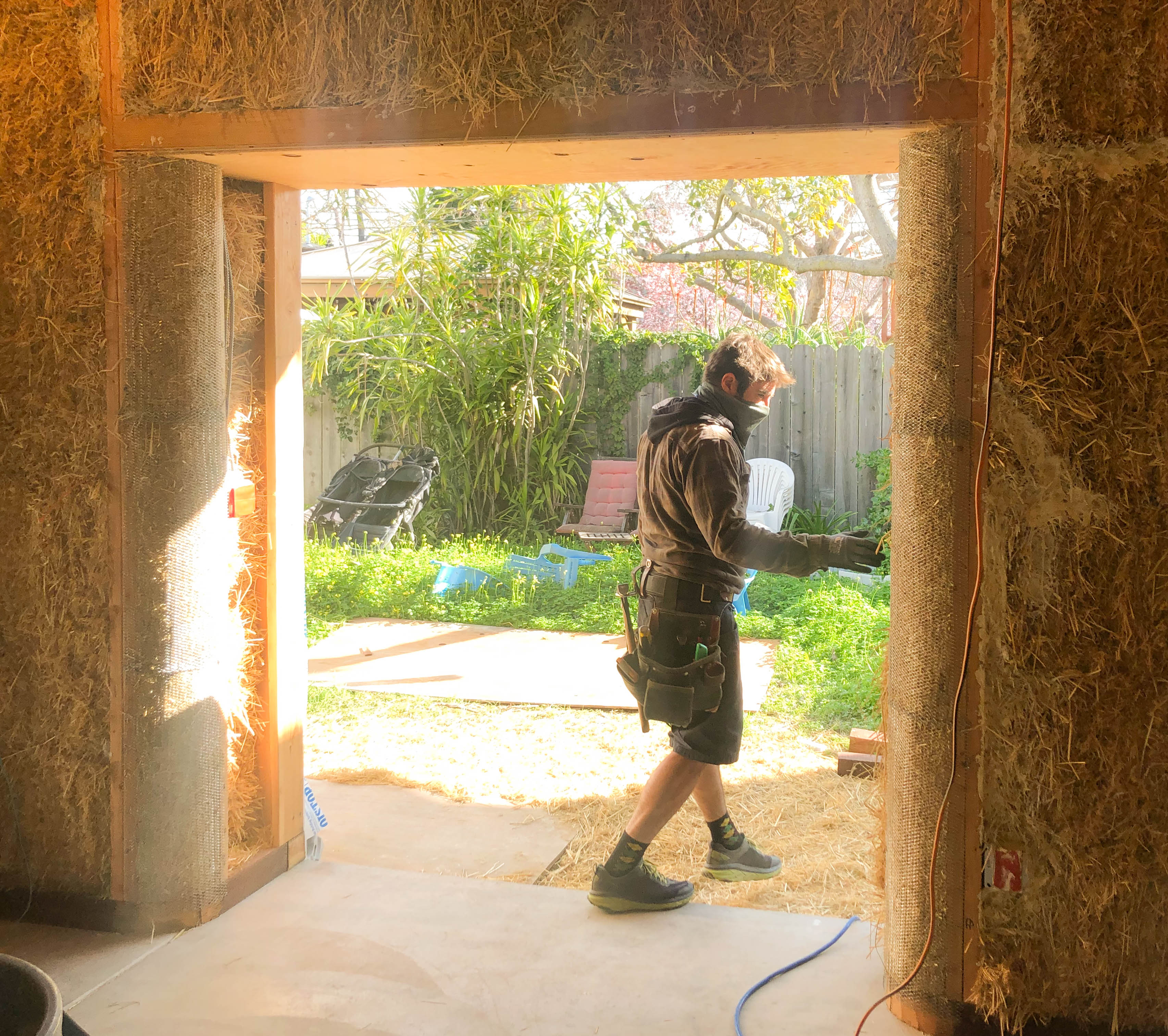
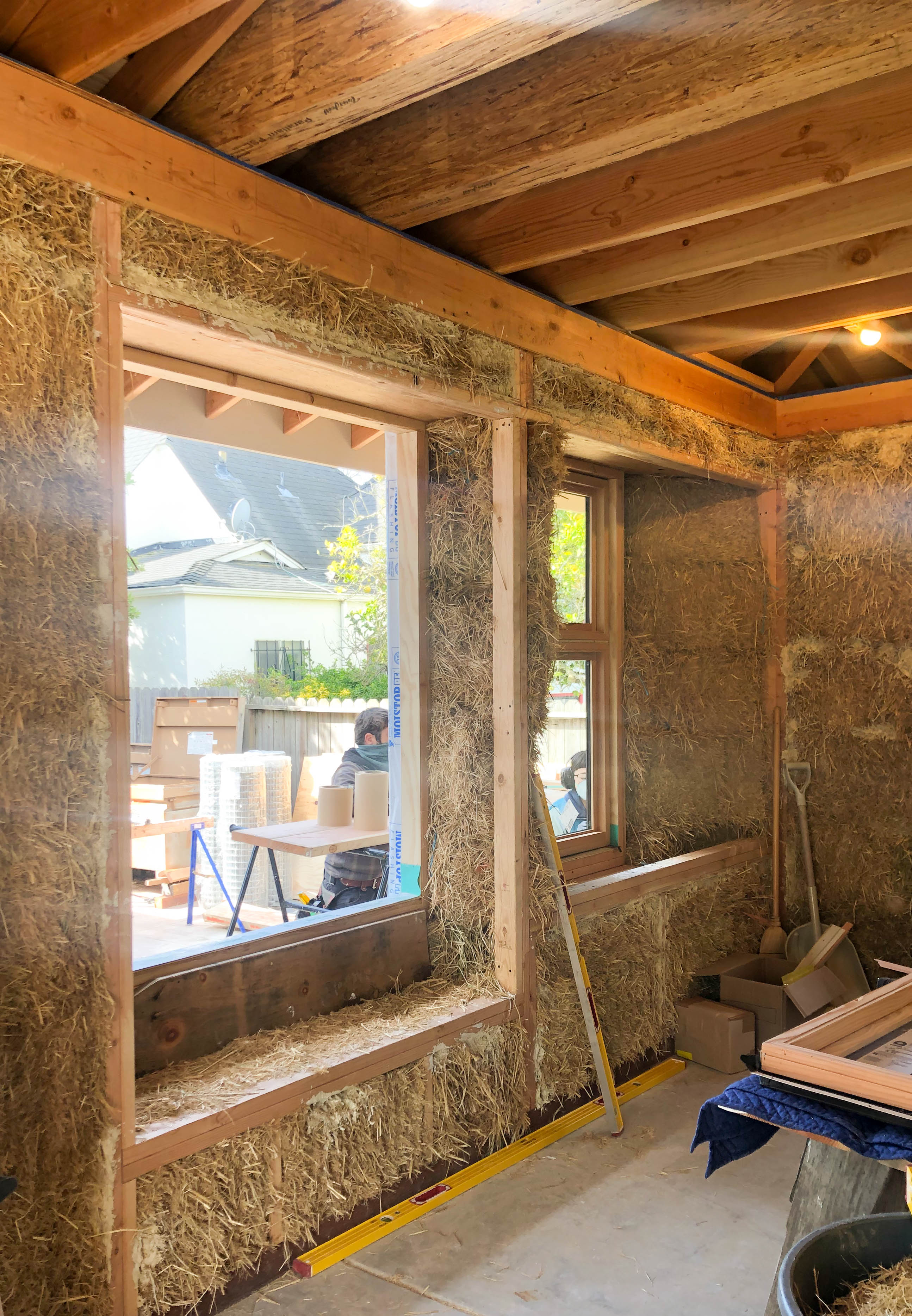
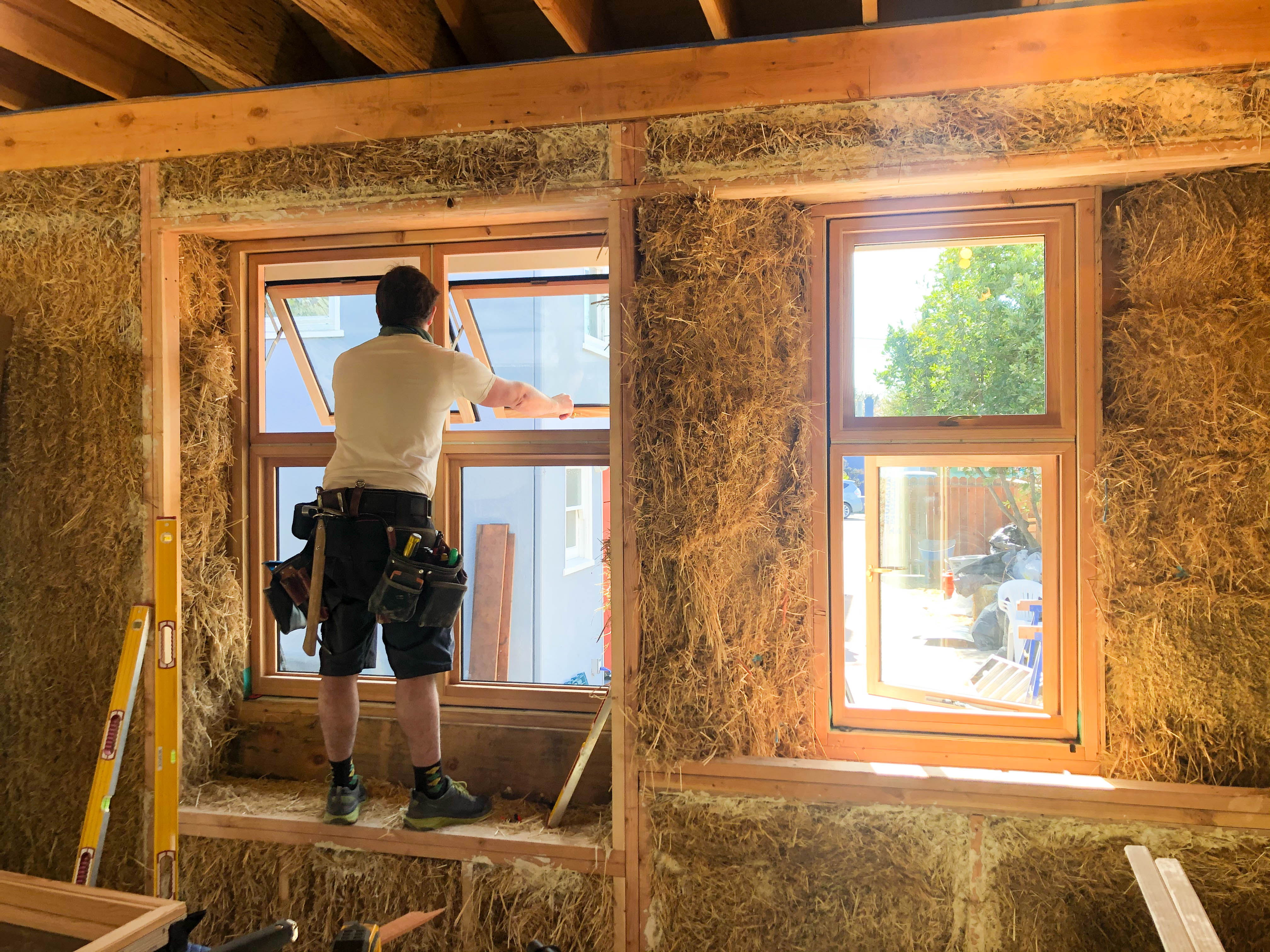
John and I both would love to build more strawbale structures. The thick walls (In this case 24″ thick, but 18″ is common) are really great architecturally and the inside is so quiet and well insulated. It is wonderful to use a natural material that is an agricultural waste product to insulate. Lime plastered strawbale buildings are also very fire resistant.
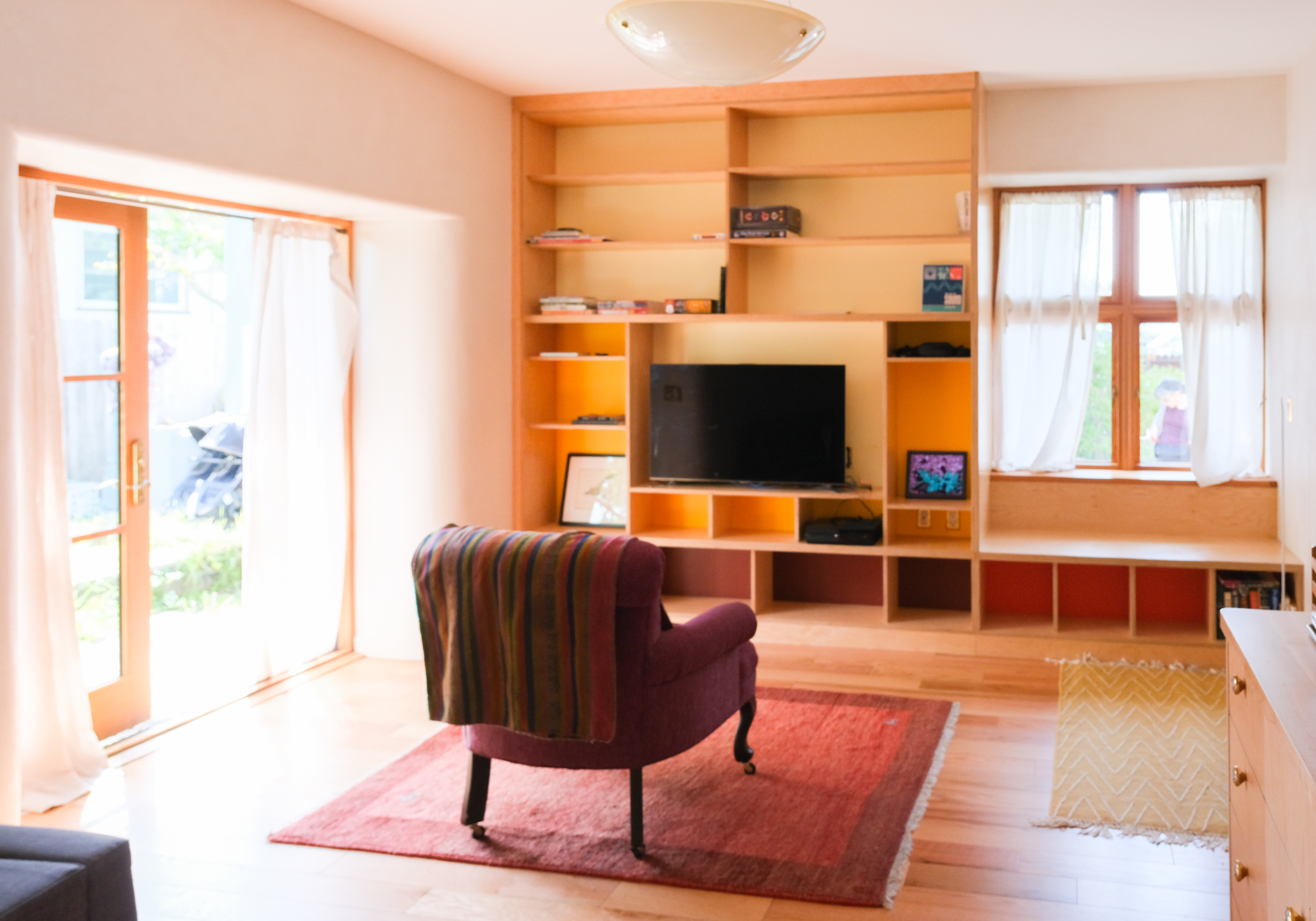
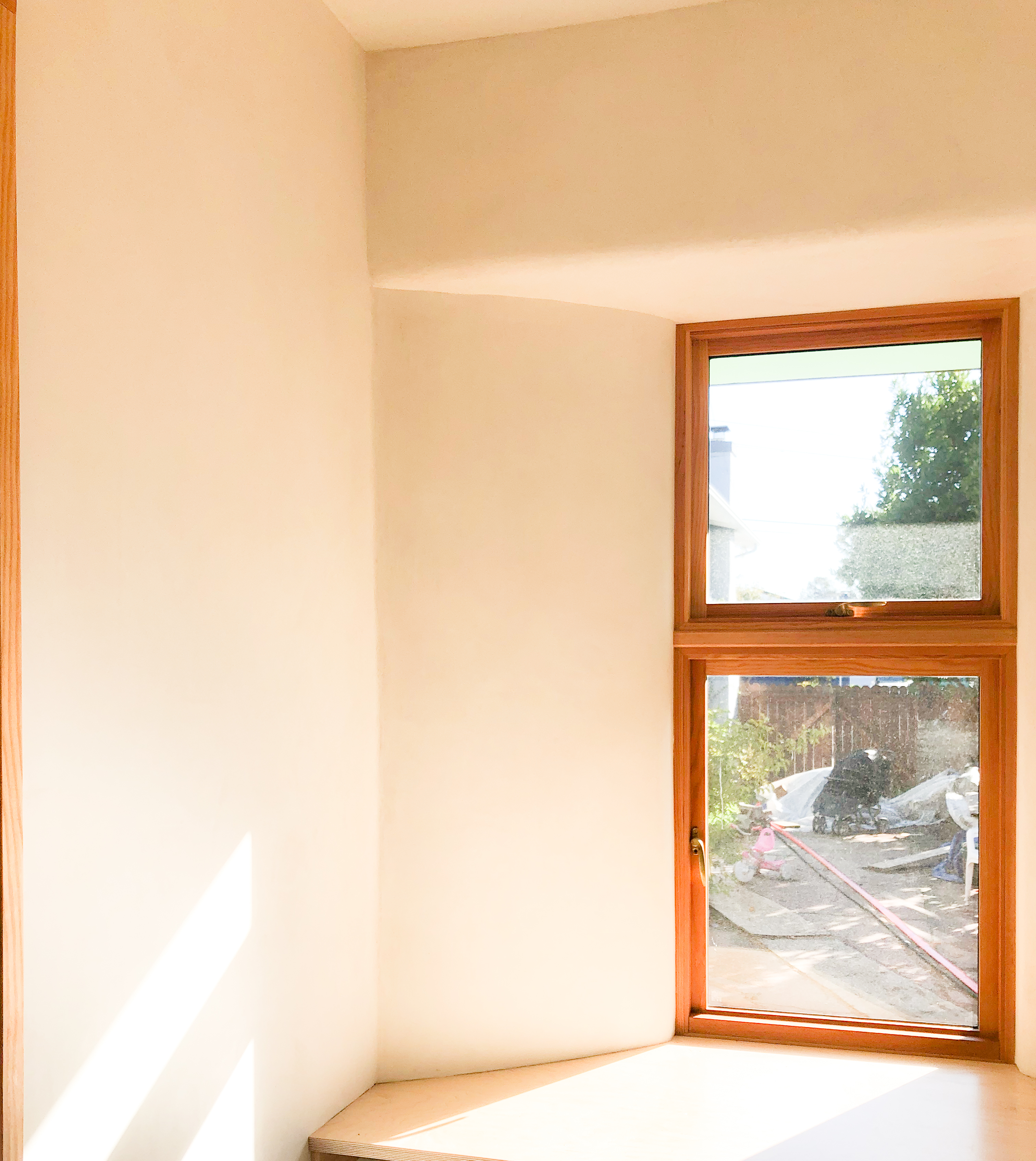
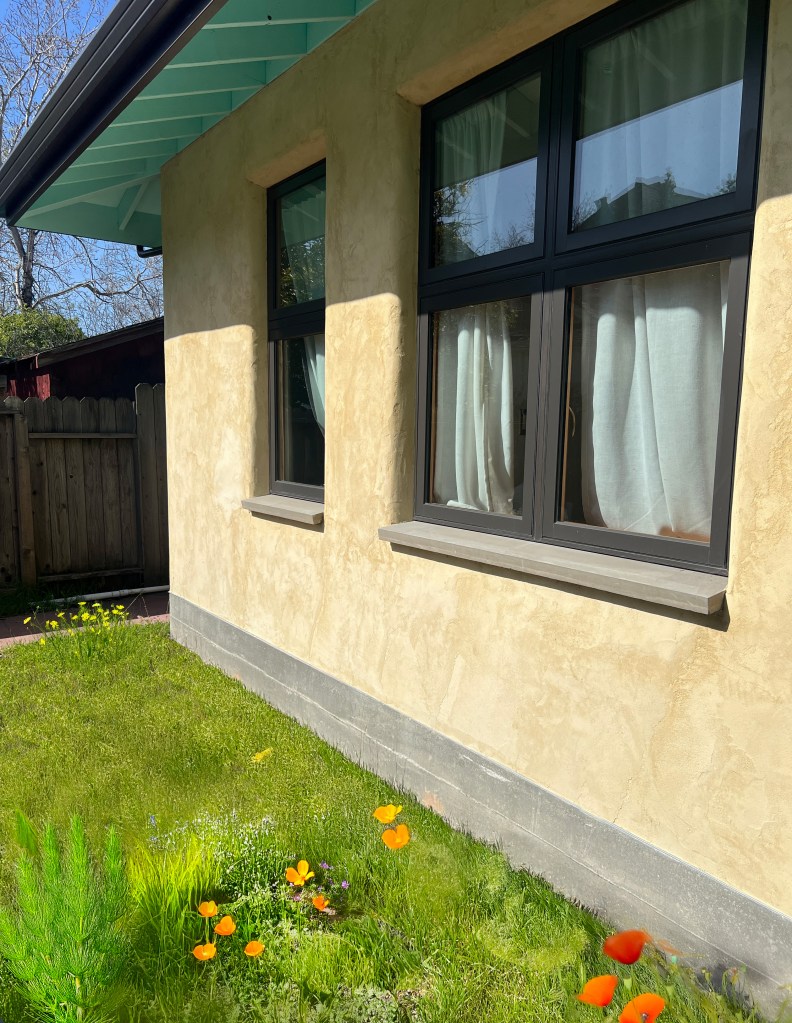
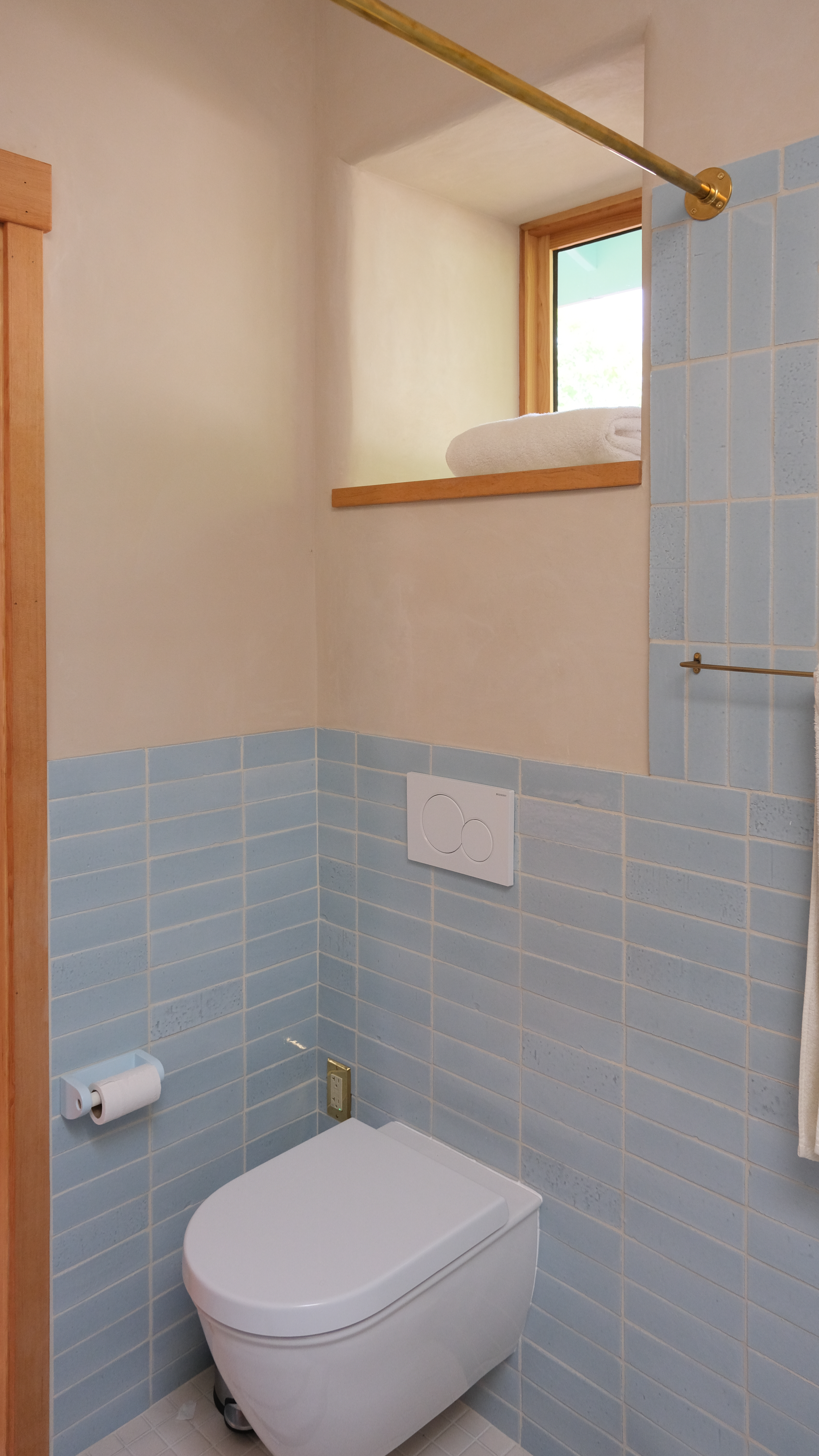
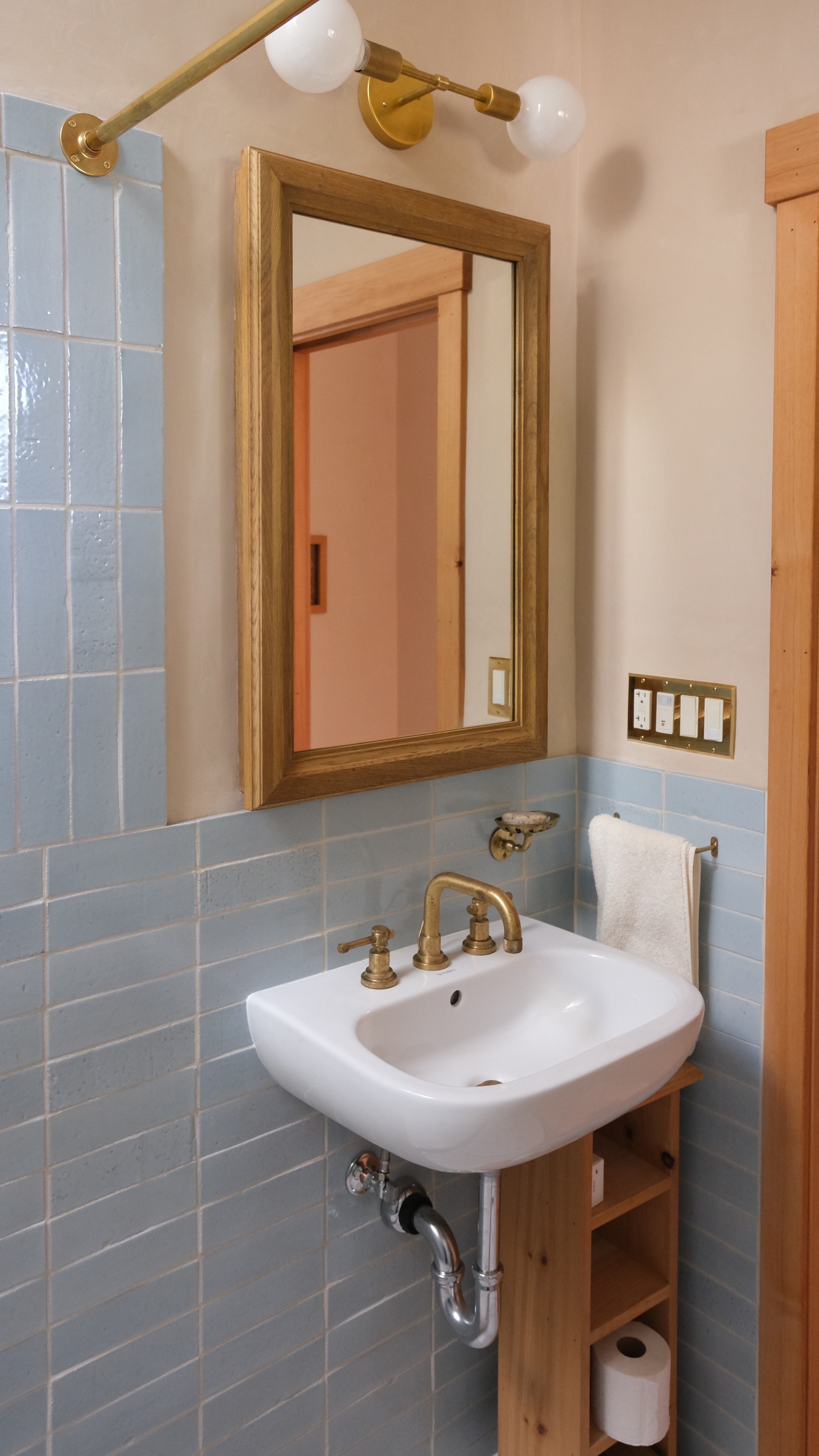
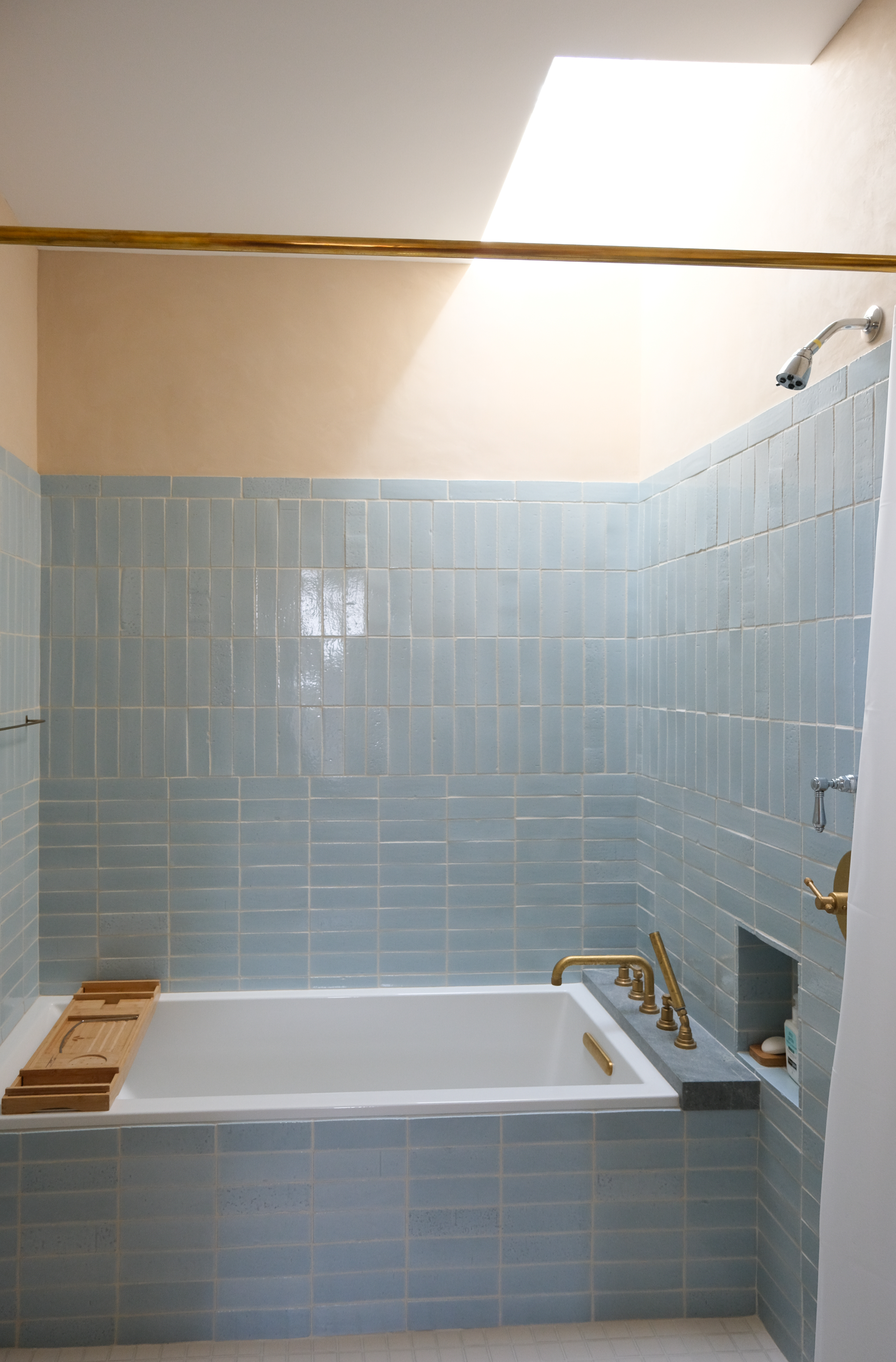
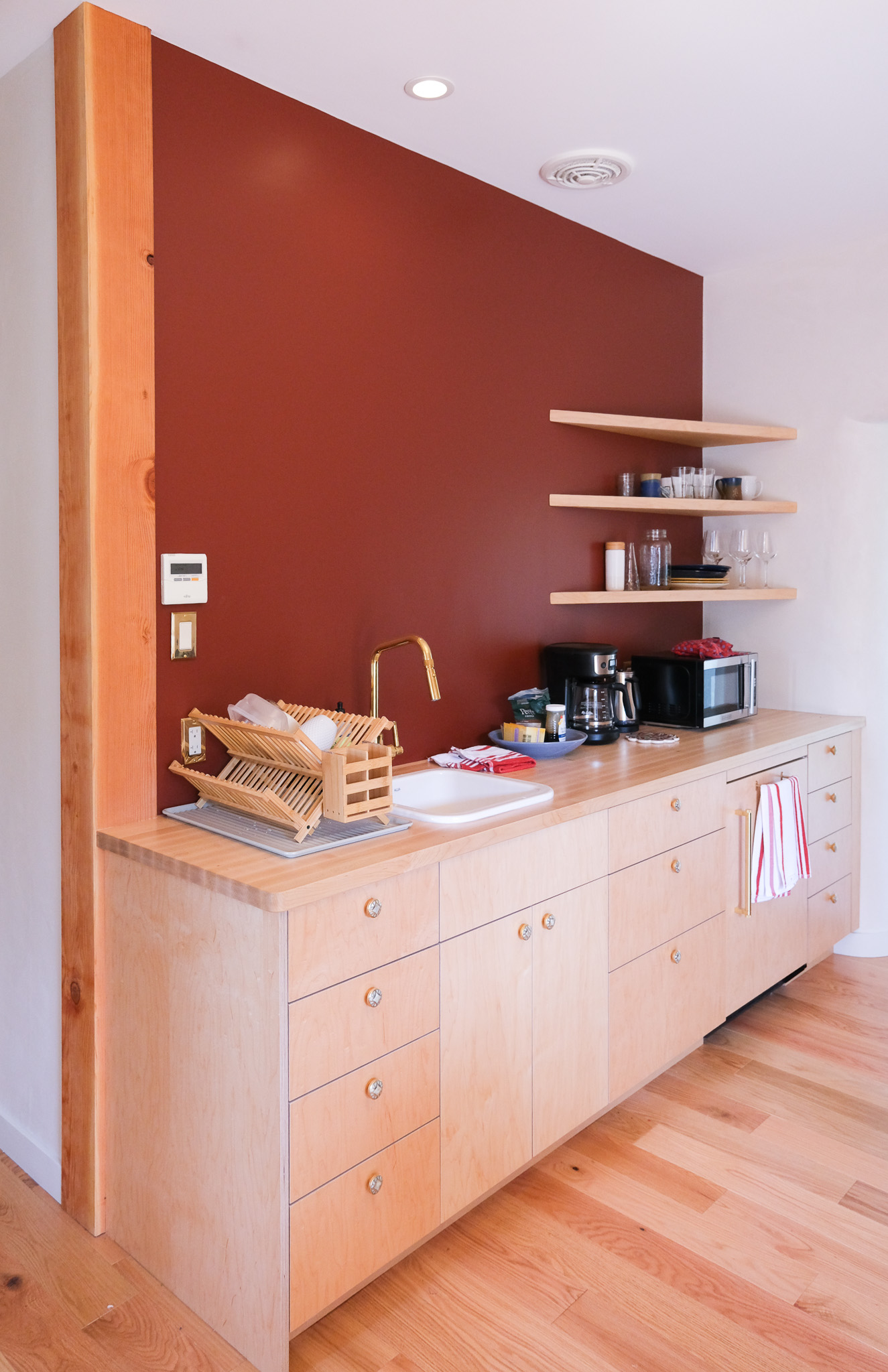
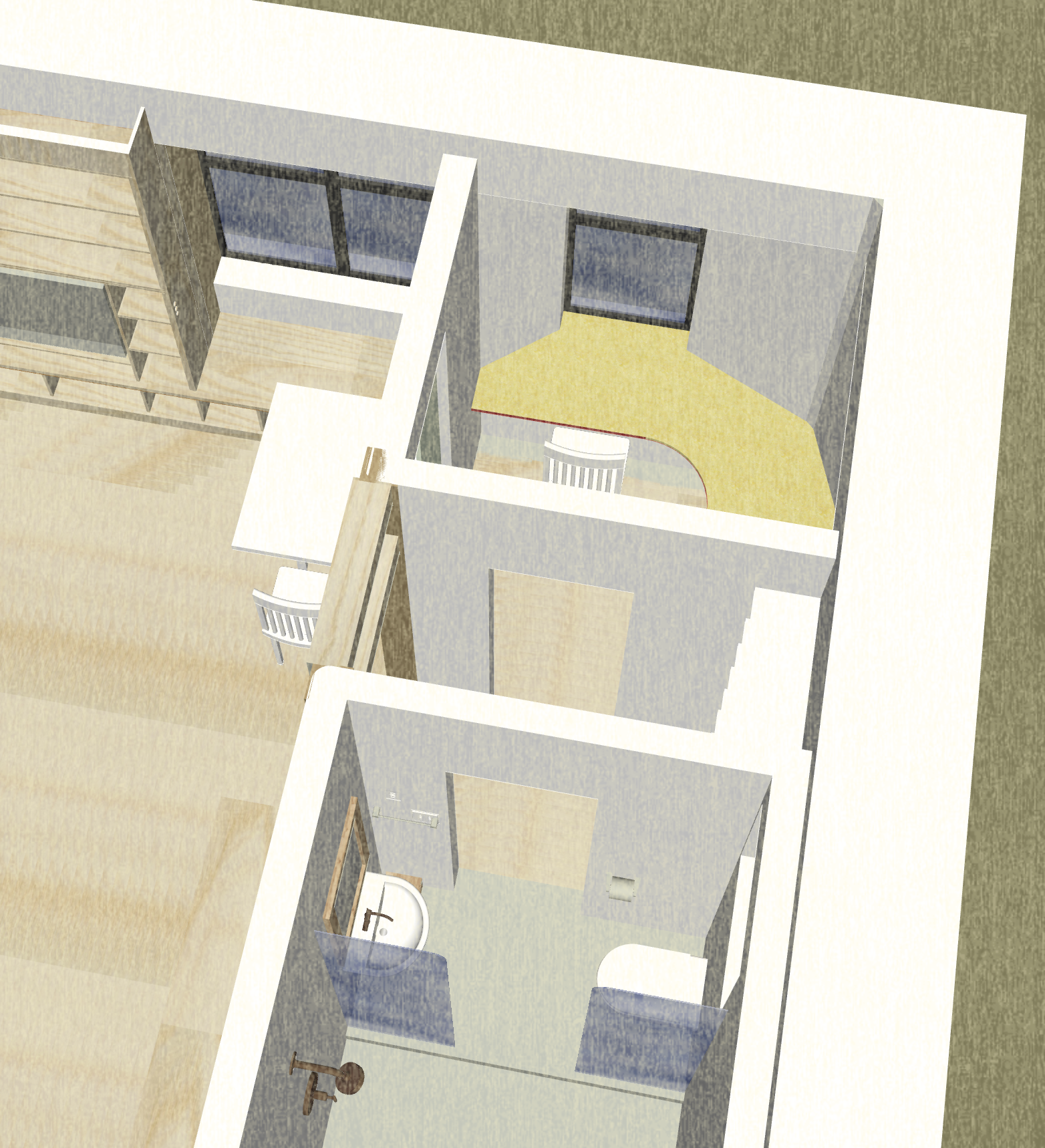
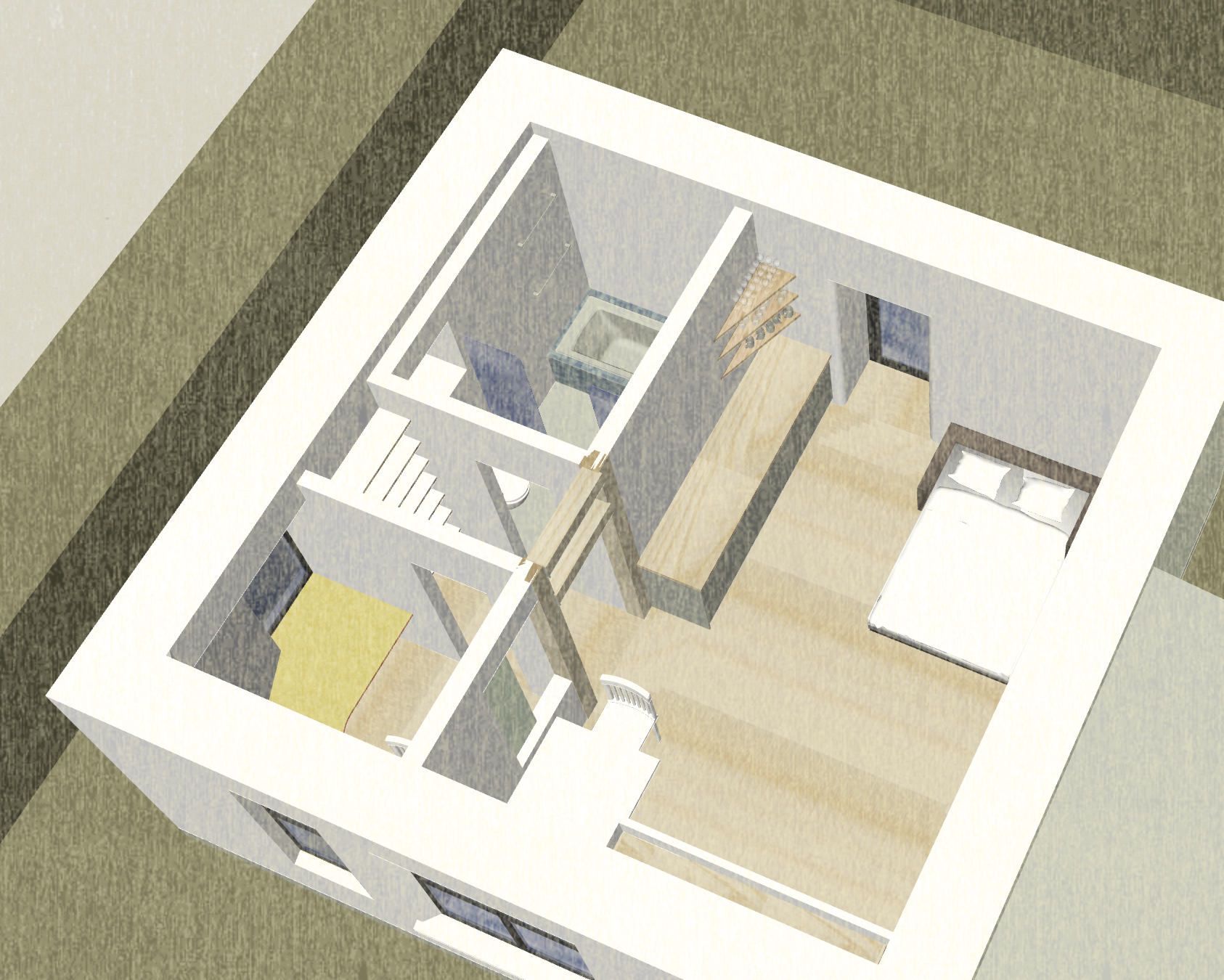
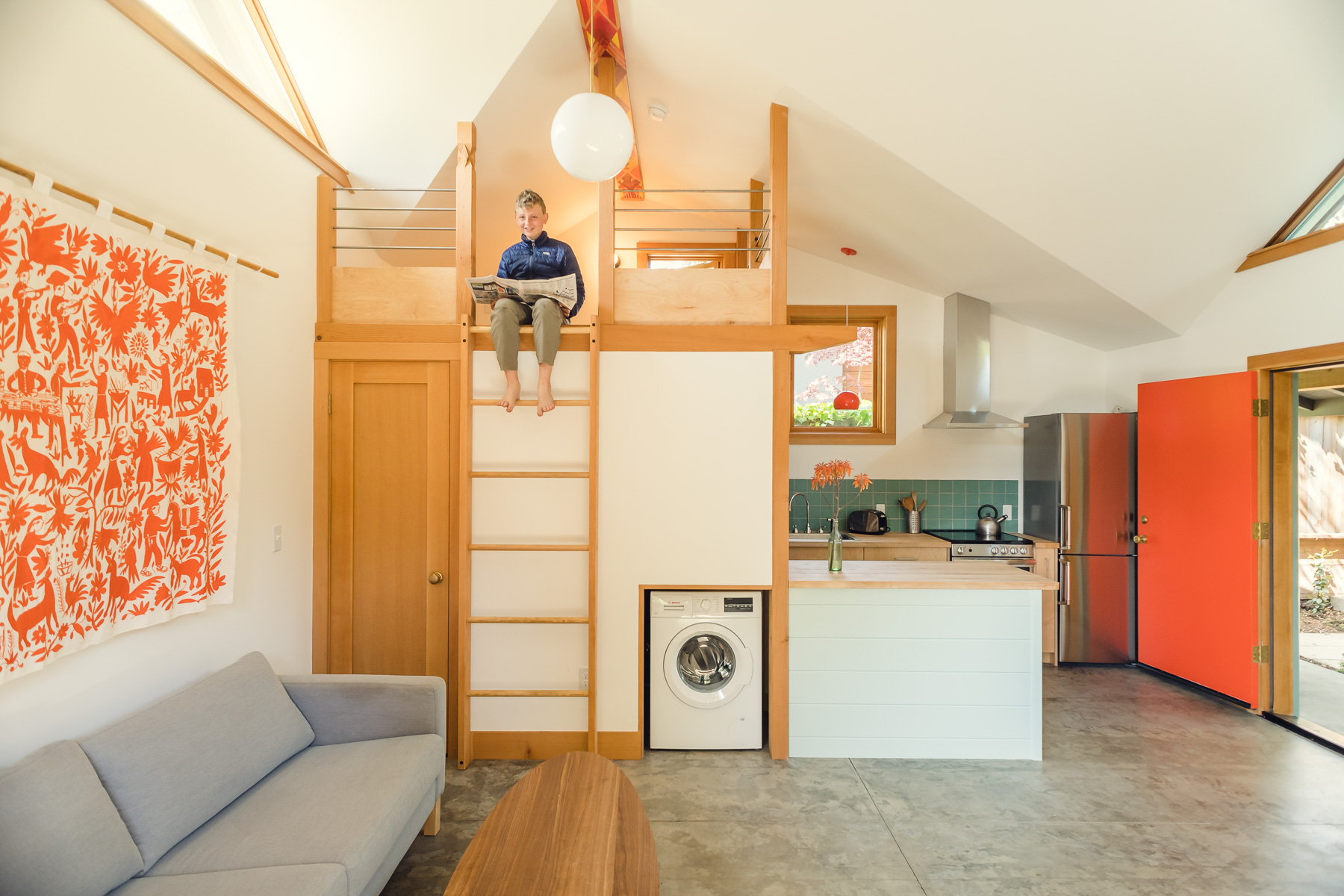
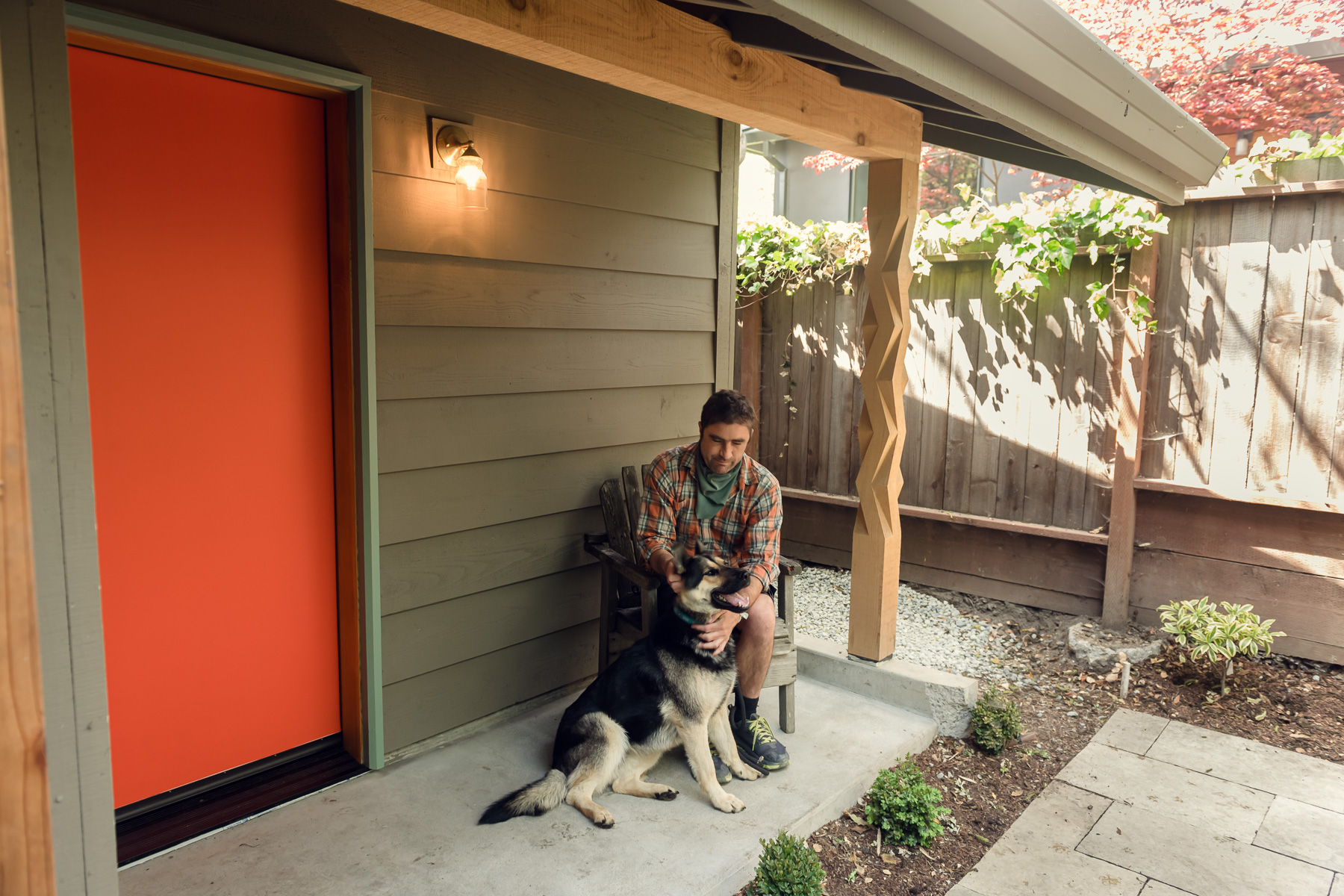
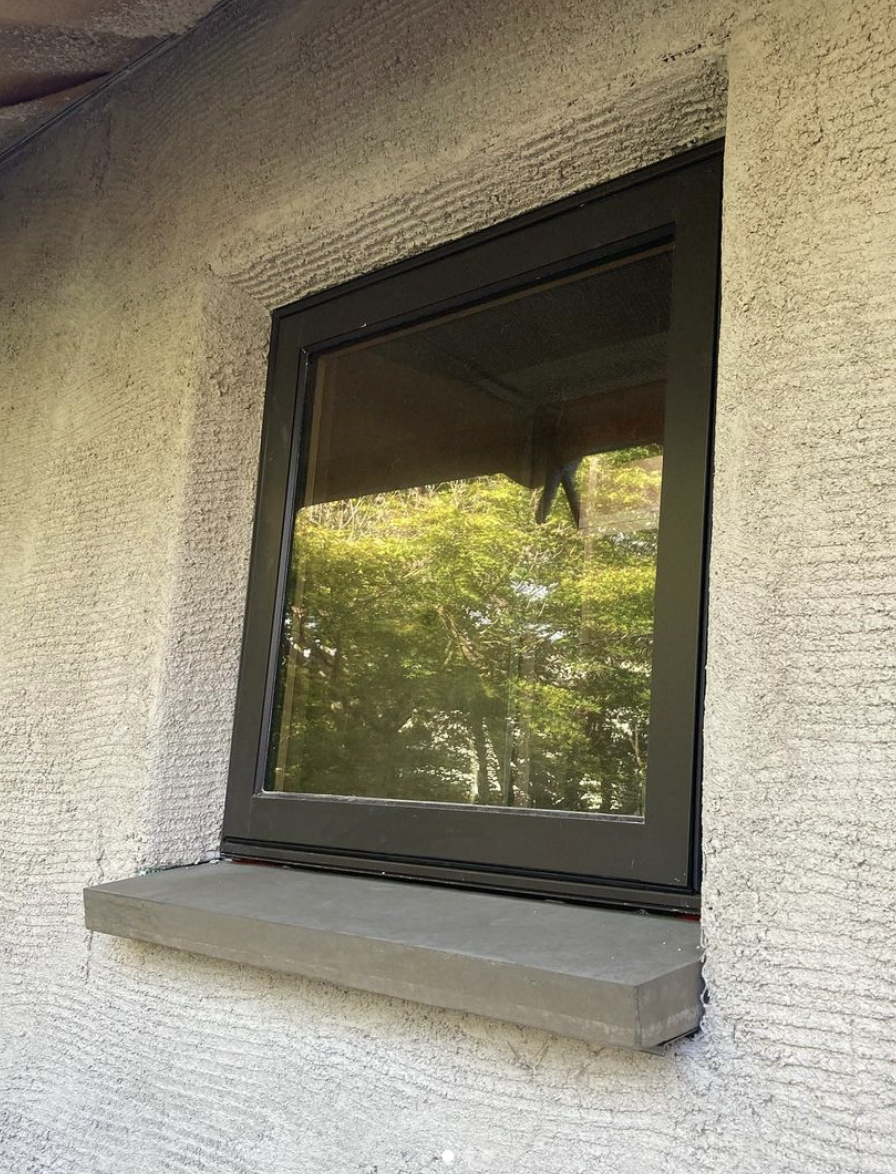
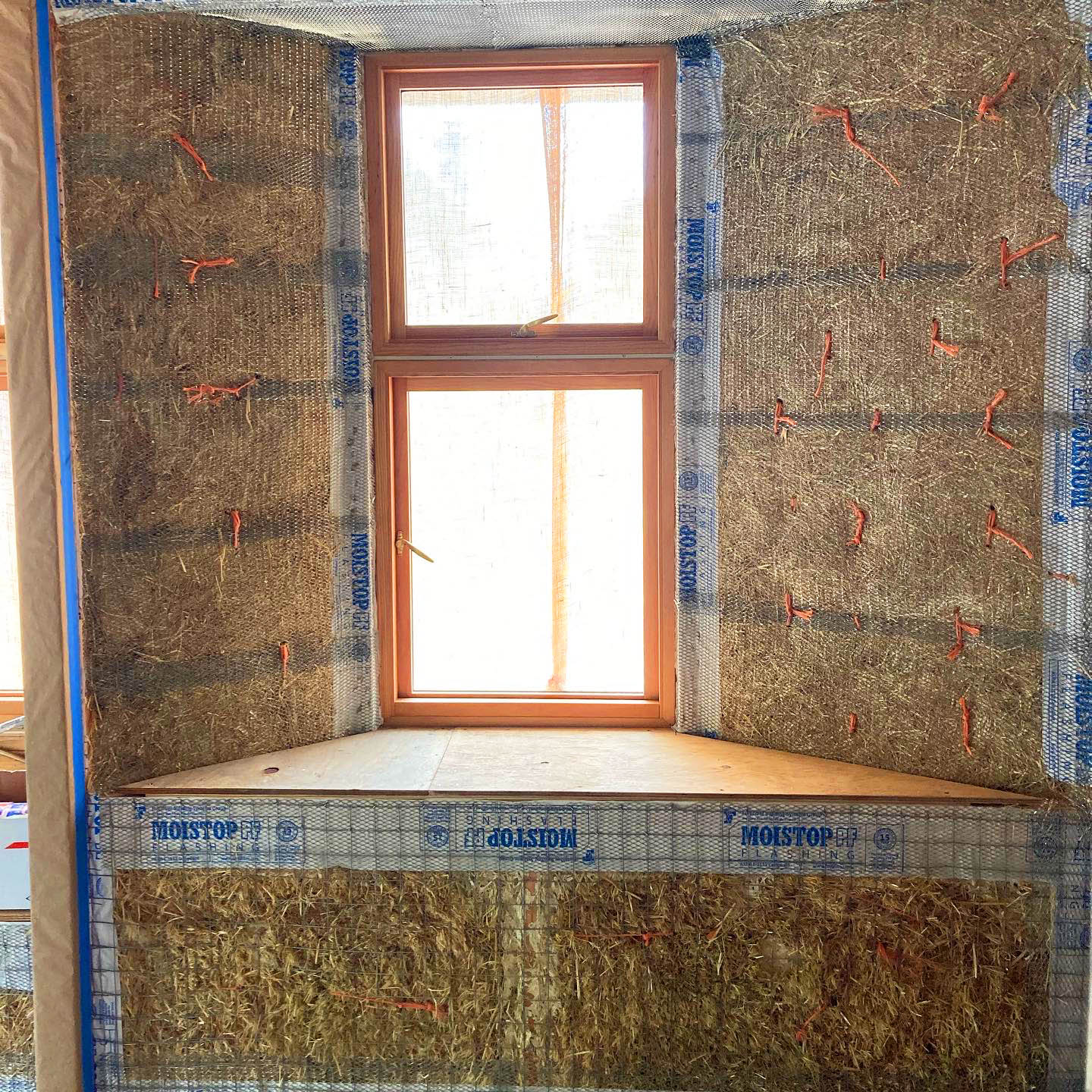
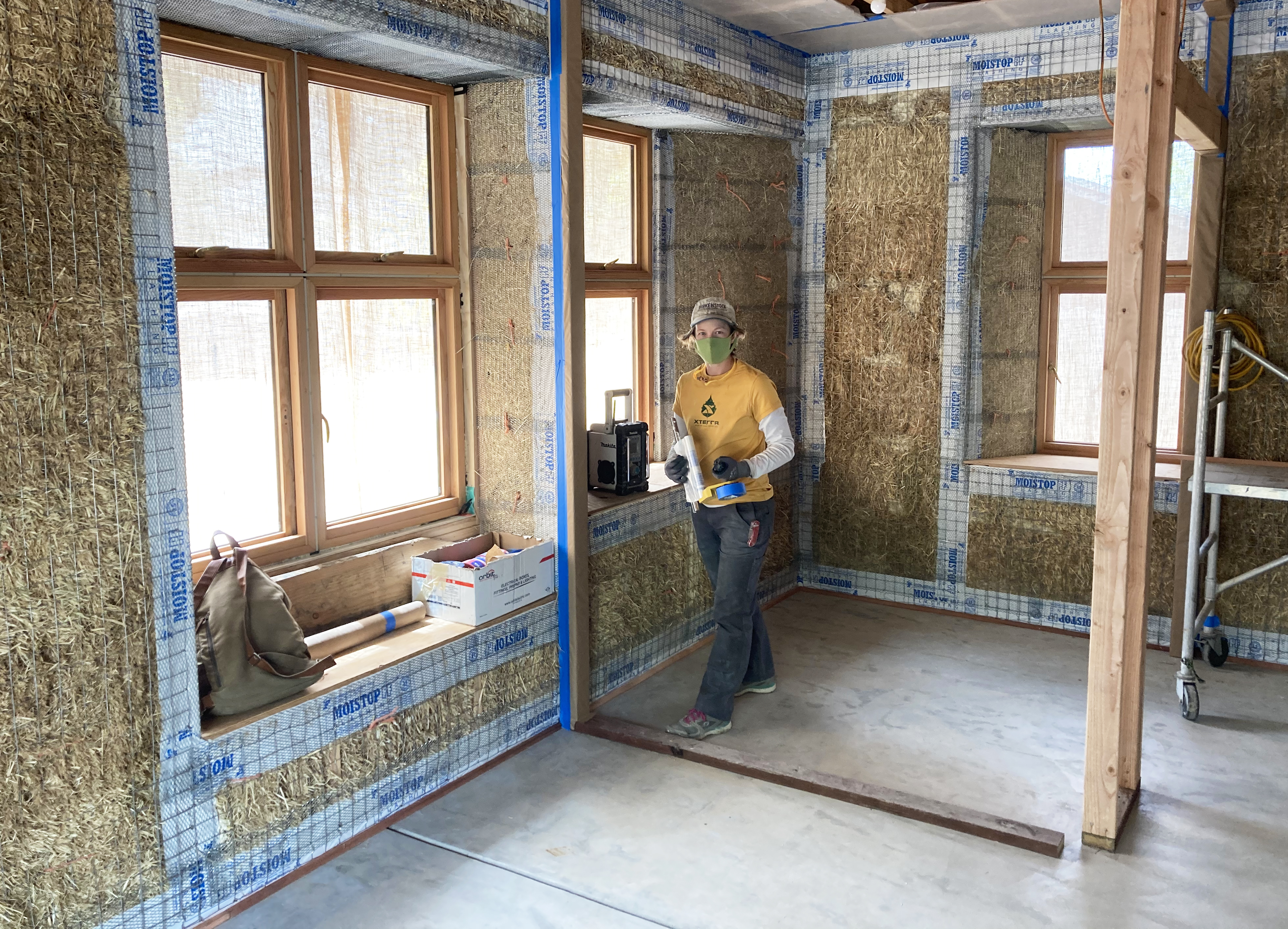
This photo shows the builder, John McBride & the construction of the curved walls at the doorsA fun, colorful cabinet for books and entertainment system and the deep window seat to the right (needs it cushion still) You can see the finished curves at the doorway to left. office window and desk built into the thick wallsWindows on the south side with concrete sills, golden lime plaster, and bright painted soffits I (& some AI ) added the garden in the foreground because this photo was taken before landscaping.)no AI on the garden here 🙂 deep bathroom windowTilework (Fireclay) and skylight (some temp plumbing that doesn’t match 🙂 for the observant. Plaster in the bathroom is clay plaster because of its humidity control and air cleaning properties. Kitchenette – If I was an interior decorator I’d add a piece of art and declutter the counter a bit and Martha Stewart the corner shelves, but this is just a snap shot) Now, in Berkeley, a bigger refrigerator is required. This is a screenshot from the concept model showing the windowseat and office, storage hallway, & bathroomanother screenshot from the concept model
John McBride and I have two projects on this years tour. A strawbale accessory dwelling unit and a stick framed accessory dwelling unit. We are proud of both projects and put a lot of extra heart and soul into them. The tour is free. you just sign up HERE. I’ll be there to answer questions.
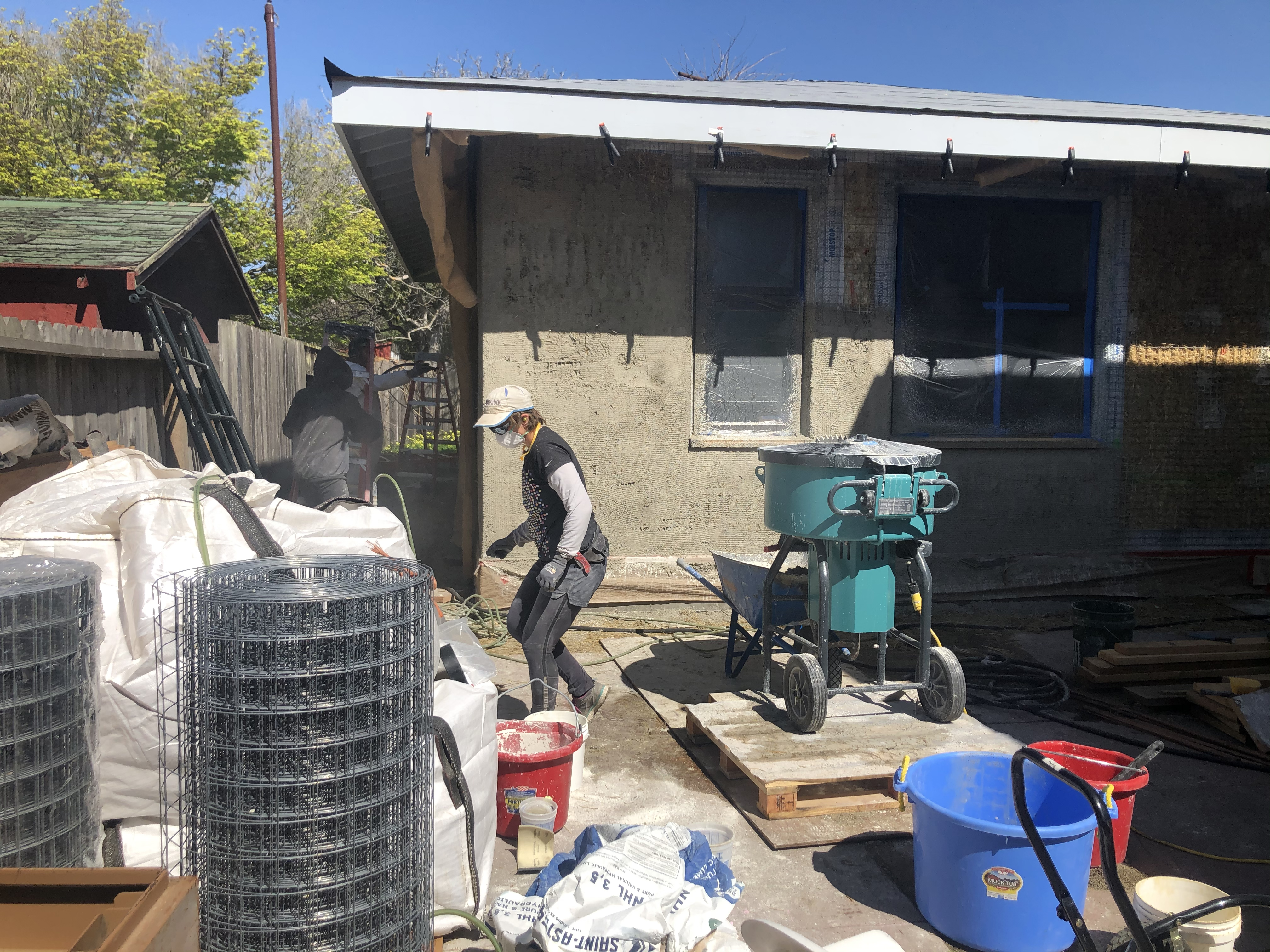
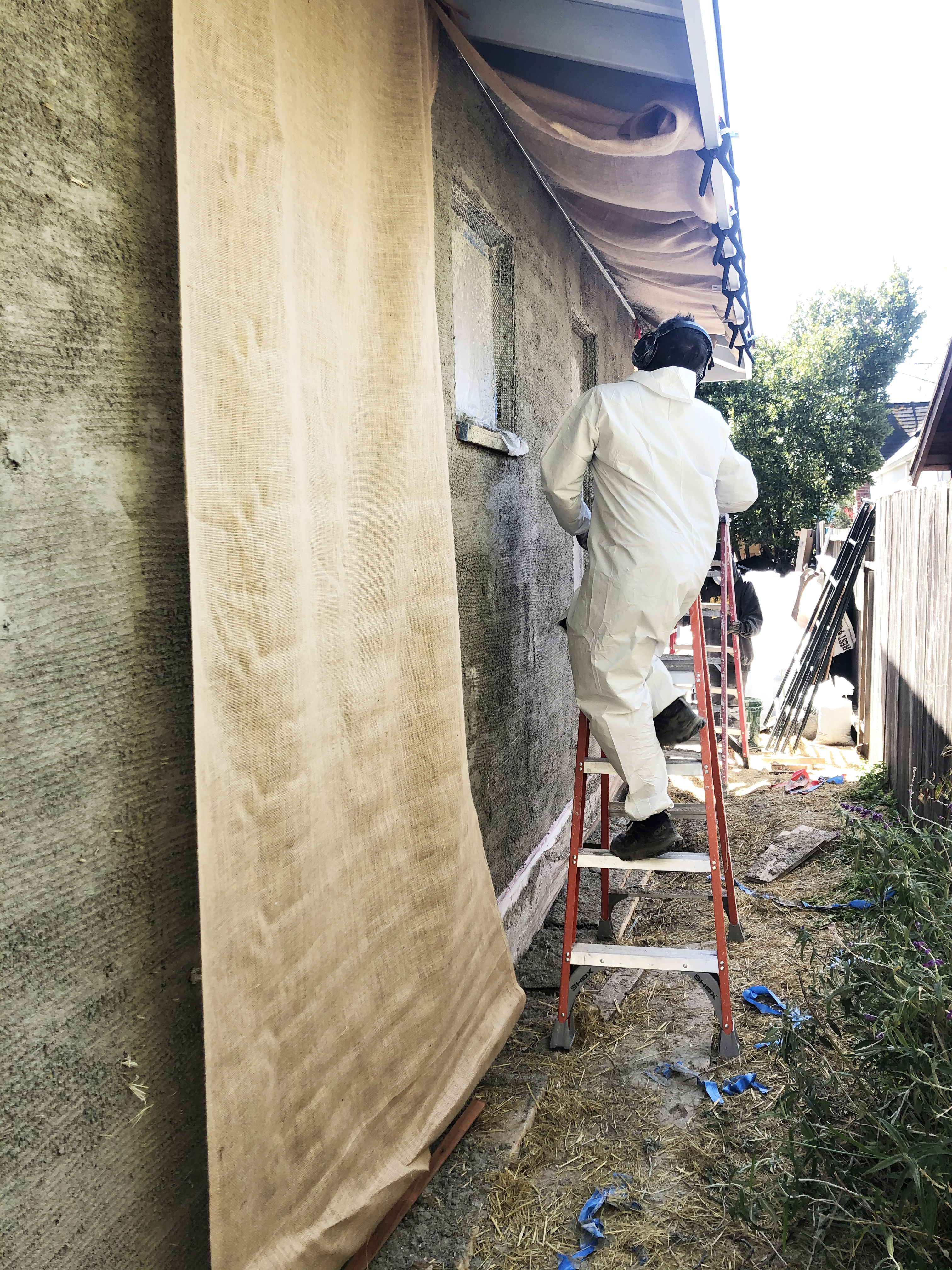
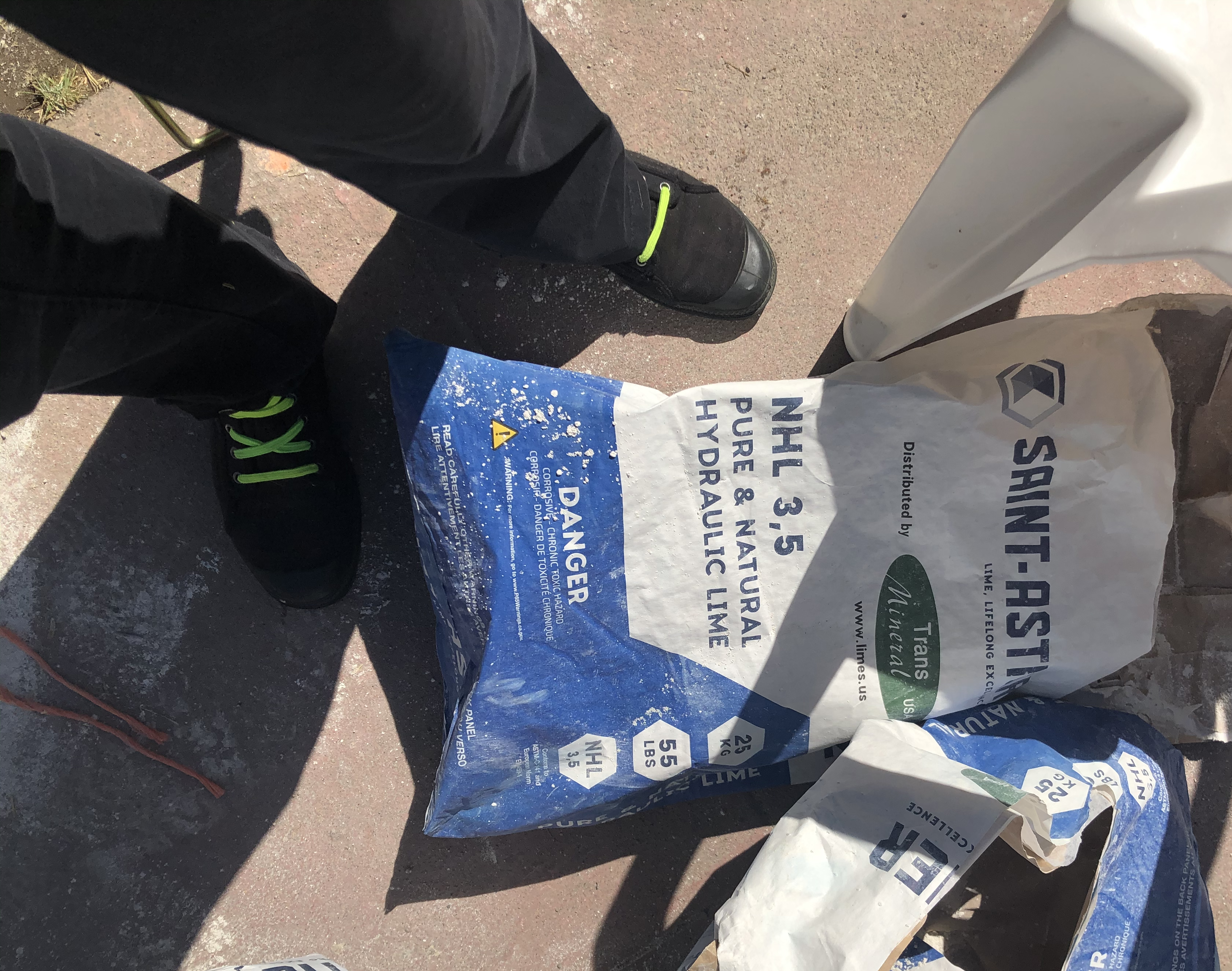
Hydraulic lime plaster is similar to cement stucco, but with lime rather than portland cement. It is more flexible and more vapor permeable than cement stucco, but it takes more skill and curing time. It also requires warmer temperatures. While making portland cement requires a lot of energy and the chemical reaction releases large quantities of CO2 into the atmosphere, Manufacturing lime takes energy, but when lime plaster carbonates (hardens) much of the CO2 released during the manufacture is reabsorbed. (From Essential Natural Plasters, Henry & Therrien) According to Strawbale Building Details (Published by CASBA – California Strawbale Building Association)The strawbales themselves sequester 26 pounds of carbon each, preventing the formation of 95 pounds of CO2)
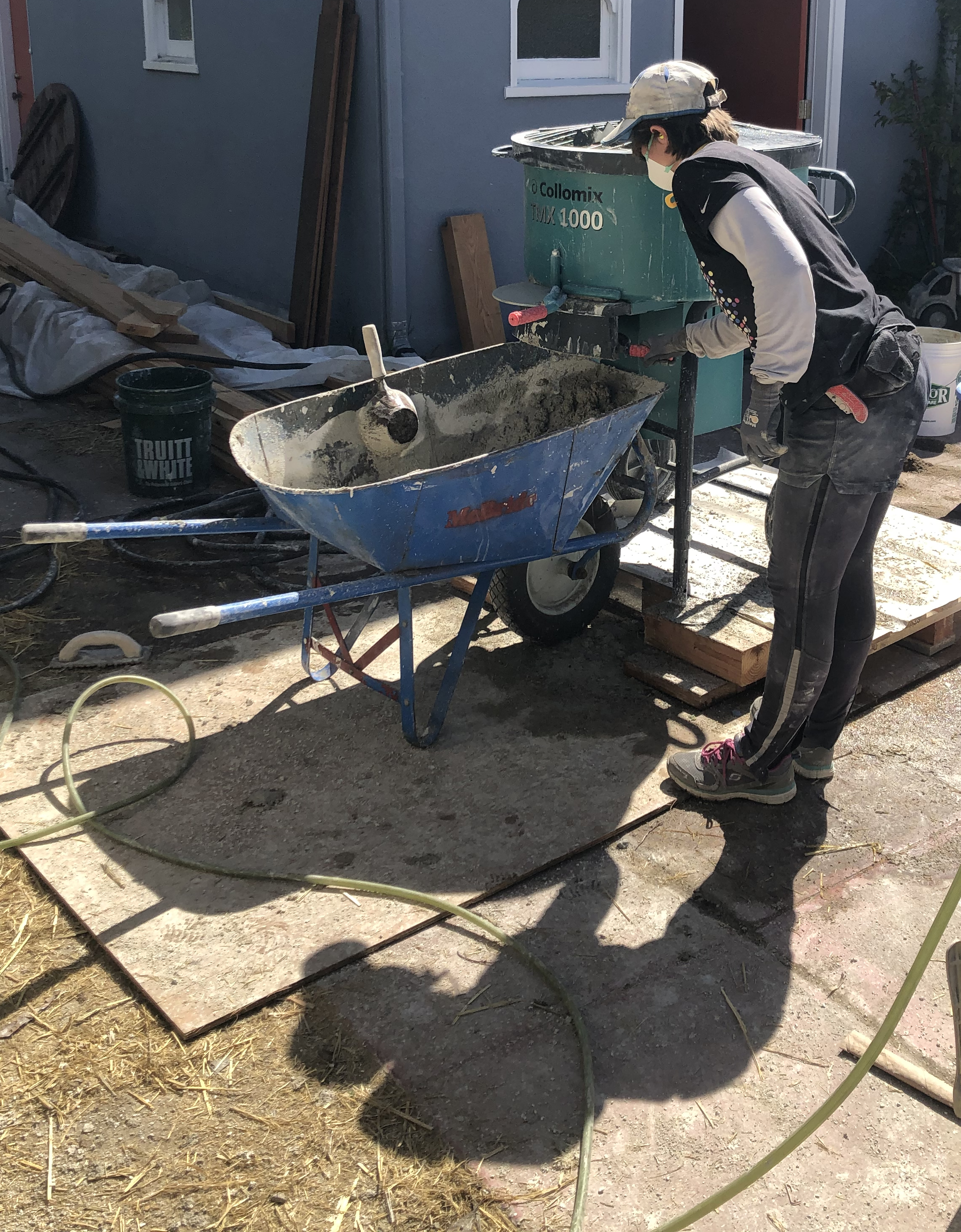
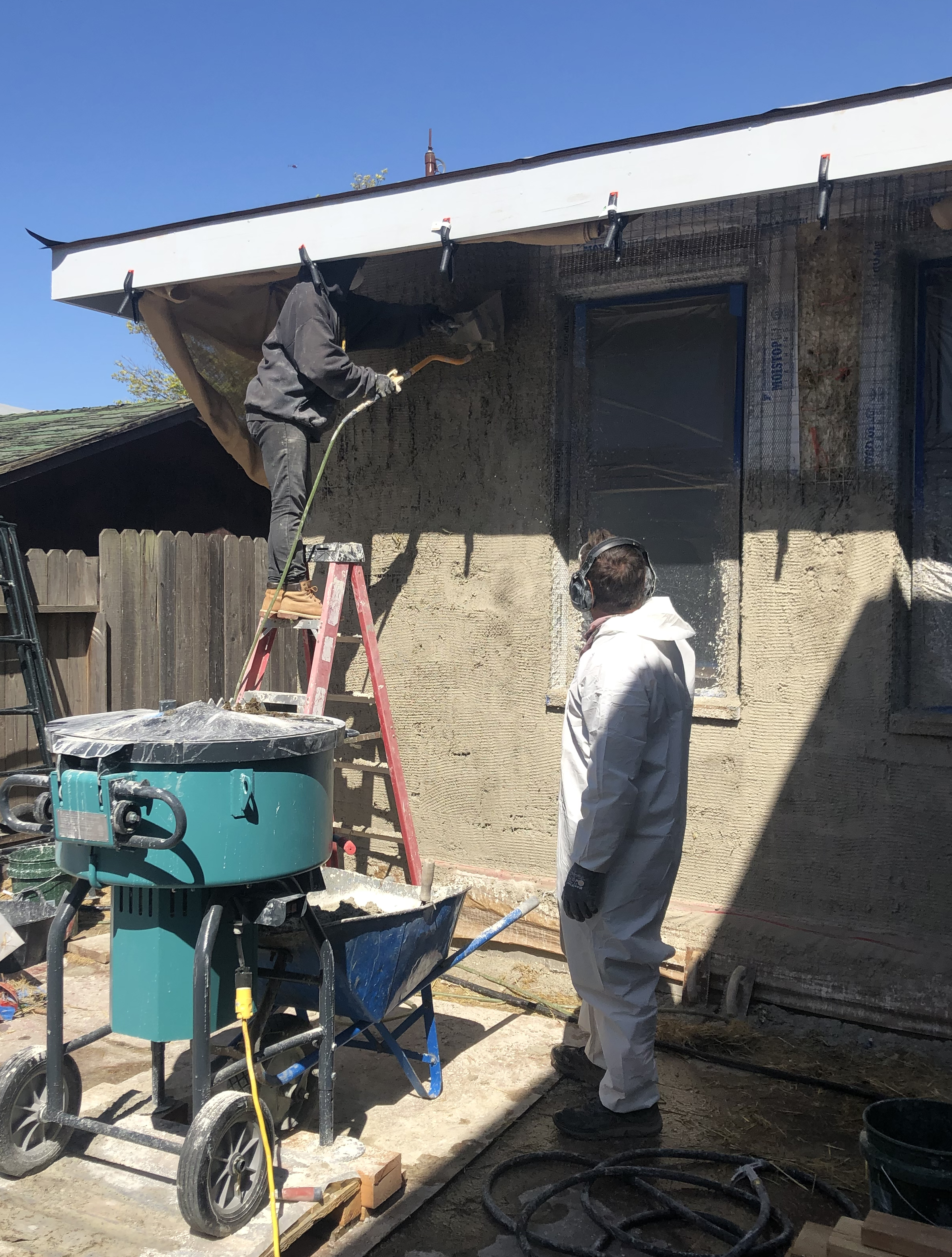
Mixing the natural hydraulic lime, plaster sand & waterSpraying the plasterBurlap shades to protect the plastered walls from direct sun (It cures better if kept moist and cool)
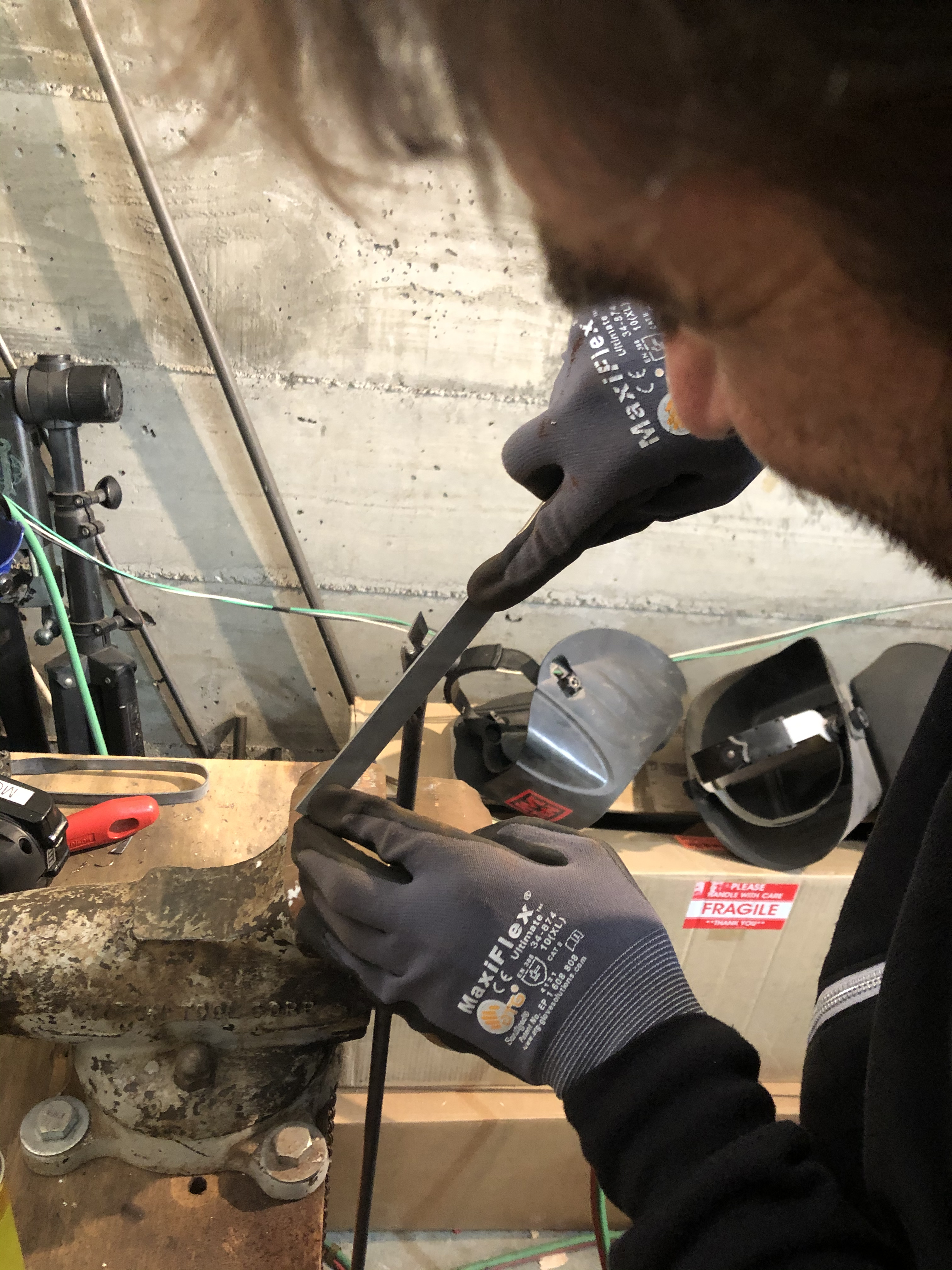
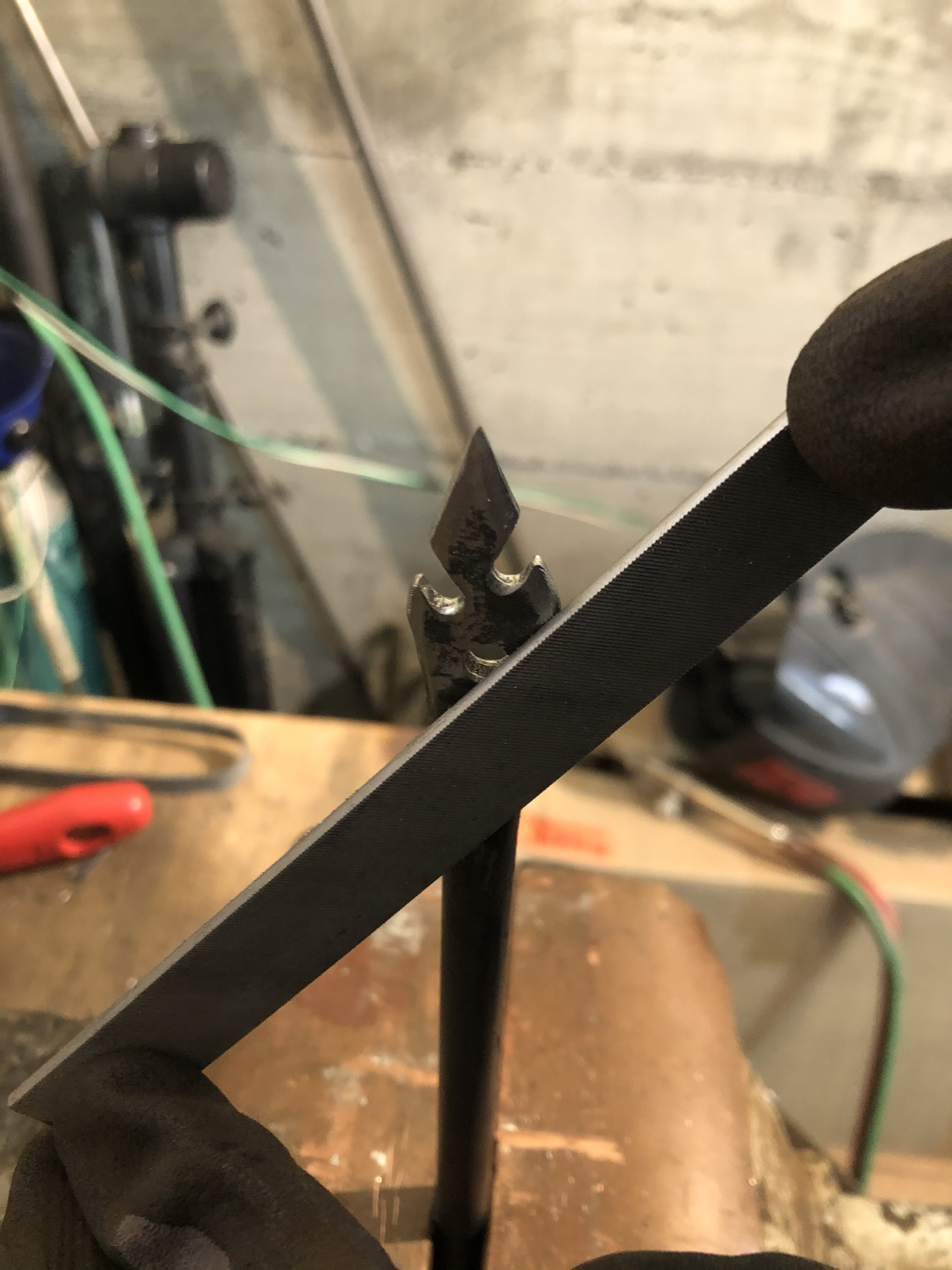
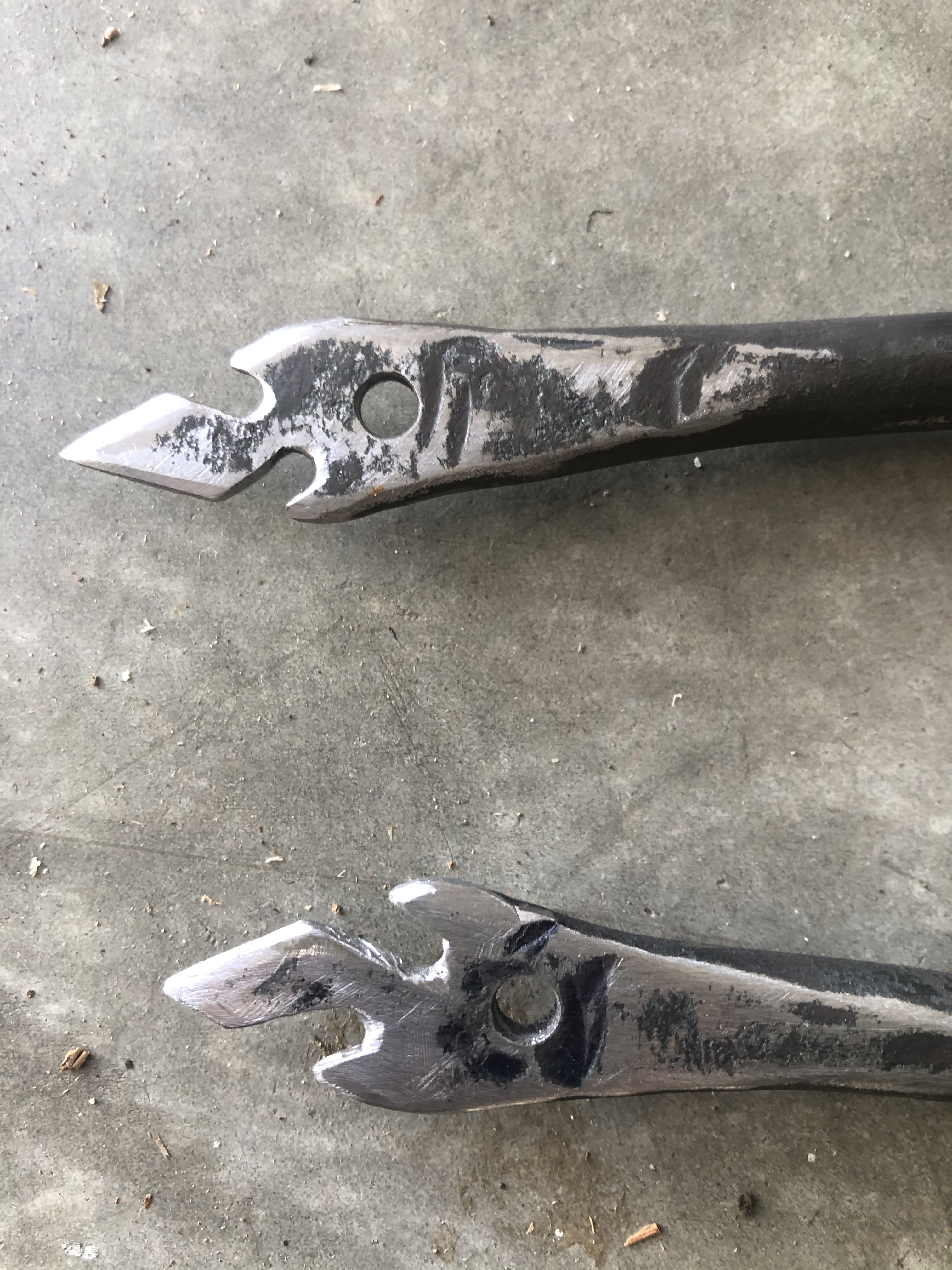
John has been getting ready for the strawbales over the holidays. He bought a bale knife on EBay and made his own needles out of a steel rod. Pretty cool.







 deedsdesign