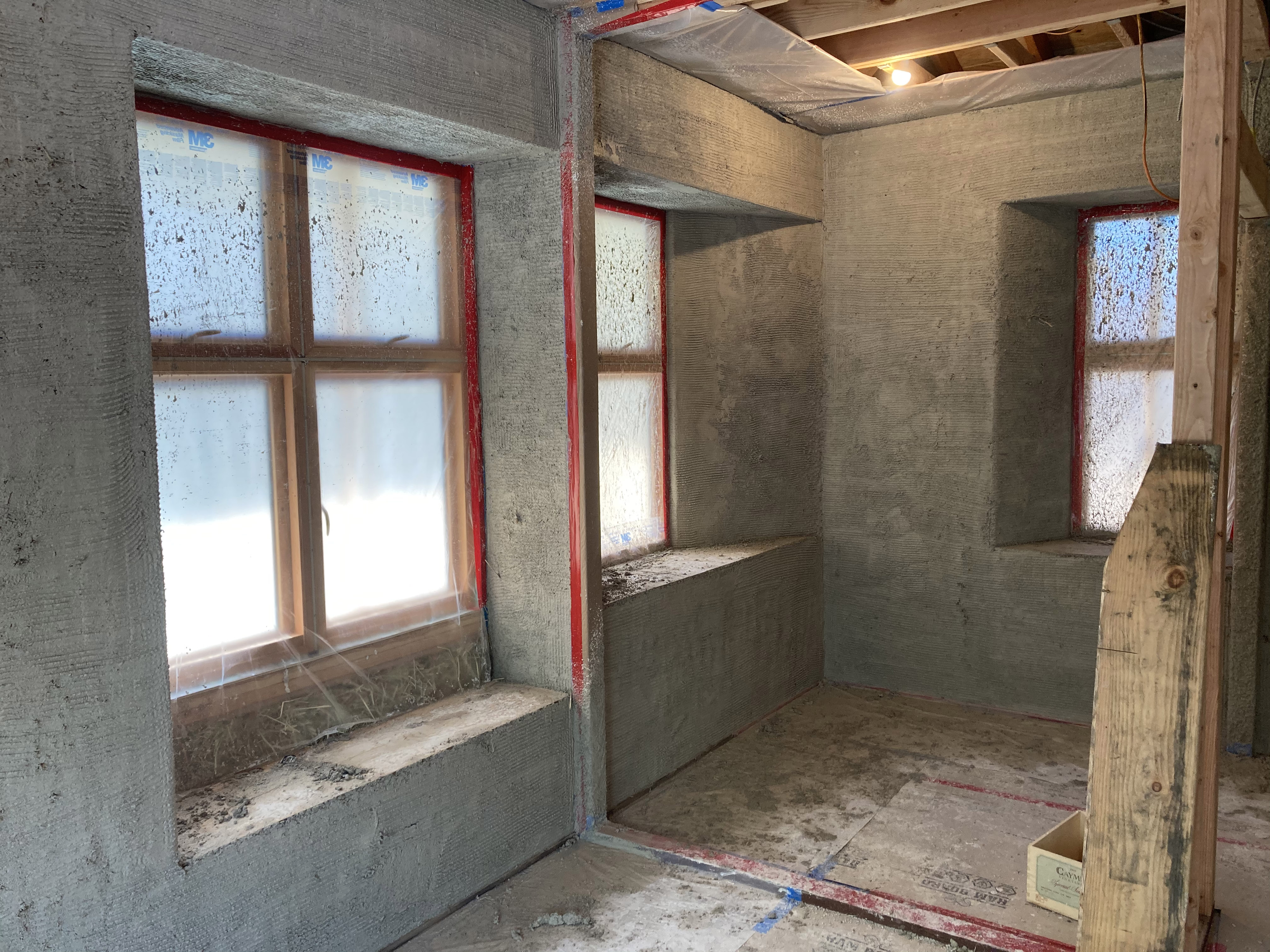
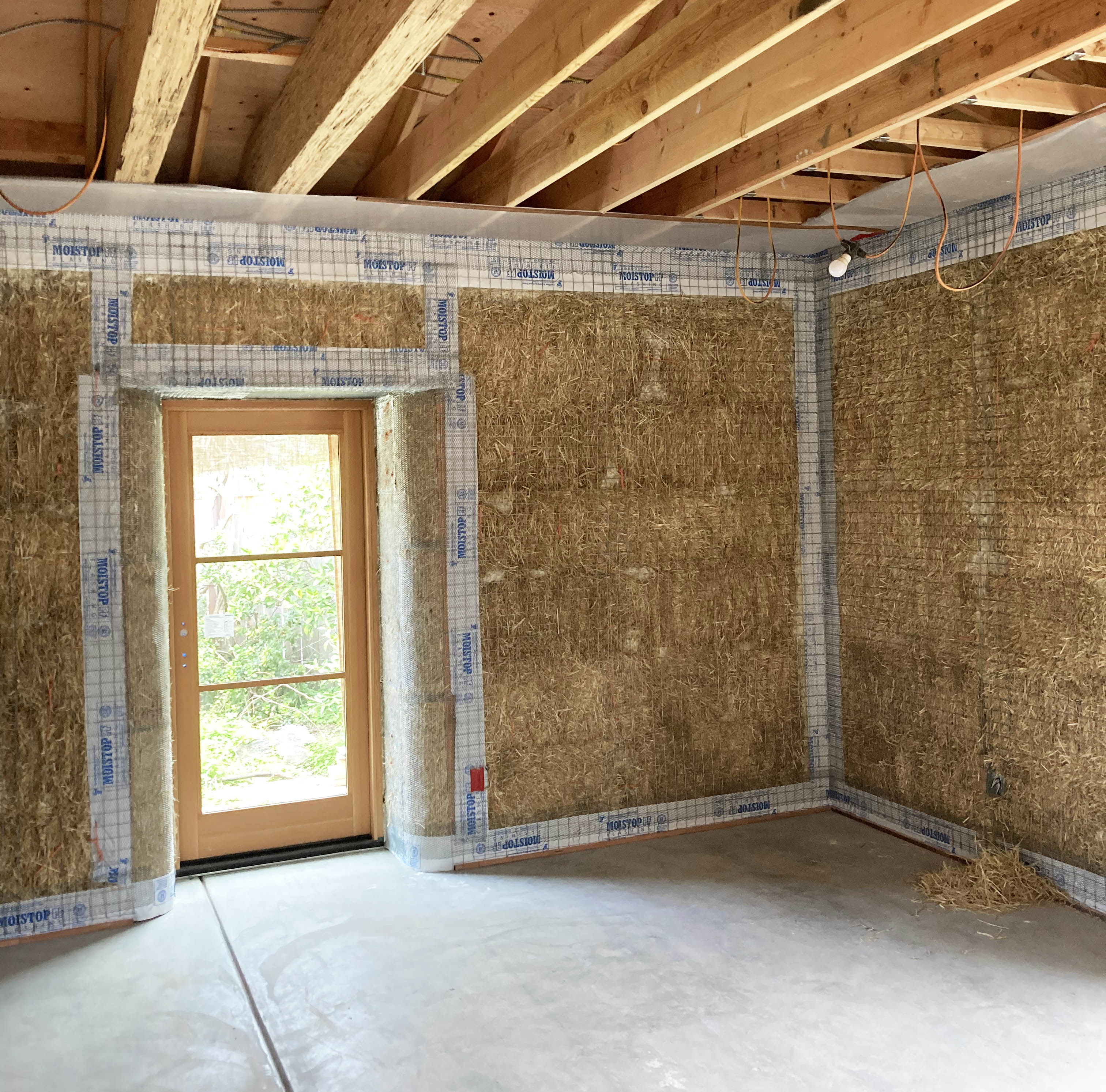
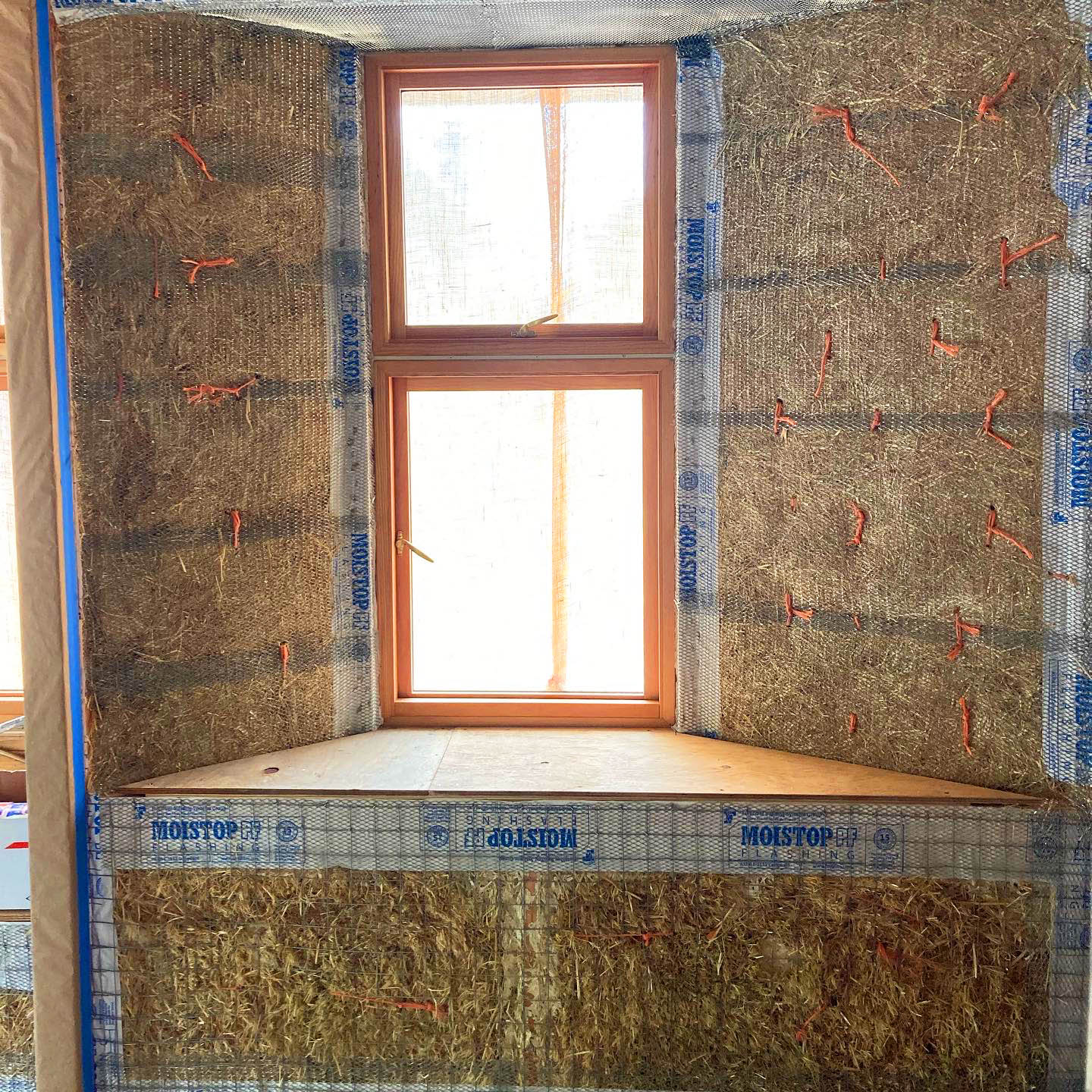
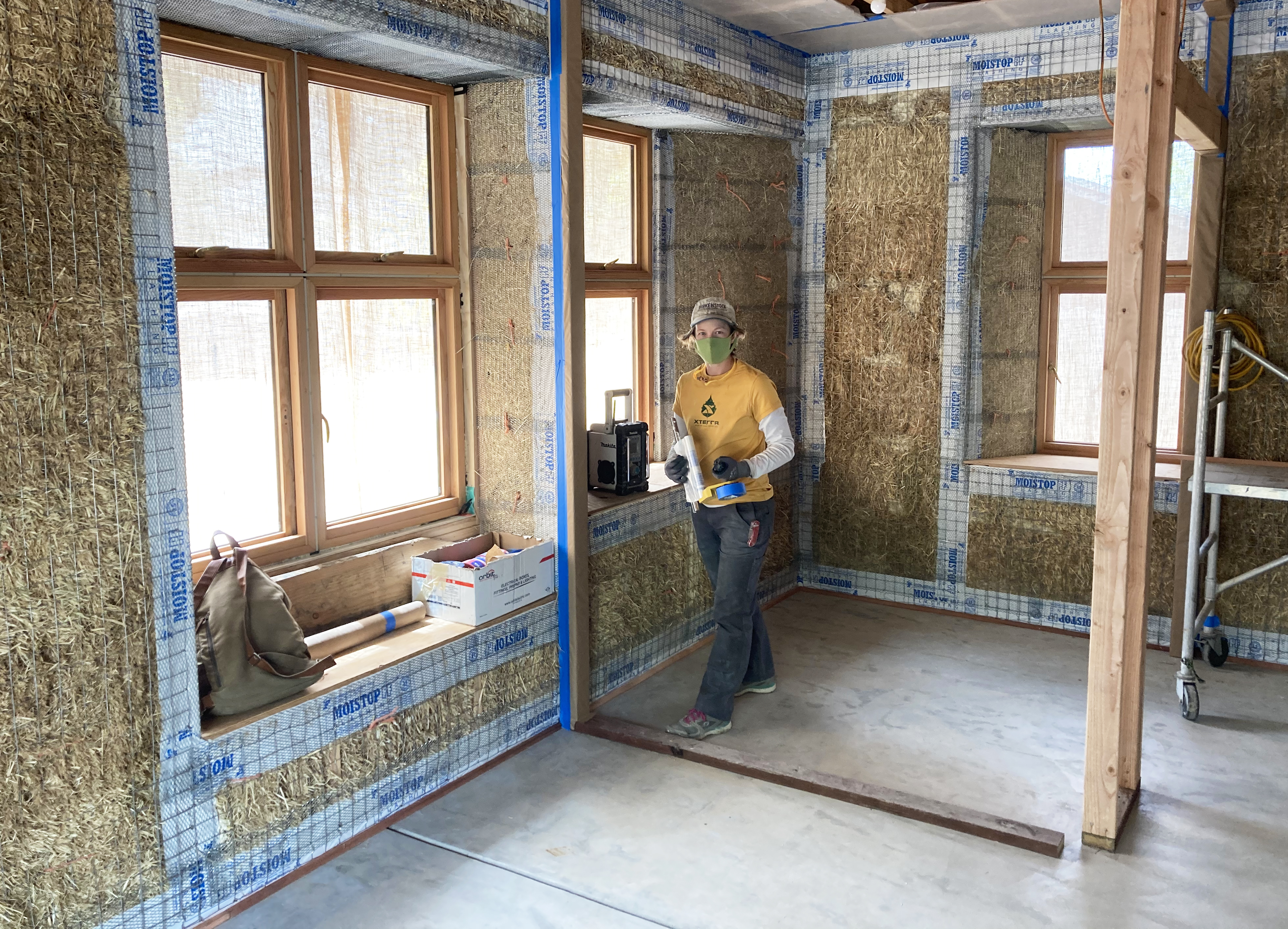
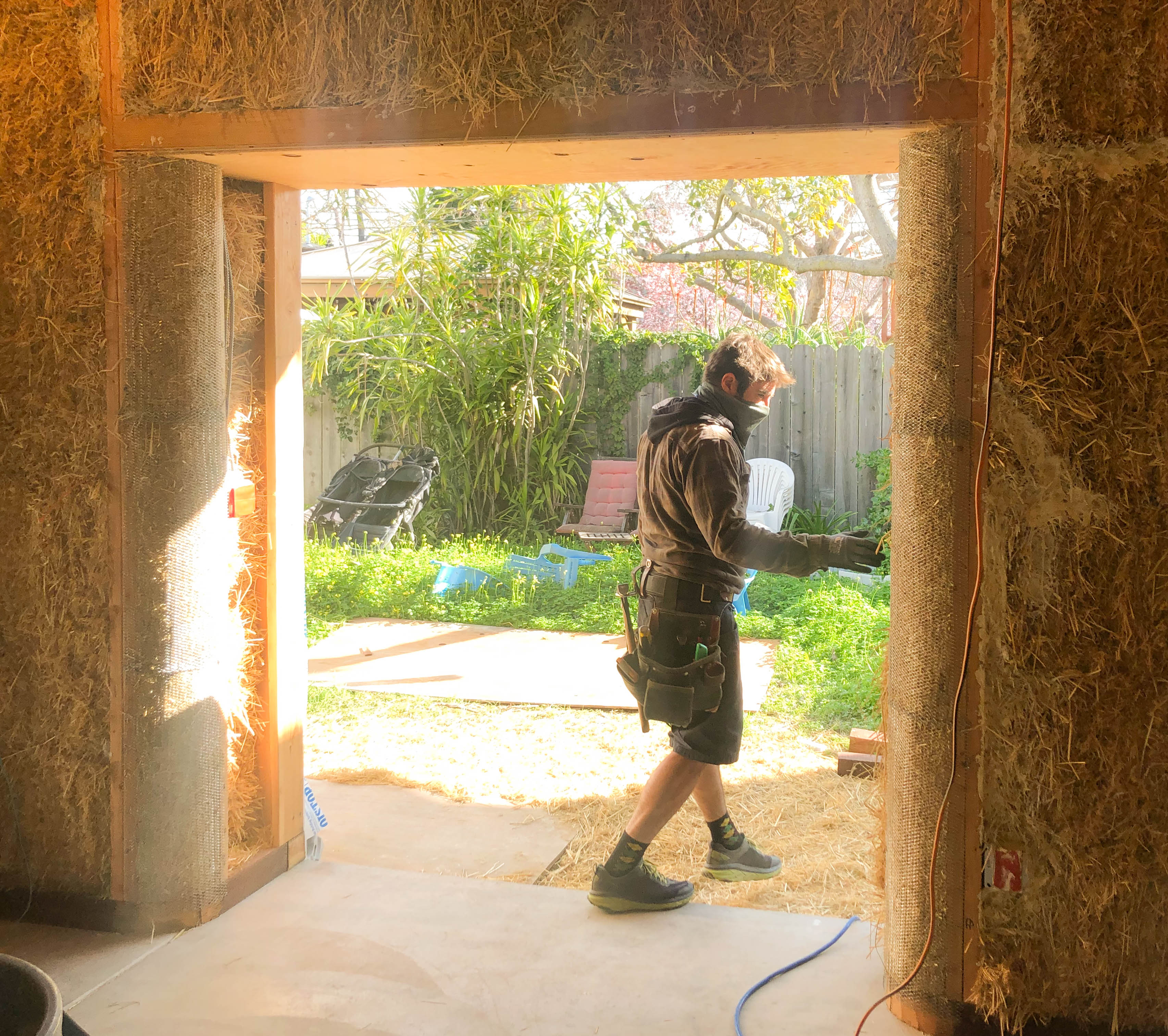
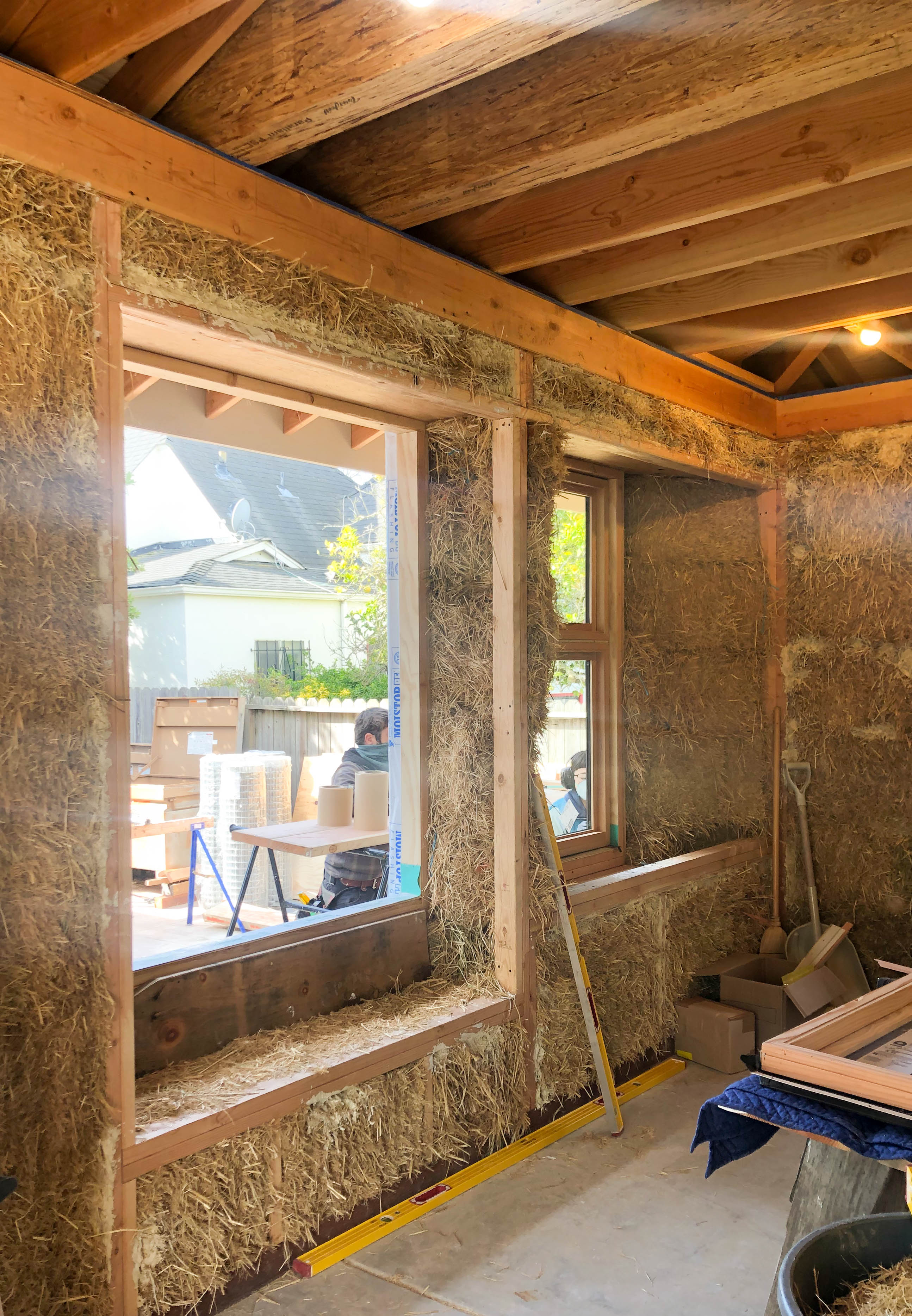
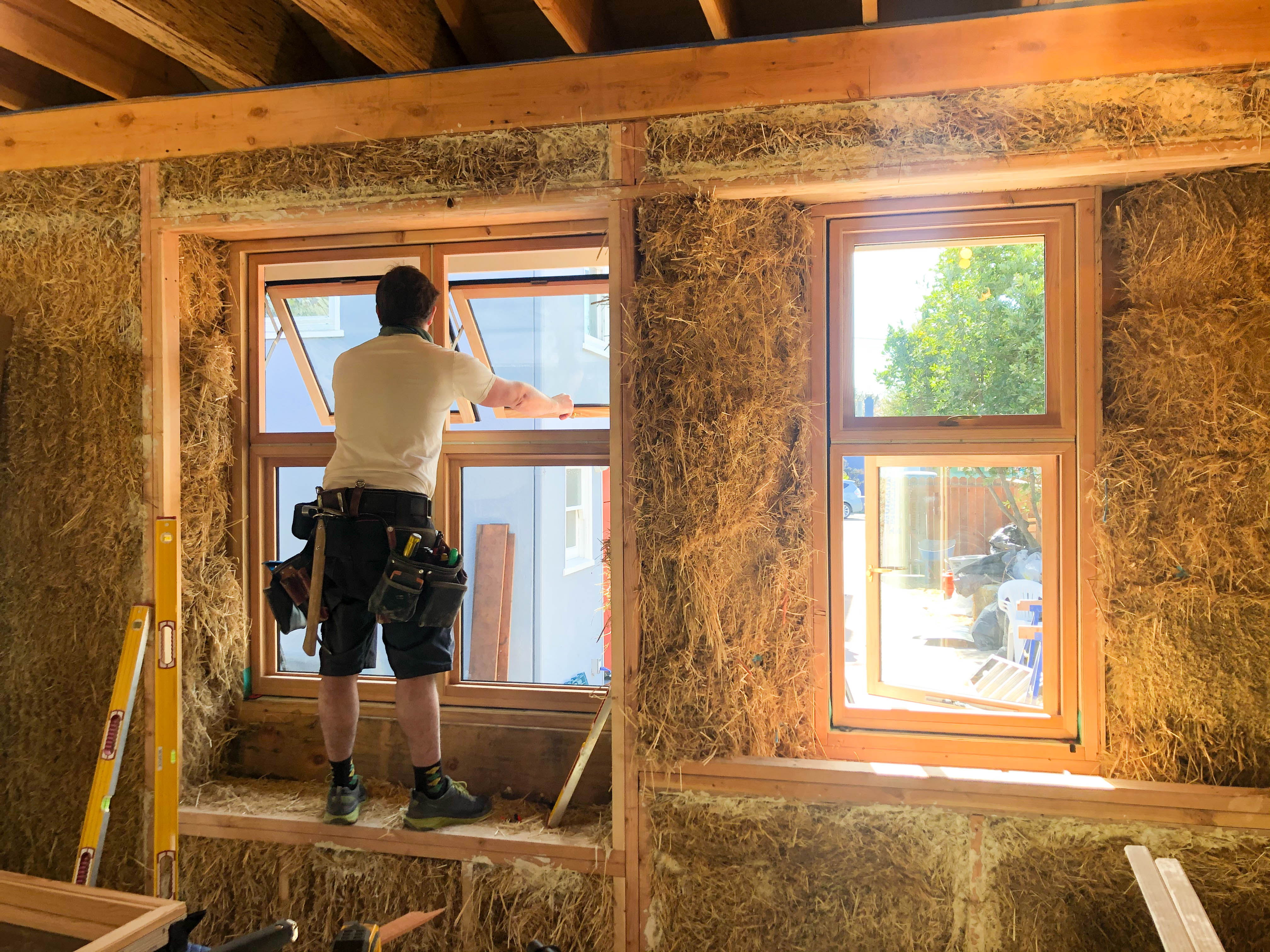
The builder (John McBride) sent these photos of the interior plaster, the deep windows, and the interior all cleaned up, ready for plastering.
Posted in Design Projects, tagged Berkeley, curves, process, small buildings, Strawbale on April 8, 2021| Leave a Comment »
The builder (John McBride) sent these photos of the interior plaster, the deep windows, and the interior all cleaned up, ready for plastering.
Posted in Design Projects, Information, tagged green building, Limeplaster, process, small buildings, Strawbale on April 3, 2021| Leave a Comment »
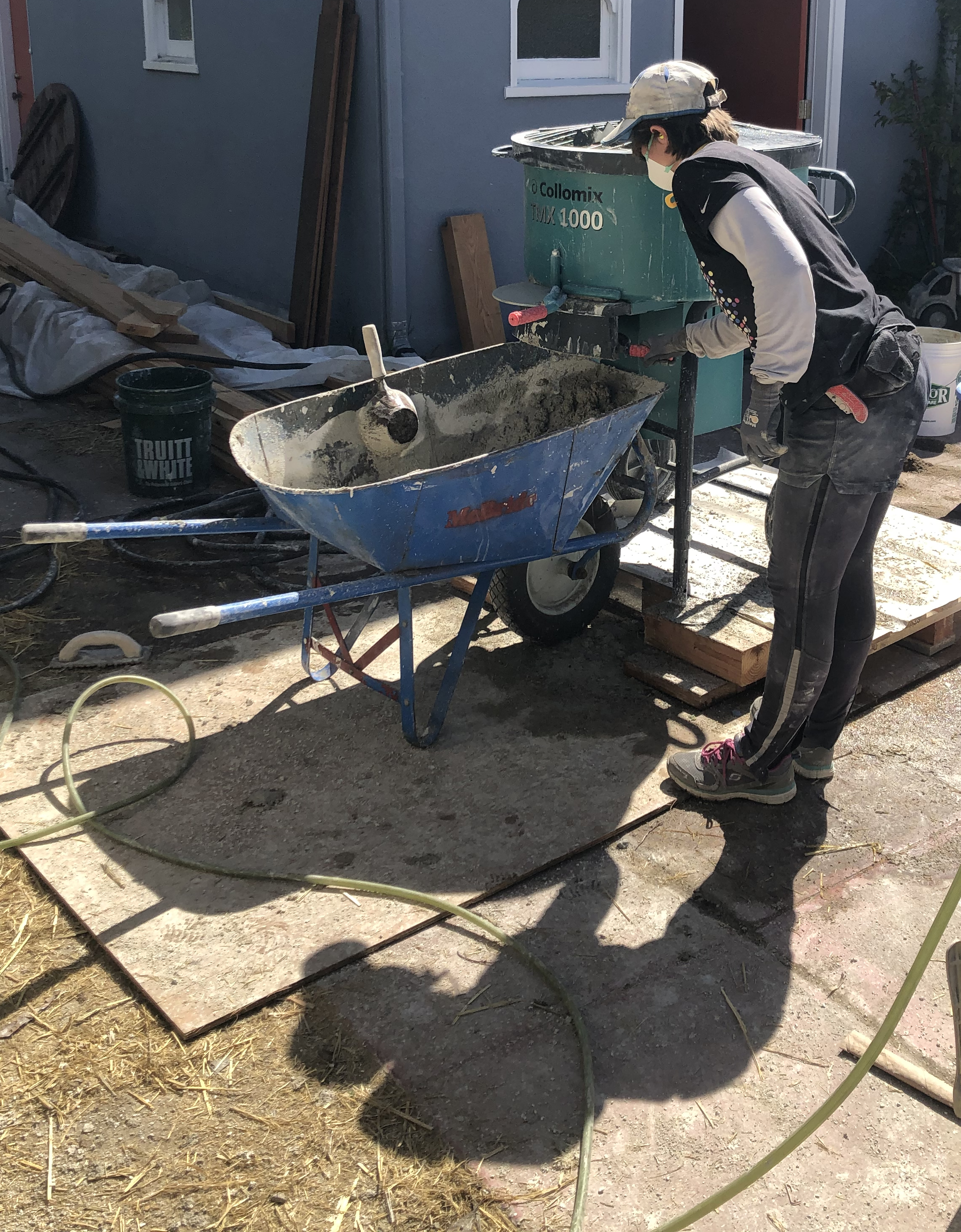
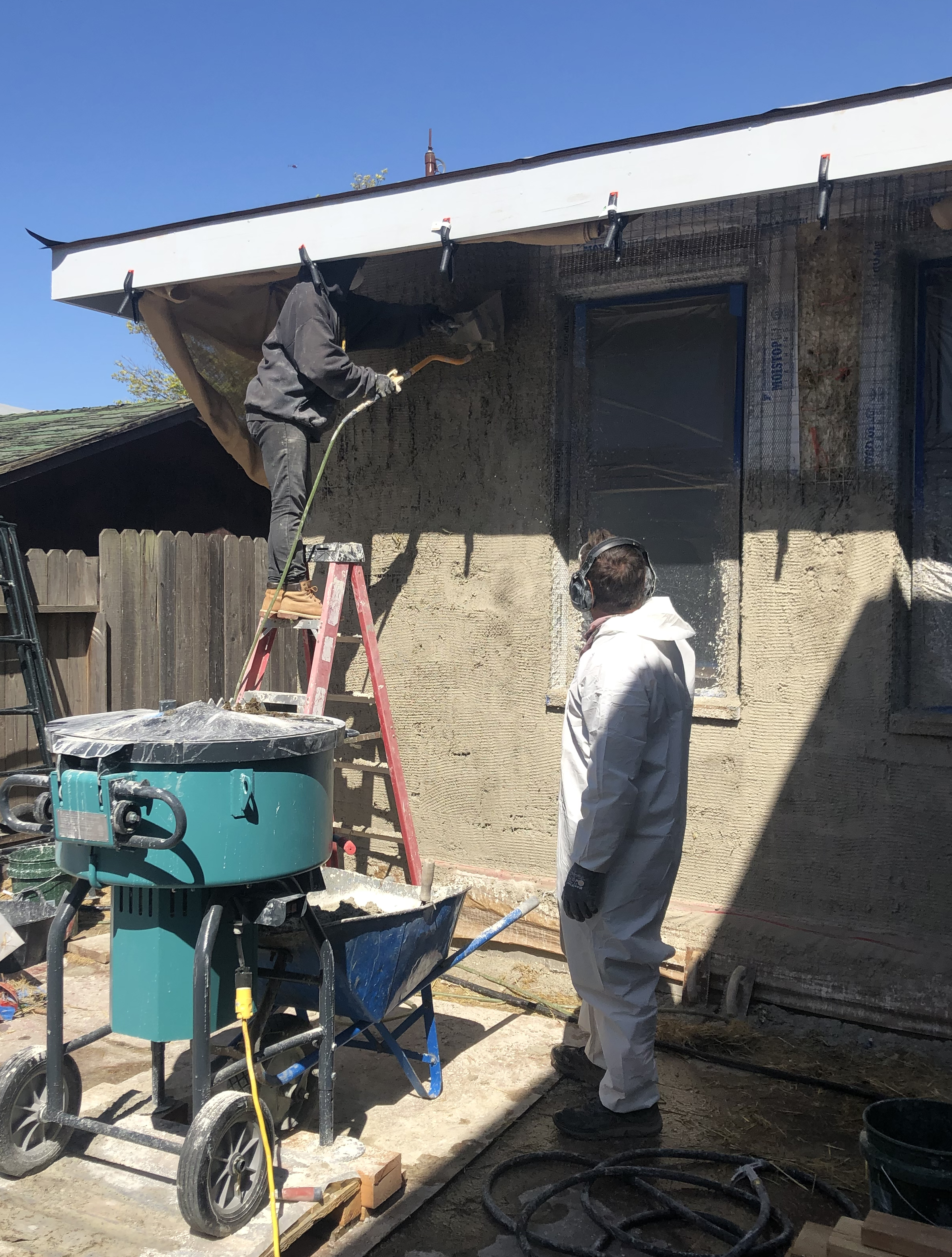
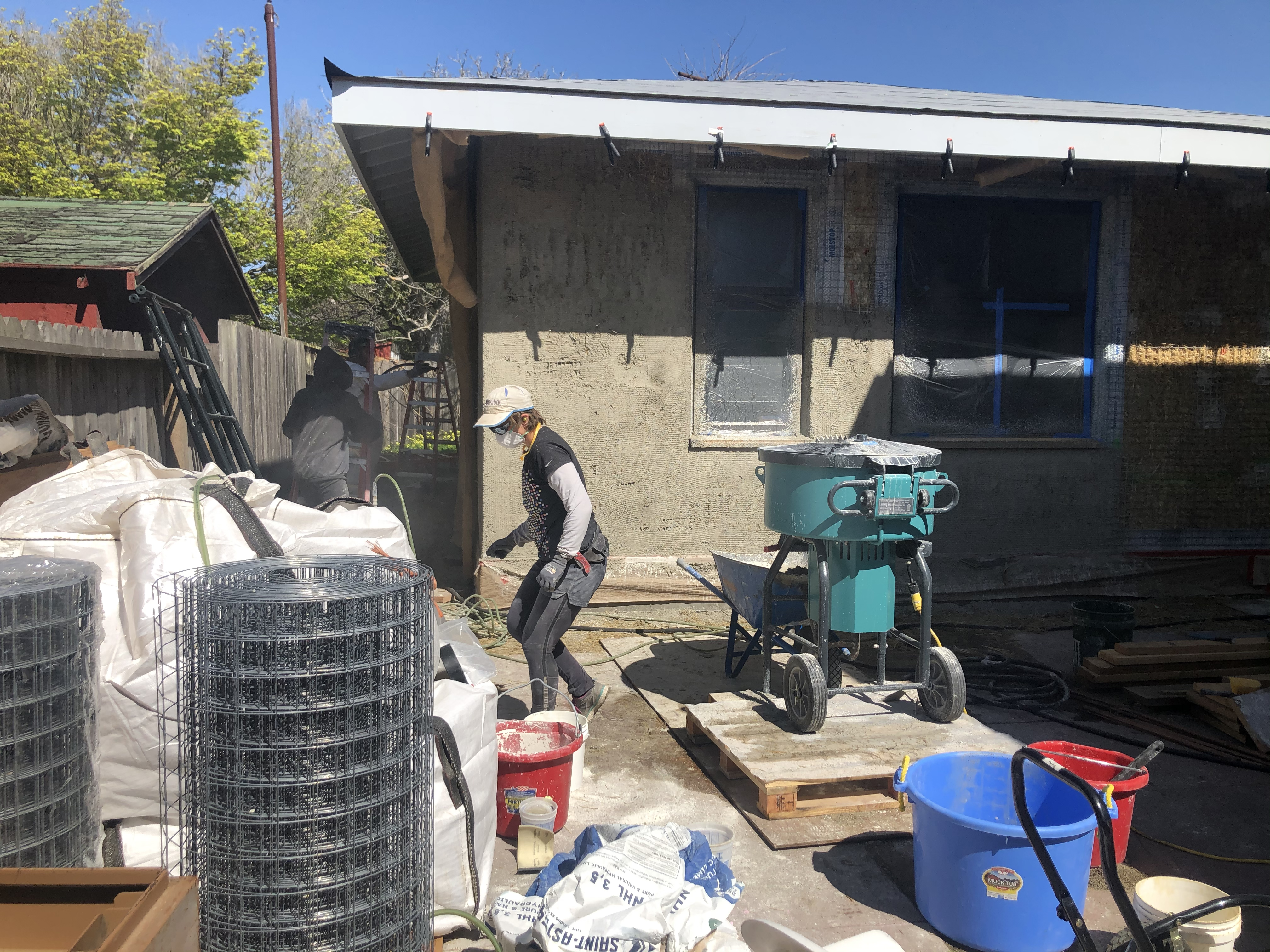
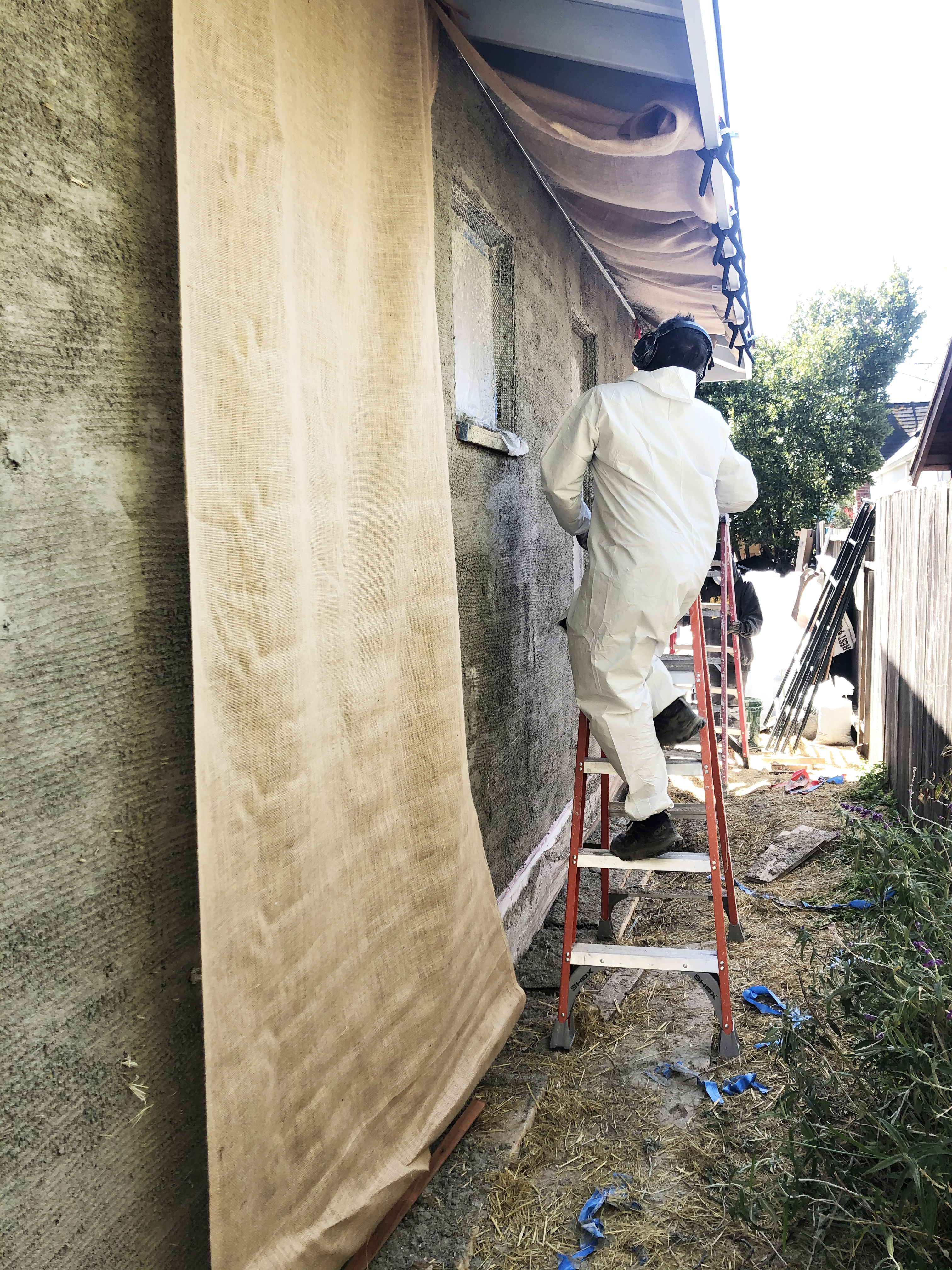
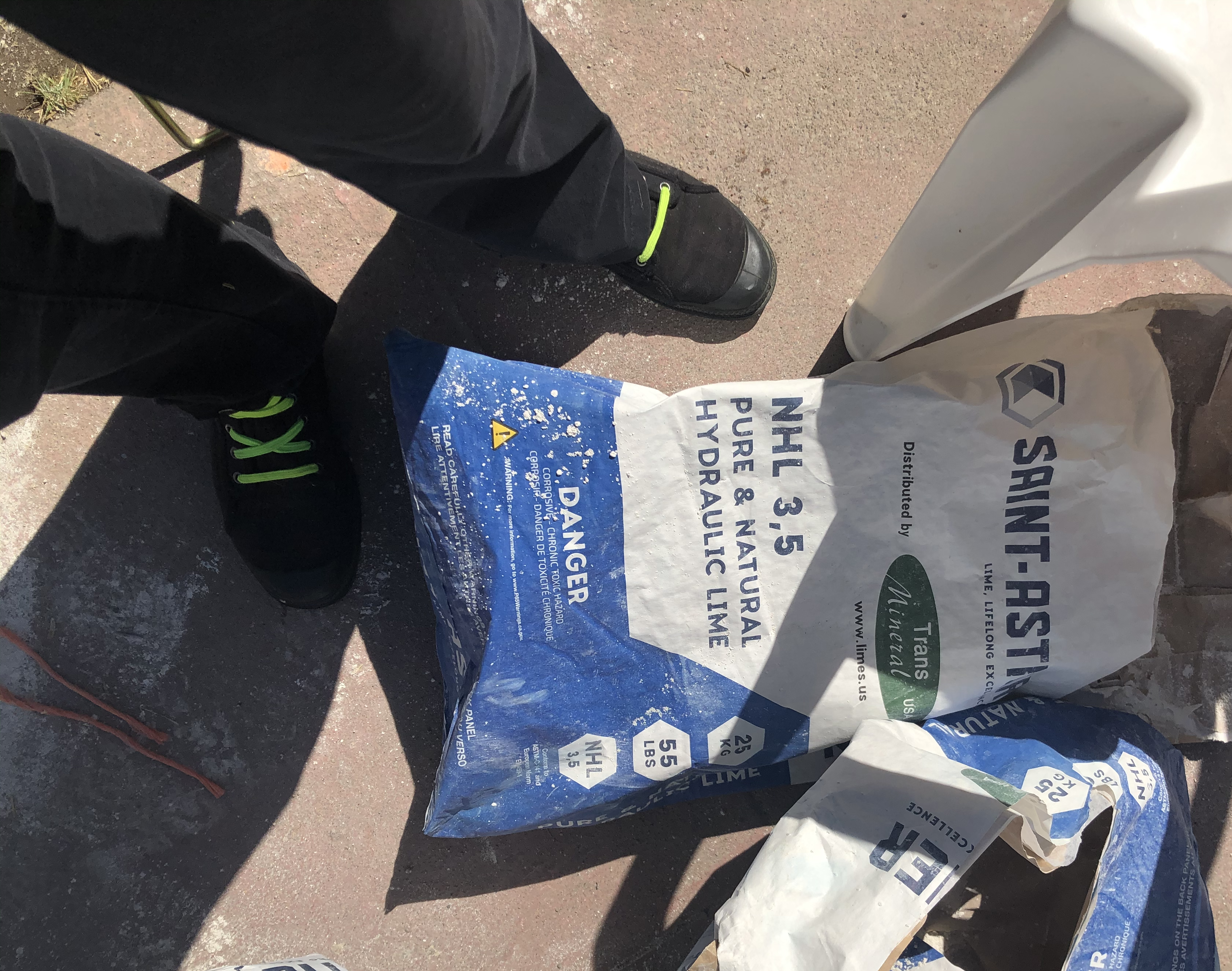
Hydraulic lime plaster is similar to cement stucco, but with lime rather than portland cement. It is more flexible and more vapor permeable than cement stucco, but it takes more skill and curing time. It also requires warmer temperatures. While making portland cement requires a lot of energy and the chemical reaction releases large quantities of CO2 into the atmosphere, Manufacturing lime takes energy, but when lime plaster carbonates (hardens) much of the CO2 released during the manufacture is reabsorbed. (From Essential Natural Plasters, Henry & Therrien) According to Strawbale Building Details (Published by CASBA – California Strawbale Building Association)The strawbales themselves sequester 26 pounds of carbon each, preventing the formation of 95 pounds of CO2)
Posted in Design Projects, tagged ADU, Berkeley, green building, insulation, process, small buildings, Strawbale on March 29, 2021| 2 Comments »
Posted in Design Projects, tagged Berkeley, McBride Construction, process, Strawbale on December 30, 2020| Leave a Comment »
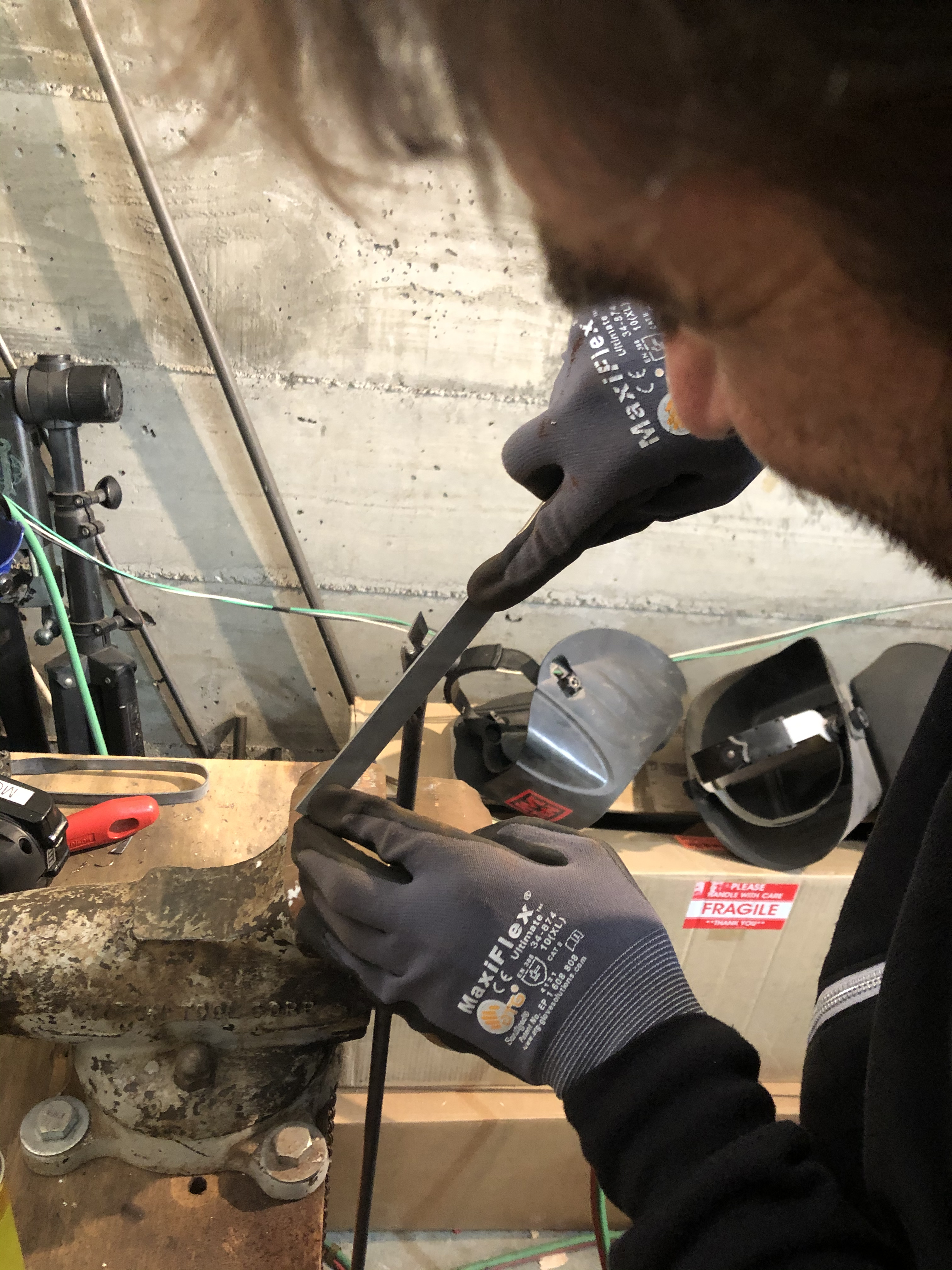
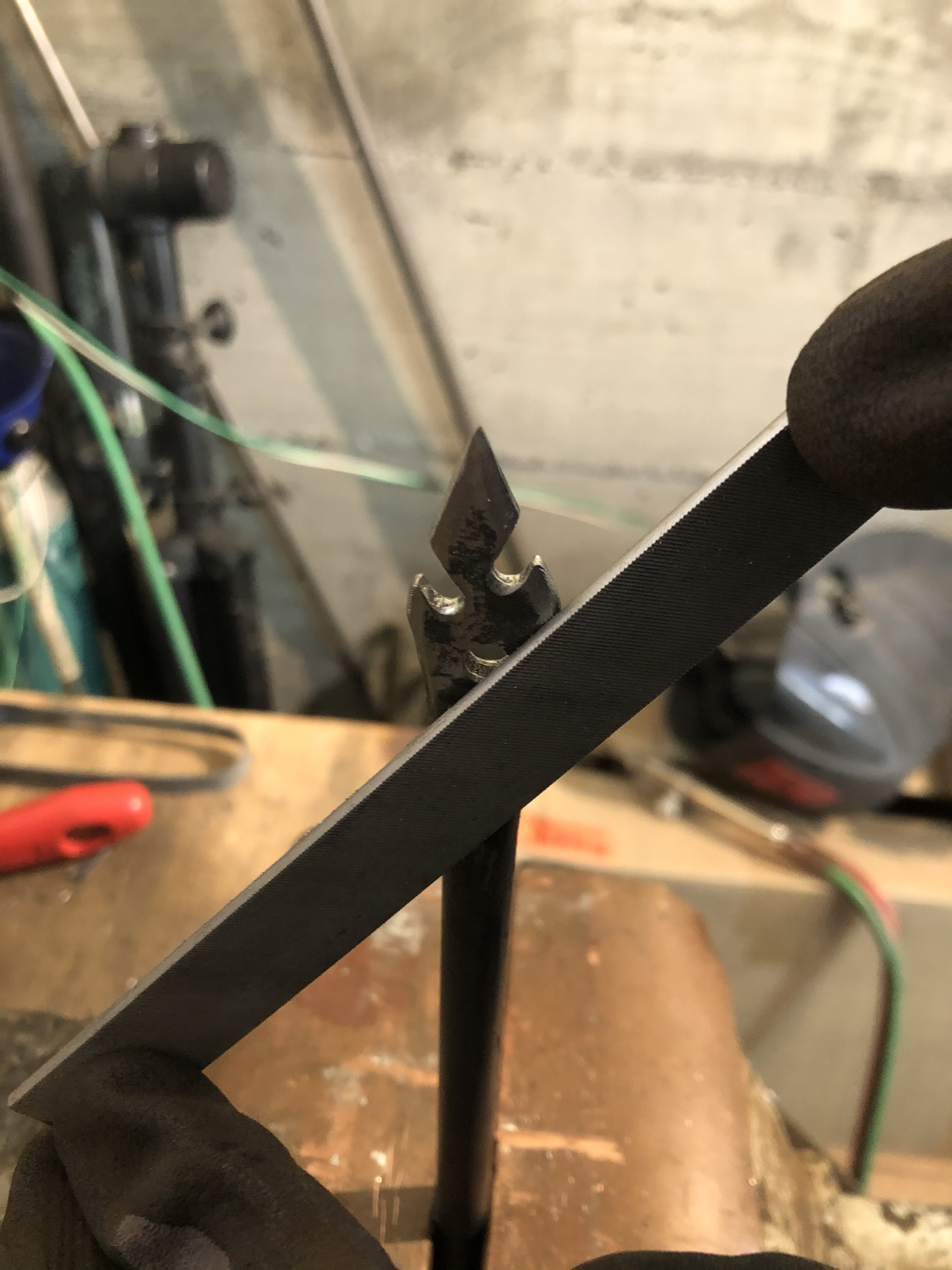
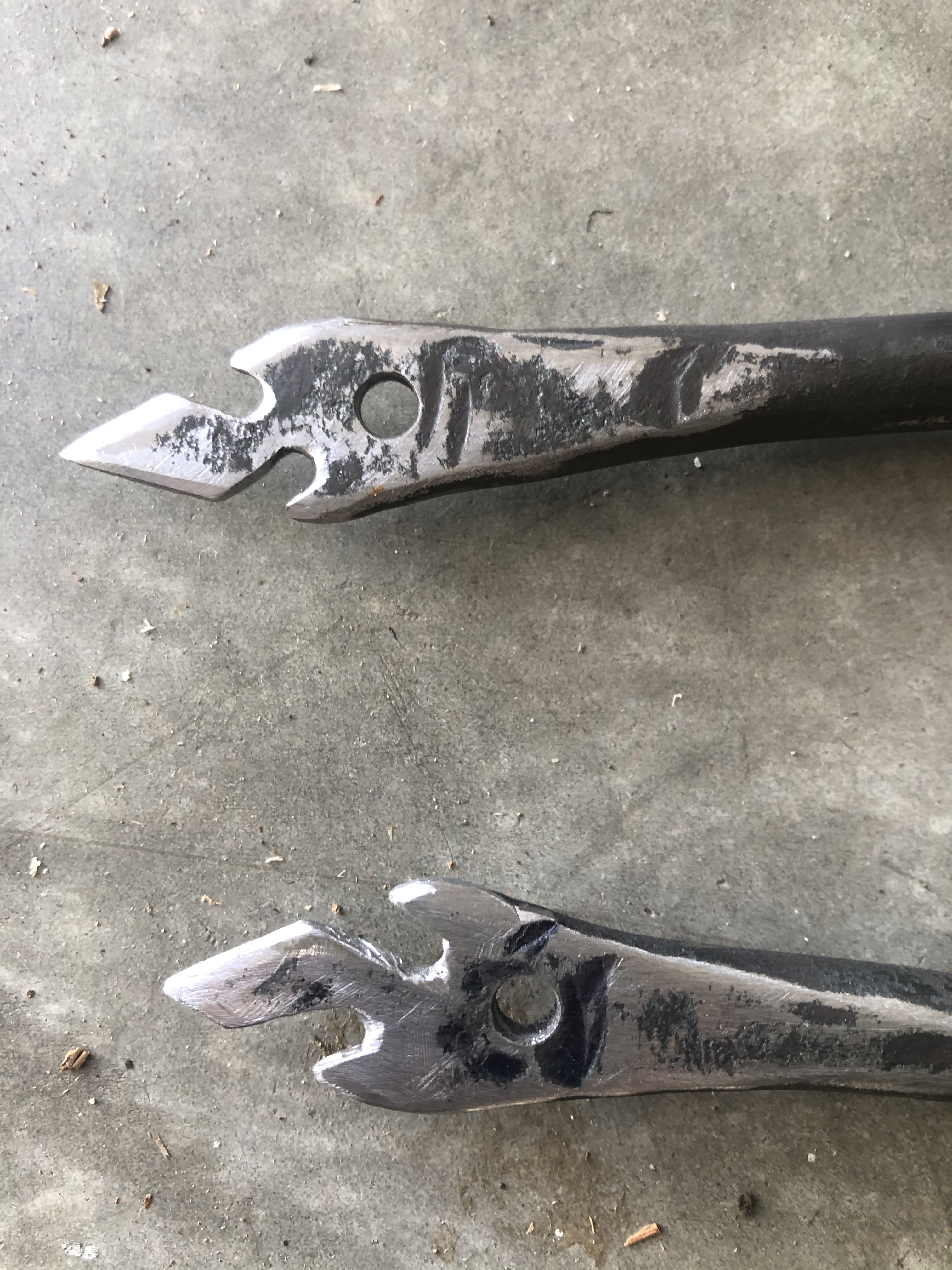

John has been getting ready for the strawbales over the holidays. He bought a bale knife on EBay and made his own needles out of a steel rod. Pretty cool.
Posted in Design Projects, tagged ADU, Berkeley, garden, landscape, Martina Ladova, process, small buildings on November 16, 2020| Leave a Comment »
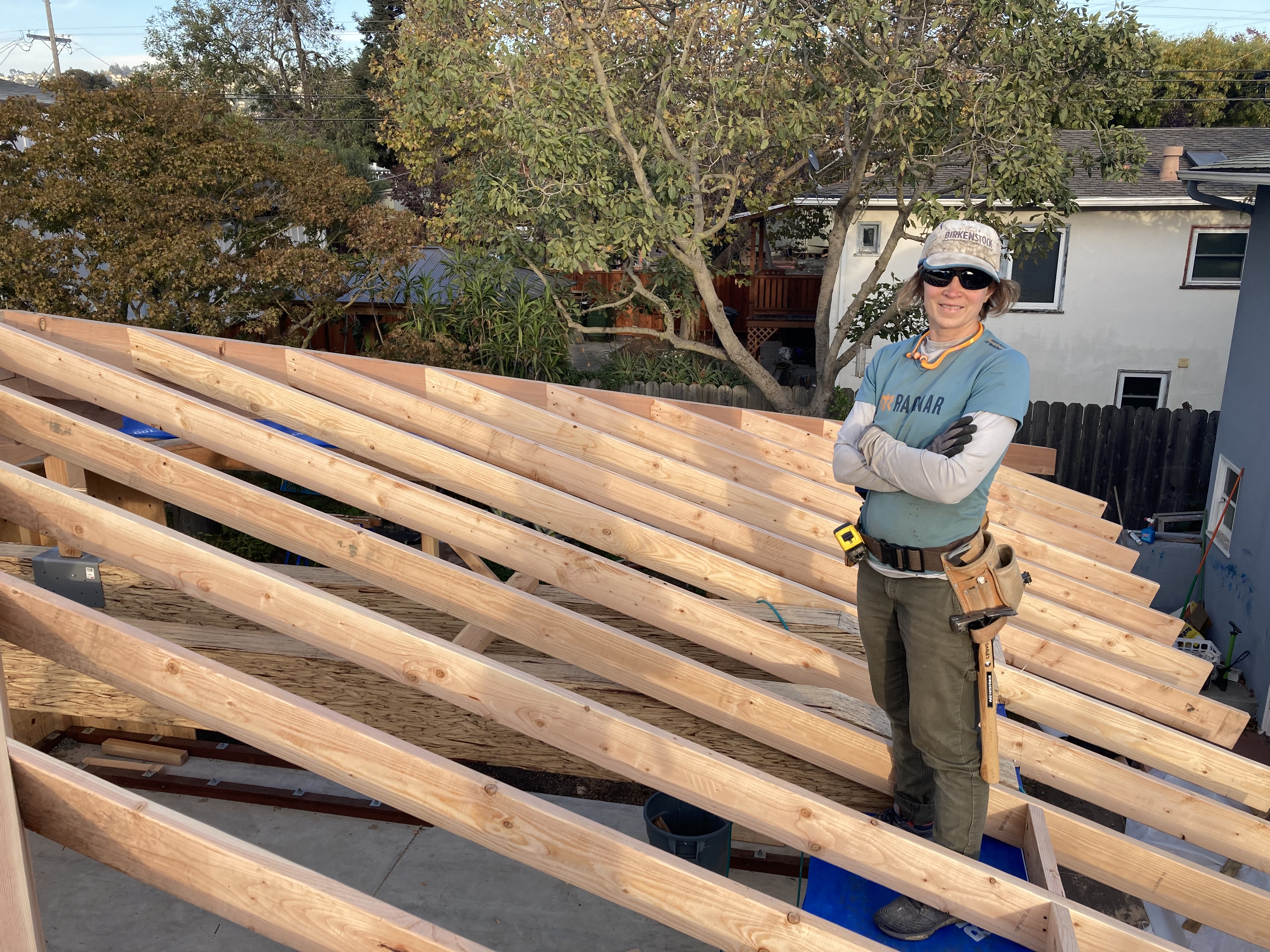
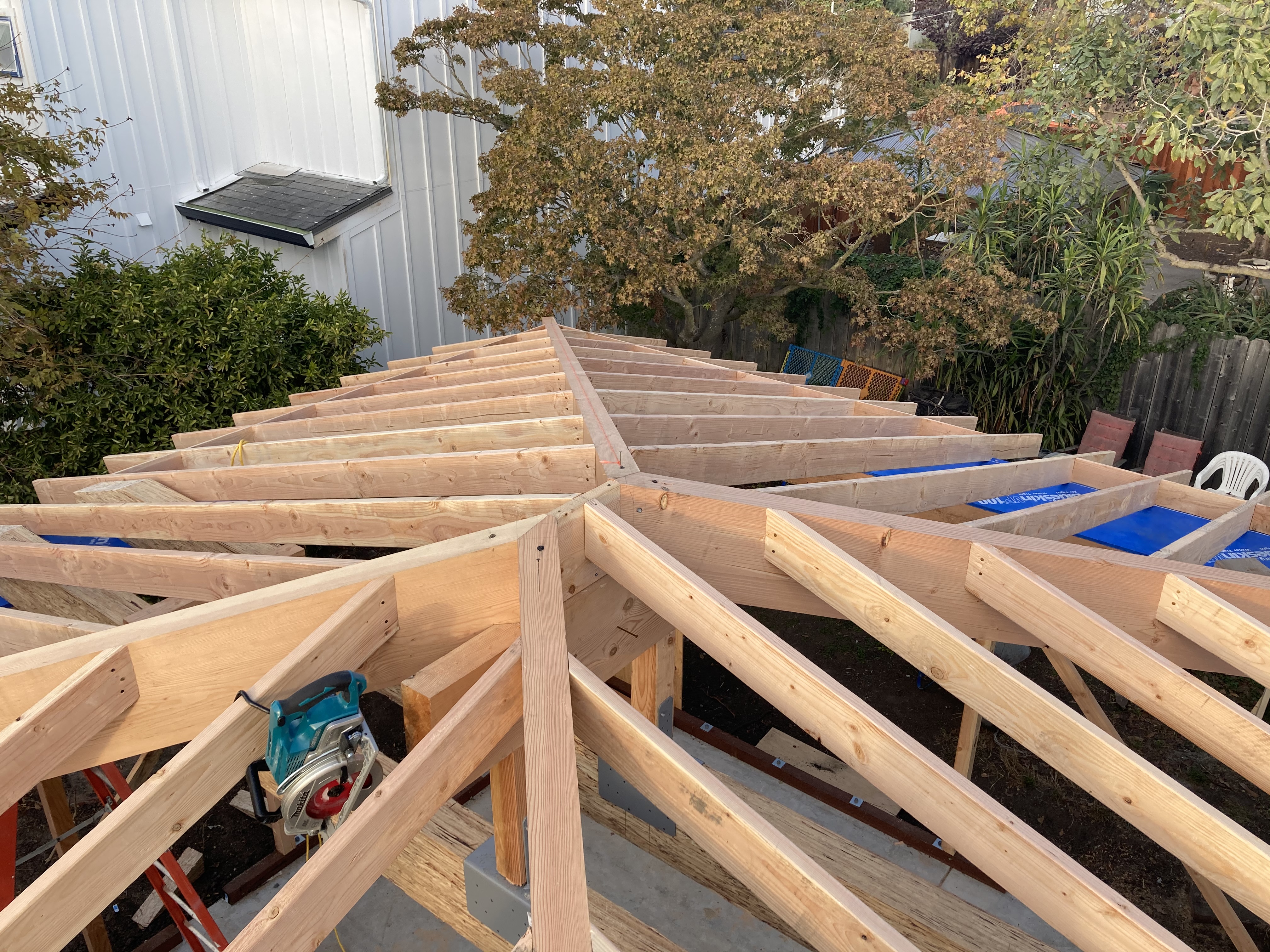
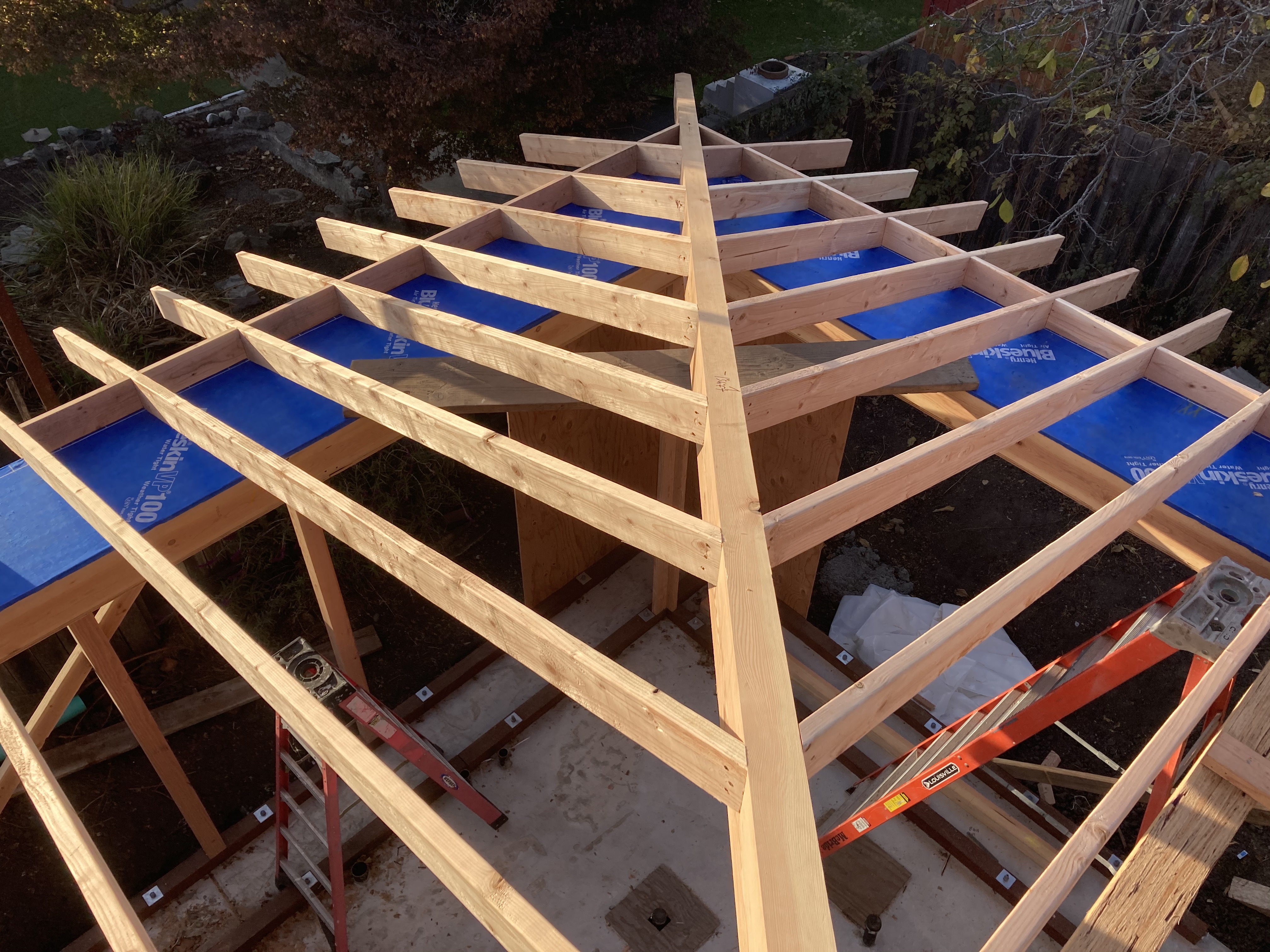
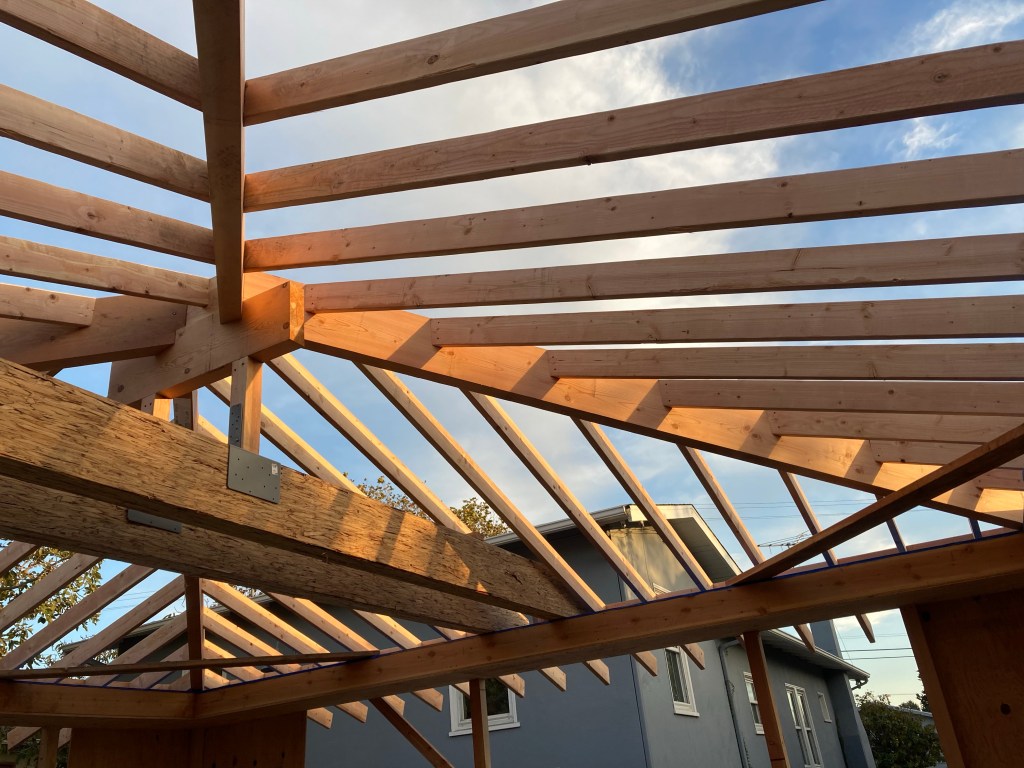
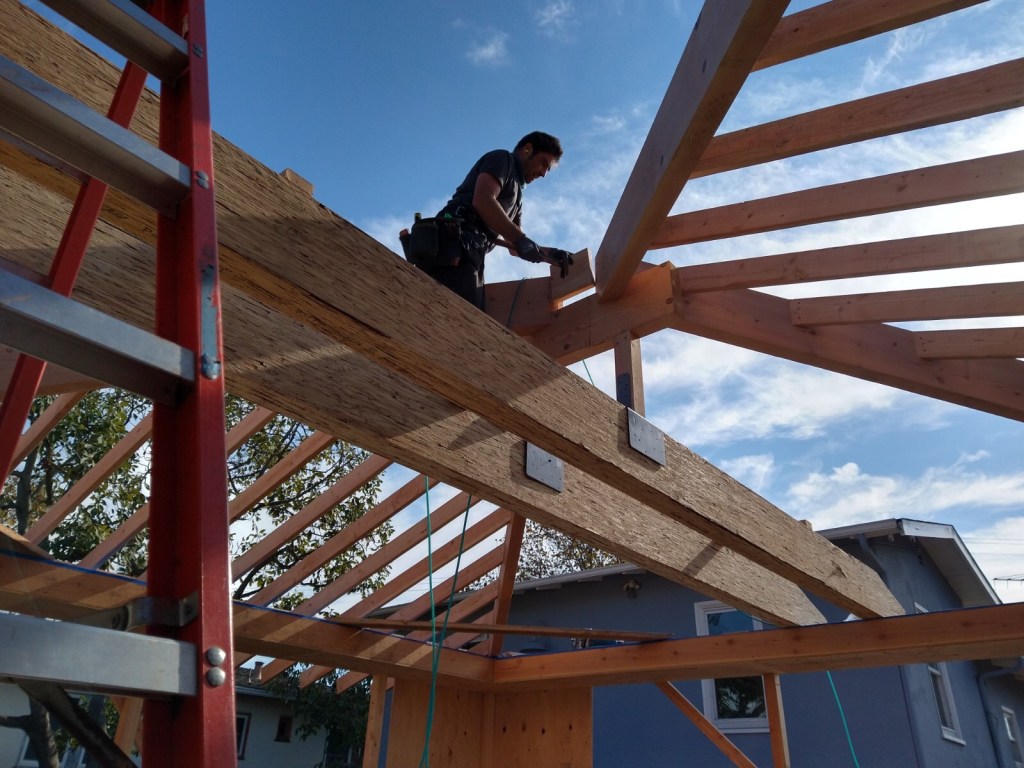
Posted in Design Projects, tagged accessory dwelling unit, ADU, Berkeley, process, roof framing, small buildings, Strawbale, wood on November 12, 2020| 1 Comment »
Posted in Design Projects, tagged Berkeley, concrete, green, process, small buildings, Strawbale on September 24, 2020| Leave a Comment »
Posted in Design Projects, tagged Berkeley, interiors, kitchen, open plan, process, remodel, value on August 21, 2020| Leave a Comment »
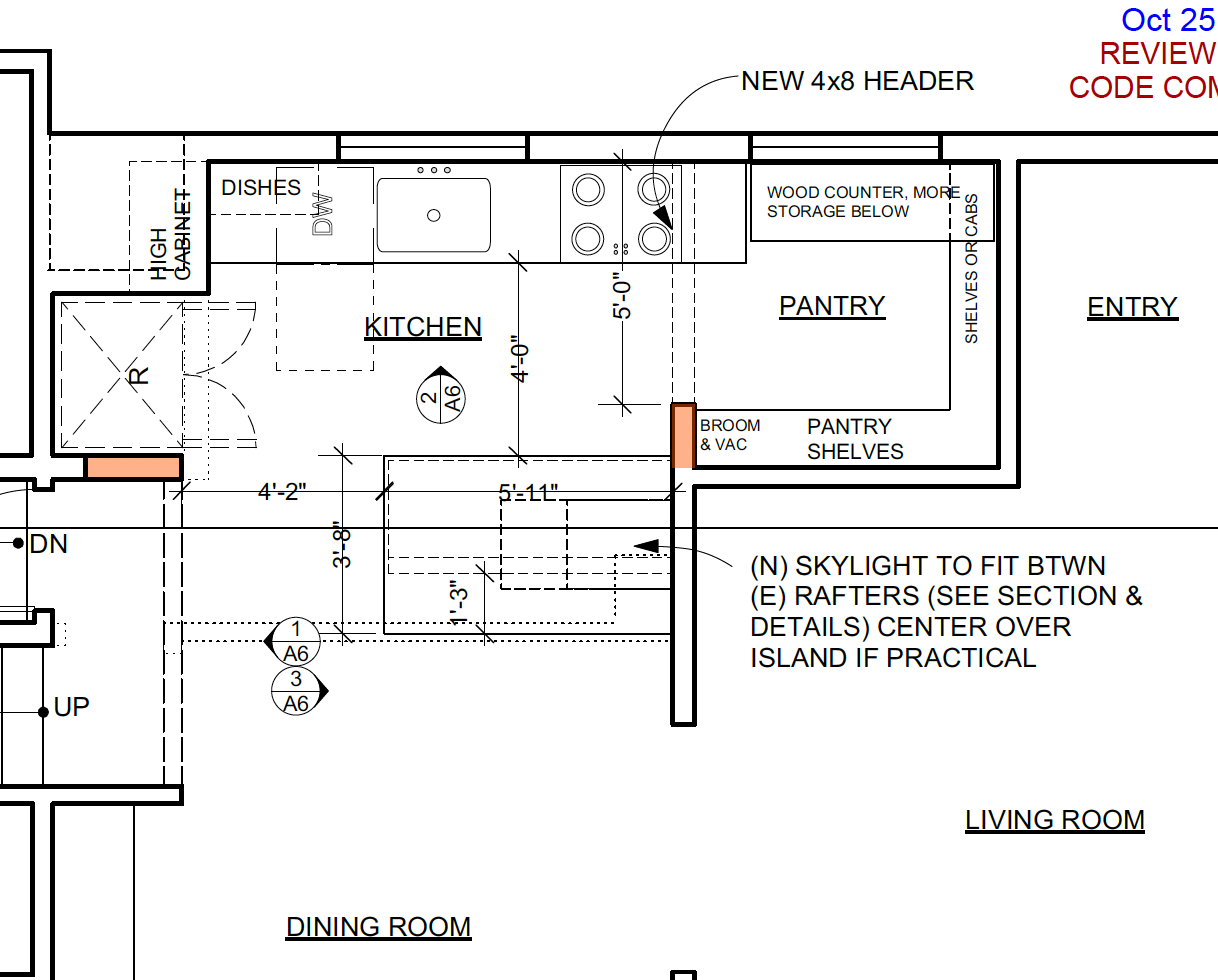
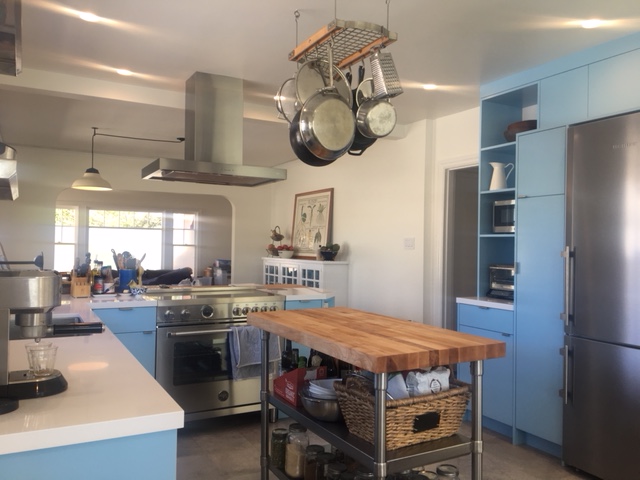
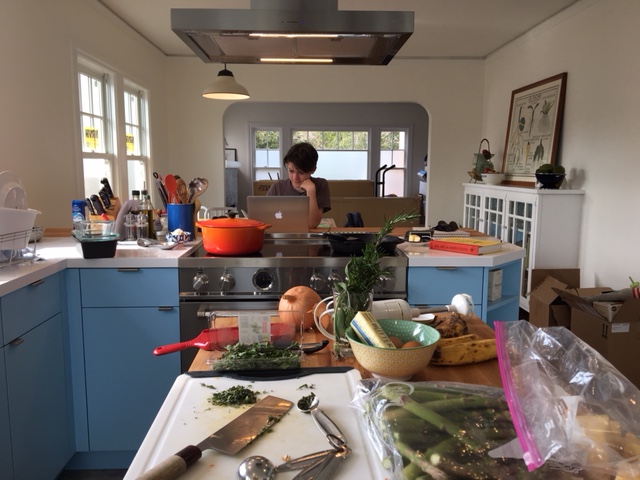
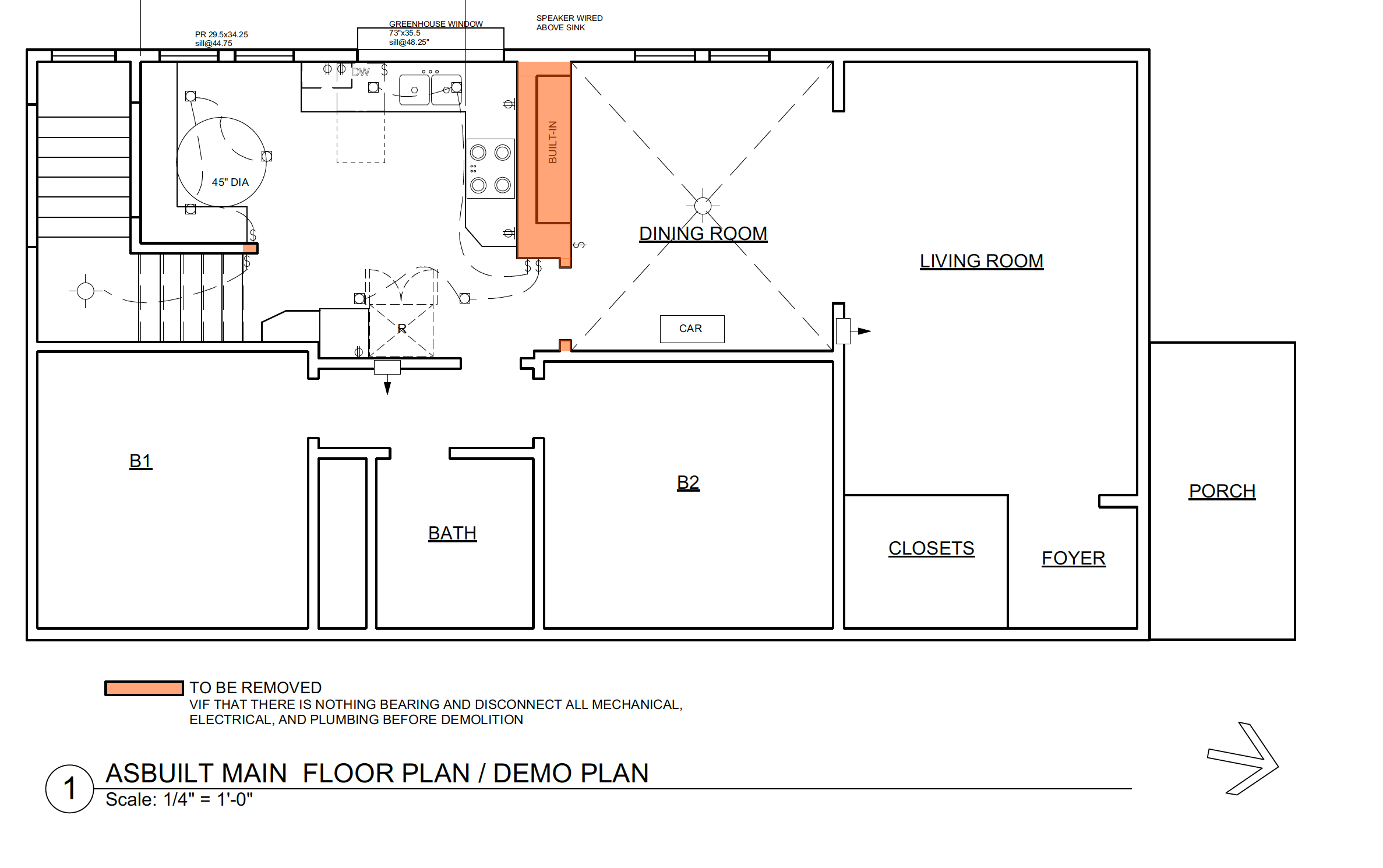
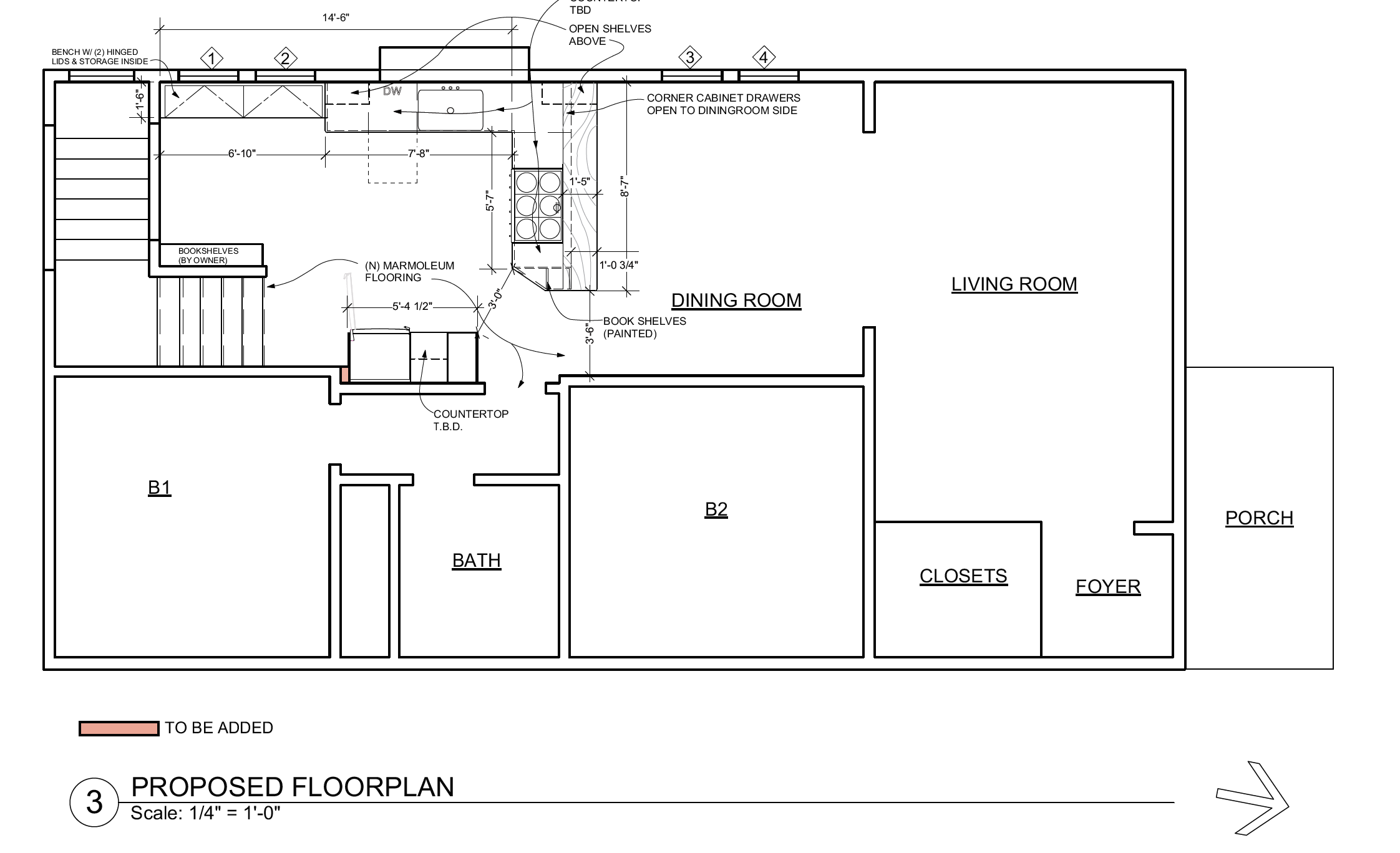
Since we are in a pandemic I wasn’t able to do a more formal photoshoot of these two projects. I also was not involved in every little decision, but they turned out well and the owners are happy to have nice new kitchens now as they shelter in place. Both projects involved removing a wall between kitchen and dining rooms, new cabinets, layout rearrangements, updated lighting, bar seating, a mix of wood and solid surface counters. One also got a skylight.
This first one was built by McBride Construction (Photos by John McBride)
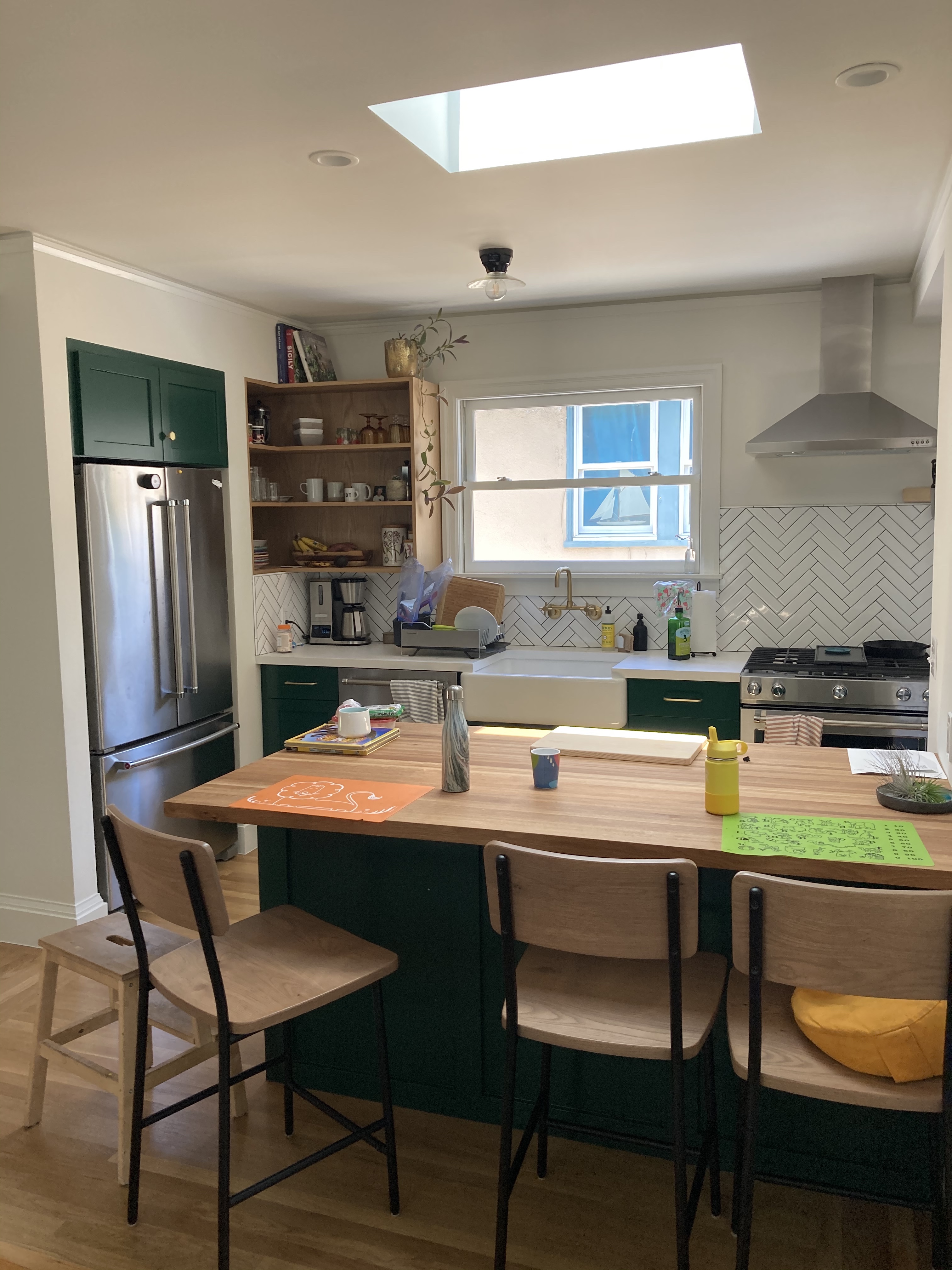
Wood-topped peninsula between kitchen and dining room makes a great place to informally eat or do homework, but also serves as a buffet for the dining room
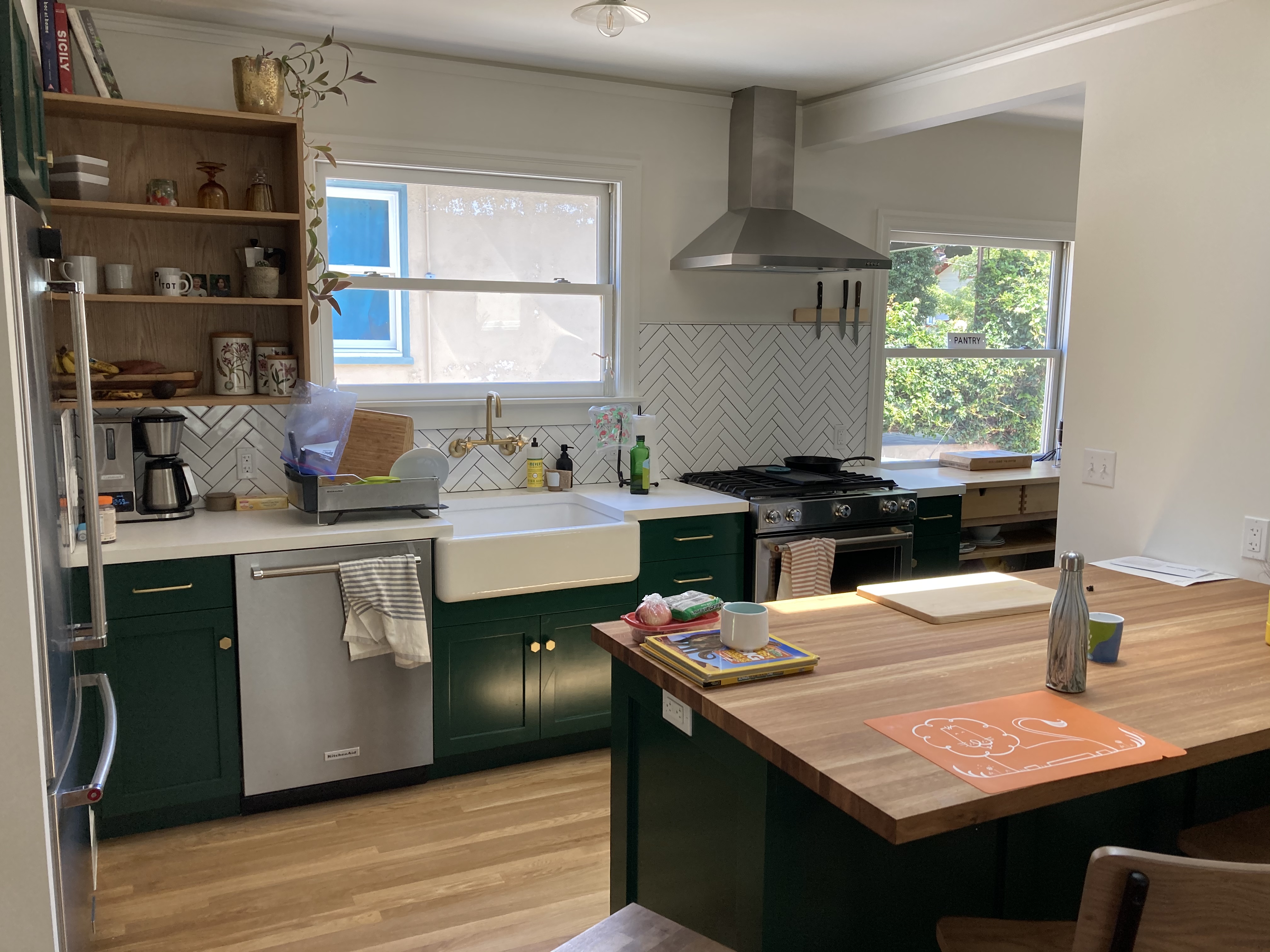

Herringbone Tile

The next one was built by 360 Property Solutions

Wall removed between dining and kitchen to let the south light flow through and connect the spaces
Posted in Design Projects, tagged Berkeley, carving, castle, cedar, construction process, curiosities, details, fun, historical styles, McBride Construction, modern, patterns, process, small buildings, whimsy, wood, zig zag on September 10, 2019| 1 Comment »
Posted in Design Projects, tagged ADU, Berkeley, carved post, carving, castle, cedar, details, hand saw, historical styles, middle ages, modern architecture, patterns, process on August 28, 2019| Leave a Comment »
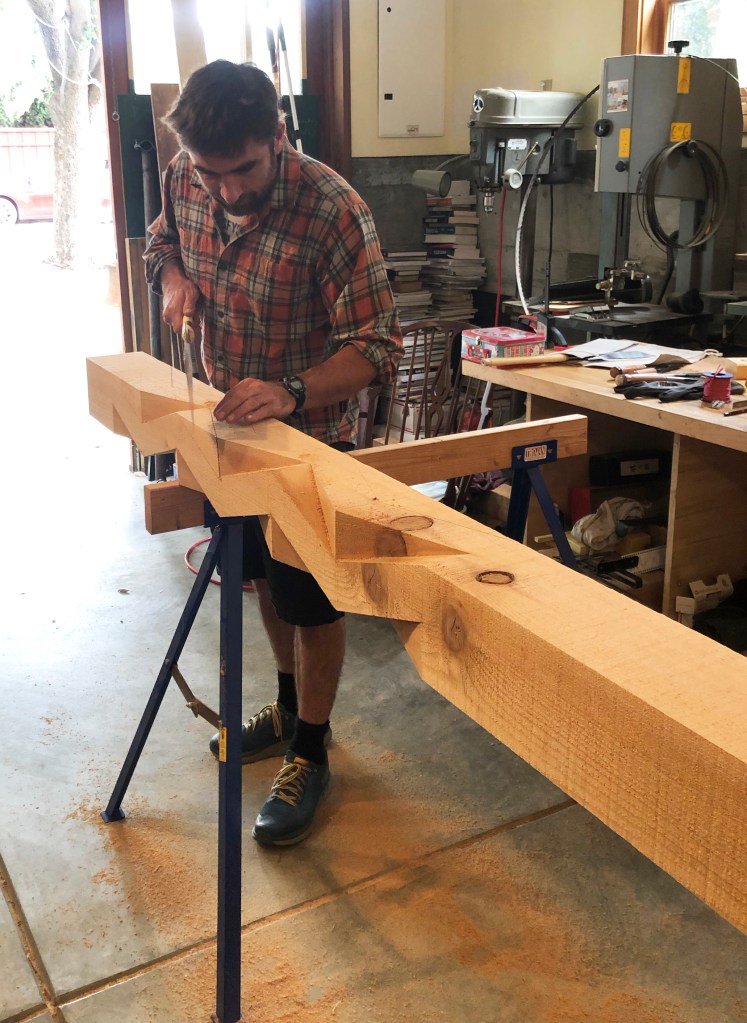
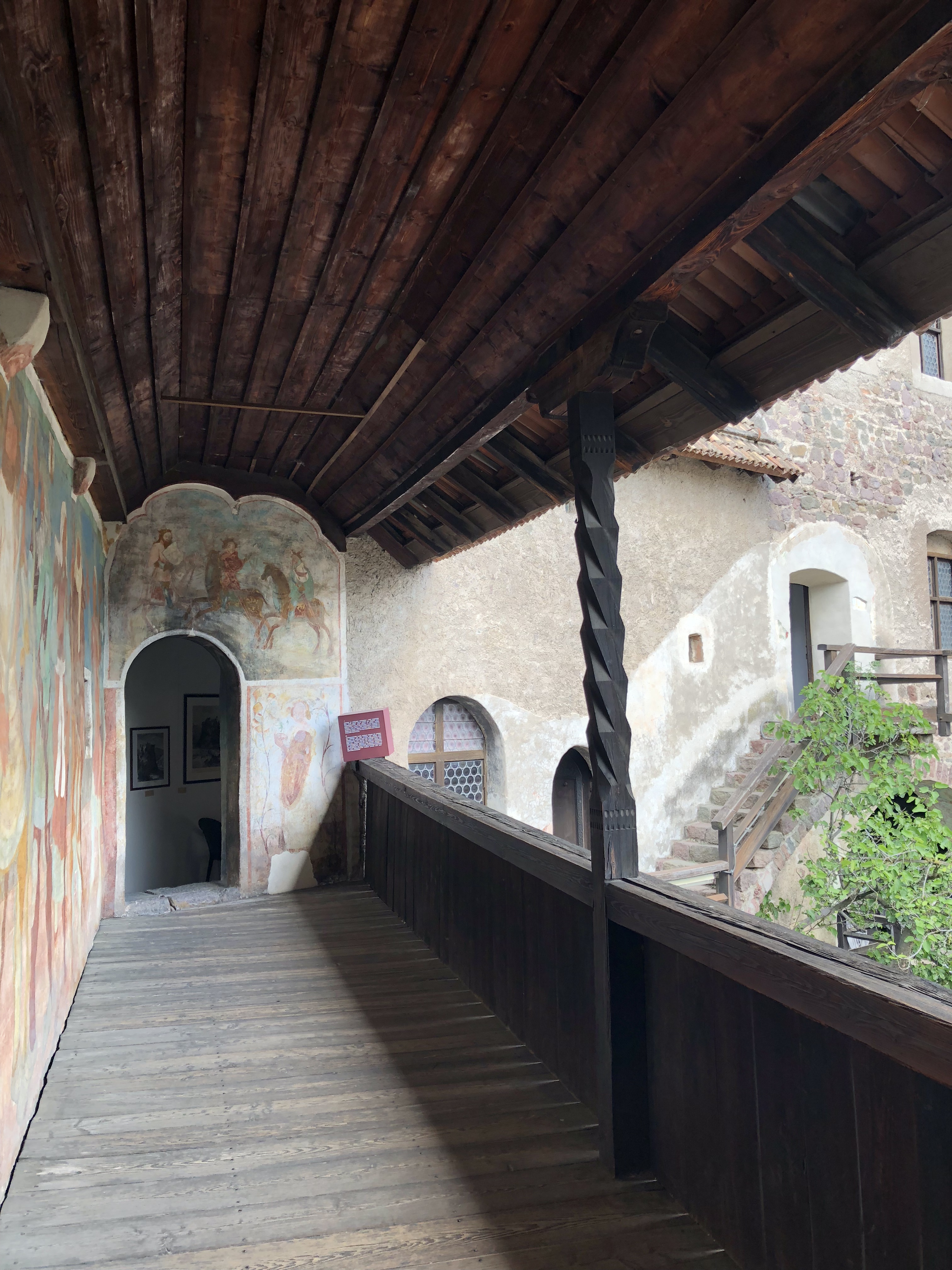
John McBride and I saw a post like this at a castle in Northern Italy. It seemed like a nice detail for a little cottage in Berkeley.
Posted in Design Projects, tagged accessory dwelling unit, ADU, Berkeley, cottage, framing, McBride Construction, process, small buildings on July 29, 2019| Leave a Comment »
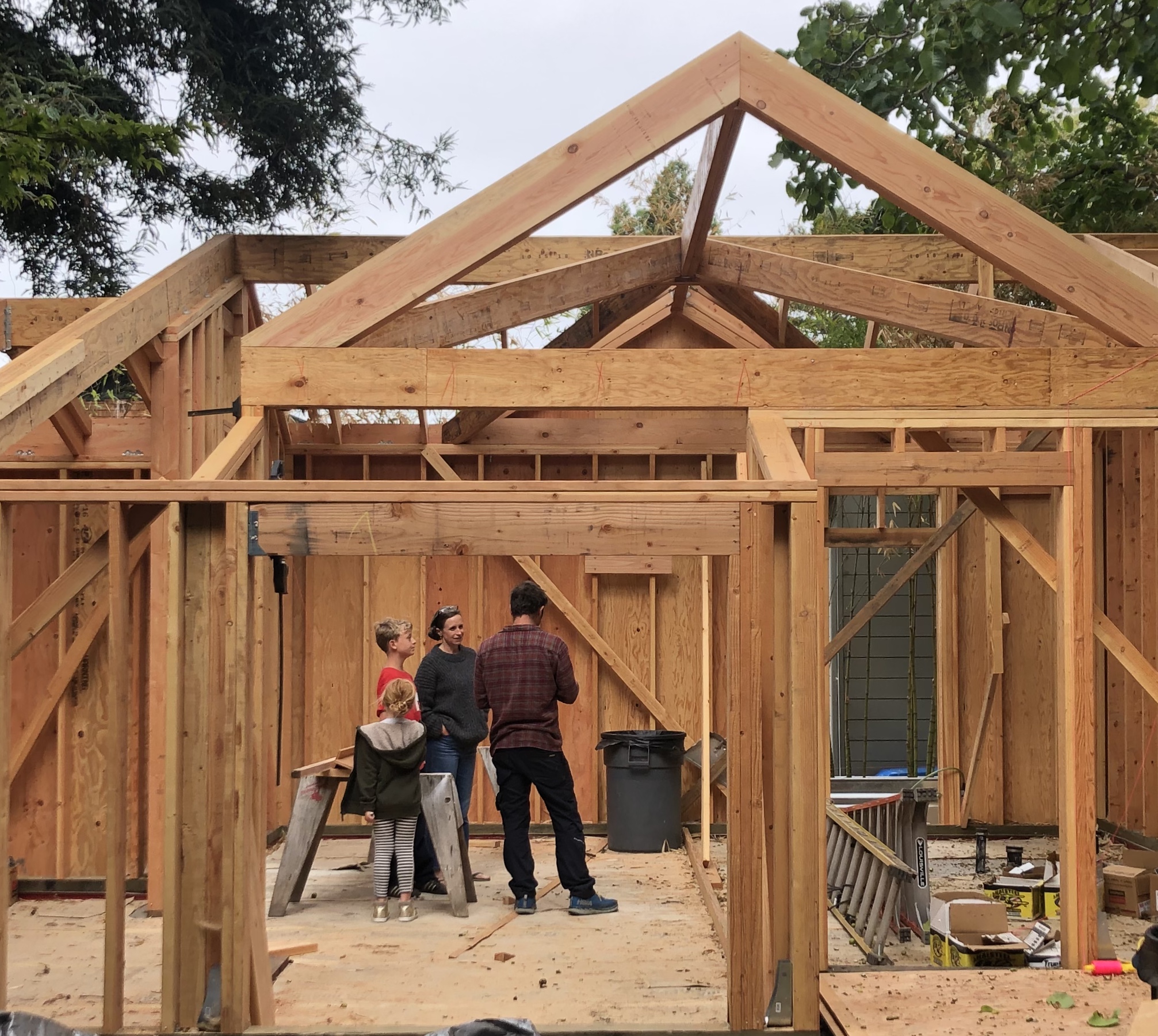
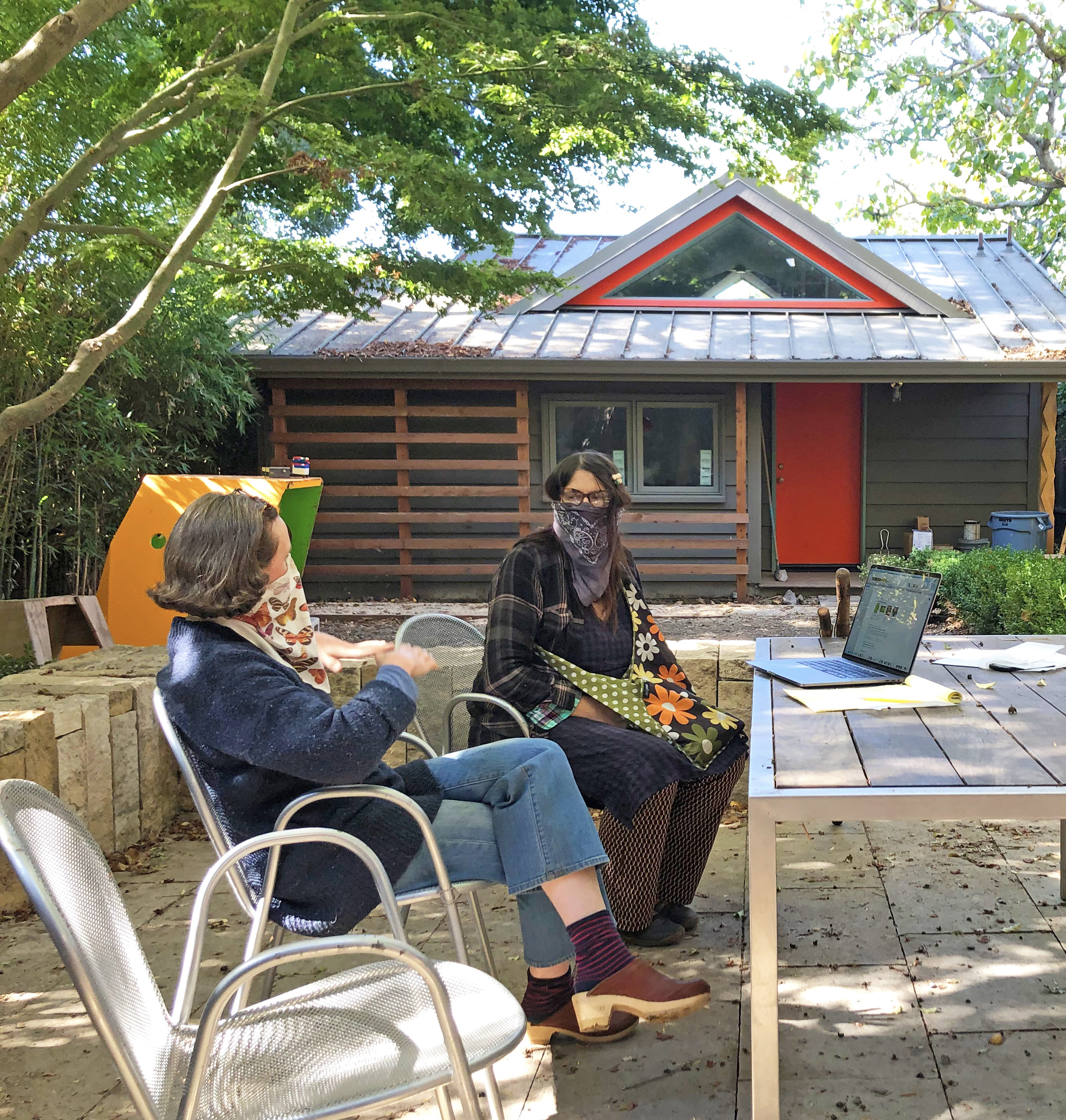
Saturday Morning Design Meeting
Posted in Design Projects, tagged ADU, All electric, Berkeley, cottage, Energy Conservation, flyash, framing, FSC, green, McBride Construction, process, rockwool, Solar on June 18, 2019| Leave a Comment »
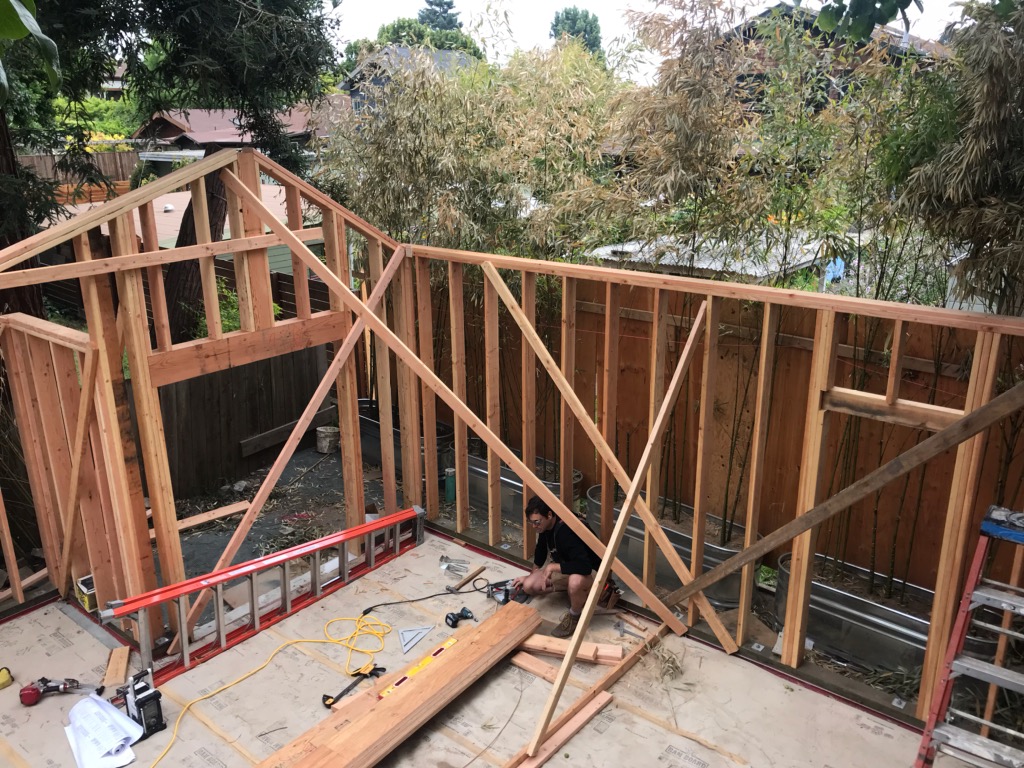
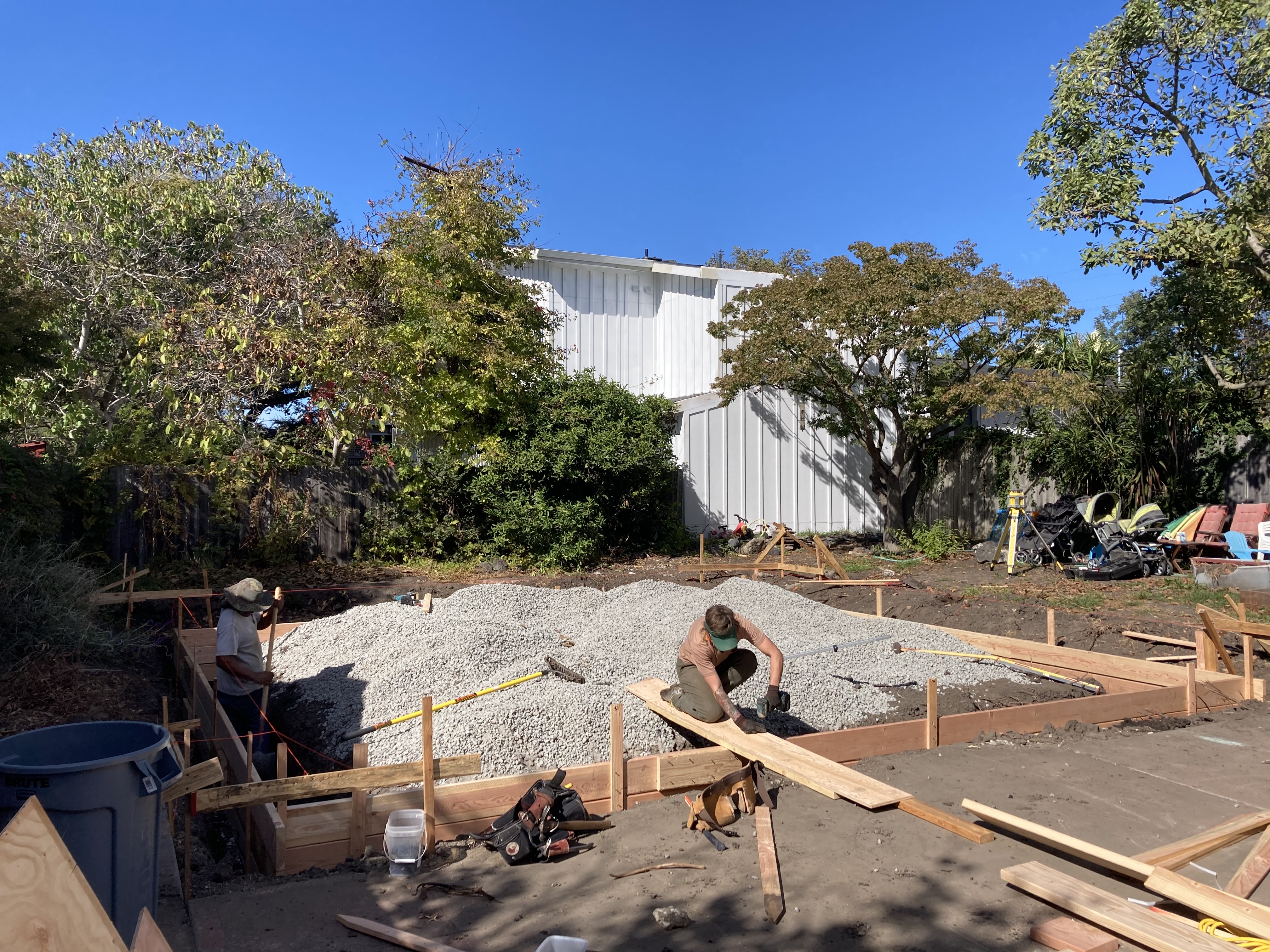
McBride Construction (and others…foundation by Caliber Structural and rough plumbing by Braco Plumbing) have this 484 SF ADU well on its way . It’s nice to see it take form. You can’t see one green innovation that is hidden under the slab. Instead of rigid foam insulation we used rigid rockwool. Concrete is high volume flyash. The framing lumber is FSC certified. The building will get a blower door test and it must meet a high standard for air tightness. (You can still open the window or turn on the ERV for fresh air, but your air won’t be trickling in through dusty cracks and crevices) Stay tuned for more. .





 deedsdesign