Feeds:
Posts
Comments

Posts Tagged ‘green’

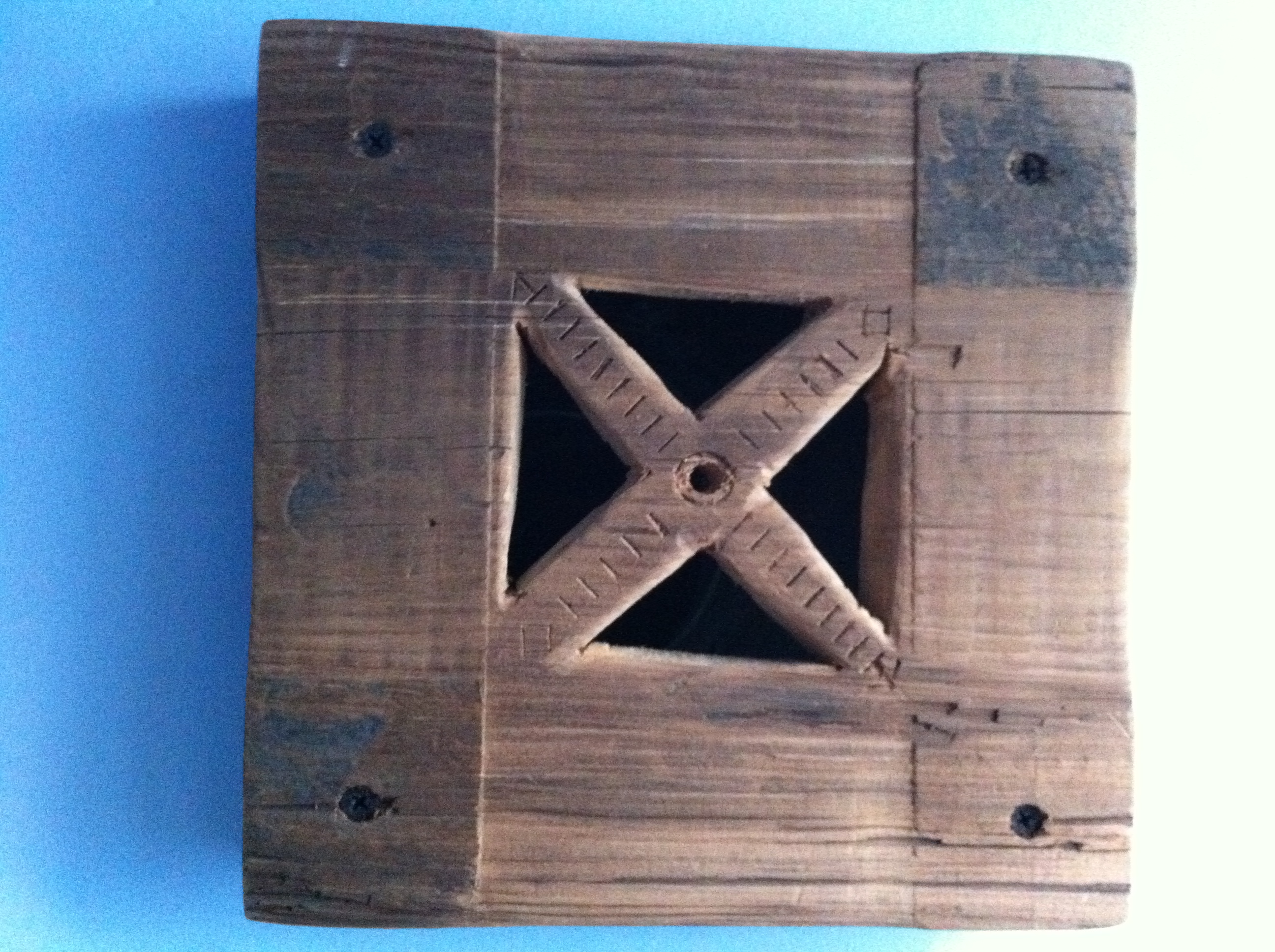
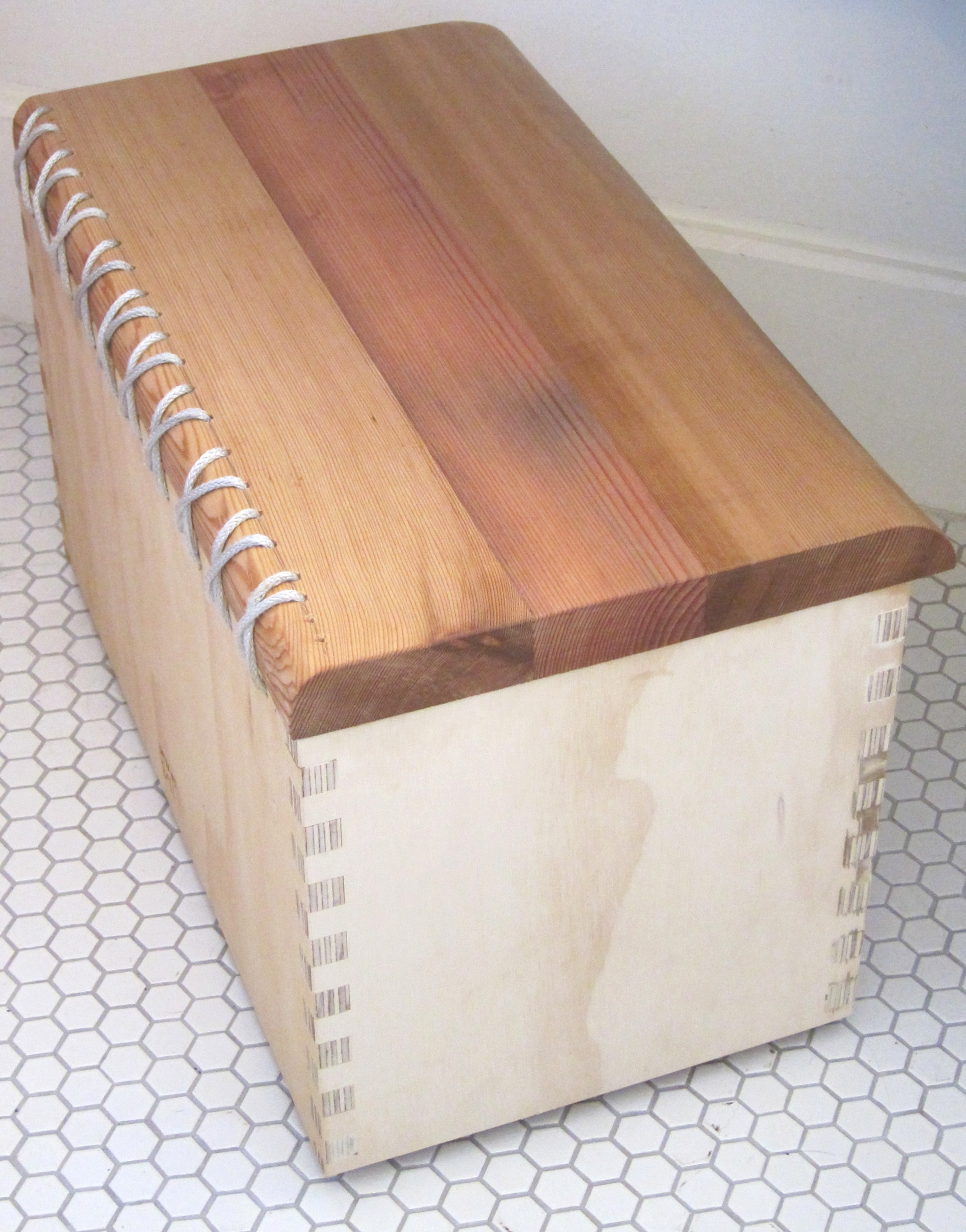
I’ve made progress on the prototype. The lid is installed. I fashioned a hinge out of retired spectra running rigging from the 5o5 Bar-ba-loot (pictured below). The hinge needs a little fine-tuning, but I like the Xs. I handcarved the curves in the lid.  Nice soft fir makes for easy carving.

Treasure chest Post 1 Treasure chest post 2

Read Full Post »

  • 60 Watt GE frosted incandescent bulb: 820 Lumens (initial)=13.6 lumens/watt; dimmable; 2700 Kelvin (warm white, when dimmed the light is warmer, up to about 2000 Kelvin;) rated to last 1500 hours; $2.20 apiece (1000 bulbs.com)
  • 13 watt Philips Lighting spiral CFL (energy star rated): 900 lumens (initial)=69 lumens/watt; not dimmable; 2700 Kelvin (warm white;) rated to last 8000 hours; $5.26 apiece (1000 bulbs.com)
  • 12.5 watt Philips EnduraLED (I have one of these and can attest that it is a great bulb so far): 800 lumens (initial)=67 lumens/watt; dimmable; 2700 Kelvin (warm white); rated to last 25,000 hours; $42.89 apiece (1000 bulbs.com)

This quick snapshot reveals that the CFL is the best value, assuming you don’t want to dim the light, this mercury business is a racket,  and the light quality is equivalent.

These dimmable CFLs are a bit more pricy.  I have never used one so cannot comment:

  • 16 watt dimmable CFL (Neptun): 900 Lumens=56 lumens/watt; dimmable; 2750 Kelvin (warm white;) rated to last 8000 hours; $11.93 apiece (1000 bulbs.com)

There is some concern that the mercury in a CFL bulb is dangerous and ends up polluting the environment. The LED bulb might be a better choice for that reason.  Another reason to choose the LED over the CFL is if the fixture is hard to reach, the LED bulb should last more than four times as long as the CFL. The incandescent will help heat your house and certainly has the least embodied energy.

In order to make a complete comparison I need more information about the embodied energy of each bulb, the environmental impacts of manufacture and disposal, and how the luminous efficacy degrades over the life of each bulb.

Dimmer switches can save a lot of energy and extend bulb life, although the performance allegedly varies a bit with new technology (LEDs and CFLs.) The aforementioned Philips EnduraLED dims very nicely.

Read Full Post »

On Tuesday I visited the Water Conservation Showcase at the Pacific Energy Center.   Water-saving products large and small were exhibited.  There were many irrigation products including ET Water’s Quickdraw timers controlled from your cell phone and time release water capsules from Driwater. Niagra Conservation gave away a Stealth Toilet that uses .8 gallons per flush as a door prize. Unfortunately they did not have a demonstration toilet on display.  D’mand Systems was there with their latest models of pumps to recirculate the lukewarm water back to the heater and not down the drain.  CUDO water storage system showed off their stackable cubes for water storage.

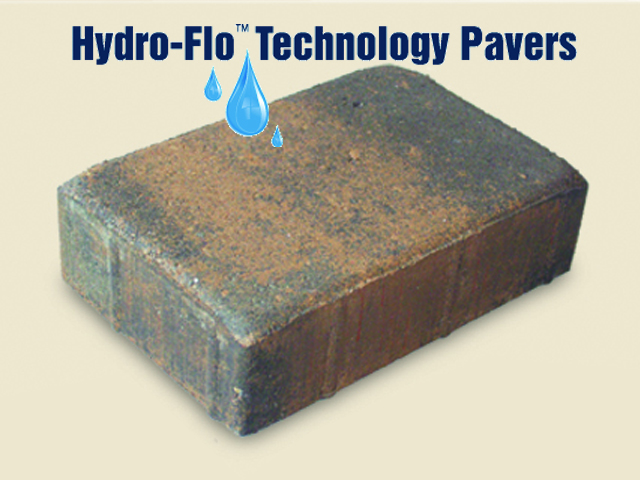
Pacific Interlock demonstrated their porous paving stones. It was enlightening to watch them pour a glass of water directly on top of the paver and it soaked right through. I had been under the assumption that porous pavers meant pavers with holes for water to drain and plants to grow through. These look like conventional bricks, just have tiny pores to drain the water.

There were also many representatives of grey water and black water treatment systems.  I think you get pay back pretty quickly on a large building or development if you can recycle some of your water. These systems are still too expensive for the average single family home owner.

In a place like the bay area, where rainfall is concentrated seasonally, storage often does not make sense.  It is more practical to use rain water in wintertime for wash or toilets, and to reuse shower and sink water for toilets and irrigation during summer. Expensive filtration is required by code for any reuse of rainwater or grey water for plumbing purposes. It is now permitted in many jurisdictions to use grey water (only from laundry and bathroom sinks and showers,) for irrigation without filtration.

Dual flush toilets are another great way to conserve water!

Read Full Post »

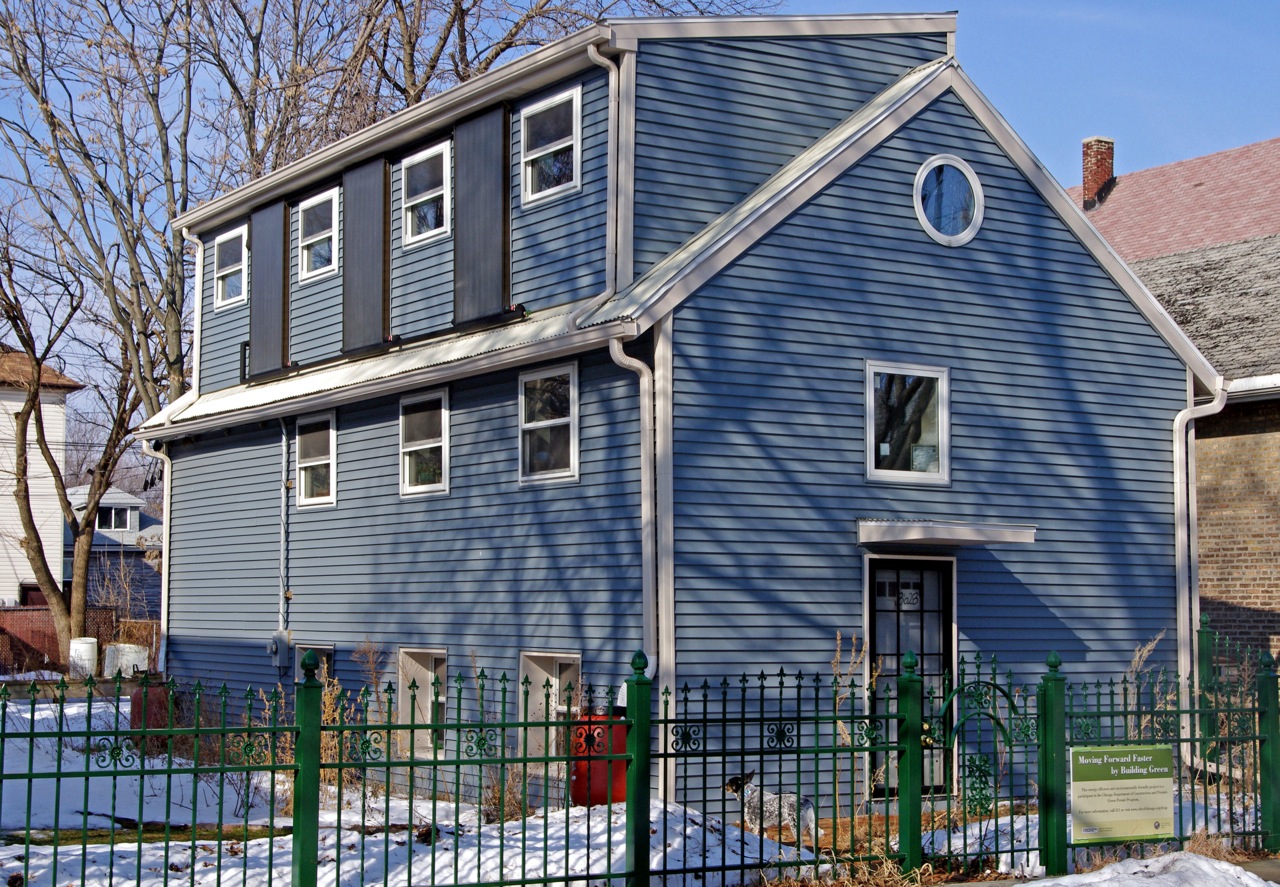
In the fall of 2009 I visited this Passive House on the south side of  Chicago, Illinois.  I didn’t really know much about Passive houses at the time, but I was impressed by one thing in particular.  The homeowner opened a window on the first floor and there was no rush of cold air. In fact there was no perceptible air movement at all. This was because The house is very “tight” The air didn’t rush in because there wasn’t anywhere for it to go.  I won’t go rambling on about what a passive house is here. Follow the link to my article on the topic, or just Google “passive house” or passivhaus.”

More information about this particular house:

Green Building Advisor

Interview with one of the owners

I need some more information about how it has been performing since commissioning. Perhaps the owner will make a comment on this post.

Beyond its Passive house status, the house has many fine recycled details such as these vent covers made from 100 year old soffit:


Read Full Post »

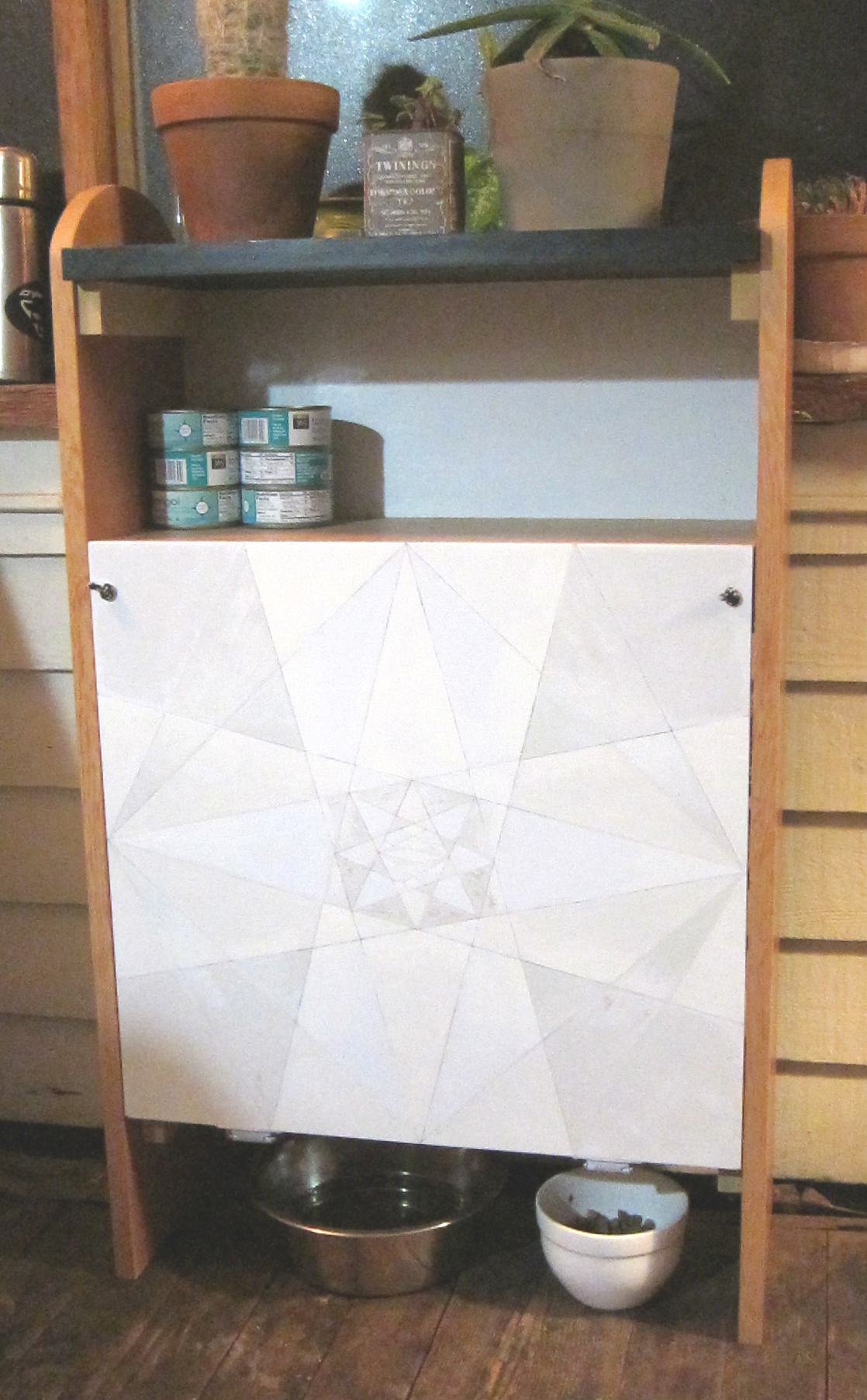
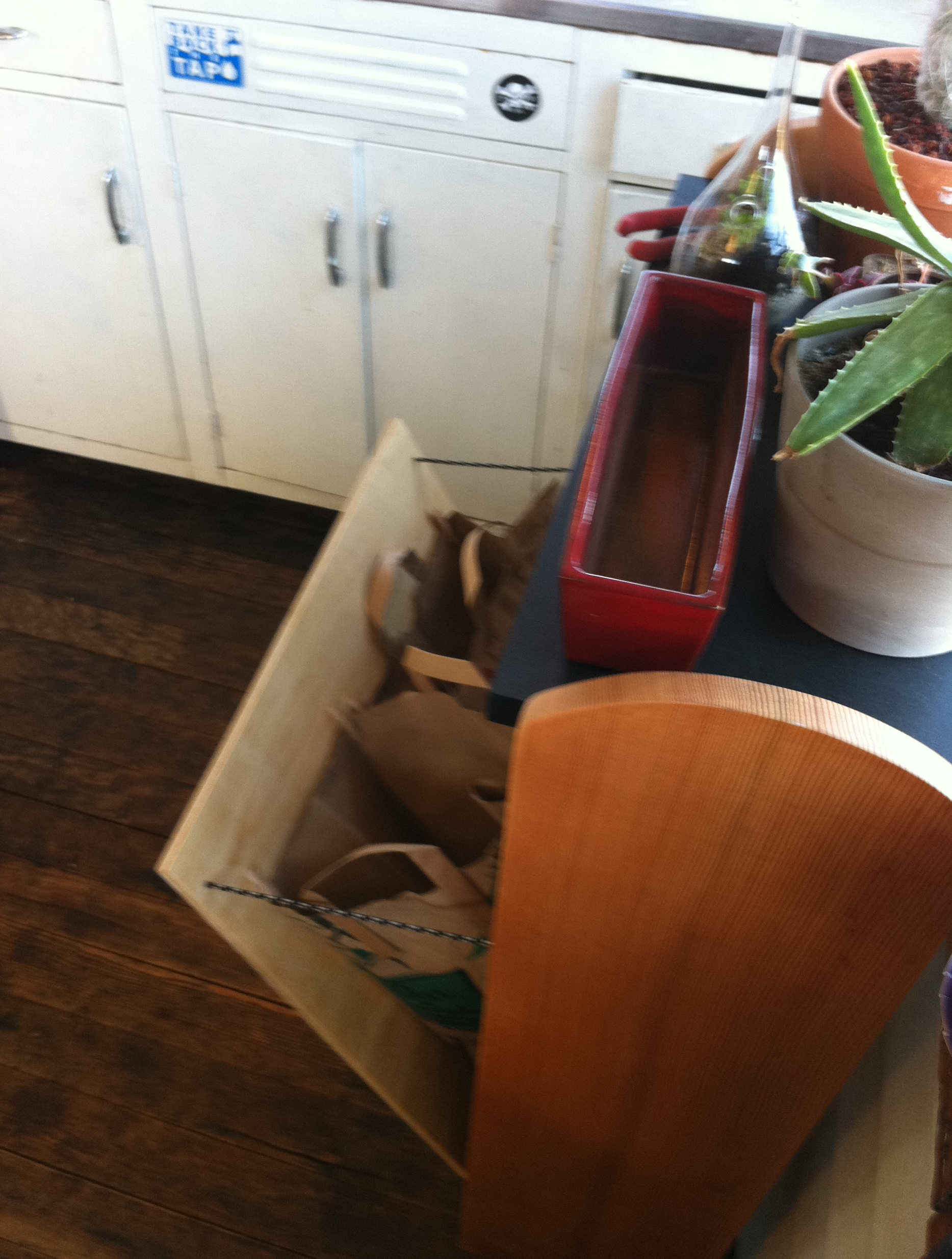
This Cadillac Trash Can has a top shelf for plants, a shelf for holding tuna for the cat, and a space below to push the dog bowls out of the way. It is built from remnants, so I didn’t have complete control of the proportions: Richlite top, fir sides, plywood shelves, door, & back panel

Decorated with pencil and Bioshield Aqua Resin Trim Enamel (zero VOC and compostable)

The door flips open on and is held at the proper angle by rope salvaged from a sailboat. Small clothespins attach the bags to the door for easy access

Read Full Post »

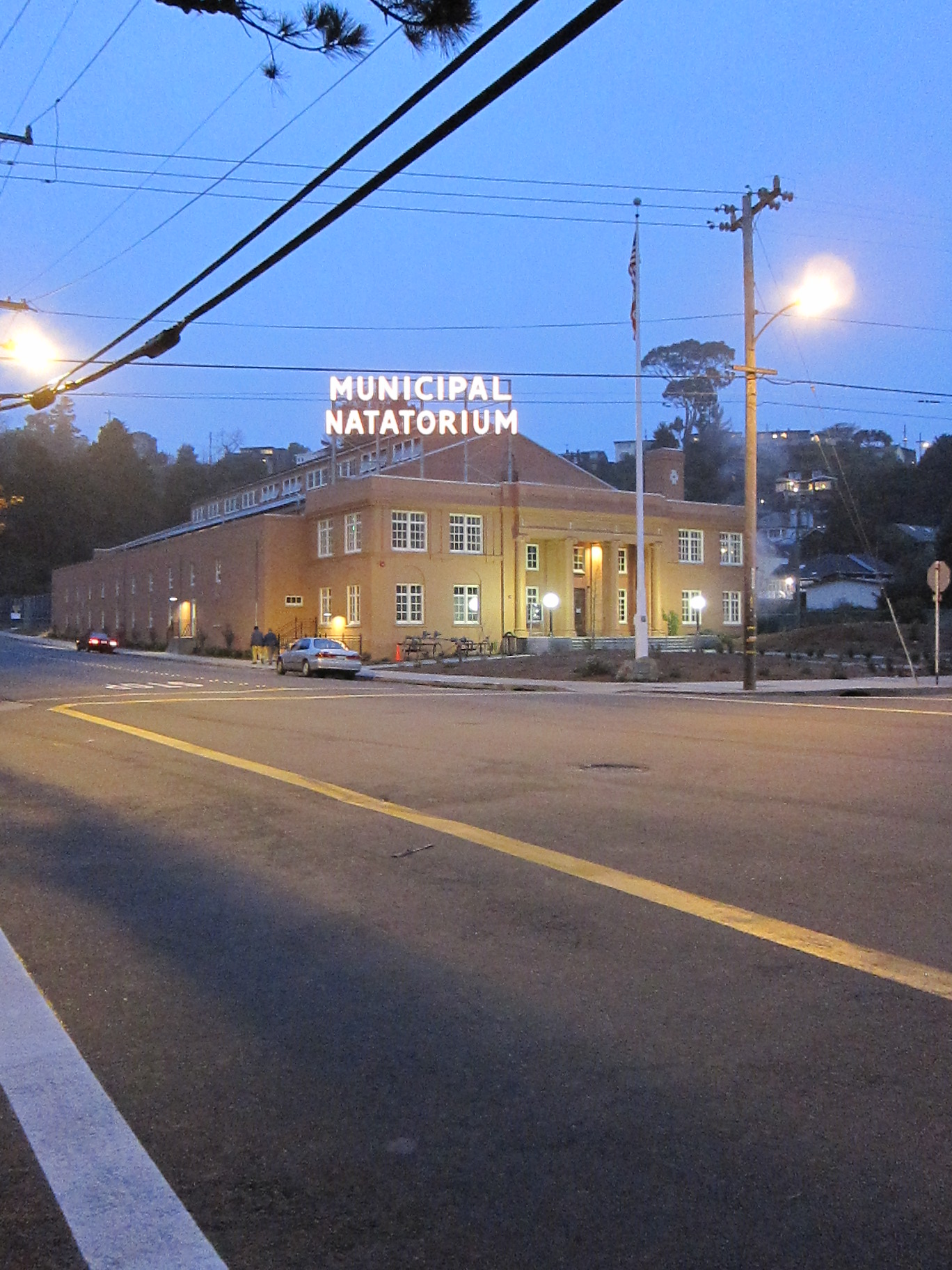
The public swimming pool in Point Richmond reopened with a grand celebration recently.  In the interior, the beautiful structure is washed with daylight, and a floor to ceiling mural at one end by John Wehrle really completes the experience.  I took a photo of the huge lighted sign the other night because it amused me. Maybe more buildings should be clearly labeled like this. I’ve considered it for my house, in part because I like to paint.  The street numbers could be 8″ high and painted in glow in the dark paint. We could bring in a new era of sign painting arts and put neon sign makers to work.  I’m not sure all the signs should be mounted at an angle to the building like this…and they could be slightly more subtle perhaps….but they should all be as beautiful as possible. No shiny plastic.

Read Full Post »

I am writing about these two State of California bills because they didn’t seem to get much press.

Starting on January 1, 2011 some Californians will be paid by the utility for the power that they generate with solar panels and windmills.  AB920 was signed into law in October 2009.

AB 510 (signed into law in February 2010) raised the cap set on the number of homes and businesses that can take advantage of net energy metering.  The cap went from 2.5% of the utilities total customer peak power demand to 5%.

The California Green Building Blog has good information, but I can’t find much on the rate structure.  I have heard that electricity will be bought at the same wholesale rate that the utility would have paid other suppliers for electricity at that place and time.

This site has some purchase rate information for many of the utilities.

So if you own a good roof for solar or wind power but don’t use a lot of electricity yourself, this might be enough incentive to build your own electricity generation plant.

Read Full Post »

Go HERE and HERE for more photos of the project Here is an article about the project on Dwell Magazine’s website and Here you can vote for or against the design.

Total Cost: $24522.47 ($204/ SF)

Design: Free (by owner)

Permit Fees: $111.55 (Electrical only, 120 SF accessory building didn’t require a building permit.

Foundation materials: $1425.79 (incl sand, gravel, plastic, 30% Flyash concrete,  forming materials, pumping labor, tool rental, rebar, etc)

Framing materials: $2661.73  (Almost all FSC Certified includes several large appearance grade exposed beams and FSC Certified sheathing plywood and all the hardware)

Building Paper and Flashing: $397.00   (We had to buy the roofing felt twice because the roof installation was repeatedly delayed by rain.

3 Windows & 1 Door: $1720.02   $750 (half price) for the Loewen half glass aluminum clad fir door salvaged from another project.   The windows are dbl glazed aluminum= inexpensive.  I chose aluminum because It looks good with the redwood.  This is a small outbuilding without heat and they work fine, but metal windows have lower U-value than wood, fiberglass and vinyl.  It would be hard to justify metal windows in a larger project with a heating system.  The glass in the south facing windows is Sungate 500.  This is a special glass that is designed to have a high U-value and also a high solar heat gain coefficient. “In winter, Sungate 500 Low-E Glass transmits the sun’s visible light and directs solar shortwave infrared energy into the home. At the same time, it reflects longs wave infrared (heat) energy — like that which comes from a home’s heating system — back into the room”

Paints and Finishes: $544.90 (Penofin Verde, American Pride, Earth Paint, AFM Safecoat, Bioshield) These are not the cheapest finishes, but honestly way more pleasant to work with than the traditional smelly stuff. Ill have to report back on longevity and durability, but so far so good.

Insulation, Sheetrock install and finish (incl labor), Interior Trim (FSC certified): $1609.93

Roof: $2615.93 (galvanized standing seam painted red by Tri Sheet Metal, James Morgenroth)  I hope this is a long lasting solution.  It was chosen for the clean crisp lines and the cheerful color. I was considering a zinc roof for its infamous longevity advantages, but didn’t find a local installer familiar with the material.

Exterior Siding & Trim: $850.73 (All the redwood siding was milled from logs salvaged from a road widening project in Sonoma County and gifted to the building. (ie free,  just involved a lot of  labor and $200 worth of stainless steel screws)

The siding is installed as a rain screen with a space behind the siding for ventilation and drainage.  The idea is to make everything last longer by preventing moisture from getting trapped and rotting the siding or the framing. I used Penofin Verde, an eco-friendly penetrating sealer on the redwood. I’m hoping that I wont have to reseal it more than every other year.  I have used the more stinky petroleum product Marine Grade Penofin on my wood garage doors for several years.  It seems to do a good job of protecting the wood, but since they are on the south side without much protection, I reapply every year.

I sealed the exposed fir rafter tails with penetrating epoxy before priming and painting.  They should hold up well, but I need to keep an eye on the corner where the high-end rafters meet the wall.  I can imagine water running down the underside and sitting in this corner.

Rain protection & Dump runs: $114.66

Tools and bits: $75.87

Electrical & Plumbing: $1469.40 (includes fixtures, somewhat expensive LED exterior strip light that only uses 7 wAtts. The Louis Poulsen PH5 pendant was a gift)

Landscaping: $1982.88 (brick path by Hornby Garden Design and Construction)

Misc: $585.35

General Labor: $8,004.00  (carpentry, Built-in furniture, electrical, trenching, rough plumbing, etc.  Some of this is discounted because it was done by my good friend John Mcbride.  This does not include extensive work by owner/designer)

Cost analysis: The door, the roof and some of the lights are expensive. The built-ins were inexpensive, but involved a lot of labor that normally would have cost far more.  The unusual shape  involved more labor in framing, siding, and roofing. This building didn’t require a permit except for the electrical.  Many components  that were free would normally have cost a fair bit. The design labor and other extensive labor of the designer also would normally have cost money.   For this reason, one should assume that a similar structure might cost at least $36,000, not including design.  This would mean $300/ SF. 

Things I would do differently or might change later: Insulate the concrete slab, use this sort of window trim detail

Performance: So far the thick and careful insulation (R19 in the 2×6 framed walls and R30 in the roof) and the passive solar features (mainly the south-facing windows with overhangs and a deciduous California Buckeye tree in front of them) perform wonderfully.  The building is very comfortable without supplemental heat.  On the occasional day that is too warm, opening the high windows works magic. When it is too cold I warm up the room by turning on a few lights and my computer. Sometimes I bring a large dog inside or do 10 jumping jacks to generate some heat.  Because of the insulation, the heat sticks around.

Read Full Post »
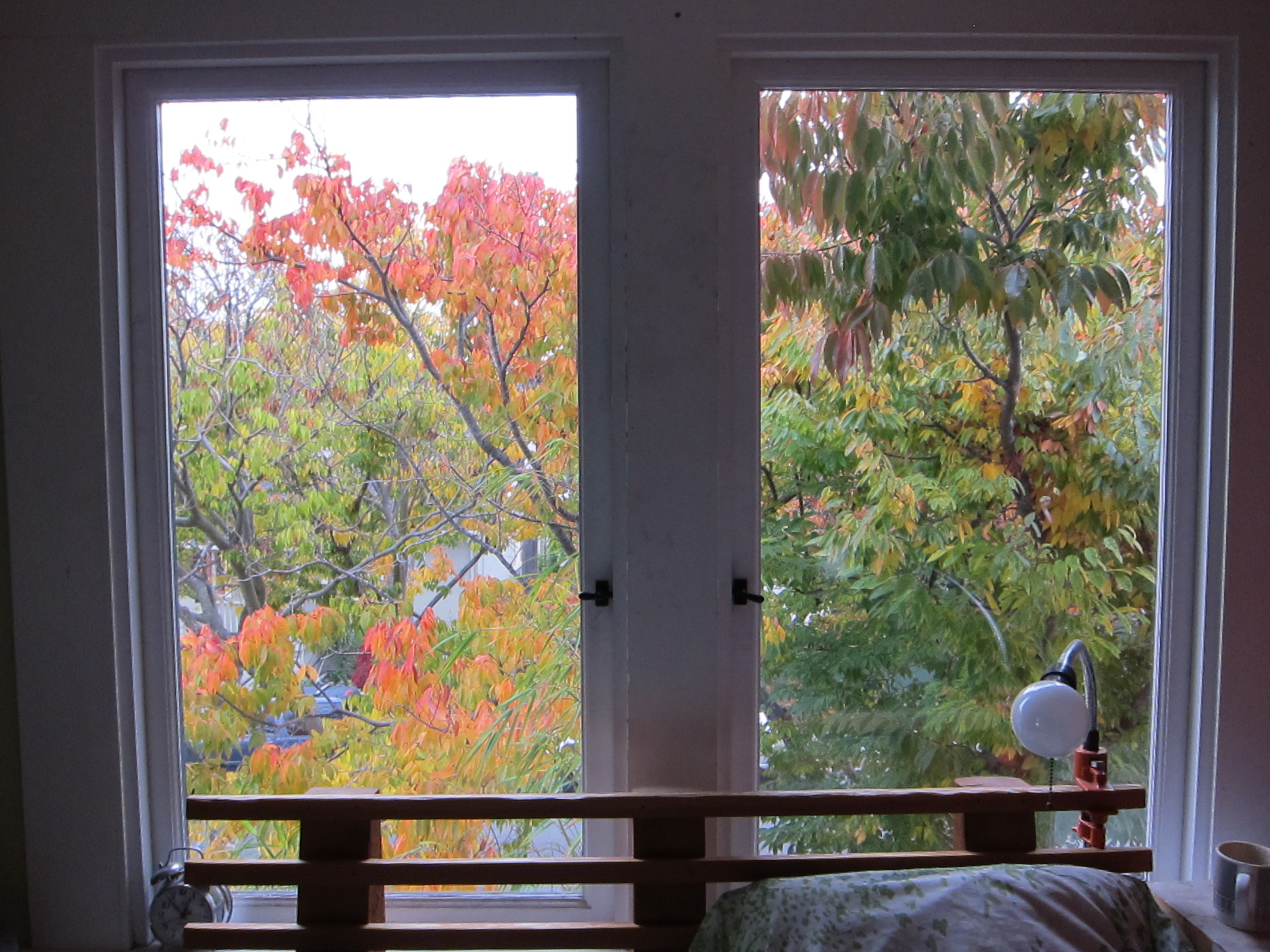
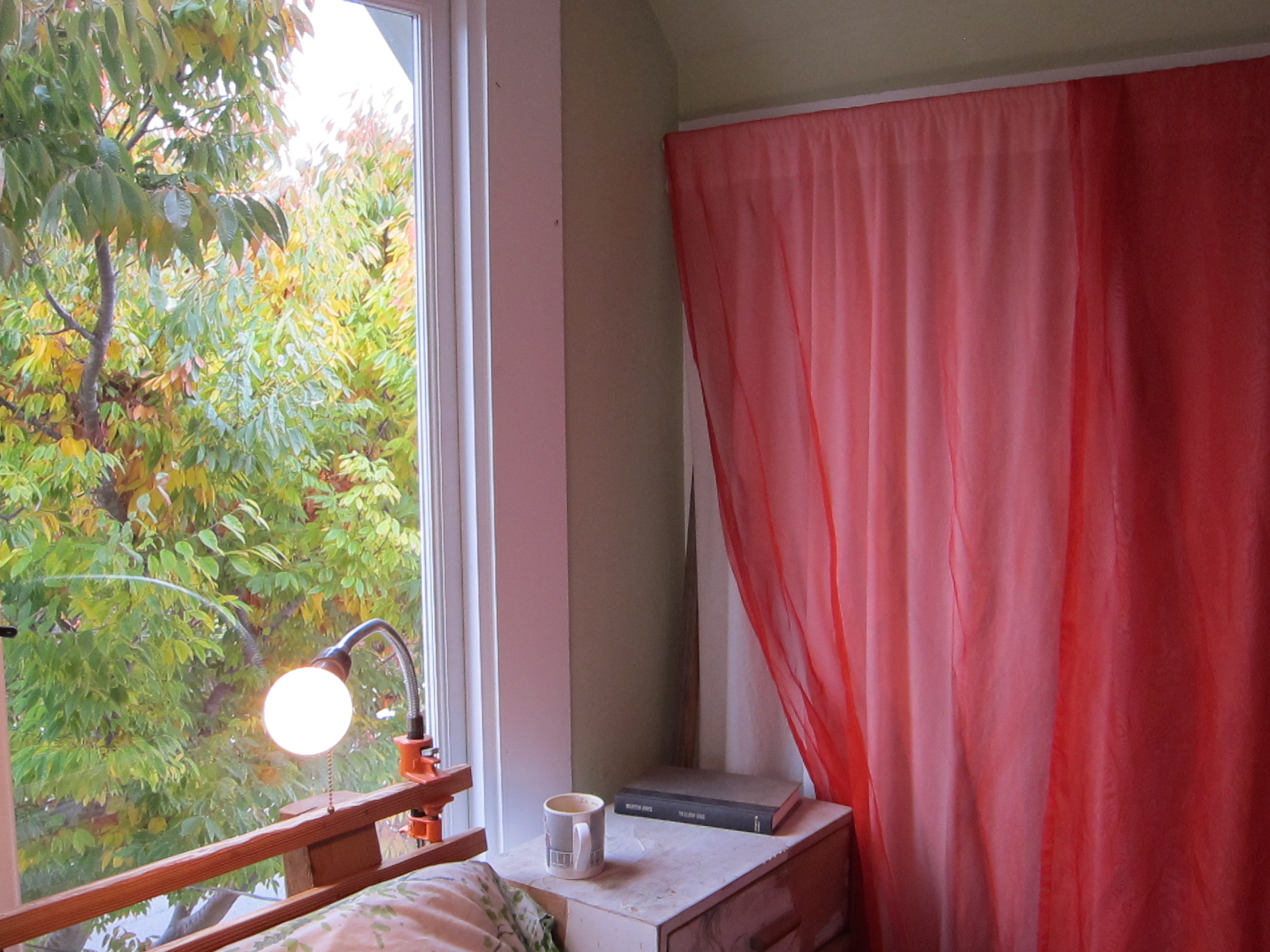
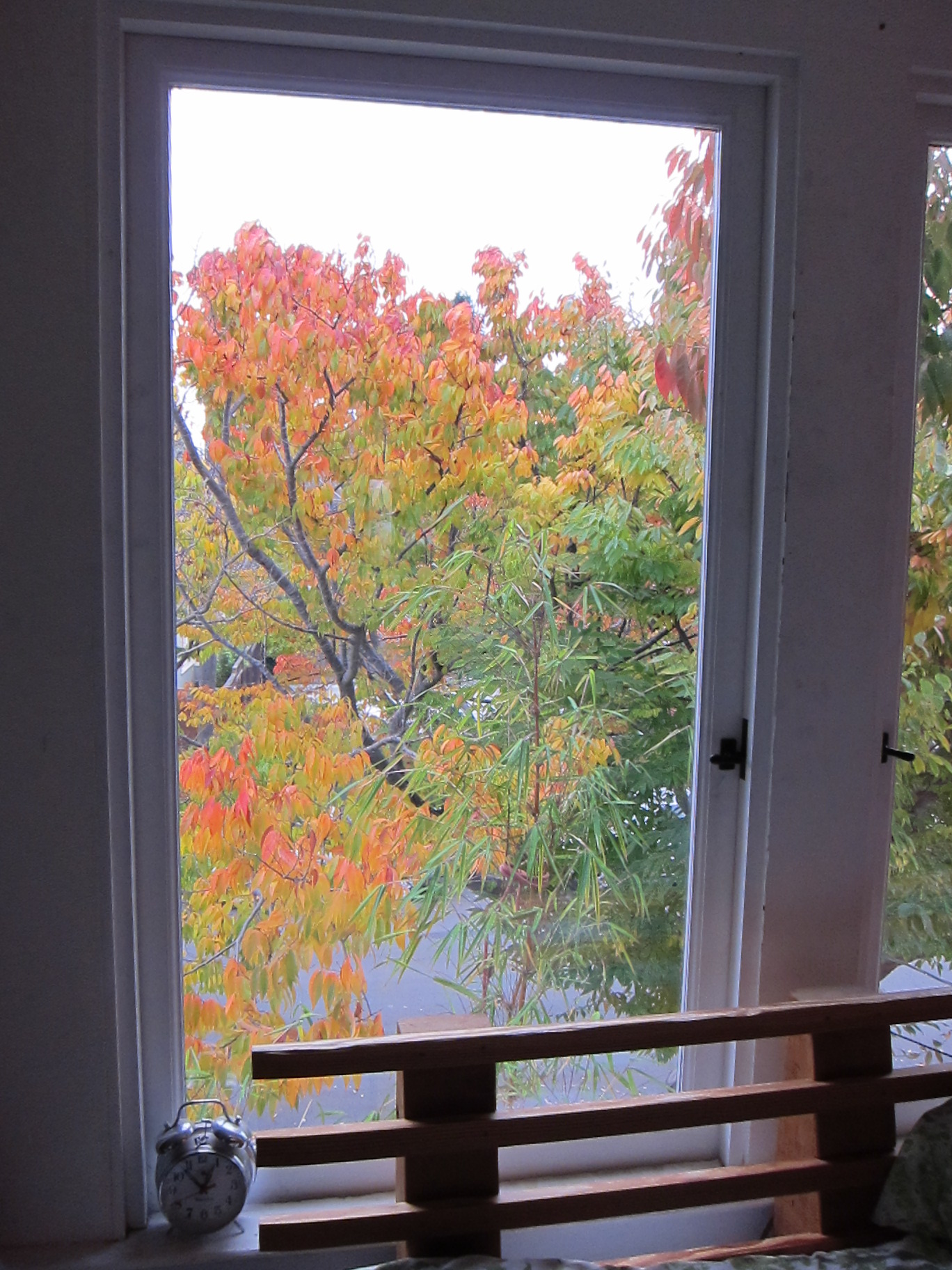
In honor of the Northern California Fall I am posting a few photos of the glorious trees that might be the most important architectural feature of my apartment. Without this pair of venerable deciduous Zelcova trees I would have much less privacy in my bedroom and the house and yard would be much hotter and sunnier in the summer months. The beauty of a deciduous tree smack on the south side of the house is that in the winter the sun streams into the south-facing windows.  warming and cheering the rooms.  Of course the fall foliage is a nice side benefit.

The seasons in Northern California have always seemed a bit confused to this native of Detroit.  I recently realized why: When the fall foliage begins, it is usually also the beginning of the rainy season.  This means that simultaneously some trees are turning red, orange, yellow and brown, and most other plants and trees are turning bright green from all of the rain. In the spring the reverse is true. The deciduous trees are sprouting little green leaves and buds….and most other things are turning brown as the water supply diminishes.

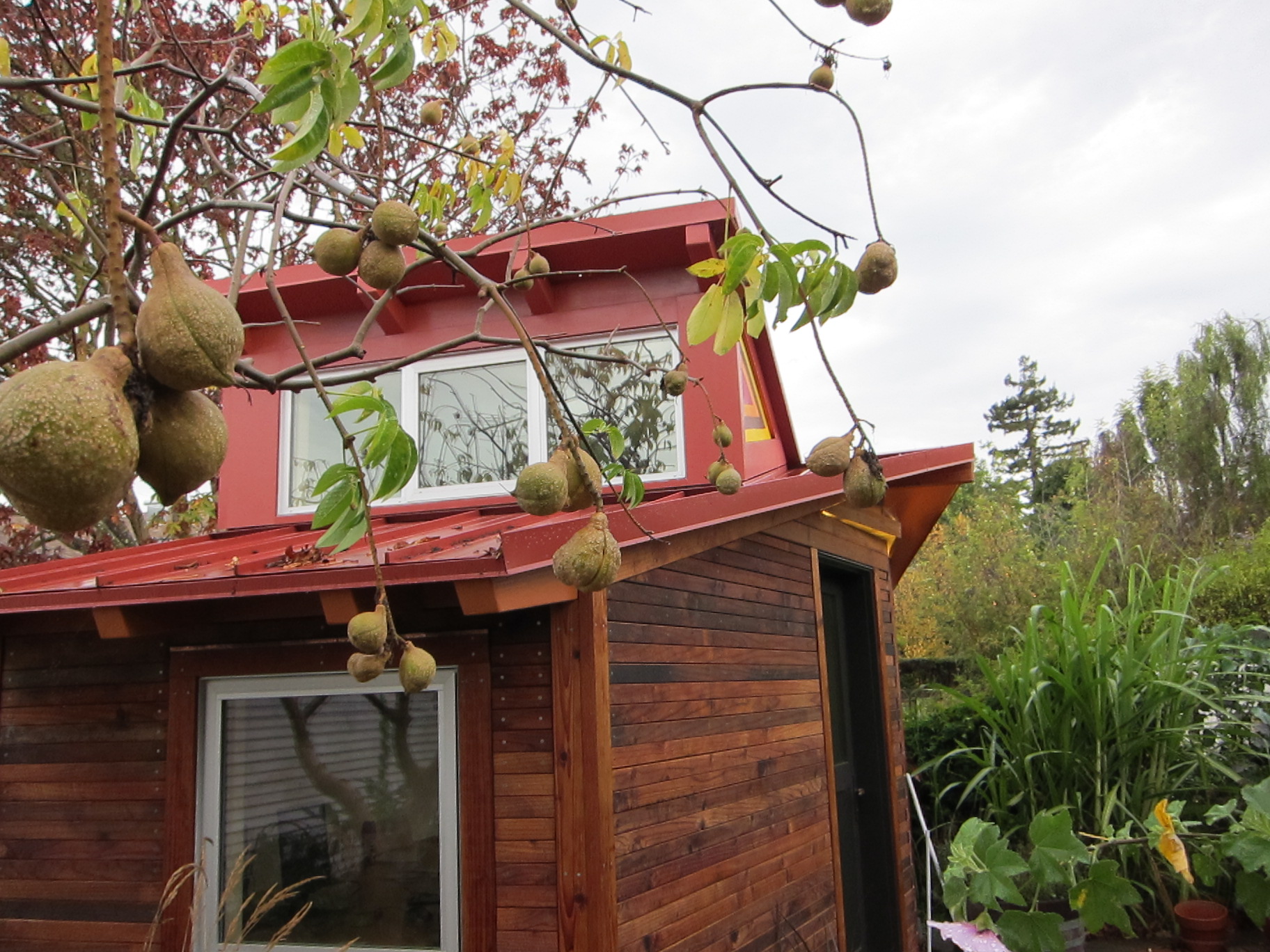
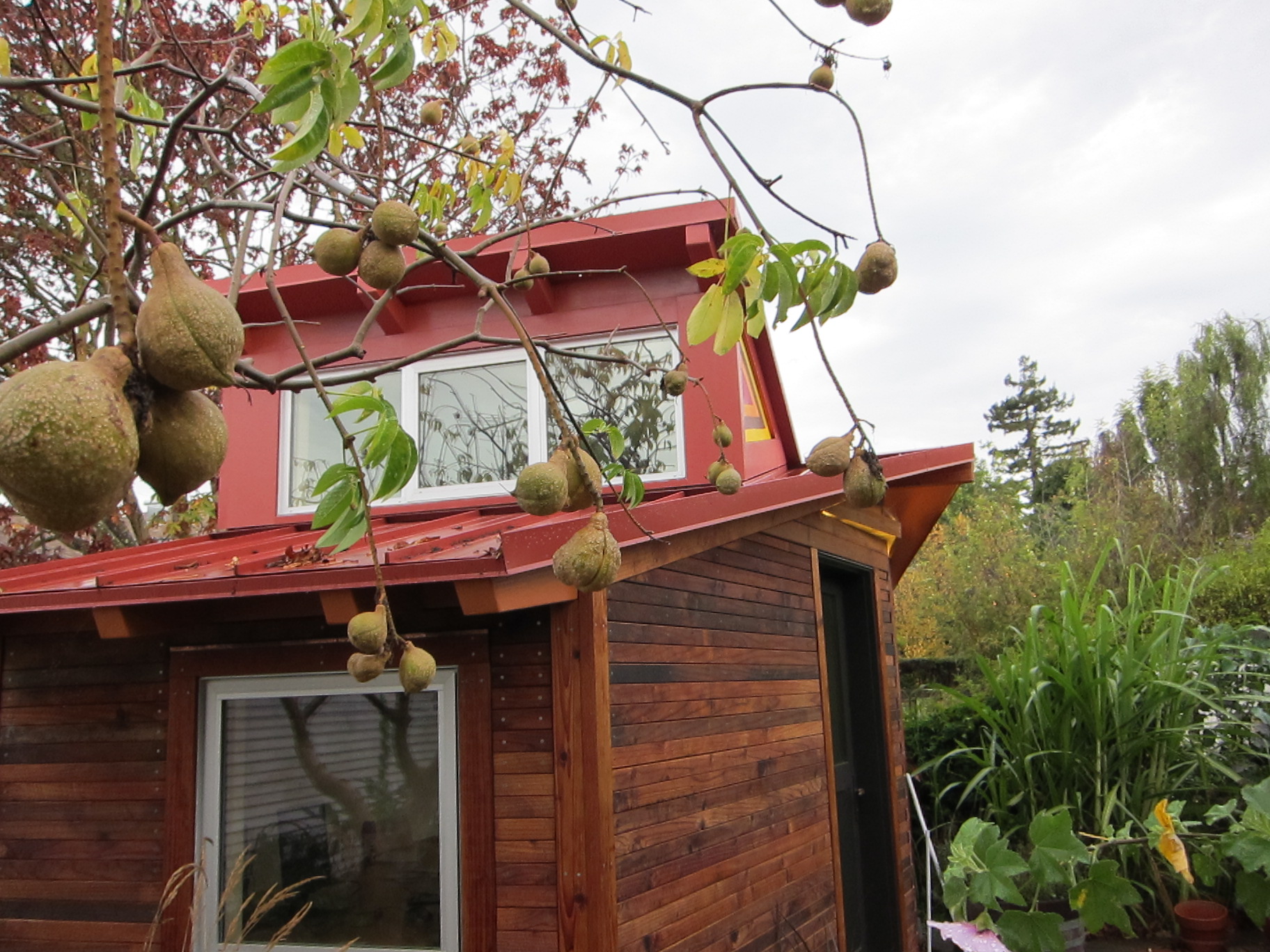
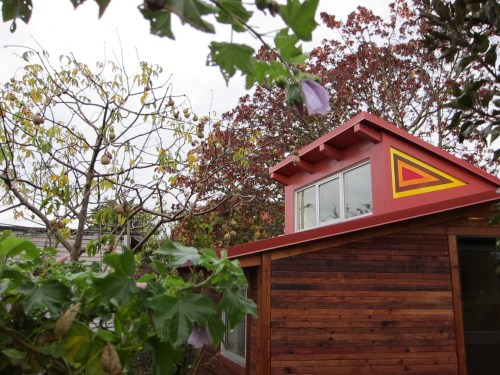
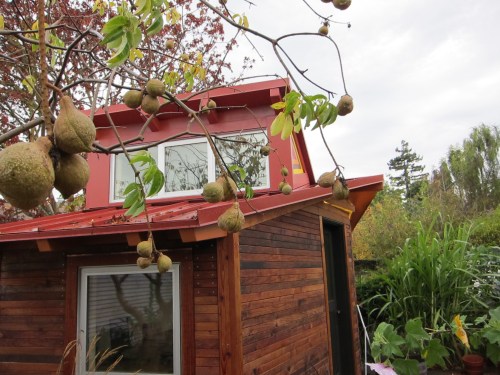
I painted the burgee on my art studio new colors for the fall.  This building also has the benefits of a deciduous tree to the south. This time it is the spectacular California Buckeye.

Read Full Post »

This past Sunday I went on a tour of some cutting edge energy-efficient houses. (They are hoping to meet the Passive House Standard) These photos are of one house  in San Jose (1820 Cottle Avenue) by One Sky Homes. It is  a conventional, 3200 SF luxury tract home, but will need much less energy to operate.  According to the Passive House calculations it will be Net Zero Energy (Solar panels on the roof will provide all the required energy)

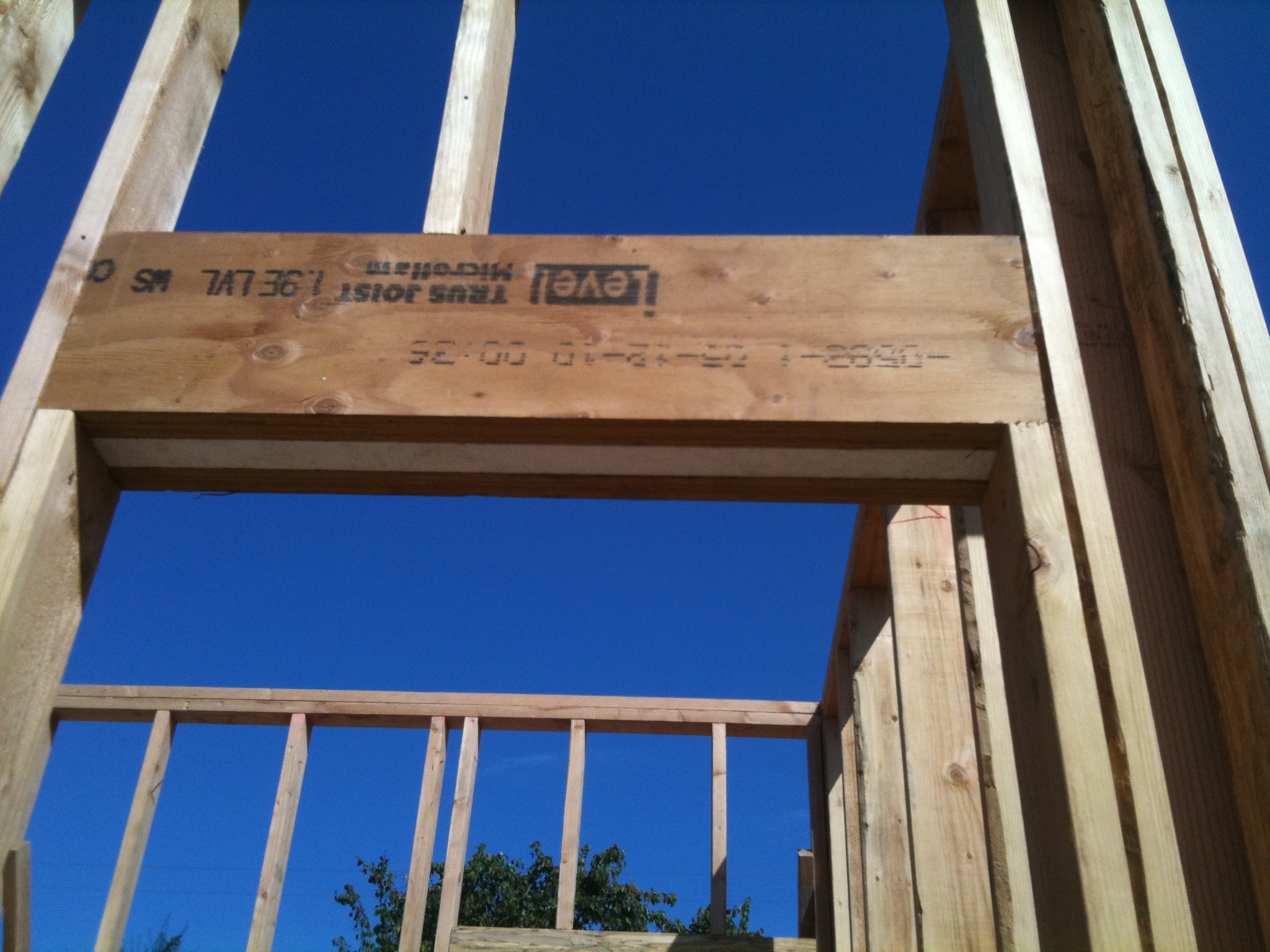
So far the house is only partially framed, but we were able to see the advanced framing techniques coming together, including this insulated header:

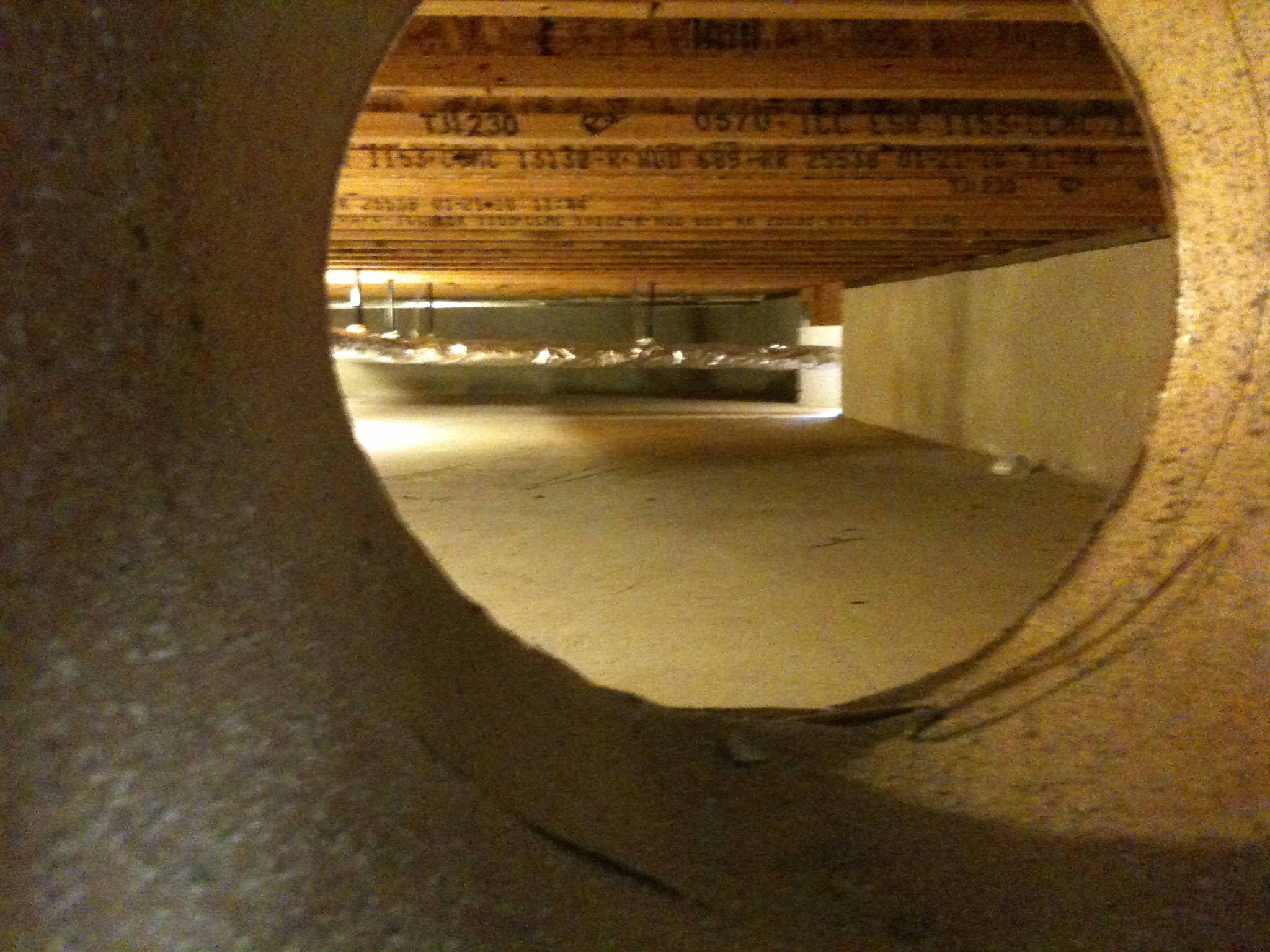
The house sits a top an insulated crawlspace.  This is the first insulated crawlspace I have seen myself.   The point of an insulated crawlspace is that all the ducts and water lines can run through conditioned space and energy is not lost.  The insulated crawlspace also eliminates some of the thermal bridging that usually occurs where house meets the foundation and the earth. Finally, the conditioned crawlspace stays clean and dry, which makes it far more pleasant when maintenance requires someone to crawl around under the house.    Here is a photo looking into the crawlspace from a ventilation hole:

There is, of course, a french drain all the way around the perimeter and also a floor drain in the slab to make sure  it stays nice and dry down there.

The walls are insulated concrete forms, and there is 3″ of insulation under the concrete slab as well.

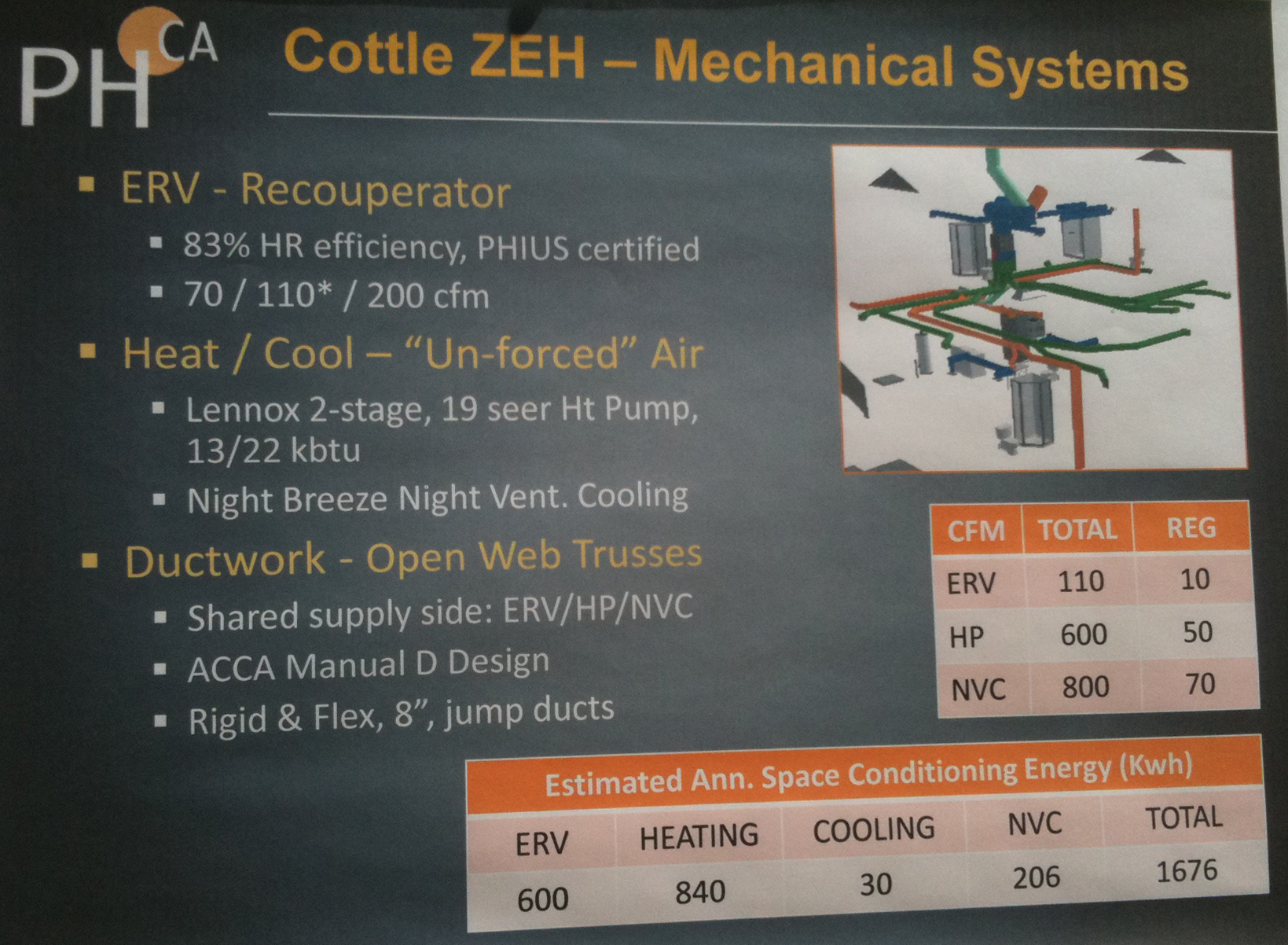
Here is a photo of some of the graphics explaining the heating, cooling and ventilating system:

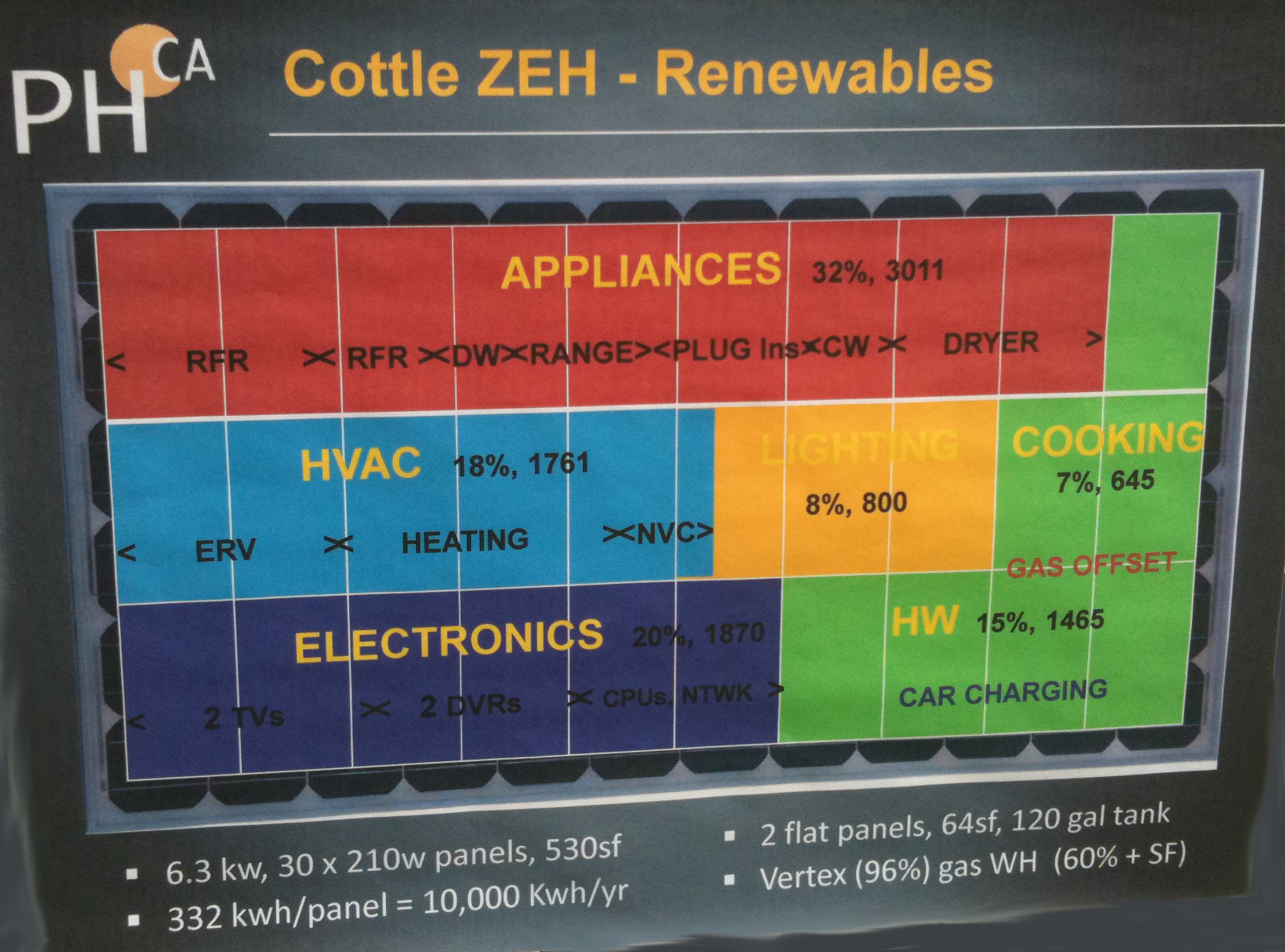
and another showing the anticipated energy breakdown for lighting, appliances, thermal comfort, electric car charging, and entertainment:

Read Full Post »

This slideshow requires JavaScript.

Some fresh photos of the small studio taken by Lenny Gonzalez for your enjoyment.  I will be writing more soon about the design and green features of this tiny building.

Read Full Post »

« Newer Posts