This project was completed a a few years ago, but I realized I never posted any finished photos because I was waiting for the landscaping and an interior sliding screen between office and living room. I think it’s done now and I hope to stop by soon to see it.
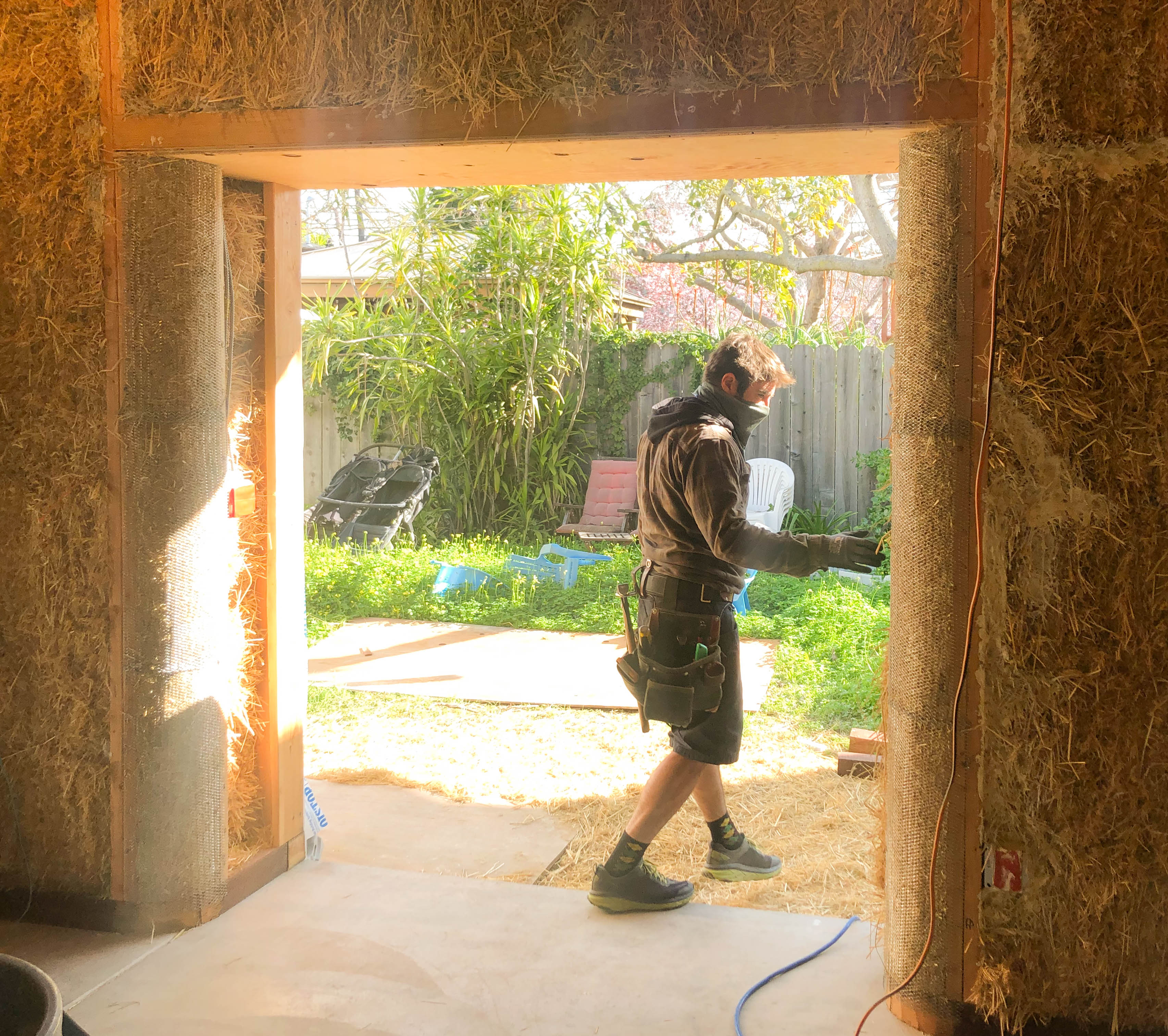
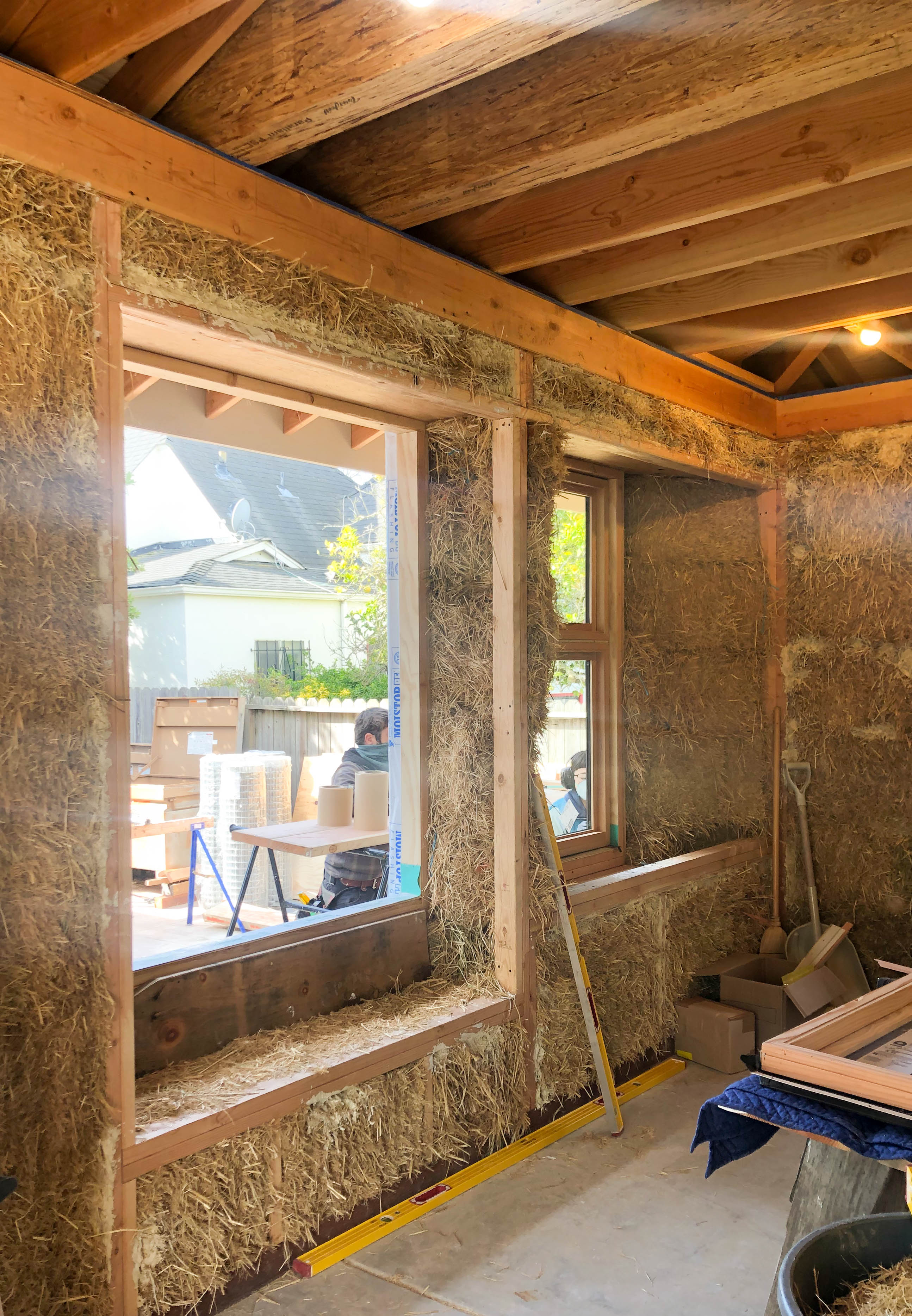
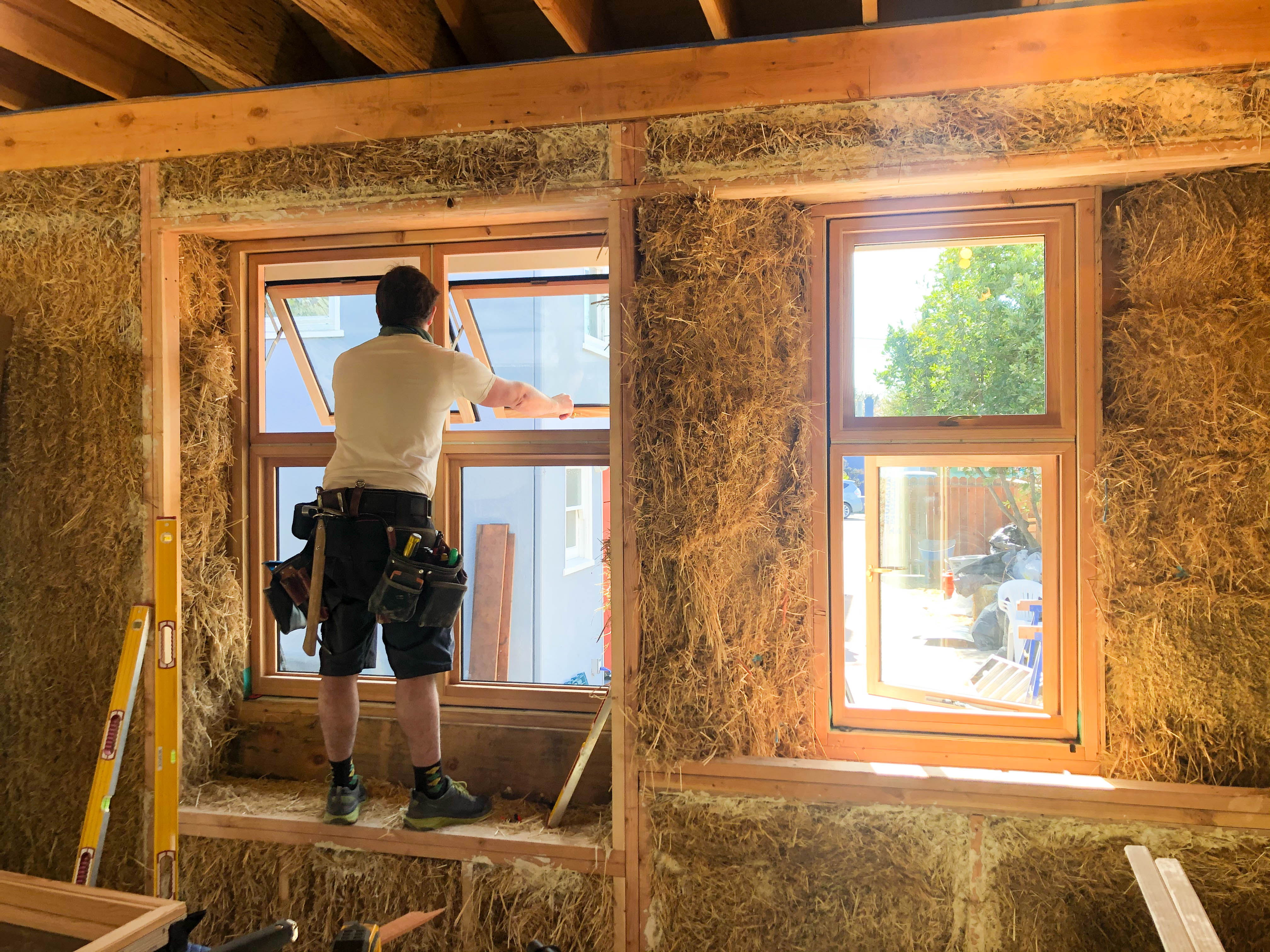
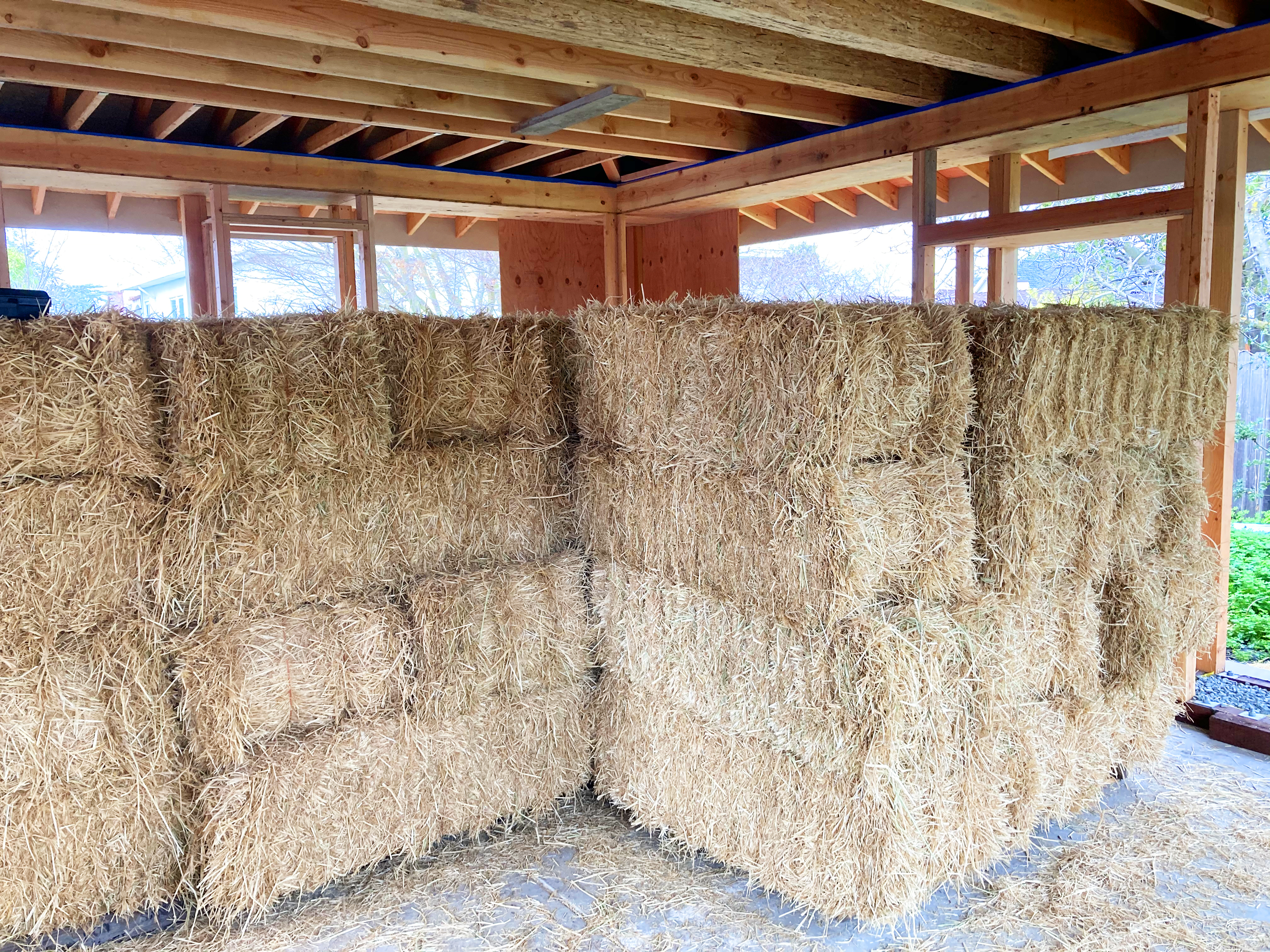
John and I both would love to build more strawbale structures. The thick walls (In this case 24″ thick, but 18″ is common) are really great architecturally and the inside is so quiet and well insulated. It is wonderful to use a natural material that is an agricultural waste product to insulate. Lime plastered strawbale buildings are also very fire resistant.
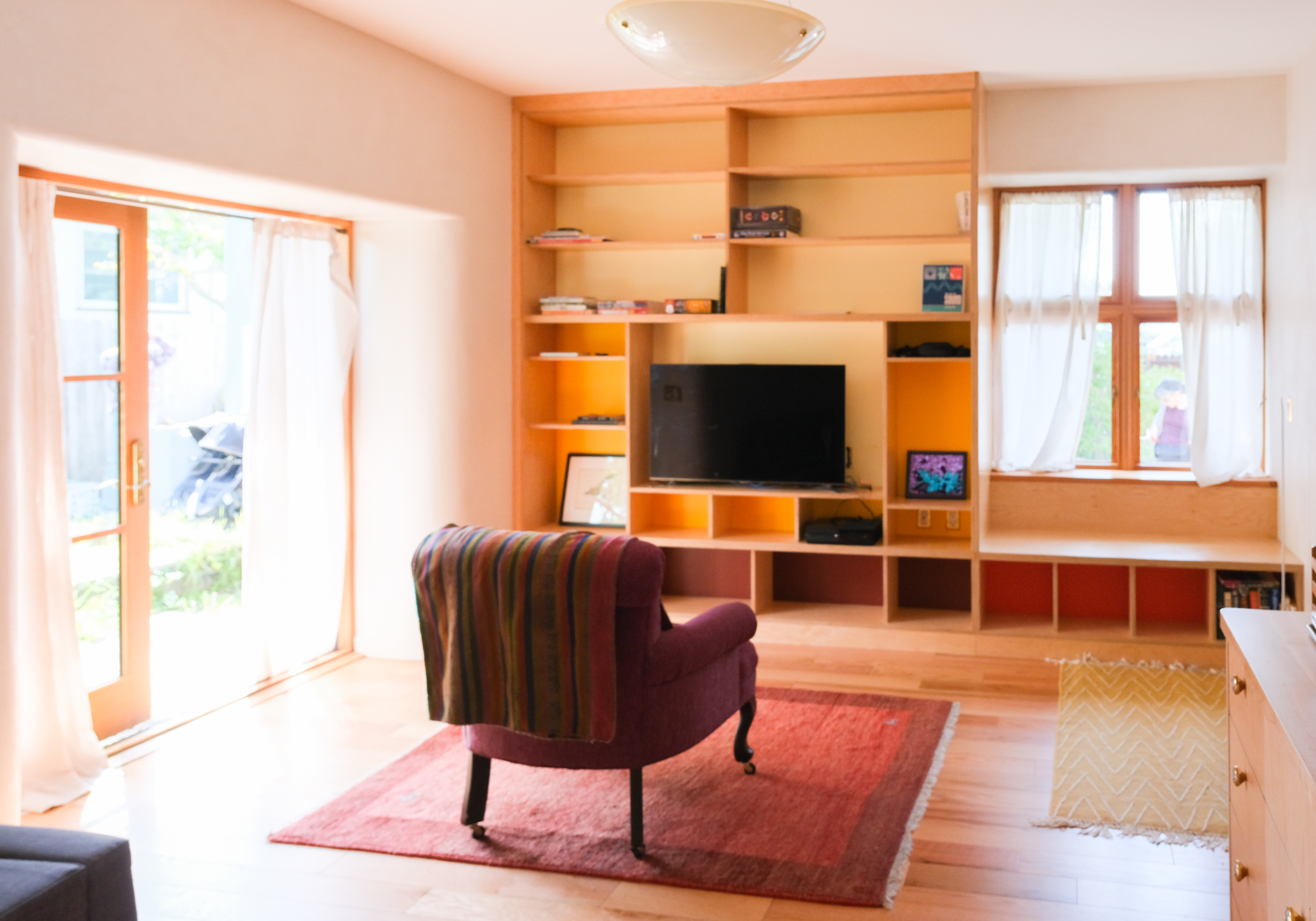
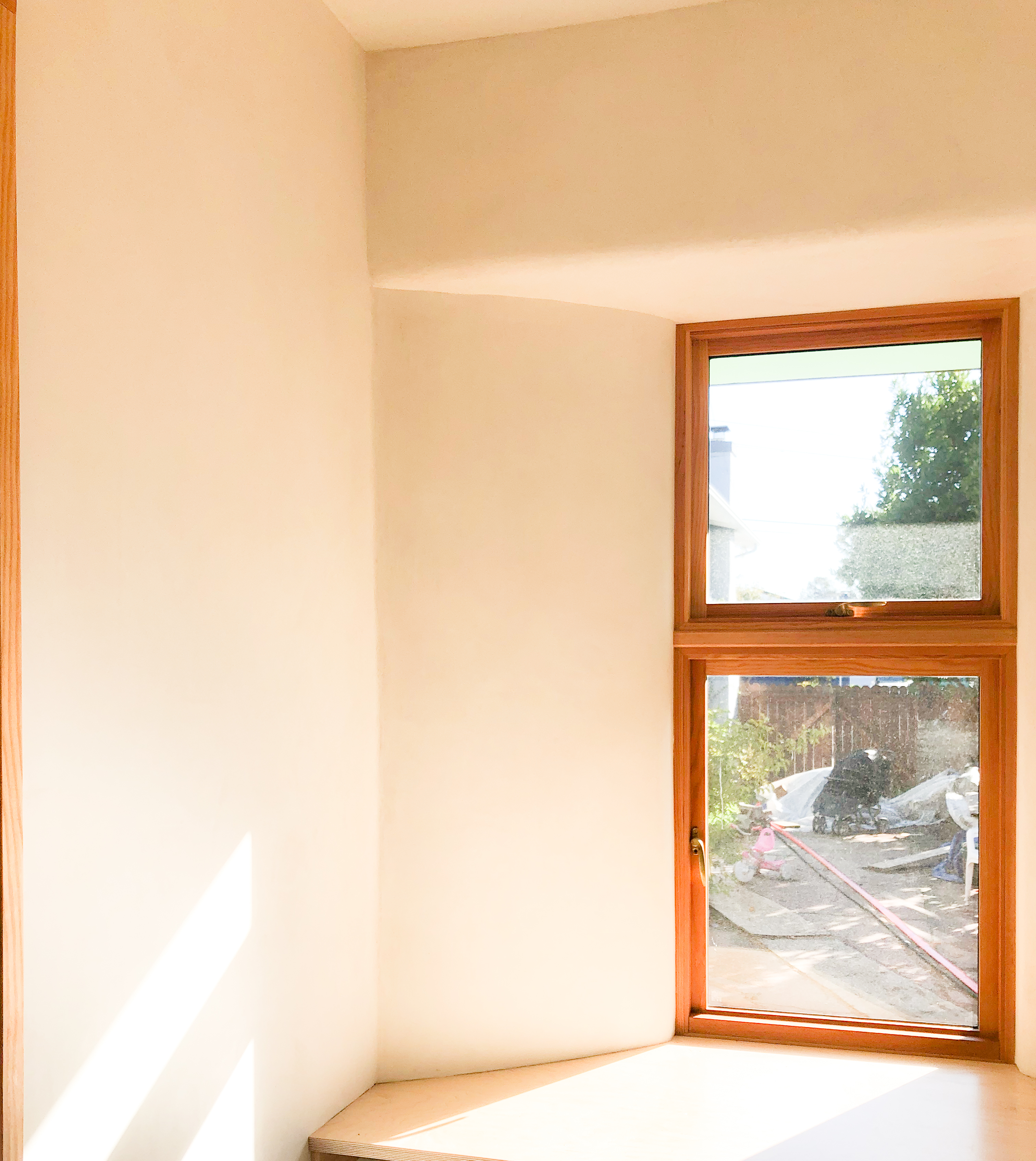
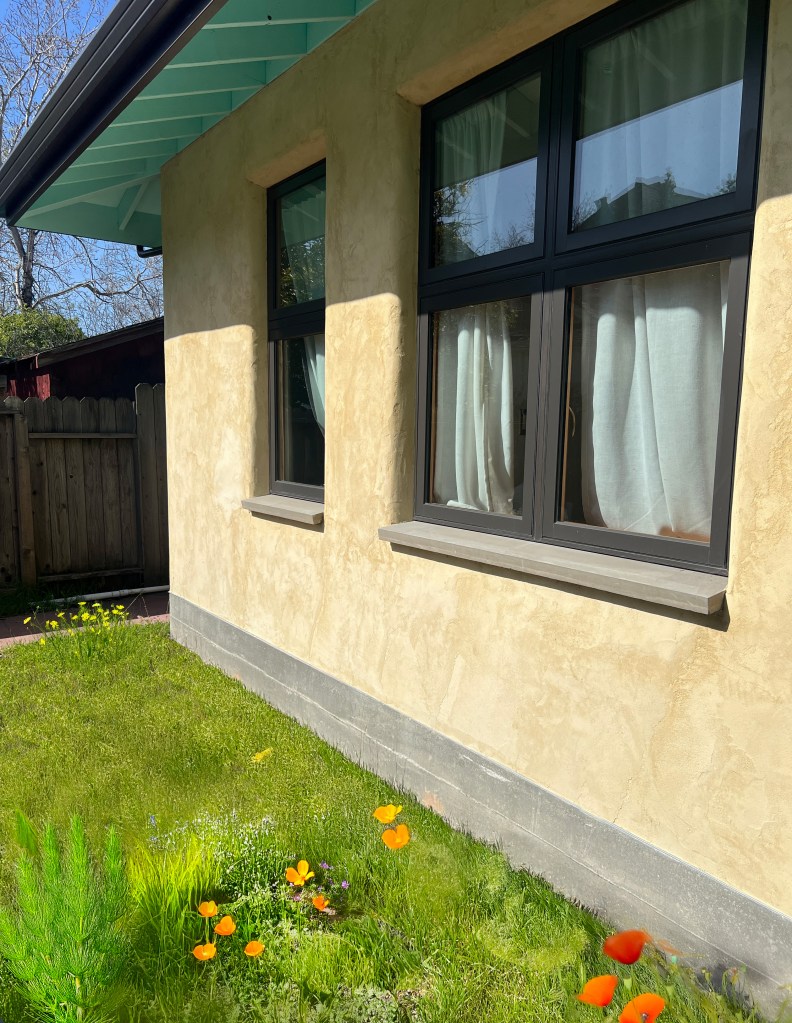
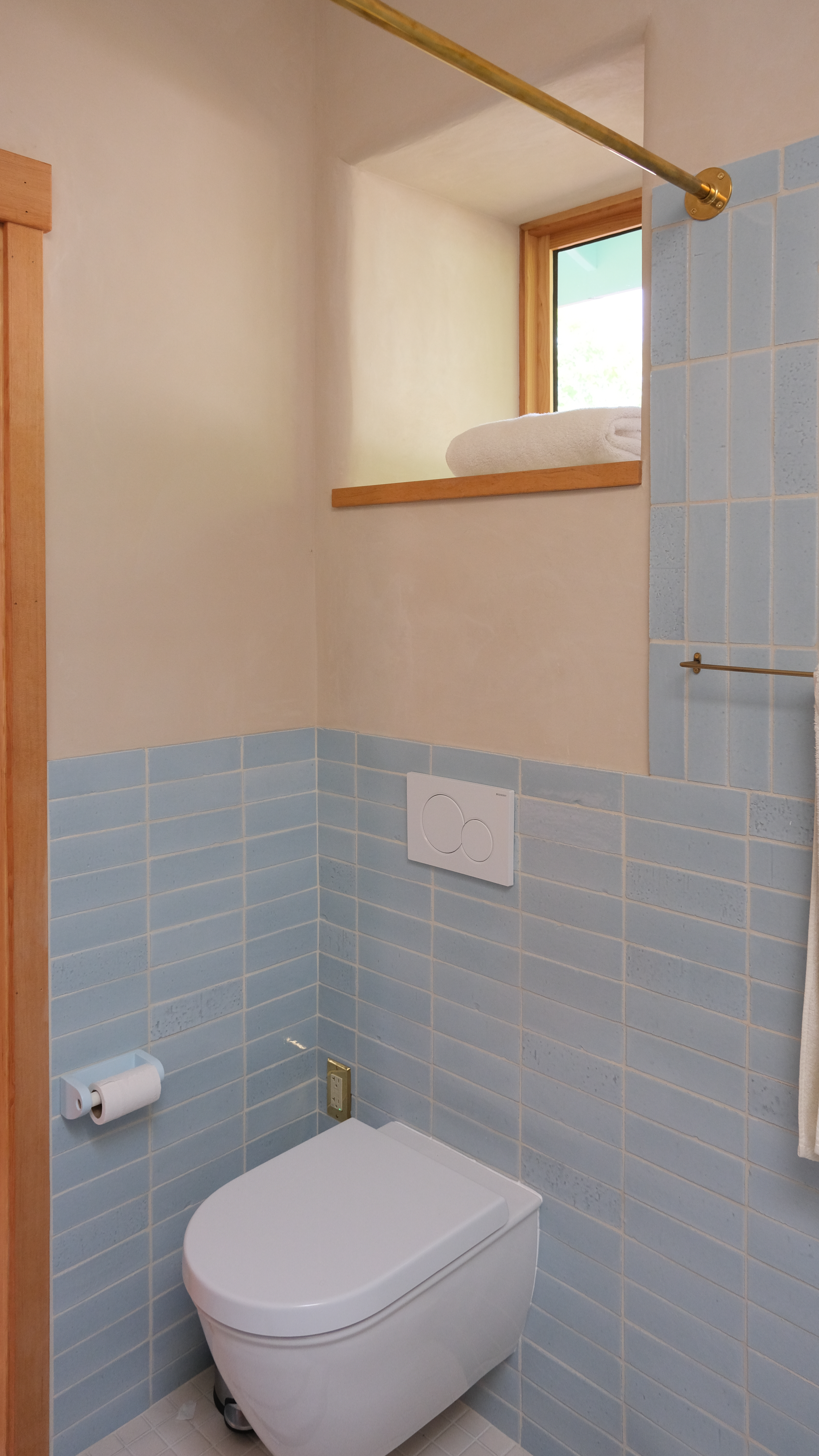
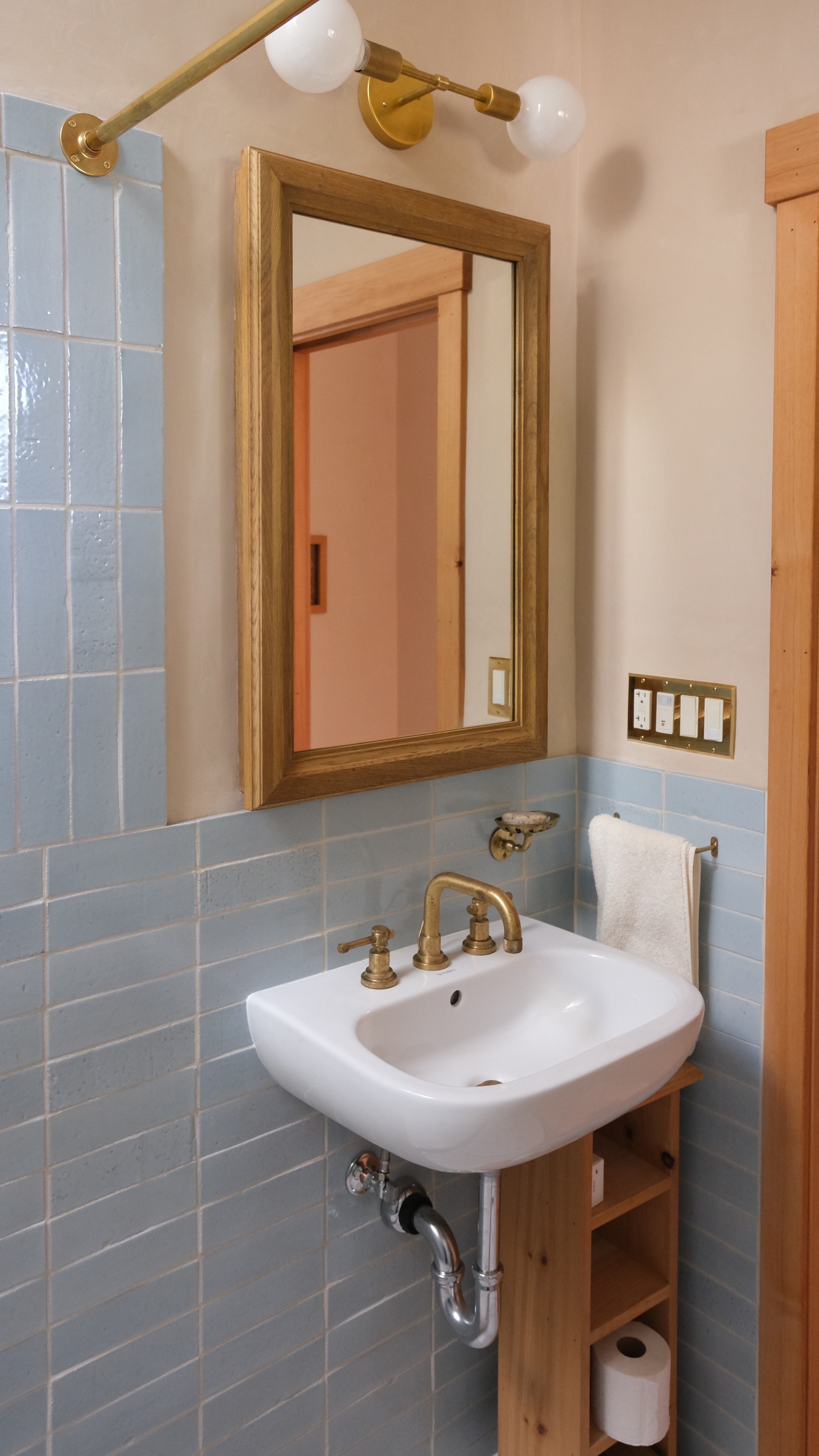
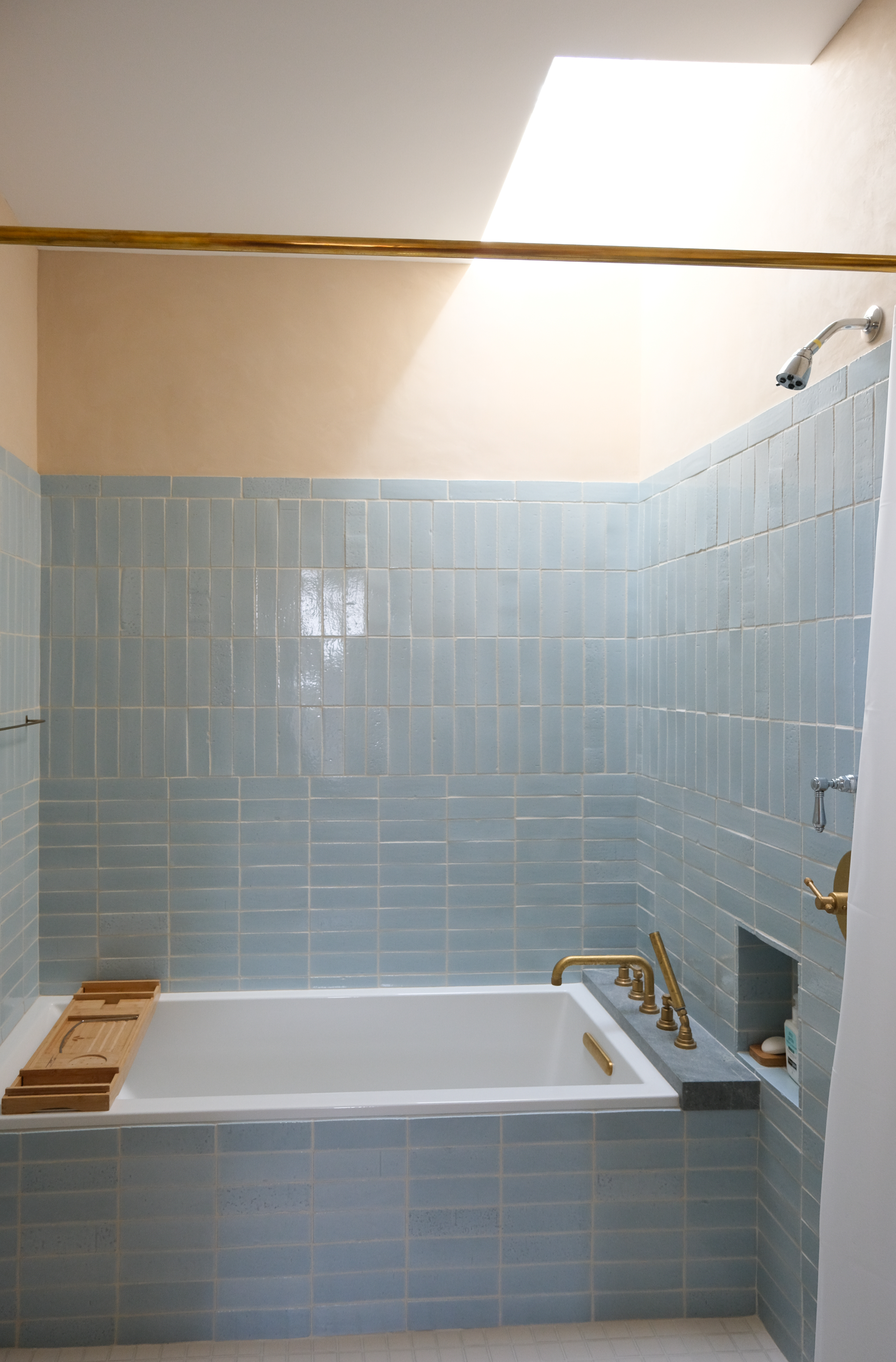
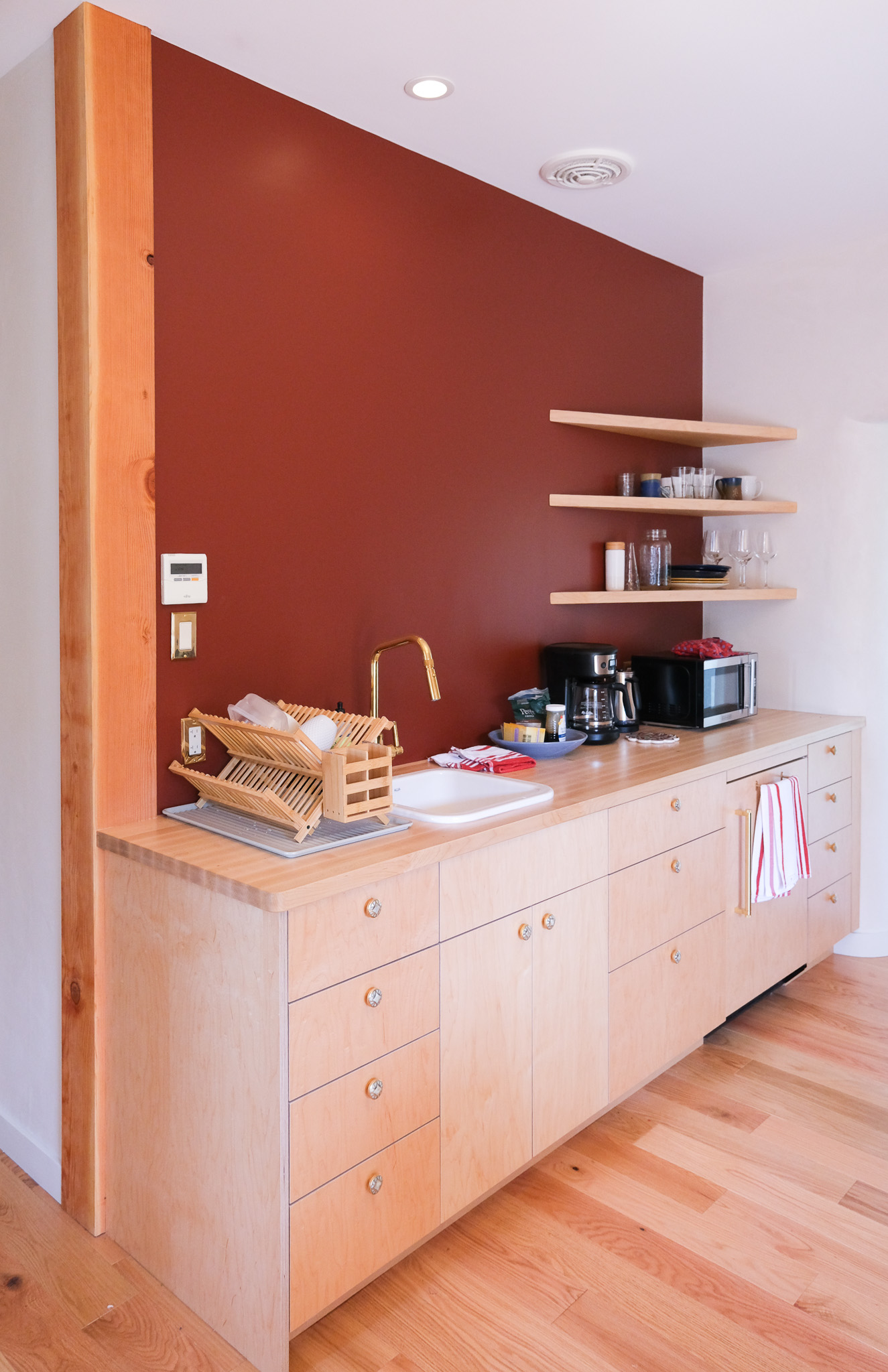
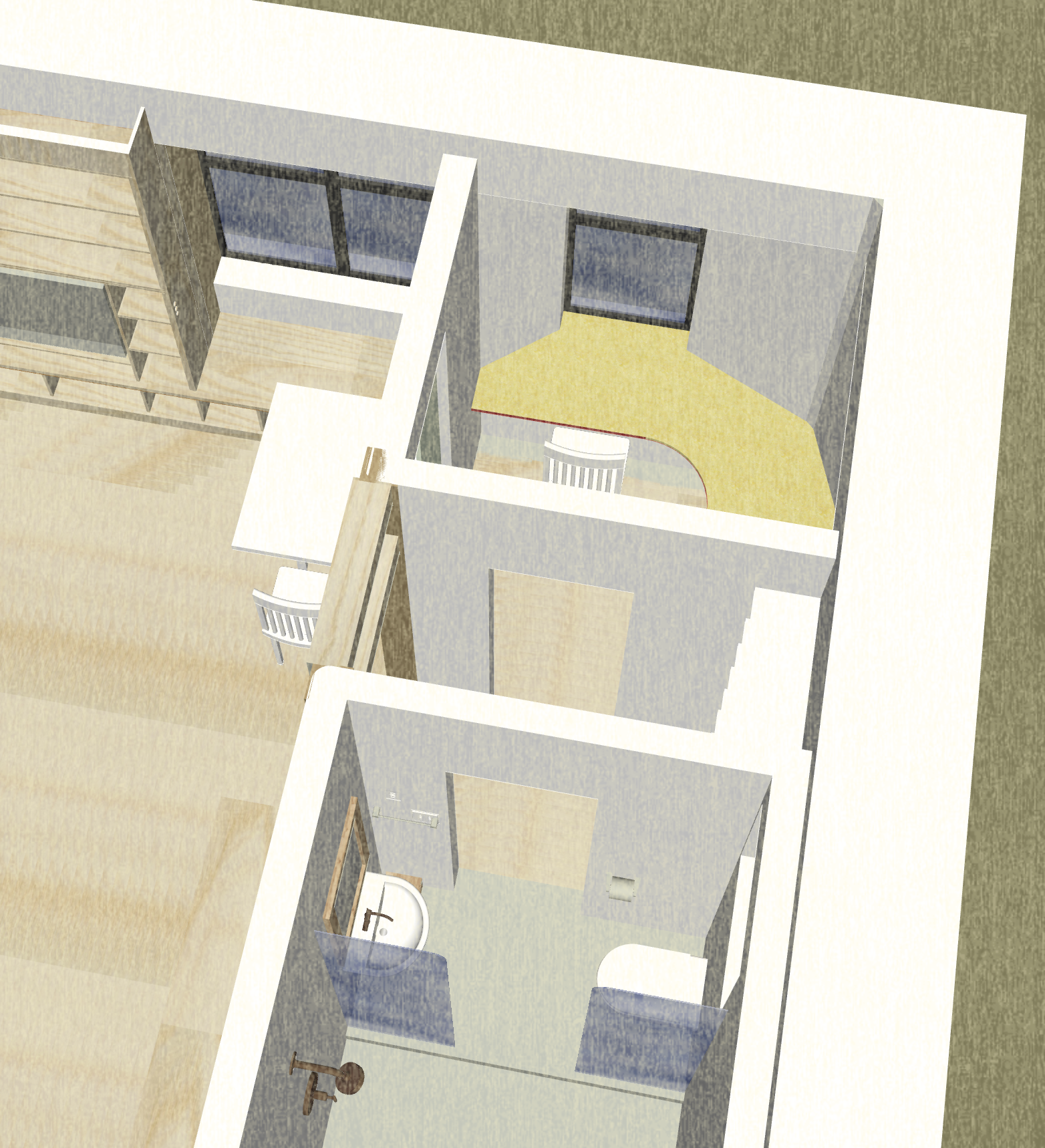
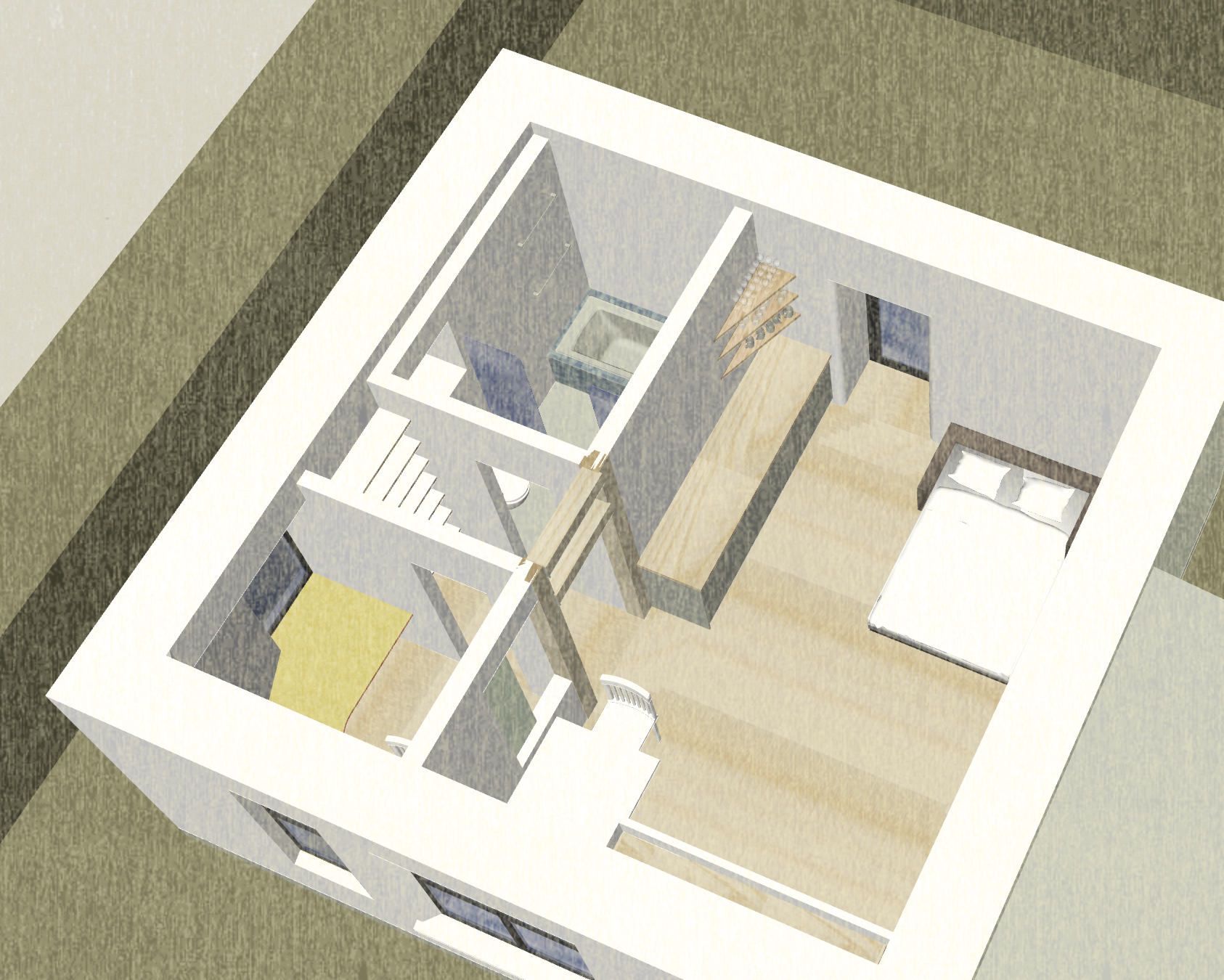
This photo shows the builder, John McBride & the construction of the curved walls at the doorsA fun, colorful cabinet for books and entertainment system and the deep window seat to the right (needs it cushion still) You can see the finished curves at the doorway to left. office window and desk built into the thick wallsWindows on the south side with concrete sills, golden lime plaster, and bright painted soffits I (& some AI ) added the garden in the foreground because this photo was taken before landscaping.)no AI on the garden here 🙂 deep bathroom windowTilework (Fireclay) and skylight (some temp plumbing that doesn’t match 🙂 for the observant. Plaster in the bathroom is clay plaster because of its humidity control and air cleaning properties. Kitchenette – If I was an interior decorator I’d add a piece of art and declutter the counter a bit and Martha Stewart the corner shelves, but this is just a snap shot) Now, in Berkeley, a bigger refrigerator is required. This is a screenshot from the concept model showing the windowseat and office, storage hallway, & bathroomanother screenshot from the concept model
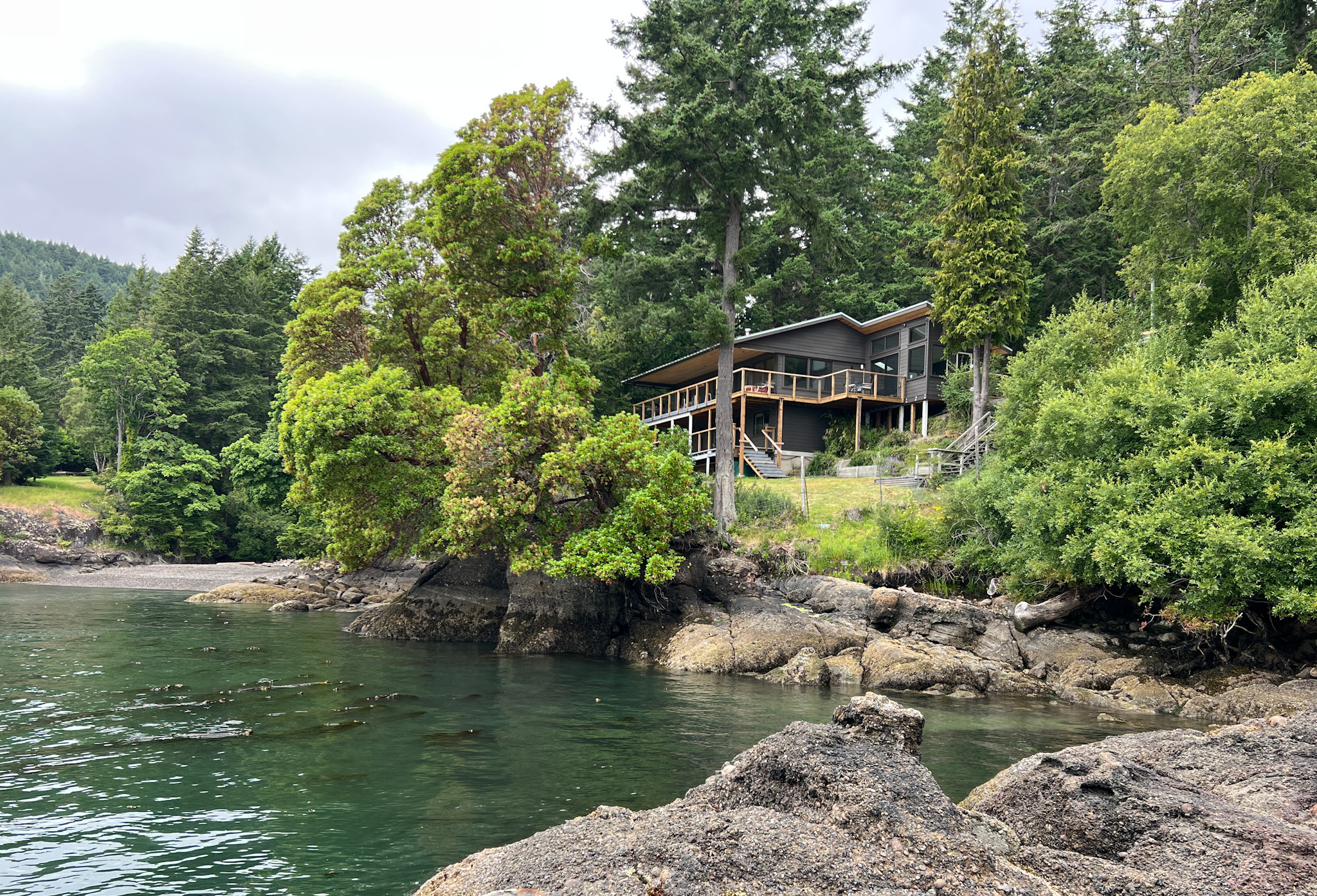
My client for a remodel of a 1960s house on Galiano Island invited my family up to see the almost finished house. (a few details and exterior paint not finished yet)
The location is truly spectacular and I was very happy with the improvements that we made. Improvements included: on the practical side: tightening up the exterior envelope (including new fibercement rainscreen siding, all new windows, & insulation), upgrading to an energy efficient heating system, and adding a HRV, and then rearranging the interior extensively to simplifying and improve the transitions between spaces. The lower level was majorly improved, but it was a pretty straight forward rearrangement breaking it up into more usable rooms, guest suite, familyroom, office and storage. I didn’t include those photos.
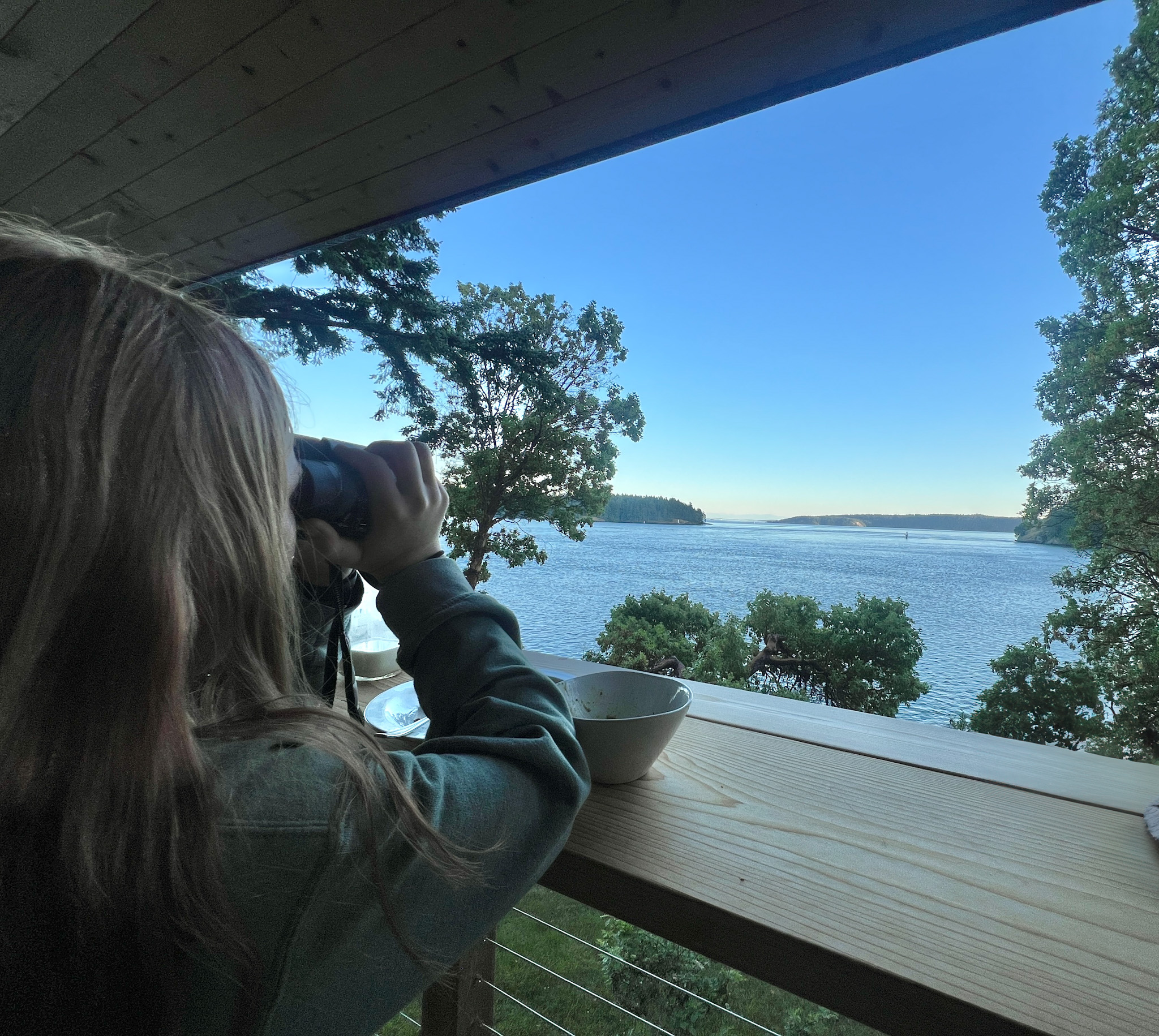
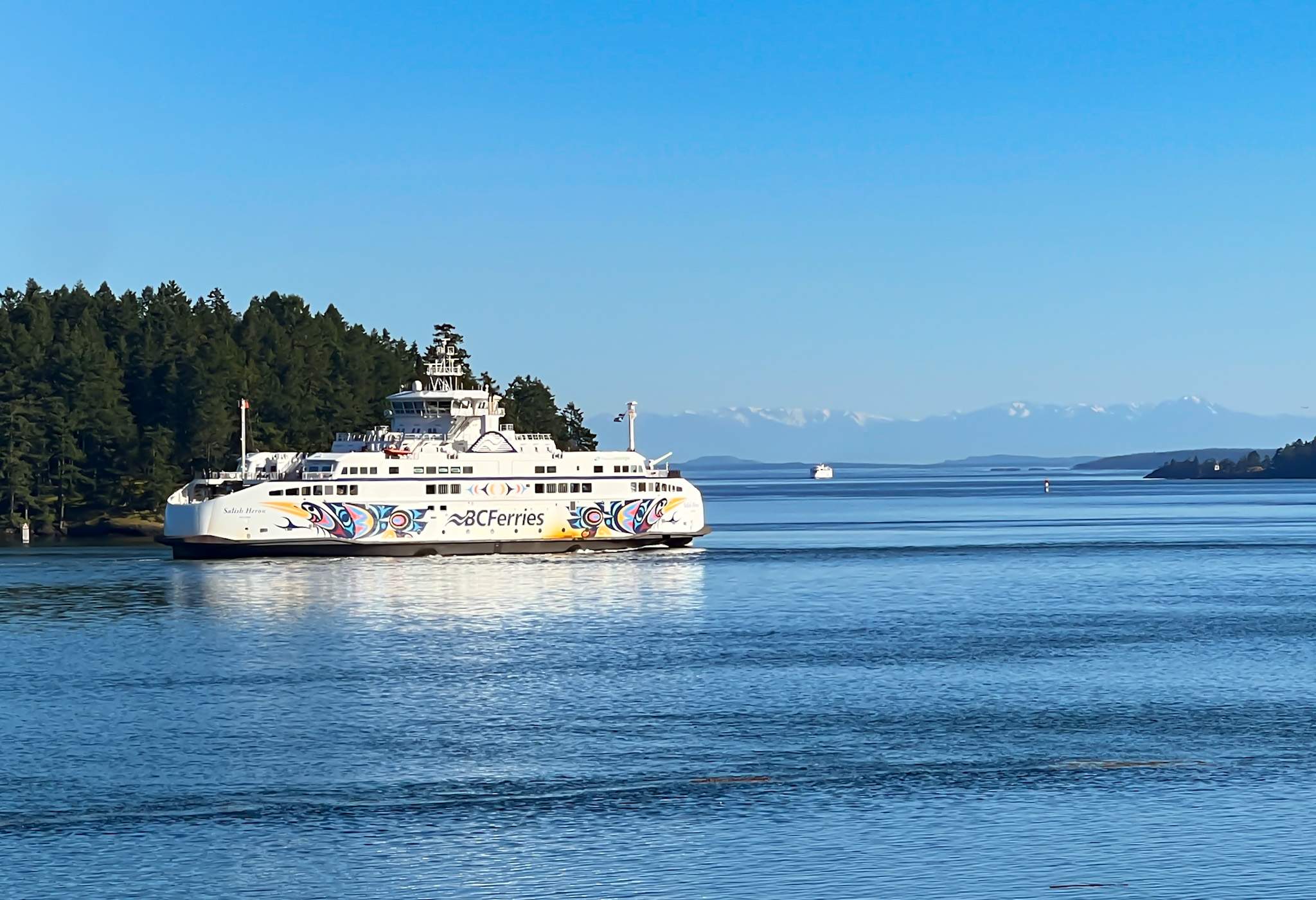
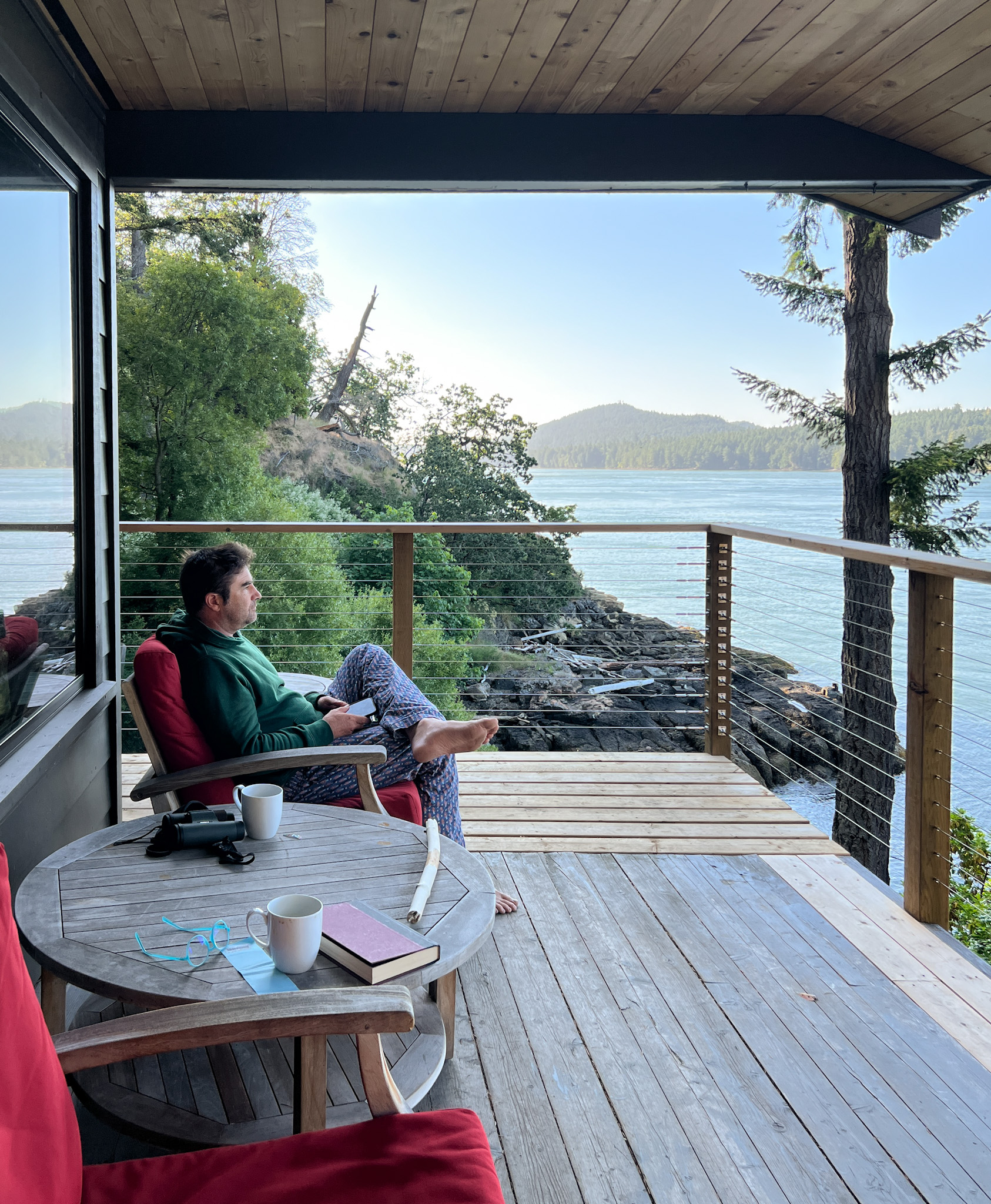
The main event is the view to the south to Active Pass and all the way to the Olympic National Park 70 miles to the south. We spent many hours enjoying the view of wildlife and boats from the covered porch.
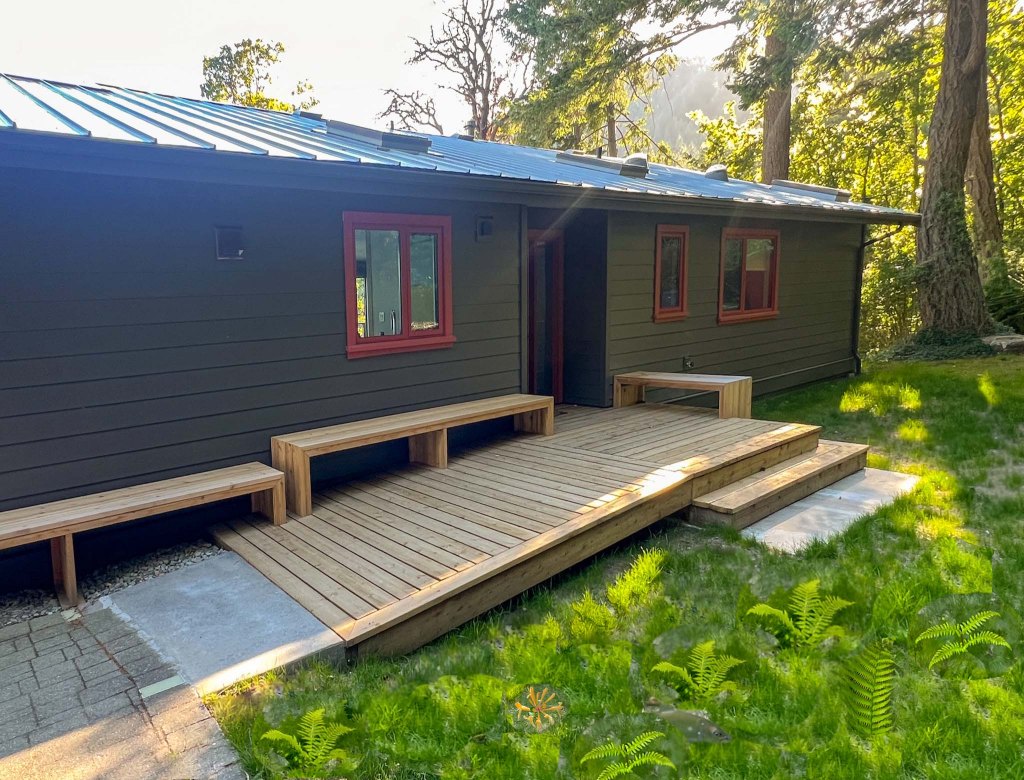
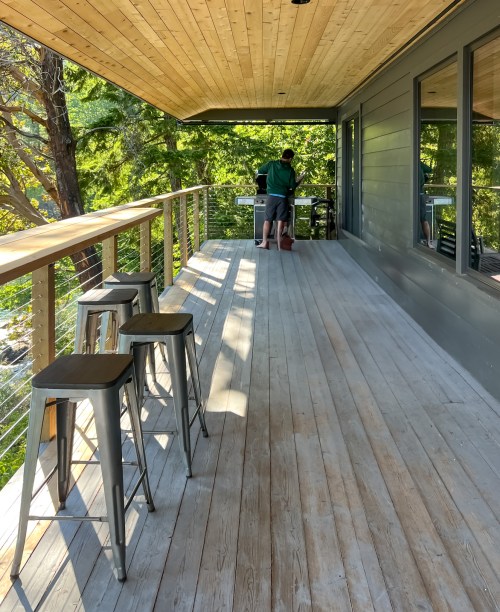
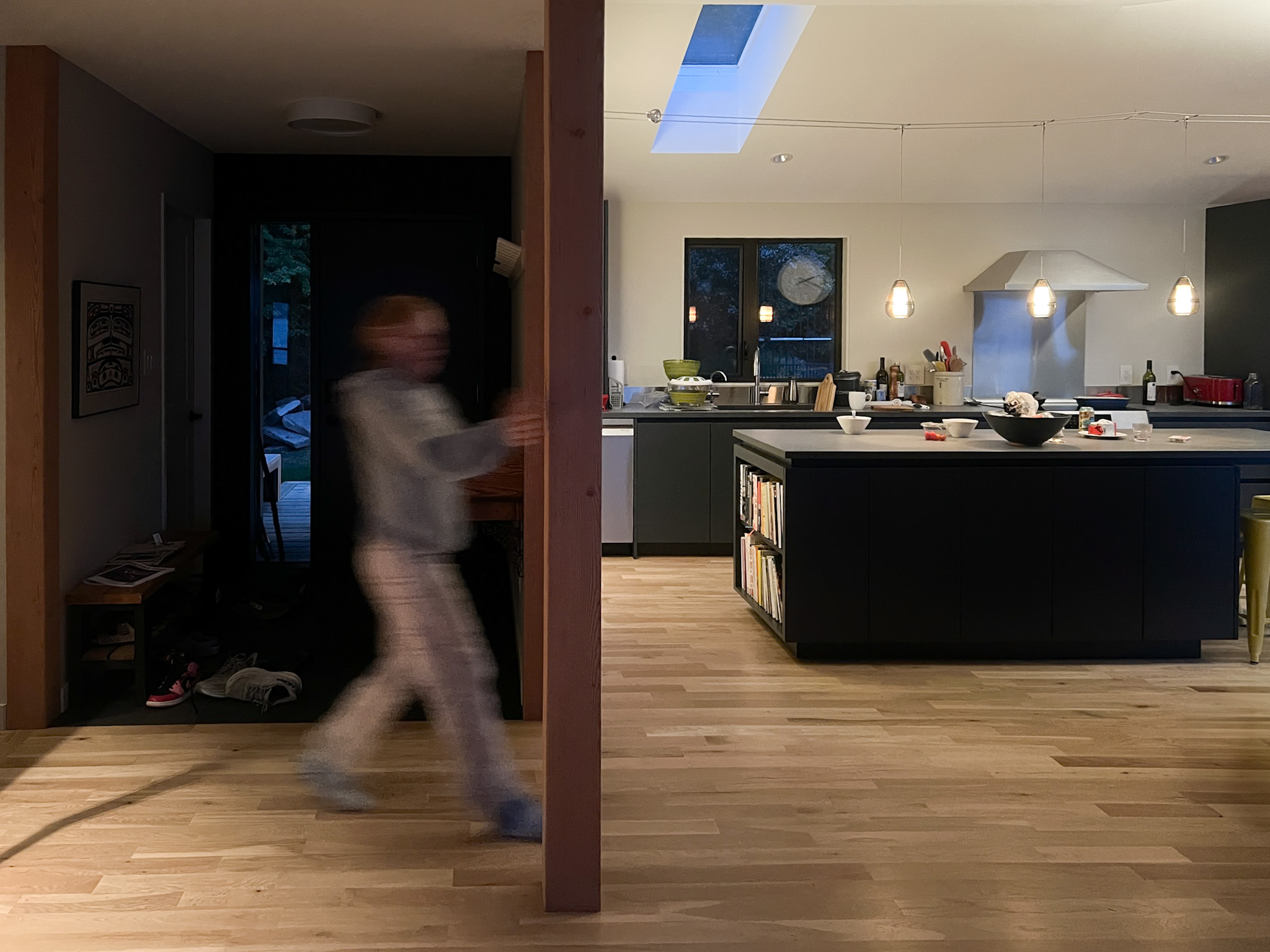
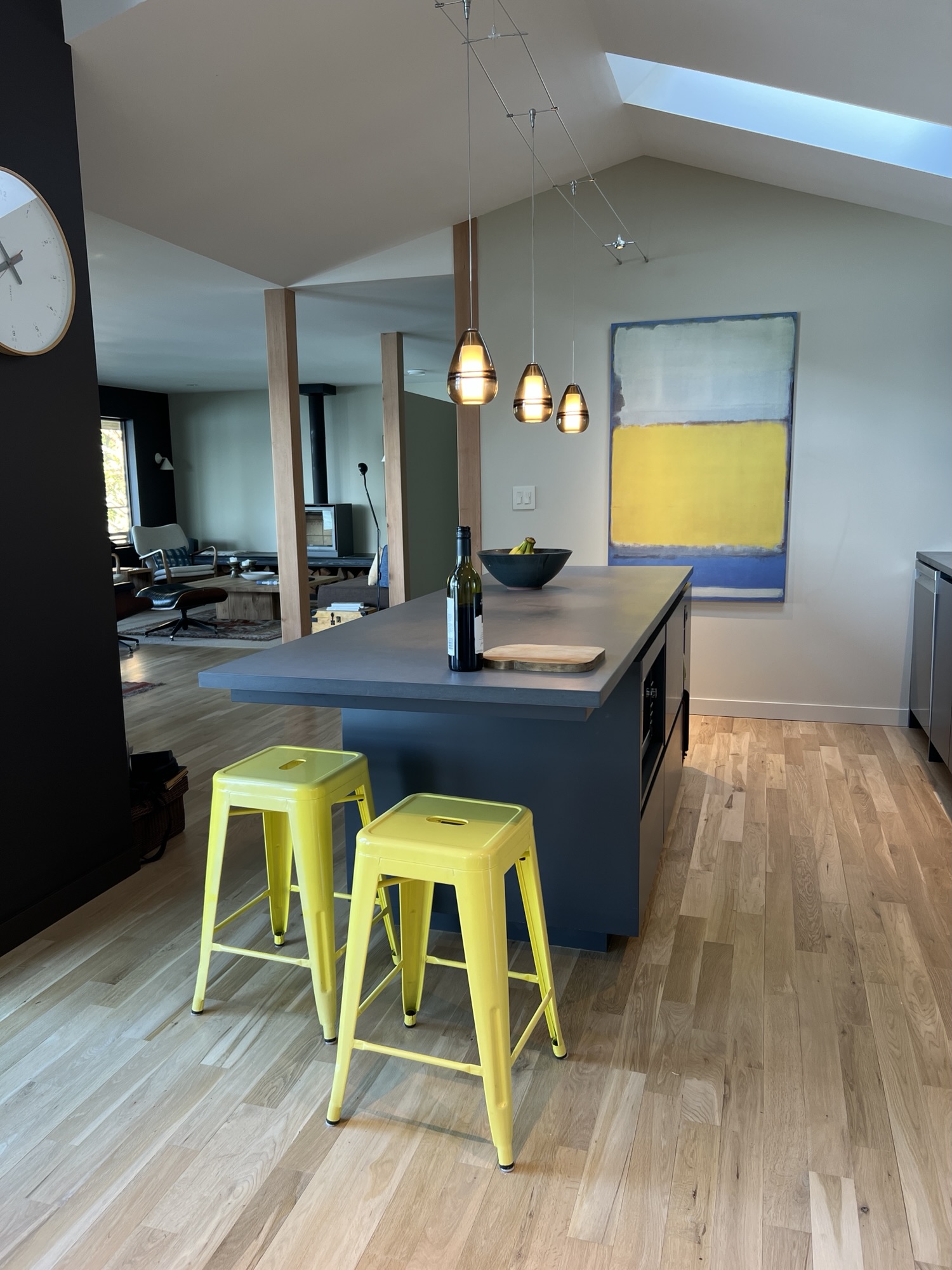
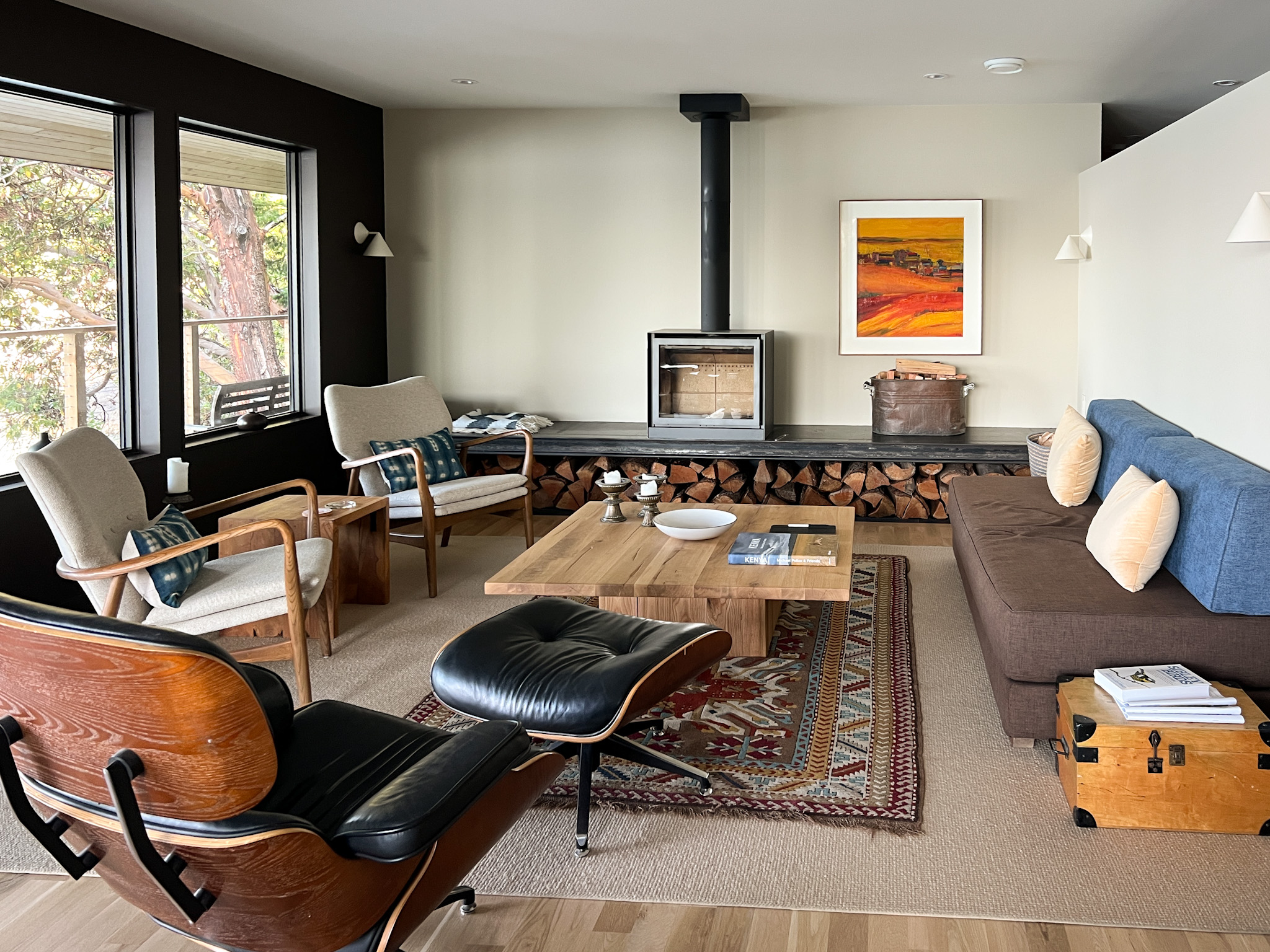
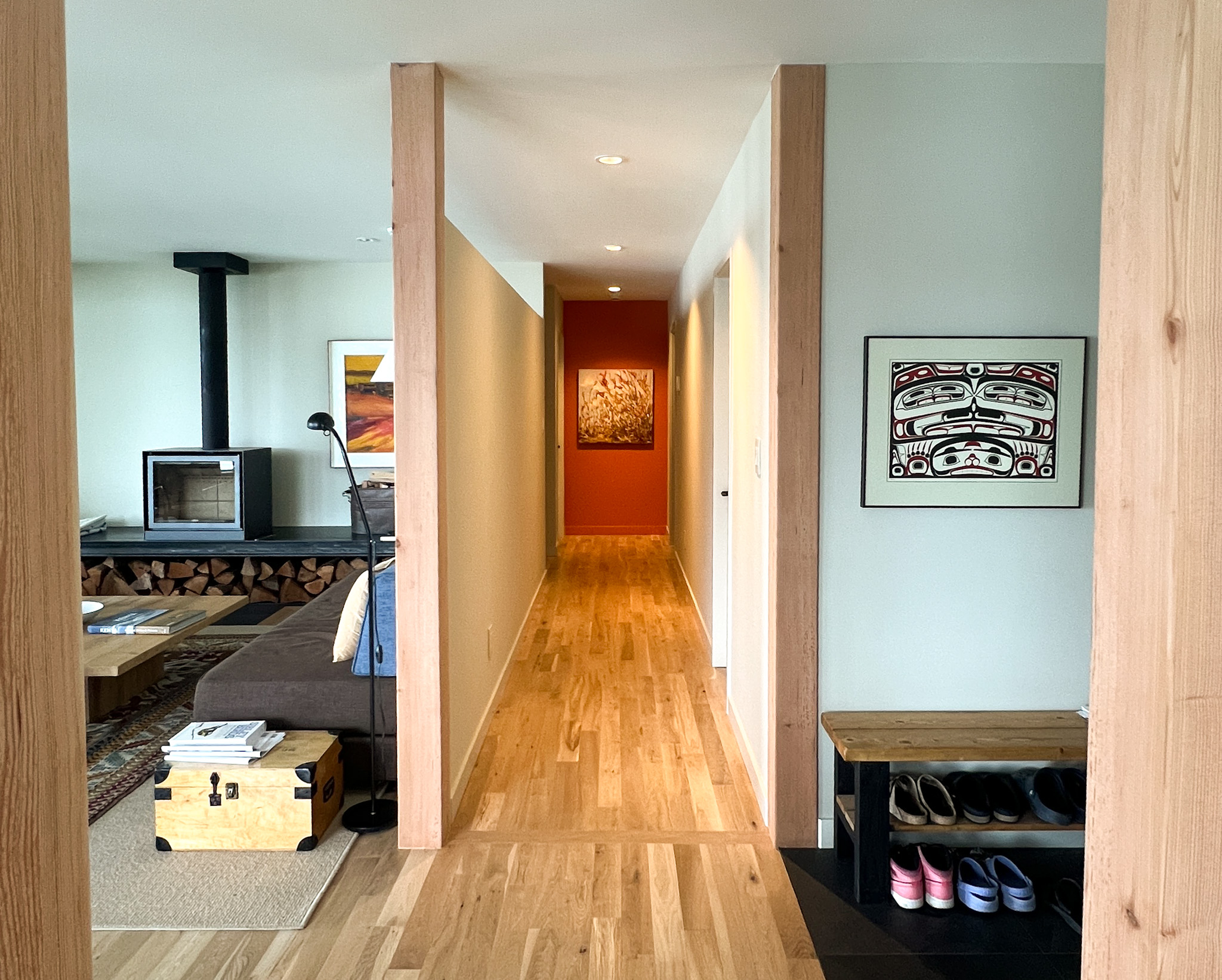
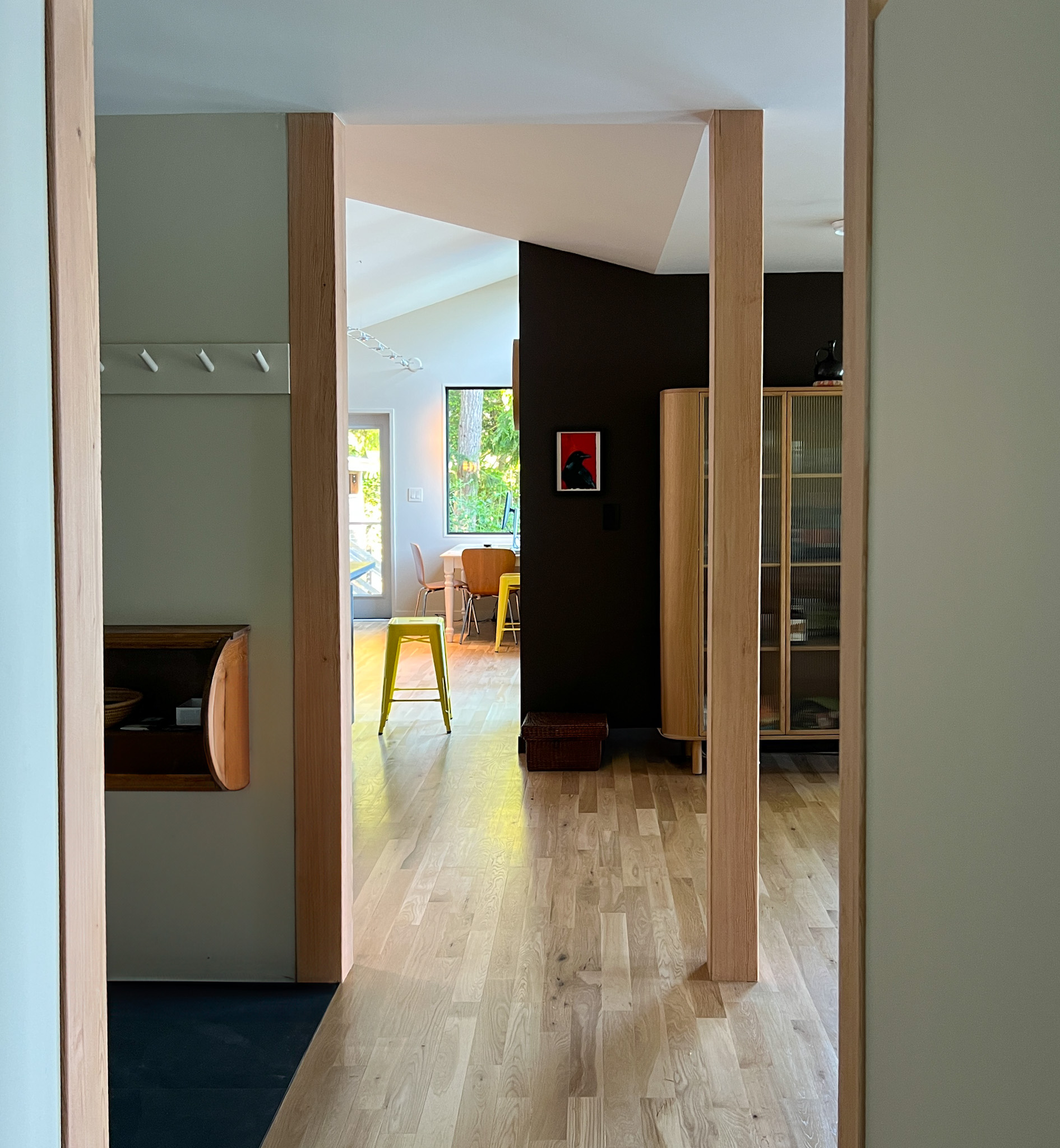
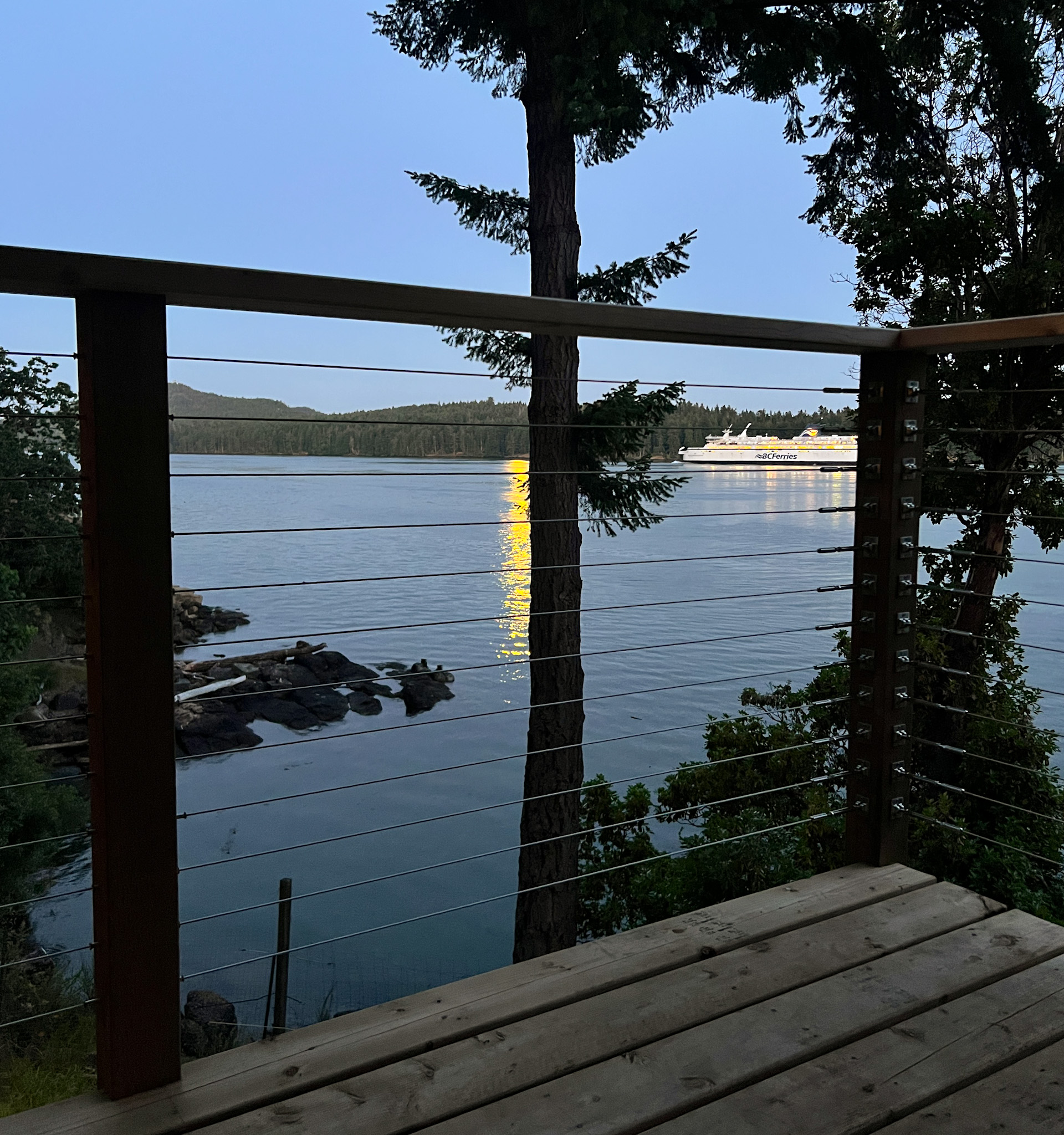
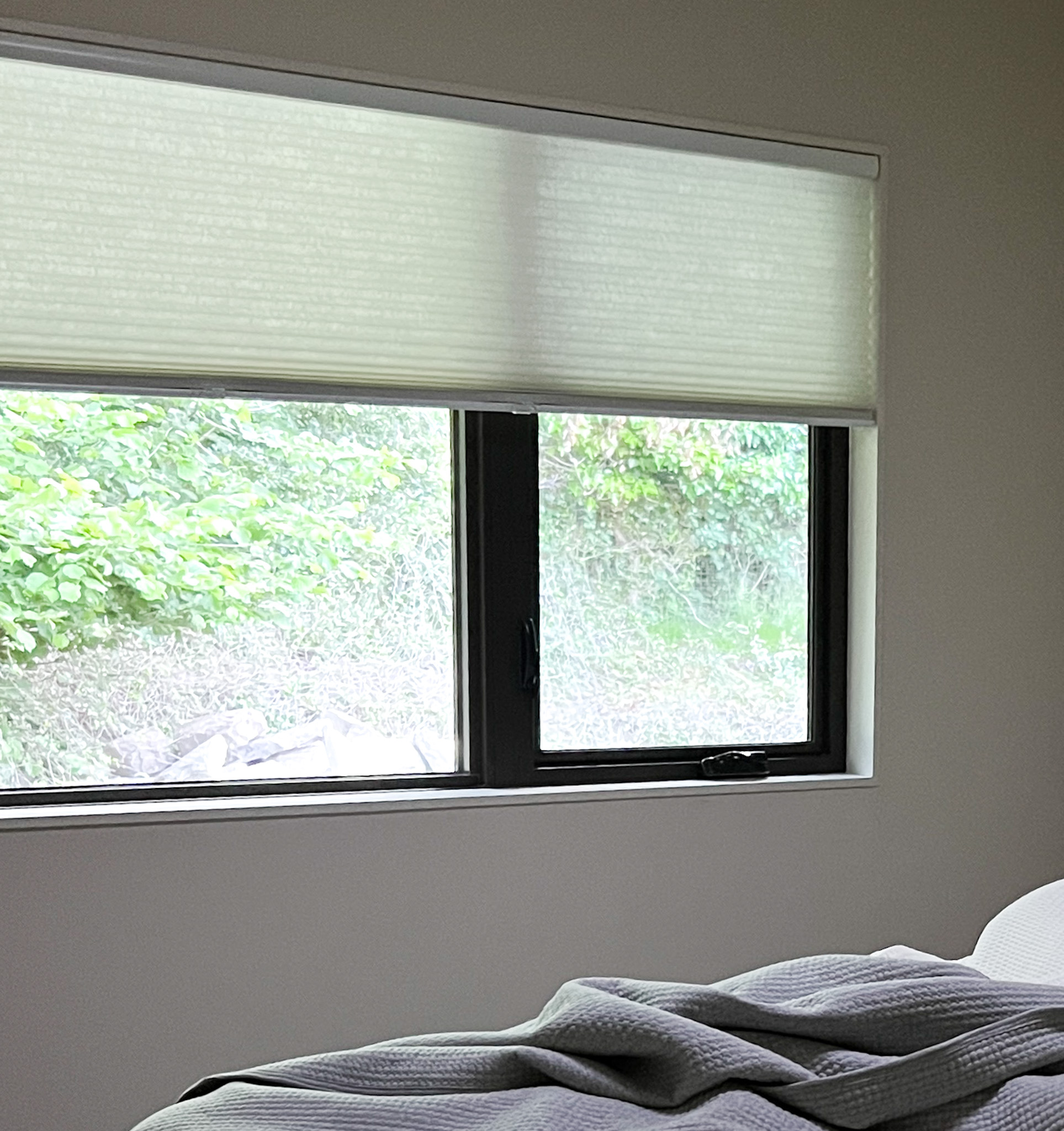
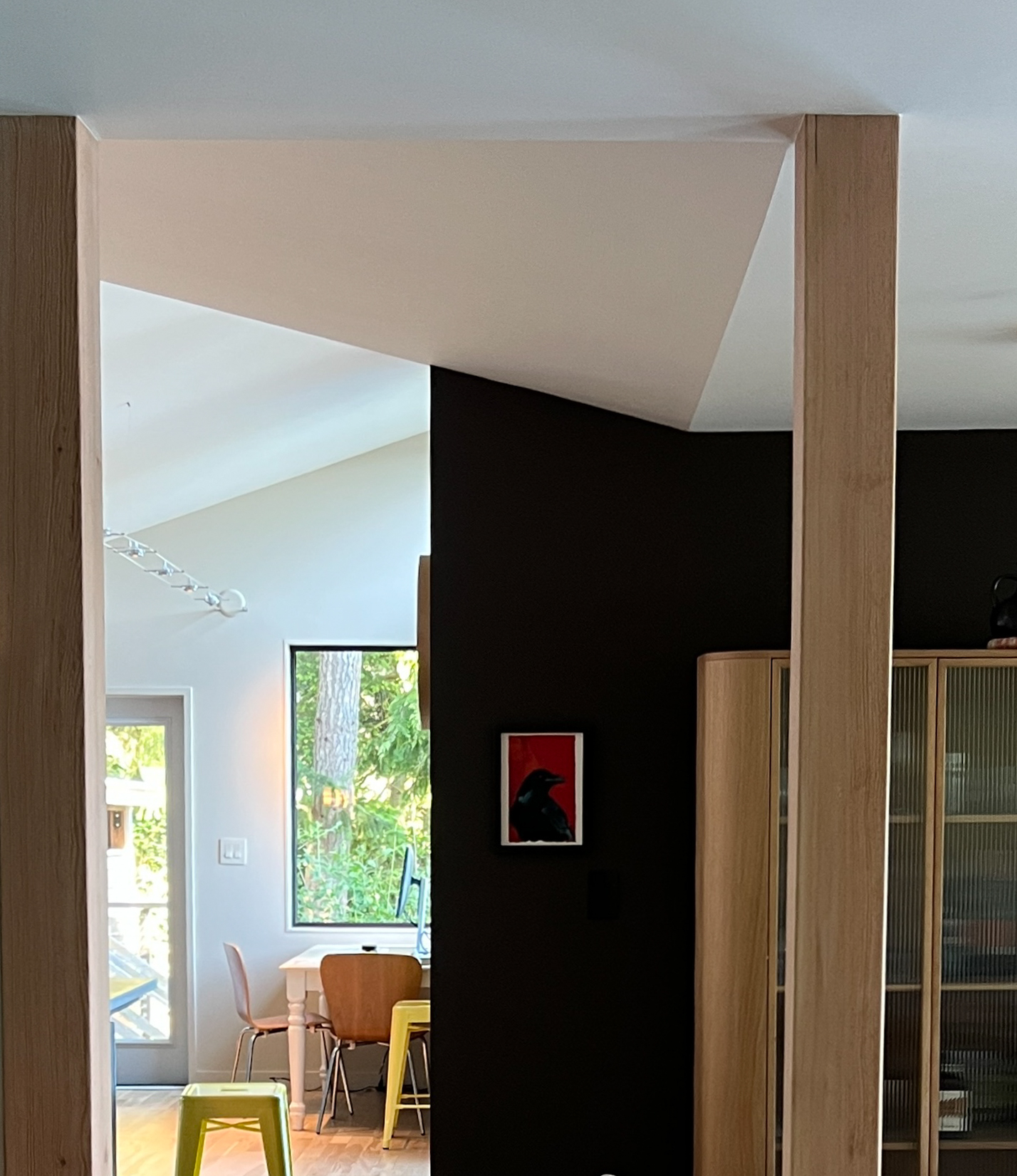
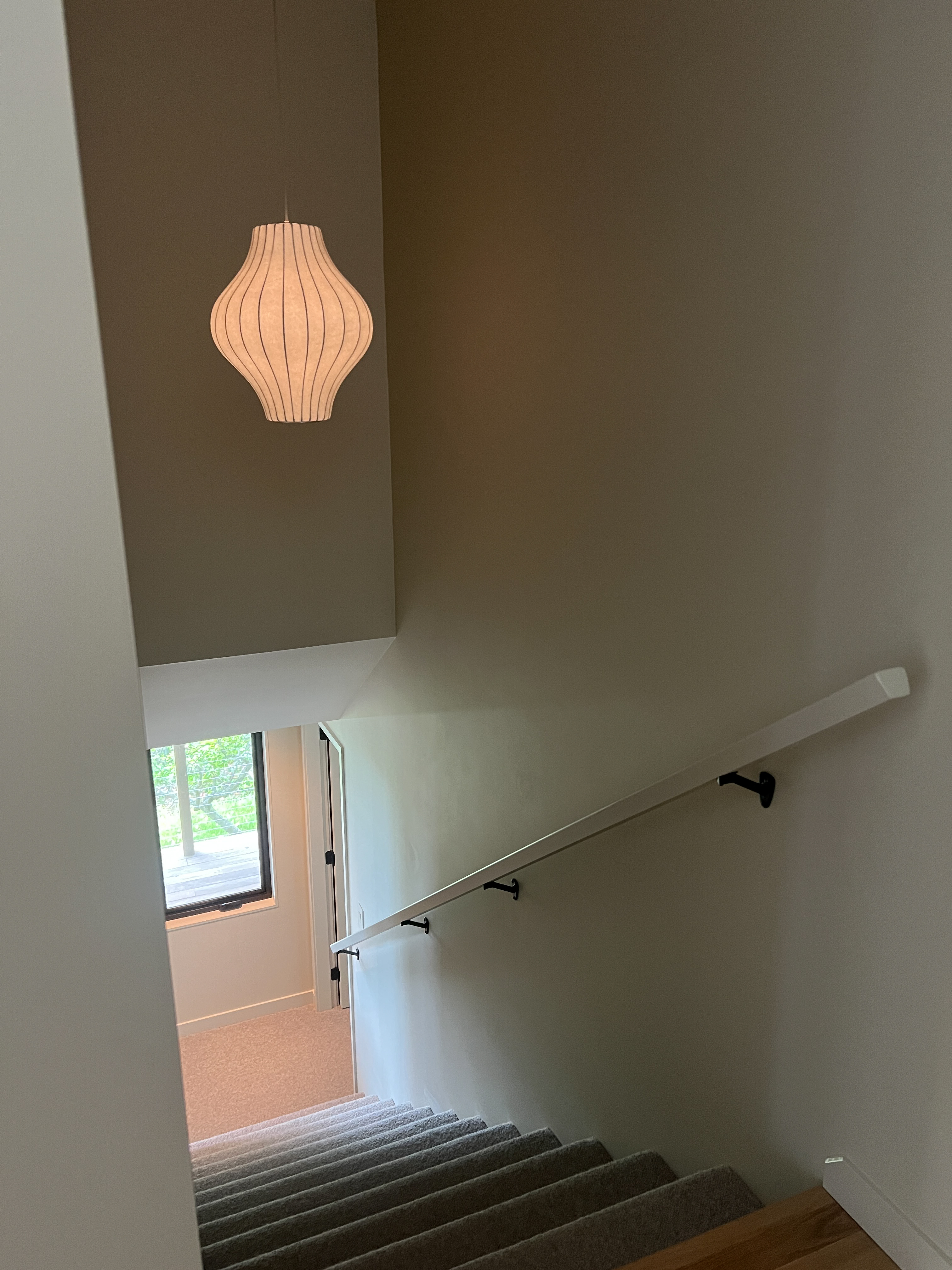
View of the house from the water. we simplified the roofline and deckView from the gate – Red windows and trim on this side to give it some personality from the road. New cedar entry porch with benches was a big improvement for easy access for all. (Old one had uneven stone steps down from driveway then back up several steps to the porch.) (I & AI added the ferns to the photo in the foreground, and strangely also a fish amongst the ferns) enjoying the viewBC Ferry Salish Heron with Mayne Island, Prevost Island, Pender Island, and The Olympics beyondEnjoying the viewLong south side covered porch. We eliminated the non structural posts that went to the roof and did not miss them despite my concerns that it might look odd without some posts. Enjoying the fir postkitchen transition to living and dining room – vaulted ceiling to flat ceiling. This was a tricky structural bit for the builder because he had to modify the existing trusses and I am thankful that the owners saw the value in making the transition what it should be rather than the easiest way. Kitchen counters are Paperstone – made from recycled paper and both warm to the touch and acoustically dampening. Livingroom – My favorite detail is the steel beam supporting the wood stove shelflooking downtown the bedroom hallway – we made it more private but kept a slot at the top of the wall to let light through. Aimable recessed light at the end illuminates a painting. Looking past entry toward kitchen – ceiling transition and four fir posts creating an elegant transitionmoonlight and ferryInterior window detail – painted wood jamb on all 4 sides. Another view of the window detailRelocated stairs to the lower level. (Old ones were in the prime real estate between kitchen and dining room.)Owner jsut sent me an updated photo of the kitchen with the tiled backsplash finished. Looks great!
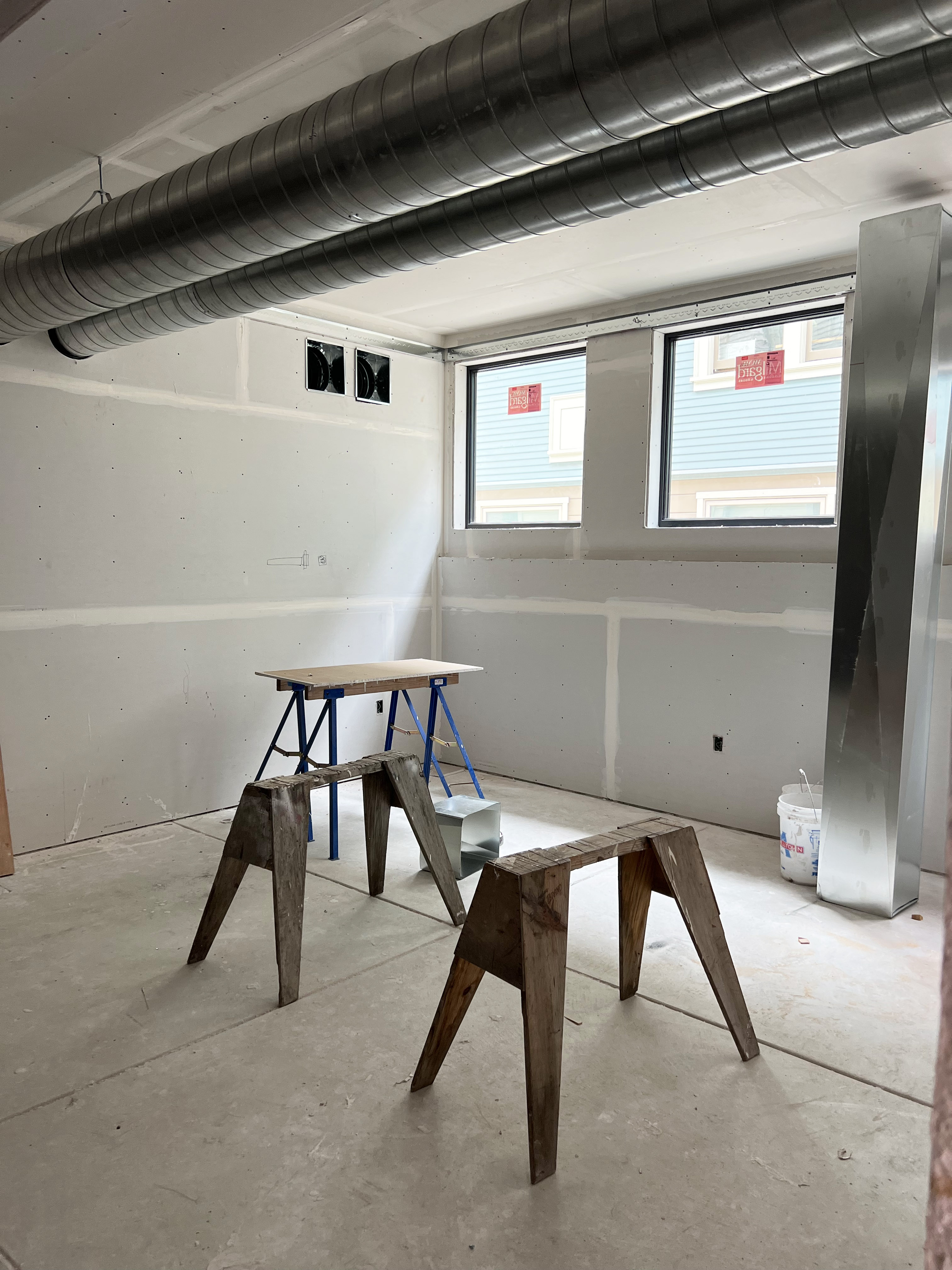
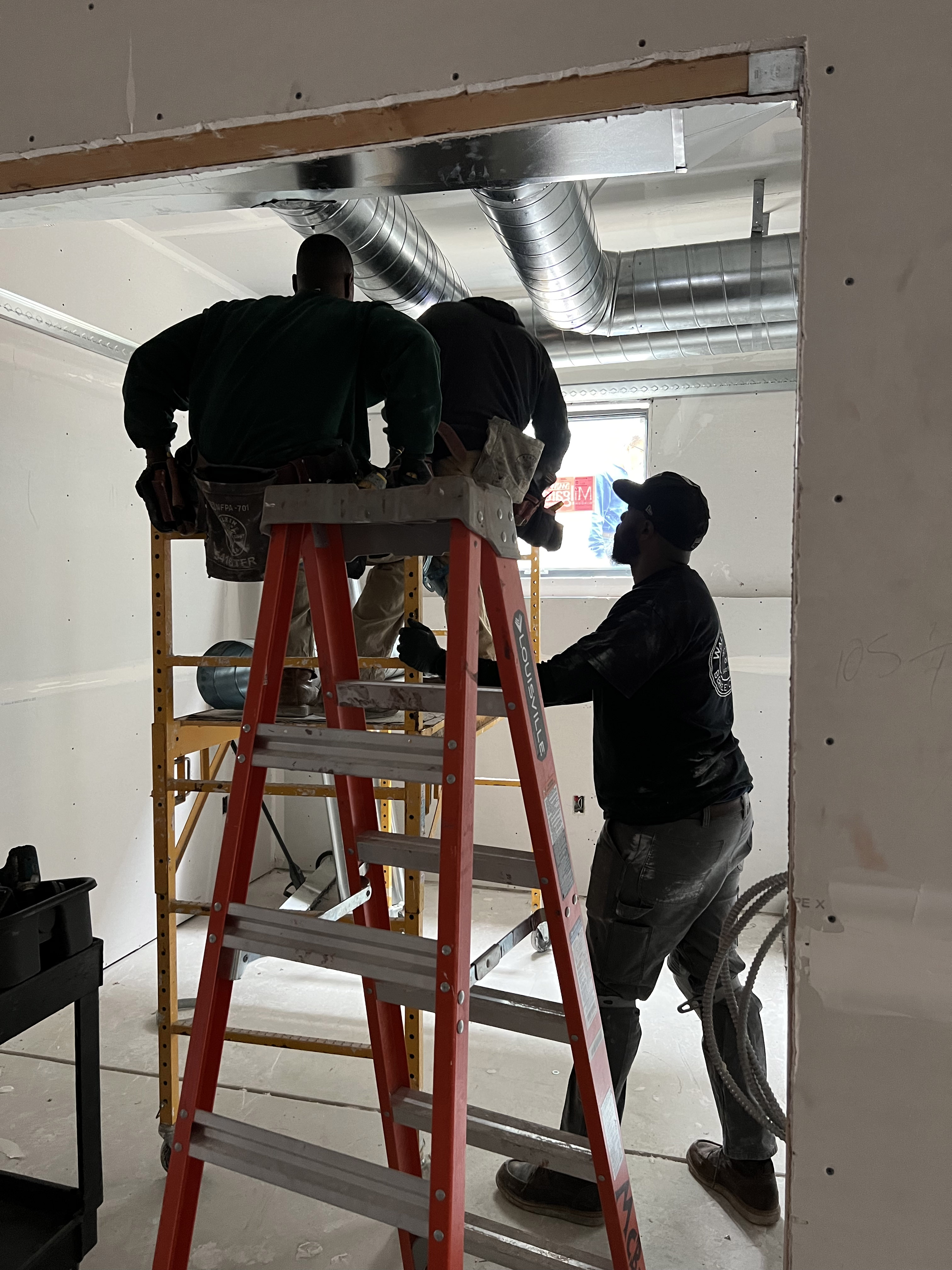
We are finally getting close to completion on this North Oakland pilates studio for Corpokinetic. The ventilation system is sized to provide 5 air changes per hour when needed to keep the Co2 concentration to 400-500 ppm. It is a heat recovery system for energy efficiency and has a HEPA filtration system that can be activated if there is wild fire smoke or other pollution outside. Hopefully none of this will be needed, but seems more than likely these days. It will also minimize transmission of the ordinary cold virus in the studio. Thanks to Beyond Efficiency for mechanical design and Walter Mork & McBride Construction for installation
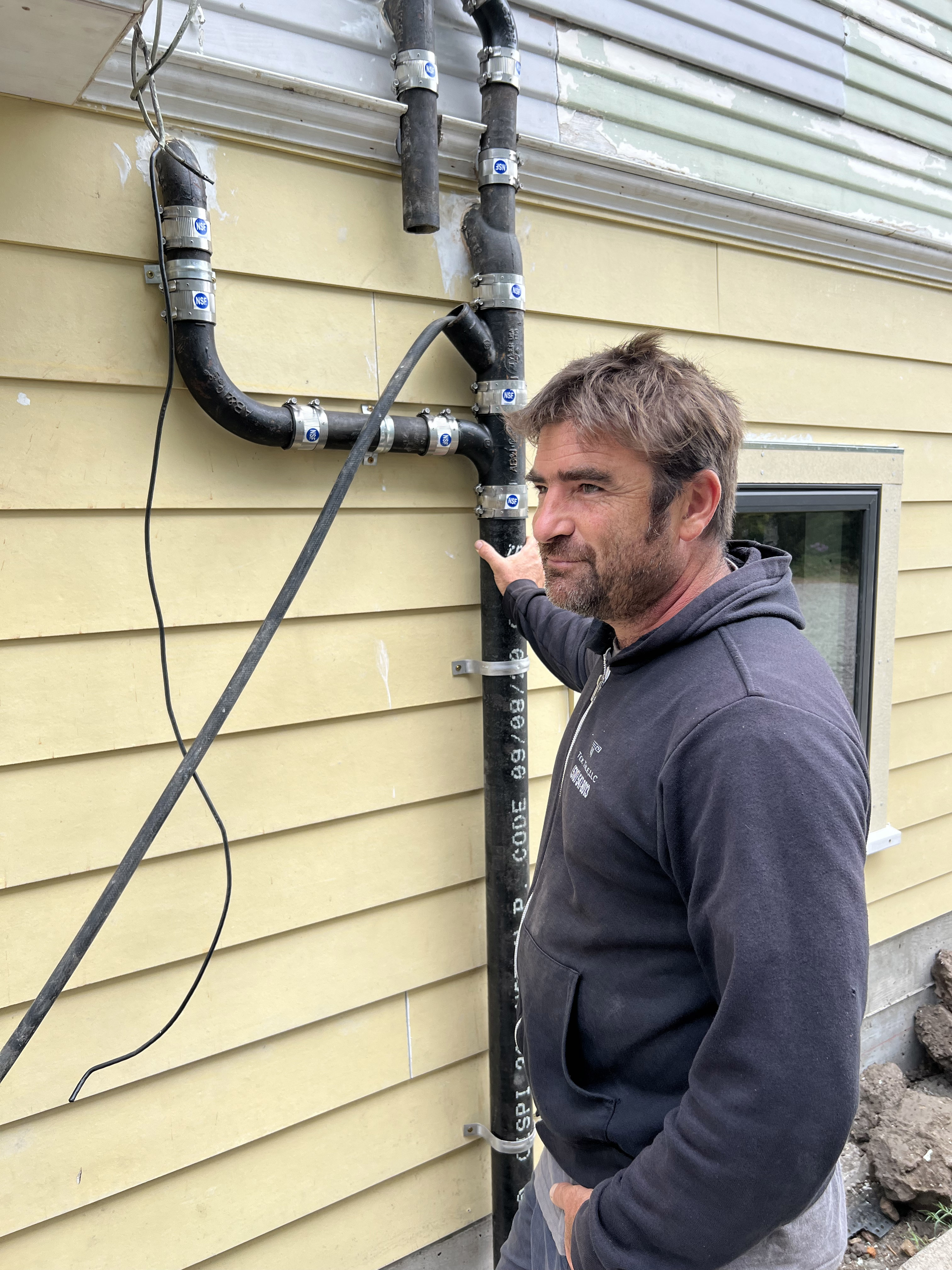
Plumbing inspection was also passed today. Here is John McBride testing the drain lines for leaks before the inspector arrived:
I was admiring the artistic way these rafter tails wrap around the corner at the Graduate Theological Union in Berkeley when I noticed the dark sky protection measures they implemented very economically with cut off black plastic waste bins. (and look at that black sky!) I recently updated my education on dark sky protection. I already knew that bright exterior lights are annoying to neighbors and that it would be nicer to see more stars at night, but I learned a few more reasons to avoid light pollution. So many nocturnal animals have their normal patterns disrupted by bright night time lights. Birds and insects in particular. I have a new love for curtains on windows to keep the interior lights from lighting up the outdoors. I had considered curtains mainly for privacy and keeping the sunshine out, but hadn’t worried about all the light that can spill out of a house when lights are on at night. Because LED lights use so little electricity the Earth’s light pollution problem is getting worse. It doesn’t cost very much to leave exterior lights on all night and this sometimes seems simpler than fancy lighting controls. Now I will be thinking of the nocturnal creatures as I plan my architectural lighting.
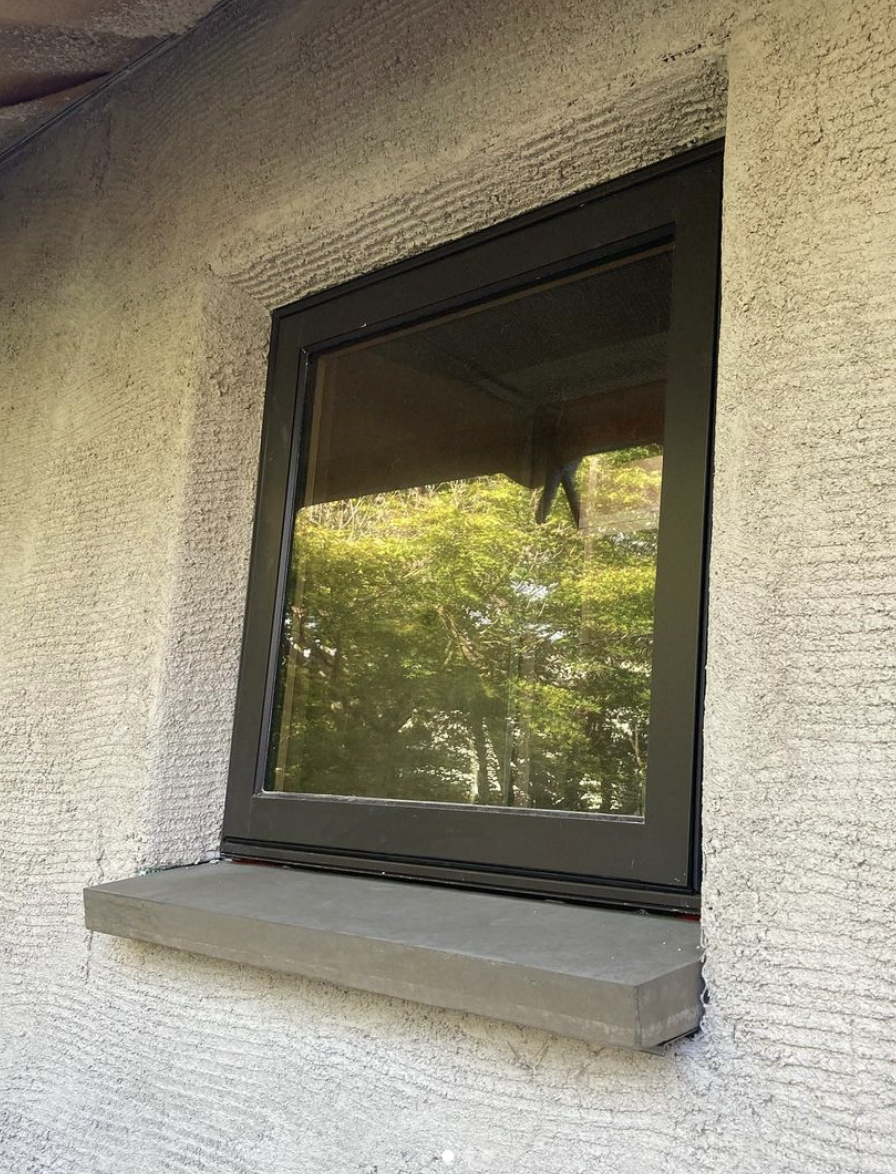
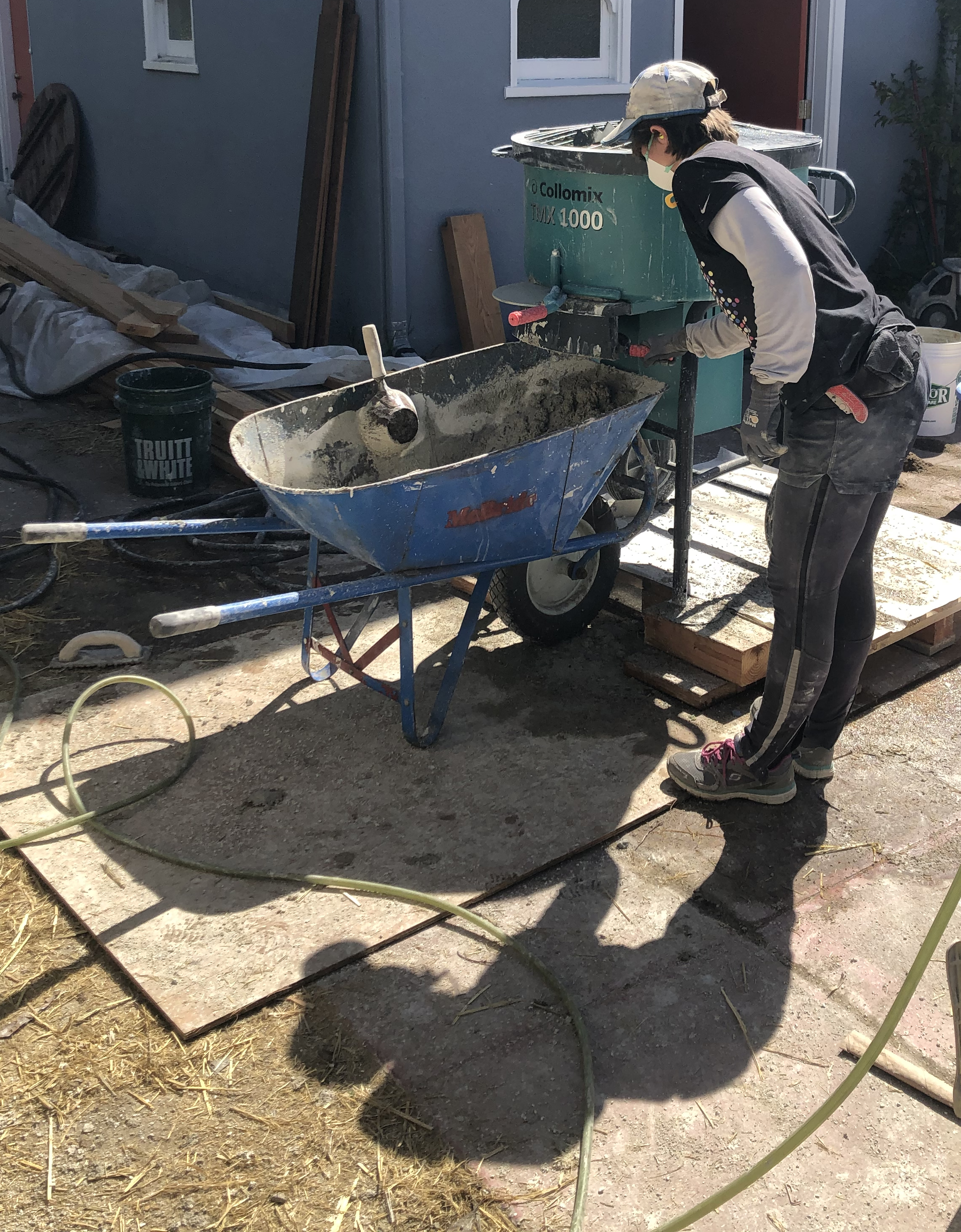
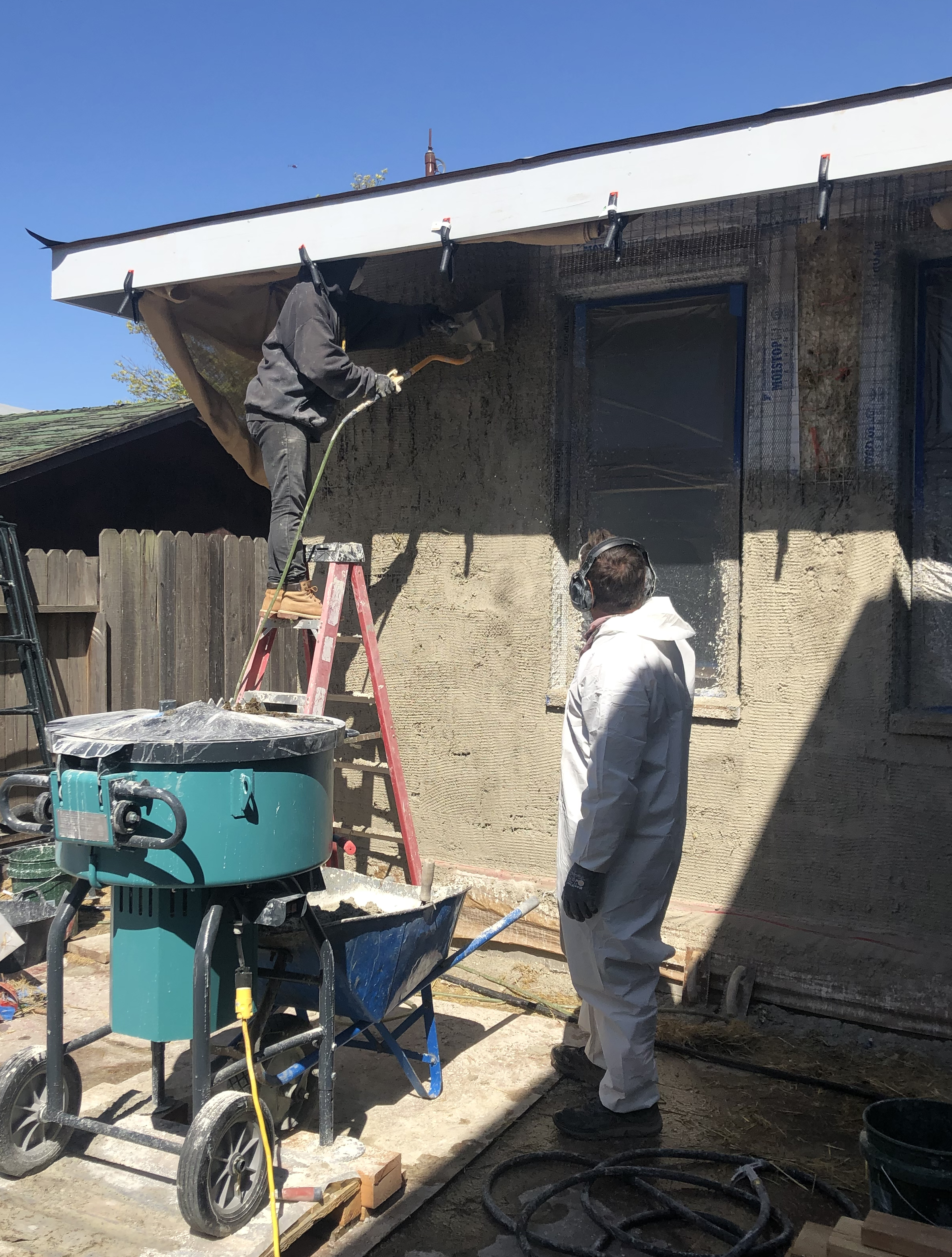
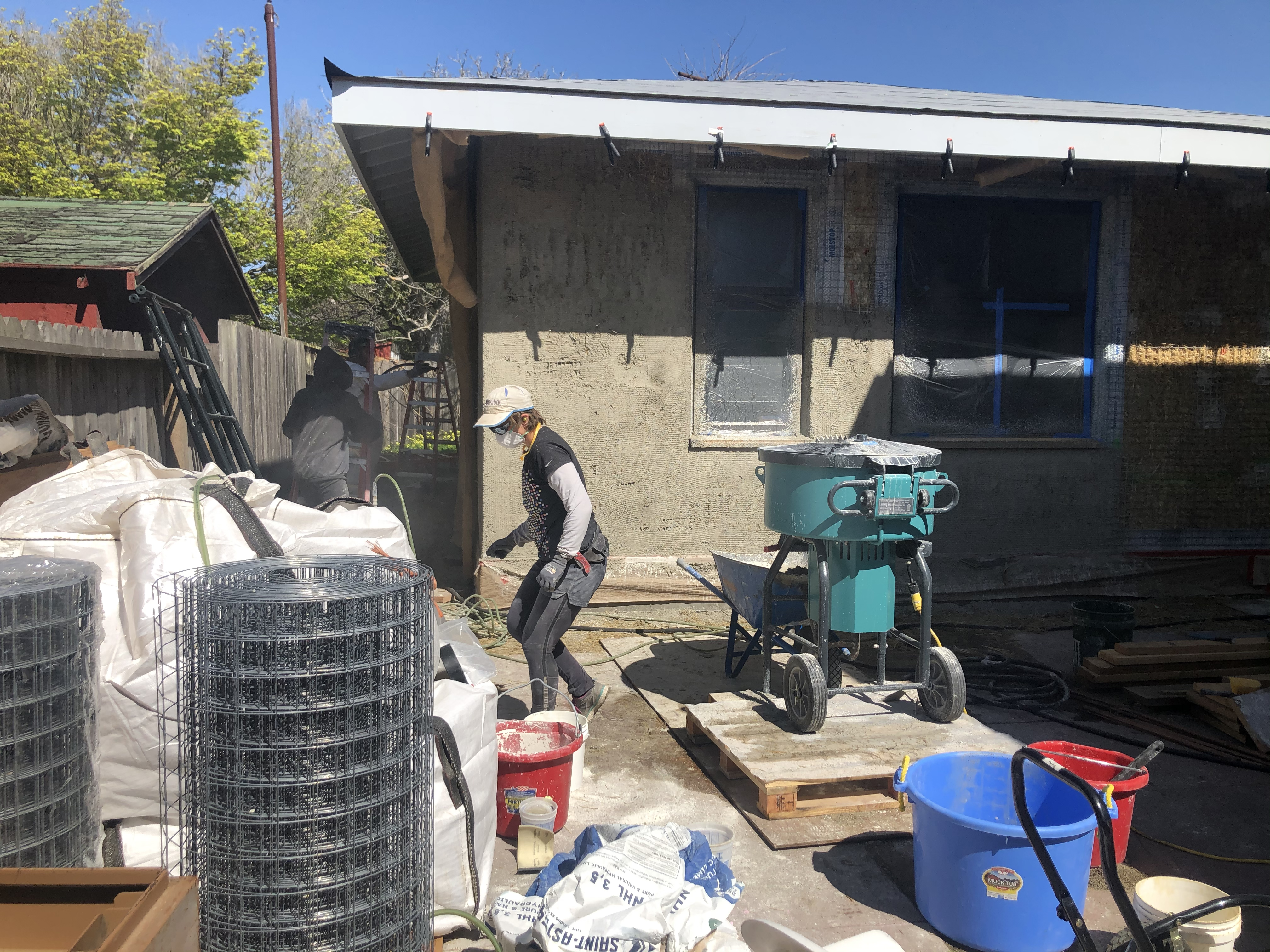
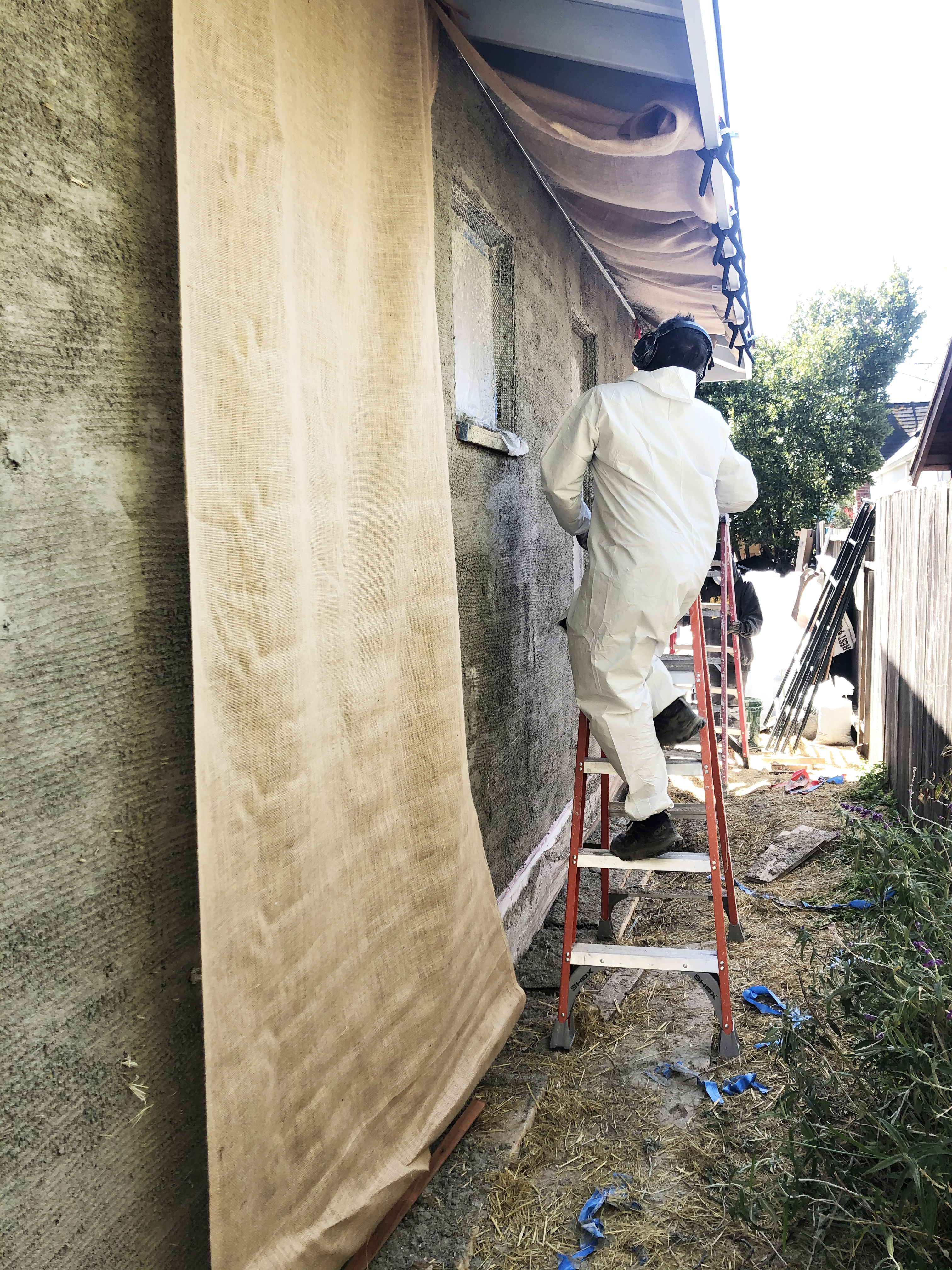
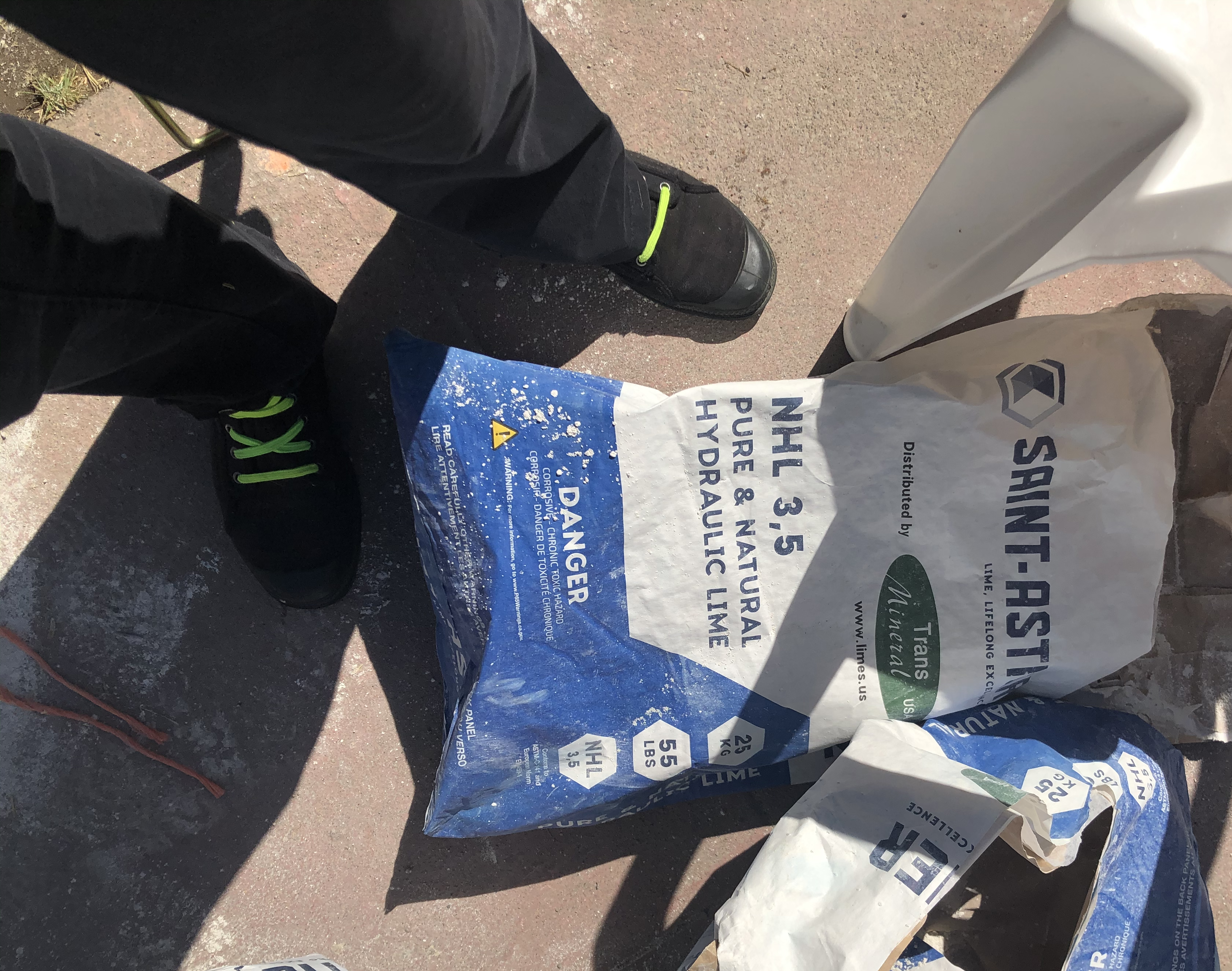
Hydraulic lime plaster is similar to cement stucco, but with lime rather than portland cement. It is more flexible and more vapor permeable than cement stucco, but it takes more skill and curing time. It also requires warmer temperatures. While making portland cement requires a lot of energy and the chemical reaction releases large quantities of CO2 into the atmosphere, Manufacturing lime takes energy, but when lime plaster carbonates (hardens) much of the CO2 released during the manufacture is reabsorbed. (From Essential Natural Plasters, Henry & Therrien) According to Strawbale Building Details (Published by CASBA – California Strawbale Building Association)The strawbales themselves sequester 26 pounds of carbon each, preventing the formation of 95 pounds of CO2)
Mixing the natural hydraulic lime, plaster sand & waterSpraying the plasterBurlap shades to protect the plastered walls from direct sun (It cures better if kept moist and cool)
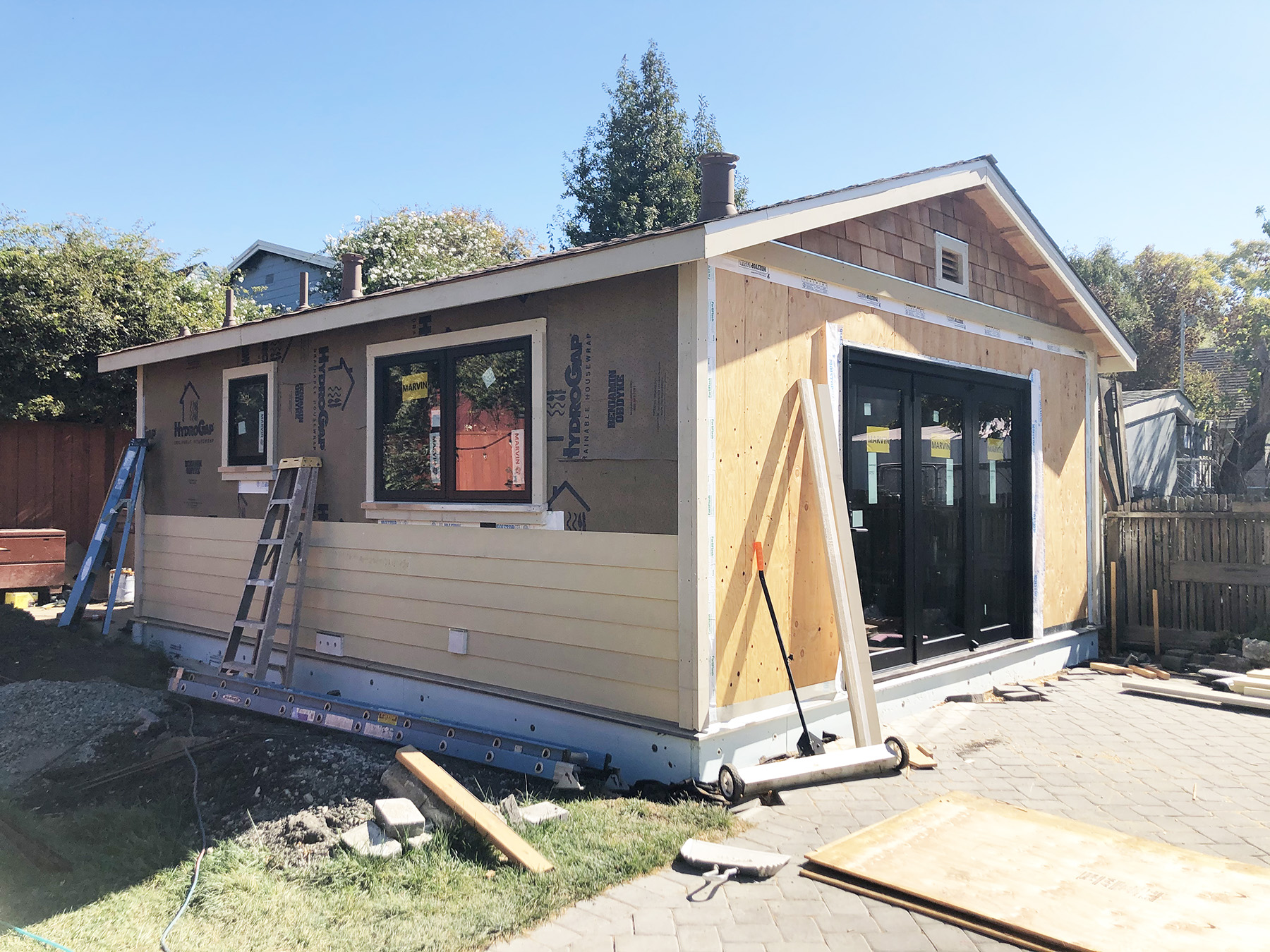
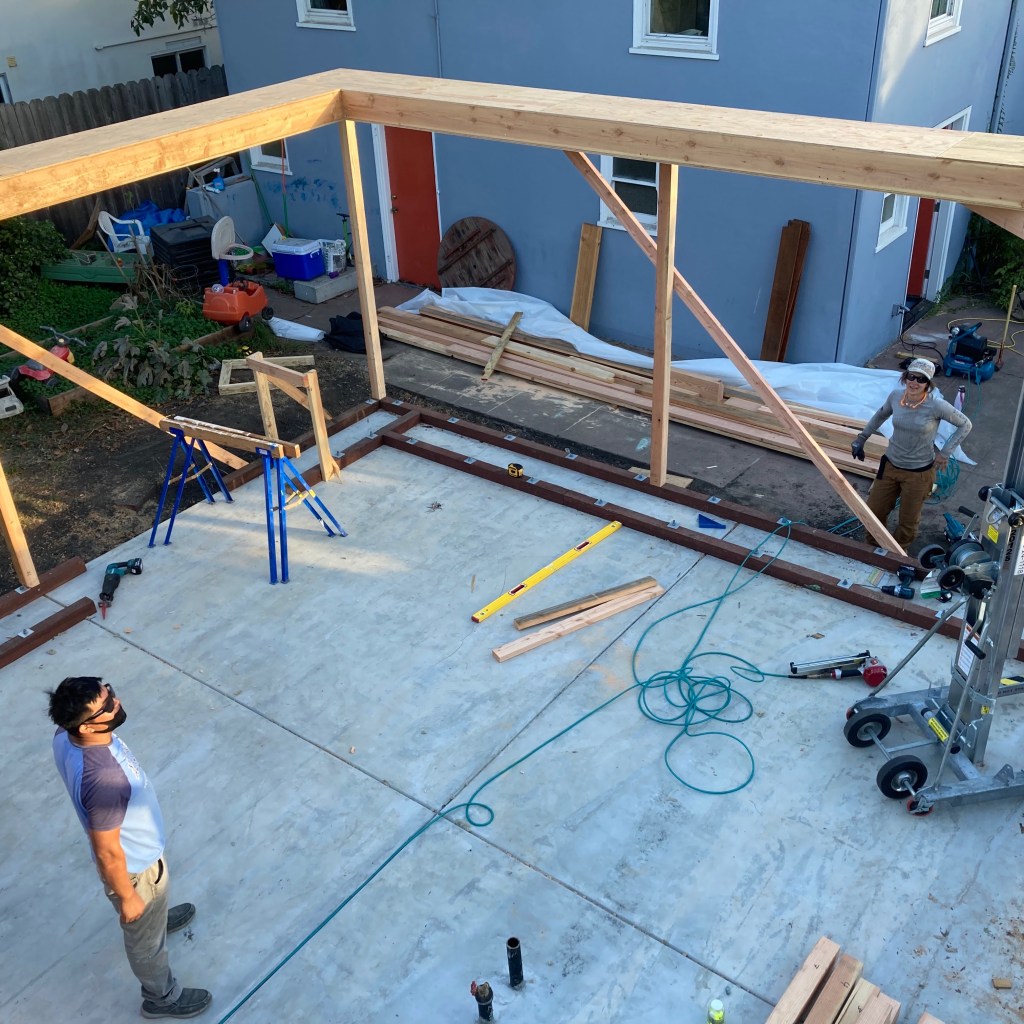
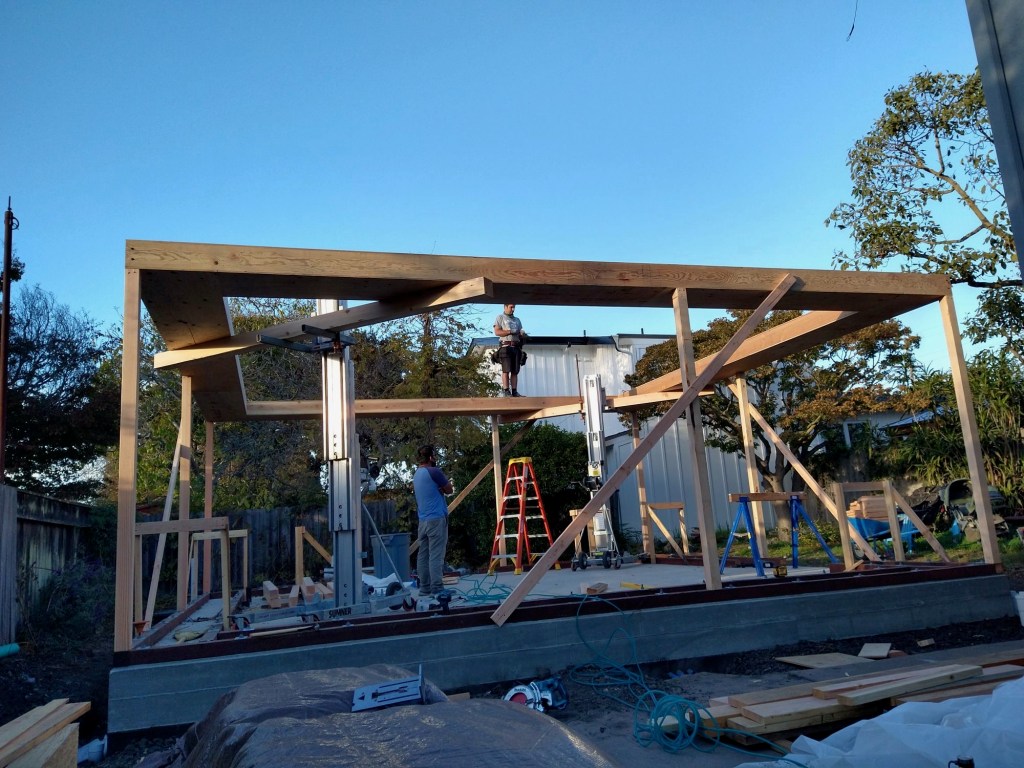
I’ll post more about this one soon…with some interior shots. This will house the homeowners while they remodel the main house, then it will be an art studio and guest quarters. Someday it will probably house renters. It exceeds all the green building and energy efficiency codes. Construction by McBride Construction.
Rainscreen fibercement siding and big doorsWall hung toilet tank – not the most exciting photo, but a nice feature.



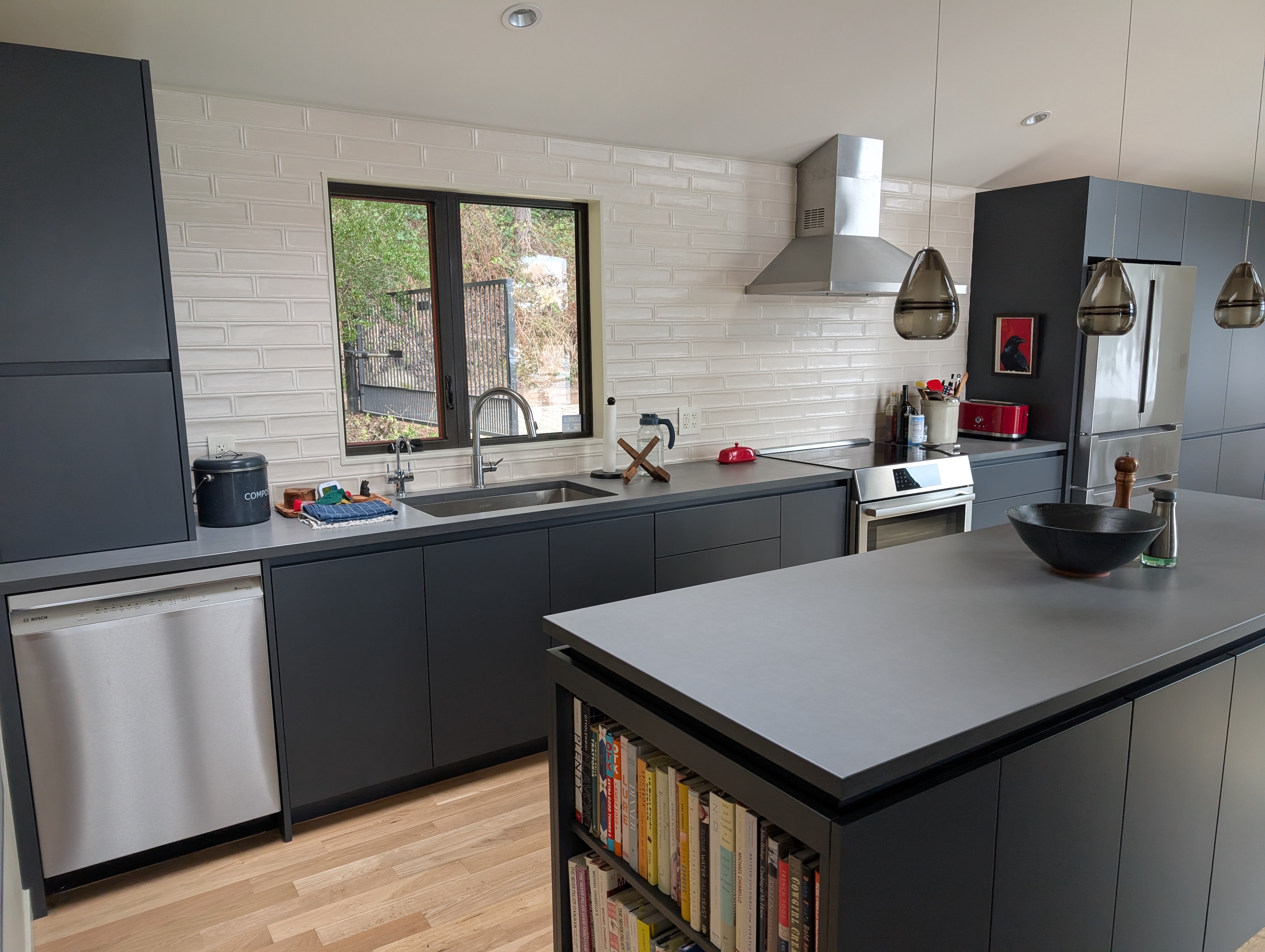
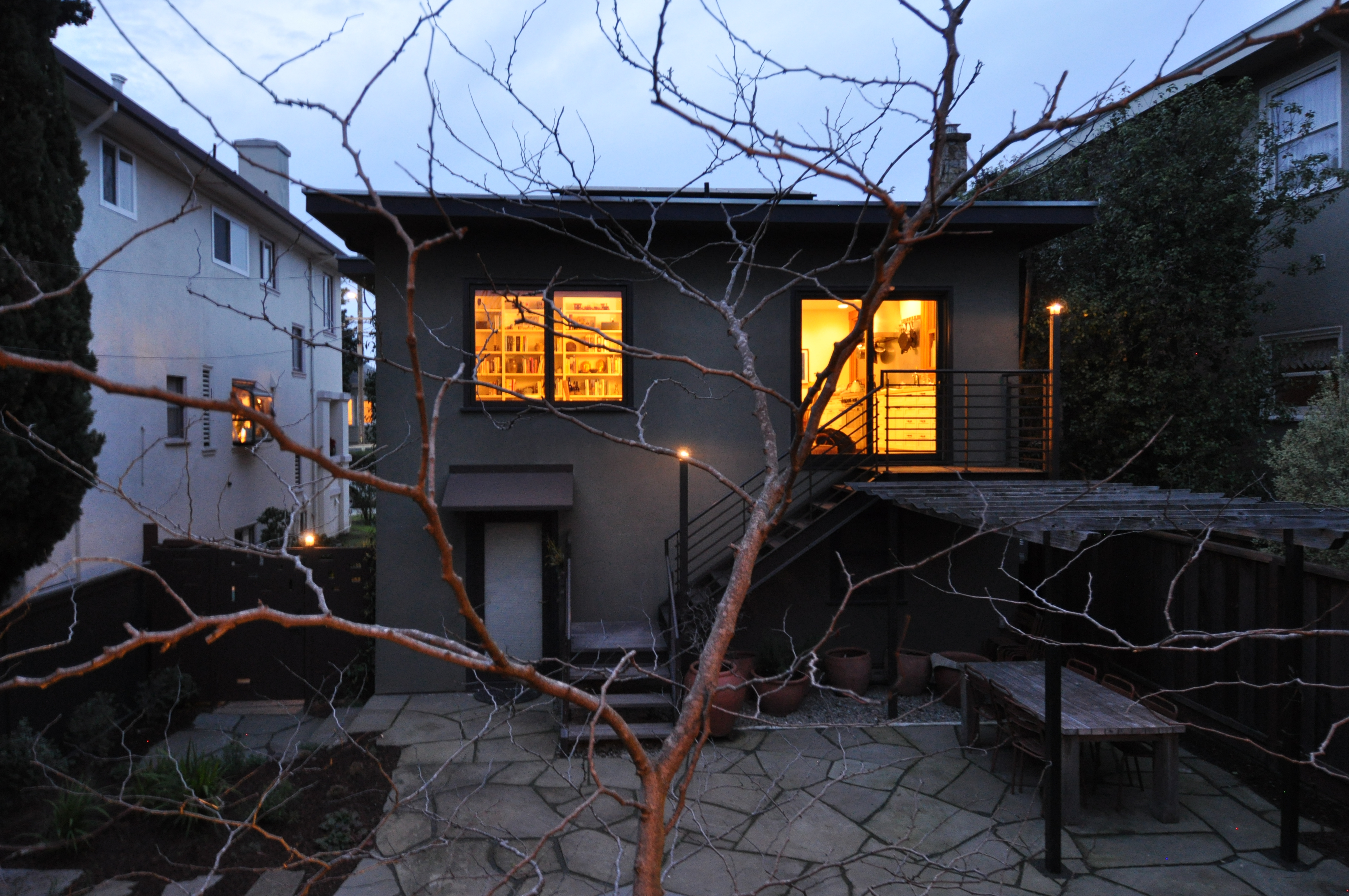
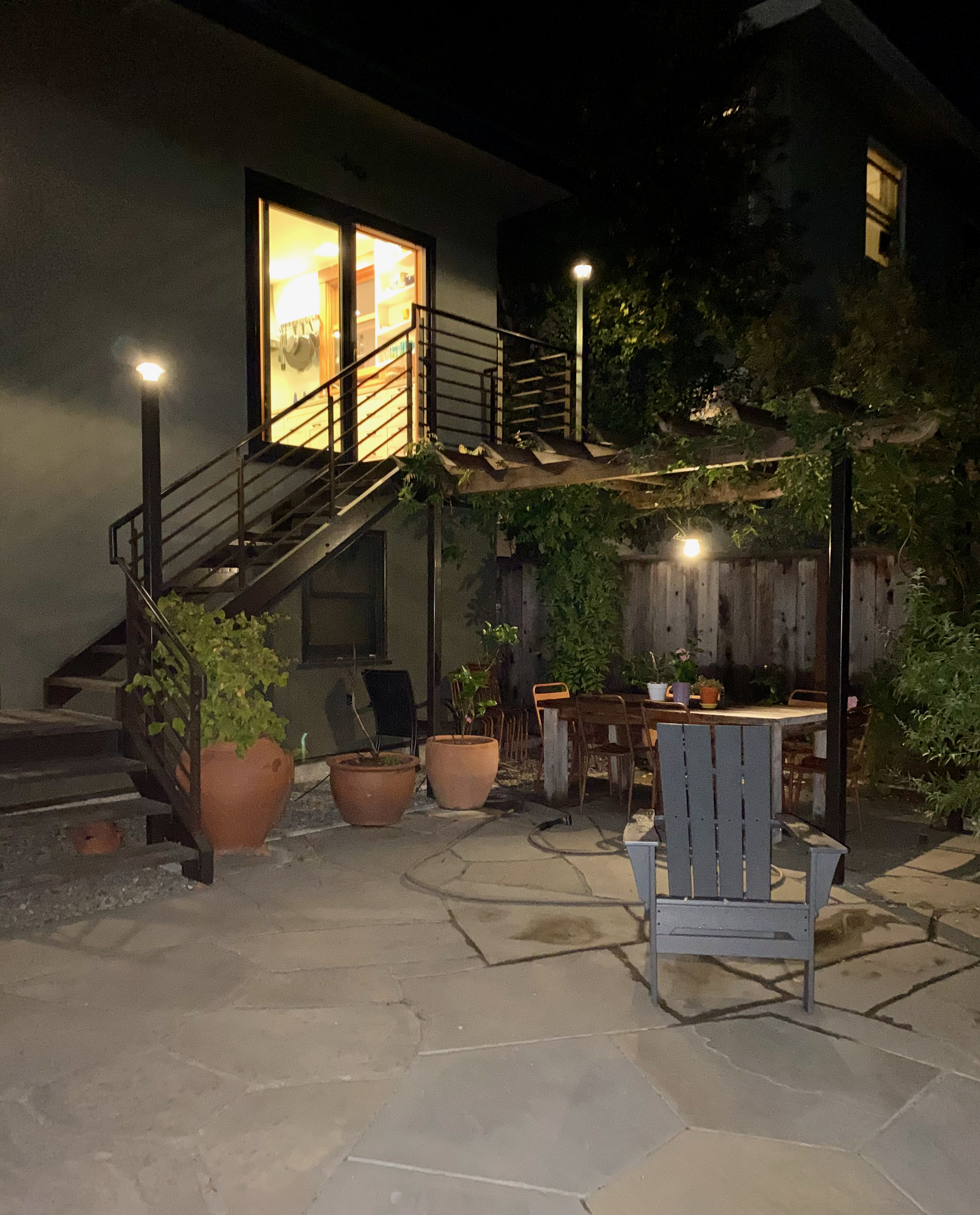
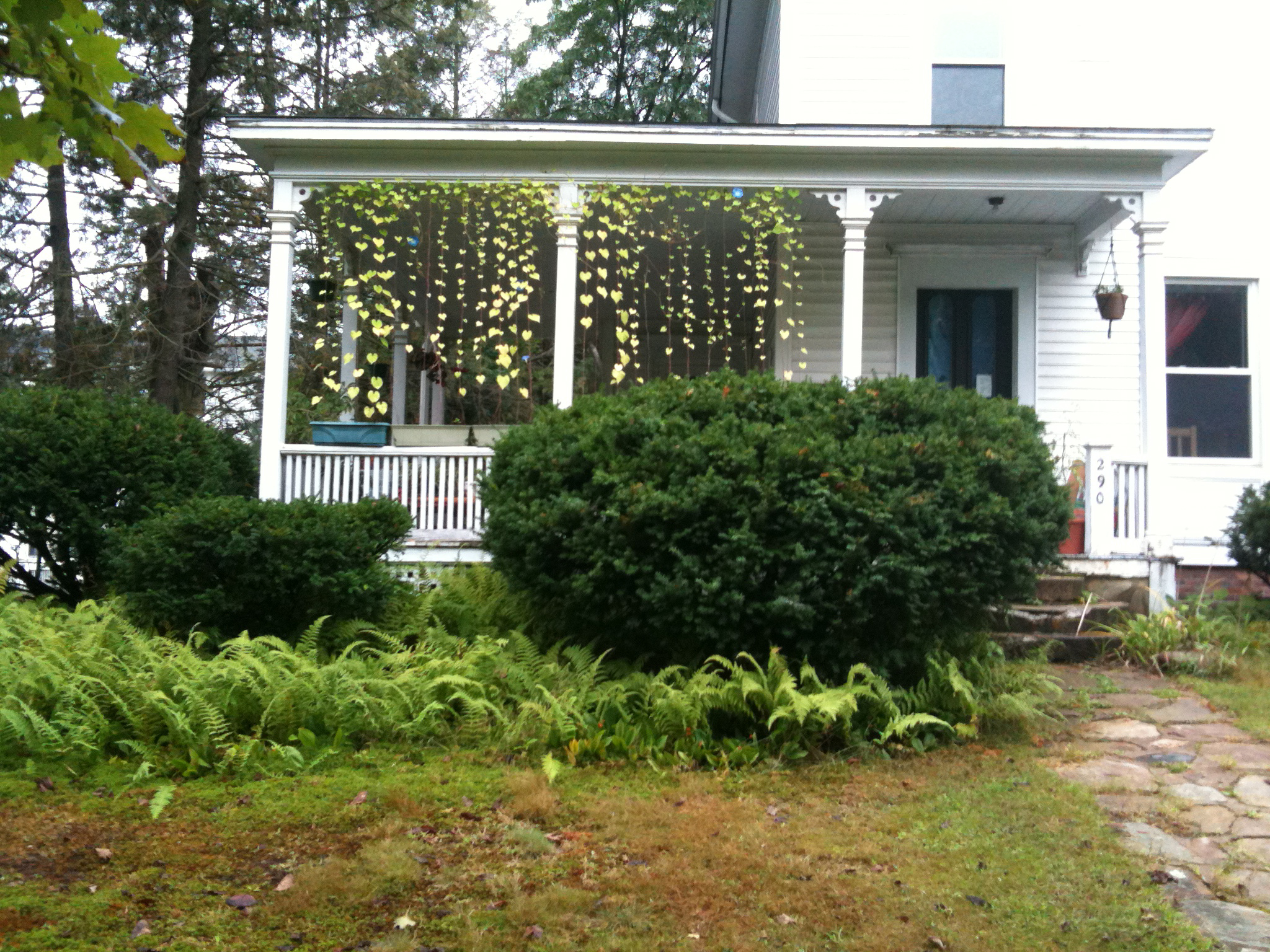





 deedsdesign