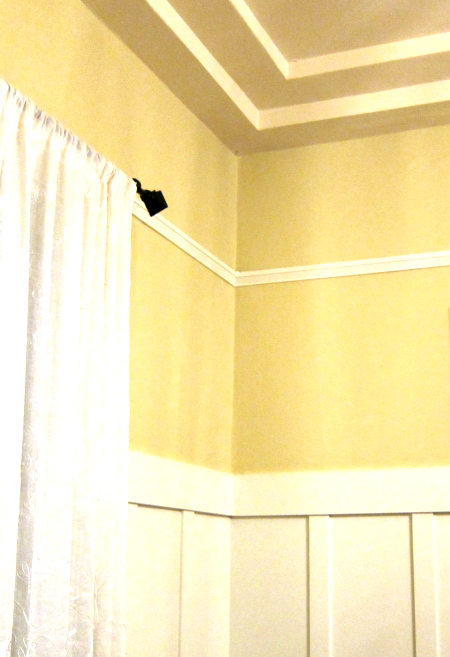
 Simple and sturdy wainscoting and a modern stepped ceiling detail is timeless in this Berkeley home. The stripe of picture molding elegantly breaks the painted wall.
Posted in Found Objects | Tagged Berkeley, ceiling details, craftsman, historical styles, picture molding, square profiles, trim, wainscoting, wainscotting | 2 Comments »
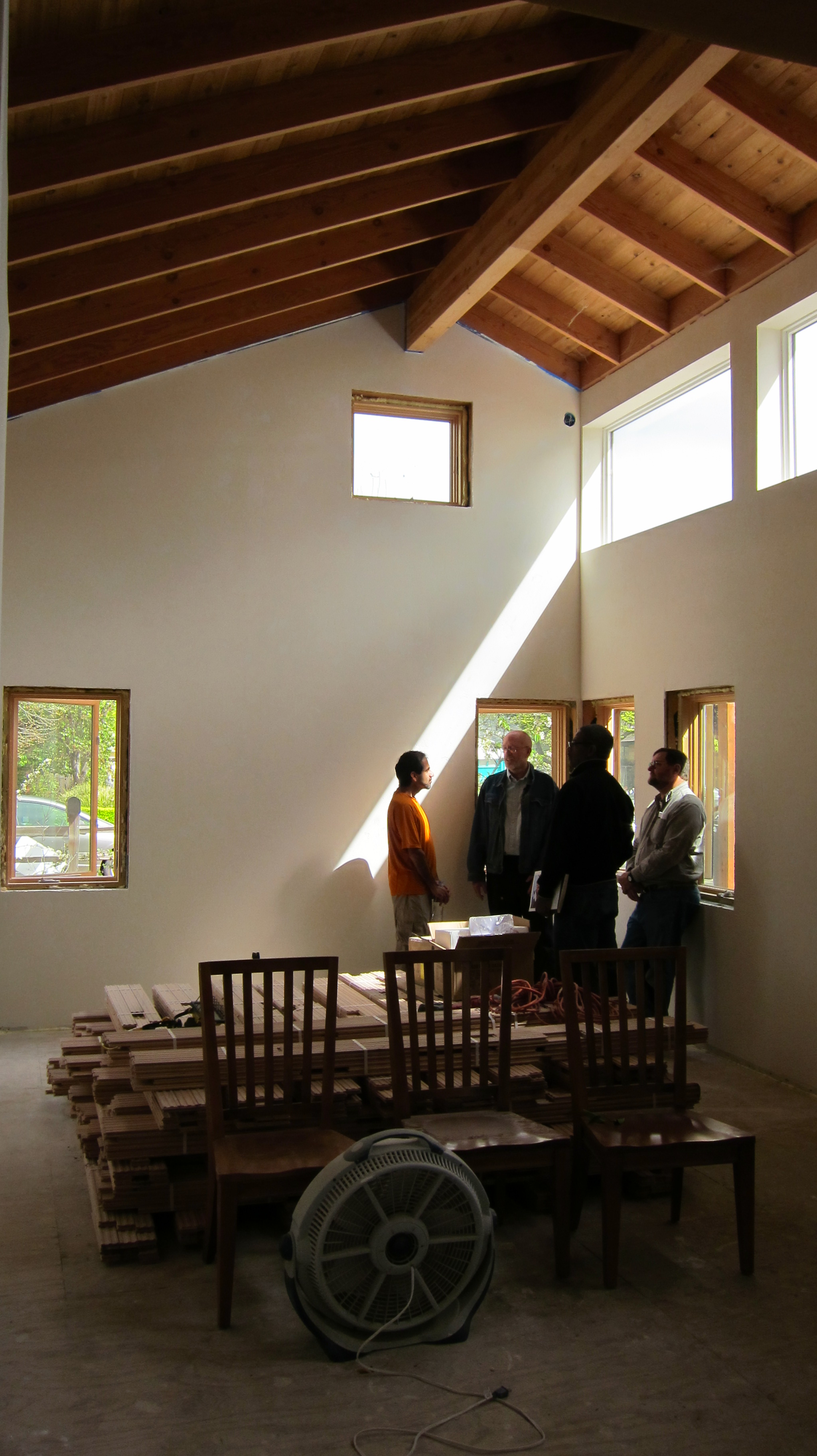
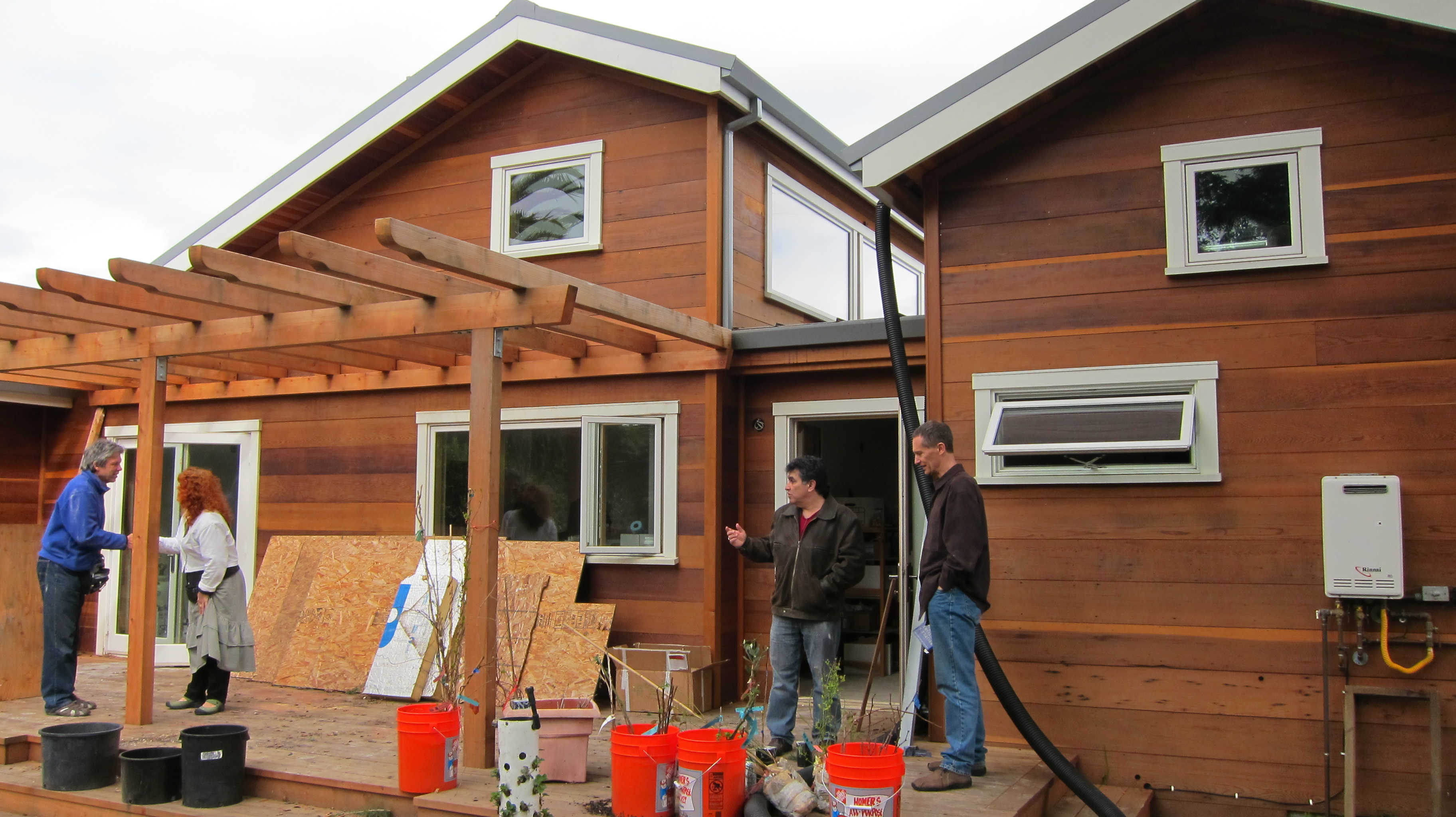
I went on another tour of a couple of passive houses under construction in the San Jose area. The two were very different from each other. The first is a remodel, designed by Thamby Kumaran with energy modelling by the owner-builder, Scott Heeschen. It uses a lot of salvaged redwood for the rainscreen siding, a mixture of Marvin Integrity and Serious windows, and rainwater catchment. Clearly architecture was a priority, since attics and flat ceilings make it easier to maximize insulation. (Compared to this beautiful vaulted ceiling)
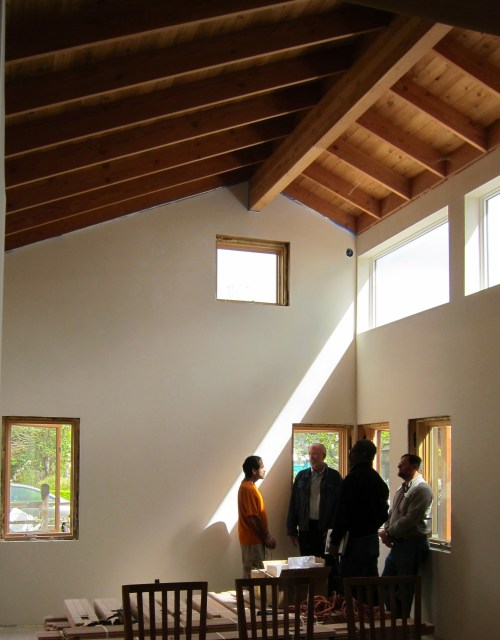
Thamby Kumaran and passive house tourists
I am curious how the long strip of south-facing clerestory windows will perform in summer with such a minimal overhang.
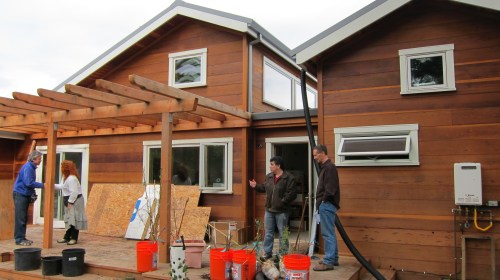
Nabih Tahan and several other visitors on the back deck
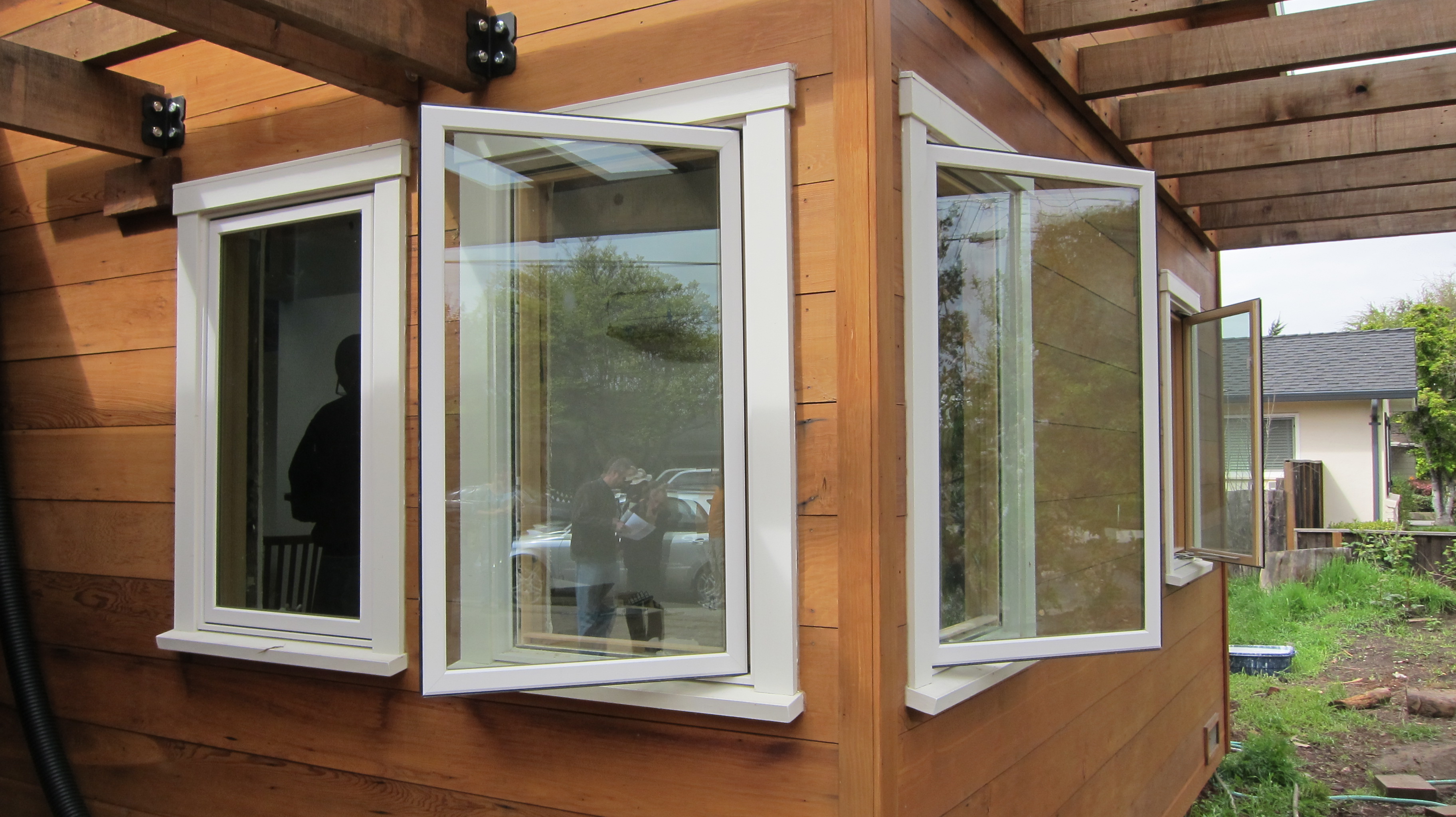
Casement, awning, and fixed windows were chosen for their air tight seals.

Marvin Integrity casement windows
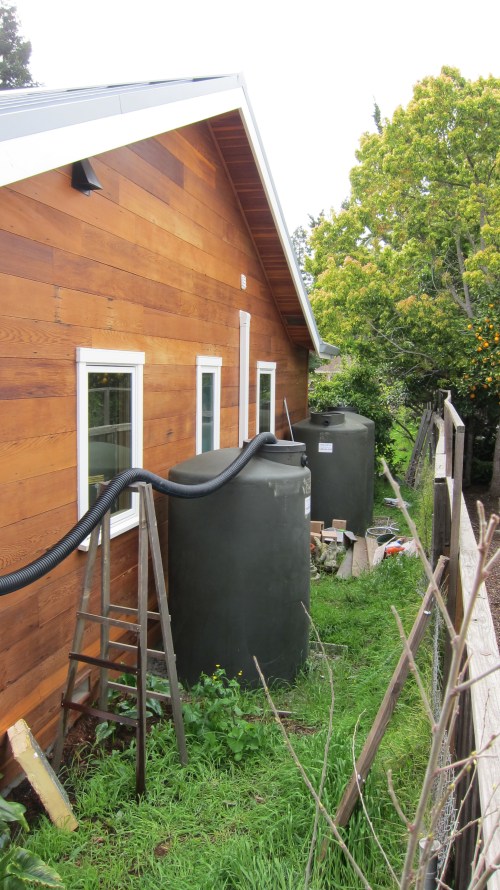
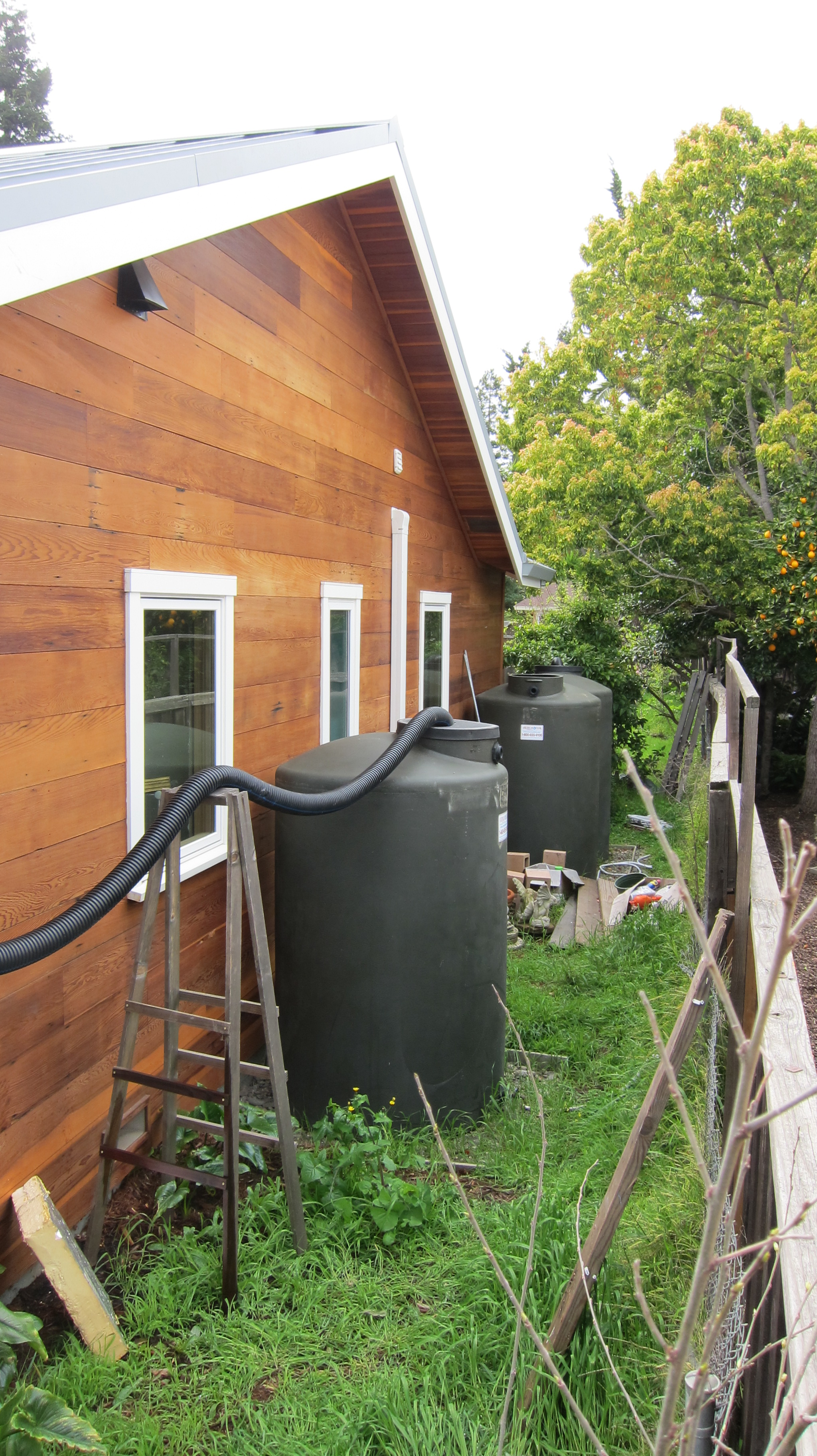
Several large water cisterns in the side yard
The other house I had already visited in the fall of 2010.
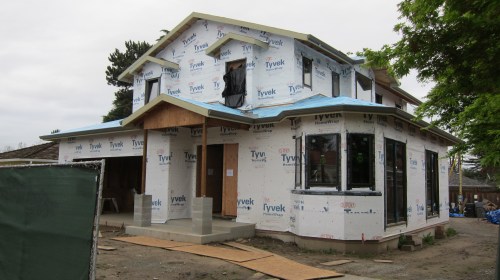
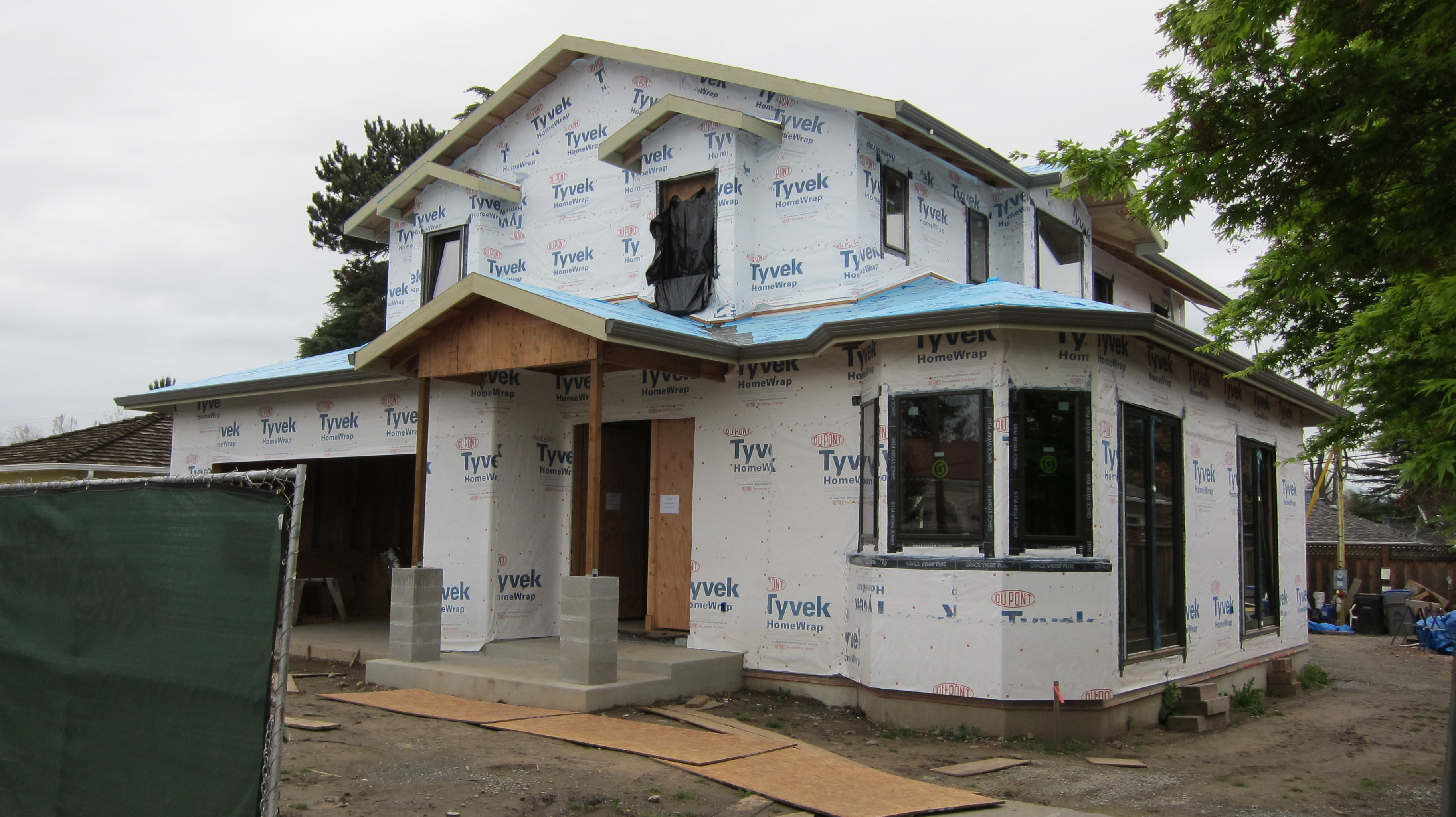
Cottle Zero Energy House
This one is more of a standard high-end spec house, but it seems to be quite technically competent on many levels.
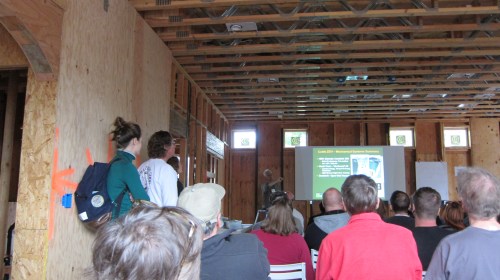
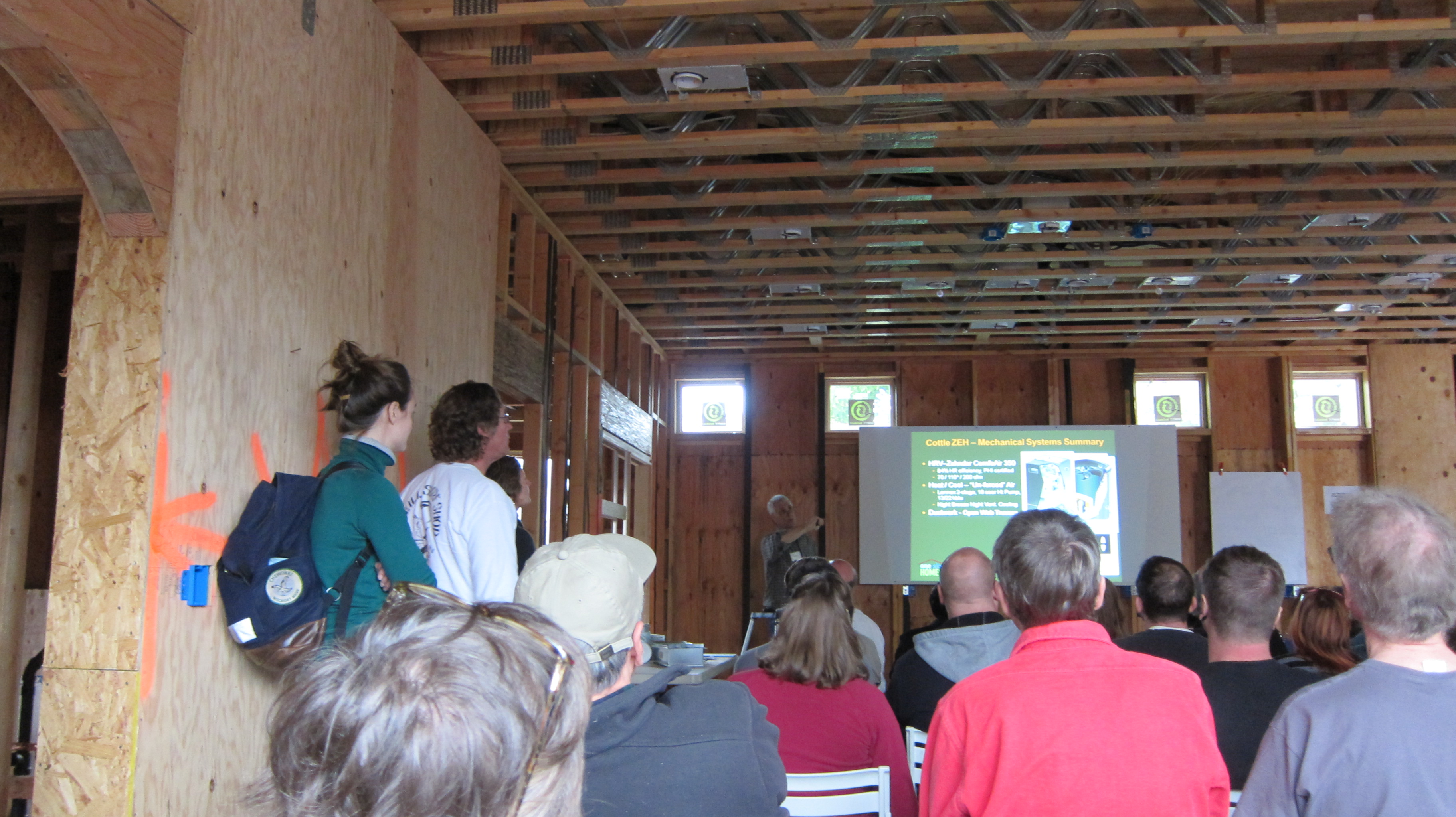
Presentation to eager passive house enthusiasts. Note the open web joists above. These make for easy routing of ducts and plumbing
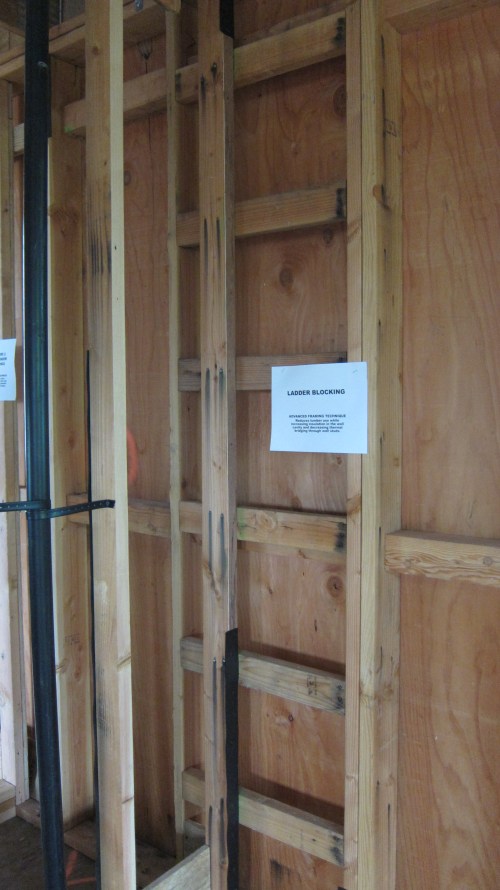
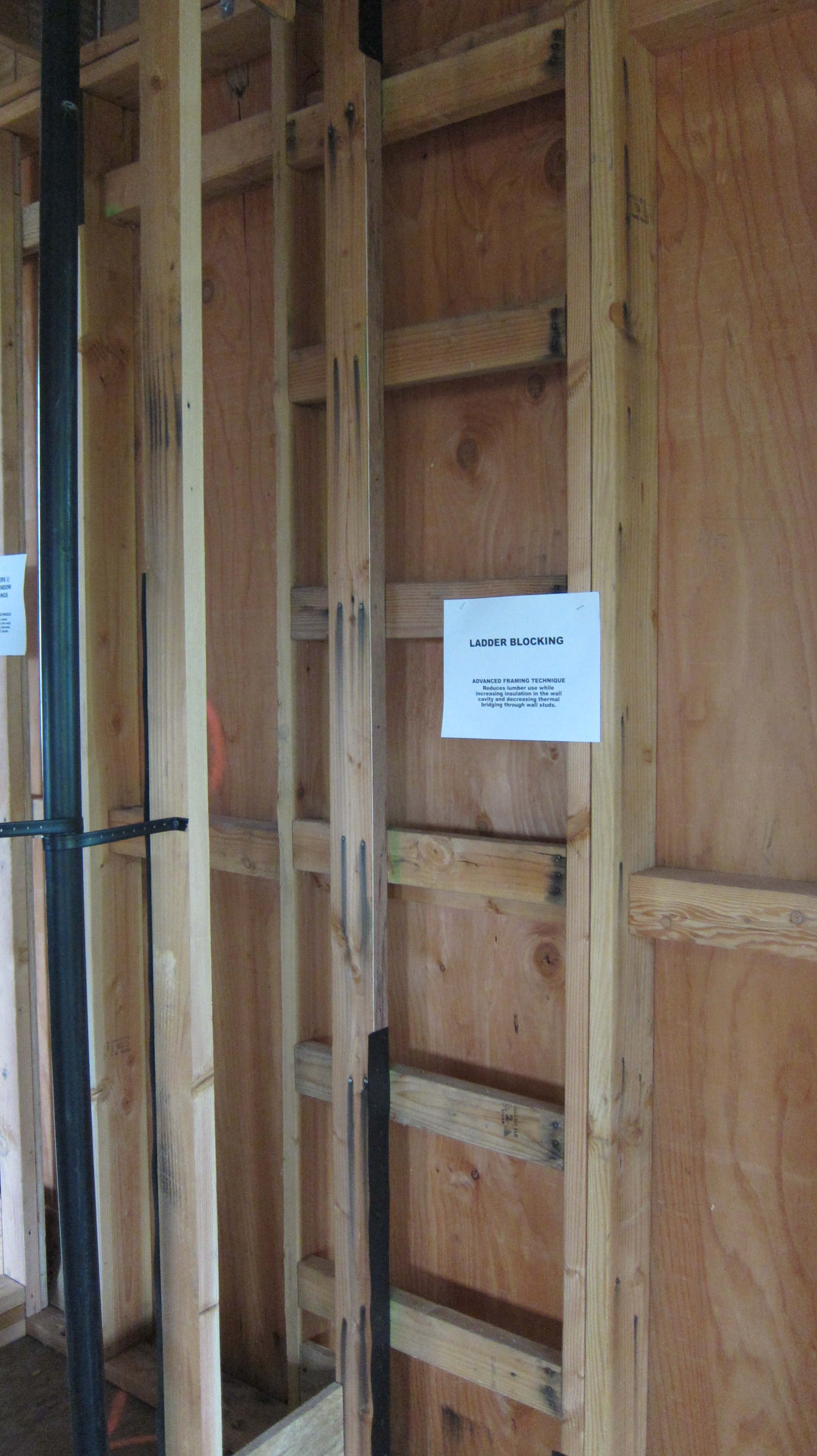
“Ladder blocking” allows for more complete insulation of the exterior envelope
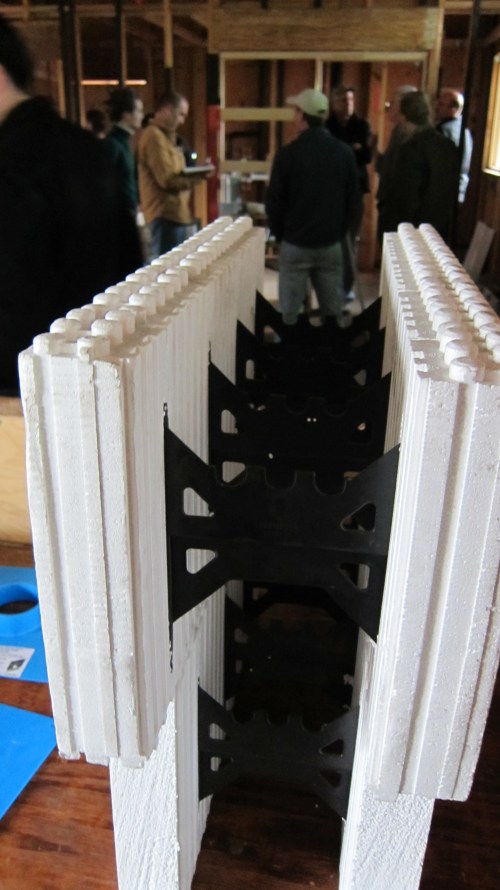
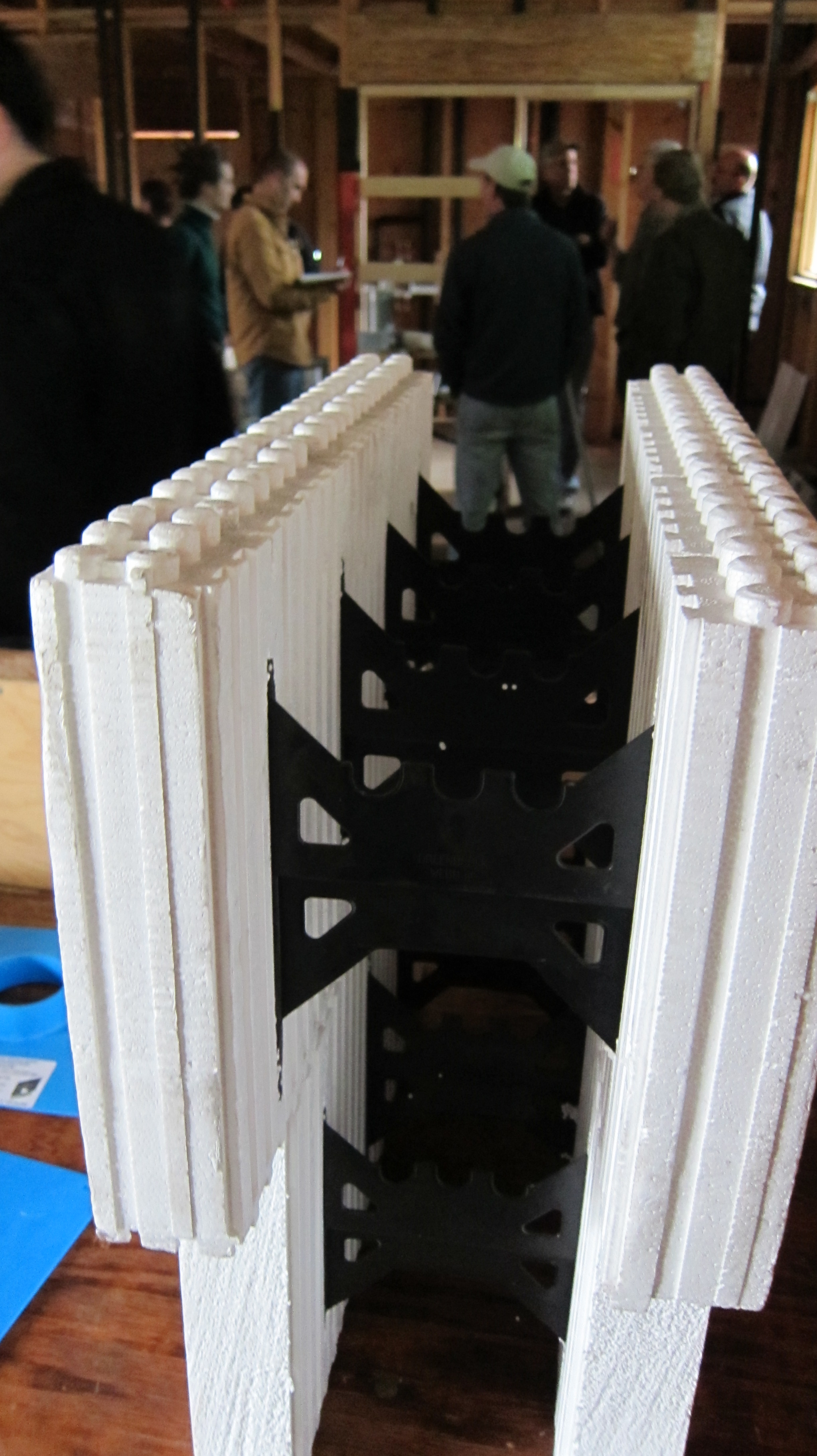
Insulated concrete form on display
Posted in Found Objects, Information | Tagged passive house, rainscreen, redwood, windows | Leave a Comment »
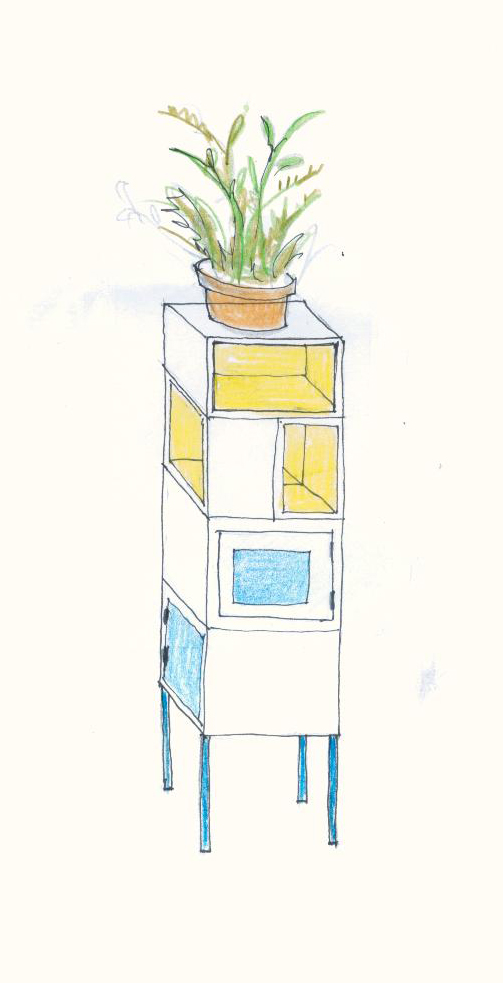
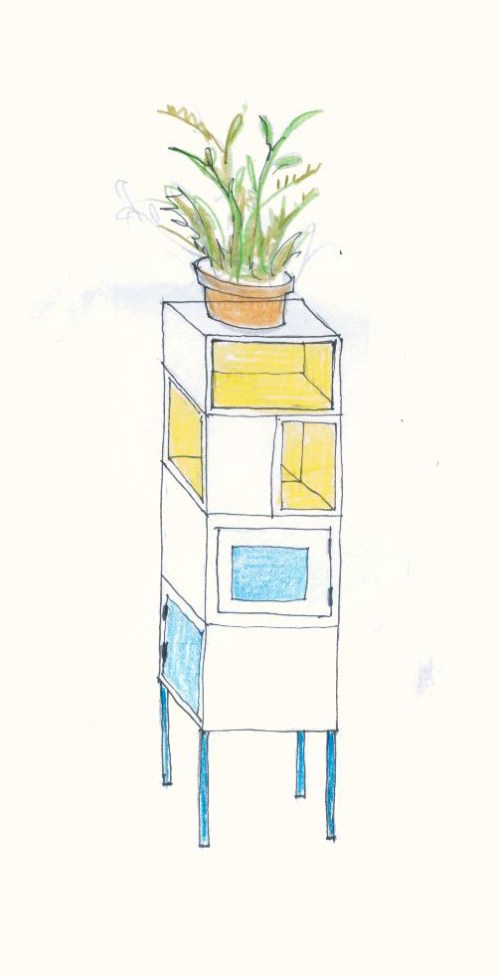 John Mcbride has this piece under construction as I write. I’ll post some more photos. It is intended to complement this tiled tub surround.
Posted in Design Projects | Tagged color, drawings, furniture, process, whimsy | 1 Comment »
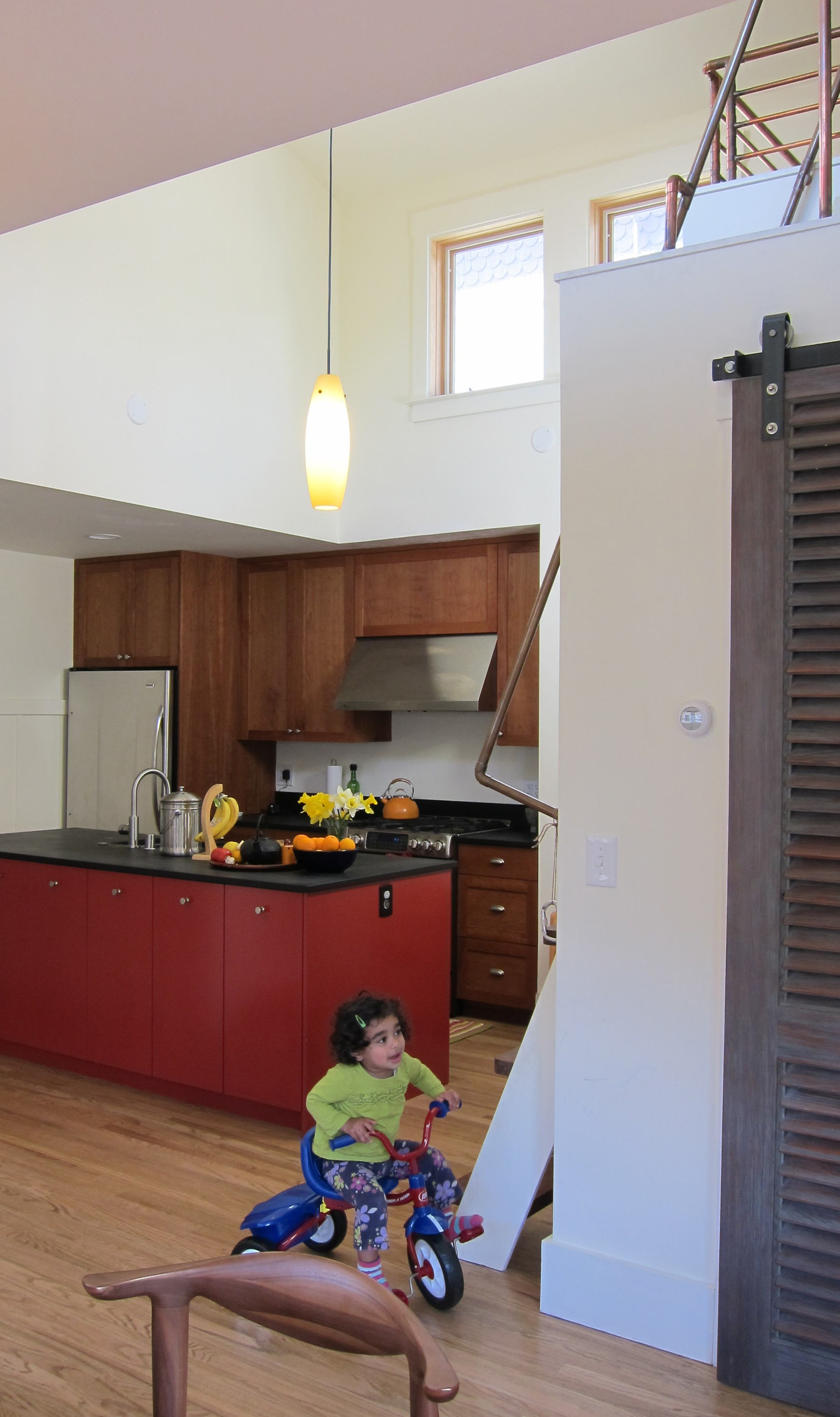
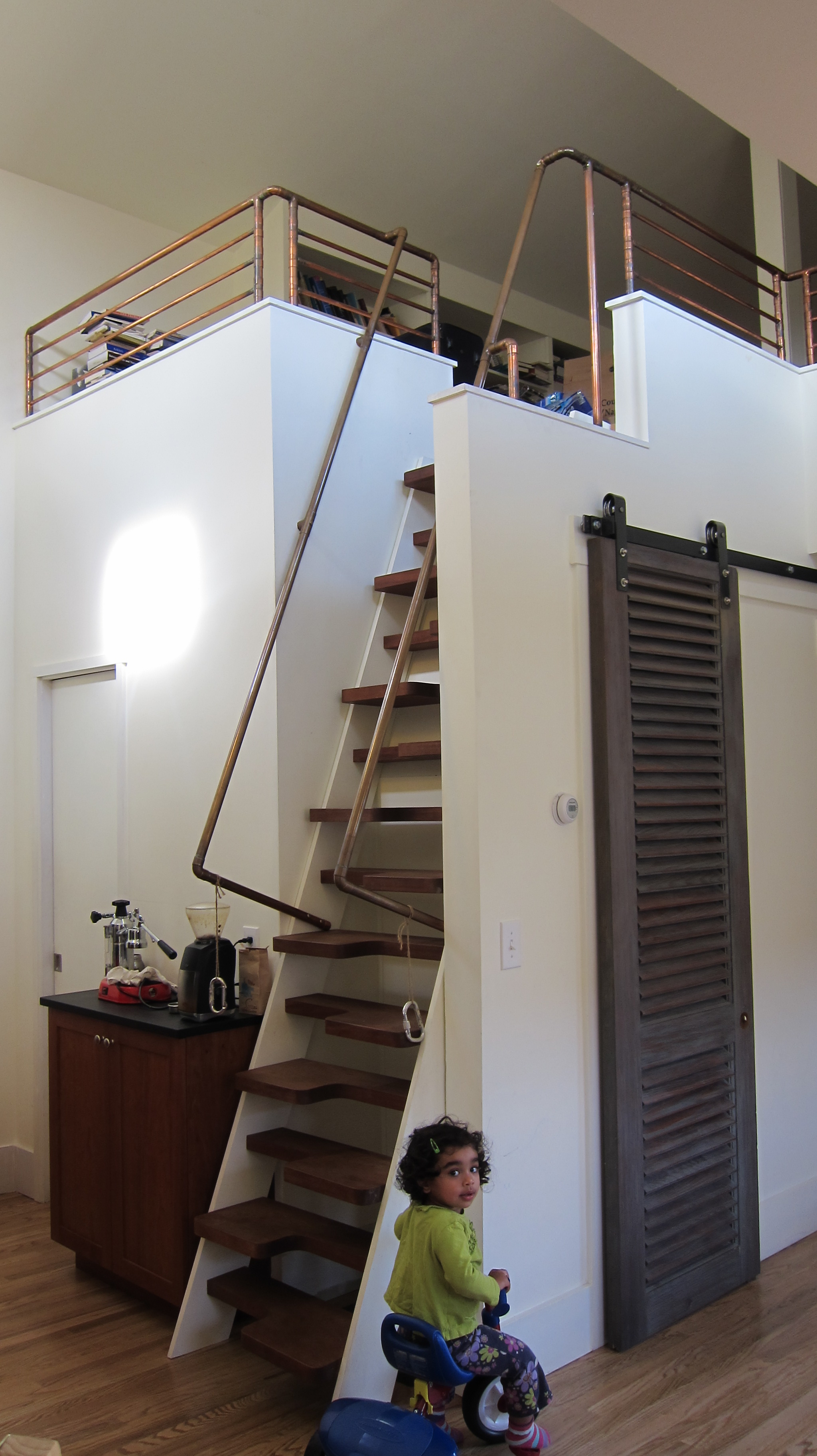
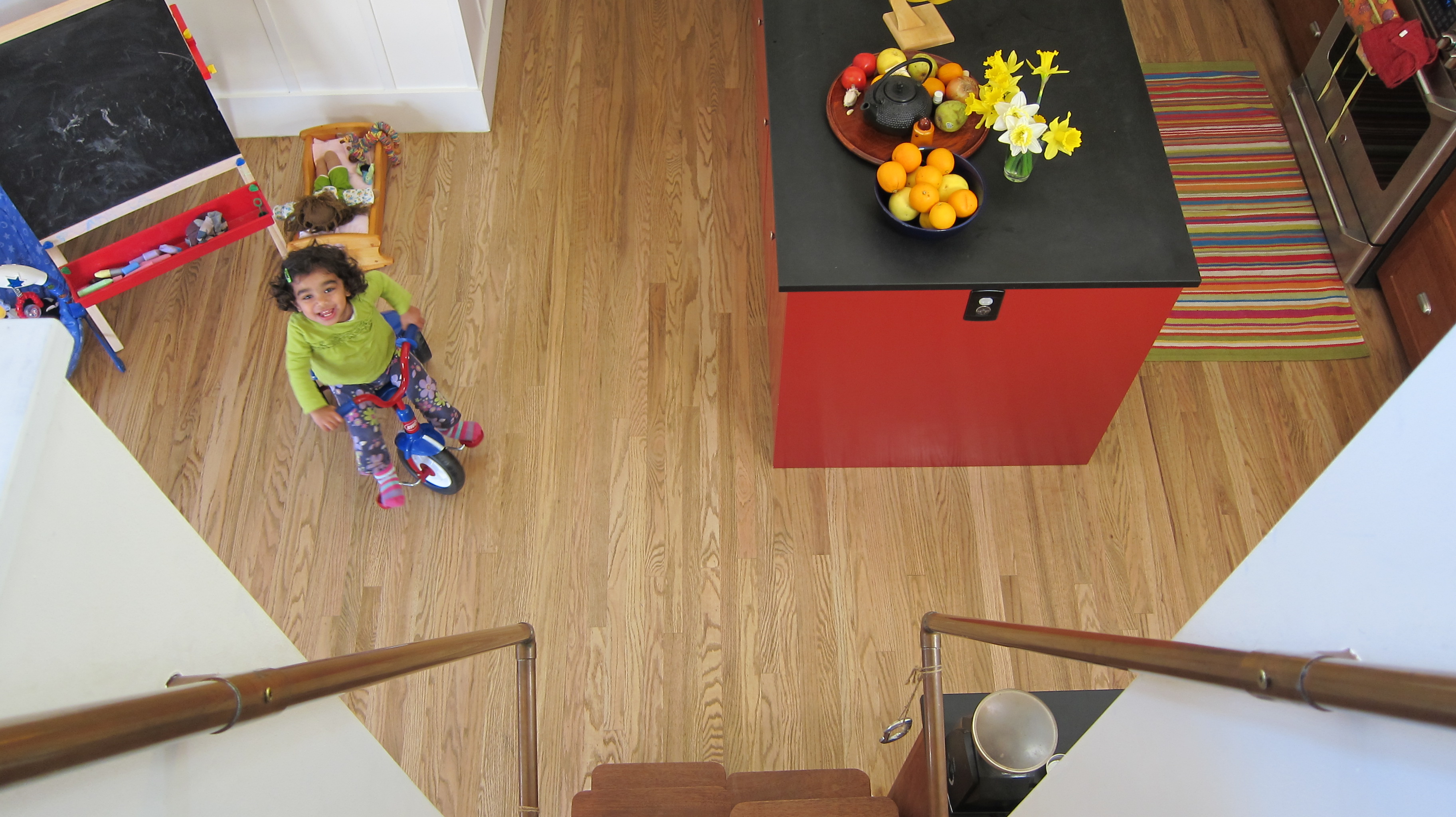
Last week Akhila gave me a tricycle tour of her crib.
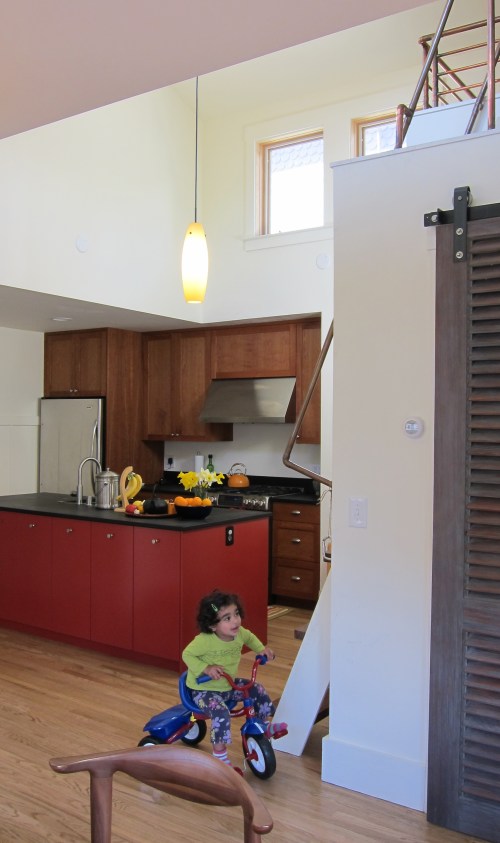
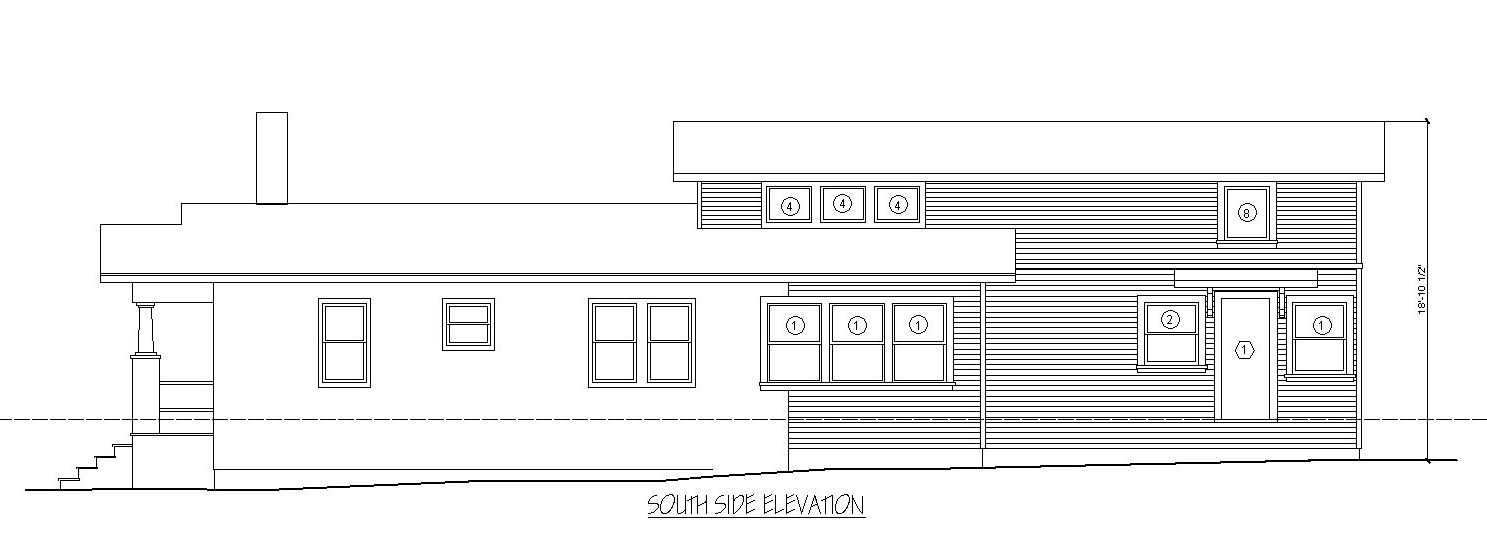
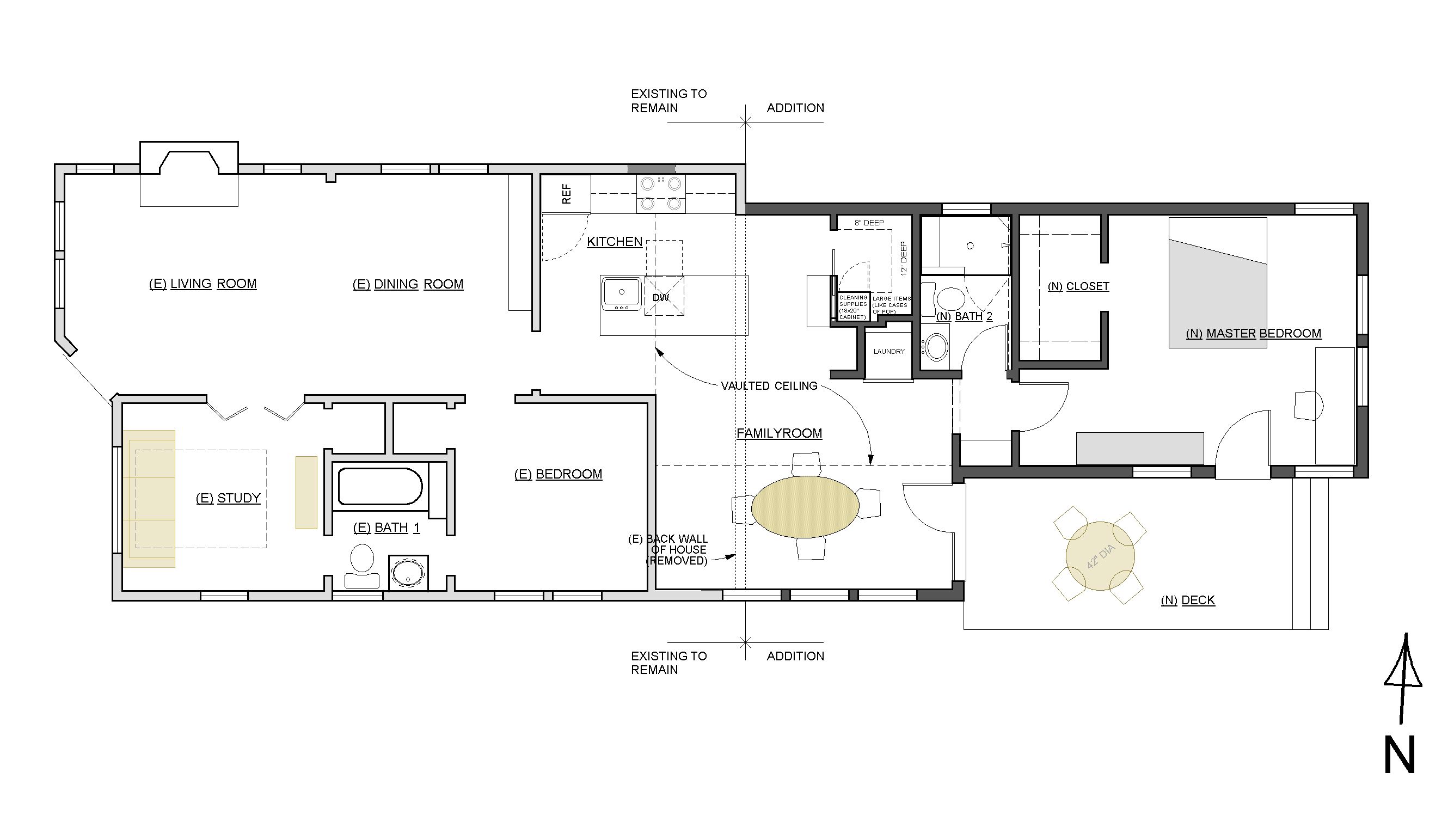
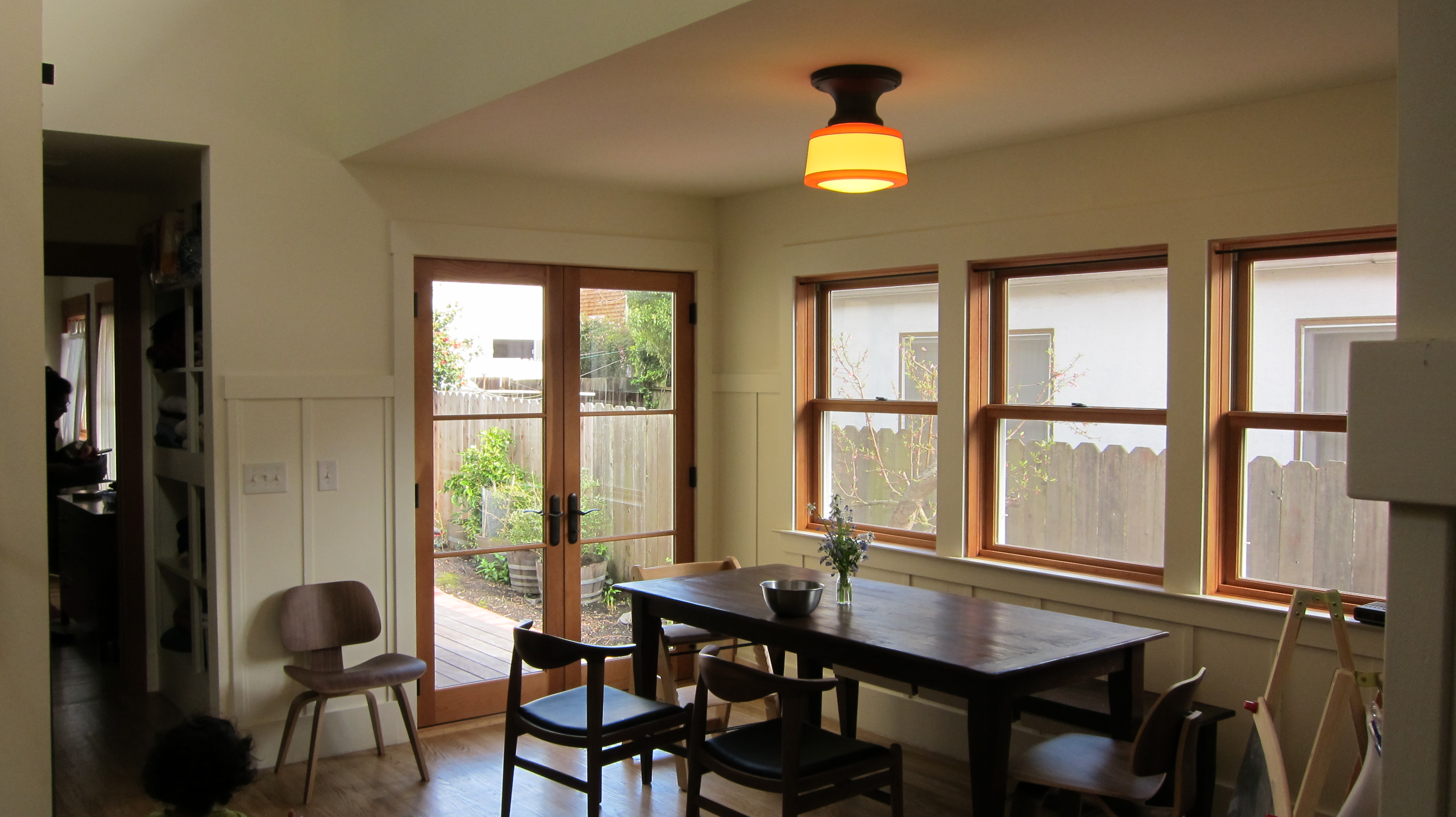
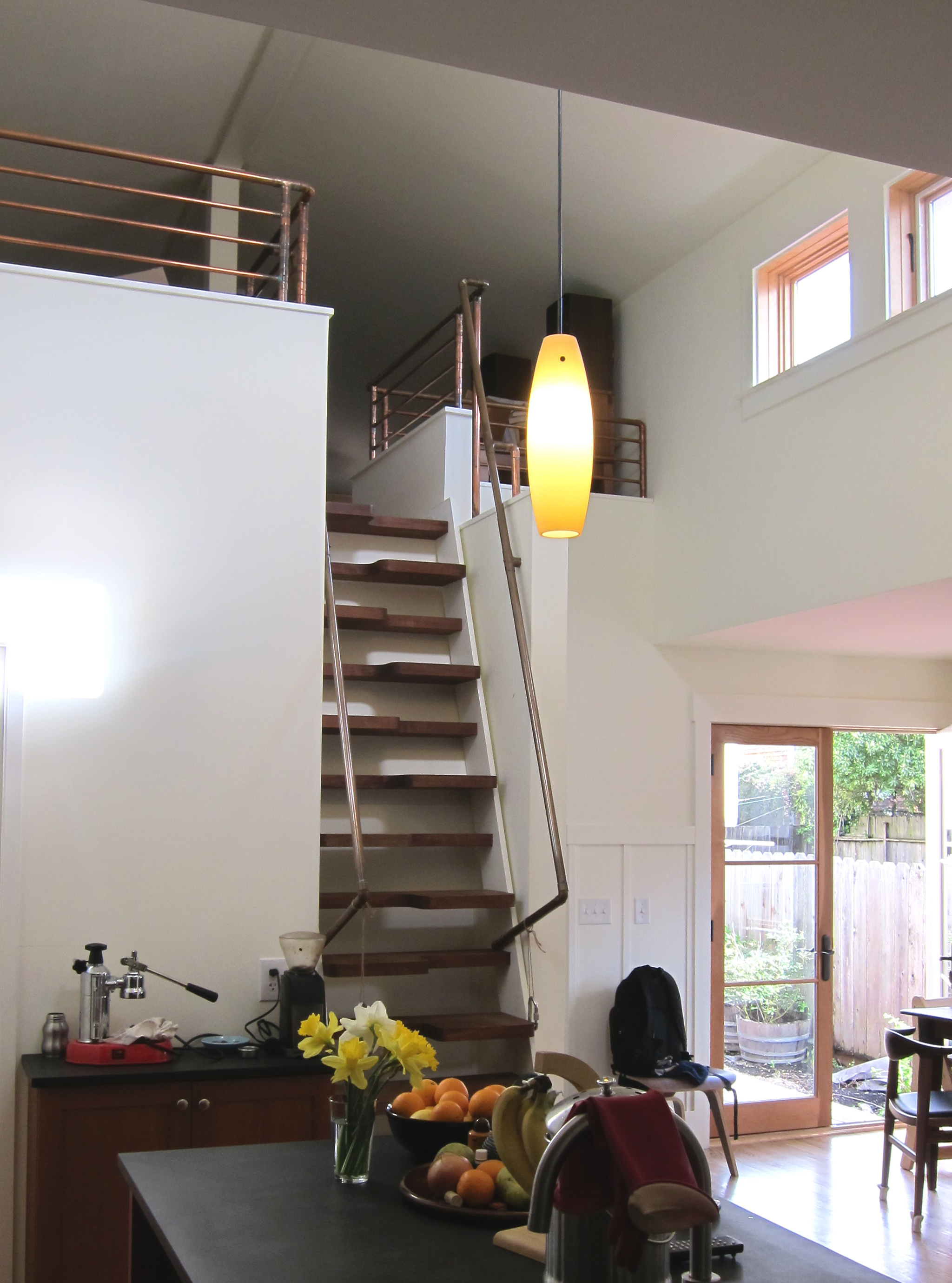
She recently commissioned deedsdesign for an addition including a master suite, expanded kitchen, and family room. Popping up the roof just a few feet allowed for a vaulted ceiling and high windows over the kitchen and an attic loft over the master. The kitchen is on the north side, so the high south windows provide southern sunshine while leaving room for enough cabinets on the north wall. (click on the thumbnails to see enlarged drawings)

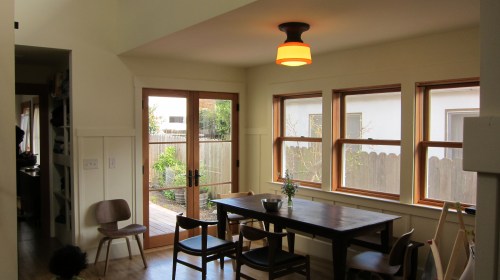
The dining room gets a lot of southern sunshine and has french doors leading to the deck.
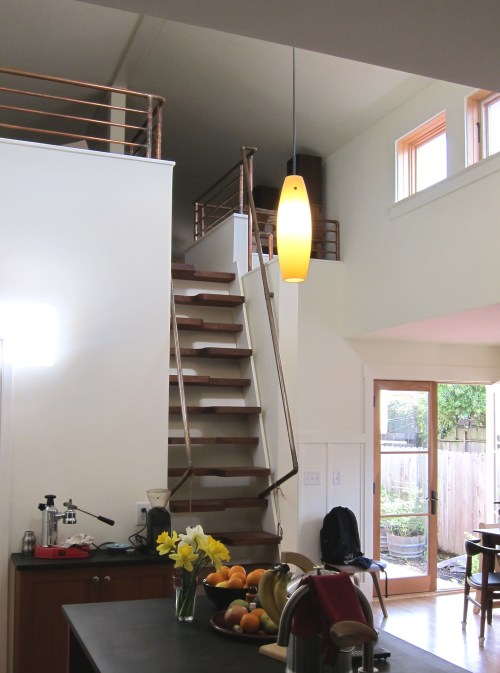
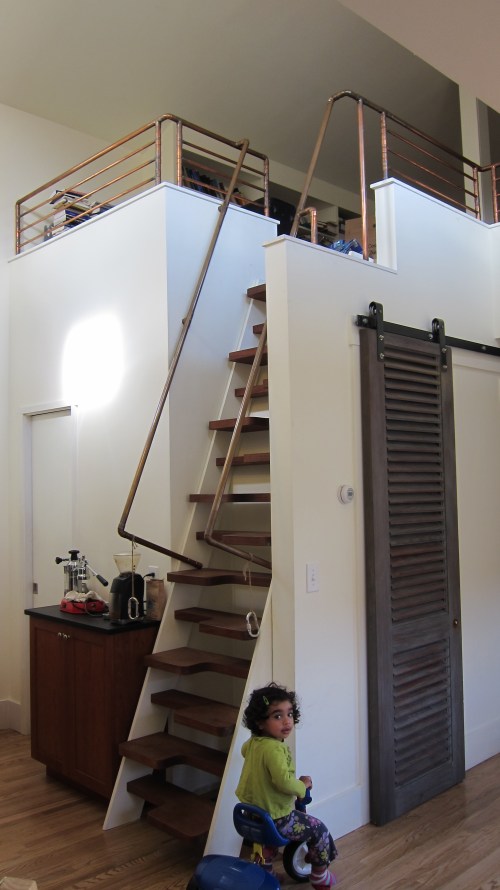
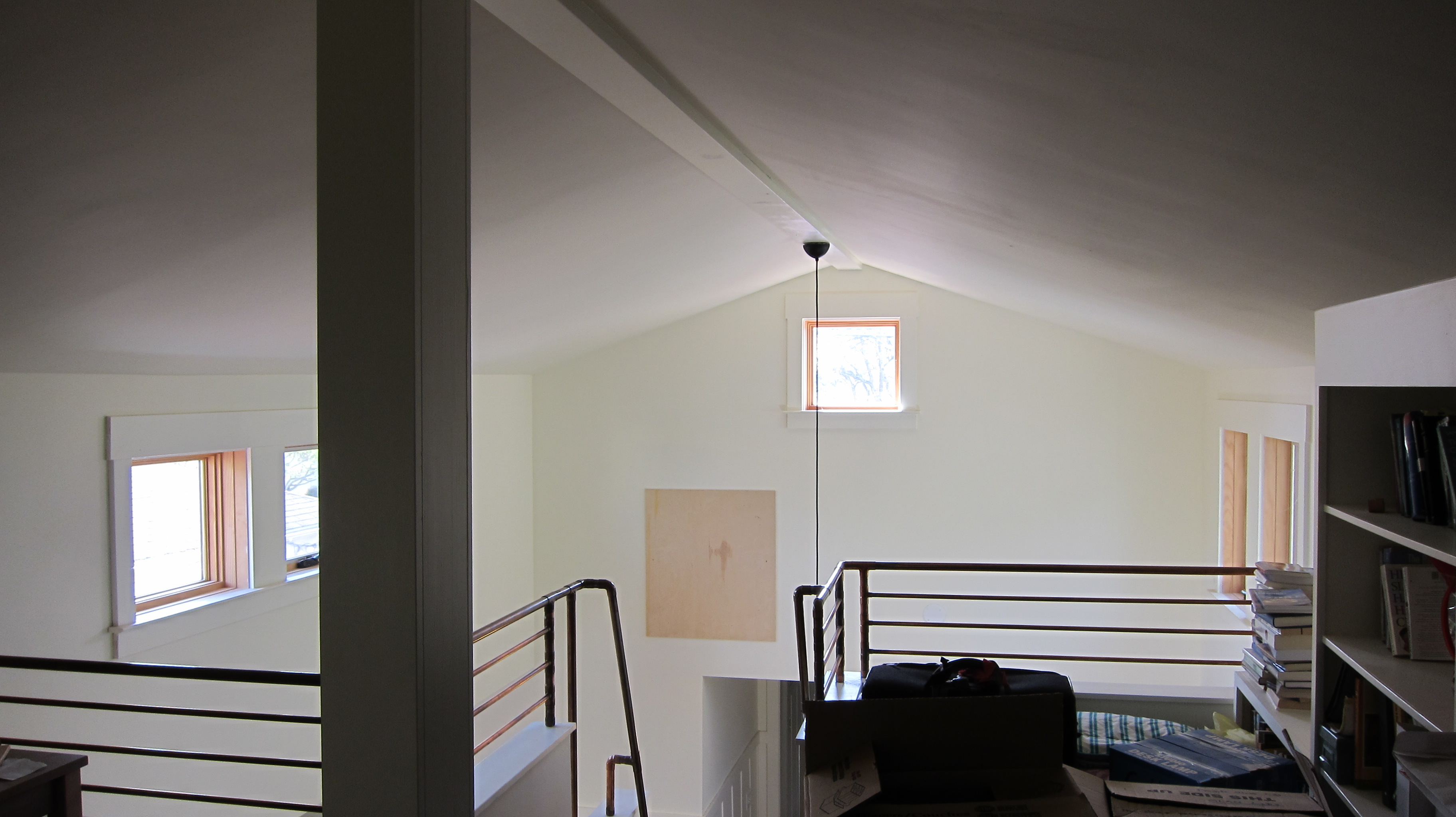
The Lapeyre stairs provide easy access to the loft above. We enclosed the loft with low walls to hide any boxes stored up there, but added open railings for the last 18″ or so. This way the required 42″ tall “guards” don’t seem so tall and a bit more light circulates.
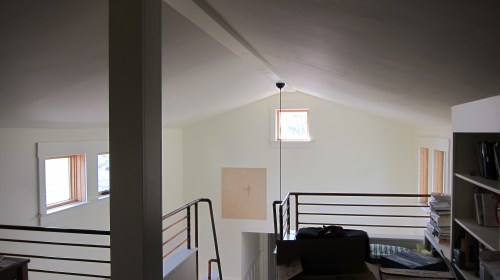
I didn’t get any photos of the loft itself, but it has built-in shelving and a fir plywood floor, finished with polyurethane. (As you can see the project isn’t quite finished yet)
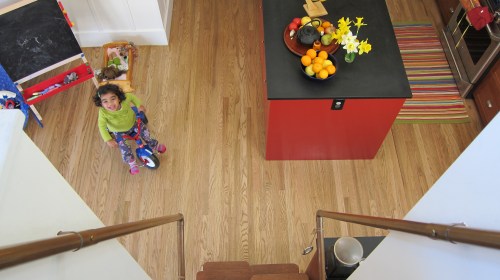
The homeowner waited for me below while I toured the loft area.
Posted in Design Projects | Tagged alternating tread stair, Berkeley, children, color, copper, copper pipe, houses, interiors, kitchen, lapeyre stair, lighting design, Lofts, passive solar, small buildings, small spaces | 2 Comments »
The Correlated Color Temperature scale for common light bulbs ranges from 2700 to 5500 Kelvin. Warm white is 2700K-3500K, and cool white is 3600K-5500K. (further extremes on the scale are not typically used for architectural lighting.)
Sunrise and sunset light and candle flame light are very warm, around 1850K.

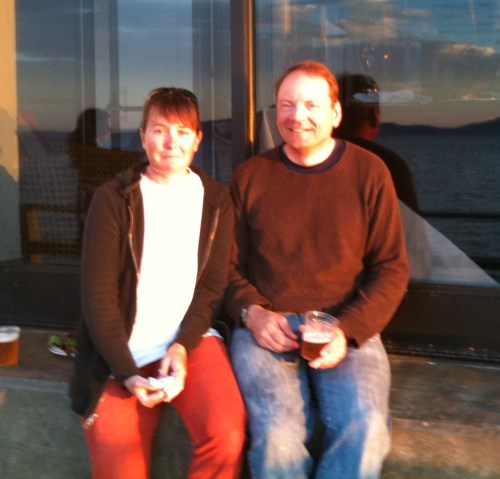
This is often very nice light for photographs of people.
The color temperature is based on the electromagnetic radiation emitted from an ideal black-body. It varies depending on its surface temperature in kelvins. This serves as a standard to which light sources are compared. An incandescent light bulb’s light is thermal radiation and the bulb approximates an ideal black-body radiator, so its color temperature is essentially the temperature of the filament. Incandescent bulbs are typically in the 2700-3300 Kelvin range, but often when dimmed the filament gets cooler (lower surface temperature, perhaps 2000 Kelvin, means “warmer” light.)
Compact Fluorescent bulbs do not emit light by thermal radiation, so they get a “correlated color temperature,” comparing the color of light to the ideal black body scale. You can buy them in a range of color temperatures.
Beware! CFLs that are sold as “Daylight” bulbs are around 5000K and considered to mimic daylight at midday. “Daylight” might sound nice, but this is a cooler light and might not be desirable for many spaces. Most people prefer the warm light of the incandescent, so should use CFLs in the 2700-3300 Kelvin range.
Posted in Information | Tagged lighting design | Leave a Comment »
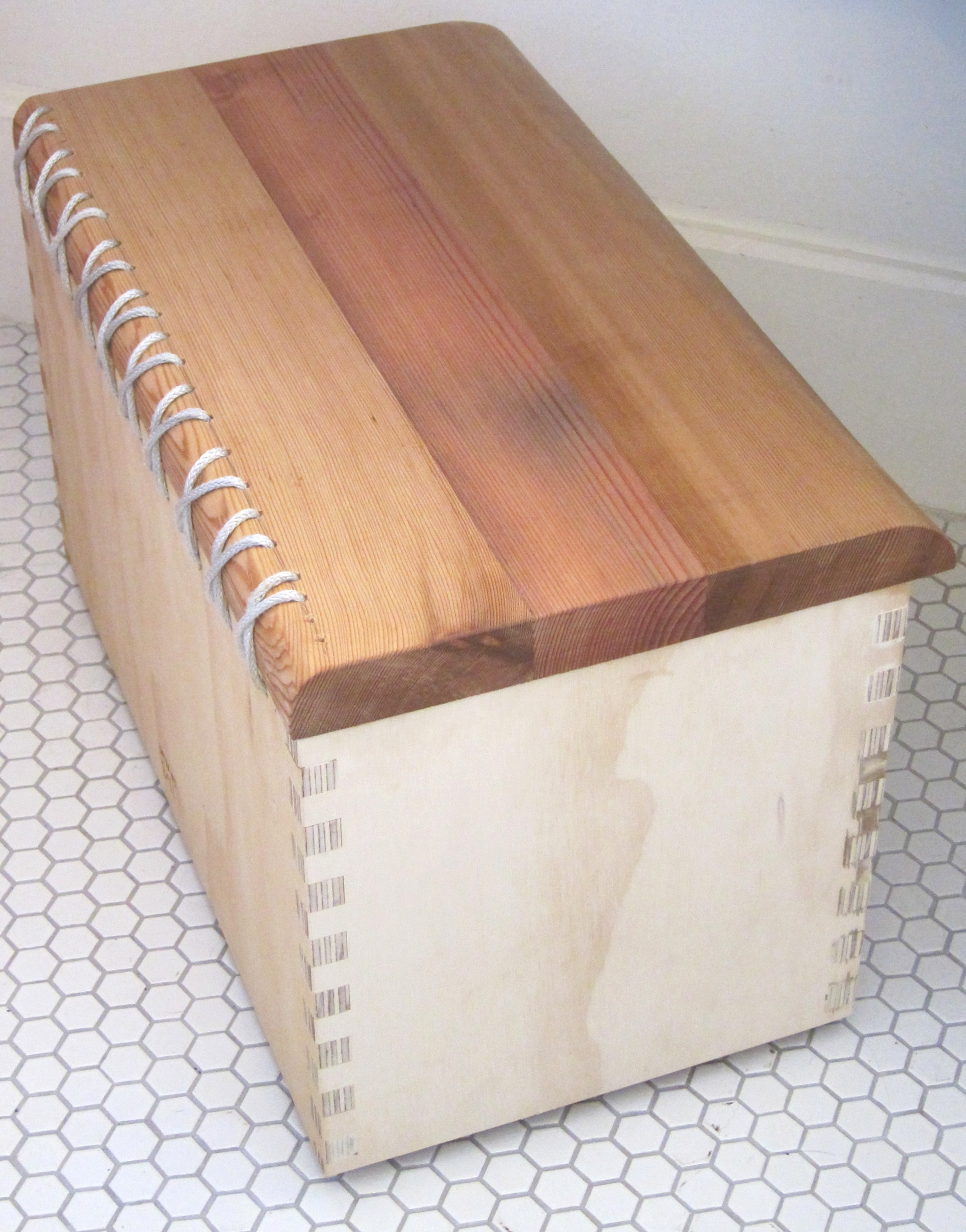
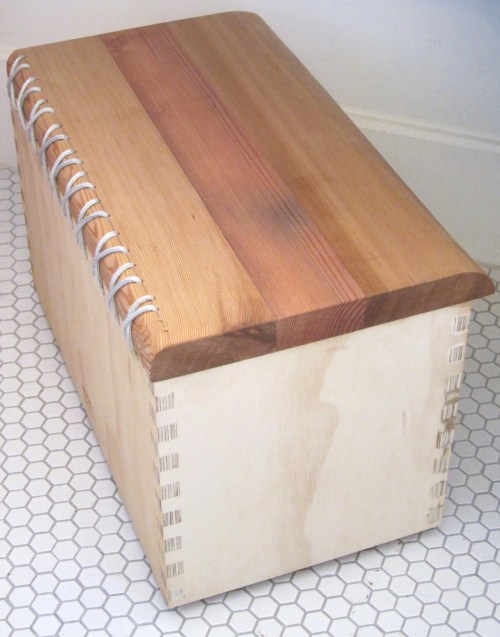 I’ve made progress on the prototype. The lid is installed. I fashioned a hinge out of retired spectra running rigging from the 5o5 Bar-ba-loot (pictured below). The hinge needs a little fine-tuning, but I like the Xs. I handcarved the curves in the lid. Nice soft fir makes for easy carving.
Treasure chest Post 1 Treasure chest post 2

Posted in Design Projects | Tagged boxes, fir, furniture, green, plywood, redwood, rope, salvaged | 2 Comments »
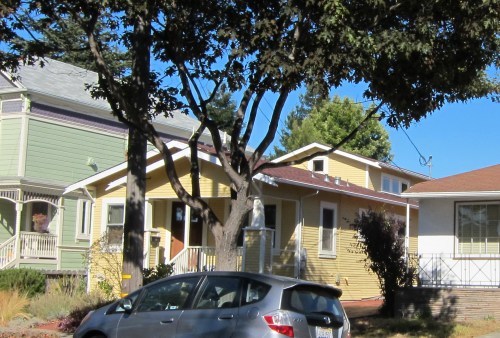
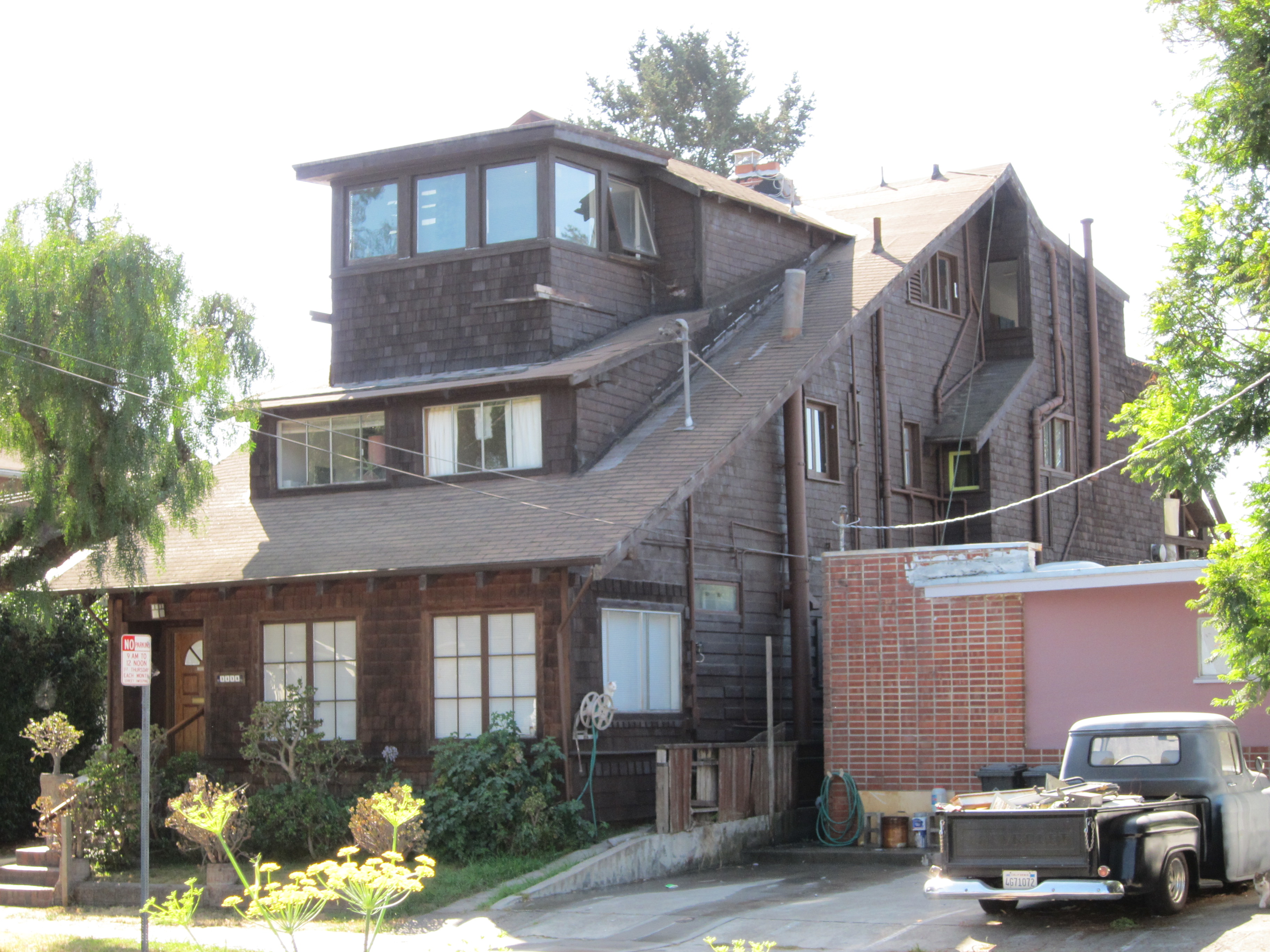
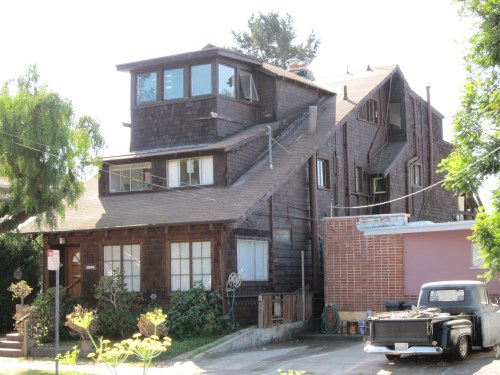 I bet the little attic room is pretty nice from the inside, but you have to wonder what they were thinking.
Posted in Found Objects | Tagged additions, Berkeley, curiosities, dormers, houses, humor, palimpsest, roof design | 1 Comment »

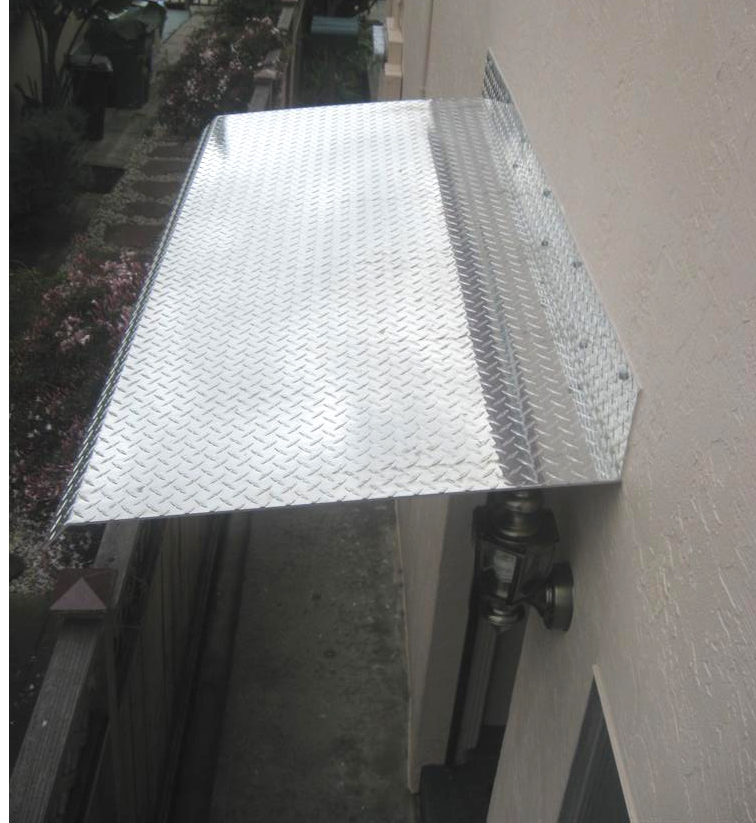
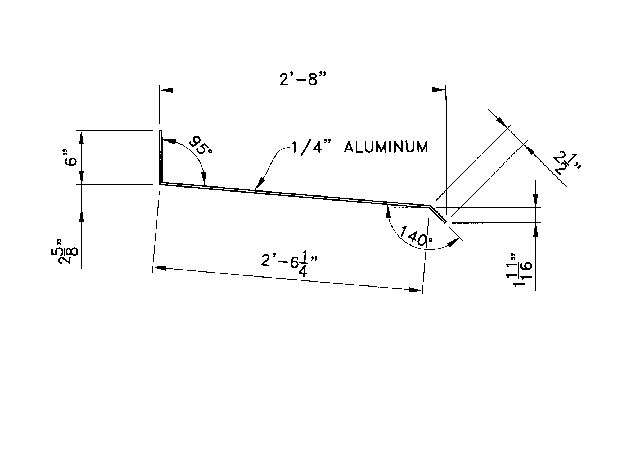
My friend Carl Milsum just installed this simple and sturdy new aluminum entry roof to protect visitors at his front door. It might look better without the diamond plate, but I think he got a special deal on this material.
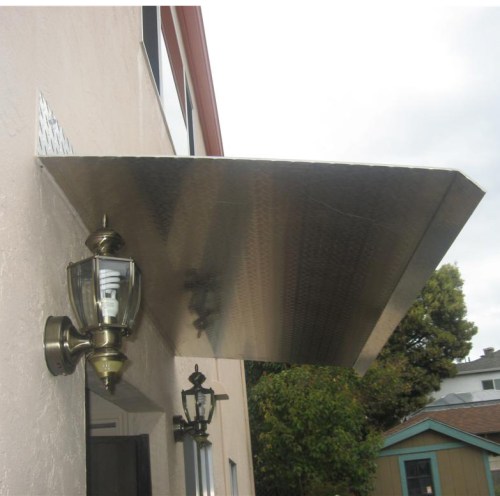
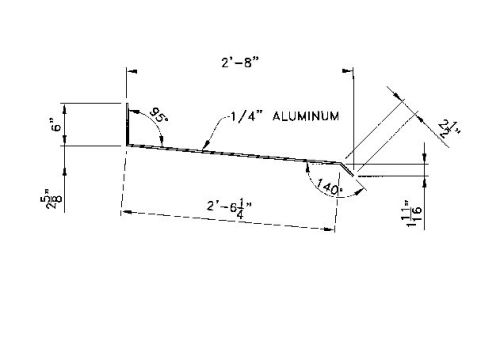
Posted in Found Objects | Tagged aluminum, metal, roof, utilitarian, water management | 1 Comment »

- 60 Watt GE frosted incandescent bulb: 820 Lumens (initial)=13.6 lumens/watt; dimmable; 2700 Kelvin (warm white, when dimmed the light is warmer, up to about 2000 Kelvin;) rated to last 1500 hours; $2.20 apiece (1000 bulbs.com)
- 13 watt Philips Lighting spiral CFL (energy star rated): 900 lumens (initial)=69 lumens/watt; not dimmable; 2700 Kelvin (warm white;) rated to last 8000 hours; $5.26 apiece (1000 bulbs.com)
- 12.5 watt Philips EnduraLED (I have one of these and can attest that it is a great bulb so far): 800 lumens (initial)=67 lumens/watt; dimmable; 2700 Kelvin (warm white); rated to last 25,000 hours; $42.89 apiece (1000 bulbs.com)
This quick snapshot reveals that the CFL is the best value, assuming you don’t want to dim the light, this mercury business is a racket, and the light quality is equivalent.
These dimmable CFLs are a bit more pricy. I have never used one so cannot comment:
- 16 watt dimmable CFL (Neptun): 900 Lumens=56 lumens/watt; dimmable; 2750 Kelvin (warm white;) rated to last 8000 hours; $11.93 apiece (1000 bulbs.com)
There is some concern that the mercury in a CFL bulb is dangerous and ends up polluting the environment. The LED bulb might be a better choice for that reason. Another reason to choose the LED over the CFL is if the fixture is hard to reach, the LED bulb should last more than four times as long as the CFL. The incandescent will help heat your house and certainly has the least embodied energy.
In order to make a complete comparison I need more information about the embodied energy of each bulb, the environmental impacts of manufacture and disposal, and how the luminous efficacy degrades over the life of each bulb.
Dimmer switches can save a lot of energy and extend bulb life, although the performance allegedly varies a bit with new technology (LEDs and CFLs.) The aforementioned Philips EnduraLED dims very nicely.
Posted in Information | Tagged green, lighting, lighting design | Leave a Comment »
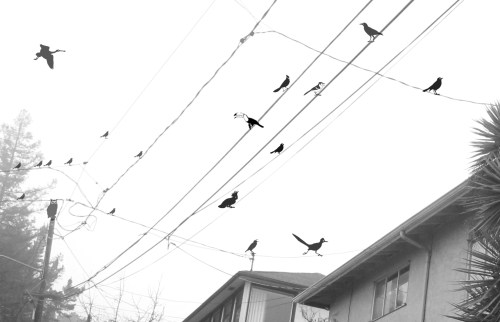
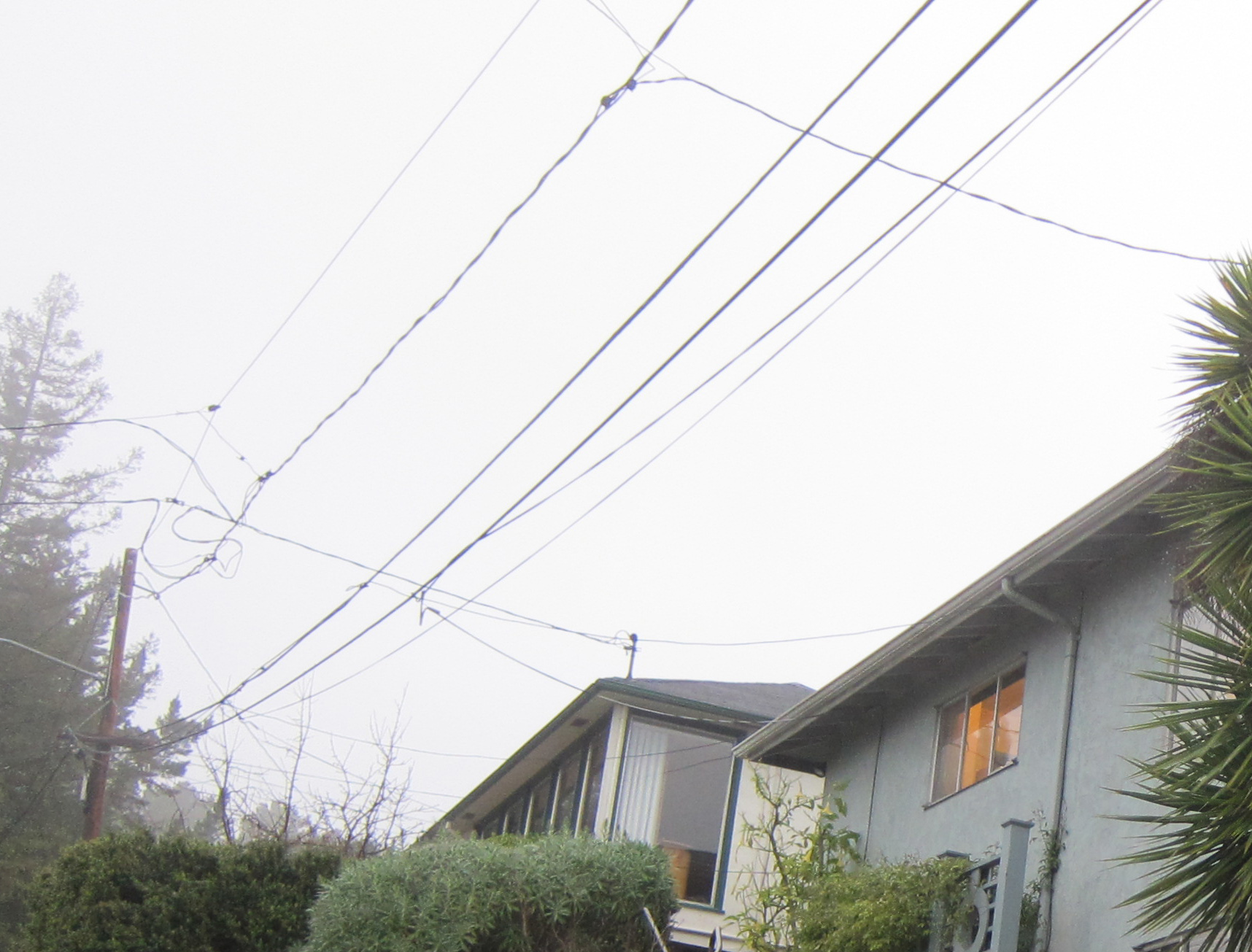
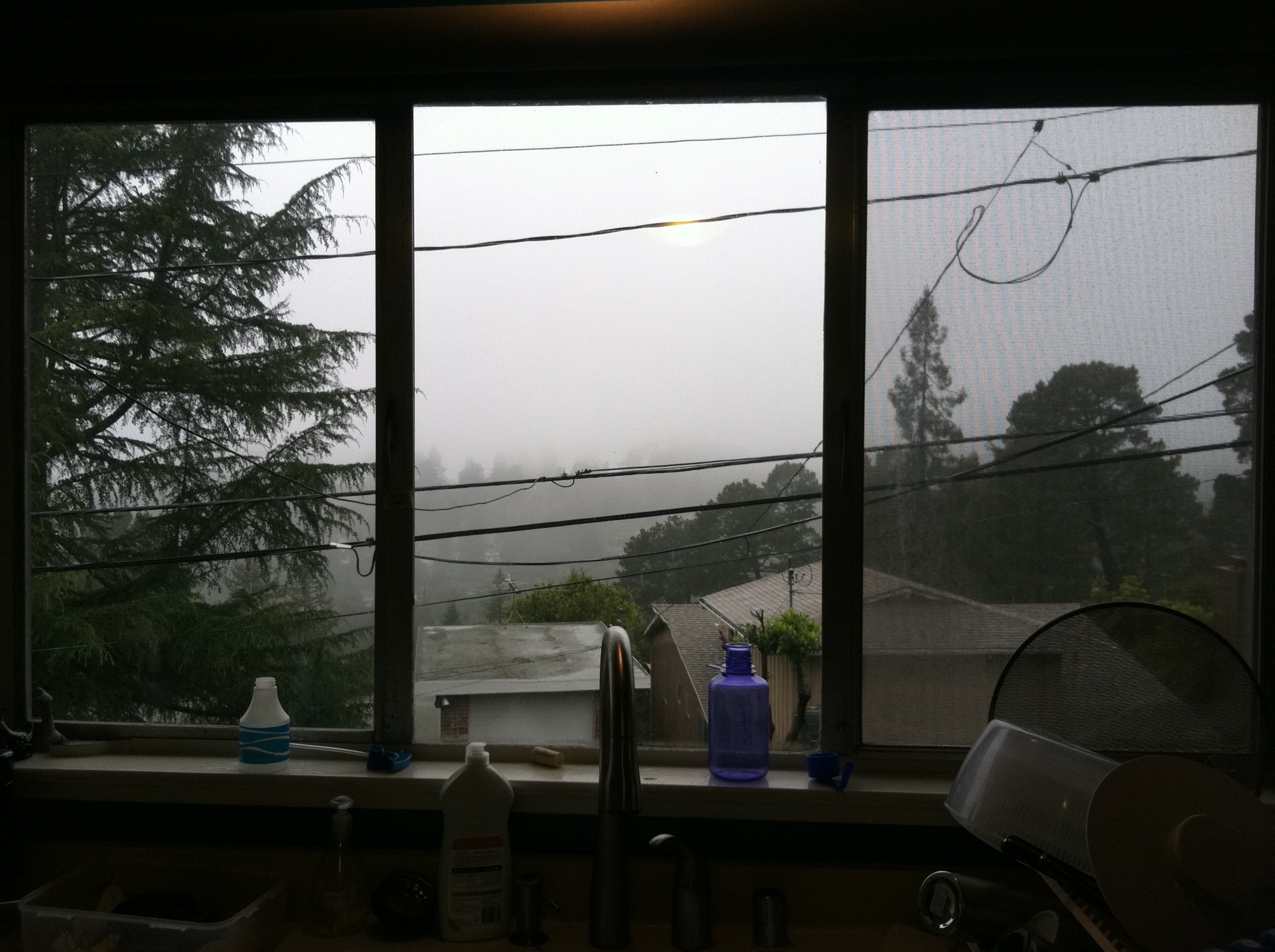
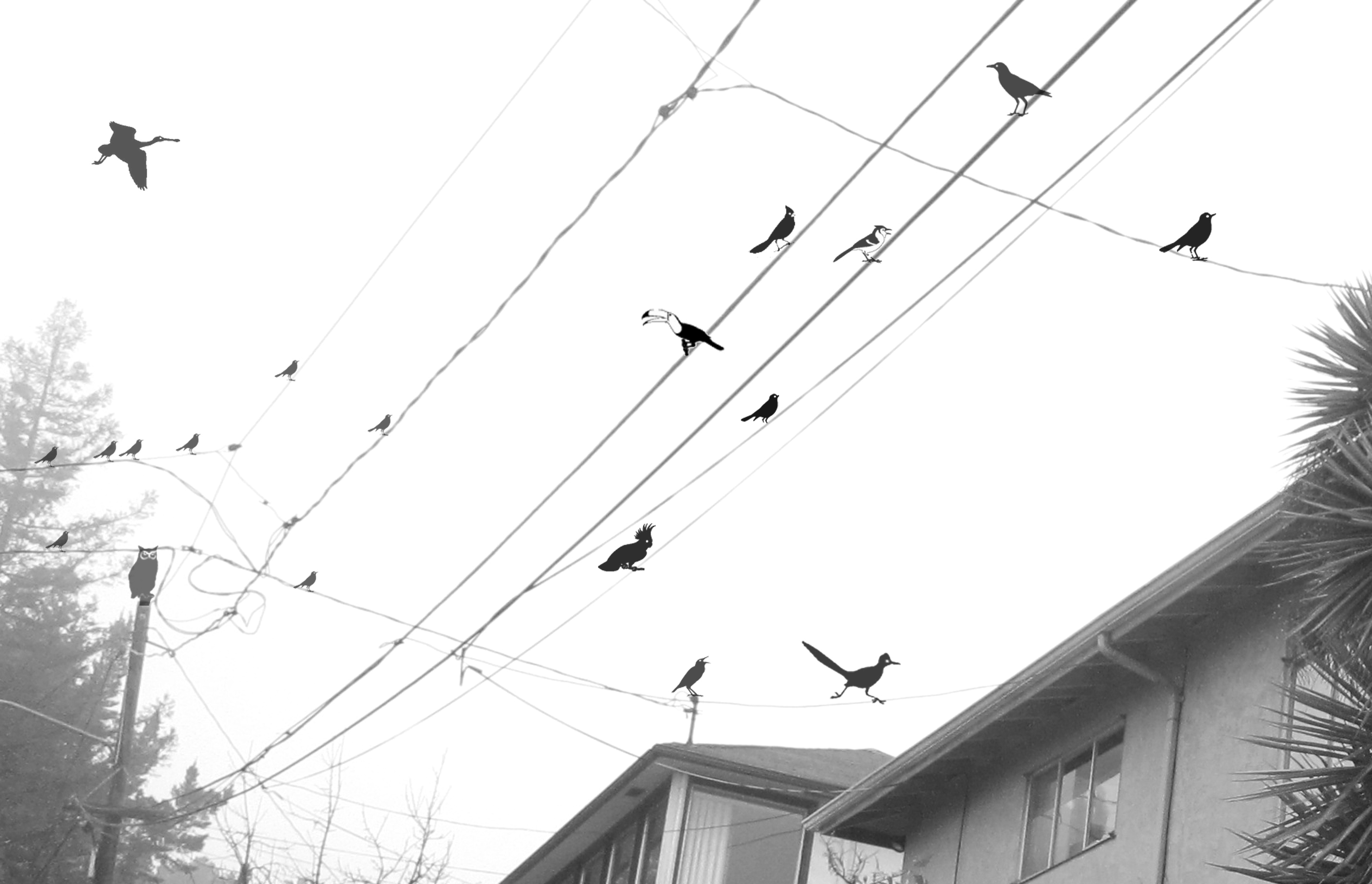
It is often a challenge to think of good solutions for a problematic design puzzle on a tight budget. 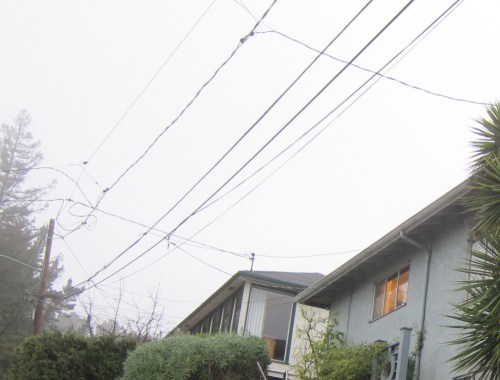
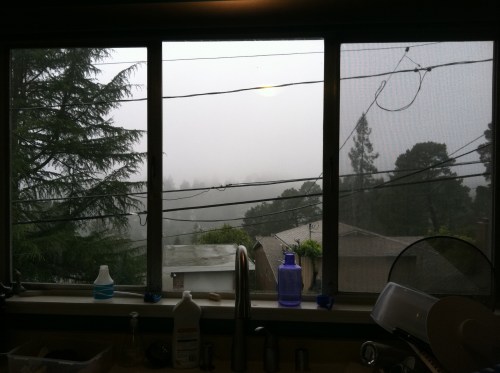
Like modern art!
Its not in the budget to underground the utility lines, so the plan is to install birdfeeders…..and with any luck the mess of wires will fill with birds of all sorts.
Posted in Design Projects | Tagged birds, humor, Oakland, value | 3 Comments »
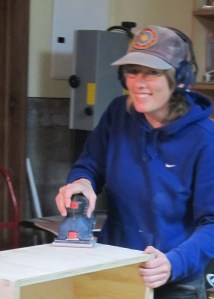
After gluing the box together, it needed some sanding.
——————————————>
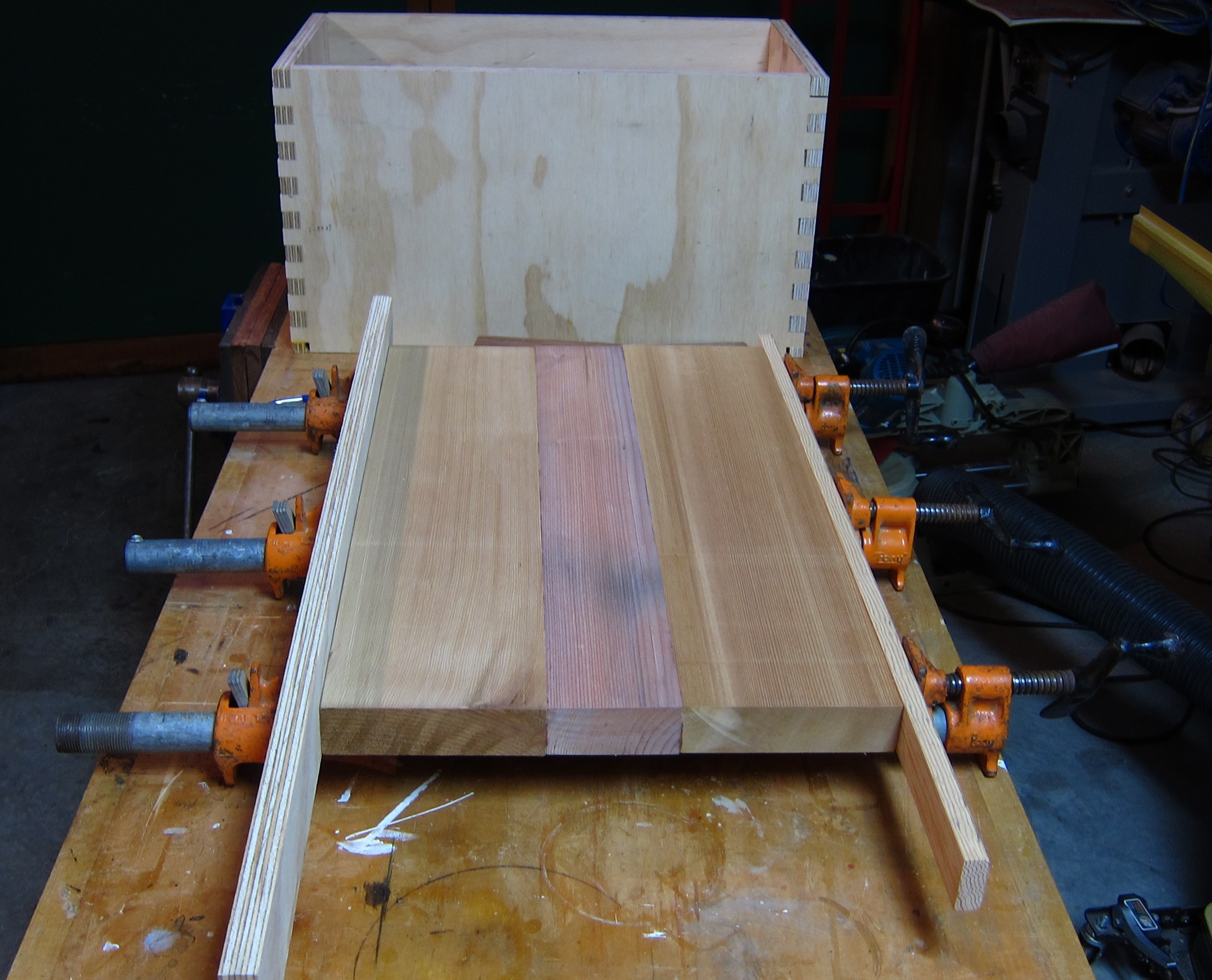
The lid is made from two fir 2×6 scraps and a redwood 2×4 scrap that John brought home from his job site. Better than average specimens, with fairly straight, tight grain; they are probably from appearance grade stock. I did not have a planer on hand, but they were pretty straight and flat. I used my new jointer to make edges flat and perpendicular to the faces. I also used the jointer to clean up the faces. (This is usually accomplished by a planer) Then I glued and clamped them together as shown in this photo.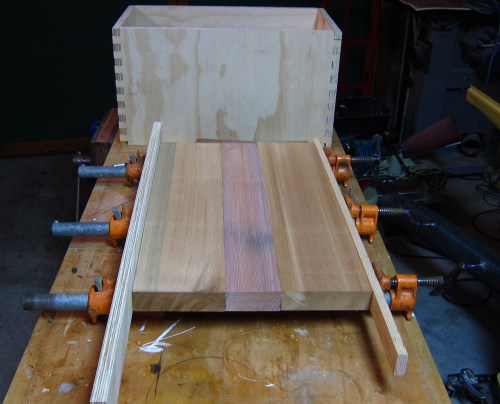
Posted in Design Projects | Tagged boxes, fir, furniture, process, redwood, salvaged, wood | Leave a Comment »
« Newer Posts - Older Posts »
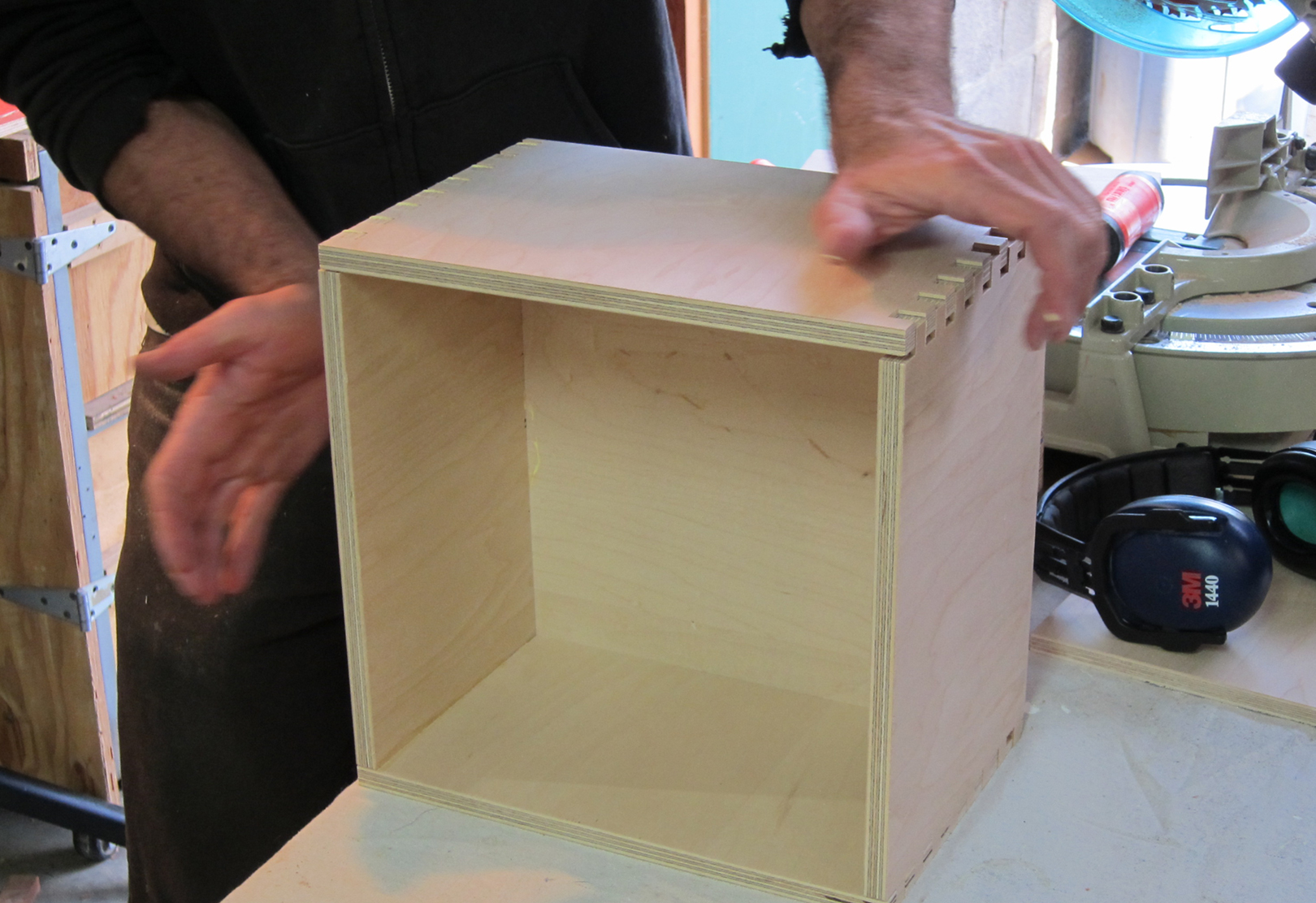
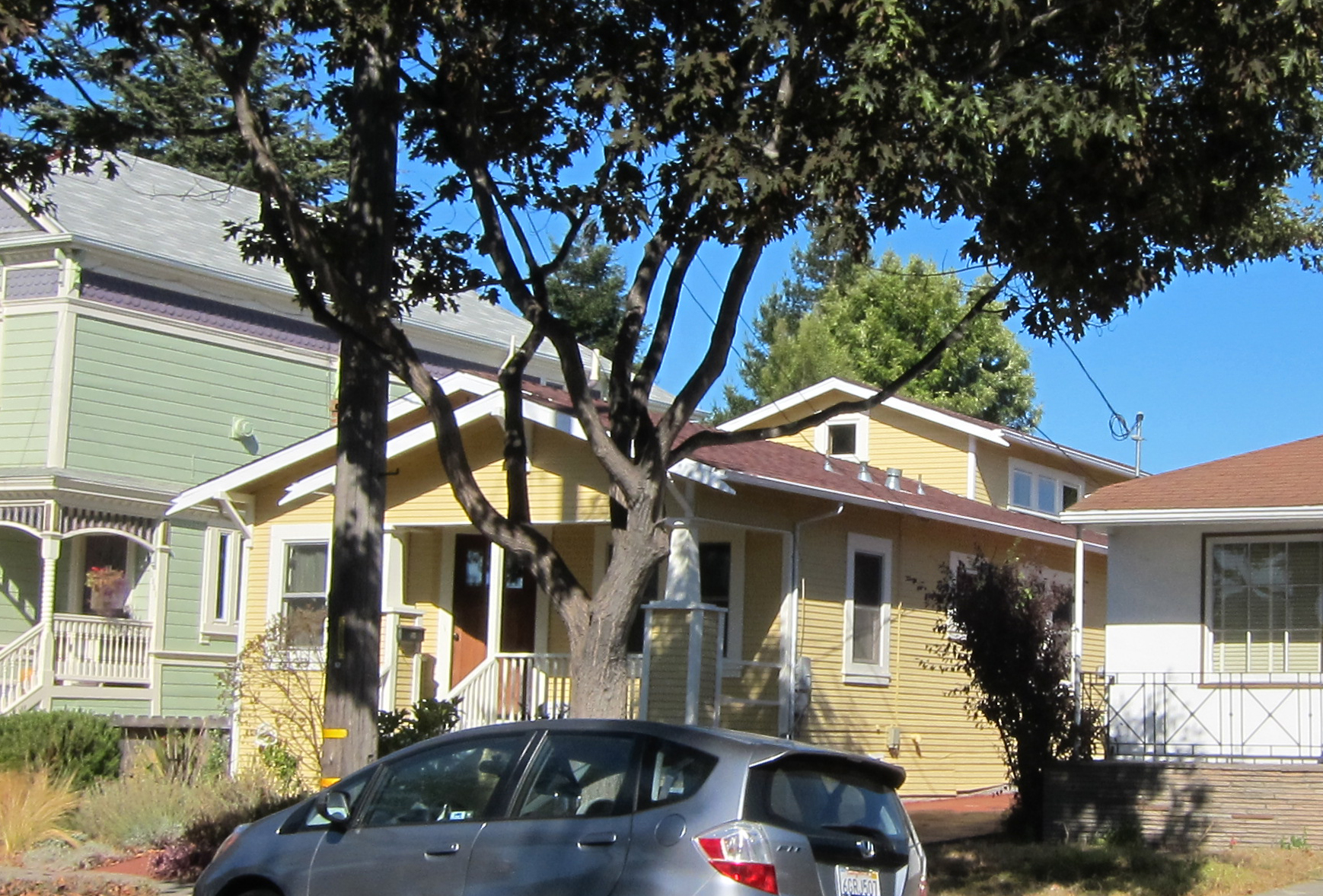
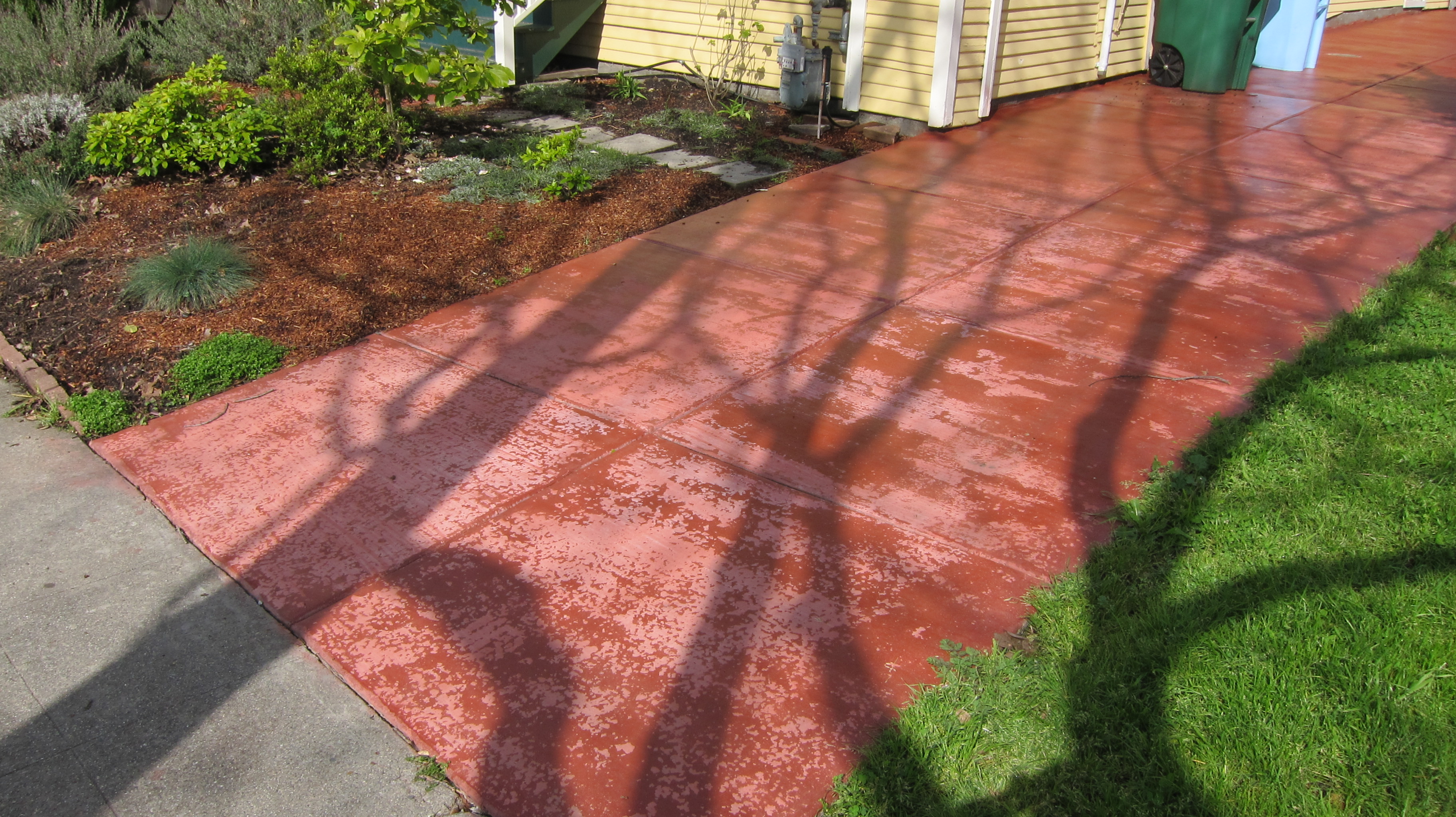
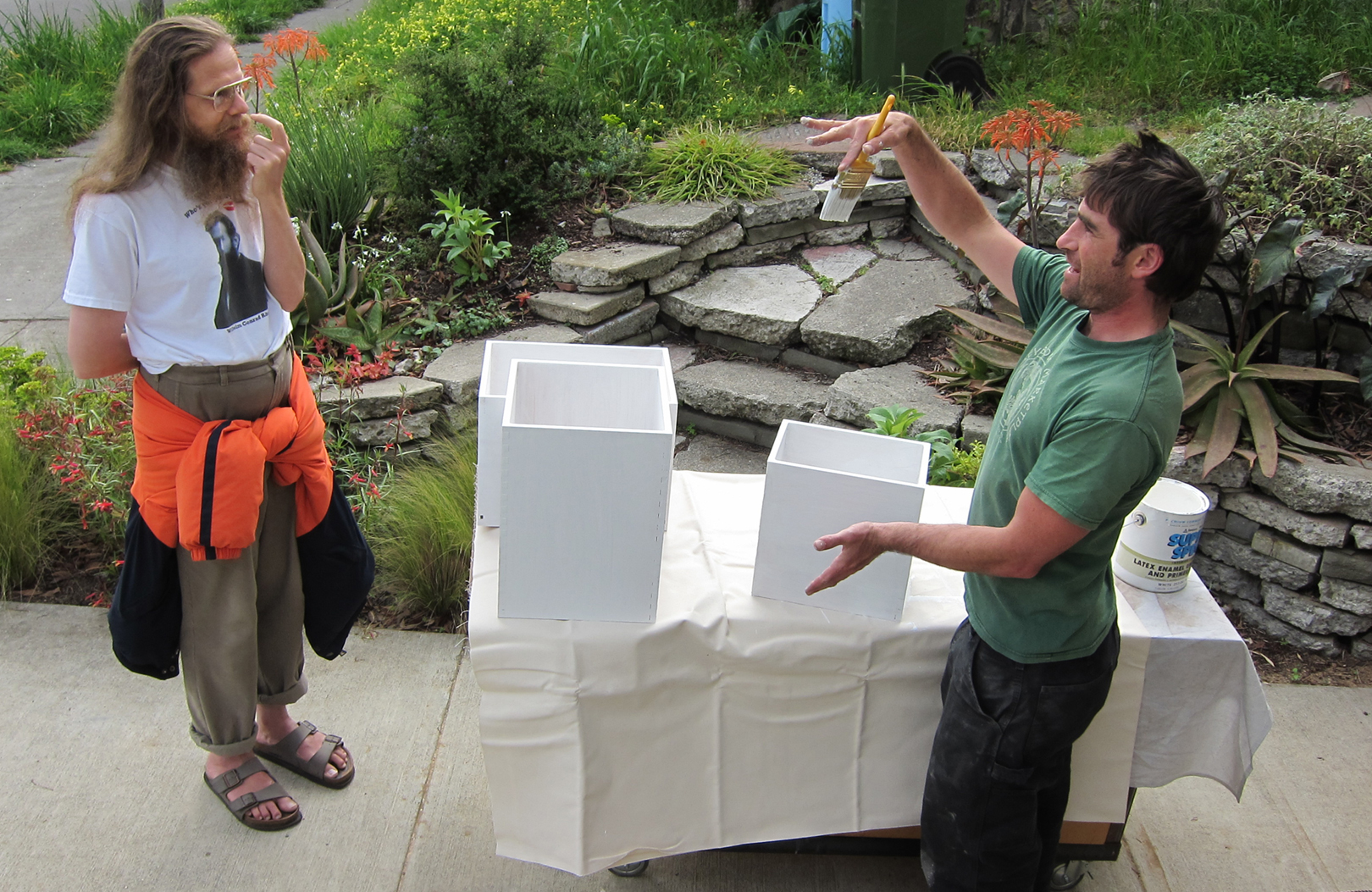 Sometimes, when working in the driveway, people stop by to check out the action. I think John is explaining the cabinet to our curious neighbor here. He now has all five boxes assembled and primed. Here are a few more pictures of the process. Even though these boxes are painted, the woven corners show through and add a nice detail. Stay tuned for the final product.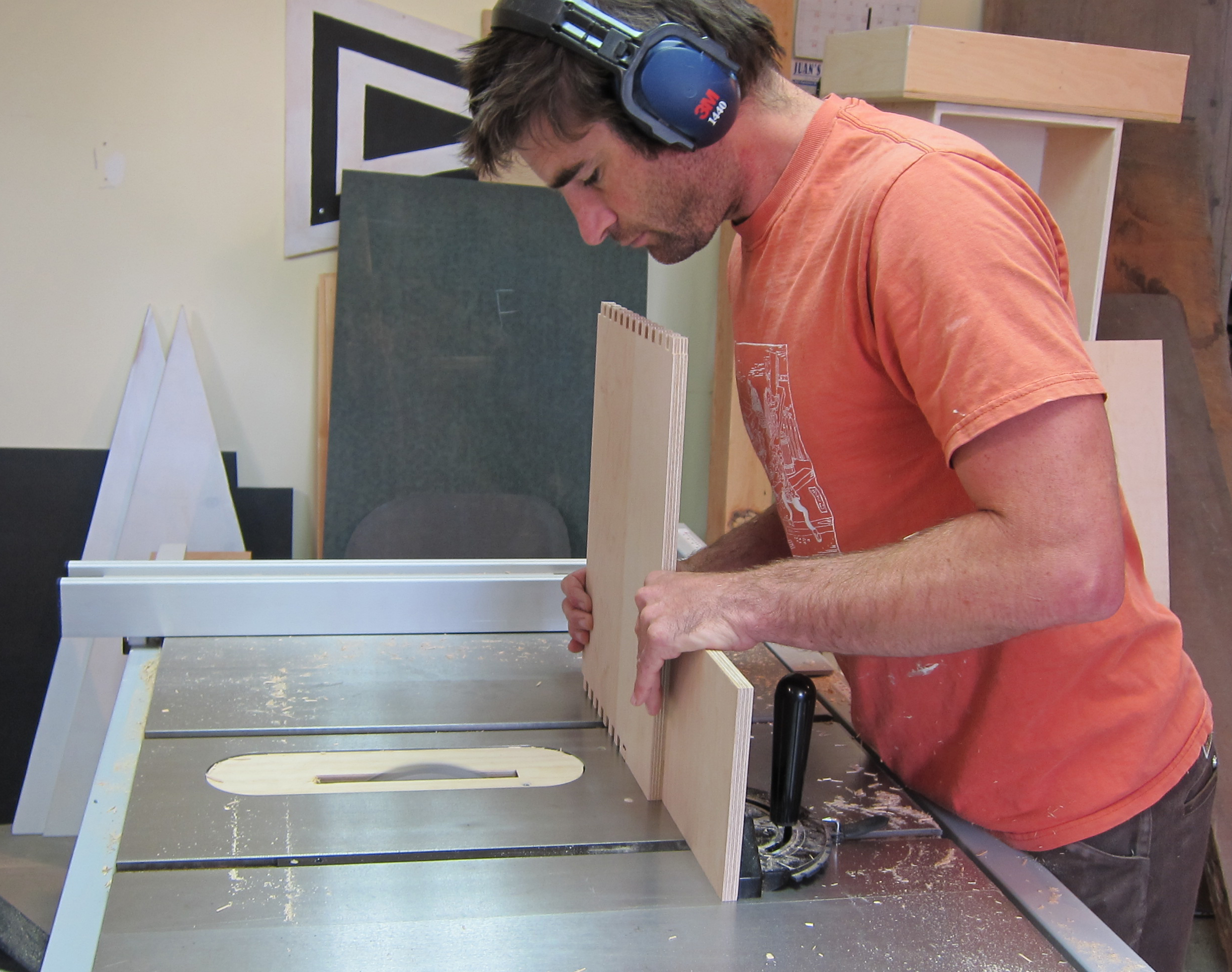





 deedsdesign