Feeds:
Posts
Comments

Archive for the ‘Information’ Category

From Eliel Saarinen’s  The Search for Form in Art and Architecture, NY Reinhold publishing Corp. 1948

Form and Color:

p. 231

“Form is mainly constituted by its proportions, rhythm, volume, and scale.  The colors used, therefore, should support and emphasize these form-properties, rather than bring disarray to them.  Thus, the more neutral the general color scheme, the more form is apt to appear to its full value, as form.  And the more color is regarded as the supporting, refining, and enlivening element, the more color is apt to bring variety and freshness to form.”

P. 232

“Suppose now that we have the following situation. Suppose that the room has been properly arranged according to the above description.  Then, that in some part of this room there has been hung a picture; lets say, a rather conspicuous one as to its size, scale, treatment, and subject-matter — and above all, radiant in color.  Obviously this picture constitutes the  paramount color-accent of its environment, and the environment must be rearranged accordingly.  Also, if other paintings or objects of whatever kind are brought within the sphere of influence of this painting, their fitness must be decided according to the nature of this influence.  Hardly any other procedure is possible if one’s ambition is to build up a consistent color-harmony”

P. 236

“However, we are not able to give advice as what should be done and what not. This could only mean that we would put down theoretical systems of our own for the use of others-which would be against our thinking. The only thing we can stress-and with emphasis-is that color is not a mere matter of decorative enjoyment.  It has a deeper meaning, and this deeper meaning everyone must individually learn to sense. Sound and movement- music and dance- are not for the sake of dinner-entertainment, as many seem to think.  They are essential means for inner cultural growth.

So is color.

And so must the art of color be.”


Read Full Post »

Adrian Higgins writes about gardens usually, but this article is about little buildings in the garden.  The featured building, “Broadhurst’s Crib”  is pretty cool. Its rainscreen is made to glow because all that is behind it is translucent plastic. 

Small buildings in the garden are great because you get to really be in the garden while having some shelter and maybe electricity.  In a small yard there is incentive to make the building as small as possible because this means more garden and less building. 

In this case, the building is an unusual shape to minimize impact on the garden and the southern sun and to maximize efficiency on the interior of the 120 SF building.

Read Full Post »

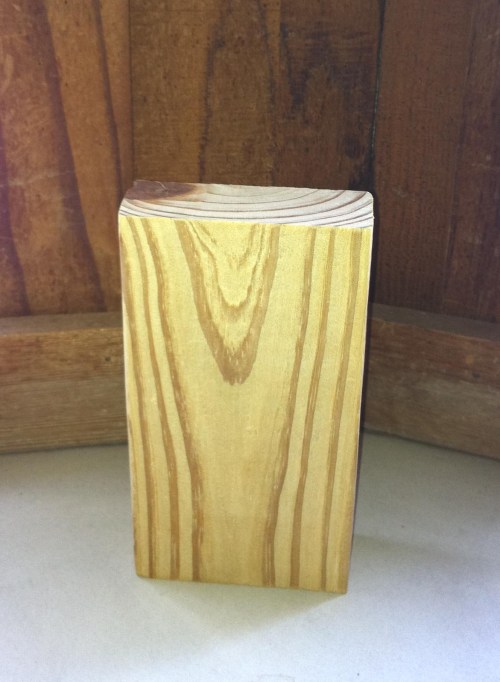
I have been searching for a material for building decks that meets the most rigorous requirements of the wildfire interface zones. I found a new product called TimberSIL that seems to fit the bill and more.  The product literature makes some big claims:

TimberSIL utilizes recycled non-toxic water glass, extracted from rice hulls (an abundant waste product) to surround and protect the wood fiber. TimberSIL wood is unrecognizable as food source for insects, protected from flame and resists rot. The glass extraction process is so heat intensive that it creates more energy than it uses (Energy positive).”

BuildingGreen.com has given the material great reviews,  and they explain the energy positive claims a bit:

“Timber Treatment Technologies switched entirely to this waste agricultural source of sodium silicate about a year ago.  The sodium silicate the company uses in its treatment process is derived 100% from burning rice hulls. Rice hulls have a high silica content–up to about 60%–and this silica is extracted in a gasification process in which the hulls are heated to produce three products: hydrogen (which is burned to generate electricity), carbon (used in making activated carbon for filters), and amorphous sodium silicate. ”

This is a relatively new and unproven product as of yet, but it seems like a good one to try.  The TimberSIL installation manual provides a lot of helpful tips.  I think only southern yellow pine is available now, but perhaps it will expand to other species and maybe they can switch to FSC certified wood as well.

Read Full Post »

I found this instructive video on an  old friend’s website.

Bunny is very authentic and truly inspired by her beautiful table setting. I like the mixing of modern and antique.  Formal dining rooms are becoming a thing of the past for people who desire efficient living in small spaces. Eating areas that are closely connected to the kitchen fit well in the foody lifestyle of the early 21st century.

Read Full Post »

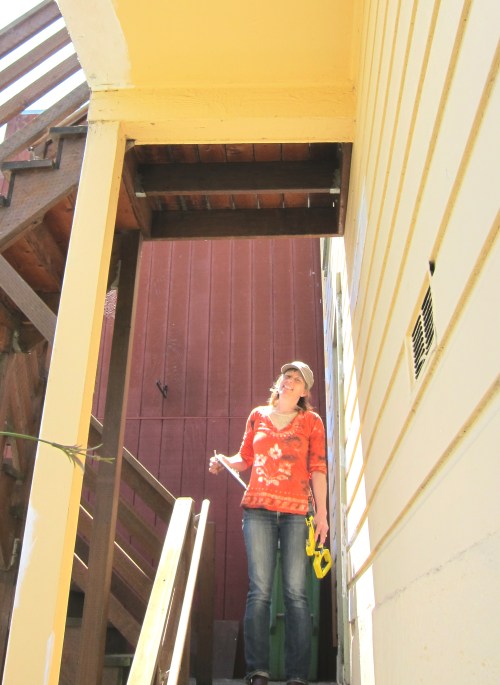
Architect measuring the back stairs

I’ve been busy starting a few new projects the past couple of weeks.   All three projects are small additions on the back of houses;  one in San Francisco, one in Livermore, and one in Richmond.

Measuring a house can be tedious, so I often begin with just the basic dimensions and information essential for the project. I can always verify and fill in details later as needed. Beyond breaking the task into manageable bites, this strategy also keeps initial costs down. This is good if the project is uncertain and the client has hired me in part to determine feasibility.   Thoroughly photographing the building is very helpful. It is hard to catch everything, and the pictures help me clarify if a dimension doesn’t seem right. Arial photographs are also a good tool for understanding the neighborhood fabric and locating the North arrow (and more importantly South)

Besides basic dimensions, asbuilt plans should include basic structural information: sizes of studs and joists, direction of joists, and roof framing and slope; and location of the utilities, furnace, water heater, electrical panel, and, of course, the main sewer line.  The location of the sewer line has been crucial in all three of these recent projects.  When designing for a tight budget, it usually doesn’t make sense to relocate the main sewer line, and you need to make sure you can connect to it easily and with adequate slope.

The next step is schematic design. This is the most exciting part of almost any project.  Sometimes unexpected solutions appear out of nowhere.

Read Full Post »

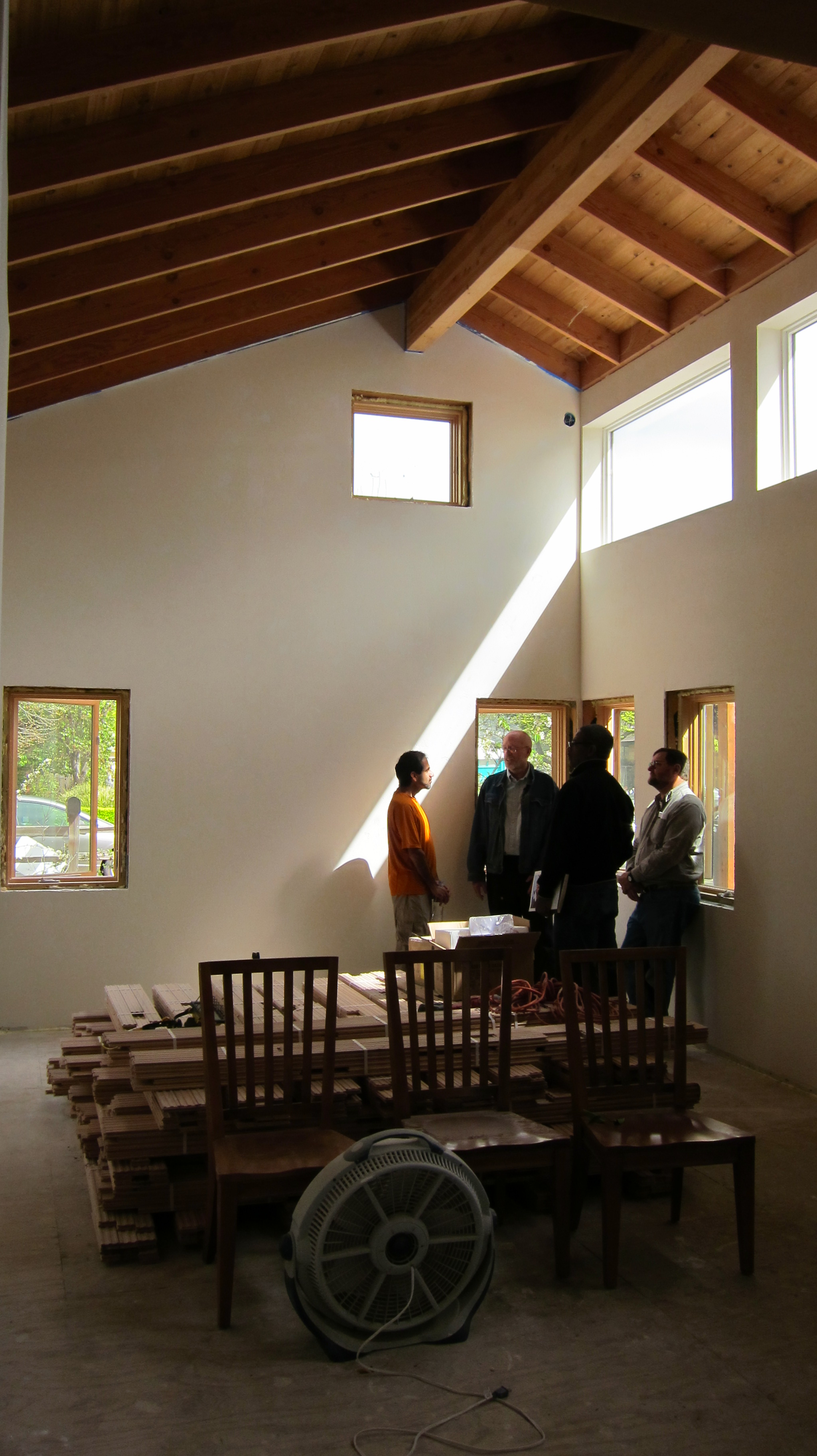
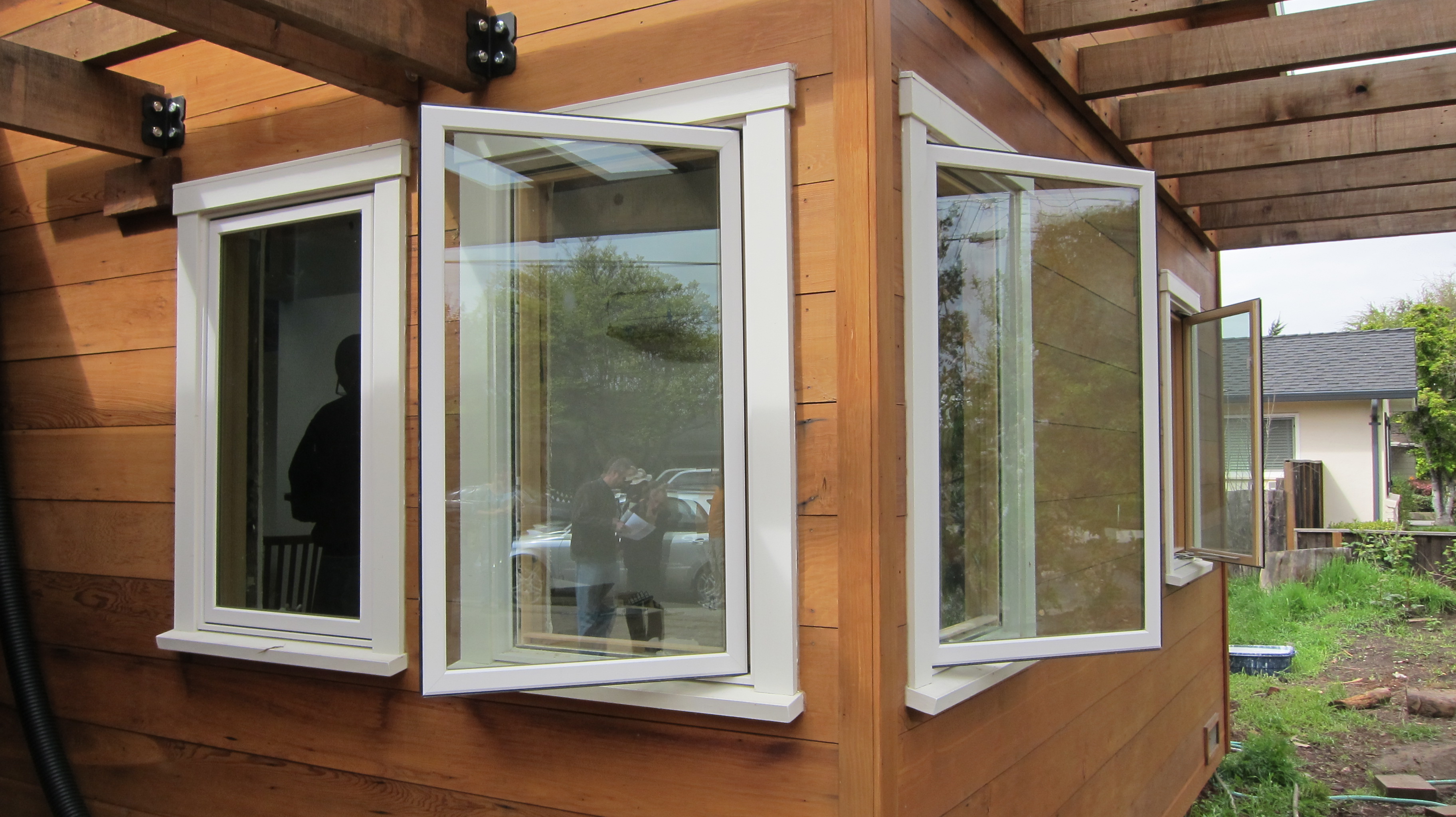
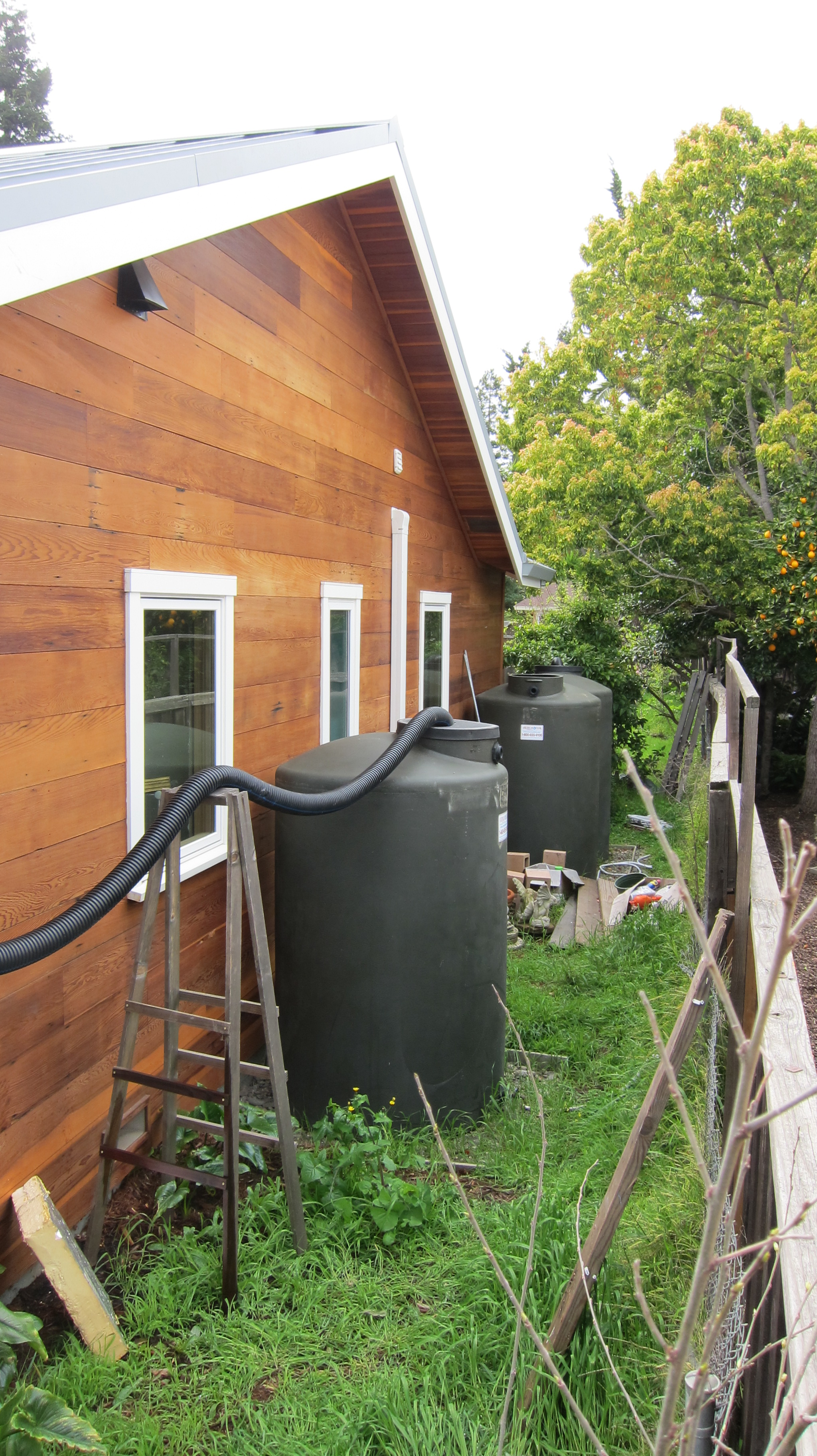
I went on another tour of a couple of passive houses under construction in the San Jose area. The two were very different from each other.  The first is a remodel, designed by Thamby Kumaran with energy modelling by the owner-builder, Scott Heeschen.  It uses a lot of salvaged redwood for the rainscreen siding, a mixture of Marvin Integrity and Serious windows, and rainwater catchment.  Clearly architecture was a priority, since attics and flat ceilings make it easier to maximize insulation. (Compared to this beautiful vaulted ceiling)

Thamby Kumaran and passive house tourists

I am curious how the long strip of south-facing clerestory windows will perform in summer with such a minimal overhang.

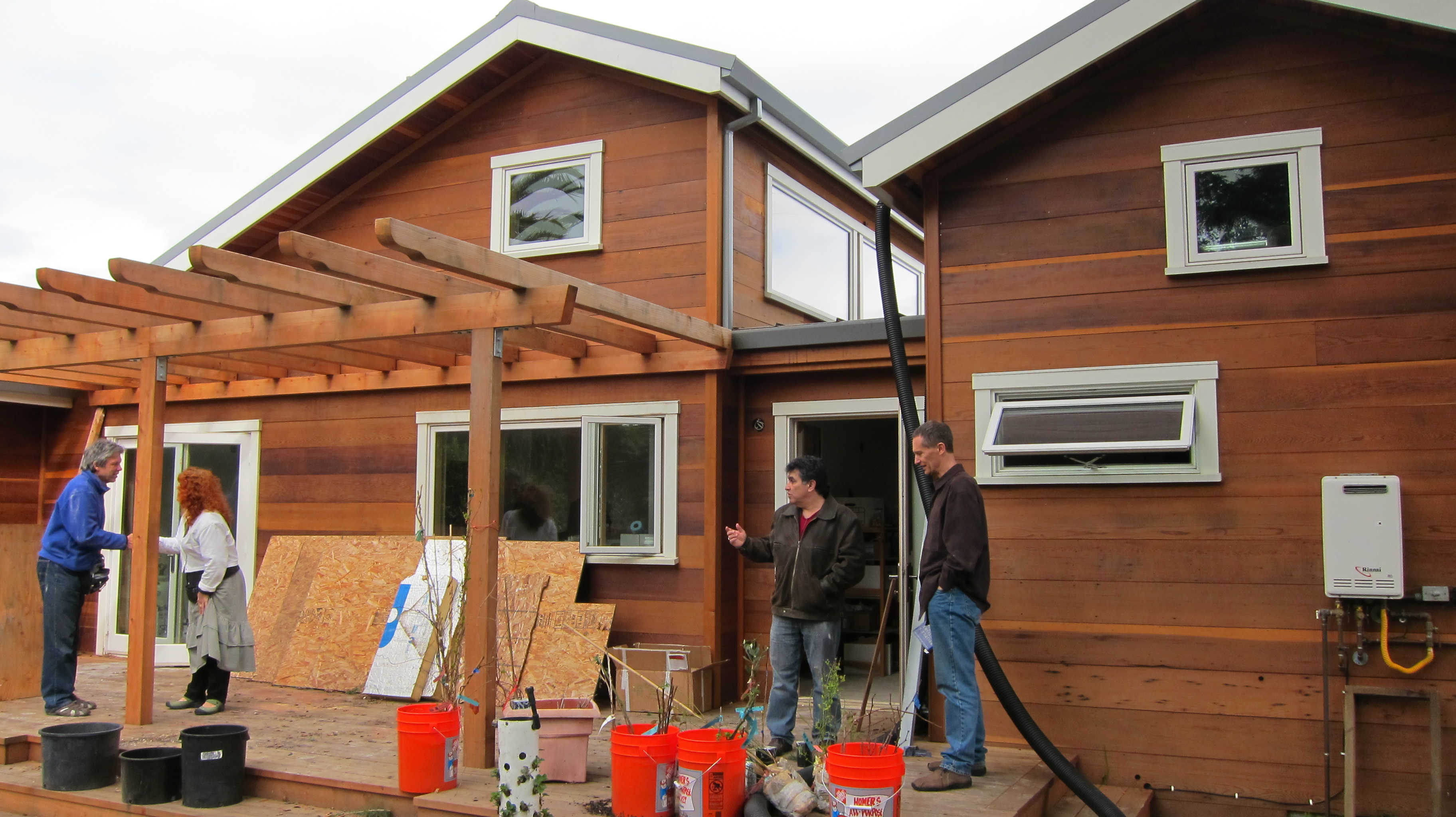
Nabih Tahan and several other visitors on the back deck

Casement, awning, and fixed windows were chosen for their air tight seals.

Marvin Integrity casement windows

Several large water cisterns in the side yard

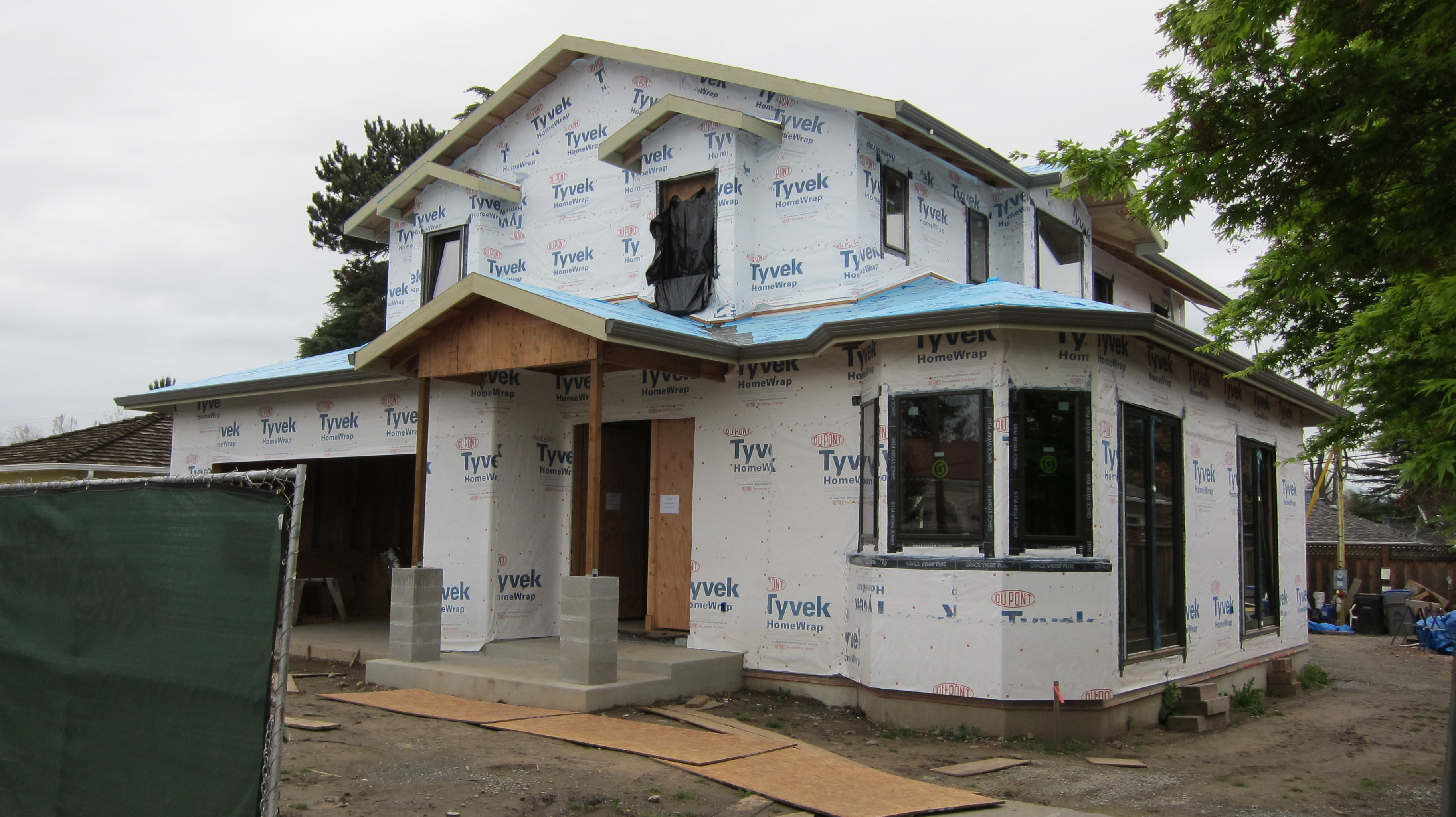
The other house I had already visited in the fall of 2010.

Cottle Zero Energy House

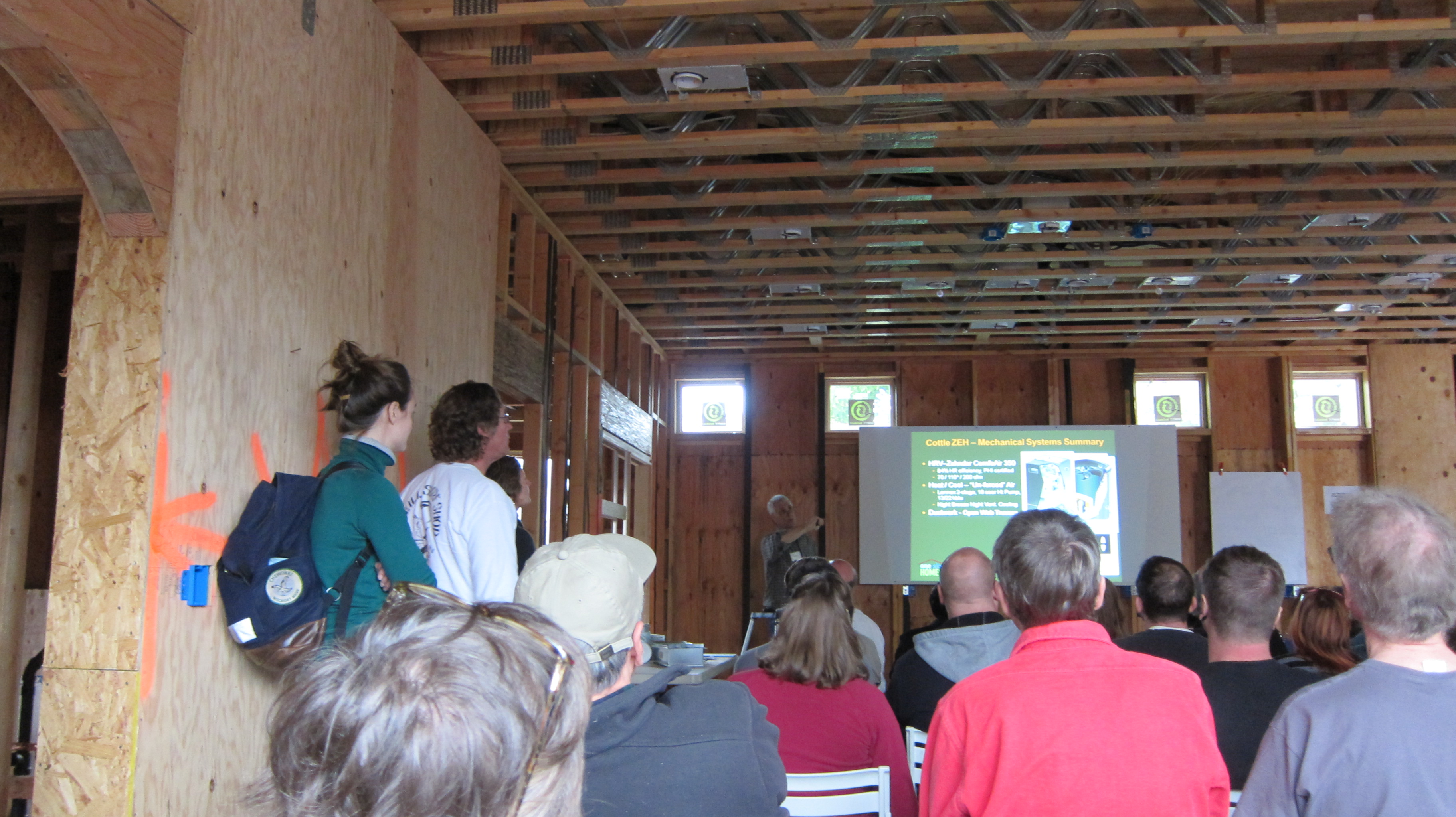
This one is more of a standard high-end spec house, but it seems to be quite technically competent on many levels.

Presentation to eager passive house enthusiasts.  Note the open web joists above. These make for easy routing of ducts and plumbing

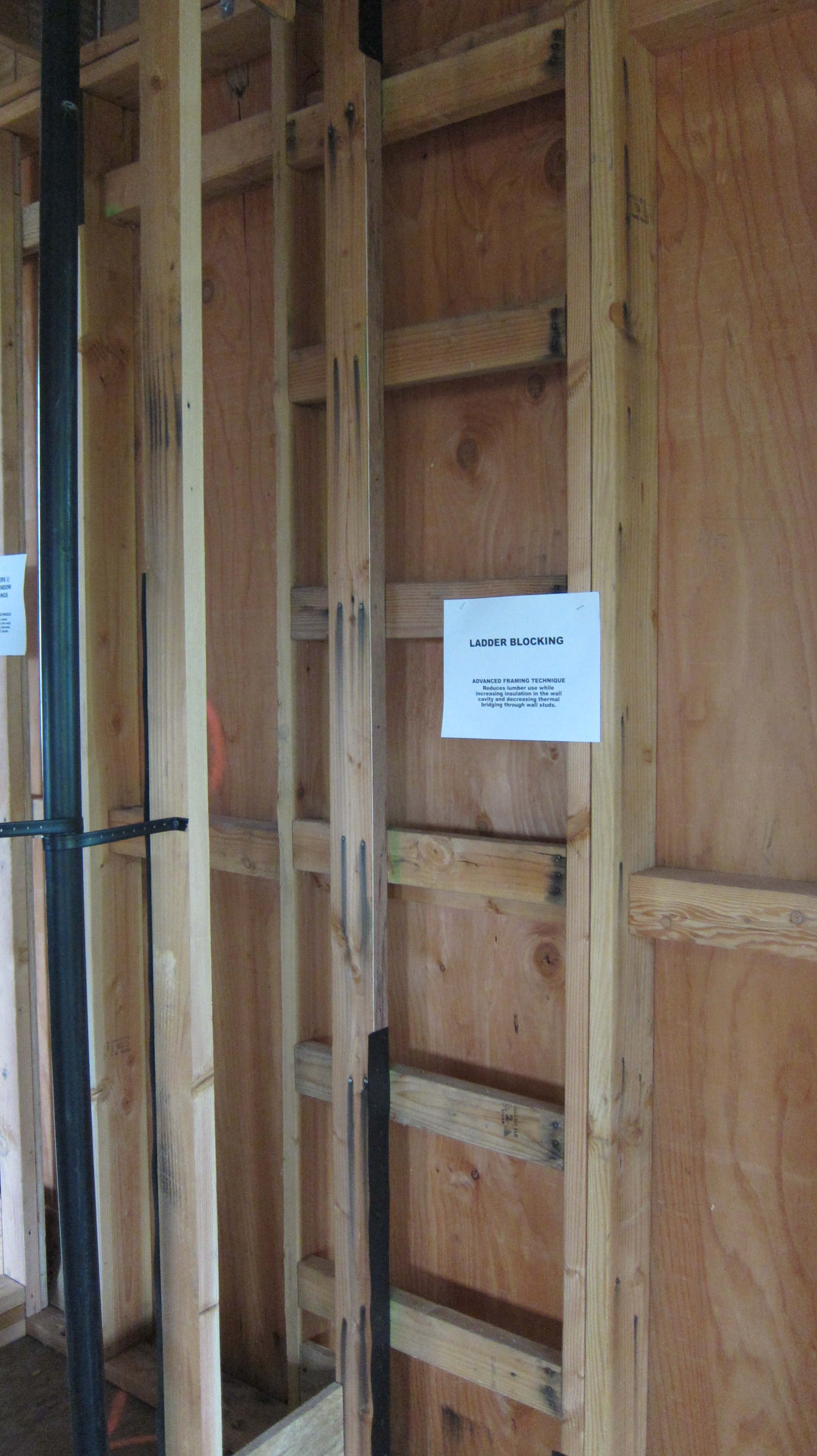
“Ladder blocking” allows for more complete insulation of the exterior envelope

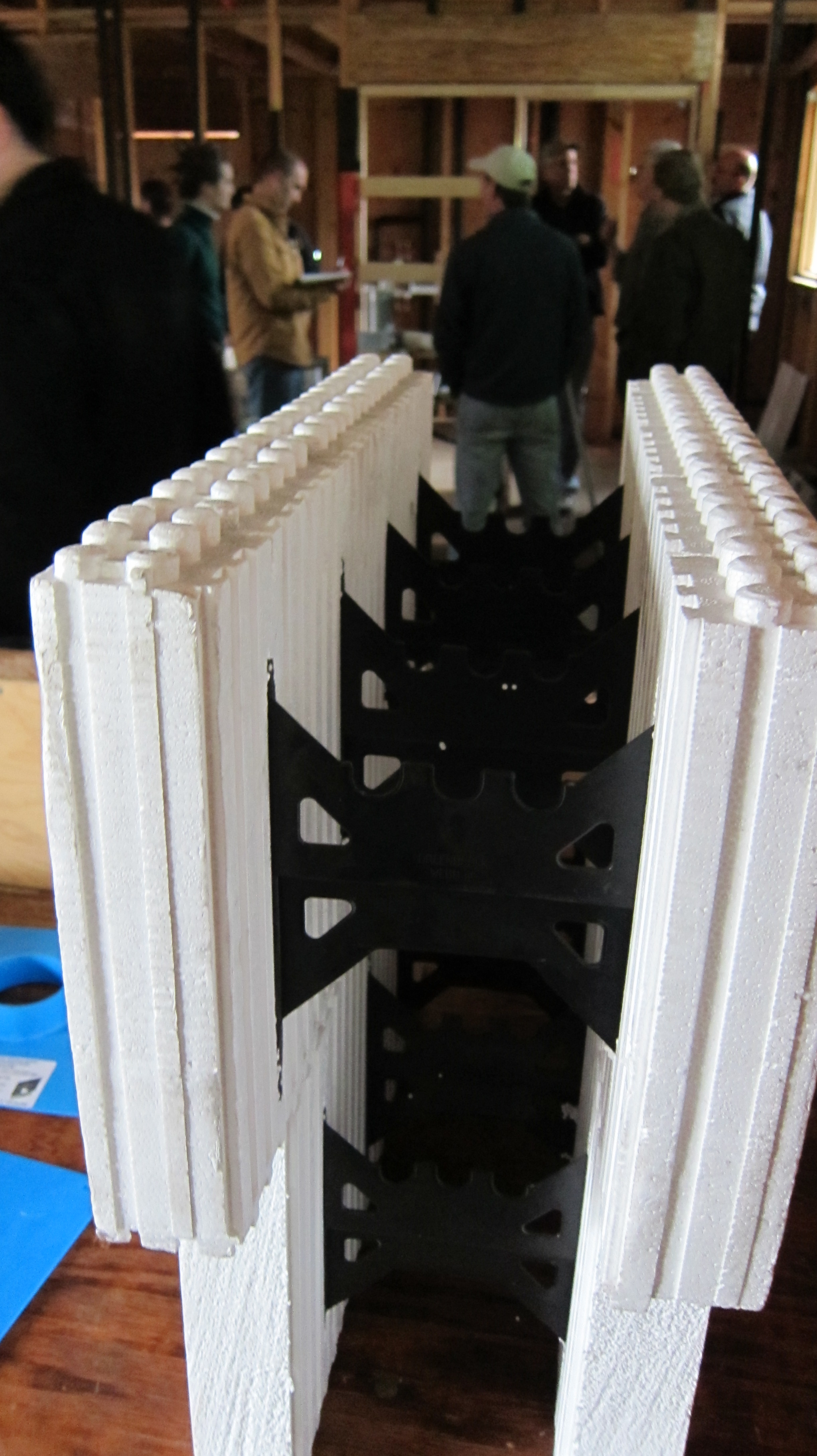
Insulated concrete form on display

Read Full Post »

The Correlated Color Temperature scale for common light bulbs ranges from 2700 to 5500 Kelvin. Warm white is 2700K-3500K, and cool white is 3600K-5500K. (further extremes on the scale are not typically used for architectural lighting.)

Sunrise and sunset light and candle flame light are very warm, around 1850K.

This is often very nice light for photographs of people.


The color temperature is based on the electromagnetic radiation emitted from an ideal black-body.  It varies depending on its surface temperature in kelvins.  This serves as a standard to which light sources are compared.  An incandescent light bulb’s light is thermal radiation and the bulb approximates an ideal black-body radiator, so its color temperature is essentially the temperature of the filament.  Incandescent bulbs are typically in the 2700-3300 Kelvin range, but often when dimmed the filament gets cooler (lower surface temperature, perhaps 2000 Kelvin, means “warmer” light.)

Compact Fluorescent bulbs do not emit light by thermal radiation, so they get a “correlated color temperature,” comparing the color of light to the ideal black body scale. You can buy them in a range of color temperatures.

Beware! CFLs that are sold as “Daylight” bulbs are around 5000K and considered to mimic daylight at midday. “Daylight” might sound nice, but this is a cooler light and might not be desirable for many spaces.  Most people prefer the warm light of the incandescent, so should use CFLs in the 2700-3300 Kelvin range.

Read Full Post »

  • 60 Watt GE frosted incandescent bulb: 820 Lumens (initial)=13.6 lumens/watt; dimmable; 2700 Kelvin (warm white, when dimmed the light is warmer, up to about 2000 Kelvin;) rated to last 1500 hours; $2.20 apiece (1000 bulbs.com)
  • 13 watt Philips Lighting spiral CFL (energy star rated): 900 lumens (initial)=69 lumens/watt; not dimmable; 2700 Kelvin (warm white;) rated to last 8000 hours; $5.26 apiece (1000 bulbs.com)
  • 12.5 watt Philips EnduraLED (I have one of these and can attest that it is a great bulb so far): 800 lumens (initial)=67 lumens/watt; dimmable; 2700 Kelvin (warm white); rated to last 25,000 hours; $42.89 apiece (1000 bulbs.com)

This quick snapshot reveals that the CFL is the best value, assuming you don’t want to dim the light, this mercury business is a racket,  and the light quality is equivalent.

These dimmable CFLs are a bit more pricy.  I have never used one so cannot comment:

  • 16 watt dimmable CFL (Neptun): 900 Lumens=56 lumens/watt; dimmable; 2750 Kelvin (warm white;) rated to last 8000 hours; $11.93 apiece (1000 bulbs.com)

There is some concern that the mercury in a CFL bulb is dangerous and ends up polluting the environment. The LED bulb might be a better choice for that reason.  Another reason to choose the LED over the CFL is if the fixture is hard to reach, the LED bulb should last more than four times as long as the CFL. The incandescent will help heat your house and certainly has the least embodied energy.

In order to make a complete comparison I need more information about the embodied energy of each bulb, the environmental impacts of manufacture and disposal, and how the luminous efficacy degrades over the life of each bulb.

Dimmer switches can save a lot of energy and extend bulb life, although the performance allegedly varies a bit with new technology (LEDs and CFLs.) The aforementioned Philips EnduraLED dims very nicely.

Read Full Post »

On Tuesday I visited the Water Conservation Showcase at the Pacific Energy Center.   Water-saving products large and small were exhibited.  There were many irrigation products including ET Water’s Quickdraw timers controlled from your cell phone and time release water capsules from Driwater. Niagra Conservation gave away a Stealth Toilet that uses .8 gallons per flush as a door prize. Unfortunately they did not have a demonstration toilet on display.  D’mand Systems was there with their latest models of pumps to recirculate the lukewarm water back to the heater and not down the drain.  CUDO water storage system showed off their stackable cubes for water storage.

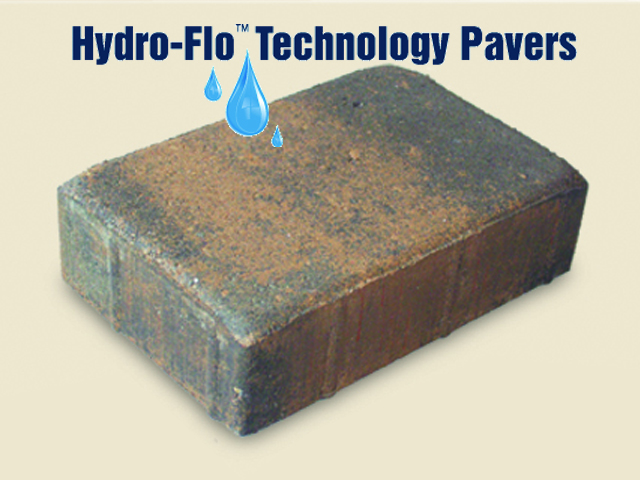
Pacific Interlock demonstrated their porous paving stones. It was enlightening to watch them pour a glass of water directly on top of the paver and it soaked right through. I had been under the assumption that porous pavers meant pavers with holes for water to drain and plants to grow through. These look like conventional bricks, just have tiny pores to drain the water.

There were also many representatives of grey water and black water treatment systems.  I think you get pay back pretty quickly on a large building or development if you can recycle some of your water. These systems are still too expensive for the average single family home owner.

In a place like the bay area, where rainfall is concentrated seasonally, storage often does not make sense.  It is more practical to use rain water in wintertime for wash or toilets, and to reuse shower and sink water for toilets and irrigation during summer. Expensive filtration is required by code for any reuse of rainwater or grey water for plumbing purposes. It is now permitted in many jurisdictions to use grey water (only from laundry and bathroom sinks and showers,) for irrigation without filtration.

Dual flush toilets are another great way to conserve water!

Read Full Post »

What are the issues if your house is on top of  an active, deep, slow moving landslide?      I had a  conversation with a geotechnical engineer from Alan Kropp and associates.  He said that they often specify 18-30″ deep concrete rafts underneath the entire house.  This way the house can ride the slide atop the raft and not get pulled apart differentially.  They also recommend flexible utility connections. (If the landslide is shallower, the foundation design usually requires piers down to bedrock, impossible with such a deep slide)  Probably only about 10% of the structures in Berkeley built on landslides have this type of foundation underneath. Most have fairly typical  foundations.  These houses can experience periodic cracking and shifting problems.  Conventional construction techniques aren’t really designed for these sorts of movements….but the damage can usually be repaired.

Beyond the massive expense of creating these concrete rafts, there are other complications that arise when an entire hill filled with houses is moving slowly downslope. Here is an article that describes some of the legal mess that can occur.  The basic problem is that the property lines are not moving. They are fixed, but everything else is moving. Because of this some buildings have crossed the property lines, and most houses have setbacks that are getting bigger on one side and smaller on the other.  Your driveway might eventually end up on your neighbor’s property. What a legal fiasco!

Here is a map of the slides in the east bay hills. The heavy weight black dashed line cutting through the slide areas is the Hayward Fault.

Read Full Post »

I am writing about these two State of California bills because they didn’t seem to get much press.

Starting on January 1, 2011 some Californians will be paid by the utility for the power that they generate with solar panels and windmills.  AB920 was signed into law in October 2009.

AB 510 (signed into law in February 2010) raised the cap set on the number of homes and businesses that can take advantage of net energy metering.  The cap went from 2.5% of the utilities total customer peak power demand to 5%.

The California Green Building Blog has good information, but I can’t find much on the rate structure.  I have heard that electricity will be bought at the same wholesale rate that the utility would have paid other suppliers for electricity at that place and time.

This site has some purchase rate information for many of the utilities.

So if you own a good roof for solar or wind power but don’t use a lot of electricity yourself, this might be enough incentive to build your own electricity generation plant.

Read Full Post »

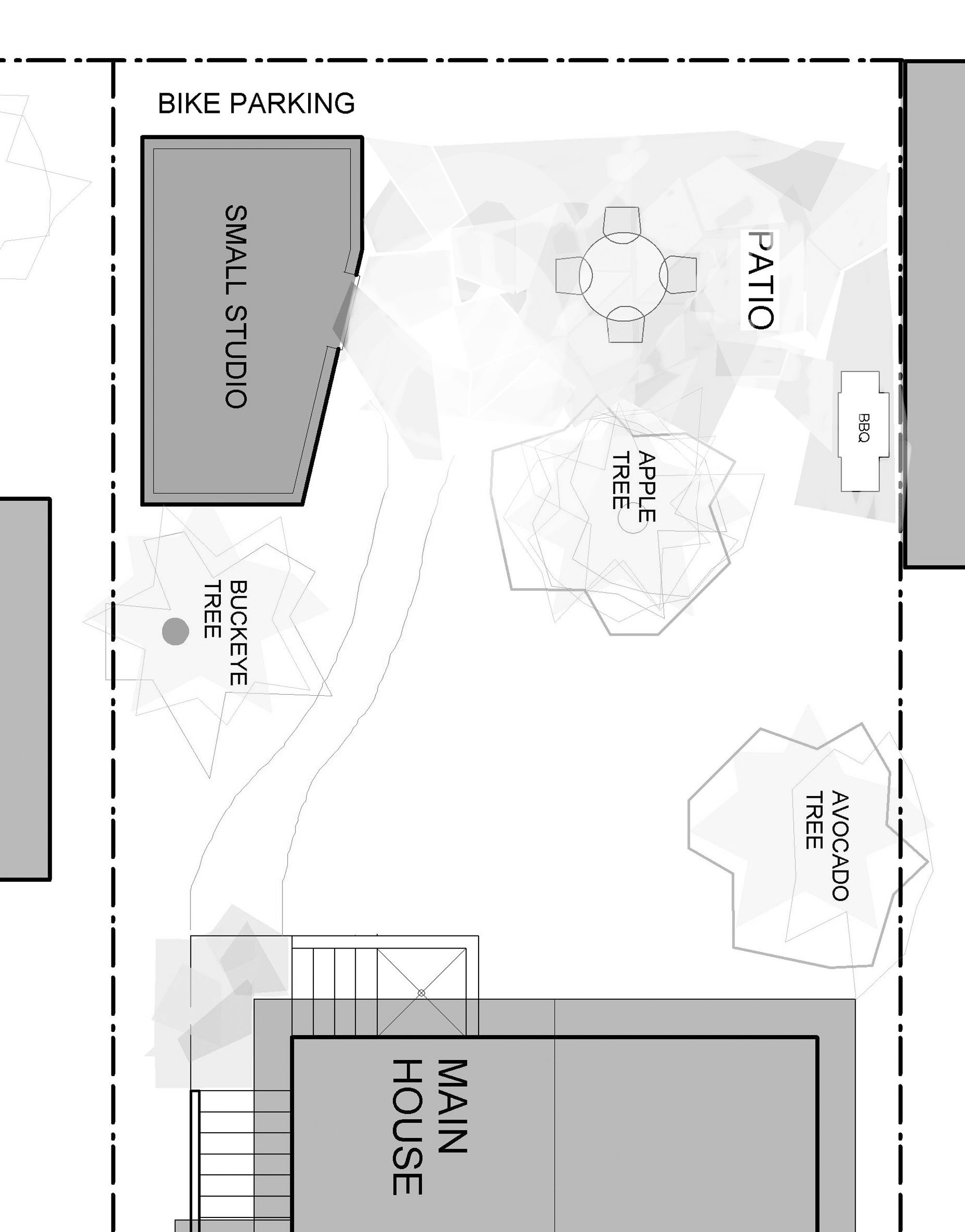
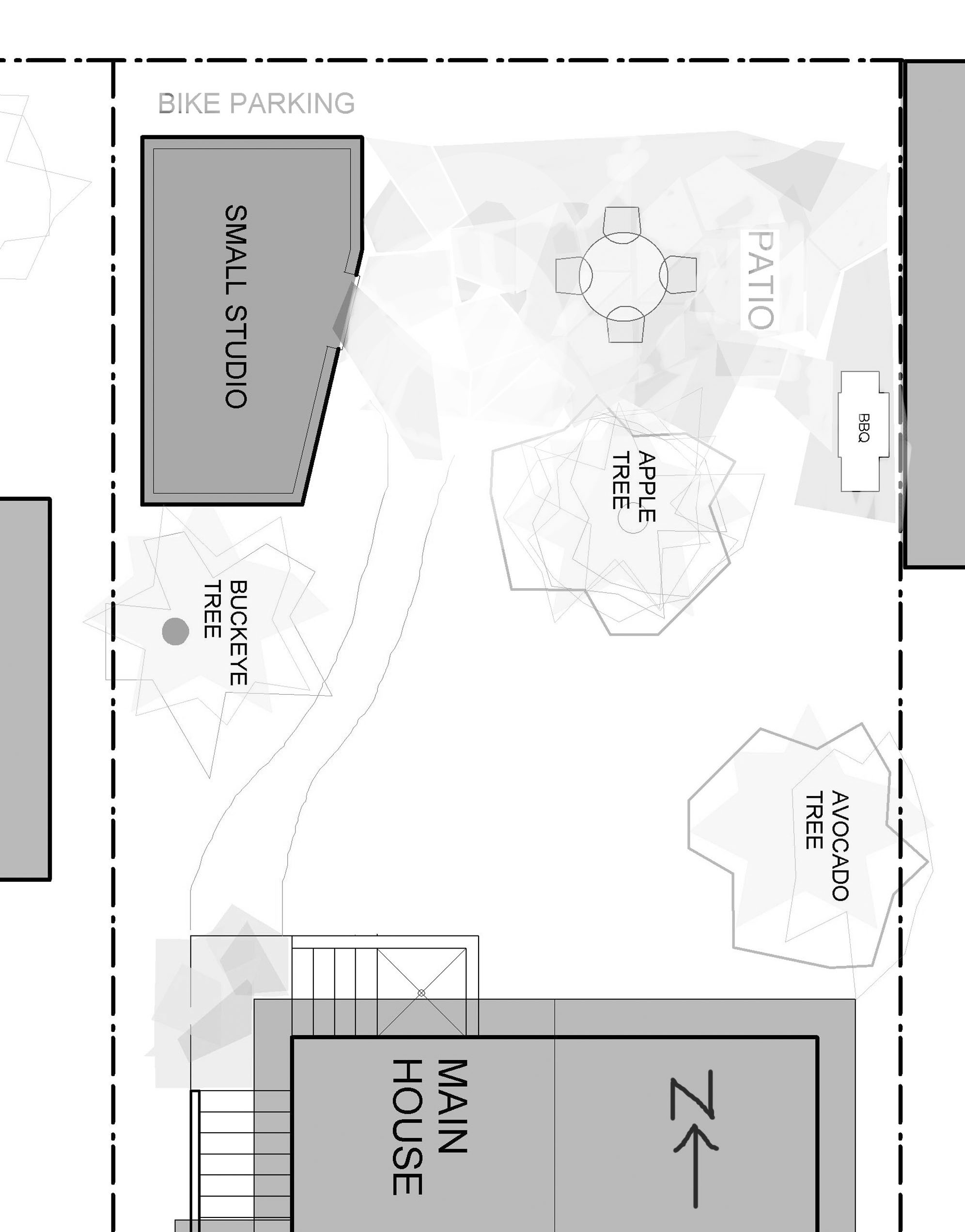
Go HERE and HERE for more photos of the project Here is an article about the project on Dwell Magazine’s website and Here you can vote for or against the design.

Total Cost: $24522.47 ($204/ SF)

Design: Free (by owner)

Permit Fees: $111.55 (Electrical only, 120 SF accessory building didn’t require a building permit.

Foundation materials: $1425.79 (incl sand, gravel, plastic, 30% Flyash concrete,  forming materials, pumping labor, tool rental, rebar, etc)

Framing materials: $2661.73  (Almost all FSC Certified includes several large appearance grade exposed beams and FSC Certified sheathing plywood and all the hardware)

Building Paper and Flashing: $397.00   (We had to buy the roofing felt twice because the roof installation was repeatedly delayed by rain.

3 Windows & 1 Door: $1720.02   $750 (half price) for the Loewen half glass aluminum clad fir door salvaged from another project.   The windows are dbl glazed aluminum= inexpensive.  I chose aluminum because It looks good with the redwood.  This is a small outbuilding without heat and they work fine, but metal windows have lower U-value than wood, fiberglass and vinyl.  It would be hard to justify metal windows in a larger project with a heating system.  The glass in the south facing windows is Sungate 500.  This is a special glass that is designed to have a high U-value and also a high solar heat gain coefficient. “In winter, Sungate 500 Low-E Glass transmits the sun’s visible light and directs solar shortwave infrared energy into the home. At the same time, it reflects longs wave infrared (heat) energy — like that which comes from a home’s heating system — back into the room”

Paints and Finishes: $544.90 (Penofin Verde, American Pride, Earth Paint, AFM Safecoat, Bioshield) These are not the cheapest finishes, but honestly way more pleasant to work with than the traditional smelly stuff. Ill have to report back on longevity and durability, but so far so good.

Insulation, Sheetrock install and finish (incl labor), Interior Trim (FSC certified): $1609.93

Roof: $2615.93 (galvanized standing seam painted red by Tri Sheet Metal, James Morgenroth)  I hope this is a long lasting solution.  It was chosen for the clean crisp lines and the cheerful color. I was considering a zinc roof for its infamous longevity advantages, but didn’t find a local installer familiar with the material.

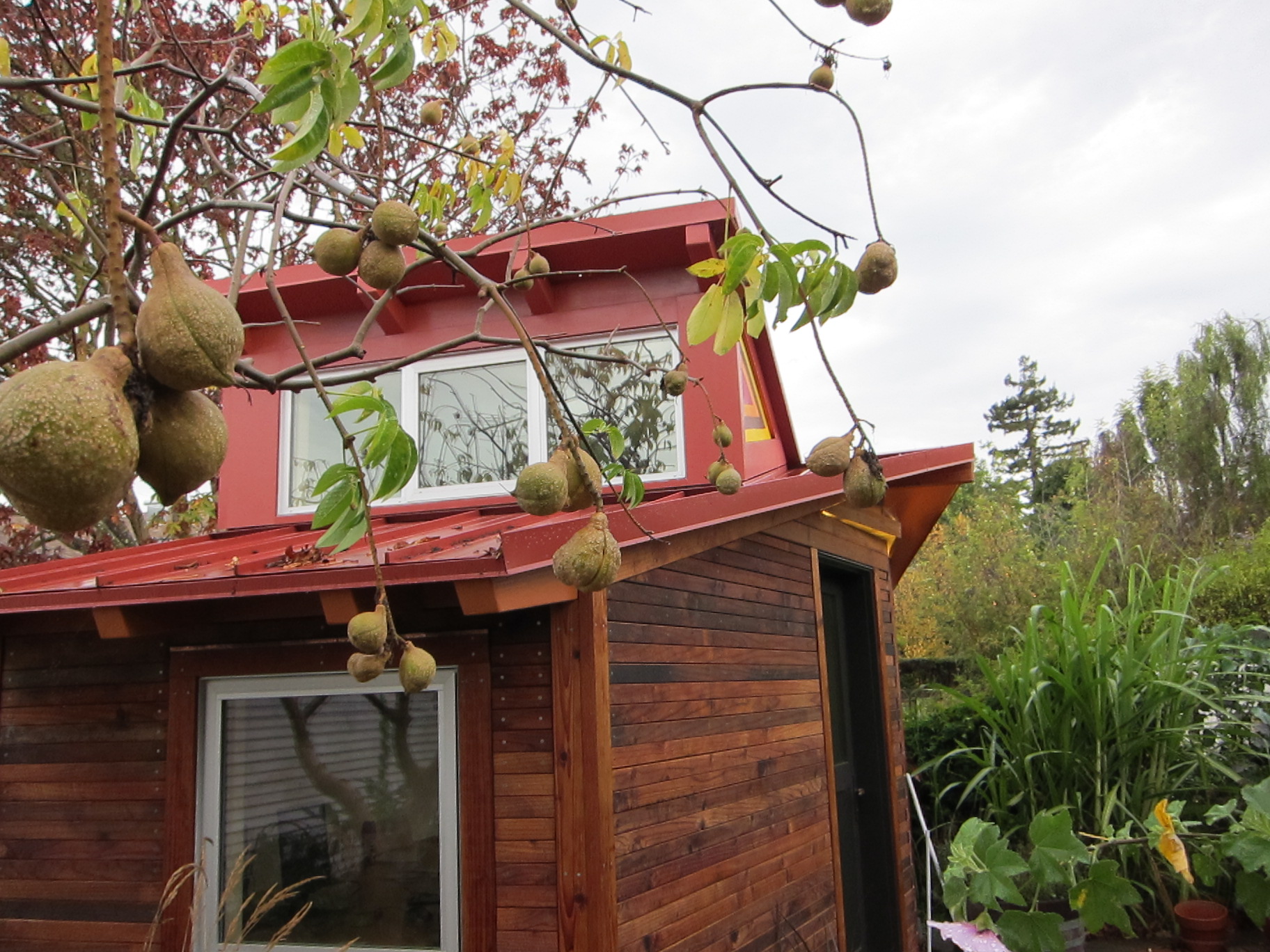
Exterior Siding & Trim: $850.73 (All the redwood siding was milled from logs salvaged from a road widening project in Sonoma County and gifted to the building. (ie free,  just involved a lot of  labor and $200 worth of stainless steel screws)

The siding is installed as a rain screen with a space behind the siding for ventilation and drainage.  The idea is to make everything last longer by preventing moisture from getting trapped and rotting the siding or the framing. I used Penofin Verde, an eco-friendly penetrating sealer on the redwood. I’m hoping that I wont have to reseal it more than every other year.  I have used the more stinky petroleum product Marine Grade Penofin on my wood garage doors for several years.  It seems to do a good job of protecting the wood, but since they are on the south side without much protection, I reapply every year.

I sealed the exposed fir rafter tails with penetrating epoxy before priming and painting.  They should hold up well, but I need to keep an eye on the corner where the high-end rafters meet the wall.  I can imagine water running down the underside and sitting in this corner.

Rain protection & Dump runs: $114.66

Tools and bits: $75.87

Electrical & Plumbing: $1469.40 (includes fixtures, somewhat expensive LED exterior strip light that only uses 7 wAtts. The Louis Poulsen PH5 pendant was a gift)

Landscaping: $1982.88 (brick path by Hornby Garden Design and Construction)

Misc: $585.35

General Labor: $8,004.00  (carpentry, Built-in furniture, electrical, trenching, rough plumbing, etc.  Some of this is discounted because it was done by my good friend John Mcbride.  This does not include extensive work by owner/designer)

Cost analysis: The door, the roof and some of the lights are expensive. The built-ins were inexpensive, but involved a lot of labor that normally would have cost far more.  The unusual shape  involved more labor in framing, siding, and roofing. This building didn’t require a permit except for the electrical.  Many components  that were free would normally have cost a fair bit. The design labor and other extensive labor of the designer also would normally have cost money.   For this reason, one should assume that a similar structure might cost at least $36,000, not including design.  This would mean $300/ SF. 

Things I would do differently or might change later: Insulate the concrete slab, use this sort of window trim detail

Performance: So far the thick and careful insulation (R19 in the 2×6 framed walls and R30 in the roof) and the passive solar features (mainly the south-facing windows with overhangs and a deciduous California Buckeye tree in front of them) perform wonderfully.  The building is very comfortable without supplemental heat.  On the occasional day that is too warm, opening the high windows works magic. When it is too cold I warm up the room by turning on a few lights and my computer. Sometimes I bring a large dog inside or do 10 jumping jacks to generate some heat.  Because of the insulation, the heat sticks around.

Read Full Post »
« Newer Posts