Feeds:
Posts
Comments

Archive for the ‘Design Projects’ Category

Go HERE and HERE for more photos of the project Here is an article about the project on Dwell Magazine’s website and Here you can vote for or against the design.

Total Cost: $24522.47 ($204/ SF)

Design: Free (by owner)

Permit Fees: $111.55 (Electrical only, 120 SF accessory building didn’t require a building permit.

Foundation materials: $1425.79 (incl sand, gravel, plastic, 30% Flyash concrete,  forming materials, pumping labor, tool rental, rebar, etc)

Framing materials: $2661.73  (Almost all FSC Certified includes several large appearance grade exposed beams and FSC Certified sheathing plywood and all the hardware)

Building Paper and Flashing: $397.00   (We had to buy the roofing felt twice because the roof installation was repeatedly delayed by rain.

3 Windows & 1 Door: $1720.02   $750 (half price) for the Loewen half glass aluminum clad fir door salvaged from another project.   The windows are dbl glazed aluminum= inexpensive.  I chose aluminum because It looks good with the redwood.  This is a small outbuilding without heat and they work fine, but metal windows have lower U-value than wood, fiberglass and vinyl.  It would be hard to justify metal windows in a larger project with a heating system.  The glass in the south facing windows is Sungate 500.  This is a special glass that is designed to have a high U-value and also a high solar heat gain coefficient. “In winter, Sungate 500 Low-E Glass transmits the sun’s visible light and directs solar shortwave infrared energy into the home. At the same time, it reflects longs wave infrared (heat) energy — like that which comes from a home’s heating system — back into the room”

Paints and Finishes: $544.90 (Penofin Verde, American Pride, Earth Paint, AFM Safecoat, Bioshield) These are not the cheapest finishes, but honestly way more pleasant to work with than the traditional smelly stuff. Ill have to report back on longevity and durability, but so far so good.

Insulation, Sheetrock install and finish (incl labor), Interior Trim (FSC certified): $1609.93

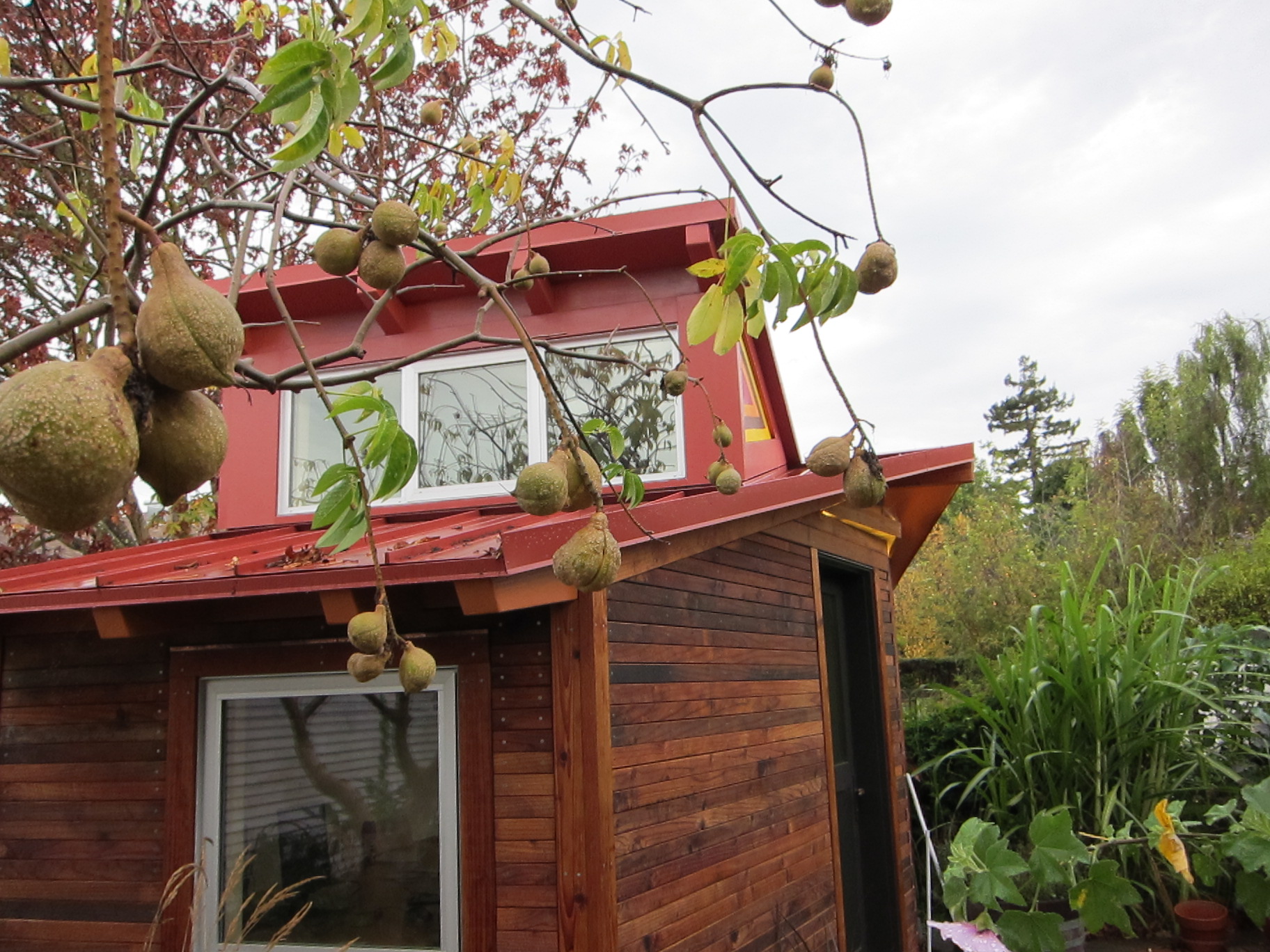
Roof: $2615.93 (galvanized standing seam painted red by Tri Sheet Metal, James Morgenroth)  I hope this is a long lasting solution.  It was chosen for the clean crisp lines and the cheerful color. I was considering a zinc roof for its infamous longevity advantages, but didn’t find a local installer familiar with the material.

Exterior Siding & Trim: $850.73 (All the redwood siding was milled from logs salvaged from a road widening project in Sonoma County and gifted to the building. (ie free,  just involved a lot of  labor and $200 worth of stainless steel screws)

The siding is installed as a rain screen with a space behind the siding for ventilation and drainage.  The idea is to make everything last longer by preventing moisture from getting trapped and rotting the siding or the framing. I used Penofin Verde, an eco-friendly penetrating sealer on the redwood. I’m hoping that I wont have to reseal it more than every other year.  I have used the more stinky petroleum product Marine Grade Penofin on my wood garage doors for several years.  It seems to do a good job of protecting the wood, but since they are on the south side without much protection, I reapply every year.

I sealed the exposed fir rafter tails with penetrating epoxy before priming and painting.  They should hold up well, but I need to keep an eye on the corner where the high-end rafters meet the wall.  I can imagine water running down the underside and sitting in this corner.

Rain protection & Dump runs: $114.66

Tools and bits: $75.87

Electrical & Plumbing: $1469.40 (includes fixtures, somewhat expensive LED exterior strip light that only uses 7 wAtts. The Louis Poulsen PH5 pendant was a gift)

Landscaping: $1982.88 (brick path by Hornby Garden Design and Construction)

Misc: $585.35

General Labor: $8,004.00  (carpentry, Built-in furniture, electrical, trenching, rough plumbing, etc.  Some of this is discounted because it was done by my good friend John Mcbride.  This does not include extensive work by owner/designer)

Cost analysis: The door, the roof and some of the lights are expensive. The built-ins were inexpensive, but involved a lot of labor that normally would have cost far more.  The unusual shape  involved more labor in framing, siding, and roofing. This building didn’t require a permit except for the electrical.  Many components  that were free would normally have cost a fair bit. The design labor and other extensive labor of the designer also would normally have cost money.   For this reason, one should assume that a similar structure might cost at least $36,000, not including design.  This would mean $300/ SF. 

Things I would do differently or might change later: Insulate the concrete slab, use this sort of window trim detail

Performance: So far the thick and careful insulation (R19 in the 2×6 framed walls and R30 in the roof) and the passive solar features (mainly the south-facing windows with overhangs and a deciduous California Buckeye tree in front of them) perform wonderfully.  The building is very comfortable without supplemental heat.  On the occasional day that is too warm, opening the high windows works magic. When it is too cold I warm up the room by turning on a few lights and my computer. Sometimes I bring a large dog inside or do 10 jumping jacks to generate some heat.  Because of the insulation, the heat sticks around.

Read Full Post »
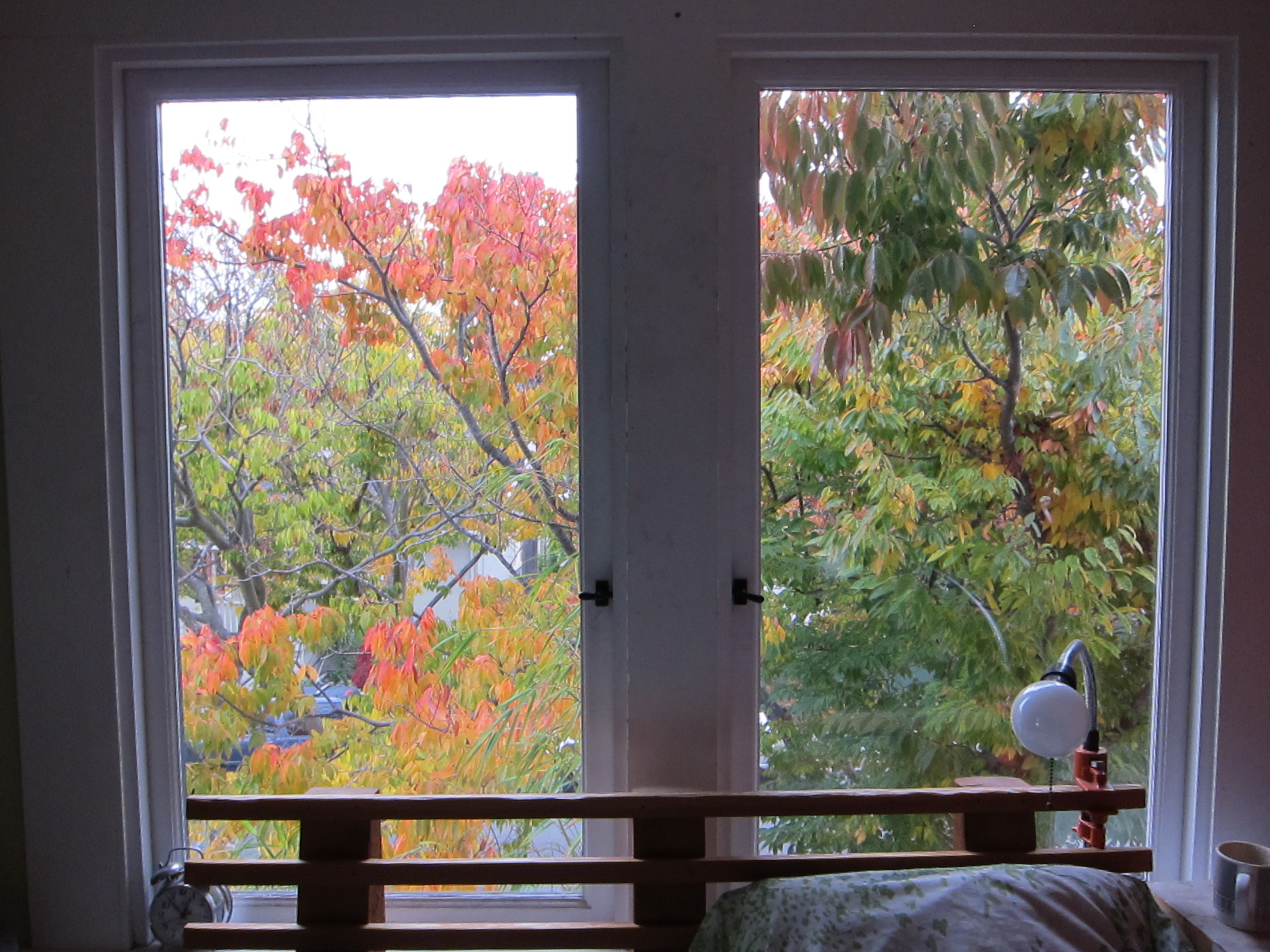
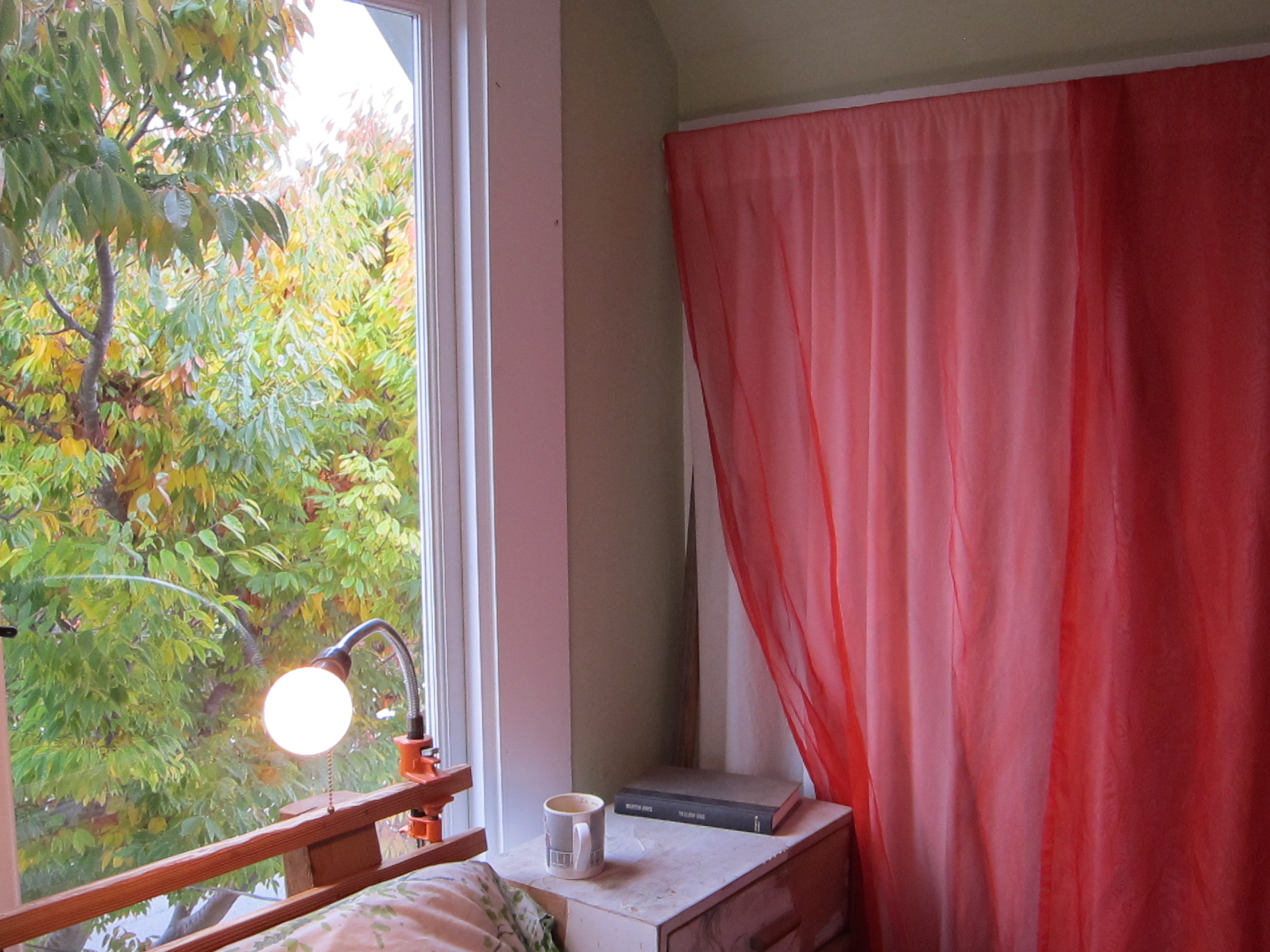
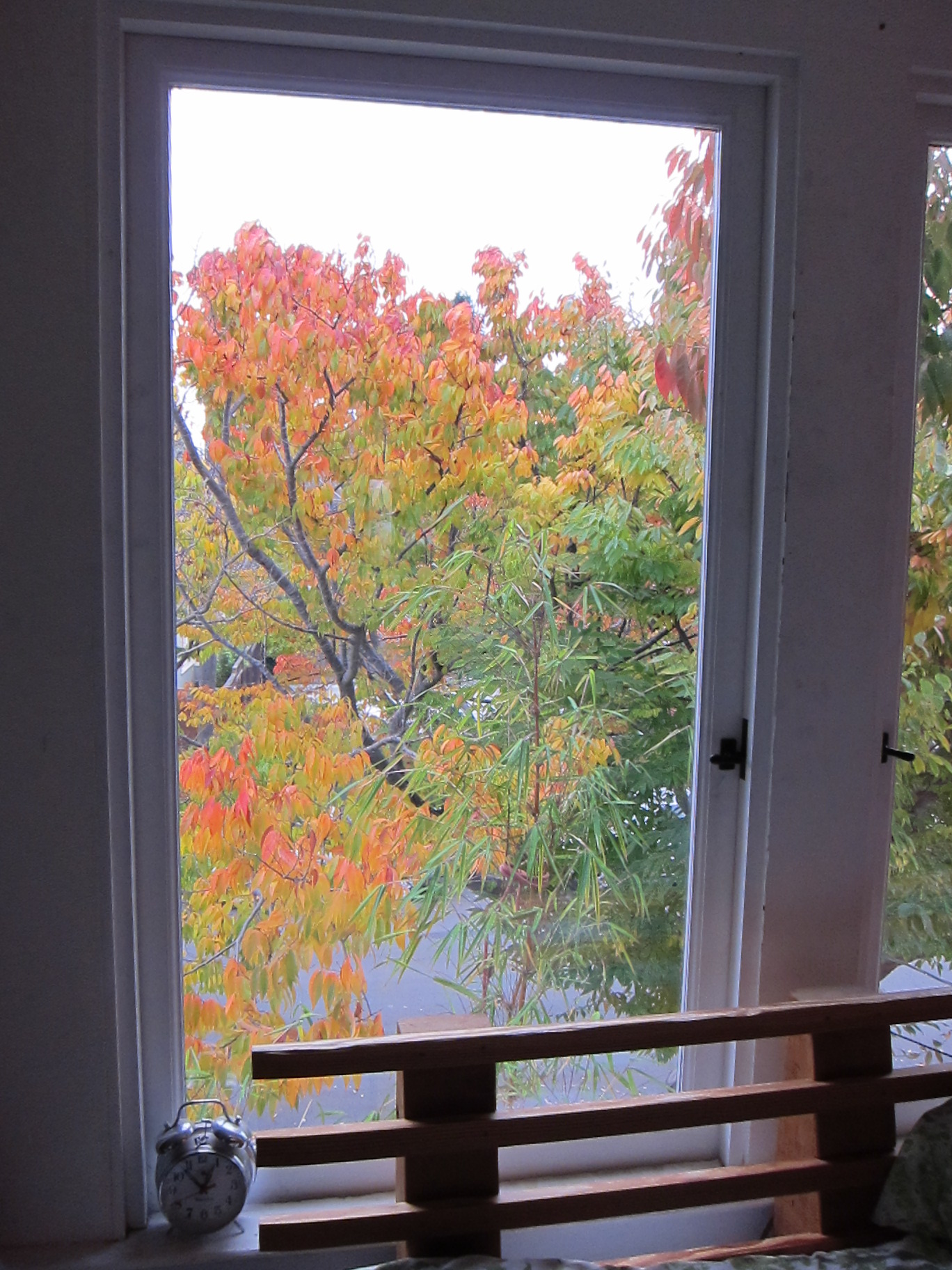
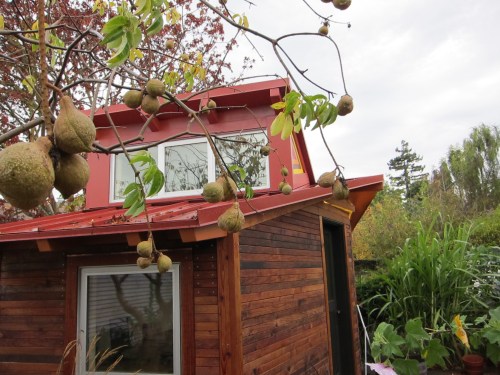
In honor of the Northern California Fall I am posting a few photos of the glorious trees that might be the most important architectural feature of my apartment. Without this pair of venerable deciduous Zelcova trees I would have much less privacy in my bedroom and the house and yard would be much hotter and sunnier in the summer months. The beauty of a deciduous tree smack on the south side of the house is that in the winter the sun streams into the south-facing windows.  warming and cheering the rooms.  Of course the fall foliage is a nice side benefit.

The seasons in Northern California have always seemed a bit confused to this native of Detroit.  I recently realized why: When the fall foliage begins, it is usually also the beginning of the rainy season.  This means that simultaneously some trees are turning red, orange, yellow and brown, and most other plants and trees are turning bright green from all of the rain. In the spring the reverse is true. The deciduous trees are sprouting little green leaves and buds….and most other things are turning brown as the water supply diminishes.

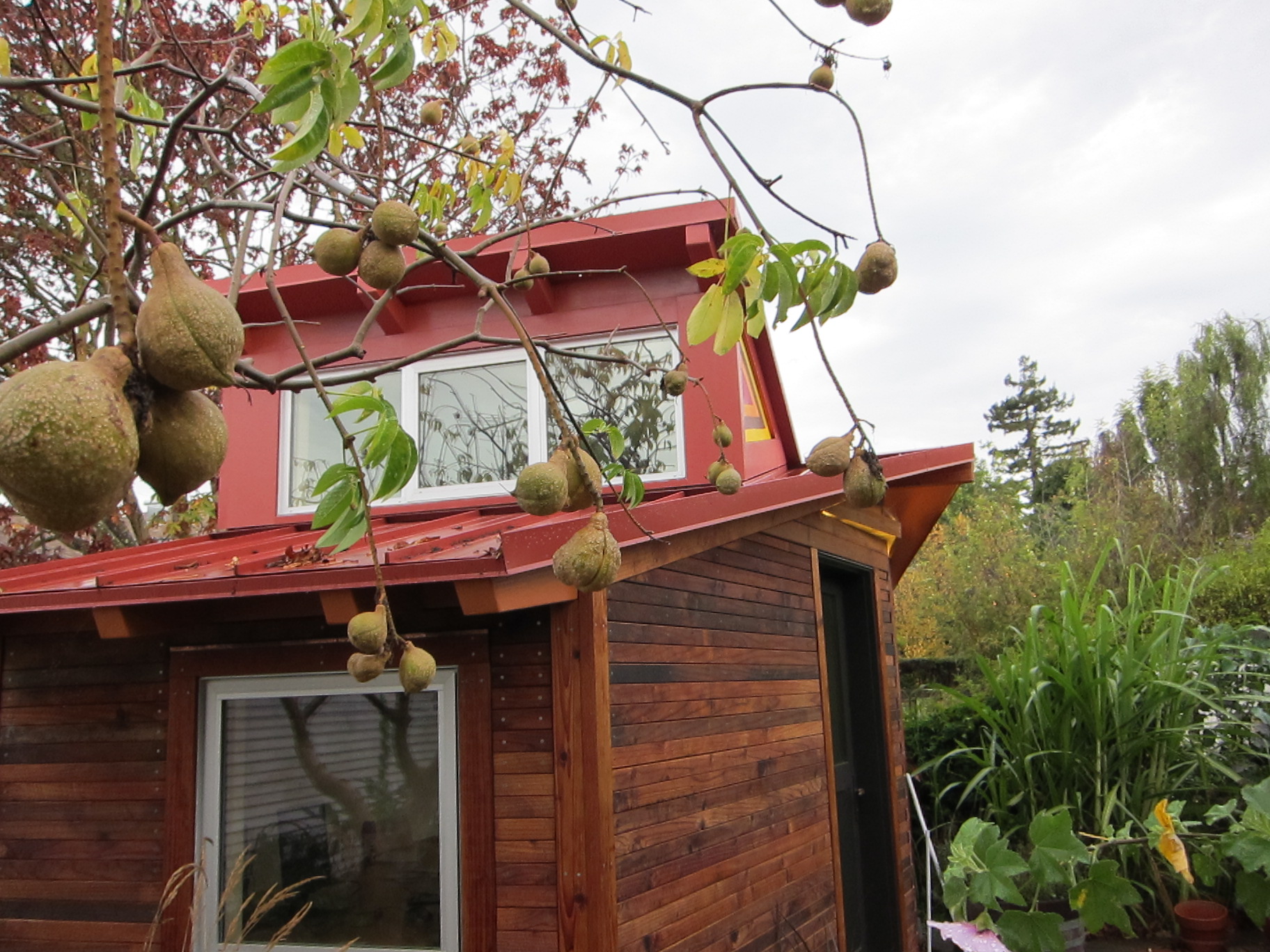
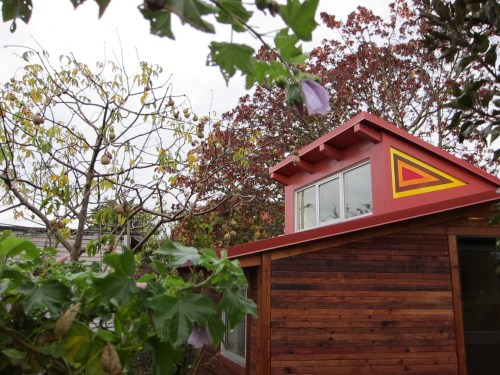
I painted the burgee on my art studio new colors for the fall.  This building also has the benefits of a deciduous tree to the south. This time it is the spectacular California Buckeye.

Read Full Post »
Read Full Post »

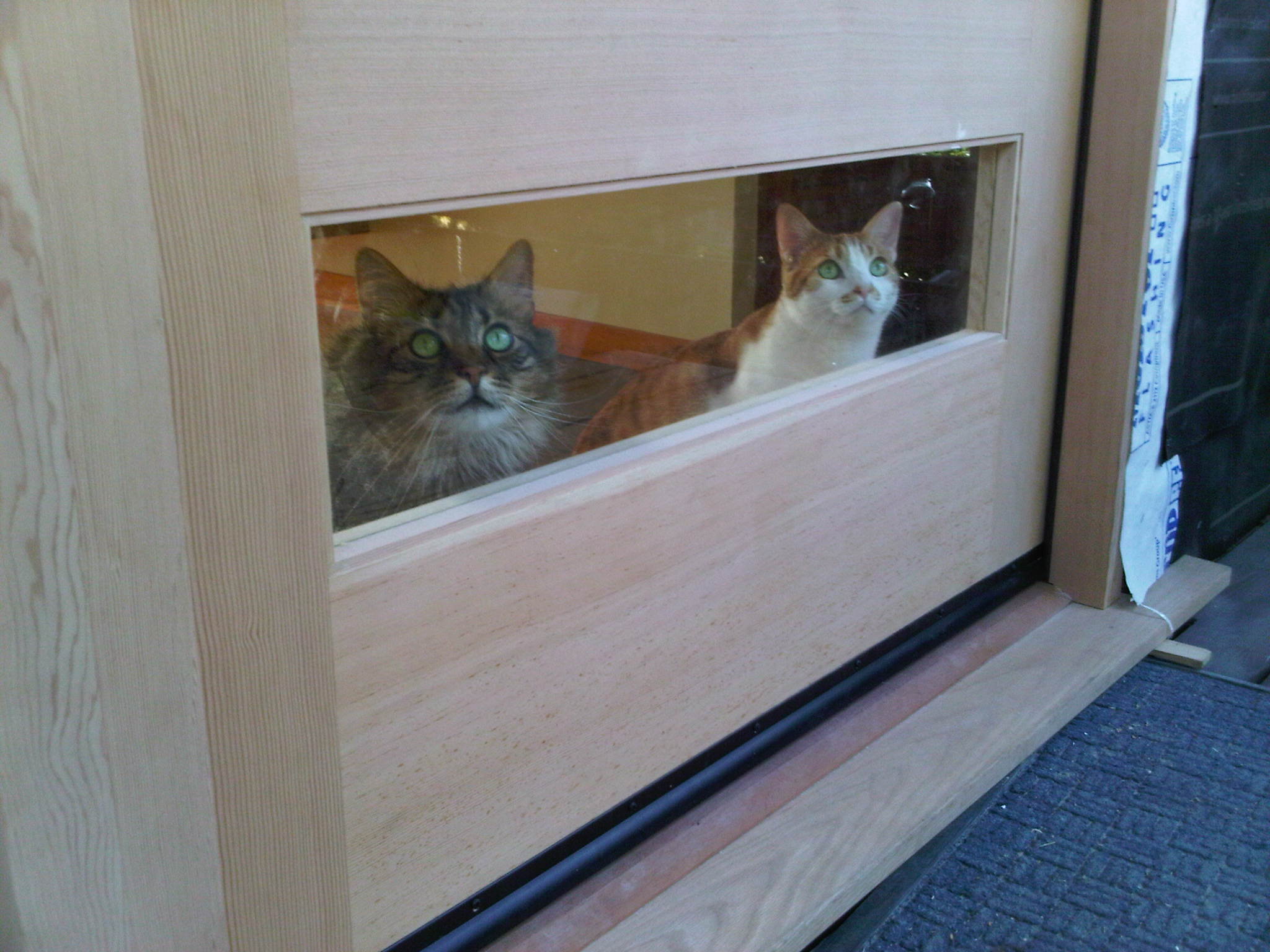
Pastis and Cognac are happy that their owners kept one clear pane for them

Read Full Post »

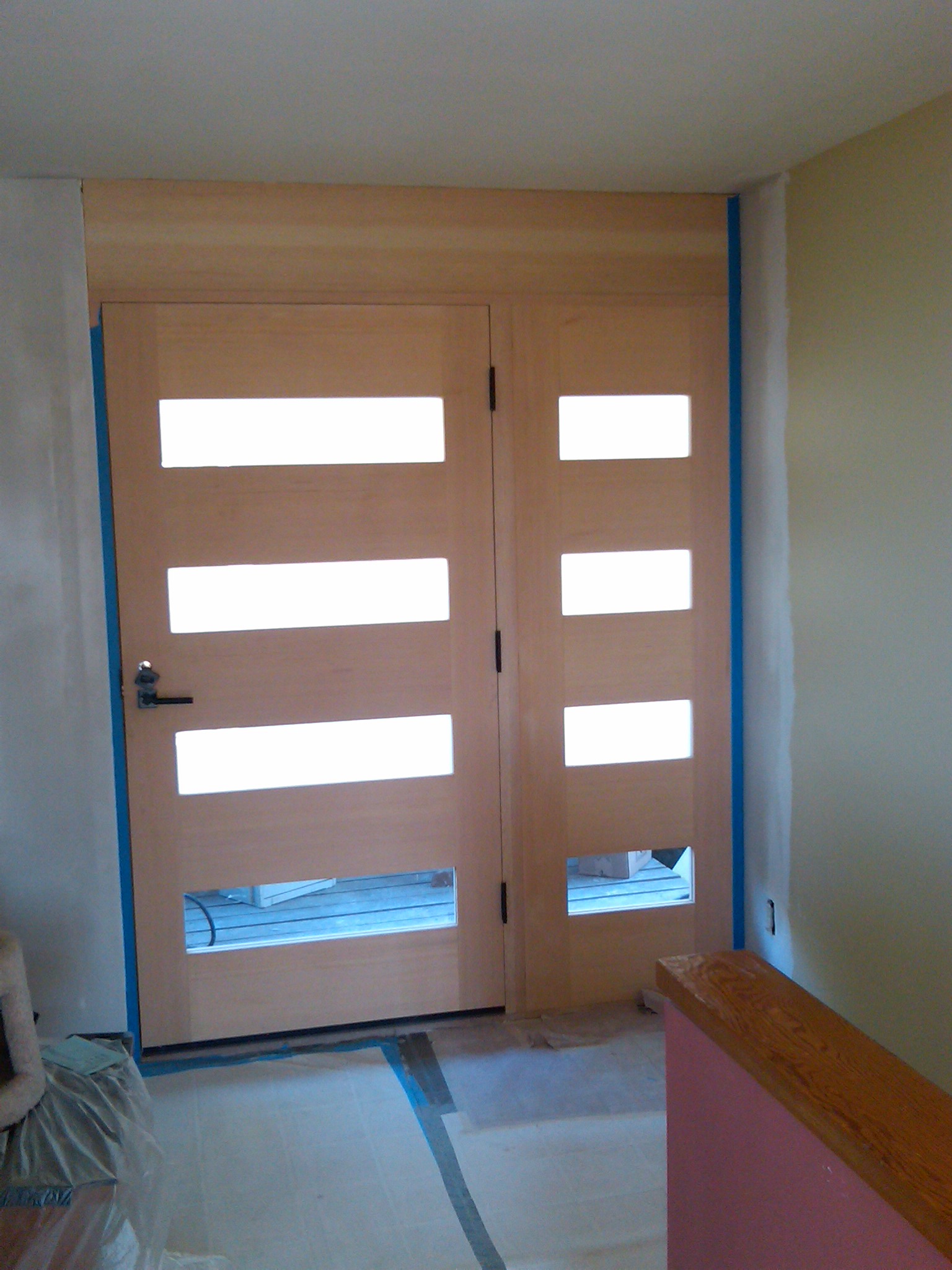
The front door was installed yesterday.  Now we are working out the trim details.  (Ignore the blue painters tape please)

We decided to make the fir continue all the way to the ceiling and the corner for simplicity   Having a sliver of white to the right of the door and a wider sliver above would have diminished the installation.   I admit some influence by the intersecting planes of  Gerrit Rietveld’s  Schröder House

Read Full Post »

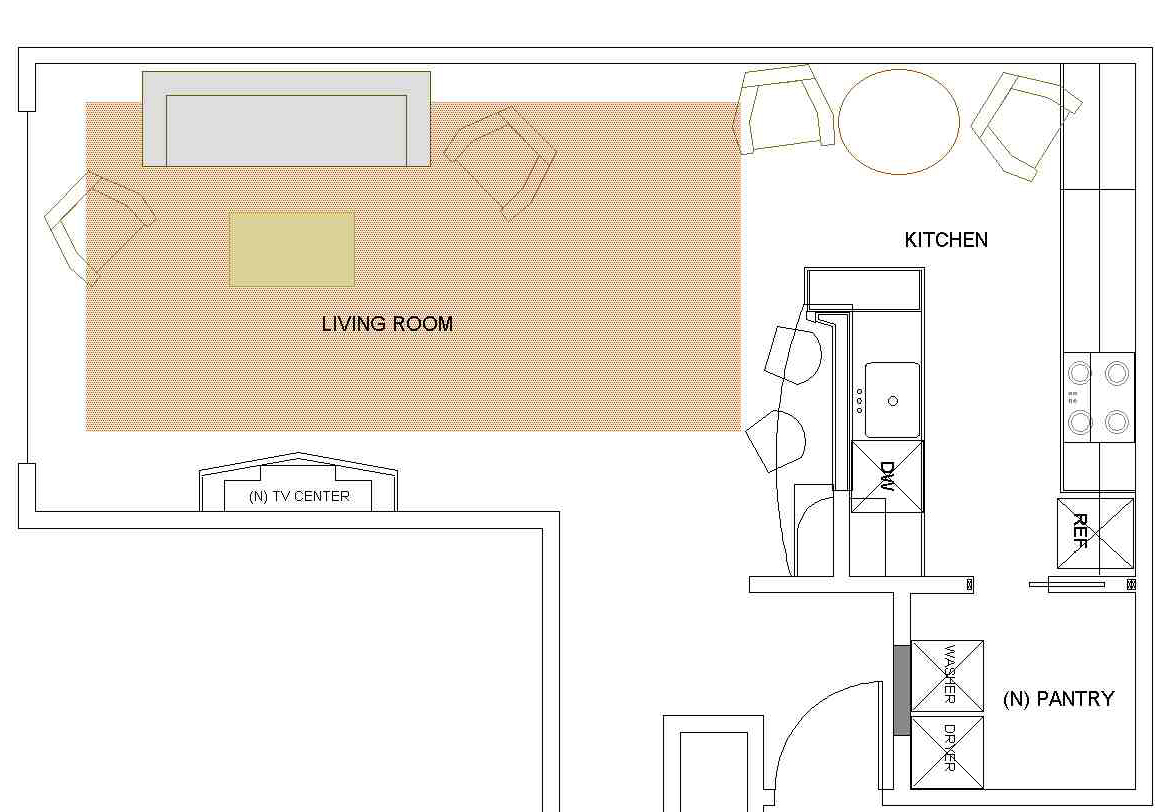
The As-built Floorplan

The Revised Floor Plan

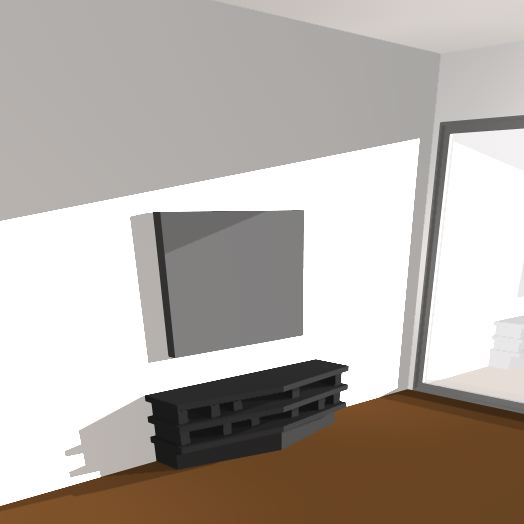
This upgrade includes an expanded kitchen (for a client who enjoys cooking,) modern kitchen cabinets, a lot of drawers to maximize storage, New lighting design throughout the kitchen, foyer,  and living room, conversion of a large storage closet into a pantry and laundry room,  incorporation of a desk area into the kitchen, elimination of an electric fireplace with two-dimensional paper bricks and a new wall mounted flat screen TV with custom entertainment cabinet below.

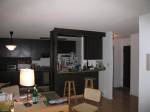
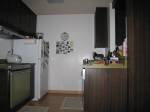
Here are a few pictures of the kitchen before construction:

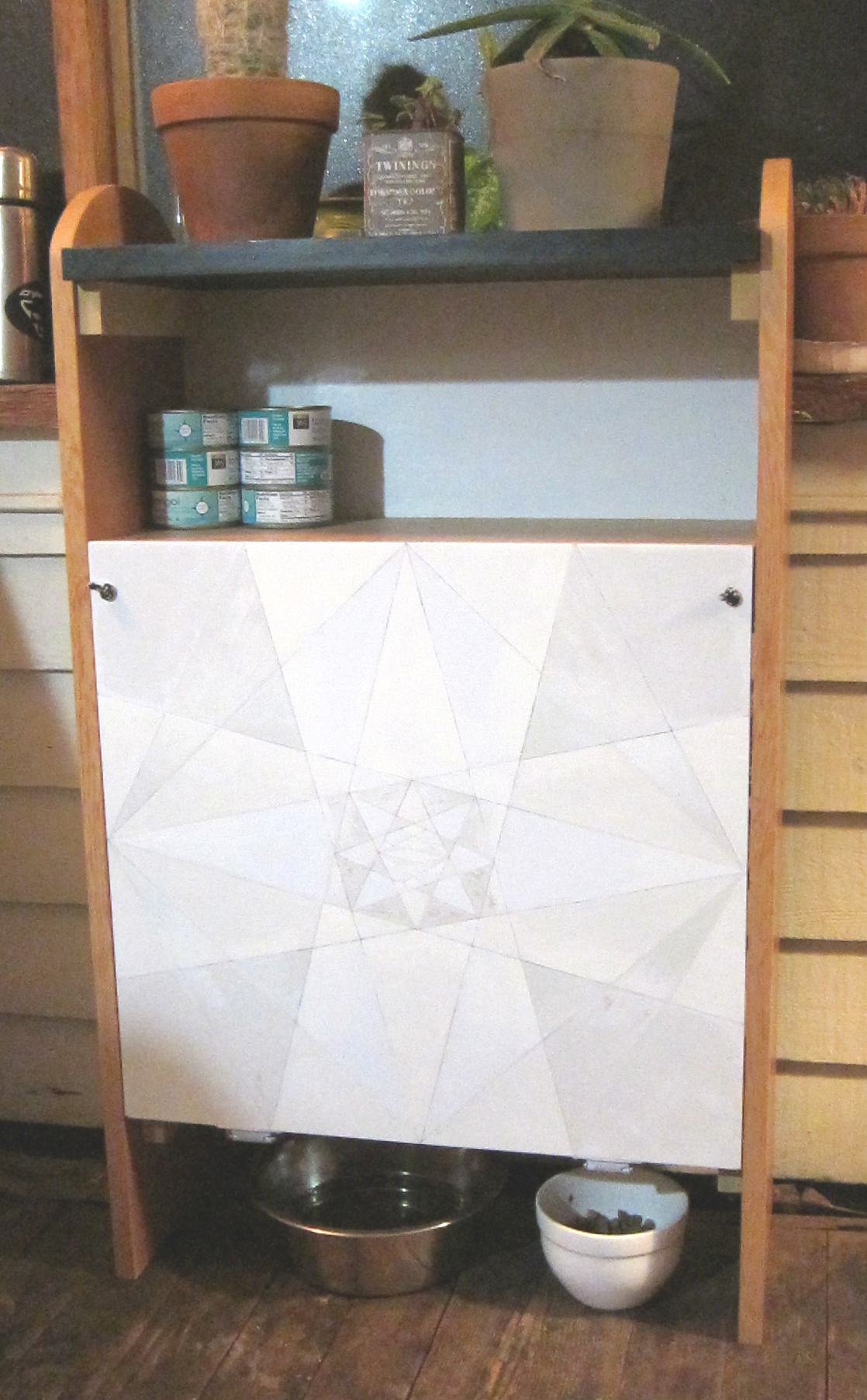
I am going to make you wait for the AFTER photos until it is finished,but here is a computer model of the new TV center to come:

Read Full Post »

Read Full Post »

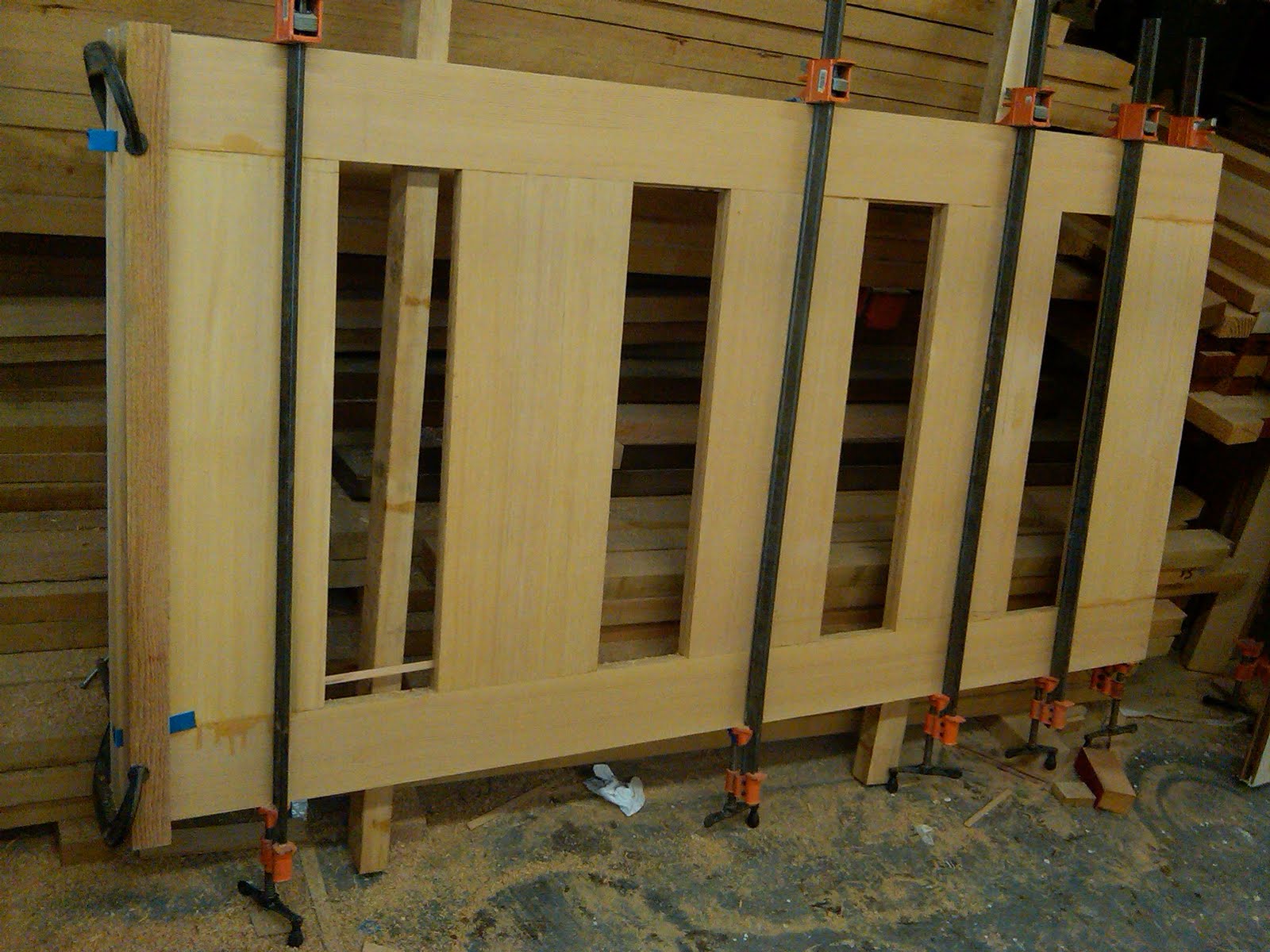
The client and their cats are moving back home so Guillaume put in a rush order for the custom fir door. Here is a photo of the door glued and clamped at John Staton in West Berkeley: I hope it will be ready in time!

Read Full Post »

It is hard to get good pictures of the rainscreen assembly, but here are a few courtesy of Mr. Canivet.

This slideshow requires JavaScript.

The point of the rainscreen is to allow air to circulate behind the siding and dry out the backside.  This way the moisture doesn’t instead get sucked inwards into the insulation and stud bays and the paper-backed sheet rock when you turn on your industrial kitchen hood. This can cause all sorts of problems.  It also just keeps the moisture from lurking behind the siding.

The siding is 5/8″ thick fibercement lap siding. the furring is 1.5″x5/16″ cedar strips, and the drainage plane is good old-fashioned 2-ply building paper.  In order to keep insects from building nests behind the siding Guillaume came up with a simple detail using wire mesh and filter fabric at the top and bottom and above and below each window.

Read Full Post »

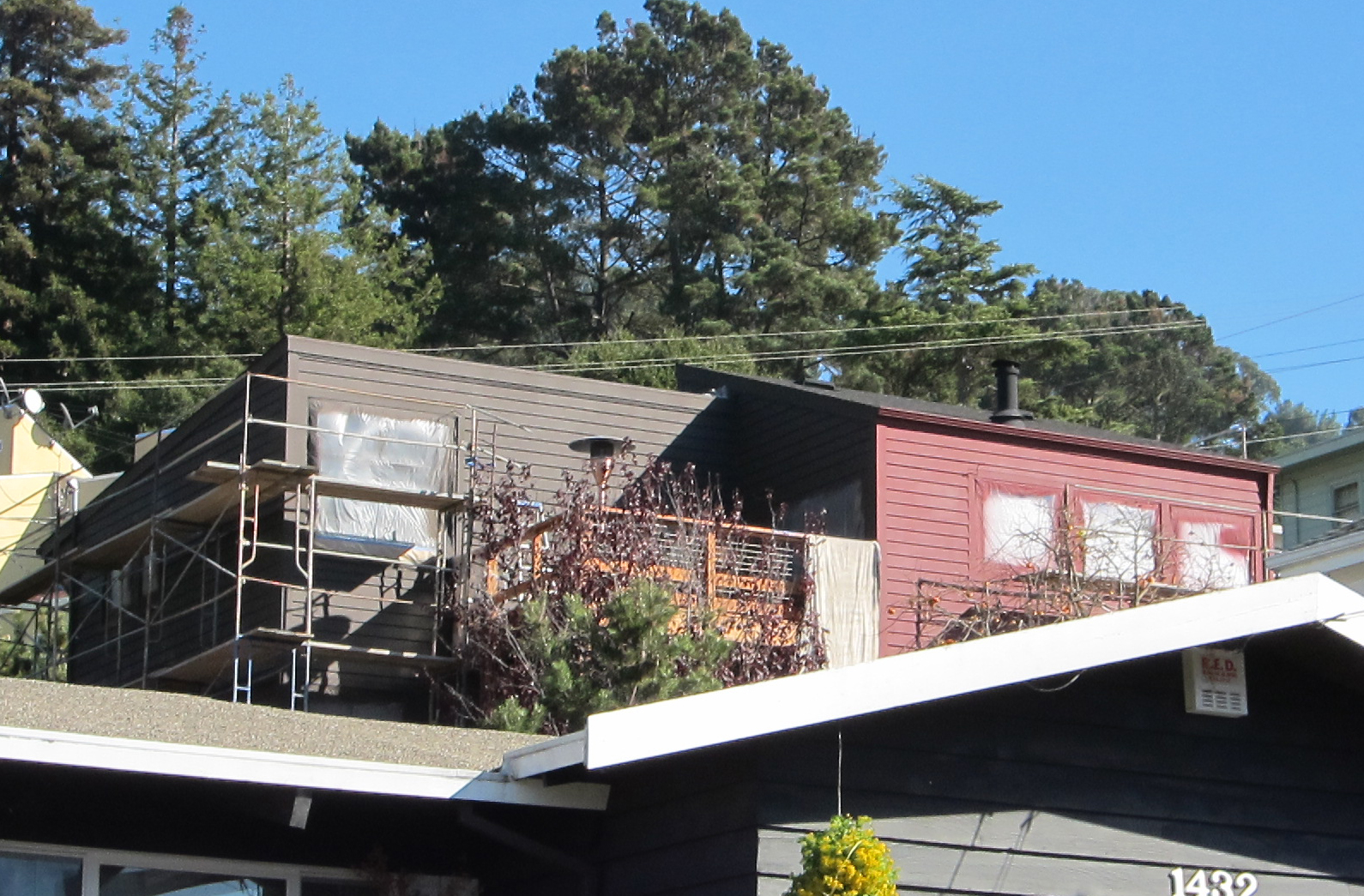
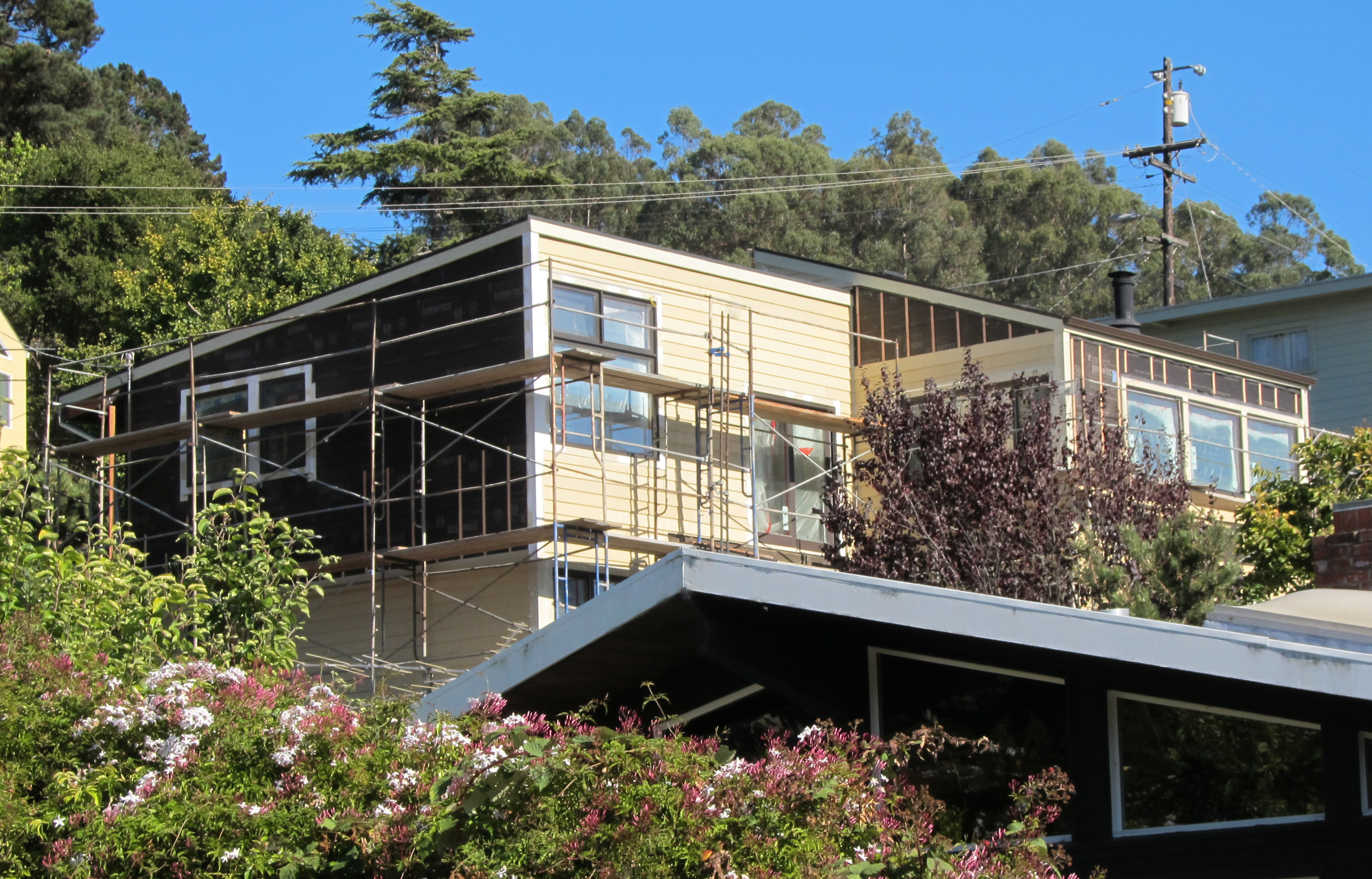
You can see the big new dining room windows and to the right three new bigger windows in the living room looking at the view. These windows face SW and will have exterior shades on them. 

Read Full Post »

I kept this elegant tub surround alive for a few extra years by patching it with fiberglass and epoxy, but I think it was time for an upgrade.

partially demolished, you can see both layers of old surround – fiberglass on top of coated masonite – with a european street scene in sepia….perhaps from the early 60s?

pacific tile putting on a layer of thinset mortar over the wonderboard (over building paper & moiststop at the tub lip)

the first row of tiles – cut to fit the curved tub

I don’t have any photos of the plumber at work, but he installed copper rough plumbing for this shiny new shower faucet. It has a modern take on the cross handle for the valve, and a nice curvy tub spout.

I would not recommend buying the cheapest shower curtain rod or brackets. I did, and I notice spots of rust already forming on the chrome.

The tiles are 4×4 white (0100) Daltile Rittenhouse Square  with a god’s eye pattern in yellows and blues.  Keeping the pattern in the middle meant that all my trim tiles and fussy cut tiles would be white. Extra ones when we ran out were easy to come by.  It also made finding a recessed soap dish easy and repairs down the road possible. Affordability is another advantage.

We used bright white unsanded grout and white adhesive caulking to complete the clean white look.

Daltile white 0100 4×4 squares with a god’s eye pattern in blue and yellow

I don’t think I got a screaming deal, in part because I was in a rush, trying to reduce the inconvenience for my renters.  The plumber was about $575, the tile setter $1300, the tiles, grout, caulk, and sealer, about $250 and the plumbing hardware another $375 or so. Call it about $2500 + a few more hours of carpentry work, sheetrock repair, clean up, and a dump run bring it to about $3200. I still have to repaint the ceiling on the lower level where we had to open it up for plumbing access.

Read Full Post »

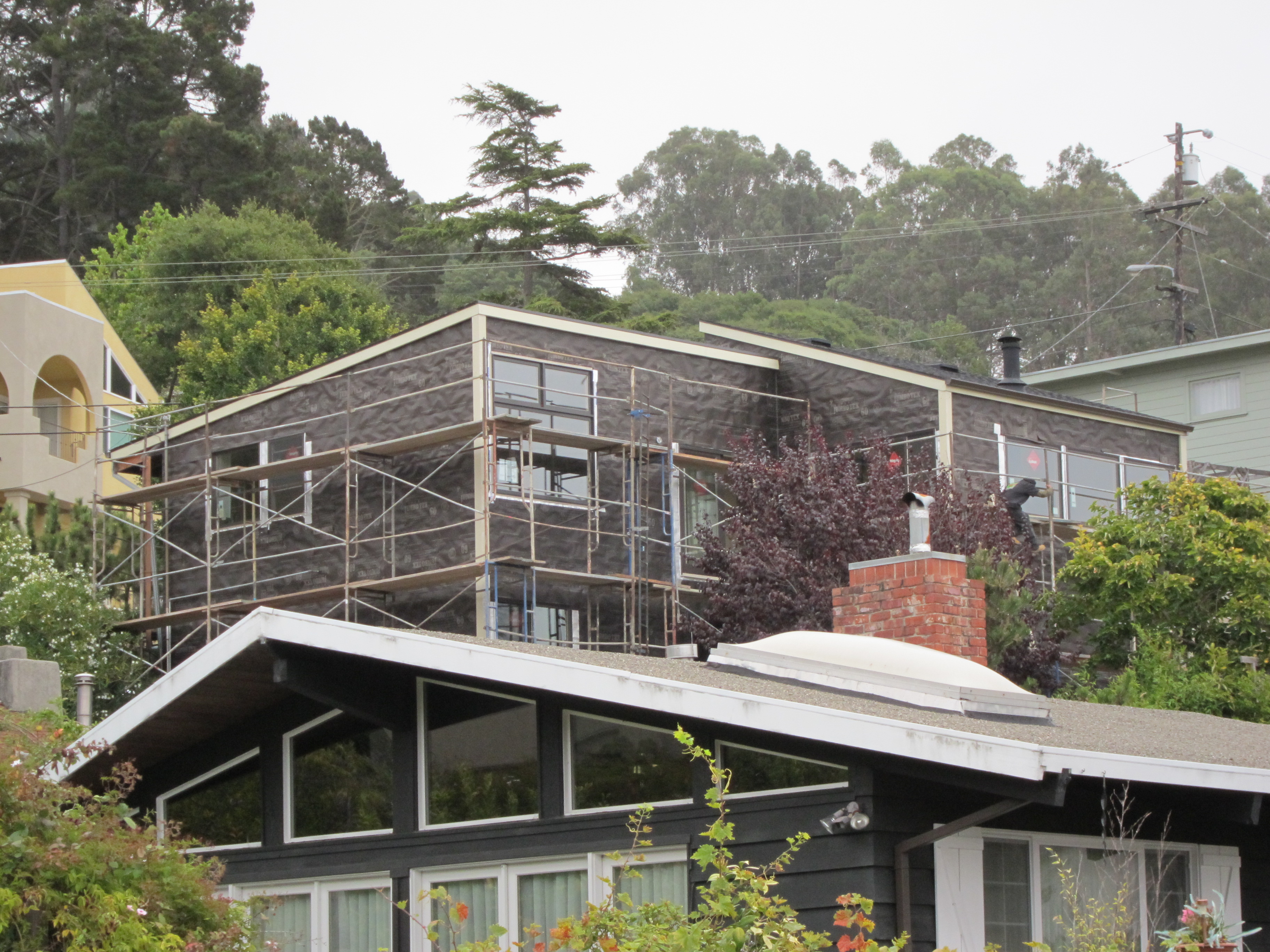
Guillaume (the builder) sent me these two photos of the facelift in El Cerrito.  They have passed the sheathing inspection and the new windows are going in.  Tomorrow I will swing by and see how the view has changed.

All new sheathing and a start on the windows

Samuel and Freddy install the new master bedroom window

We have also been finalizing the design of the front entry door so that it can be fabricated by John Staton Doors, Berkeley, CA.

The client spied this nice modern door in San Francisco

Read Full Post »

« Newer Posts - Older Posts »